 By Kelvin

High ceiling living room ideas should help a room feel open without making furniture look undersized or the seating area feel disconnected. The key is to establish a clear focal point at floor level, then connect it to the upper walls through lighting, curtains, and carefully chosen decor. Whether your living room has vaulted ceilings, tall windows, or a two-story wall, thoughtful proportions can make the space feel more comfortable without filling every empty corner. Start with the layout, then build upward with purpose.
Table of Contents
How Do You Make a High-Ceiling Living Room Feel Balanced?
Start by creating a defined seating area. Instead of spreading furniture along the walls, group the sofa, chairs, and coffee table around a shared focal point, such as a fireplace, television, or window. This gives the room a clear center and makes the open space feel intentional.
Use this quick guide to identify what your layout needs before buying anything.
| What feels wrong | What to check first | Design solution |
| Furniture looks lost | Distance between seating pieces | Create a connected seating group |
| The center feels empty | Furniture placement and rug coverage | Define a central lounge area |
| The room feels cluttered | Number of competing focal points | Keep one main visual anchor |
| The seating area feels unfinished | Relationship between sofa and table | Add a proportionate central surface |
These checks help distinguish a furniture problem from a layout problem. A room may not need a larger sofa; it may need the existing seats arranged more closely or a rug that connects them.
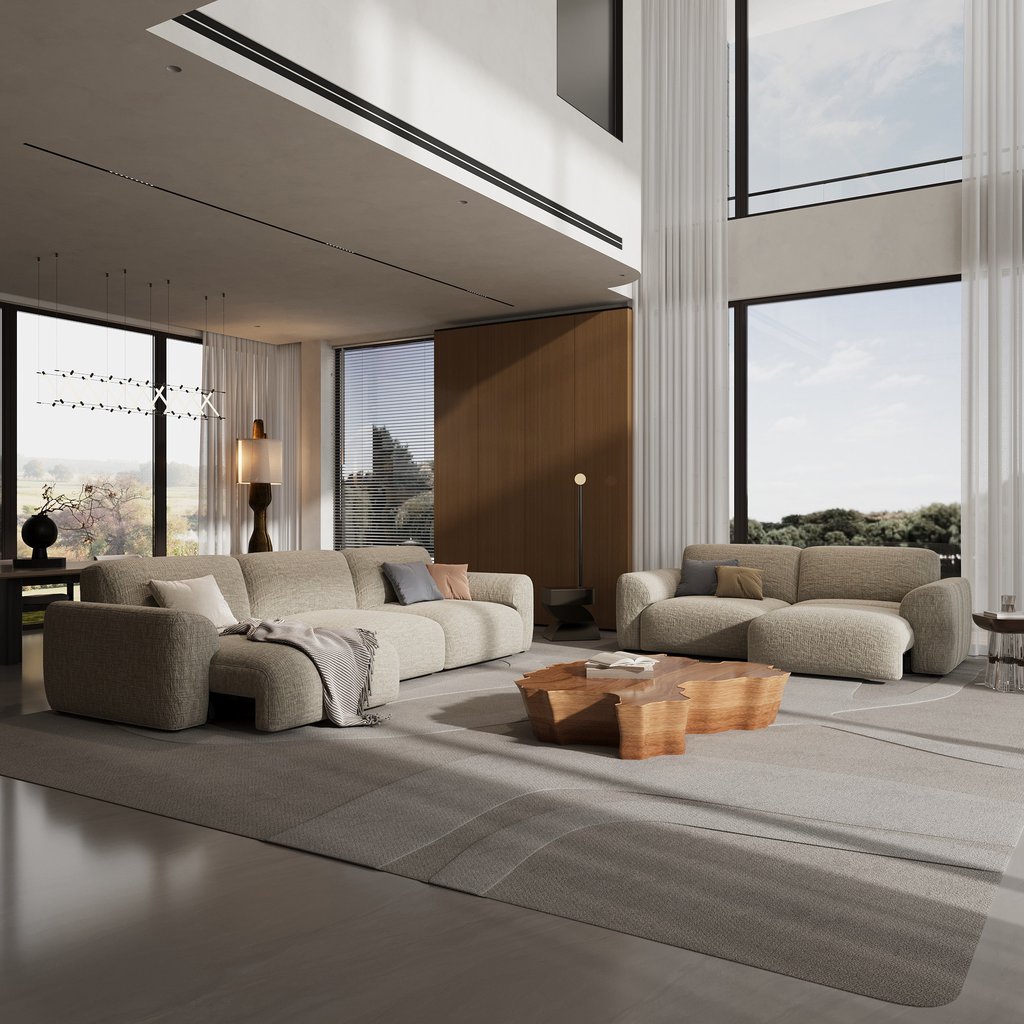
What Furniture and Rug Proportions Work Best?
Furniture should relate to the room’s usable floor area, not just its ceiling height. A tall room may accommodate substantial seating, but oversized pieces can still obstruct walking paths or overwhelm a narrow footprint. Start by measuring the available space, then choose furniture that gives the seating area enough visual weight without making movement difficult.
Choose a Sofa That Anchors the Layout
Measure the intended sofa position, the distance to the television or fireplace, and the routes people use to cross the room. A modular sofa can help establish a defined seating zone, particularly in an open-plan living room where the lounge area needs to feel separate from a nearby dining space.
The Cronus Genuine Leather Modular Sofa features top-grain leather upholstery and a solid wood frame. Its 81.5-inch width in the selected configuration can anchor a smaller seating group within a larger room without spanning an entire wall.
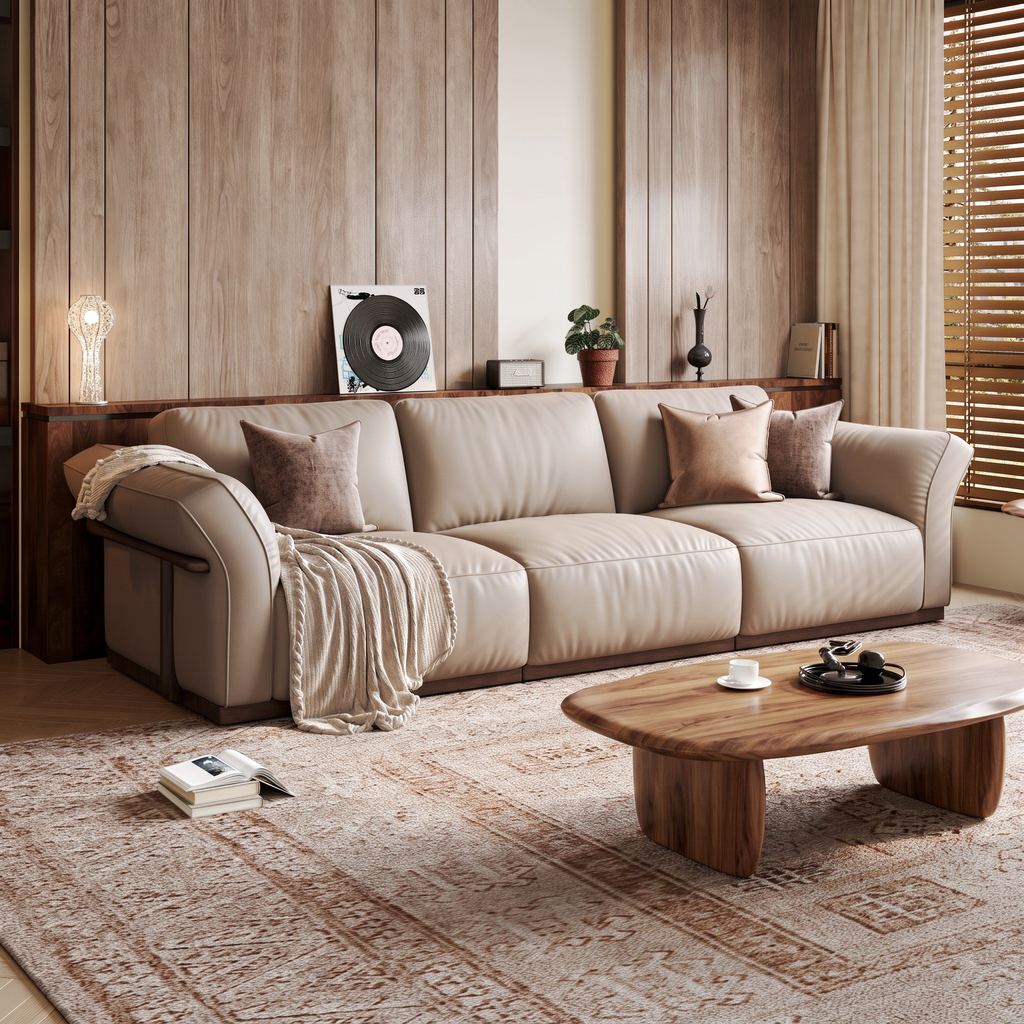
Cronus Genuine Leather Modular Sofa
Leather upholstery and modular proportions anchor seating without overwhelming the room.
👍 Best for: Open rooms needing a defined anchor
✨ Top-grain leather upholstery
✨ Solid wood frame
✨ Modular seating configuration
Connect the Sofa, Rug, and Coffee Table
A rug helps the furniture read as one arrangement rather than separate pieces scattered across a large floor. As a practical starting point, place the front legs of the main seating pieces on the rug. Measure the complete furniture grouping before selecting the rug, and preserve enough clearance around the coffee table for comfortable movement.
Once the sofa and rug establish the seating area, choose a coffee table that connects the surrounding seats without making the arrangement feel crowded. The Silva Lifting Top Round Coffee Table offers two size options, a walnut finish, a lift-top surface, and two drawers.
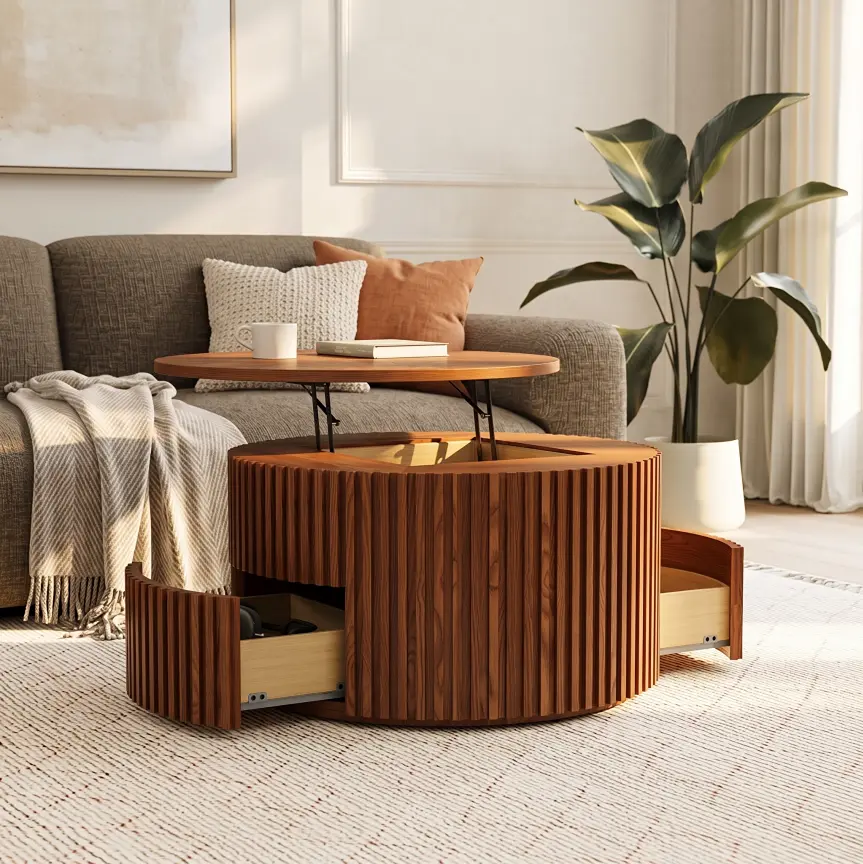
Silva Lifting Top Round Coffee Table
A rounded walnut profile connects seating and adds useful concealed storage.
👍 Best for: Seating zones needing a softer center
✨ Two diameter options
✨ Dual hidden drawers
✨ Lift-top work surface
Before purchasing either piece, mark the furniture dimensions on the floor with painter’s tape. This helps you check the arrangement against actual walking routes instead of relying on product photos or ceiling height alone.
How Can You Connect the Seating Area to Tall Walls?
Once the furniture layout feels complete, use a few vertical elements to connect the lower half of the room to the ceiling. The goal is not to decorate every inch of wall space. Instead, select features that relate to the furniture below and give the eye a clear path through the room.
Give One Wall a Clear Focal Point
A large artwork, gallery arrangement, fireplace surround, or carefully styled media wall can provide a visual anchor. Above a sofa, a substantial artwork or a coordinated group of frames generally feels more connected than several small pieces scattered far apart.
Choose the scale according to the furniture beneath it and the available wall width. Leave breathing room around the arrangement so it does not compete with nearby windows, shelving, or architectural details.
Use Curtains to Emphasize Vertical Height
Mounting the rod closer to the ceiling and allowing the panels to reach the floor often creates a more continuous vertical line. This approach works particularly well around tall windows, where full-length fabric can connect the upper architecture to the furniture below.
Consider the window width, fabric weight, natural light, and nearby doors before choosing a treatment. Wider panels can soften a large glass surface, while textured fabrics add warmth. Check that the curtains will not obstruct window access, vents, or frequently used doorways.
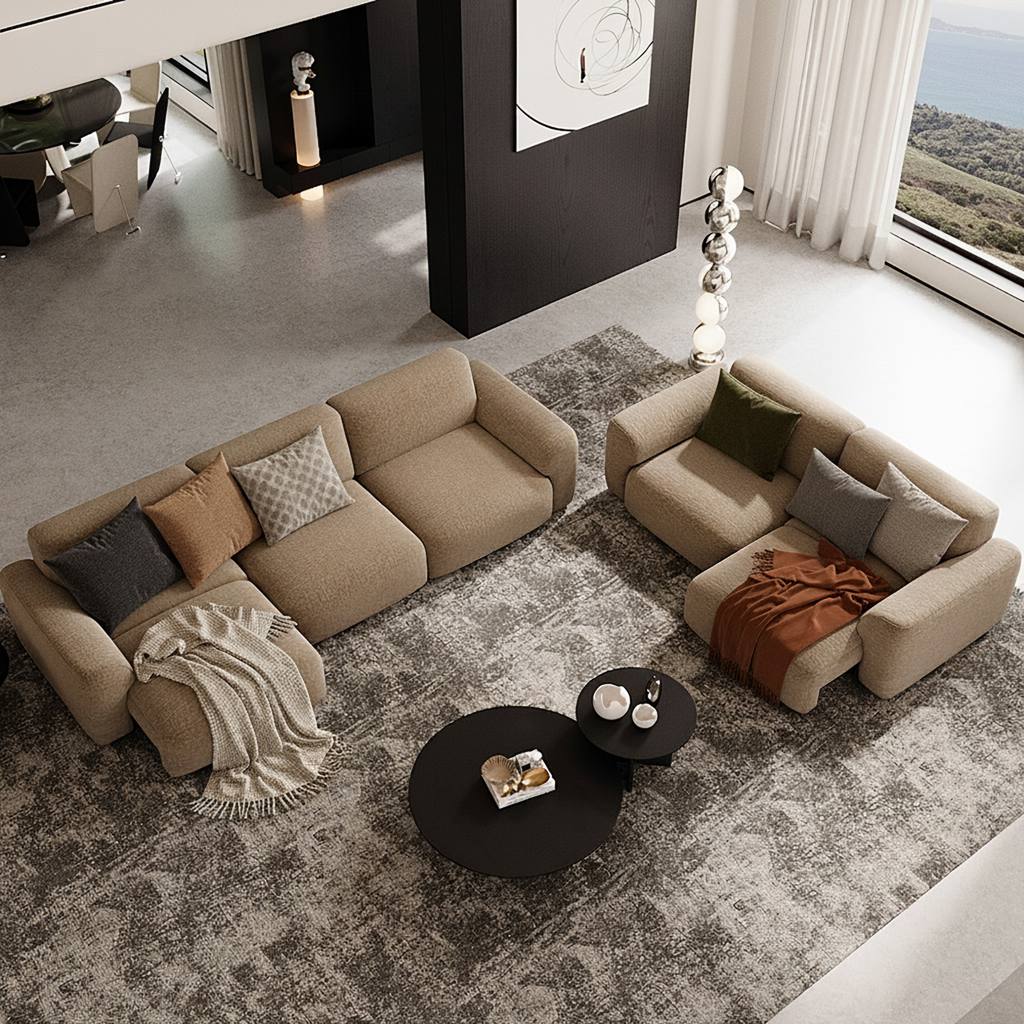
A secondary seating piece can also make a tall room more functional without adding another full sofa. The Oliver Swivel Power Barrel Recliner swivels and reclines from 90° to 145°, making it suitable for a reading corner near a window or bookcase.
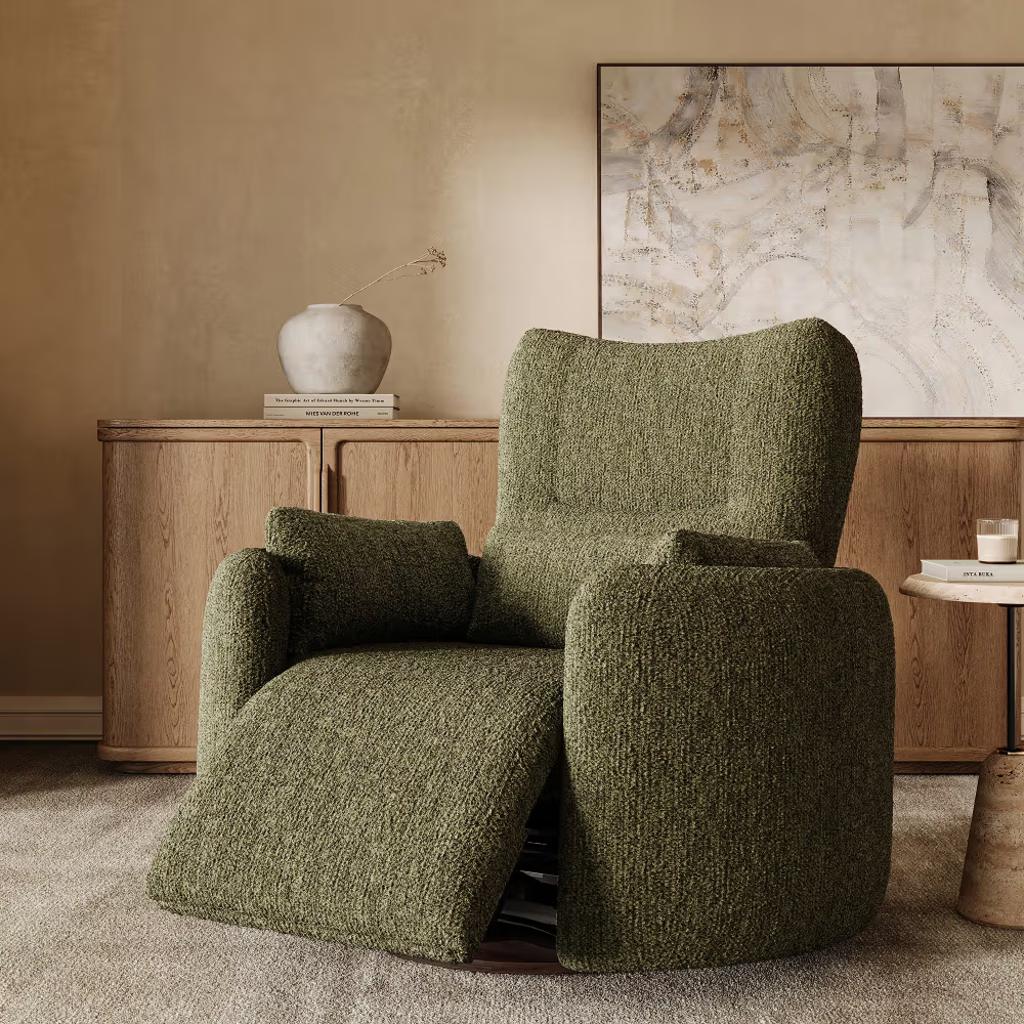
Oliver Swivel Power Barrel Recliner
A swivel recliner adds a dedicated lounge spot without another sofa.
👍 Best for: Reading corners and extra lounge seating
✨ Grass chenille upholstery
✨ 90°–145° power recline
✨ Swivel seat
What Lighting Works Best at Different Heights?
Good high ceiling living room lighting ideas combine a fixture that suits the architecture with lighting closer to the areas where people sit and relax. A chandelier or pendant can establish a focal point overhead, but it should not be expected to illuminate every corner on its own.
Layer three types of light:
- Ambient lighting: Ceiling fixtures provide general illumination.
- Task lighting: Floor lamps or reading lights support activities near seating.
- Accent lighting: Wall lights or picture lights highlight artwork and architectural details.
For a living room used for reading during the day and relaxing in the evening, a ceiling fixture paired with a floor lamp beside the sofa offers more flexibility than a single bright overhead light.
The same principle applies to living room lighting ideas: match each light source to a particular zone and avoid glare on television screens. In rooms with very high ceilings, confirm fixture installation height, maintenance access, and clearance before selecting a large pendant or chandelier.
How Can You Make the Room Feel Warm Without Overfilling It?
A room can have balanced proportions and still feel cold if it relies on hard surfaces and a limited range of textures. The solution is to introduce softness and repeat a few materials or colors, rather than adding more furniture to every empty area. These high ceiling living room decorating ideas work best when each addition serves a clear purpose.
Layer Textures and Repeat a Cohesive Palette
Combine an upholstered sofa, a textured rug, curtains, and a few cushions in related colors. Warm wood can offset cool flooring, while cream, taupe, and muted brown can create continuity across a neutral room.
If the sofa and rug already establish a strong visual center, a textured throw or a pair of cushions may be enough to complete the arrangement. Soft furnishings can also reduce some sound reflections in rooms with hard floors and extensive glazing. They will not eliminate significant echo, but they can make the seating area feel less acoustically harsh.
For more ideas on coordinating furniture and textures, consider the principles used when decorating a large living room that feels cozy. The key is to build a cohesive arrangement rather than fill every open area.
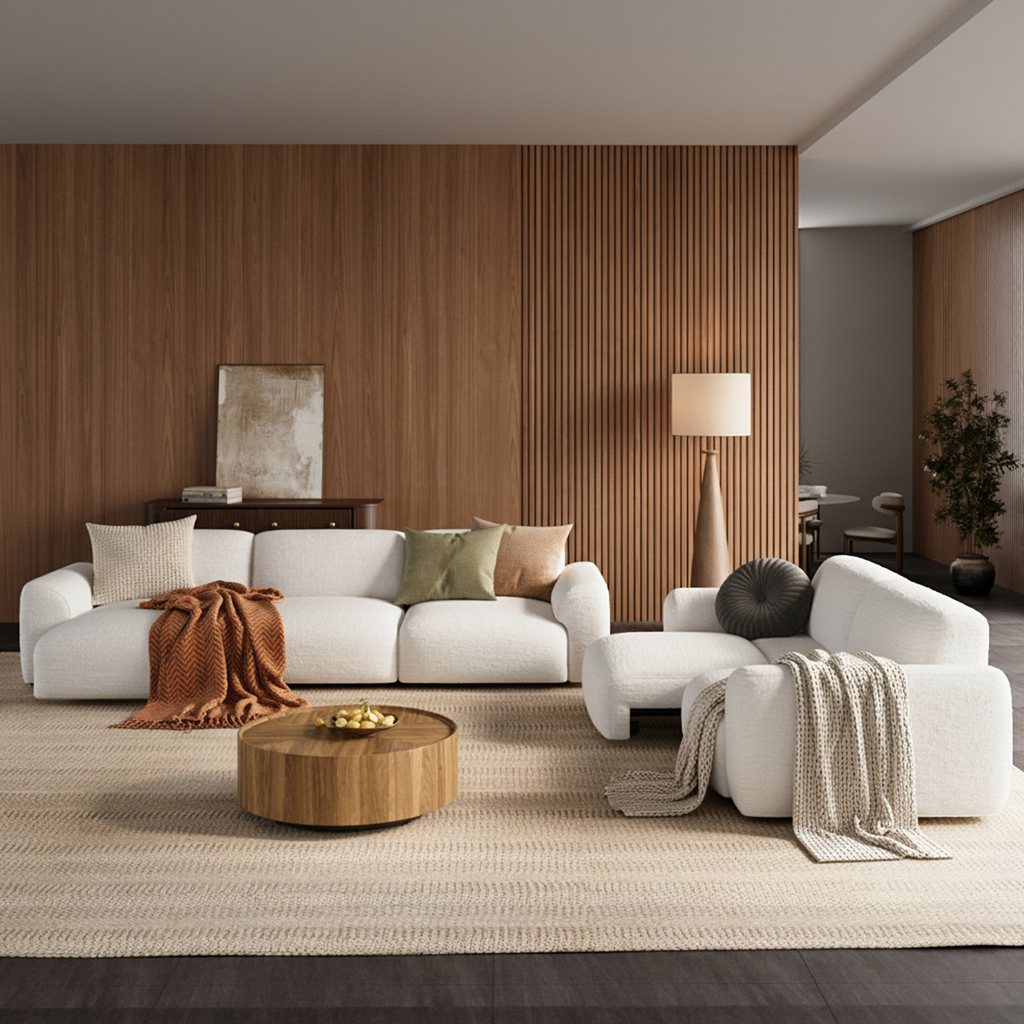
Choose Flexible Seating Only When It Serves a Real Need
Some living rooms need to accommodate longer lounging sessions or occasional overnight guests. In these cases, flexible seating can support different activities without requiring a separate bed to remain in the room every day.
The Aurora Power Sofa Bed adjusts its seat depth from 27 to 45.5 inches, allowing the seating surface to extend for more relaxed lounging. Its white chenille upholstery also suits light, neutral interiors.
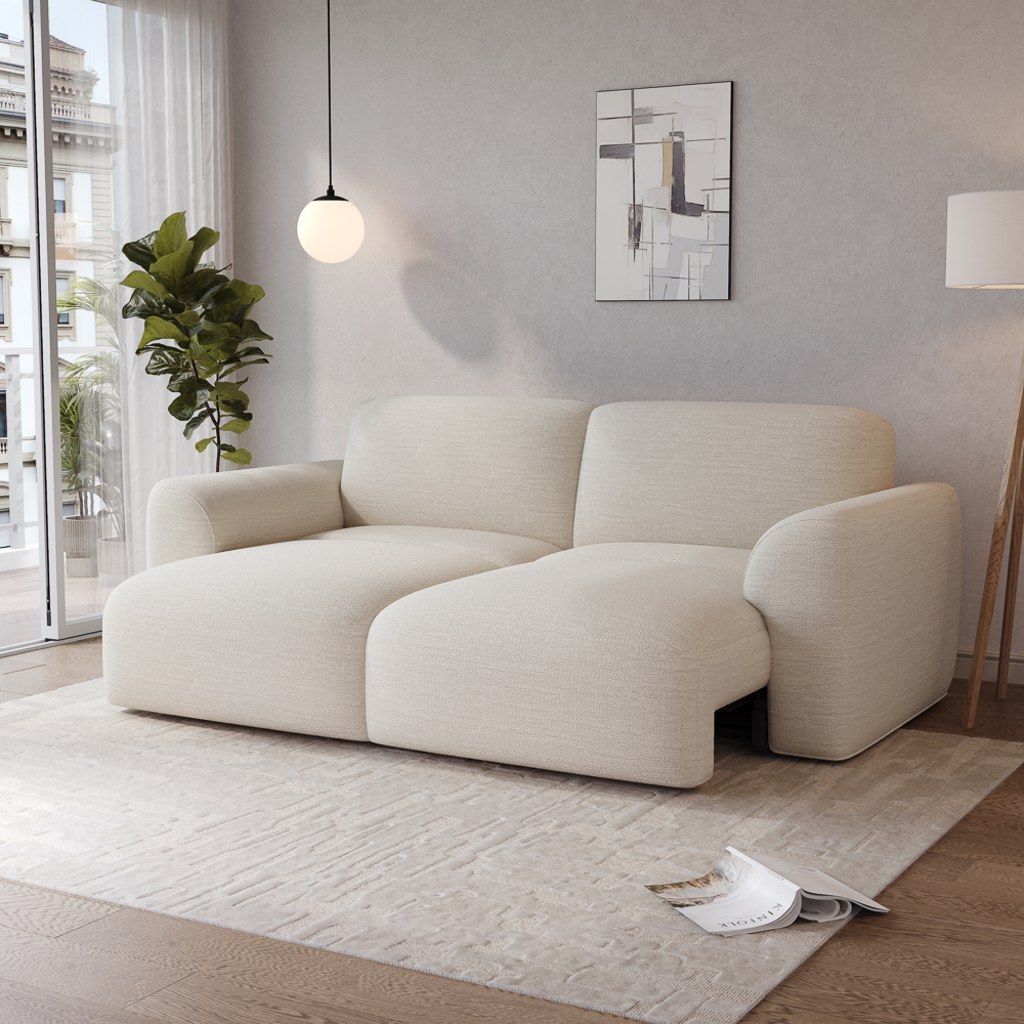
Aurora Power Sofa Bed
Adjustable seat depth supports relaxed lounging in rooms with multiple uses.
👍 Best for: Living rooms needing flexible seating
✨ 27–45.5-inch seat-depth range
✨ White chenille upholstery
✨ Power-adjustable extension
What Changes for Vaulted or Two-Story Living Rooms?
Different ceiling shapes call for different adjustments, but the same principles of balance still apply.
- Vaulted ceilings: Follow the roofline when positioning lights or artwork. Avoid forcing symmetry if the slopes, windows, or beams are uneven.
- Cathedral ceilings: Use a strong focal point, such as large artwork or an appropriately scaled pendant, to relate the upper wall to the seating area.
- Two-story living rooms: Consider how the wall looks from both the ground floor and the upper level. Large decorative elements should feel connected to the architecture rather than clustered only at eye level.
These high ceiling living room design ideas should preserve the room’s openness while giving the furniture below a clear purpose.
What Decorating Mistakes Should You Avoid?
The most common mistakes come from treating height as a problem that must be filled. Before adding more furniture or decor, check whether the existing layout needs better proportions or a clearer focal point.
- A rug that is too small: The main seating pieces appear disconnected.
- Furniture pushed against every wall: The center may feel empty and conversation less natural.
- Only one overhead light: The ceiling is illuminated, but seating corners may remain dim.
- Too many small wall decorations: Tall walls can look busier without feeling more cohesive.
- Oversized furniture without enough clearance: A large sofa can obstruct movement even when it suits the room’s height.
The best high ceiling living room decor balances visual interest with everyday function. Keep the main seating arrangement connected, choose a few vertical features that complement it, and leave enough open space for comfortable movement.
Conclusion
The most effective high ceiling living room ideas start with a well-planned seating area, not an attempt to fill every empty wall. Choose furniture that fits the floor plan, connect the seats with a suitable rug and coffee table, and use curtains, artwork, and layered lighting to relate the lower room to the ceiling. Soft textures can add warmth without sacrificing openness. Before buying new pieces, measure the layout and identify the specific problem each item needs to solve. A balanced room should feel spacious and comfortable in everyday use.
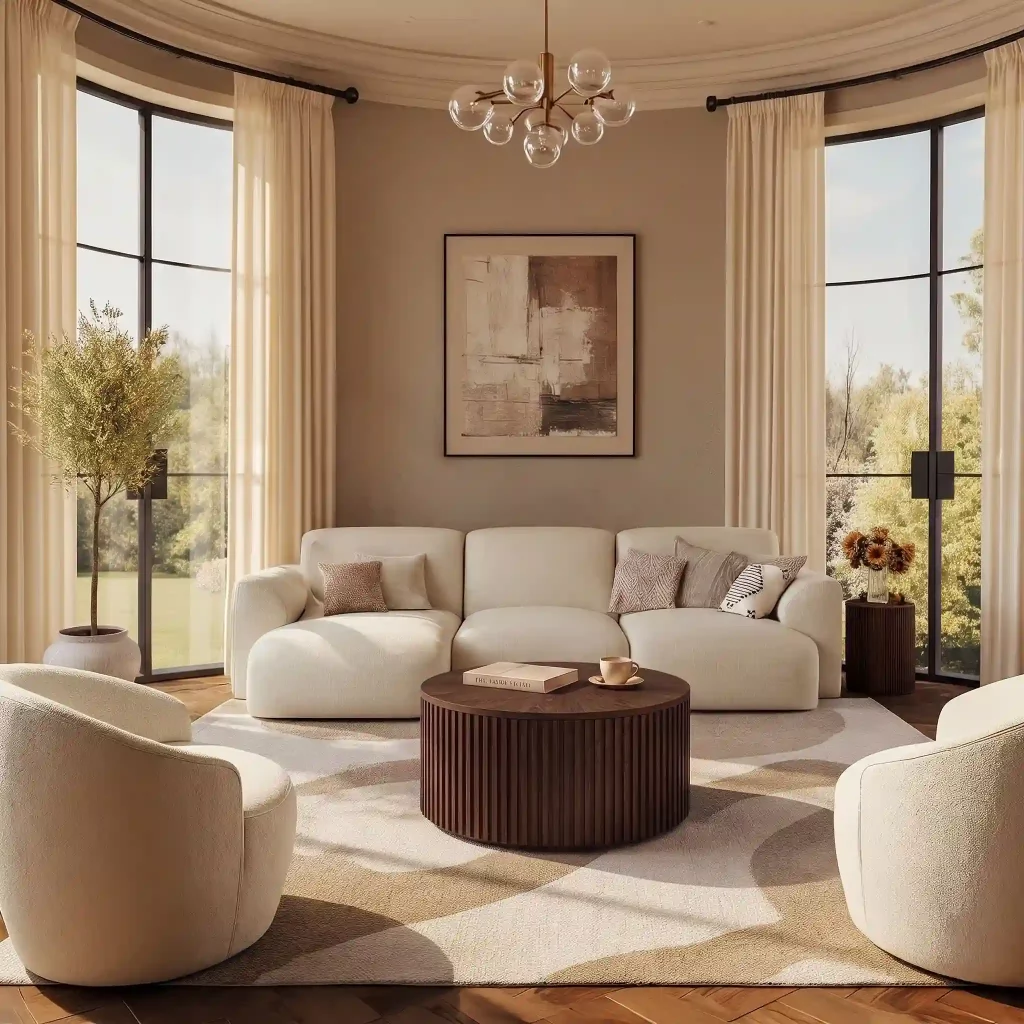
Find the Right Living Room Seating
Explore sofas and accent seating for different room sizes, layouts, and everyday needs.
FAQs
What Rug Size Works Best in a High-Ceiling Living Room?
Choose a rug based on the seating group’s footprint, not the ceiling height. A useful starting point is to place the front legs of the sofa and accent chairs on the rug. For multiple seating zones, separate rugs can define each area, provided they leave comfortable walking paths between them.
Should You Paint a High Ceiling the Same Color as the Walls?
Using the same color can create a continuous, understated look, while a contrasting ceiling draws more attention to the architecture. In a room with limited natural light, test paint samples at different times of day before choosing a darker shade, which may make the ceiling feel visually lower.
How Can You Reduce Echo in a Double-Height Living Room?
Start with a large rug, upholstered seating, full-length curtains, and other soft surfaces that absorb some reflected sound. If voices still echo noticeably, especially in rooms with extensive glass and hard flooring, consider purpose-designed acoustic panels rather than adding decorative objects that provide little sound absorption.
Can You Use a Ceiling Fan and Chandelier Together?
Yes, if the ceiling height, fan blade clearance, fixture dimensions, and installation positions allow both to operate safely. Check manufacturer clearance requirements before choosing the combination. For a complex double-height installation, have a qualified professional confirm placement and electrical requirements.
Can a High-Ceiling Living Room Double as a Guest Space?
Yes, if the main seating arrangement remains practical for daily use and the extended sleeping setup fits without blocking essential paths. A power sofa bed may suit occasional guests, while frequent overnight use may justify a dedicated guest room. Compare power sofa beds for more ways to live before deciding whether flexible seating meets your needs.


