 By Kelvin
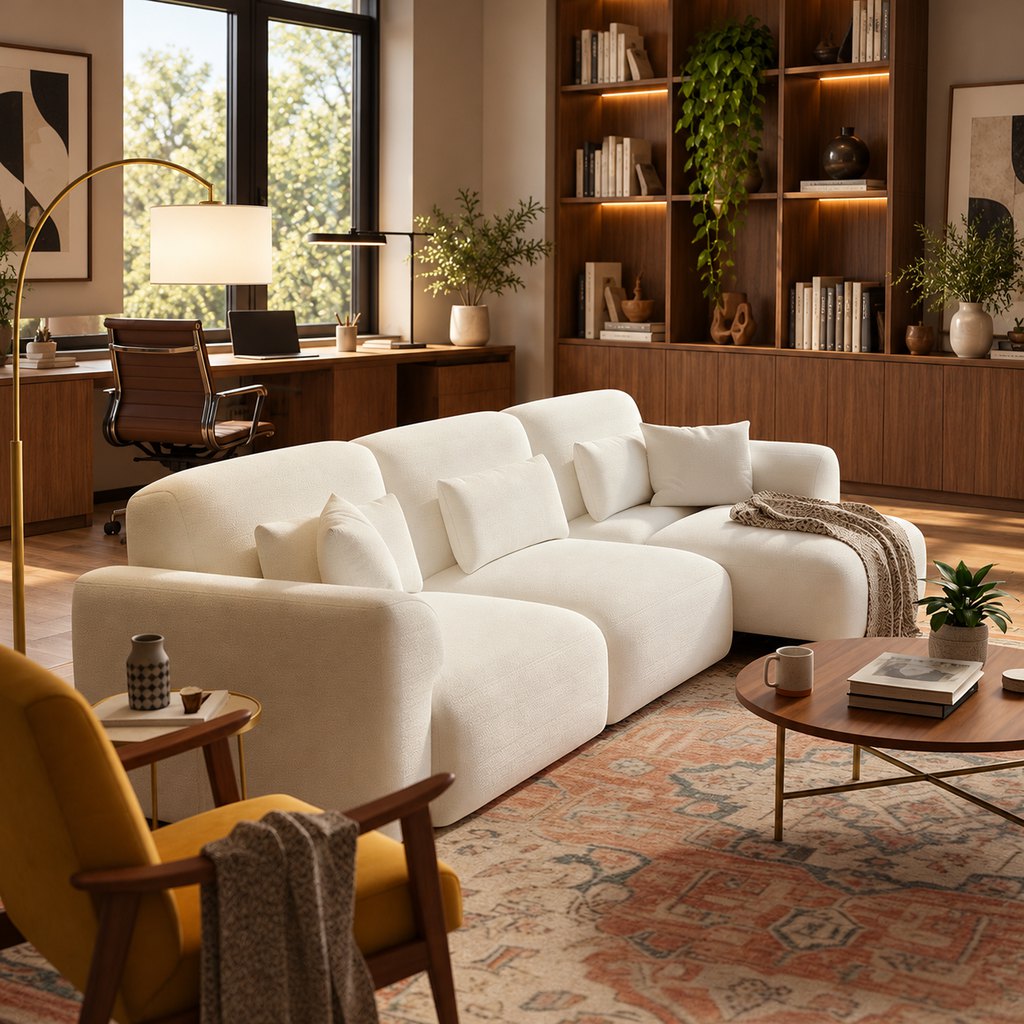
A living room can fit a desk without turning into a full-time office, but placement matters more than simply finding an empty wall. The best living room office ideas protect three things at once: a usable workspace, comfortable seating, and clear everyday circulation. This guide helps you choose a layout based on your sofa, windows, available walls, and how often you work from home. The layouts below show how to combine a desk, sofa, and storage without crowding the living room. Each setup suits a different room shape or work routine, with practical tips for keeping the seating area comfortable and the workspace functional.
Table of Contents
How Should You Choose a Living Room Office Layout?
Start with the space the office will use while you are actually working, not just the dimensions of the desk. A successful living room office combo should leave the room’s main seating and walking routes functional even when the chair is pulled out, a laptop is open, or someone else is using the living area.
Use the room itself to narrow your options:
| Room Situation | Better Office Layout | Main Constraint to Check |
| Sofa floats away from the wall | Desk behind the sofa | Desk and chair depth |
| One side wall is mostly empty | Side-wall workstation | How visible work equipment remains |
| Bright corner is underused | Window-corner office | Screen glare and curtain access |
| Floor space is very limited | Slim or fold-down workstation | Work surface and storage |
| Work needs to disappear nightly | Hidden workstation | Available work surface |
| Living room has a long media wall | Workstation beside the media zone | Cable and visual organization |
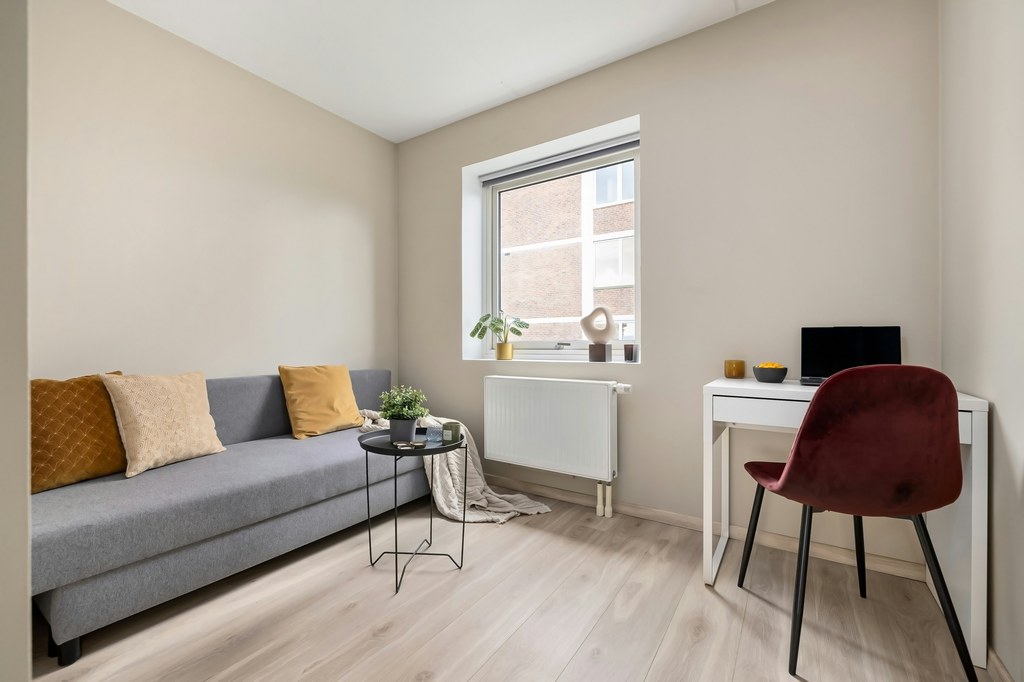
| Living room also needs to host overnight guests | Sofa bed with a separate desk zone | Full sleeping footprint and desk-chair clearance |
Before moving furniture, identify the room’s primary route between doors, hallways, seating, and adjoining spaces. In especially tight rooms, a small living room furniture layout should protect that route before using leftover floor area for a workstation.
Also consider how often you work there. A laptop used twice a week can function on a shallower, more flexible surface. A five-day workweek with a monitor, keyboard, files, and video calls usually needs more permanent space.
7 Living Room Office Combinations That Work Best
The most useful living room office ideas are not interchangeable. Each layout works because it uses a particular part of the room efficiently, and each introduces a different tradeoff. Choose the arrangement that solves your existing space problem instead of adding a desk first and trying to make everything else fit around it.
1. Desk Behind the Sofa
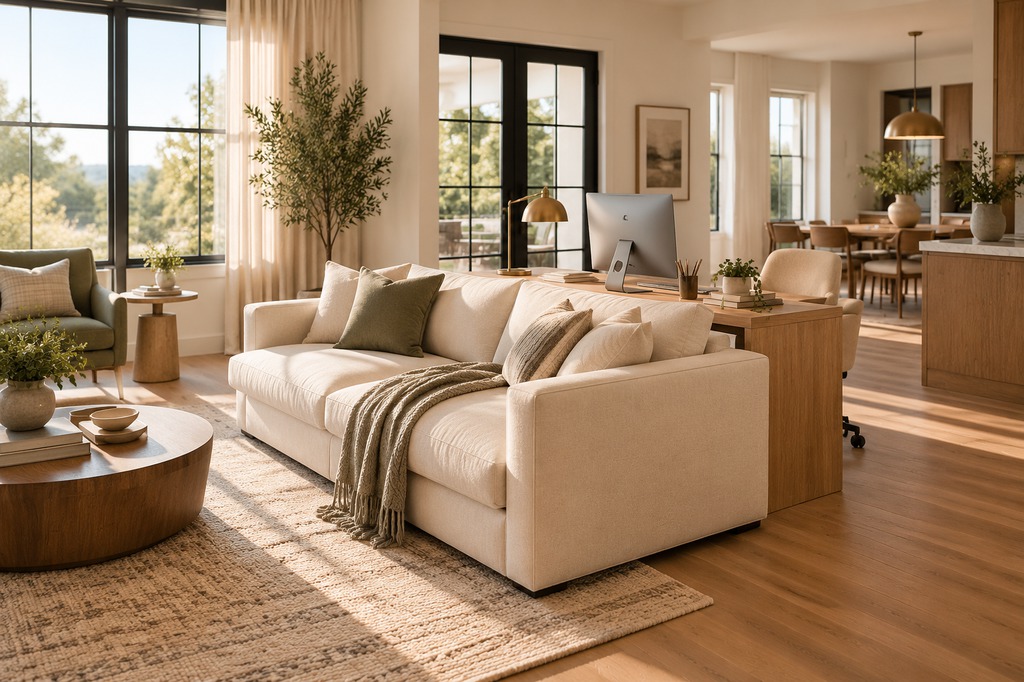
A desk behind a floating sofa creates a natural boundary between relaxing and working without adding a wall or tall divider. It works particularly well in long rooms or open-plan spaces where the sofa already separates the seating zone from unused floor area.
Check the combined depth of the sofa, desk, and chair before settling on this layout. The setup may fit when the chair is tucked in but block the walkway once someone sits down. If you use a sofa bed, also measure its fully extended sleeping footprint. This arrangement only works when the opened bed, desk chair, and main passage do not compete for the same floor space.
2. Side-Wall Workstation
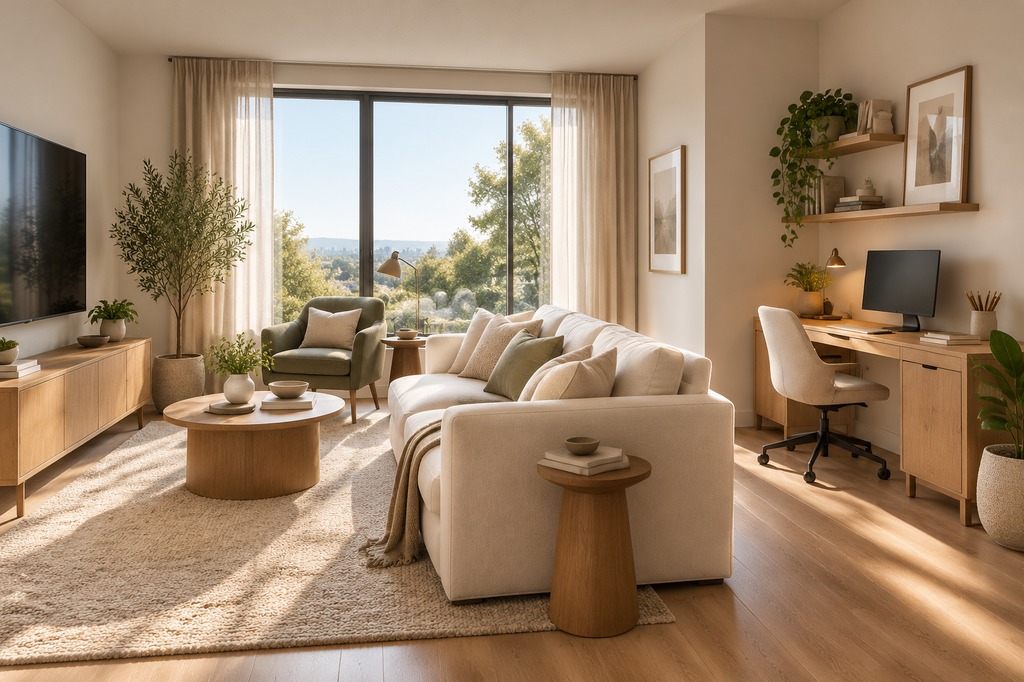
An unused side wall is often the simplest place for a home office in living room layouts because the sofa, TV, and coffee table can remain where they are.
A relatively shallow desk works well when the office does not need extensive equipment. The drawback is visibility: monitors, chargers, documents, and the chair remain part of the living room view. Closed drawers or storage nearby therefore matter more here than they do in a separate office.
3. Window-Corner Office
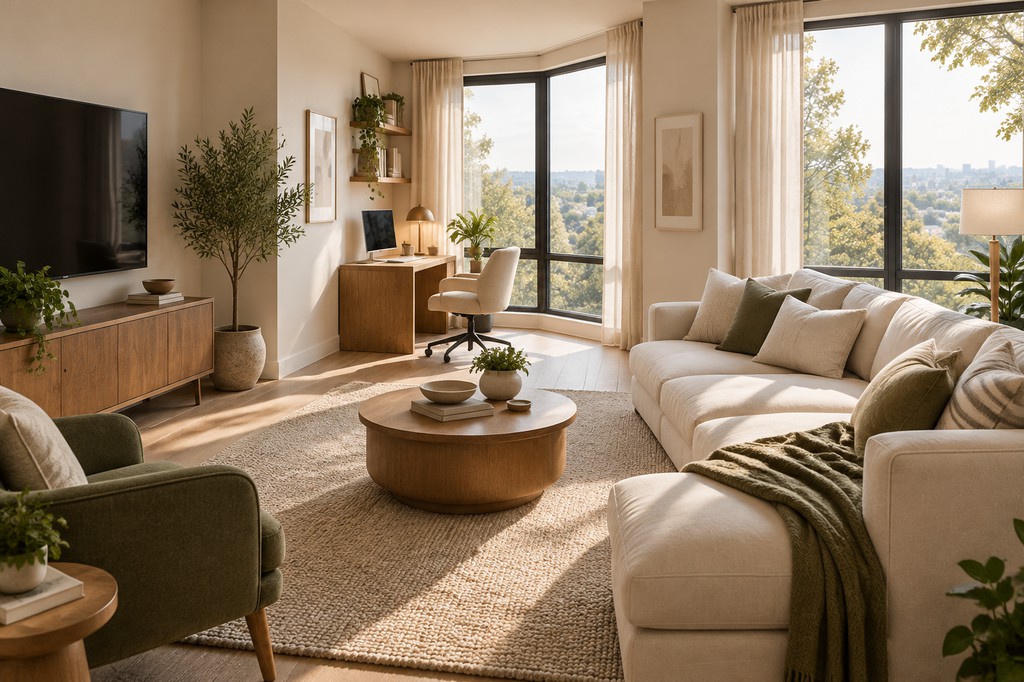
A corner beside a window can turn otherwise unused floor space into a defined work zone. This setup suits daytime laptop work particularly well because it can make use of natural light without placing the desk at the center of the room.
Do not automatically face the monitor directly toward or away from the window. Strong daylight can create screen glare or backlighting during video calls. A desk placed perpendicular to the window often gives you daylight while reducing those conflicts. Make sure the chair does not prevent curtains, shades, or the window itself from opening.
4. Use a Sofa Bed to Keep the Living Room Flexible
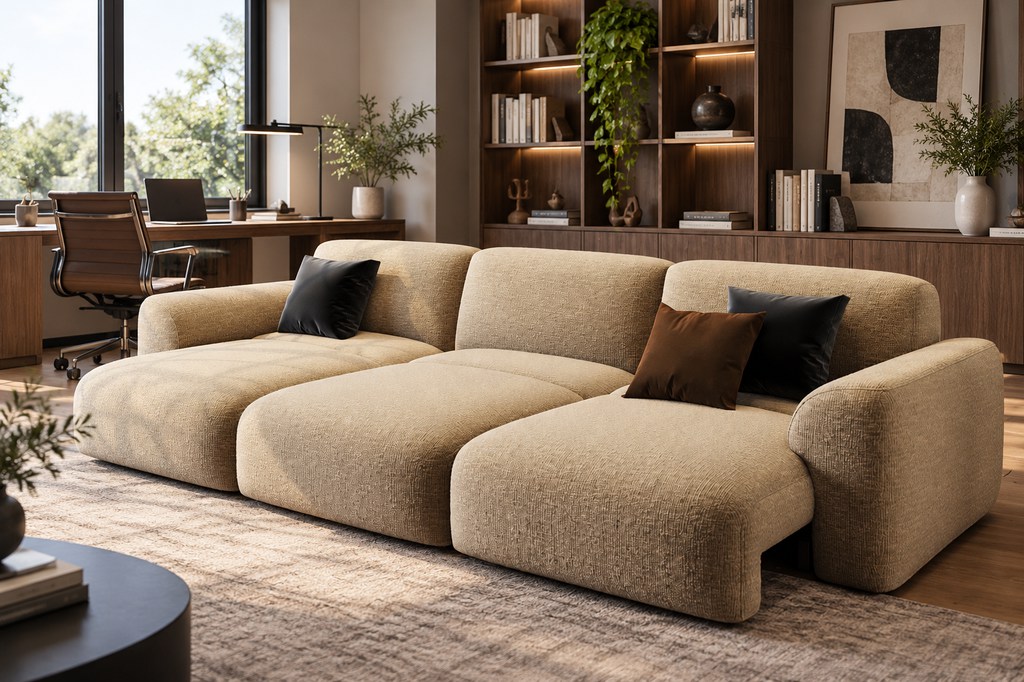
If your living room also needs to accommodate overnight guests, a sofa bed can provide everyday seating without reserving a permanent area for a separate guest bed. Keep the desk in a dedicated work zone, such as along an adjacent wall or in a window corner, and position the sofa bed where it can open without blocking the desk chair, TV access, or main walkway.
This arrangement works best when guests stay occasionally and the living room needs to remain comfortable for work and relaxation between visits. Before choosing a model, check its usable seating dimensions and full sleeping footprint. A sofa bed that fits neatly against a wall in sofa mode may occupy much more of the room when opened.
Povison’s Aurora Power Sofa Bed offers adjustable seat depth from 27 to 45.5 inches and a near-Queen sleeping surface for a living room that needs to serve more than one purpose. Its zero-clearance extension design removes the need for additional space behind the sofa during adjustment, but the extended footprint still needs to be checked against the desk, chair, and main walkway.
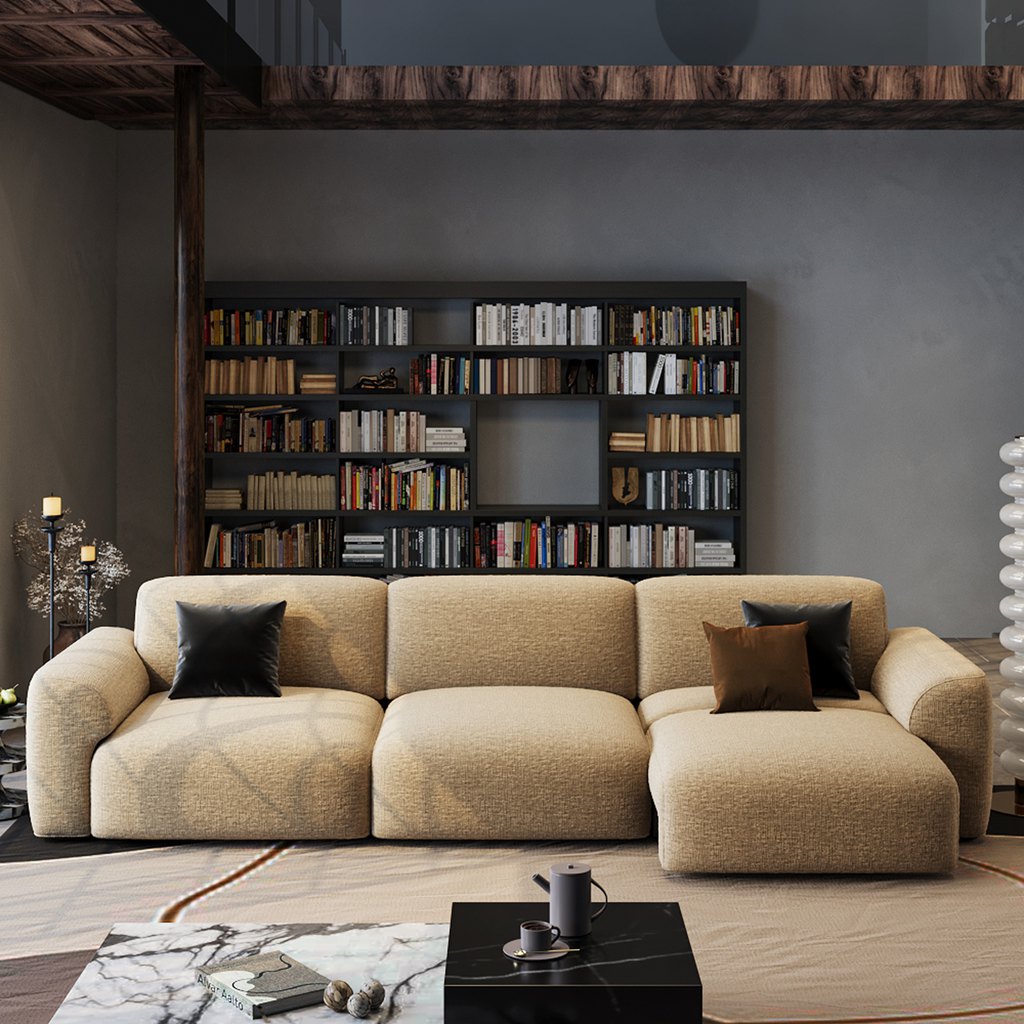
Aurora Power Sofa Bed
Motorized flexibility lets one shared room handle seating, lounging, and overnight guests.
👍 Best for: Multipurpose living and work spaces
✨ 27–45.5″ adjustable seat depth
✨ Zero-clearance power extension
✨ Near-Queen sleeping surface
If the desk sits behind the sofa bed, make sure the extended sleeping surface does not overlap the chair’s pullback area. In many rooms, placing the desk along an adjacent wall is the simpler option.
5. Hidden Workstation
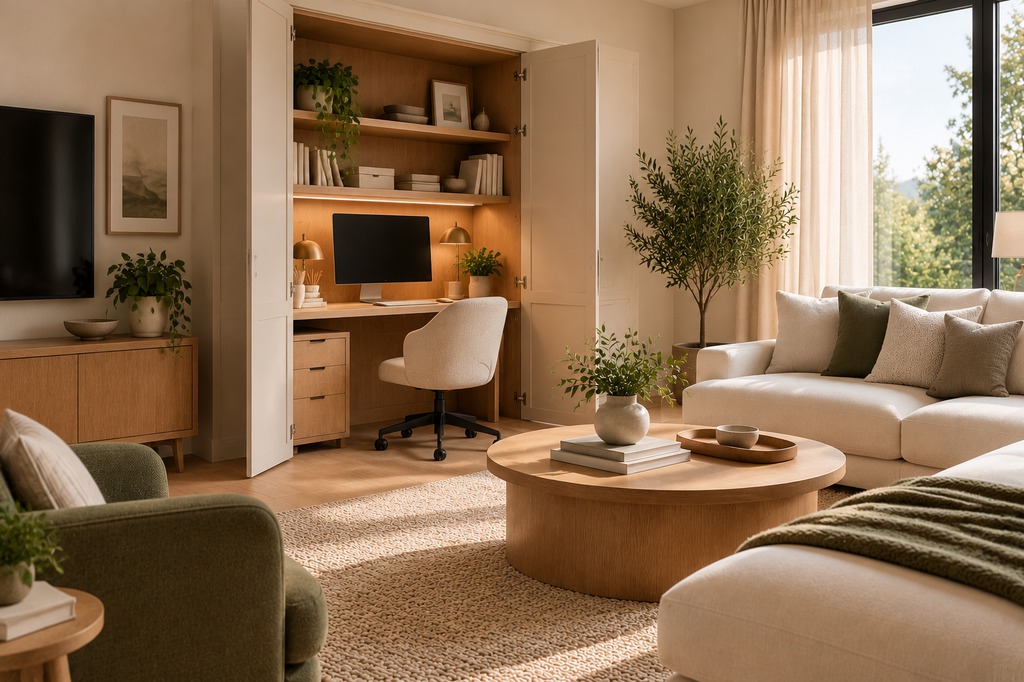
If the living room needs to switch quickly between work, relaxing, and hosting, a workstation that closes or clears away can be more useful than a permanently styled desk.
A cabinet desk, fold-down surface, or compact workspace beside closed storage lets the computer, paperwork, and chargers leave the visual field after work. This layout works best for people who value a clear evening reset, although smaller hidden workstations may offer less desktop space and storage than a conventional desk.
6. Office With a Storage Divider
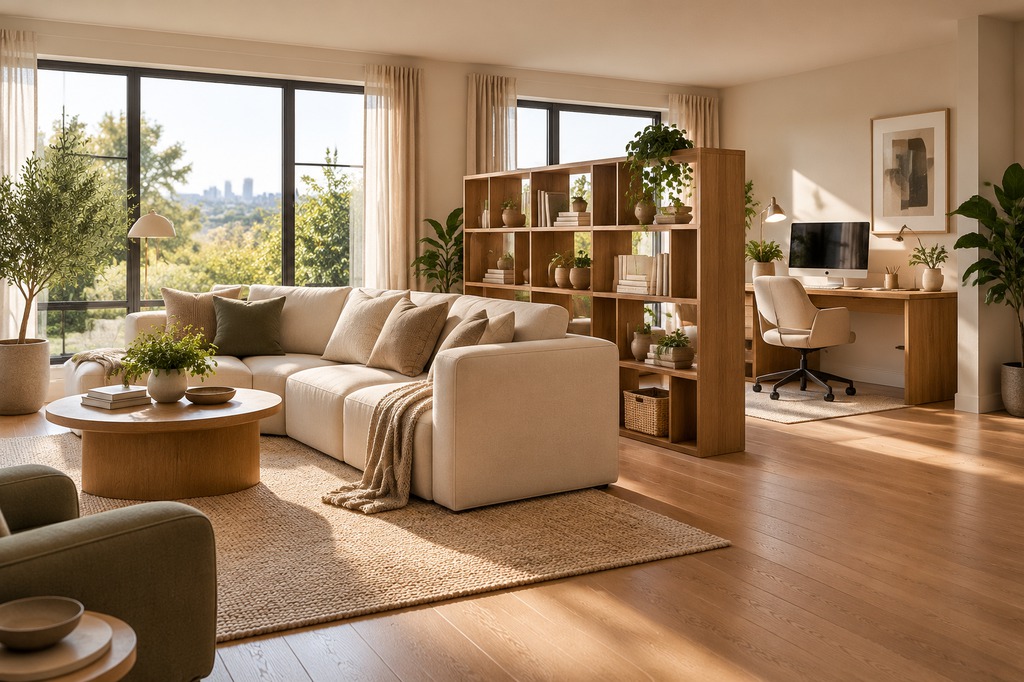
A divider can make an office feel separate without fully enclosing it. Open shelving, low storage, or a light screen works best when the goal is to hide the monitor and desktop from the sofa while still allowing light to move through the room.
Avoid solving a visual problem by creating a circulation problem. Existing living room divider ideas for an office workspace are most useful when the divider is selected according to privacy, daylight, storage, and walkway needs rather than appearance alone.
7. Workstation Along the Media Wall
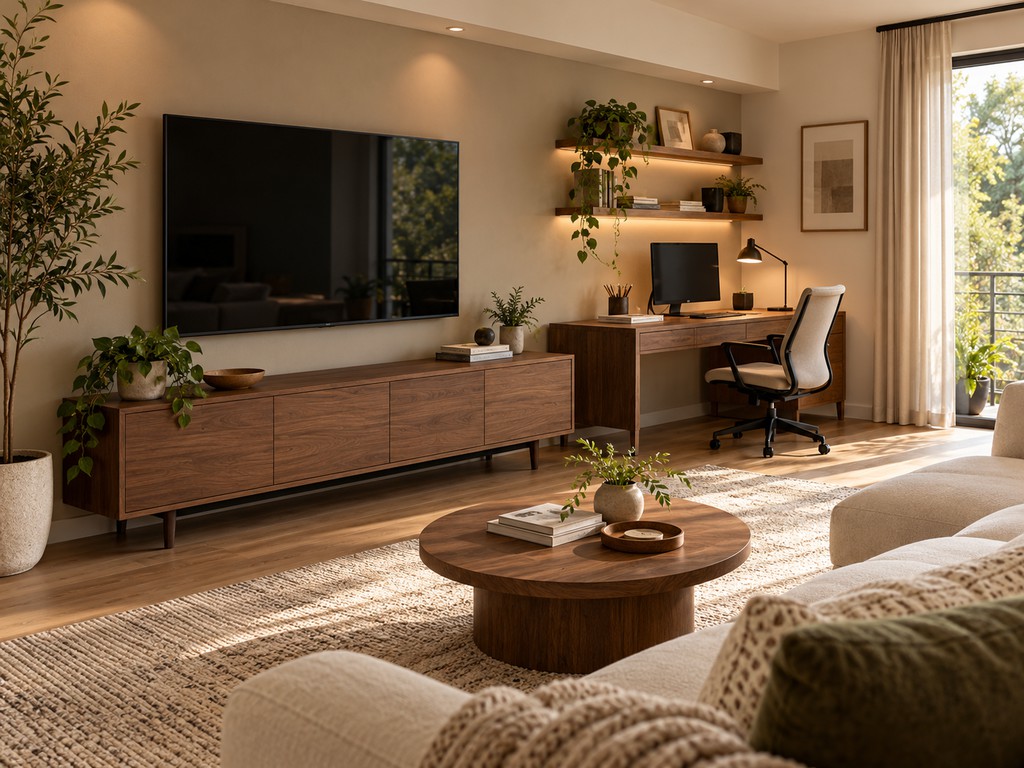
A long media wall can sometimes support both entertainment and work functions more cleanly than placing the office on the opposite side of the room. Positioning a desk beside the TV console keeps major technology and storage along one organized wall.
This approach is particularly useful when the alternative would create two competing focal points. Keep the desk visually distinct enough to function as a workstation, but repeat a wood tone, cabinet finish, or horizontal line so the wall reads as one planned composition.
How Much Space Does a Living Room Office Need?
There is no single minimum room size because a laptop workstation and a dual-monitor setup use very different amounts of space. The more useful rule is to measure the working footprint, not only the furniture footprint.
Before buying furniture, mark the active footprint of each major piece on the floor:
- Desk and chair: Mark the desk dimensions and the space needed to pull out the chair, sit down, and stand up.
- Sofa bed in seating mode: Measure the full sofa footprint and check whether it fits without narrowing the main walkway.
- Sofa bed in sleeping mode: Mark the fully extended sleeping area and check whether it overlaps the desk chair, TV access, or doorways.
- Shared circulation: Leave a clear route between the entrance, main seating, and other parts of the living room.
- Fixed access: Check windows, vents, outlets, drawers, and cabinet doors in both everyday and guest configurations.
Use painter’s tape to mark the desk, chair, and sofa bed on the floor before ordering. Test the room with the chair pulled back and the sofa bed fully extended rather than judging the fit from the furniture’s closed dimensions alone.
What Furniture Makes the Combo Work Better?
The layout determines where each zone goes, but the furniture itself determines how comfortably the room works day to day. Prioritize pieces that support the room’s main activities without taking up space needed for work, seating, or movement.
Sofa and seating: Start with how the living room will be used most often. If it also needs to accommodate overnight guests, consider whether convertible seating can meet that need without making everyday lounging less comfortable. If guests rarely stay overnight, a conventional sofa may be the simpler choice.
Desk or console: Match the work surface to the job. Occasional laptop use requires less depth than daily work with a monitor, keyboard, papers, and other equipment. A shallow surface can save space, but it should still provide enough room for comfortable, regular use.
Chair: A chair that remains visible all evening needs to work in both modes. Check whether it tucks under the desk, whether its arms clear the top, and whether its scale looks appropriate beside living-room seating.
Closed storage: Files, headphones, chargers, notebooks, and accessories are easier to manage when they have a designated place out of sight. In an open room, closed storage often reduces visual clutter more effectively than adding another open shelf.
If the office sits within a larger multifunctional space, the principles used to decorate an open-plan apartment with furniture also apply: give each zone a clear purpose while repeating enough materials or finishes to keep the room connected.
How Do You Make the Office Disappear After Work?
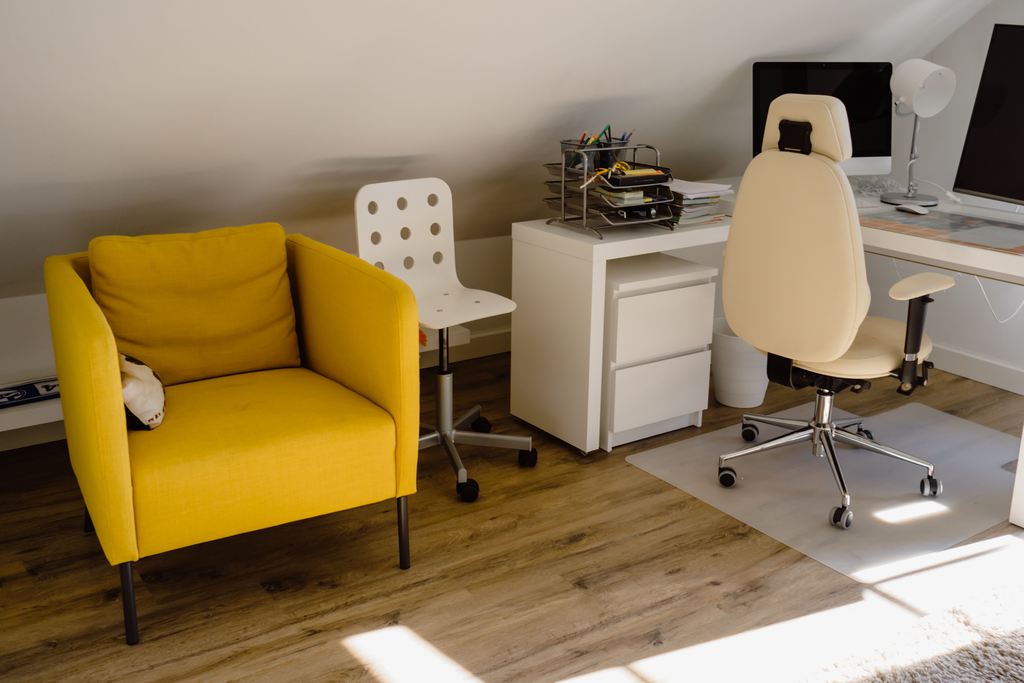
A well-planned living room and office setup should still read primarily as a living room when work is over. That does not mean every desk must physically disappear. Instead, remove the objects that communicate unfinished work.
Use a simple end-of-day reset:
- Put the laptop, paperwork, and small accessories into closed storage.
- Route chargers and power cables so they do not cross the floor.
- Clear temporary work supplies from the main desktop.
- Push the chair fully into its planned resting position.
- Switch from bright task lighting to the room’s normal evening lighting.
Consider a weekday evening in a small apartment: the laptop is closed at 6 p.m., but a monitor, charging brick, stack of papers, and rolling chair still dominate the corner beside the sofa. Adding decorative objects will not solve that conflict. Providing a specific storage location and a defined resting position for the chair will.
The objective is not to erase every sign of work. It is to keep temporary office clutter from becoming the permanent visual focus of the room.
Selene gives work-specific items a defined place without introducing office-style filing furniture into the living room. Five cabinet spaces and two drawers separate smaller supplies from larger equipment, while ten rear cable openings are useful when chargers or electronics need to remain connected but visually controlled between work sessions.
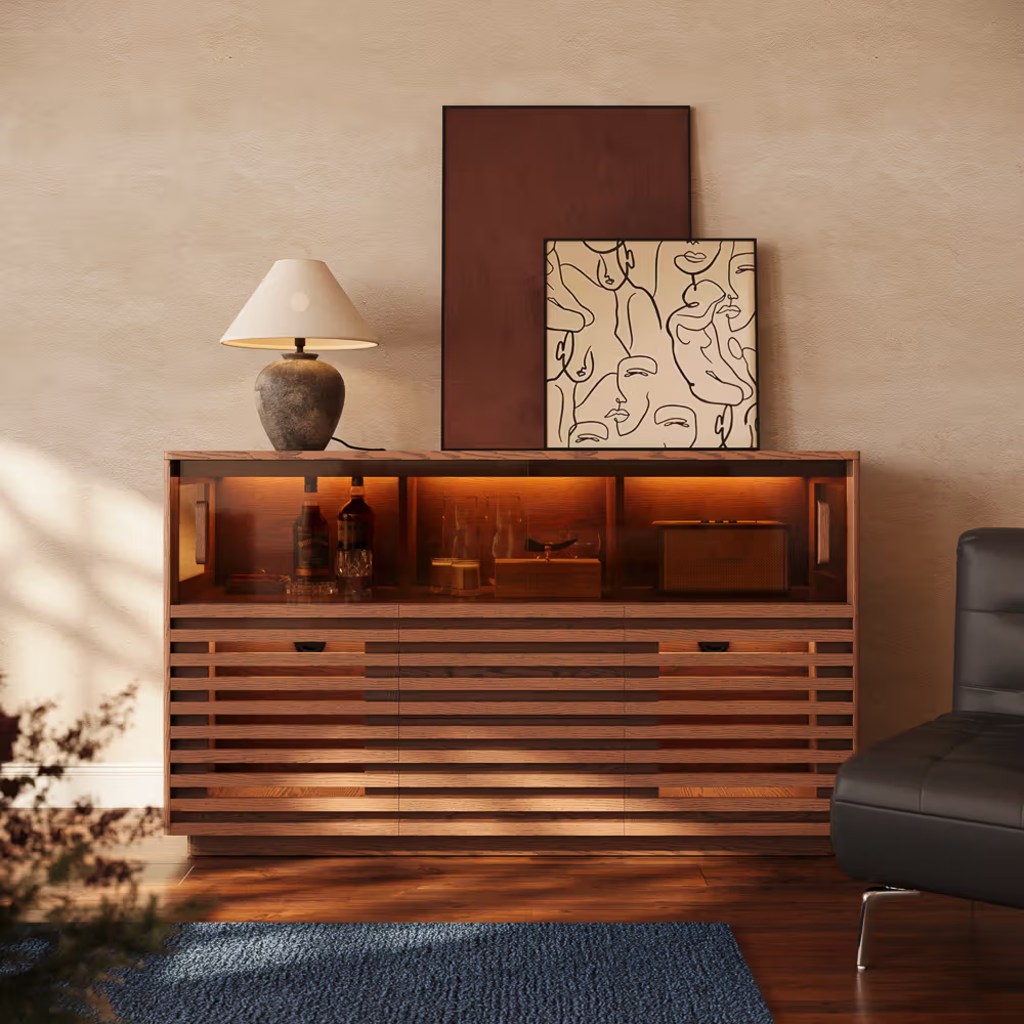
Selene LED Storage Cabinet
Closed storage helps office supplies disappear when the living room takes over.
👍 Best for: After-hours office clutter control
✨ Five enclosed cabinet spaces
✨ Ten rear cable openings
✨ Two dedicated storage drawers
Conclusion
The strongest living room office ideas start with layout rather than decoration. Choose the workstation position according to the sofa, windows, traffic paths, and how often the office is used, then measure the space while chairs and other furniture are in motion. A good shared room does not need to hide every sign of work, but it should protect comfortable seating and make office clutter easy to put away. Once the working footprint is clear, you can choose furniture that supports both sides of the room without forcing either one to compromise.
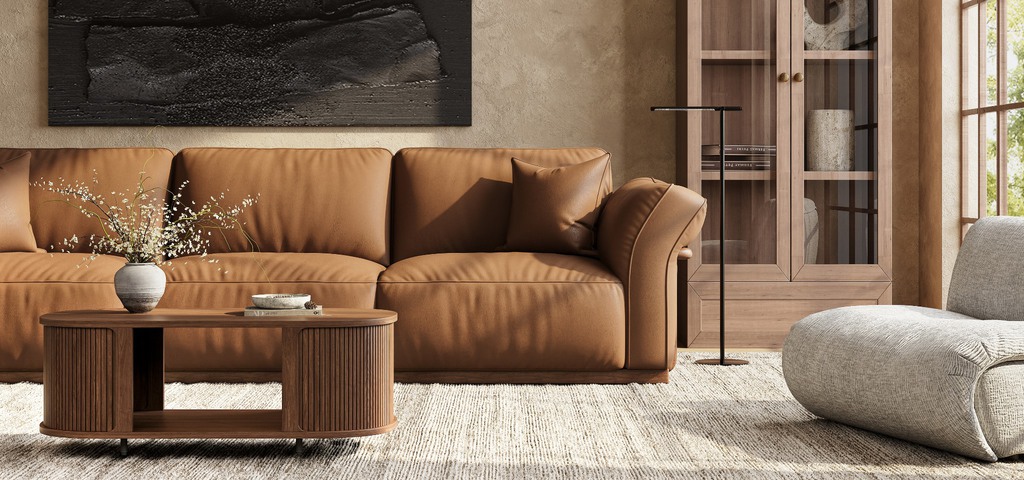
Find the Right Living Room Furniture
Explore designs for different room sizes, layouts, and everyday needs.
Q&A
How wide should a desk be for a living room office?
For basic laptop work, a compact desk may be enough, but width should follow your equipment rather than the room alone. Add space for a monitor, keyboard, notebook, and anything that must stay on the surface. Avoid choosing an unusually narrow desk if it forces frequently used items onto nearby living-room furniture.
Is open or closed storage better for a living room office?
Closed storage is usually better for paperwork, cables, chargers, and work supplies that would otherwise remain visible after hours. Open shelving works better for books and decorative objects used in both zones. If the office occupies a prominent wall, prioritize closed storage for work-specific items and use open shelves more selectively.
Can a living room office share outlets with the TV area?
It can, but check the number and location of outlets before finalizing the layout. Avoid running extension cords across walkways or behind moving furniture. If the desk and media setup share one wall, plan separate cable paths so office chargers, monitor cords, and entertainment equipment remain accessible without creating a tangled service area.
Is a rolling desk chair practical on a living room rug?
It depends on the rug. Thick or high-pile rugs can make casters harder to move and may create uneven resistance when pulling the chair back. For daily office use, test the chair on the actual rug or keep the rolling area on a firmer surface. A chair mat may help, but check whether it suits the room visually and physically.
Is a Sofa Bed Comfortable Enough for Guests Staying Several Nights?
That depends on the sleeping surface, support, and how often the bed will be used. Before buying, check the actual sleeping dimensions rather than the sofa’s overall width, and look for a sleep surface that suits the expected length of each stay. For frequent or extended visits, compare the sofa bed with a dedicated guest bed, considering both overnight comfort and the effort required to convert the furniture each day.
What Upholstery Is Practical for a Sofa Bed in a Living Room Office?
Because the sofa bed serves as everyday seating as well as an occasional guest bed, choose upholstery that suits the room’s daily wear and cleaning needs. For homes with pets, children, or frequent spills, look for durable fabric with clearly stated care instructions. Removable, washable covers can be useful when available, but check the manufacturer’s cleaning guidance before assuming the fabric can be machine-washed. Also consider how the upholstery’s texture and color will work with the rest of the living room.


[…] In a larger home, a spare bedroom or dedicated study is ideal; in smaller spaces, a bedroom corner, a quiet living-room wall or even a wide hallway can become a compact modern home office. Prioritise natural light that doesn’t cause harsh screen glare, then sound—stay away from TVs, […]
[…] The living room might be your office, a workout area, and a kids’ play zone—sometimes all before dinner. Gallup reports that 60% of remote-capable employees prefer hybrid work, and 52% expect to be hybrid long-term. (Gallup.com, 2022) That shift changes how we buy furniture: you’re no longer furnishing for weekends only—you’re furnishing for everyday use. […]
[…] Combine a Home Office With a Casual Lounge […]