 By Kelvin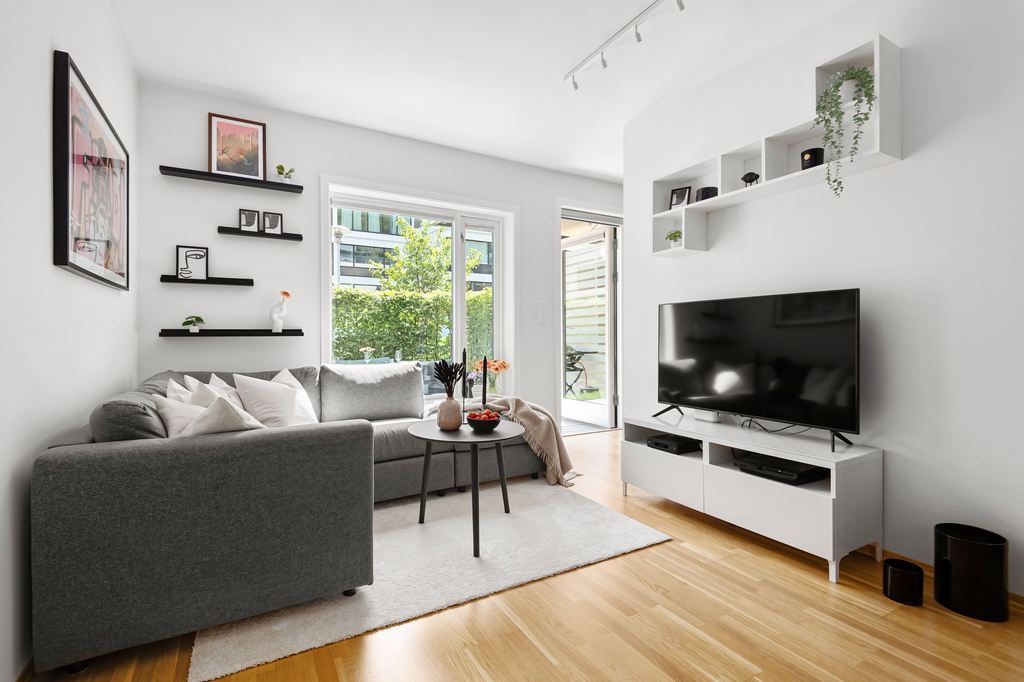
Introduction
White walls give a room light and flexibility, but they can also make new furniture look disconnected or unfinished. The right furniture for white walls does more than match a paint color: it gives the room a focal point, warmer materials, and enough contrast to feel lived in. Whether you are furnishing a rental living room, replacing one large piece, or starting with an empty new-build, use the choices below to decide what should anchor the space, what should support it, and what can stay light.
Table of Contents
What Furniture Works Best With White Walls?
The best furniture for white walls is not one fixed palette. It is a group of pieces that gives the eye three things: a focal point, a useful connection between zones, and material warmth.
Start with one substantial item that defines the room—a sofa, dining table, bed, or media console. Then add a table, storage piece, or chair that repeats part of its tone or material. Finally, bring in a tactile surface such as wood grain, woven upholstery, leather, stone, or matte metal.
A caramel leather chair can give a cream sofa a clear outline. A walnut coffee table can stop pale seating and white walls from blending together. In a dining room, a wood table may do most of the visual work while chairs and sideboards stay quieter.
Look for these three roles rather than a matching set:
- Anchor: the largest piece with the clearest visual weight.
- Connector: a coffee table, console, sideboard, or nightstand that repeats a finish or shape.
- Warmth layer: furniture with visible grain, texture, patina, or soft upholstery.

How Do You Add Contrast Without Making White Walls Feel Stark?
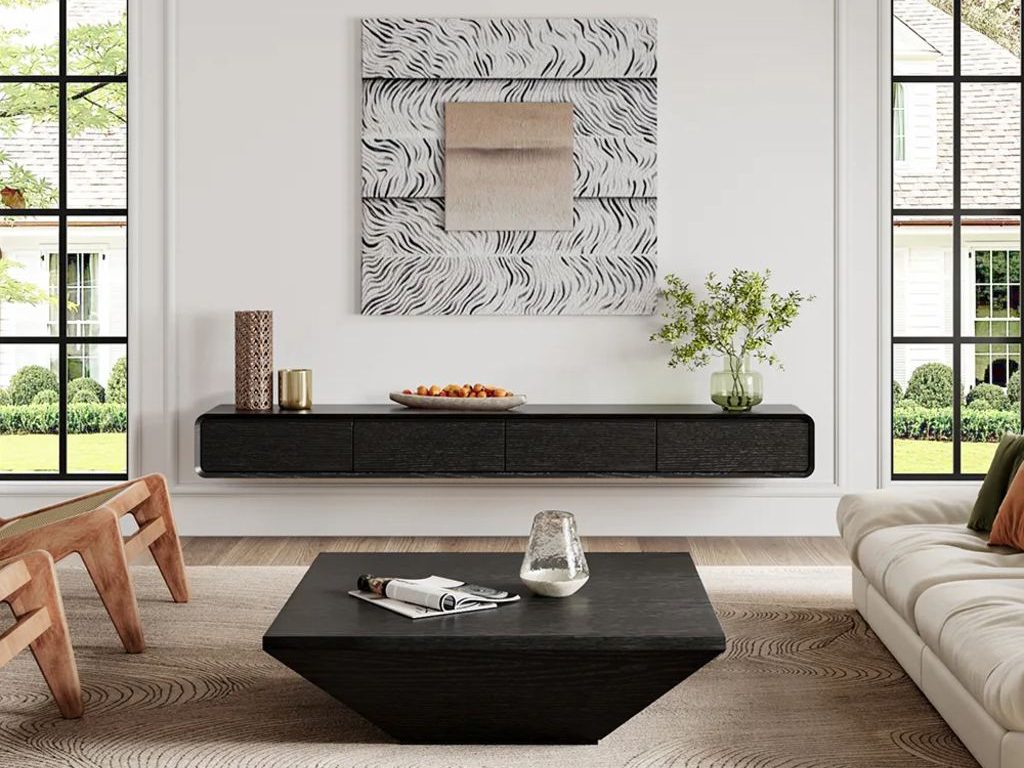
Contrast does not have to mean a black sofa against bright white paint. It can come from a deeper wood tone, nubby fabric, a rounded table beside a long media console, or warm brass against a cooler-looking wall. The goal is to create enough material and shape variation that the room does not read as one pale, flat field.
Use one or two of these contrast types as the main direction:
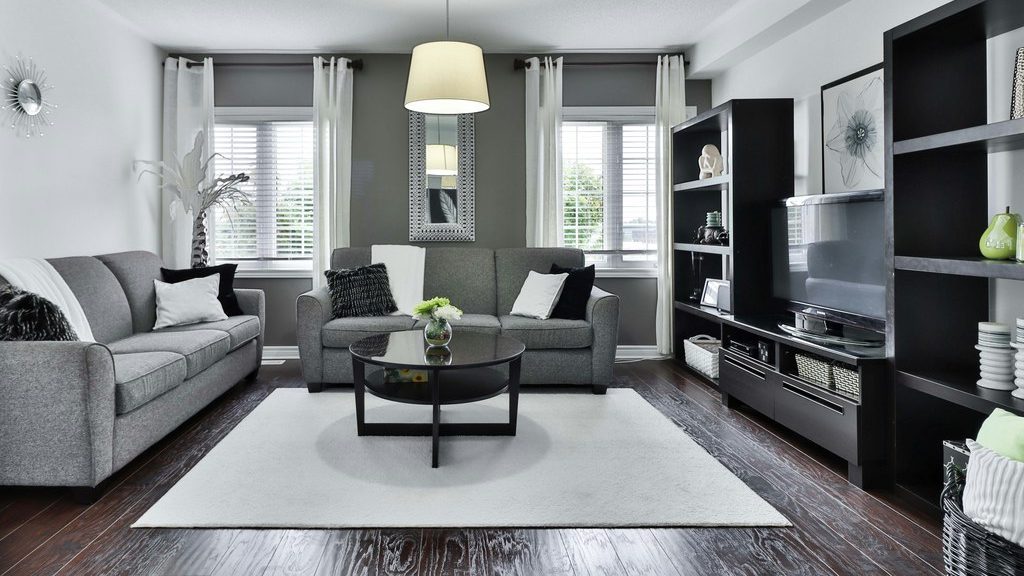
- Light and dark: A walnut table, dark brown leather chair, charcoal rug, or black media console creates a visual stop.
- Smooth and textured: Pair clean-lined seating with textured wood, cane-front storage, woven upholstery, or a stone surface.
- Straight and curved: Balance a rectangular TV stand with an oval coffee table, rounded chair, or soft-edged sofa.
- Low and tall: Add a floor lamp, taller sideboard, high-back chair, or bookcase so every major piece does not sit at the same height.
White-on-white can work when at least two elements differ in undertone, texture, finish, or outline. A warm ivory sofa with oak legs reads differently from a glossy white sofa sitting on pale flooring. When color is your main uncertainty, what color furniture goes with white walls helps compare dark, neutral, and wood-toned directions without treating the whole room like a color chart.
Which Furniture Mix Works With White Walls?
A good furniture mix gives you a repeatable route instead of a long list of colors to memorize. Choose the atmosphere you want first, then keep the largest furniture pieces within that direction. Small accessories can change later; your sofa, table, bed, and storage pieces are the decisions you will live with every day.
| Furniture mix | Choose this when | Main furniture direction | Keep it from falling flat |
| Warm natural | You want a relaxed organic, Japandi, or warm modern room | Cream or oatmeal seating, oak or walnut tables, woven or linen-textured pieces | Add one medium-to-dark wood item so pale pieces do not merge |
| Soft tonal | You prefer a quiet, airy room | Ivory, sand, taupe, light gray, pale wood, matte stone | Vary undertones and fabrics instead of buying every piece in the same off-white |
| Graphic contrast | You like modern or mid-century structure | A black or deep-brown anchor with cream upholstery and mid-tone wood | Limit the darkest finish to one or two major pieces |
| Color-led | You want more personality without changing the walls | A blue, olive, rust, or muted red sofa or chair with neutral supporting pieces | Repeat the accent color once in a smaller item, then stop |
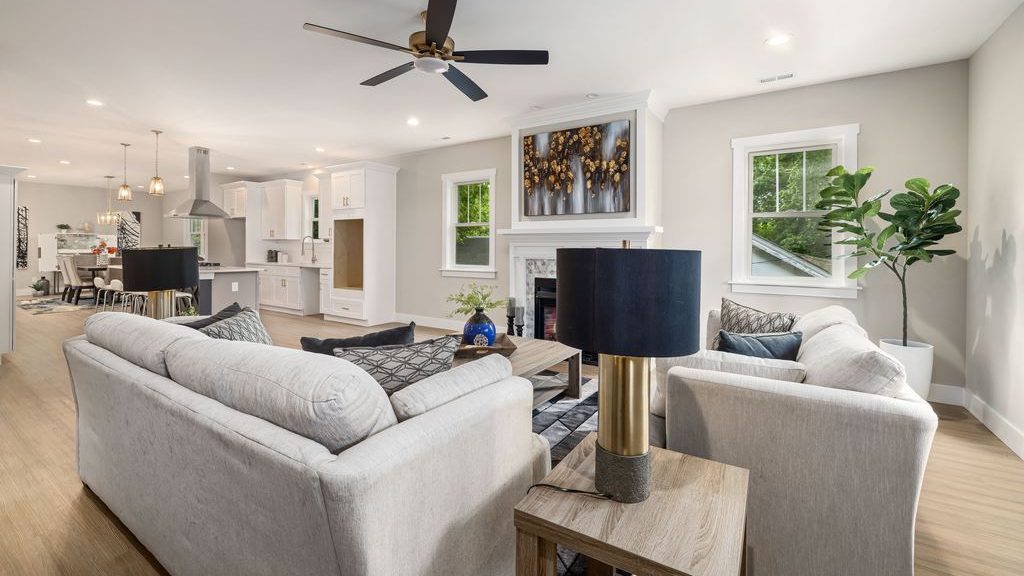
Warm natural is often an easy route for rentals and new builds because it softens white walls without committing the entire room to a trend. A cream sectional, pale flooring, and only light oak can still look unfinished, though. Pair light colored wood furniture with a walnut side table, dark lamp, or charcoal rug so the eye has a stable place to land.
What Should You Buy First in a White-Wall Room?
Buy in the order that settles daily use first and decoration second. The most useful first item differs by room, but the principle stays the same: choose the furniture people will use most often and that occupies the largest share of the visual field. Secondary furniture should distribute weight, add function, and support the main piece rather than compete with it.
Living Room
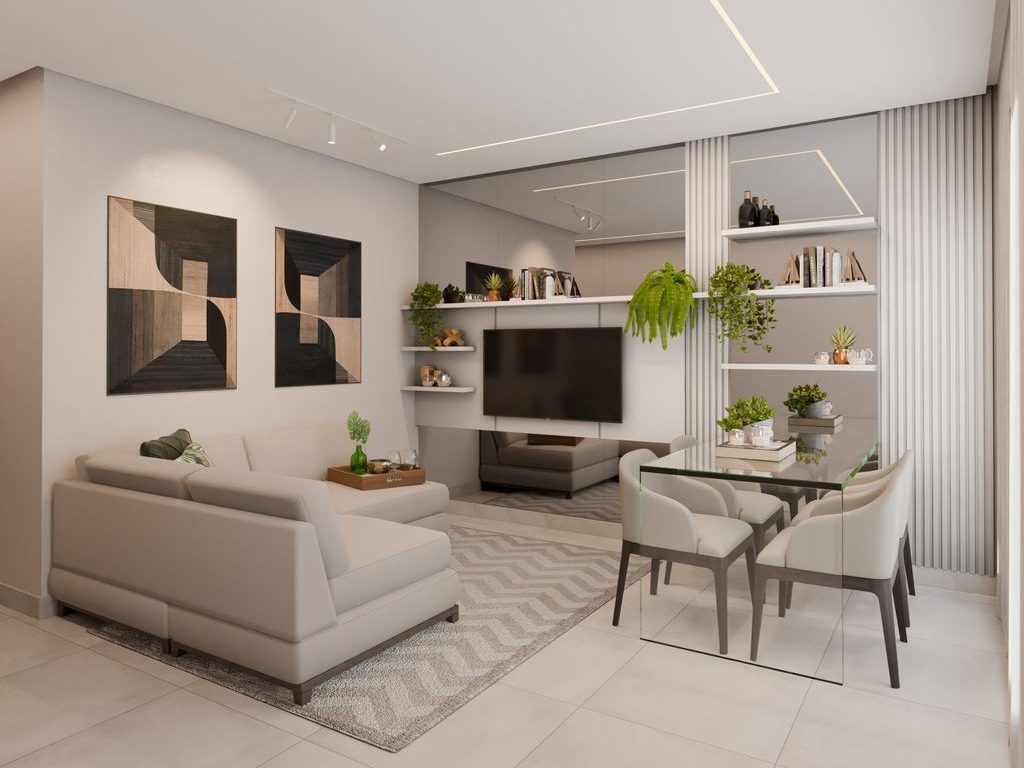
For living room furniture for white walls, start with the sofa or sectional. Decide whether it should blend into the room or become the dark, colored, or textured anchor. Next, choose a TV stand or media console that gives devices, remotes, and cables a settled home. Then choose a coffee table that repeats either the sofa’s softness or the console’s material.
On a Saturday evening, a cream sofa, walnut coffee table, and closed media console can still feel calm with a game on TV, snacks on the table, and chargers put away. If you prefer a stronger palette, black and white living room ideas can help balance a dark sofa or console against light walls.
Dining Room
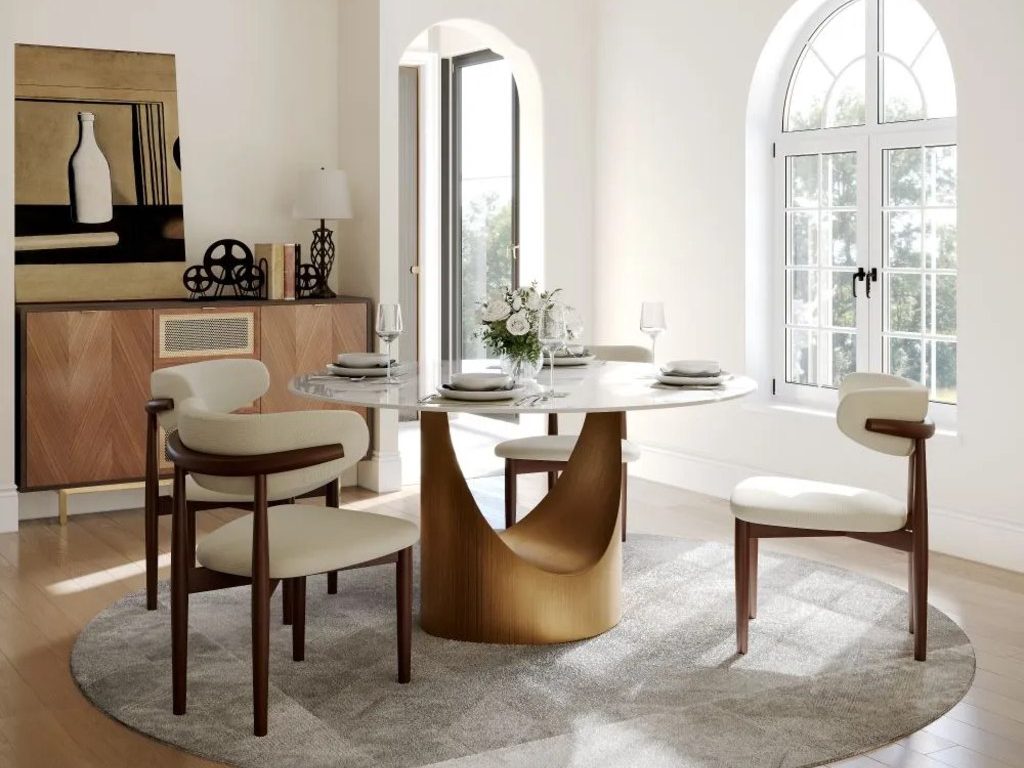
In a white-wall dining room, the table is usually the anchor. Pick its wood tone, stone surface, or dark finish before choosing chairs. A round wood table can soften a compact dining nook, while a rectangular walnut table gives an open room more structure.
Add a sideboard only when it solves a real storage or serving need. It should not exist only to fill a blank wall. A useful sideboard can hold table linens, serving dishes, or small appliances while adding a horizontal layer that makes the room feel more complete.
Bedroom
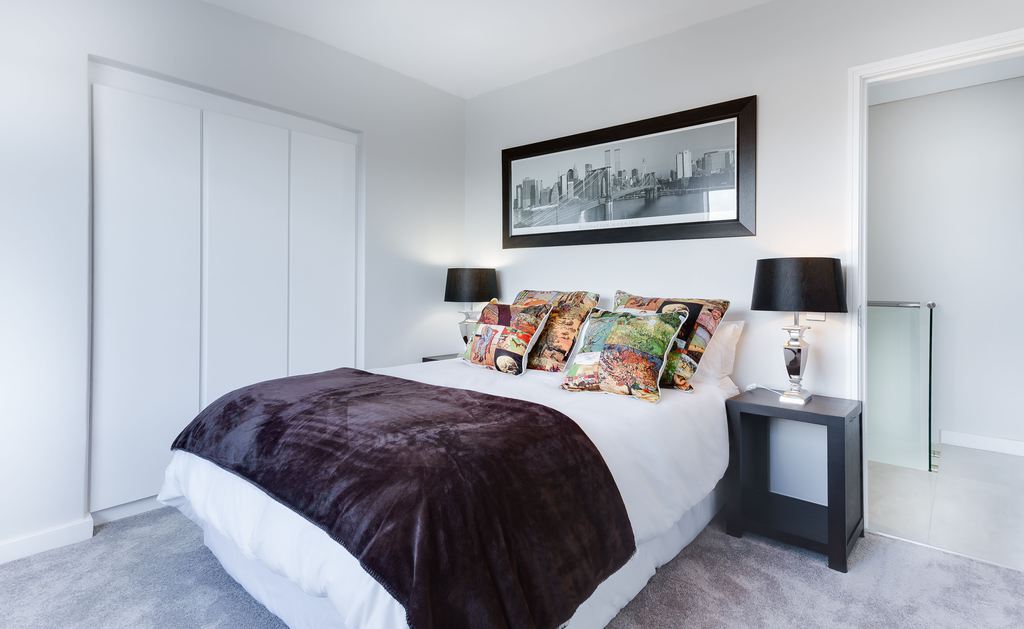
Start with the bed and headboard. Upholstered, wood, and leather headboards all add warmth in different ways, but the practical question is whether the bed will have a visible edge against the wall.
If the headboard is pale, use darker nightstands, textured bedding, a bench, or a rug to define the sleeping zone. Do not depend on a crowded gallery wall to do the job of a clear furniture anchor.
How Can You Check Visual Weight Before Buying?
Before ordering, stand at the room entrance and picture the largest items in place. You are not checking whether every piece matches. You are checking whether the room will have a clear focal point, useful surfaces near where people sit, and storage that keeps everyday clutter from becoming the most visible feature.
Use this quick check:
- Name the anchor. If you cannot point to the sofa, table, bed, or console that grounds the room, the plan may be too scattered.
- Check the pale stack. White walls, pale flooring, a white sofa, and a white rug can work, but add a darker or more textured piece before buying more light furniture.
- Spread the dark notes. Do not place a dark sofa, dark console, and dark rug all on one side while the other side stays visually blank.
- Look at the bases. Several bulky, closed furniture bases can crowd a small room. A mix of grounded storage and open-legged pieces usually feels easier to move around.
- Test the routine. Leave room for door swings, pulled-out dining chairs, an opened recliner, and the walkway from sofa to kitchen. A room that photographs well but blocks daily movement will not feel settled.
Conclusion
The most useful furniture for white walls gives the room a clear anchor, a few related materials, and enough contrast to avoid a blank or overly matched look. Begin with the piece that supports your everyday routine, then add storage and tables that repeat its tone, texture, or shape. White walls leave room for change, so you do not need to solve every decision at once. A thoughtful sofa, table, bed, or console can set the direction; rugs, lighting, and smaller decor can refine it over time.
Q&A
Are Washable Slipcovers Worth Considering in a White-Wall Room?
Yes, especially when you want pale seating but expect frequent use. Washable slipcovers make cream and ivory sofas easier to live with around pets, children, or regular guests. Before buying, confirm that the covers can be removed without disassembling the sofa and that the care instructions fit your normal laundry routine.
Is Performance Fabric or Leather Easier to Maintain in a Light Living Room?
Performance fabric is often the lower-stress option for a busy light living room because it is designed to handle common spills and everyday use. Leather can be easy to wipe clean, but it may show scratches or dye transfer. Choose based on who uses the room, how often, and what kind of messes are most likely.
How Can I Prevent Denim Transfer on White Upholstered Furniture?
Use washable throws or removable covers on the seats used most often, especially when dark denim is part of your regular routine. Address fresh transfer quickly using the manufacturer’s recommended cleaning method. Textured fabric and warm light neutrals usually make small marks less noticeable than smooth, bright-white upholstery.
Are White Dining Chairs Practical for Everyday Meals?
Yes, but the upholstery and construction matter more than the color. For frequent family meals, choose wipeable materials, removable cushions, or chairs with easy-clean surfaces rather than delicate boucle or loose-weave fabric. White dining chairs are less practical when spills are common and regular upkeep is already difficult to manage.
Should I Choose Removable or Fixed Seat Cushions for a Light Sofa?
Removable cushions are usually easier to rotate, air out, and clean around the edges, which can help pale sofas wear more evenly. Fixed cushions can look neater and avoid shifting, but they give you fewer options when a spill lands in one regular sitting spot. Consider how the sofa will be used day to day.
How Do I Keep White Furniture From Looking Dull Between Deep Cleanings?
Use a soft microfiber cloth for regular dusting, keep food and drinks on trays, and clean small marks promptly instead of waiting for a full-room reset. Avoid harsh cleaners that can alter fabric or finishes. For upholstered pieces, vacuum seams and cushions regularly so dust does not settle into the surface.


