 By Charles
My brother-in-law called me last March, mid-panic. He’d just unboxed a beautiful chaise sofa, slid it into place, and realized the chaise was on the wrong side — the TV now framed by an empty wall, the lounger facing a hallway. He lived with it for six months before paying to swap it out.
A couch with chaise is one of the most committal furniture decisions you’ll make. Unlike a regular sofa you can rotate seasonally, a chaise sofa locks in a layout the day it arrives. Get the side right and it becomes the lounge spot you actually use every night. Get it wrong and it’s a daily reminder of a $1,200 mistake. This guide walks you through what actually matters — direction, traffic flow, lounging habits, and how to measure before you click buy.
What Is a Couch With Chaise Best For
A couch with chaise is a sofa with one extended seat — usually 60 to 70 inches deep — that lets one person stretch out fully without taking the U-shaped footprint of a full sectional. Most designs run 90 to 102 inches wide overall, with the chaise side projecting forward into the room.
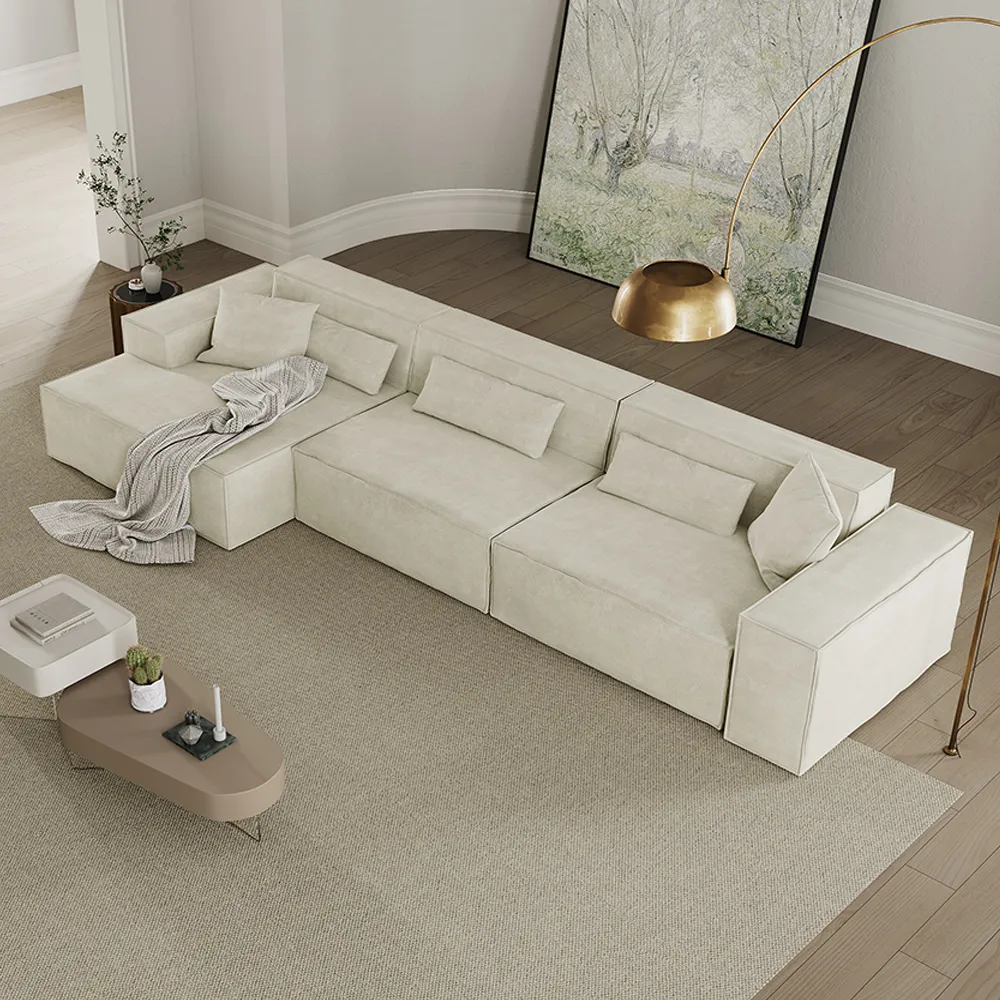
This shape works best when one person regularly does the lounging. If your evenings look like one adult horizontal, one adult upright, and a TV running, a chaise couch handles that better than a regular sofa with a separate ottoman. The seat blends into the back, you don’t push furniture around to lie down, and pets and kids can sprawl without launching pillows everywhere.
It’s not a great fit if multiple people compete for lying-down space, if you host large groups regularly (you’ll hit capacity at 3–4 seats), or if you rearrange your layout often. A chaise sofa is a fixed-layout decision. Be honest about that before you order.
Who Should Choose a Chaise Sofa
The right chaise candidate falls into one of two groups. If you don’t see yourself in either, a regular sofa with a separate ottoman is probably the smarter call.
Apartments and Condos
Small living rooms are where chaise sofas earn their keep — but only when the chaise replaces other furniture instead of adding to it. In a 10×12 ft room, a chaise couch tucked against a long wall replaces a sofa, an ottoman, and an accent chair in one move. That’s the math that makes it work: one piece, three jobs.
The trap most people fall into is treating the chaise like an extra. They put it in addition to a regular sofa setup. Now the chaise projects 60+ inches into a room that’s only 144 square feet, and the walkway drops below the 30–36 inch range designers consistently use for primary circulation paths. Suddenly you’re sidestepping a chaise every time you walk to the kitchen.
The rule I follow: if the chaise replaces things, buy it. If the chaise is in addition to things, you don’t have the room.
Family Living Rooms
The other strong fit is a family living room where the chaise becomes the kid-and-pet zone. Kids pile onto the chaise, the dog claims the end, and the rest of the seating stays for adults who want to sit upright. It works because the chaise is its own contained area — fur, crumbs, and chaos stay localized.
Two things matter more than usual for family use. First, fabric — performance polyester or scratch-resistant weaves are the only sane choice if you have pets or kids under 8. Second, materials. Sofas off-gas more than most people realize: the EPA notes that VOC concentrations indoors run consistently 2 to 5 times higher than outdoors, and new upholstered furniture is one of the bigger contributors during the first weeks. If the room is where your kids spend evenings, look for CARB Phase 2 compliant frames and low-VOC fabric finishes — POVISON’s sectional collection lists these specs on the product pages, which makes cross-checking faster than digging through PDFs.
For families, the chaise is less about lounging luxury and more about giving the chaos a designated home.
Left-Facing vs Right-Facing Chaise
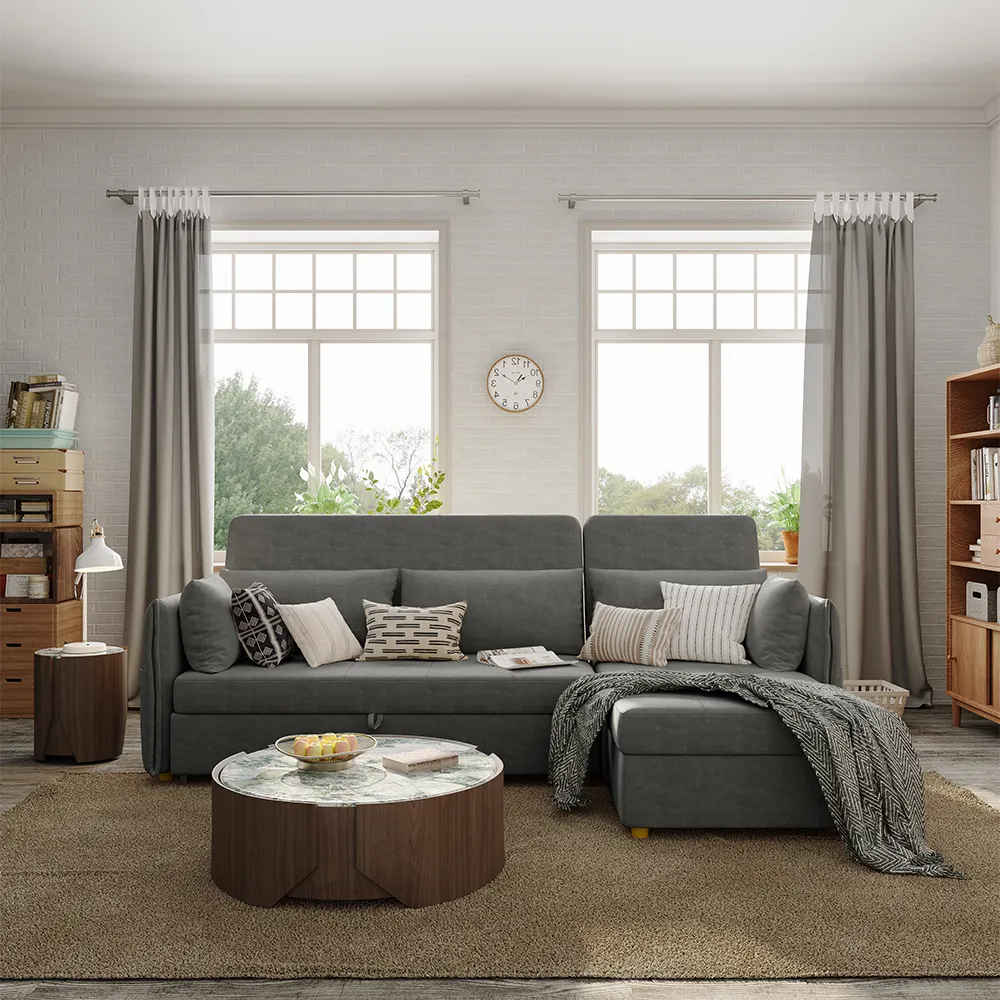
Here’s the part that trips up almost everyone, including my brother-in-law. The rule: stand in front of the sofa as if you’re about to sit down. If the chaise extends to your left, it’s left-facing (LAF — left-arm facing). If it extends to your right, it’s right-facing (RAF). That’s it. But product photos shot from above, floor-plan diagrams, and bird’s-eye renders all flip the perspective, which is how people order the wrong one.
The decision itself comes down to one question: where does traffic enter the room? The chaise should sit on the opposite side of your main walkway, not block it. If you walk into the living room from the left, you want a right-facing chaise — that keeps the entry path open and the chaise tucked away. Reverse it if you enter from the right.
Two secondary checks help. Look at where your TV is — the chaise should let you see the screen comfortably from a horizontal position. And check your fireplace, window, or whatever the room’s secondary focal point is — you don’t want the chaise back blocking it.
If you genuinely can’t decide, a reversible chaise is your hedge. Some modular designs let you flip the chaise from one side to the other after delivery. POVISON’s modular sectionals allow this on most configurations, which is what I’d lean toward if you’re a first-time apartment furnisher or you know you’ll be moving in 2–3 years. Live with the layout for six months, see which side you actually prefer, and lock it in once you’ve tested it in real use.
Couch With Chaise vs Sectional With Chaise
People use these terms interchangeably online and it causes real ordering confusion. The practical difference:
| Feature | Couch With Chaise | Sectional With Chaise |
| Total width | 90–102 inches typical | 110–130+ inches typical |
| Seating | 3 seats + chaise lounger | 4–6 seats + chaise |
| Room size needed | 12×14 ft and up | 14×16 ft and up |
| Footprint shape | One extension off a straight sofa | Full L-shape (sometimes U) |
| Best for | One main lounger, smaller spaces | Family pile-on, hosting groups |
| Reconfigurable? | Usually no (some reversible) | Often yes (if modular) |
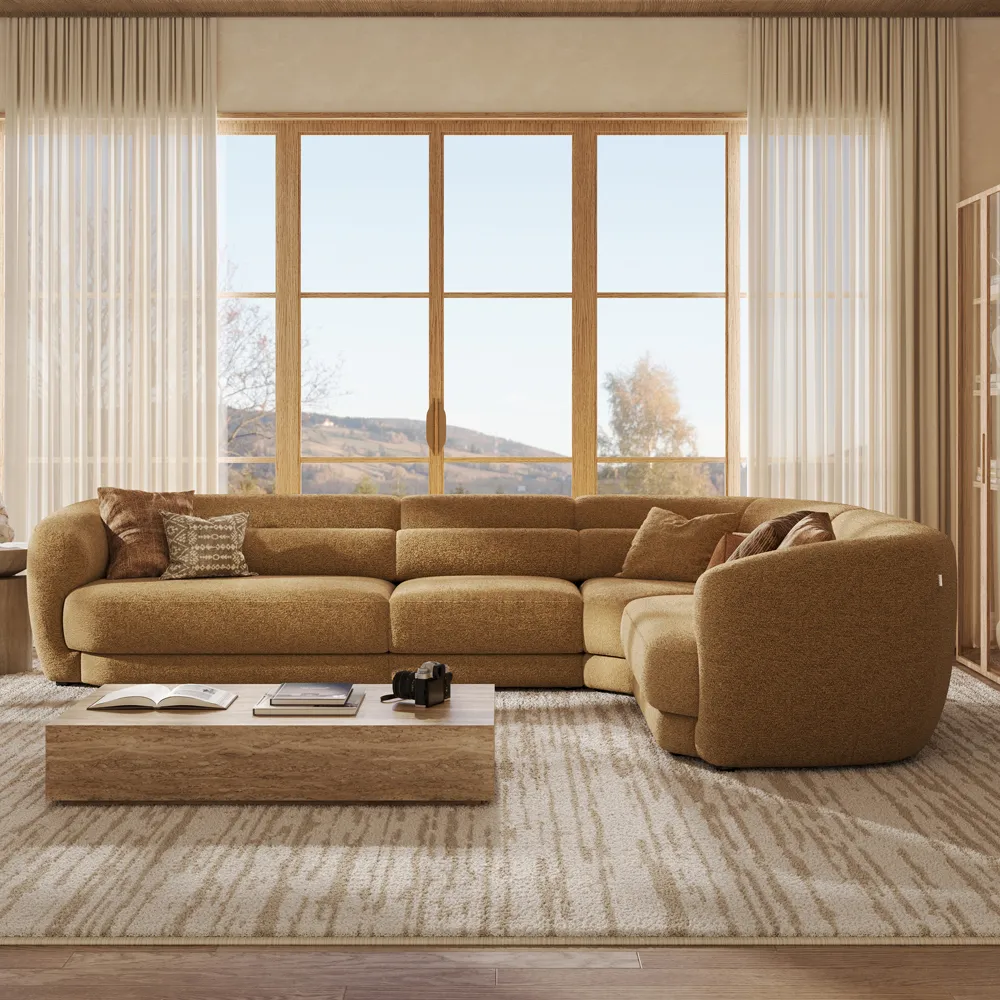
A couch with chaise is the lighter version. A sectional with chaise is the bigger commitment — more seats, bigger footprint, harder to move. If you’re between sizes, ask yourself whether you actually need the extra seats, or just like the look of the bigger piece. Most apartments don’t need a sectional. Most family rooms with regular guests do.
What to Measure Before Ordering Online
This is the section most shoppers skip and then regret. Before you click order, you need four numbers. Don’t wing it.
- Doorway clear width. Measure the actual opening, not the door slab. Standard interior doors in U.S. residential construction provide 32 inches of clear width per the International Residential Code — but what’s left after door stops, hinges, and trim usually comes out to 30–31 inches. If your sofa ships in one piece and exceeds this, you have a problem before it reaches the elevator.
- Hallway and turn clearance. Measure the narrowest hallway and any 90-degree turn between your front door and the living room. A 32-inch hallway with a 90-degree turn into another 32-inch space is dramatically harder than a straight 36-inch run.
- Room layout with painter’s tape. Tape out the actual footprint on your floor — width, depth, and the chaise extension. Walk the room. Can you reach the kitchen without sidestepping? Can you open the front closet? Does the chaise block a vent or heat register? Tape doesn’t lie. Photos do.
- Walkway clearance with the sofa in place. From the chaise edge to any wall, doorway, or other furniture, leave at least 36 inches of clear walkway on the high-traffic side. Below 30 inches and the room starts to feel like an obstacle course. While you’re spec-checking, also look at frame durability — well-built sectionals should meet BIFMA’s voluntary furniture performance standards for frame strength and weight capacity, which most reputable brands publish openly.
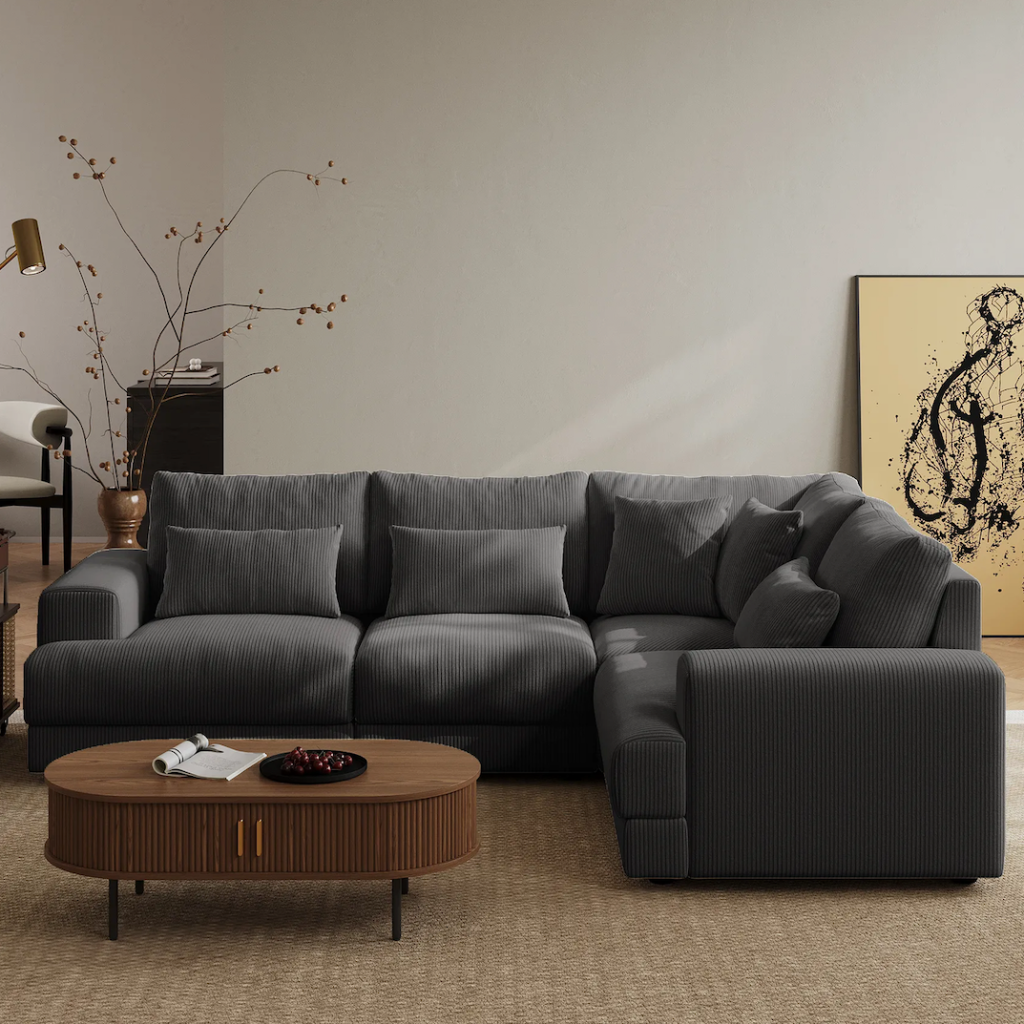
This is where the modular question matters more than people realize. A standard one-piece couch with chaise that fits beautifully in your current apartment may not fit through the door of your next one. POVISON’s modular sofa lineup ships as pre-assembled individual modules — corner, armless seat, chaise — that each fit through a 32-inch door on their own and connect inside. That’s a meaningful structural advantage if you live in a walk-up, an older building, or anywhere with tight stairs. Connectors snap inside the room. No flat-pack assembly, no Allen keys, no swearing at 9pm.
Before you order, confirm with the brand: does the chaise ship as one piece or modular? What’s the largest carton dimension? Does delivery include in-home placement or stop at the curb? POVISON’s white-glove delivery handles in-home placement on most large pieces — that’s the difference between “sofa arrives” and “sofa is sitting where it’s supposed to sit.”
FAQ
Is a couch with chaise good for a small living room?
Only if the chaise replaces other furniture instead of adding to it. In a 10×12 ft room, a chaise sofa tucked against the long wall can replace a regular sofa, an ottoman, and an accent chair — freeing up floor space overall. The trap is treating it as an addition: a chaise projecting 60+ inches into a 144 sq ft room drops walkways below the 30-inch comfort minimum. Replacing pieces, it’s a smart small-space play. As an extra, the room is too small for it.
Should the chaise go on the left or right side?
Opposite your main traffic path. Stand at your living room entrance facing where the sofa will go — if you enter from the left, choose a right-facing chaise (and vice versa). This keeps the walkway clear and tucks the chaise into a low-traffic corner. Then check that you can see the TV from a lying-down position and that the chaise back doesn’t block windows or a fireplace. Can’t decide? A reversible chaise lets you flip after delivery.
Is a chaise sofa better than a regular sofa?
A chaise sofa is better when one person regularly stretches out and you want lounging built into the seating. A regular sofa is better when you need flexibility, host groups frequently, or rearrange often. The chaise locks you into a fixed direction the day it arrives — its strength for committed lounge setups, its weakness for households that move furniture seasonally.
How do I know if a chaise couch will fit through my door?
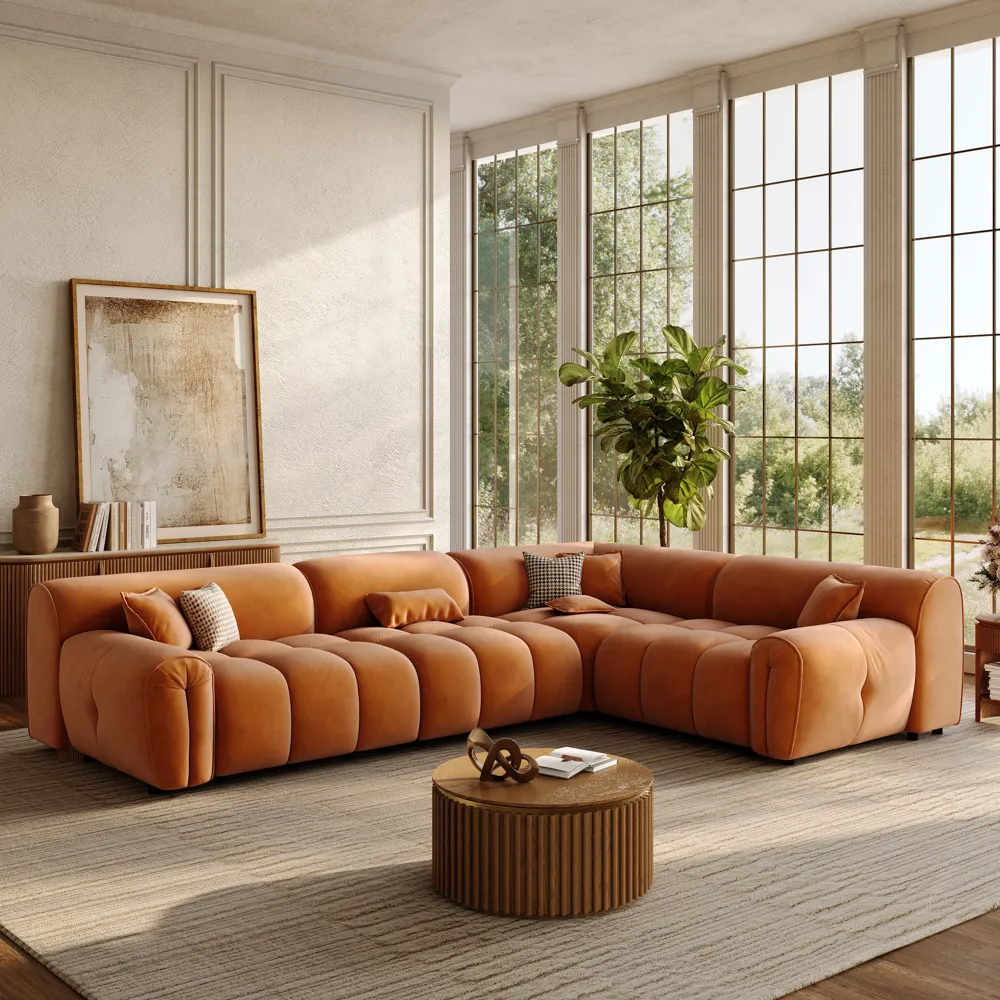
Measure the clear opening of every doorway between the truck and your living room — most U.S. interior doors provide about 30–31 inches of actual clearance after the door stop and hinges, even though the framed opening is 32 inches. Then measure the chaise sofa’s diagonal dimension (corner to corner of the longest shipping piece), not just its width. If the diagonal exceeds your narrowest doorway, you need a modular sofa that ships in separate pieces — POVISON’s modular configurations ship as pre-assembled modules sized to clear standard doorways.
Conclusion
A couch with chaise is a great piece of furniture for the right household — and a daily annoyance for the wrong one. Buy it if: you have one main lounger, your room is at least 12×14 ft, traffic flow stays clear with the chaise on one side, and you’ve taped out the layout on your floor before ordering. Skip it if: multiple people compete for lying-down space, you rearrange furniture seasonally, or your room is under 10×12 ft and the chaise would be an addition rather than a replacement.
The mistakes I see most often: choosing the wrong chaise side because the photo perspective tricked someone, ignoring the modular option in older buildings with narrow stairs, and underestimating how much the chaise extension cuts into walkway space. All three are avoidable in 20 minutes with painter’s tape and a measuring tape.
If you’ve measured, taped, and decided this is the right shape for your room, browse POVISON’s chaise and modular sectional configurations — most ship as pre-assembled modules with reversible chaise options, which gives you a hedge if you’re not 100% certain on the side. White-glove delivery places the piece where it goes; you don’t end up with a 200-pound box in your hallway.
Measure first. Tape second. Order third. In that order.
Related Reading:


