 By Charles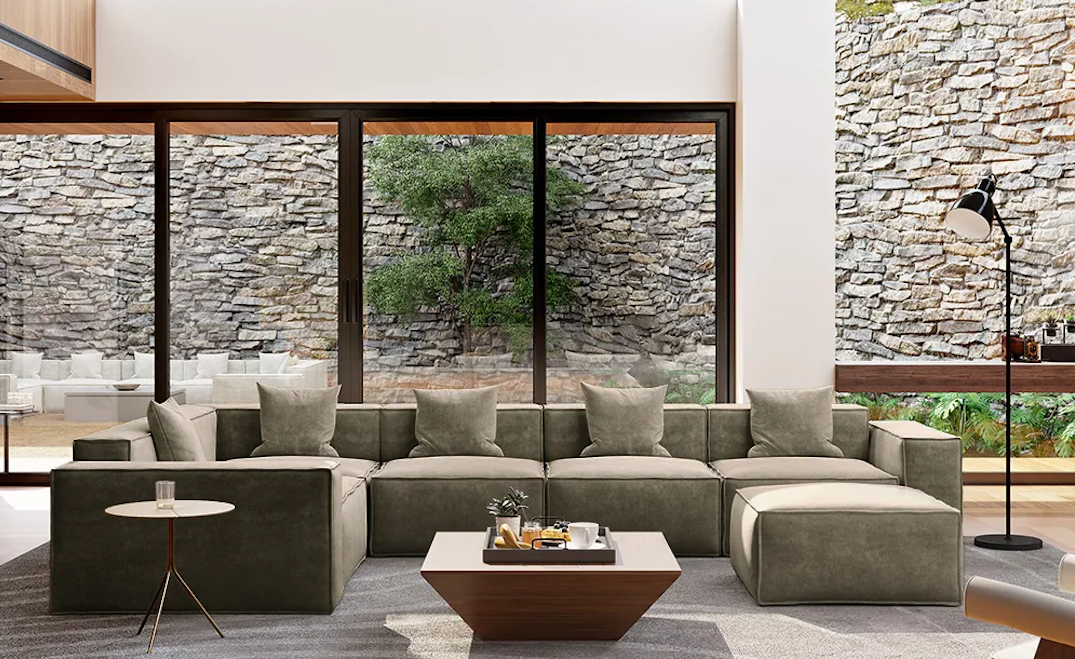
A friend of mine bought a U-shaped sectional last spring. Beautiful piece — deep cushions, wide chaise on each side, the works. Cost more than my first car. Then I helped her host a movie night six months in, and I realized something: in the entire time she’d owned it, four people had sat on it together exactly twice. The rest of the time, it was an enormous, expensive piece of furniture serving as a dog bed and a laundry-folding station.
That experience reframed how I think about U-shaped sectionals. The question isn’t “Is this sofa beautiful?” (most of them are). The question is: does your household actually use the space you’re paying for?
Because here’s the thing — a U-shaped sectional that fits the way you live is genuinely incredible. A U-shaped sectional that doesn’t is the most expensive room-blocker you’ll ever buy.
Let’s figure out which one you’re looking at.
What Makes a U-Shaped Sectional Different
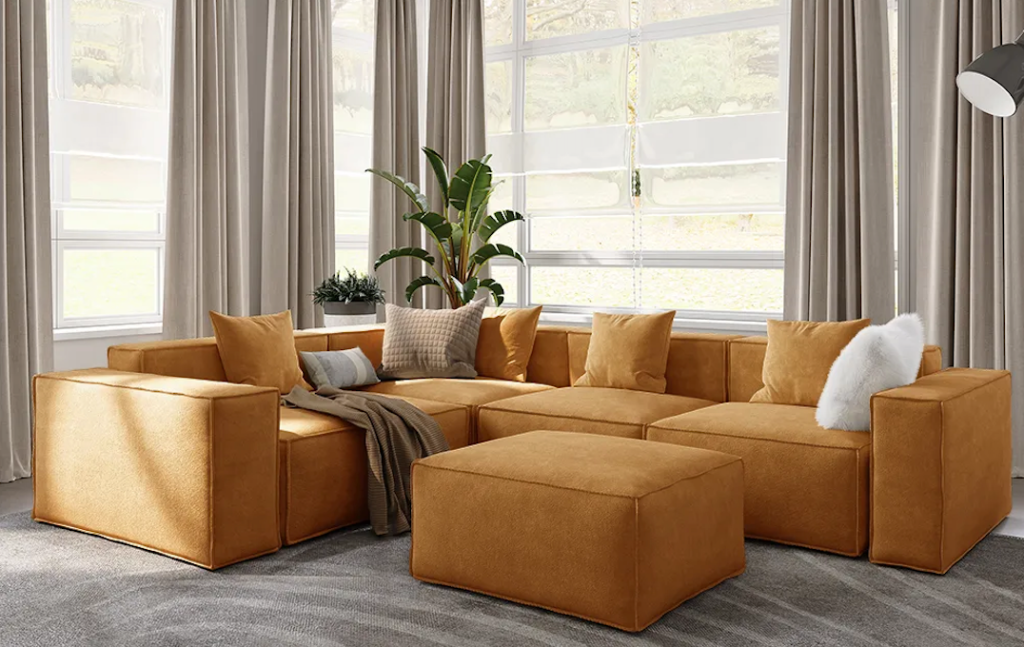
A U-shaped sectional is built around the idea of inward-facing seating on three sides. You get a long center sofa flanked by two chaise or return arms, creating a partial enclosure that pulls a group’s attention toward the middle of the room.
That layout solves a specific problem: getting six to eight people into a single conversation or shared experience. A standard sofa seats three. An L-shaped sectional seats four to five. A U-shaped sectional opens up the door to seven, eight, sometimes nine people sharing one piece of furniture without anyone perched on an ottoman or pulled in from the dining chairs.
The trade-off is volume. Most U-shaped sectionals run 108 to 144 inches across the back wall and 80 to 110 inches deep on each chaise return. Compare that to a standard 84-inch sofa, and you’re looking at a piece of furniture that occupies roughly two and a half to three times the footprint.
That footprint is also why these sectionals are almost always built modular. BIFMA recommends modular builds for any sectional over a certain weight class — partly for shipping, partly so the connectors can flex slightly under load instead of stressing the frame. In practice, this means most U-shaped sectionals arrive in 4–6 separate modules that connect on-site.
Best Rooms and Households for This Layout
A U-shaped sectional rewards two specific situations. If you’re not in one of them, you’re probably overbuying.
Large Family Living Rooms
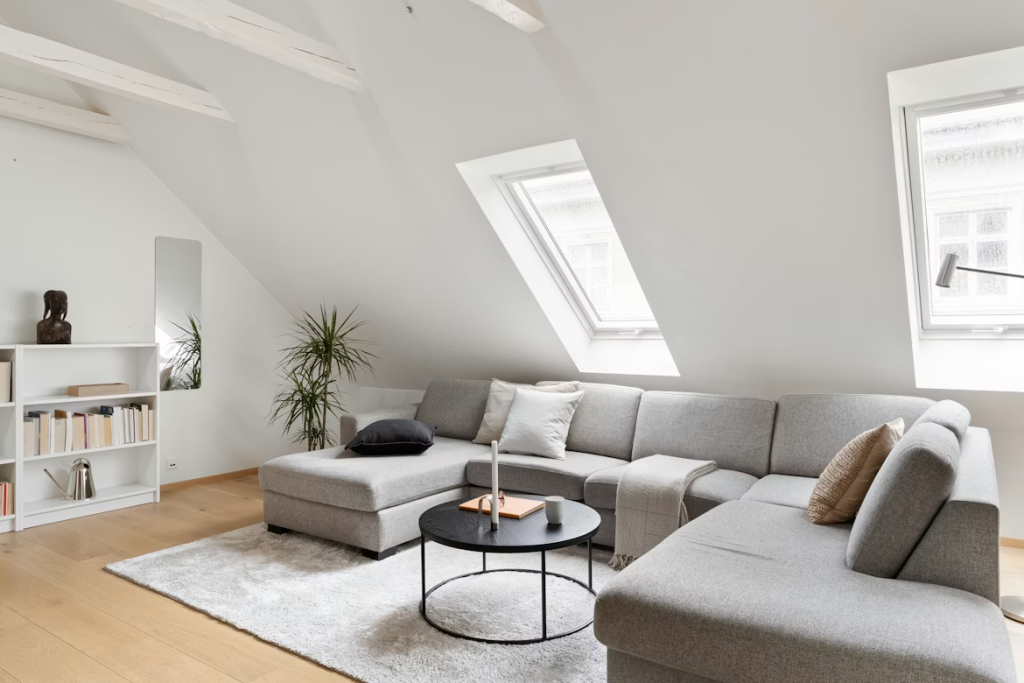
This is the original use case, and the one where U-shaped sectionals actually earn their footprint. Picture a household of four or five, plus regular extended family visits, plus the kids’ friends staying over on weekends. You’re hosting movie nights with eight people, holiday afternoons with grandparents and nieces sprawled across the cushions, lazy Saturdays where three different people are reading, watching, and napping on the same piece of furniture.
In that household, the sectional is the most-used room in the house. It’s not decorative. It’s not aspirational. It’s getting cushion-deep daily use.
I’d recommend a minimum room footprint of about 15 ft × 18 ft (roughly 270 sq ft) before considering U-shaped. Below that, you’ll lose the walking paths that make a living room feel livable.
Open-Plan Homes
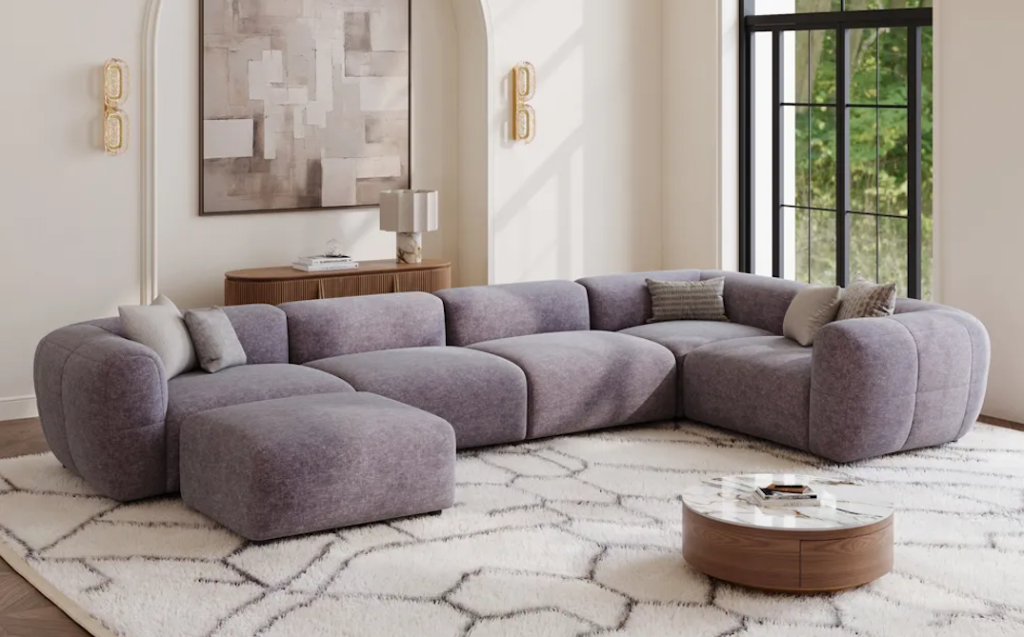
The second strong fit is open-plan layouts where the living area shares space with the kitchen and dining. In open-plan homes, traditional sofa-against-the-wall arrangements feel disconnected from the rest of the activity. A U-shaped sectional defines a “living zone” without needing a wall — the chaise returns act like soft architecture, signaling where the room ends.
According to the AIA’s home design trends research, open-plan layouts now make up the majority of new construction, which is part of why U-shaped sectionals have surged in popularity over the past few years. They solve a real architectural problem: how do you make a space feel grounded when there’s no wall to anchor against?
If your living area flows directly into a kitchen or dining space and you’ve never quite figured out how to make the seating feel like a “room,” a U-shaped sectional is genuinely worth considering.
If you’re at the early stage of comparing sectional shapes and configurations, POVISON’s sofa collection lets you filter by overall footprint and module count — which is more useful than browsing by photo, especially for sectionals where dimensions matter as much as design.
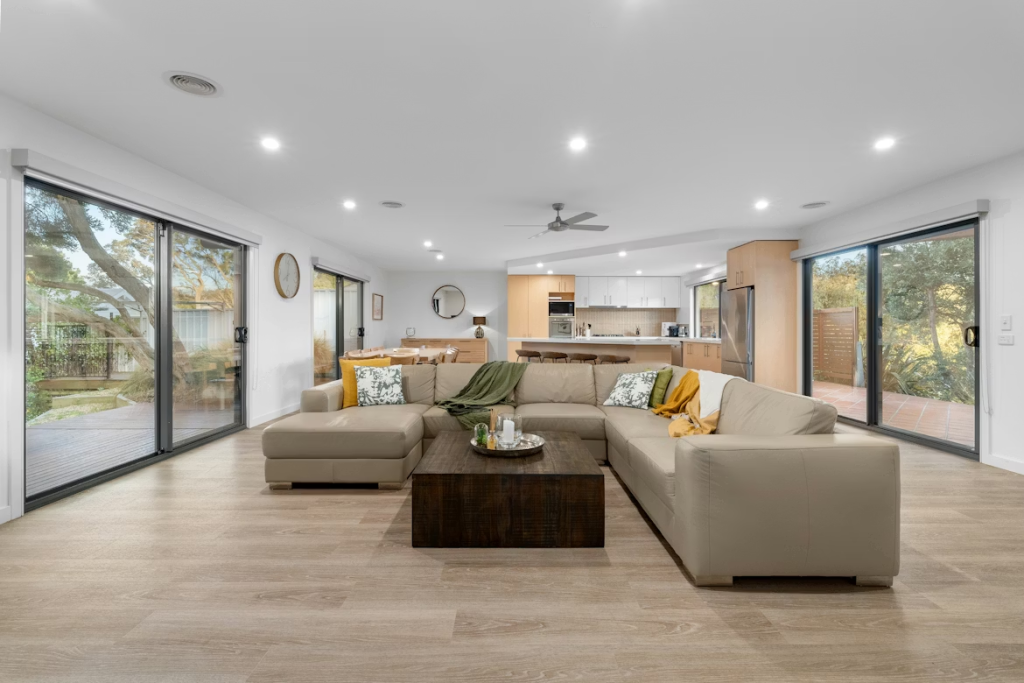
When It Feels Spacious and When It Feels Overbuilt
Here’s the honest version. Same sectional, two different rooms — one feels like a Pinterest dream, the other feels like you walked into a furniture showroom that ran out of space.
It feels spacious when:
- You have at least 30–36 inches of walking clearance on the open side of the U (the entry path)
- The coffee table sits 14–18 inches from the front of the cushions on all three inward-facing sides
- There’s visual breathing room between the back of the sectional and the wall behind it (even 4–6 inches helps)
- The room has natural light from at least two directions, so the dark mass of the sectional doesn’t dominate
It feels overbuilt when:
- The chaise returns push within 24 inches of opposing walls or other furniture
- You can’t walk a full circle around any side without turning sideways
- The TV is positioned so that one of the chaise sides has a worse viewing angle than a dining chair would
- More than two-thirds of the floor area is occupied by furniture
The fix for “overbuilt” is almost never “rearrange the sectional.” The fix is “buy a smaller sofa.” This is the conversation I’ve had with three different friends now, and the answer is always the same: if your room is borderline, you’ll regret a U-shape within a year.
The painter’s tape test: Before ordering, lay out the actual footprint on your floor with painter’s tape. Measure your widest module width, sit on the floor inside the outline, and look around. If the room already feels tight when there’s nothing there but tape, the actual sofa will feel suffocating.
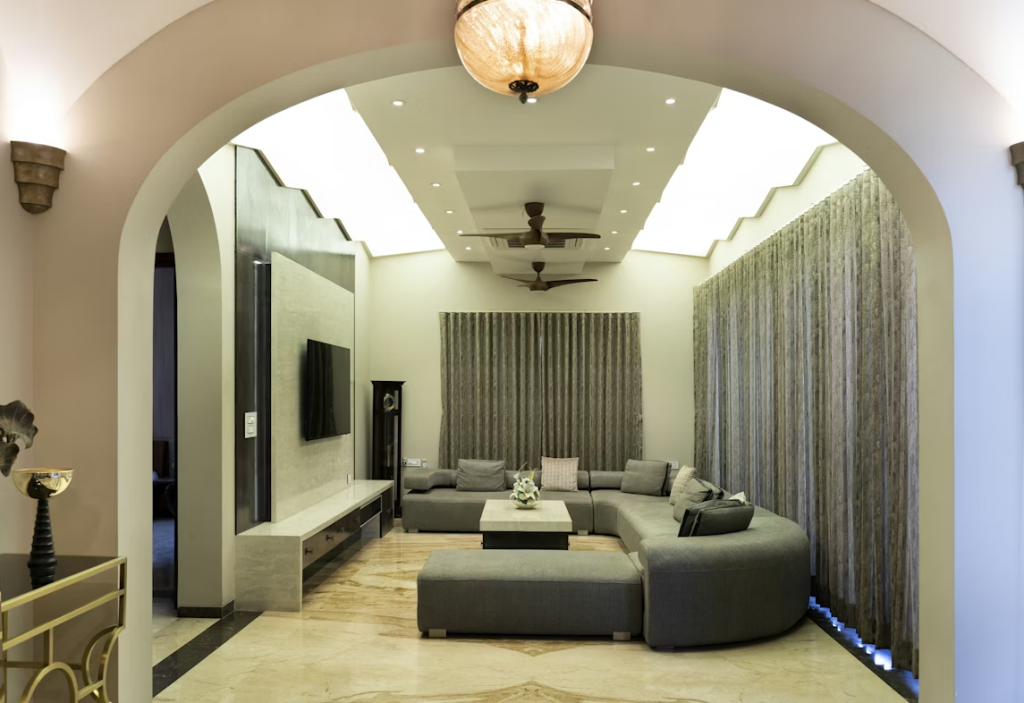
What Buyers Should Measure Before Ordering
This is where most online sectional purchases go sideways. The sofa fits the room — but it never makes it into the room. I’ve seen this happen twice in my own family. Both times the sectional ended up living in a garage for three weeks while we sorted out returns.
Measure these before you click “buy”:
The room itself:
- Length × width of the open floor space (not wall-to-wall — subtract any built-ins or radiators)
- Distance from where the sofa back will sit to the TV: aim for 1.5 to 2.5 times the screen size (so a 65″ TV wants the seating about 8–13 feet back). Dimensions publishes detailed seating-distance and circulation standards that align with these recommendations.
- Walking clearance on all open sides — minimum 30 inches, ideally 36 inches for high-traffic paths
The delivery path (this is the one people skip):
- Front door width and height
- Any 90-degree turns inside the entry hall
- Stairwell width and ceiling height if your living room isn’t on the ground floor
- Elevator interior dimensions and door clear opening, if applicable
The largest single module: This is the dimension that determines whether the sofa physically fits through your home, not the assembled total. Most U-shaped sectionals break down into modules in the 35–45 inch wide range, but check the spec sheet, not the marketing copy.
If any single dimension is tighter than 36 inches, ask the manufacturer specifically what their largest single module measures — packaged and unpackaged. Don’t accept “should fit fine” as an answer.
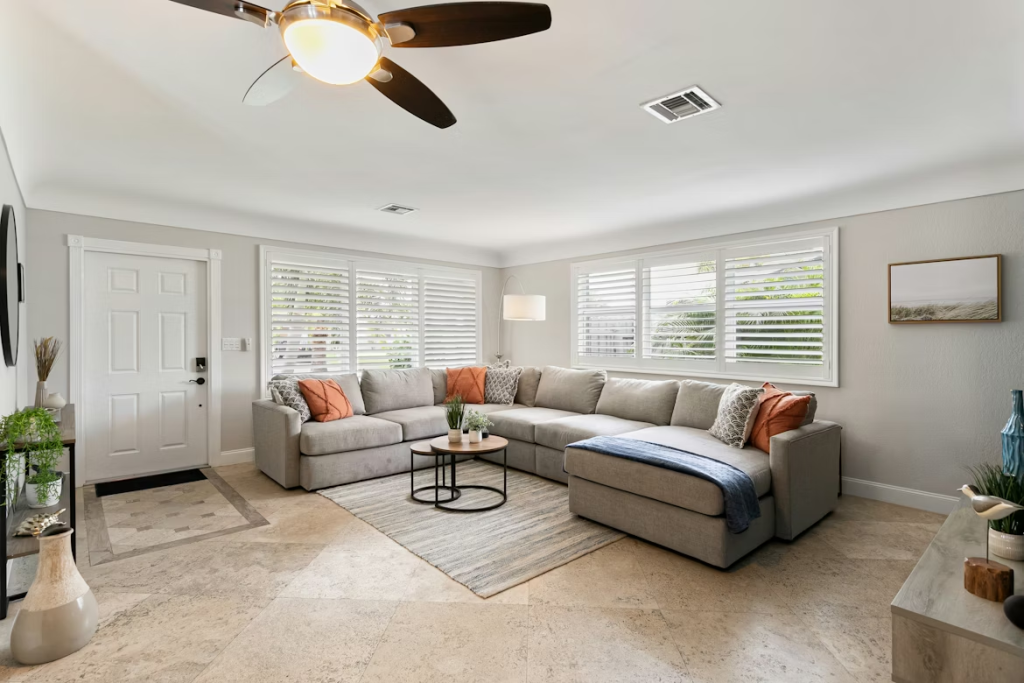
Trade-Offs to Know Before Buying Online
A few things buyers don’t always realize until the truck shows up:
The piece is heavy. A full U-shaped sectional often weighs 250–400 pounds total across all modules. Individual modules typically run 40–80 pounds each. You will not move this alone, even partially. Plan for at least two people on delivery day, or budget for white-glove placement service.
Modular ≠ flat-pack. This is where I think some buyers get confused. A modular sectional arrives in pre-assembled modules — meaning each section is fully built — that connect on-site with brackets or clips. This is very different from a flat-pack sectional that arrives in pieces requiring assembly with tools. POVISON ships sectionals as fully assembled modules, which is the difference between 15 minutes of clicking modules into place versus three hours of construction with someone holding cushions while someone else hunts for an Allen key.
Cushion firmness matters more on a U-shape than a sofa. On a standard sofa, you only sit in one orientation. On a U-shaped sectional, you sit, lie sideways, sprawl on the chaise, and sometimes lounge across the corner. If the cushions are too soft, the corner becomes a sinkhole. If they’re too firm, the chaise returns feel like benches. Aim for medium-firm with a 1.8–2.2 lb density foam.
Reconfigurability is mostly a myth. Marketing copy often claims you can “rearrange” a U-shaped sectional into other shapes. Technically true — practically, most people set it up once and never move it again. The connectors loosen with repeated reconfiguration, and the cushion alignments are designed for one specific layout. Buy the shape you actually want.
For a more detailed breakdown of how sectional configurations differ in practice, POVISON’s living room collection groups sectionals by configuration type with clear module counts and total dimensions on every product page.
FAQ
Is a U-shaped sectional too big for most living rooms?
A U-shaped sectional is too big for most standard living rooms — typically those under about 15 ft × 18 ft (270 sq ft). Below that threshold, the sectional crowds out walking paths and overwhelms the room’s other furniture. U-shapes work best in dedicated family rooms or open-plan living areas where the sectional can breathe on at least two sides. If your space is borderline, an L-shaped sectional usually delivers most of the seating capacity at roughly two-thirds the footprint.
How much space do I need for a U-shaped sectional?
You need a minimum living area of about 15 ft × 18 ft to comfortably fit a standard U-shaped sectional, with at least 30–36 inches of walking clearance on the open side and 14–18 inches between the cushions and the coffee table on all three inward-facing sides. The sectional itself typically occupies a footprint of roughly 9–12 ft along the back and 7–9 ft on each chaise return. Always do a painter’s tape outline of the actual dimensions before ordering — most online photos make rooms look larger than they are.
Is a U-shaped sofa good for large families?
A U-shaped sofa is well-suited to large families and households that regularly gather six to eight people in the same room — especially for movie nights, holiday hosting, or multi-generational living. The inward-facing layout creates a single shared seating zone where everyone can see each other and the screen, which traditional sofa arrangements struggle to deliver. For households of two or three who rarely host, a smaller L-shaped sectional or pair of sofas typically delivers better daily comfort at less than half the footprint.
What should I measure before ordering one online?
Before ordering a U-shaped sectional online, measure four things: (1) your living area’s open floor space, accounting for walking clearance on all sides; (2) the distance from the sofa to the TV (1.5–2.5x the screen size); (3) every dimension of your delivery path — front door, hallway turns, stairwells, and elevators if applicable; (4) the manufacturer’s largest single module dimensions, both packaged and unpackaged. The delivery path is where most online purchases fail — the sofa fits the room but won’t fit through the door.
Conclusion
A U-shaped sectional is the right call when you have the room, the household, and the use case to back it up. Big family room. Frequent gatherings. Movie nights with seven people. Open-plan space that needs definition. In those situations, this is genuinely the best seating layout you can buy.
It’s the wrong call when you’re buying it for the look. A U-shape doesn’t make a small living room feel grand — it makes it feel cramped. It doesn’t make a household of two feel cozy — it makes the empty cushions feel hollow. Big furniture isn’t more sophisticated furniture. It’s just bigger.
Tape it out before you order. Measure your delivery path twice. And be honest with yourself about whether you’ll actually use seven seats — or whether four would do the job, with more room left over for the rest of your life.
Related Reading:


