 By Charles
Last spring, I stood in my living room at 10pm with a tape measure, three browser tabs open, and the slow-dawning suspicion that I was about to spend $1,400 on the wrong piece of furniture.
Sound familiar?
A sectional couch is the biggest visual commitment you make in a living room. Get the configuration wrong and the whole space feels like a furniture showroom — minus the professional lighting and the salesperson who actually knows what a “chaise return” is. Get it right, and suddenly your room works: conversations flow, movie nights actually make sense, and you stop rearranging the accent chairs every three weeks trying to compensate.
I’ve navigated this decision twice now. This is the guide I wish I’d had both times — honest, practical, zero fluff.
Quick Reference Before You Buy
A sectional makes sense if: Your room is 12×14 ft or larger; you have a family, pets, or regularly host people; you want one anchor piece instead of sofa-plus-loveseat-plus-extra-chair chaos.
Think twice if: Your room is under 10×12 ft; you move frequently; your hallways or doorways can’t accommodate a large piece (minimum 30–32″ clearance to angle most sections through).
Nail these numbers first: Room dimensions, doorway width, layout direction (left vs. right-facing), delivery method, and return policy for oversized items.
What Is a Sectional Couch Best For?
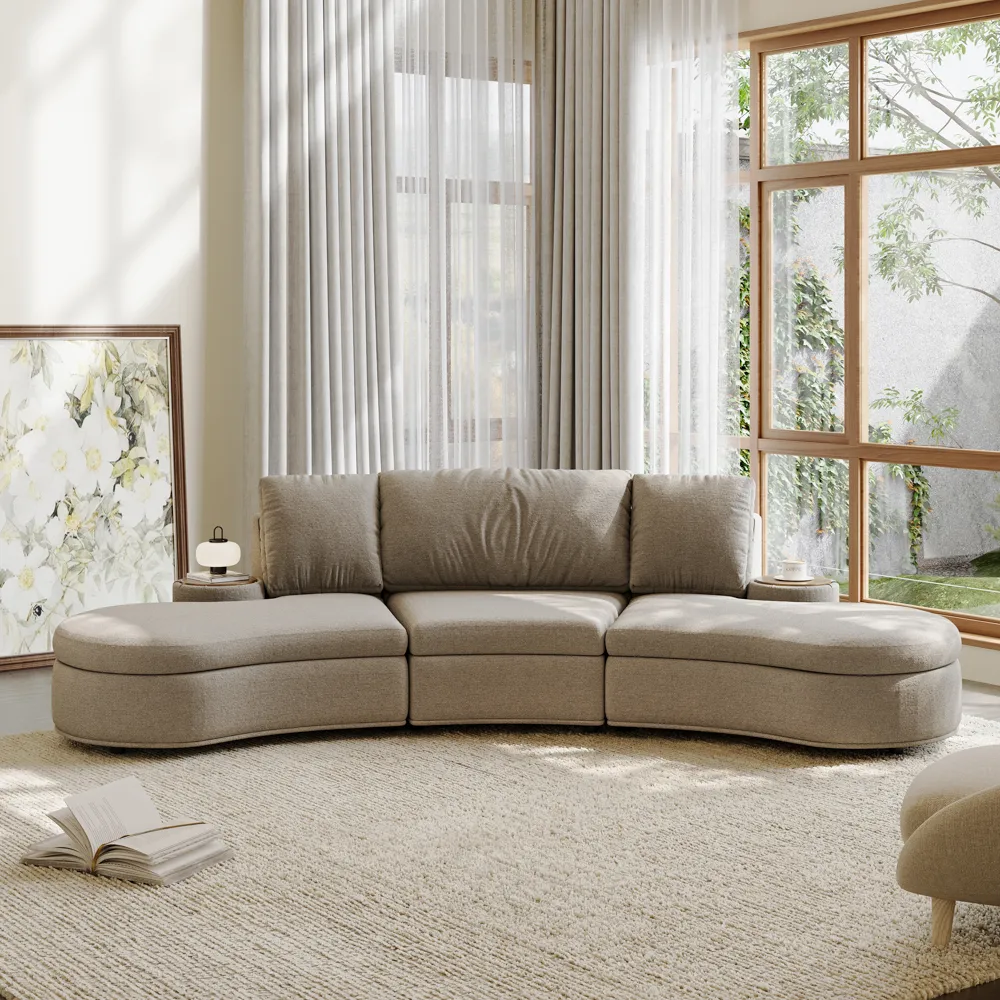
Here’s the short version: a sectional earns its place when your living room needs to do more than one thing.
If you have kids who’ve decided the cushions are a climbing structure, a partner who claims one end as their permanent “zone,” or a friend group that refuses to sit in dining chairs for movie night — a sectional is built for exactly that reality. It replaces the need for a sofa plus loveseat plus extra chair, and it does it in a way that looks intentional rather than accumulated.
What sectionals aren’t ideal for: tight rooms where they’ll create traffic jams, or anyone who moves frequently and dreads furniture reassembly day. I’ve been that person. Not fun.
The sweet spot? Living rooms between 12×14 ft and 20×20 ft, with a clear sense of where your main viewing or conversation zone is anchored. That’s where a sectional shifts from “too much furniture” to “exactly what this room needed.”
How to Choose the Right Sectional for Your Room
Before you fall in love with anything online, grab a tape measure and some masking tape. Mark the footprint on your actual floor. This sounds overly cautious until the moment you realize the sofa that looked proportional in the listing photos would block your kitchen walkway in real life.
Apartment Living Rooms
If you’re working with under 300 square feet in the main living area, compact L-shaped sectionals in the 95–110″ range (along the longer side) are your best starting point. The critical number to maintain: at least 36 inches of clear walkway between the sofa edge and any adjacent wall or furniture. That’s the standard clearance that keeps a room feeling like a home rather than an obstacle course.
One thing I figured out the slightly painful way: measure your doorway and any hallways before you order. Standard interior doorways run about 32″ wide, but sectionals often need to be angled through at specific angles. If you’re in an older building with narrow corridors, a modular option that comes in separate pieces is worth looking at — the modules can be brought in individually and configured inside.
Family Living Rooms
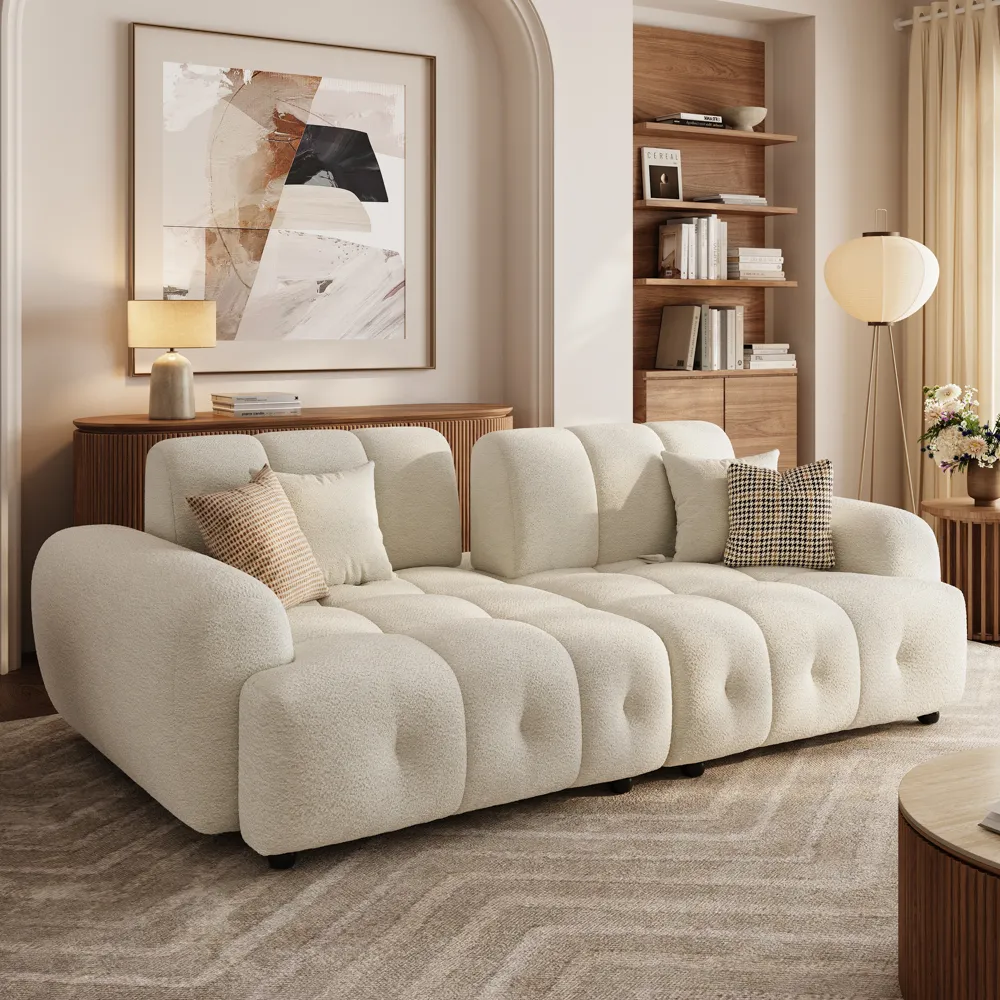
For households with kids, pets, or a permanent open-door hosting policy — prioritize seat depth and configuration over aesthetics. A standard seat depth of 21–24 inches works well for upright sitting. But if “movie night” means horizontal sprawl with a golden retriever taking up the chaise, you’re looking at 26–30″+ depth territory.
For family rooms specifically, here’s what I’d actually check:
- Weight capacity per seat — target 250–300 lbs minimum for a piece that’s going to take real daily use
- Fabric performance — tightly woven polyester or performance fabric hides life significantly better than loose-texture weaves; look for fabrics rated for 50,000+ double rubs if durability matters
- Frame construction — kiln-dried hardwood frames with corner-blocked joints outperform engineered wood alternatives over years of genuine use; FSC-certified solid wood frames (like those used in POVISON’s sofa and sectional collection) add the sustainability dimension if that matters to your household — FSC certification means the wood was sourced from responsibly managed forests, audited by a third party, not just a marketing claim
L-Shaped vs U-Shaped vs Modular Sectionals
Three main configurations, and each serves a genuinely different use case.
L-Shaped is the default choice for most rooms — one long straight run, one shorter chaise or return section. It fits rooms as compact as 12×14 ft. The limitation: seating is directional, which is great for TV-focused layouts but less natural for conversation-centered rooms where you want people facing each other.
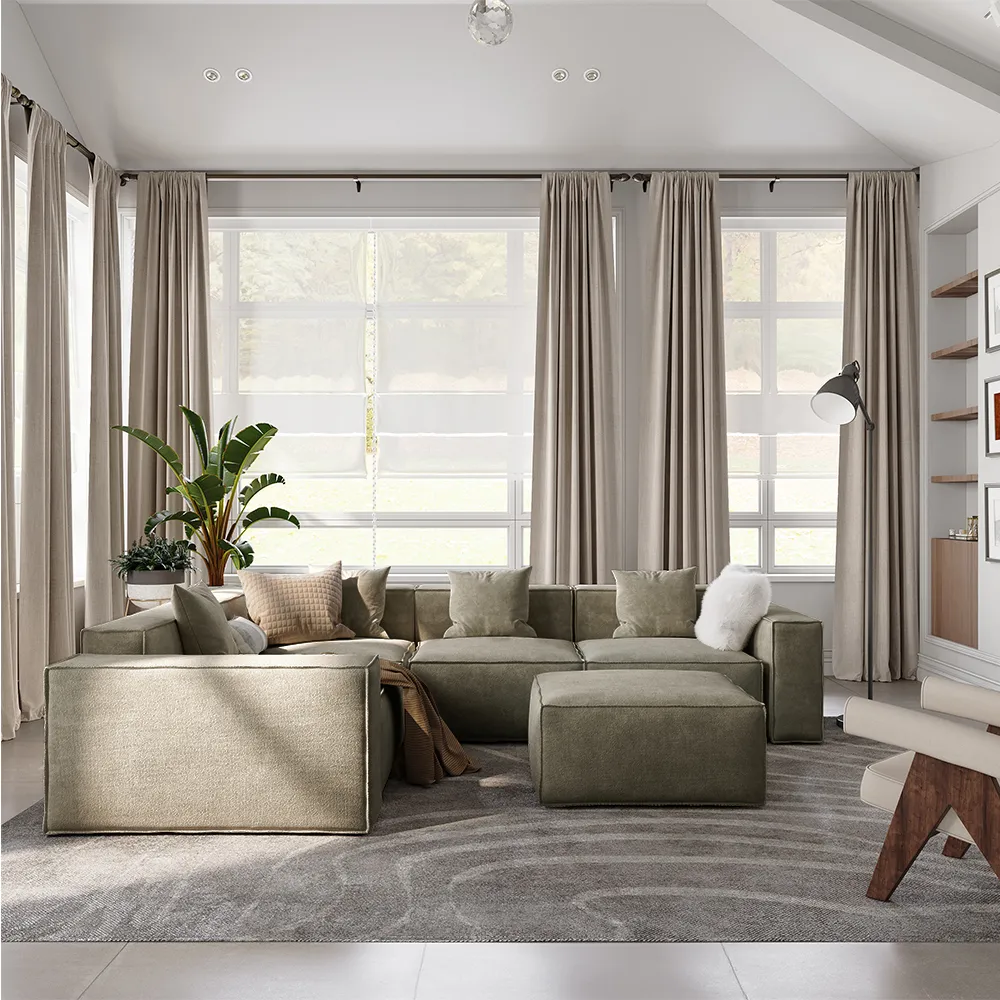
U-Shaped is the generous option. It wraps three sides and creates a natural conversation pit that’s genuinely hard to replicate with any other configuration. It also requires significantly more floor space — typically 14×14 ft or more with proper clearance — and a wider delivery path. If you’ve got the room, it’s unbeatable for hosting. If you don’t, it’ll swallow the space.
Modular is what I’d seriously consider if you’re planning to move in the next three to five years, or if your room has an unusual layout that doesn’t fit standard L or U configurations. Individual modules — armless chairs, corner pieces, ottomans, chaises — can be reconfigured as your space changes. The Business and Institutional Furniture Manufacturers Association (BIFMA) publishes voluntary performance standards for furniture durability and weight capacity; well-built modular sectionals should meet the same benchmarks as traditional frames. Modular doesn’t mean lower quality — it means flexibility.
Quick comparison:
| Configuration | Min. Room Size | Best For | Trade-off |
| L-Shaped | 12×14 ft | TV rooms, compact spaces | Directional seating only |
| U-Shaped | 14×14 ft | Conversation, hosting | Needs significantly more space |
| Modular | Flexible | Renters, irregular layouts | Can cost more per piece |
Left-Facing vs Right-Facing Sectionals
This catches almost everyone off guard the first time — including me.
The rule: stand in front of the sofa as if you’re about to sit down. Left-facing means the chaise or return extends to your left. Right-facing means it goes to your right.
The decision comes down entirely to your room layout — specifically where your TV sits, where your windows are, and where your main foot traffic flows. The chaise should extend toward the TV or the main lounging direction without blocking doorways or walkways.
A simple way to figure it out before you commit: use masking tape to mark the full sofa footprint on your floor in both configurations and walk your normal daily patterns for a day. You’ll know immediately which one feels wrong — usually because you keep stepping around it.
One more thing worth knowing: “left-facing” and “right-facing” aren’t universally standardized across retailers. Double-check how a specific brand defines the terms before confirming your order. I’ve seen enough forum threads about this particular mixup to know it’s surprisingly common.
What to Check Before Buying Online
Buying a large sectional online is legitimately nerve-wracking. Here’s what actually matters beyond the listing photos.
Return policy for oversized items. This is non-negotiable to read before you order, not after the truck arrives. Some retailers offer free returns; others charge restocking or pickup fees that can run $150–300+. Know the number going in.
Delivery method. Standard threshold delivery (they leave it at or just inside your door) is a very different experience from white-glove delivery, which typically includes room placement, basic inspection, and packaging removal. For a piece this size and weight, white-glove is the one that saves your back, your floors, and your afternoon.
Material transparency. If a listing says “wood frame” without specifying the type, treat that as a yellow flag. Solid hardwood and engineered wood have different longevity profiles. Foam density matters too — seat cushion foam at 1.8 lbs/ft³ or higher will hold its shape over years; lower density foam compresses and stays flat. And if you have young children or pets at home, it’s worth knowing that the U.S. EPA’s indoor air quality guidelines highlight furniture as a significant source of indoor VOC emissions — low-VOC or non-toxic finishes aren’t just a buzzword, they’re a real consideration for enclosed living spaces.
Customer photos, not just product photos. Product photos are staged. Customer photos show what the color actually looks like in a normal room with normal lighting. Filter reviews by images and look for people in similar room sizes to yours.
Delivery timeline. Sectionals and large sofas often run 3–8 weeks for delivery. If you’re furnishing around a specific date — a move, a gathering, the holidays — build that timeline into your decision.
If delivery anxiety is something you’d rather skip entirely, POVISON’s sectional options arrive fully assembled with white-glove delivery included. No guesswork on configuration, no “which piece connects where.” — it’s the Ready To Live In approach applied to the biggest seating decision in your home.
FAQ
Is a sectional couch good for a small living room?
A sectional can work in a small living room — configuration is everything. For rooms under 12×12 ft, look for compact L-shaped options under 100″ on the long side, and maintain at least 36″ of walkway clearance between the sofa edge and the nearest wall or pathway. Avoid U-shaped configurations unless your room is genuinely 14×14 ft or larger. A modular option that can be brought in piece by piece is also worth considering if your doorways or hallways are narrow.
How do I know what size sectional to buy?
Start with your room dimensions, then subtract 36″ on all sides for clearance. That remaining footprint is your maximum sofa size. Use masking tape on the floor to mock up the configuration before you order — it sounds like extra work, but it’s the single most useful thing you can do. Also measure your door frames and any hallways: most sectional pieces need at least 30–32″ to angle through. If a modular option can be brought in section by section, that clearance issue mostly disappears.
Should I get a left-facing or right-facing sectional?
Stand in the position you’d be facing the sofa from and look at your room layout. The chaise extension should point toward your TV or main lounging direction — not toward a doorway, a main walkway, or your best window. Left-facing means the chaise extends to your left; right-facing means it goes to your right. Before you order, confirm how the specific retailer defines these terms — it’s not standardized, and the difference matters a lot when the truck shows up.
Are fully assembled sectionals worth it?
For a piece this size? Yes — genuinely. A fully assembled sectional means no connection points that loosen over time, no alignment issues between modules assembled at different angles, and no Saturday afternoon lost to instructions that seem to be written in a different dimension. For households with kids, pets, or anyone who values their weekend, the premium for pre-assembly pays off in the first hour. And every month after.
Conclusion
A sectional is one of those purchases where the research you put in upfront directly determines how much you’ll enjoy the result. Room fit, layout direction, material quality, delivery method — these aren’t details you can course-correct after the truck leaves.
Get the configuration right for your space. Confirm the delivery experience matches what you’re paying for. Choose materials that will actually hold up to your life, not a staging shoot. And if you’d rather skip the “will this even fit through my door” phase entirely, a fully assembled option with white-glove delivery is the version of this purchase that ends with you sitting on a couch, not standing next to one in pieces.
When you’re ready to explore options that arrive Ready To Live In, POVISON’s sofa and sectional collection is worth a look. Your living room upgrade shouldn’t cost you a weekend to complete.
Related Reading:


[…] Capacity is therefore only one part of sectional shopping. Room fit, module arrangement, and delivery dimensions also matter in a sectional couch buying guide for modern homes. […]