 By Charles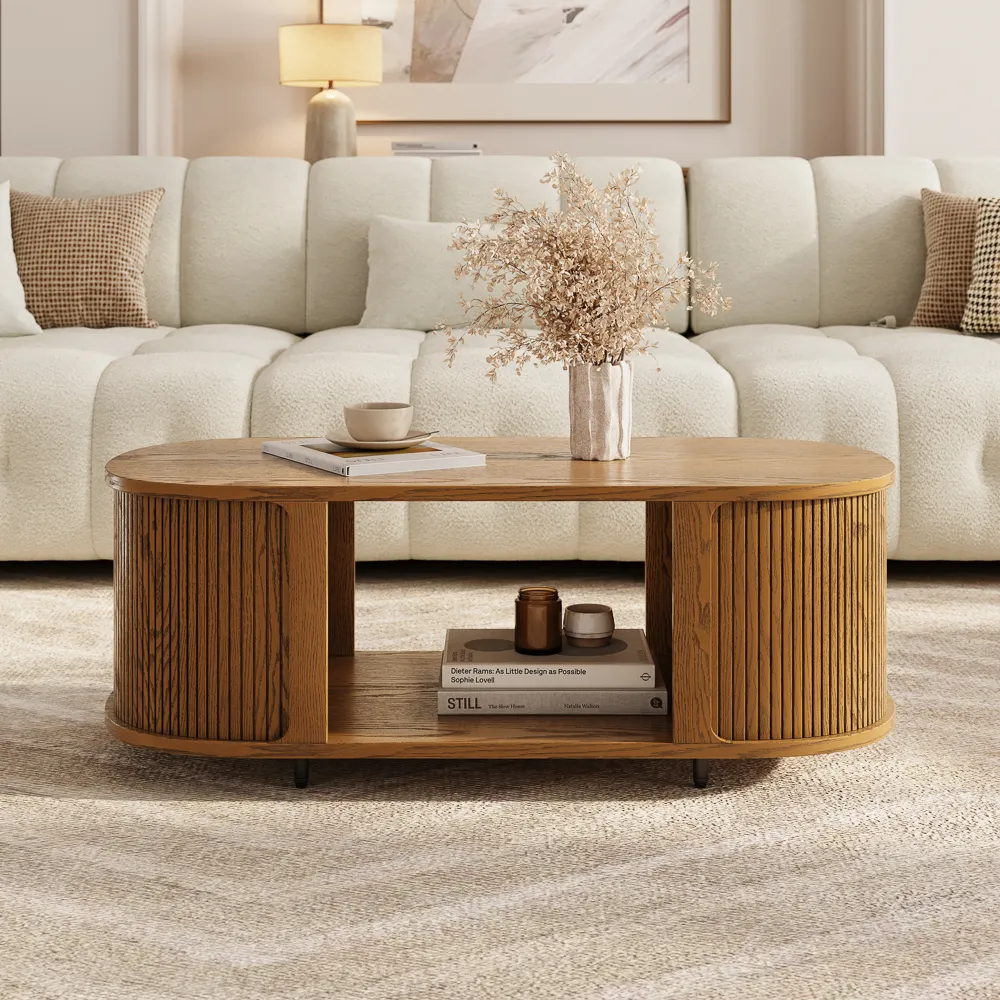
Hey there! This is Charles. And I’ve looked at a lot of storage coffee tables. And after a few purchasing mistakes of my own — one lift-top that felt like opening a car hood every time I needed a throw, and one drawer table where the slide sounded like a sad trombone after three months — I built a checklist I now run every table through before recommending it.
This article isn’t a ranked product list. It’s a structured evaluation of what to look for in a storage coffee table for small spaces, using five criteria I’ve found actually predict whether a table works in daily life or becomes an expensive regret. Think of it as the buyer’s framework I wish I’d had.
The five criteria: mechanism quality, usable storage volume, hardware durability, visual weight in context, and material safety. I’ll break each one down with specific numbers so you’re comparing apples to apples, not marketing copy to marketing copy.
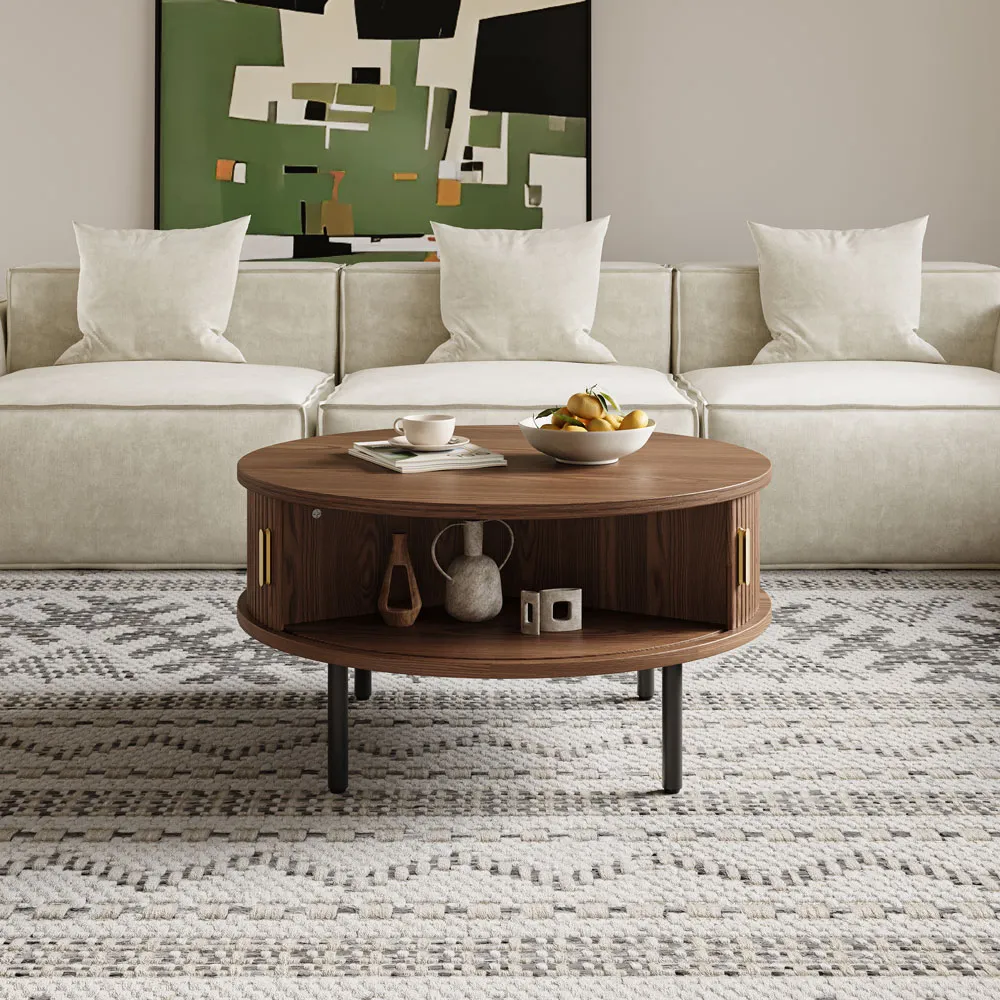
When a Storage Coffee Table Is Worth It
The case for a storage coffee table in a small living room is straightforward: it consolidates a function you’re already performing — clearing surfaces before guests arrive, hunting for the remote at 10pm, relocating throws that live on the sofa — into a piece of furniture that was going to occupy that floor space anyway.
The honest counter-case: if your clutter problem is behavioral rather than spatial, a hidden compartment just becomes a more expensive hiding spot. A storage coffee table earns its place when you have recurring, specific items that need somewhere to go — and the table’s mechanism matches how often and how urgently you need to access them.
For most small living rooms under 200 square feet with kids, a WFH setup, or a guest-hosting habit, the answer is yes. But the type of storage determines whether it actually makes your life easier.
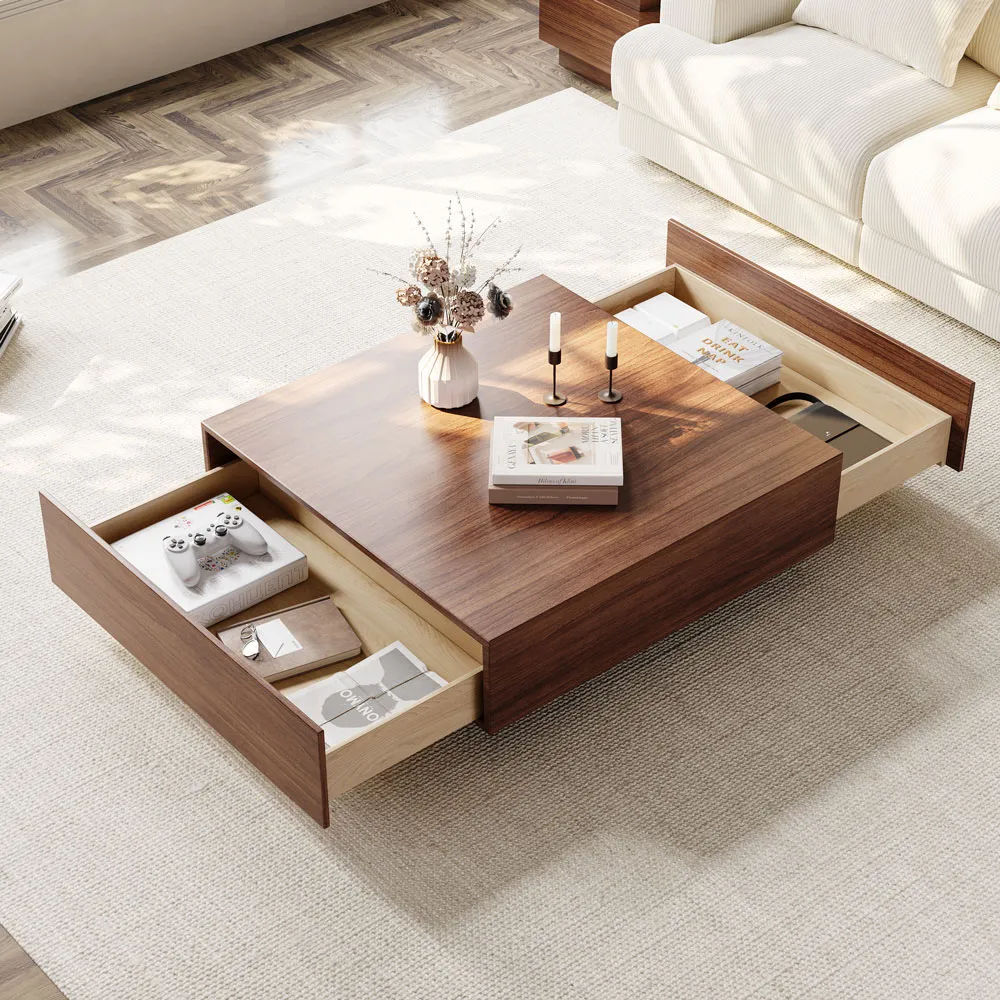
Best Storage Types for Small Living Rooms
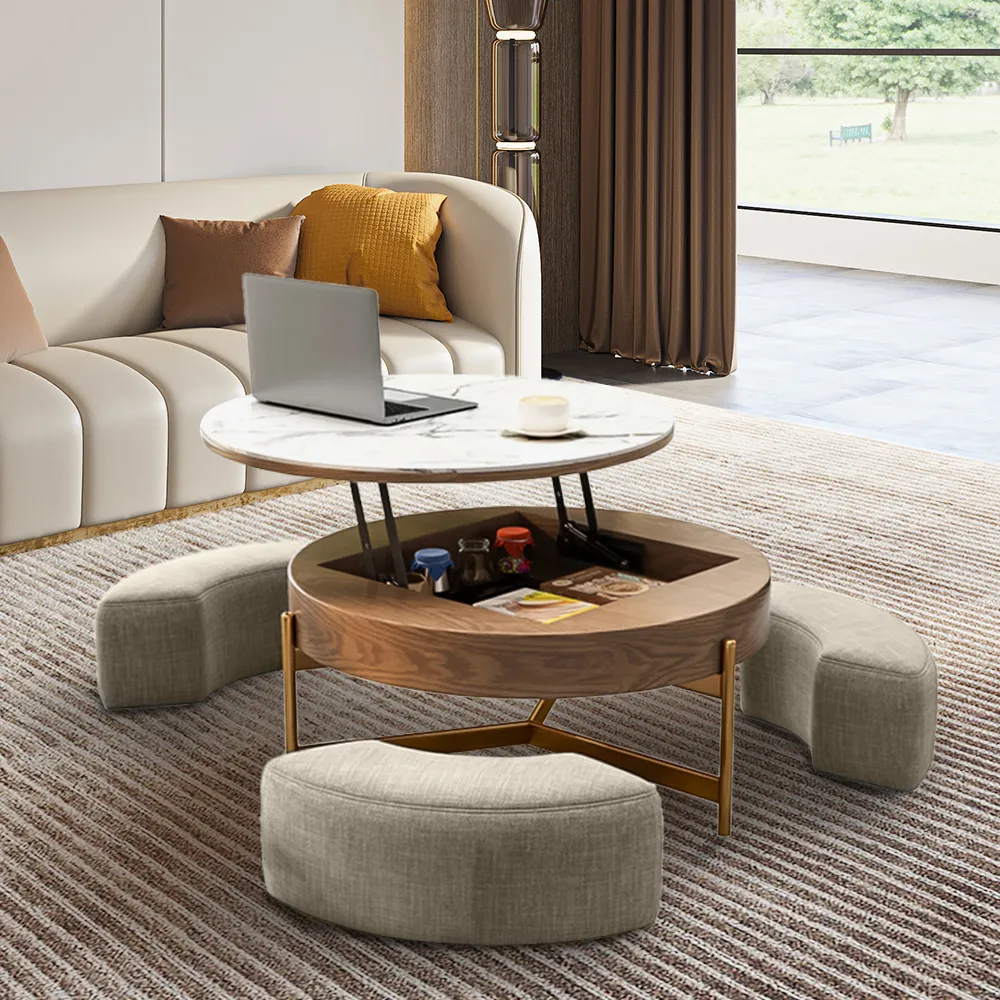
Lift-Top Coffee Tables
What makes a lift-top mechanism worth buying — or not
The mechanism is the product. Everything else is furniture.
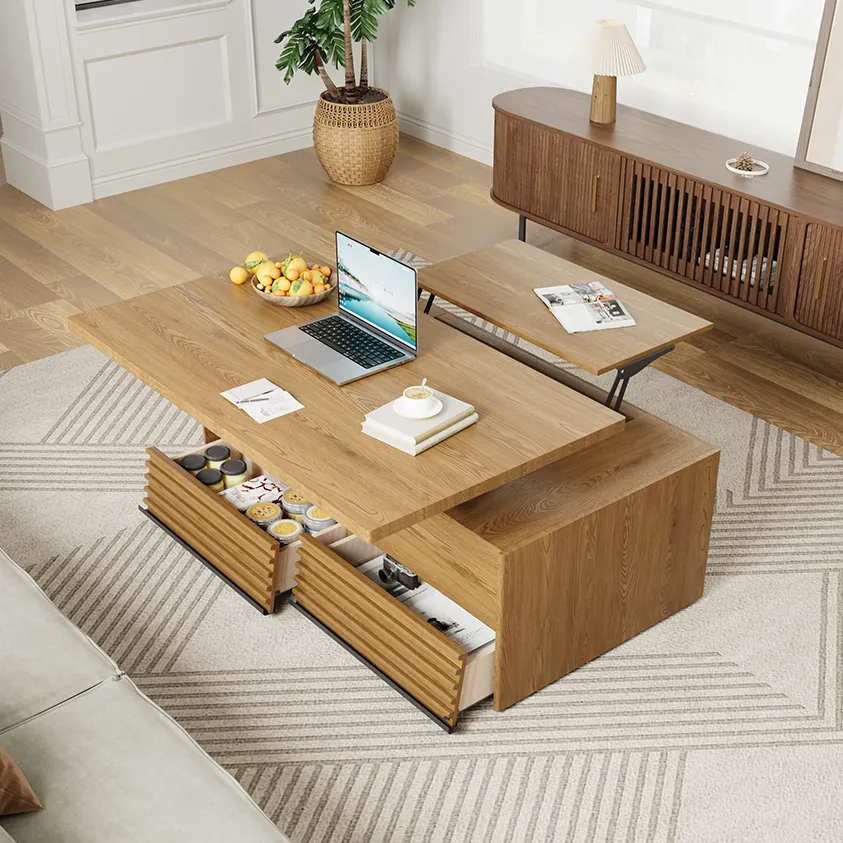
A well-engineered lift-top uses a gas-piston or counterbalanced spring system that supports the weight of the tabletop — typically 15–25 lbs — at any point in its range of motion, without drift or resistance. You push it up, it stays. You lower it, it doesn’t slam. That’s the standard worth paying for.
Budget lift-tops use a simple pivot hinge. They work on day one. By month six of daily use, the pivot develops play, the top doesn’t stay level when raised, and you’re propping it with a book. Consumer Reports’ furniture quality guidance consistently identifies hardware as the primary durability differentiator in functional furniture — the mechanism is where longevity is won or lost, not the finish.
What to measure before ordering:
- Opening clearance: The top extends 10–14 inches toward the sofa when raised. You need that clearance between the table’s front edge and the sofa — tape it on your floor. If you can’t spare it, the lift-top becomes a table you don’t use.
- Raised height: Should reach 26–28 inches — practical as a laptop or meal surface without hunching.
- Storage cavity volume: Good lift-tops offer 40–60 liters of internal volume. That’s enough for 2–3 folded throws, a tablet with charging cable, a board game in a flat box, and the charger graveyard most households maintain.
- Tabletop weight capacity when lowered: Standard use (drinks, books, a laptop): 50 lbs minimum. For a table that doubles as an occasional foot rest or kid’s perch, look for 80 lbs or more.
Visual weight tradeoff: Lift-top mechanisms add 1–2 inches to the table’s profile compared to a standard top. In rooms with 8-foot ceilings, choose models that keep overall height at 18 inches or under.
Drawers and Hidden Storage
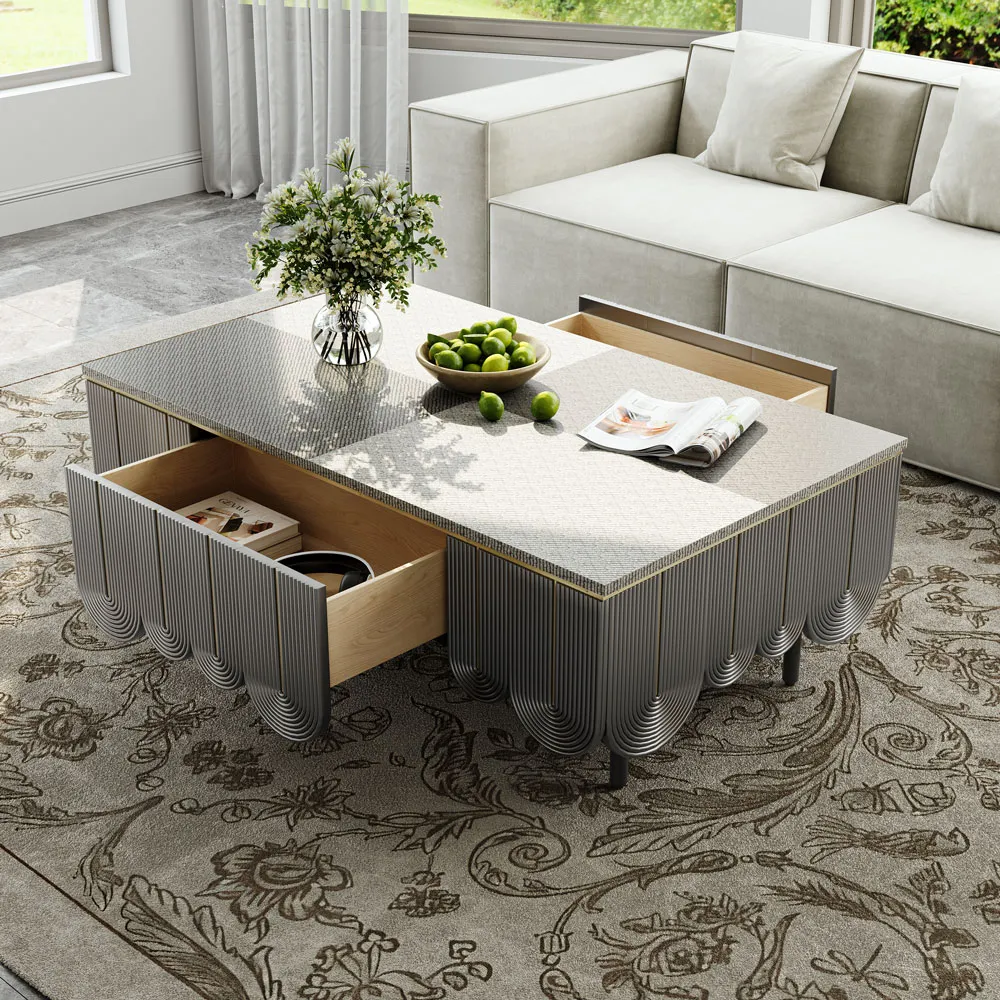
Drawer storage has one decisive advantage over lift-tops: zero clearance required to access it. Pull, retrieve, push closed. No repositioning, no knee-clearing ritual.
Hardware quality is the differentiator here, same logic as above:
- Ball-bearing slides open smoothly under any load and stay aligned after years of use. This is the standard for any table you’re opening daily.
- Plastic runners drag within months, especially with humidity variation. You’ll feel the difference by summer of year one.
- Soft-close mechanism: Not a luxury. A drawer that slams is a daily annoyance in a quiet apartment. Worth checking the spec sheet explicitly.
Drawer dimensions that matter:
- Standard coffee table drawers run 3–5 inches deep and 14–20 inches wide — enough for remotes, cables, reading glasses, small notebooks.
- If you need to store anything taller (a small power strip, a thick paperback standing upright), measure the internal cavity depth specifically. Product listings often give external dimensions only.
- Drawer extension matters too: a full-extension drawer lets you see and reach the back; a partial-extension leaves the rear third inaccessible in practice.
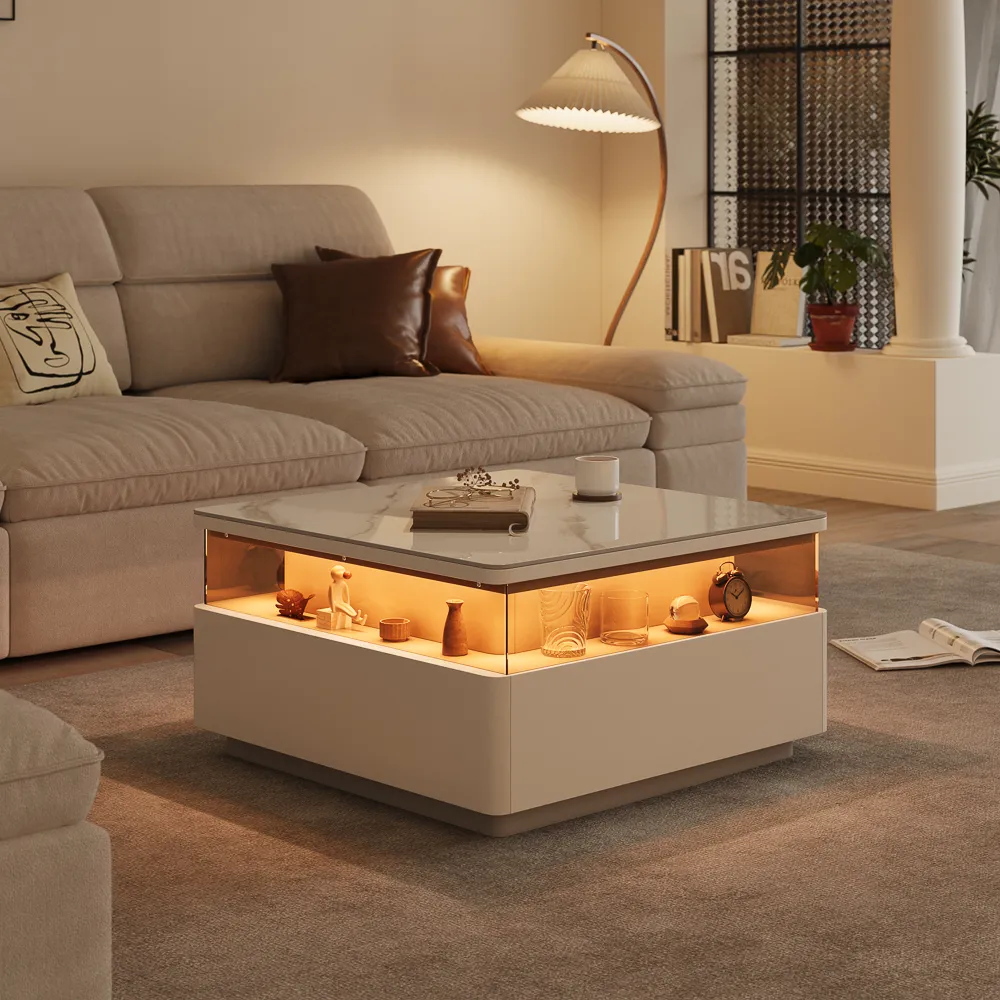
Open lower shelf: Worth mentioning as a third category. Open shelves don’t qualify as “hidden” storage, but they handle books, decorative baskets, and low plants without the friction of a mechanism. The trade-off is dust collection and visual weight — an open shelf reads as another horizontal surface the eye has to process. In a room that’s already visually busy, a closed drawer or lift-top keeps the table reading as one clean form.
For reference on standard coffee table sizing — height, clearance zones, and proportional length relative to sofa — Dimensions’ coffee table reference provides a useful baseline for cross-checking specs against industry norms before committing.
What You Can Realistically Store
Specific inventories by storage format, with actual capacity figures:
| Storage Type | Volume | Fits | Doesn’t Fit |
| Lift-top cavity | 40–60L | 2–3 throws, tablet + cable, flat board game box, kids’ activity kits | Standing books, anything taller than 8″ |
| Standard drawer (3–5″ deep) | 3–8L | All remotes, phone chargers, short cables, reading glasses, small notebook | Thick paperbacks upright, power strips |
| Open lower shelf | Varies | Books lying flat, baskets, low plants (under 10″ tall) | Anything you want hidden from view |
One thing that matters more than most listings acknowledge: what you’re storing in a sealed compartment affects air quality in the room around it. Charging cables and electronics off-gas minimally. Certain foam-filled items, synthetic fabrics, or plastic-heavy toys stored in a closed cavity in a small apartment concentrate any emissions in a confined space. The U.S. EPA’s guidance on indoor VOCs documents that indoor VOC concentrations typically run two to five times higher than outdoor levels — in a studio or one-bedroom, that gap is relevant.
This is why the table’s own materials matter, not just what you put in it. Look for frames built from FSC-certified wood — which verifies responsible sourcing across the full supply chain — and finishes described as CARB Phase 2 compliant or low-VOC. If you’re storing kids’ toys or items handled by children daily inside the compartment, this isn’t optional due diligence.
For readers comparing specific models, POVISON’s coffee table collection uses FSC-certified solid wood frames with non-toxic finishes. I’m flagging this as a brand I’ve looked at directly — not a neutral recommendation — but the material spec is relevant to the criteria above. You can check the current lineup and dimensions at their coffee table collection page if you want to compare configurations.
When Storage Coffee Tables Feel Too Bulky
This is the failure mode I see most often: someone buys a storage table because it looks functional in photos, it arrives, and the room suddenly feels like it has too much going on. The table isn’t oversized. It’s visually heavy in a room that was already working hard.
Four specific culprits:
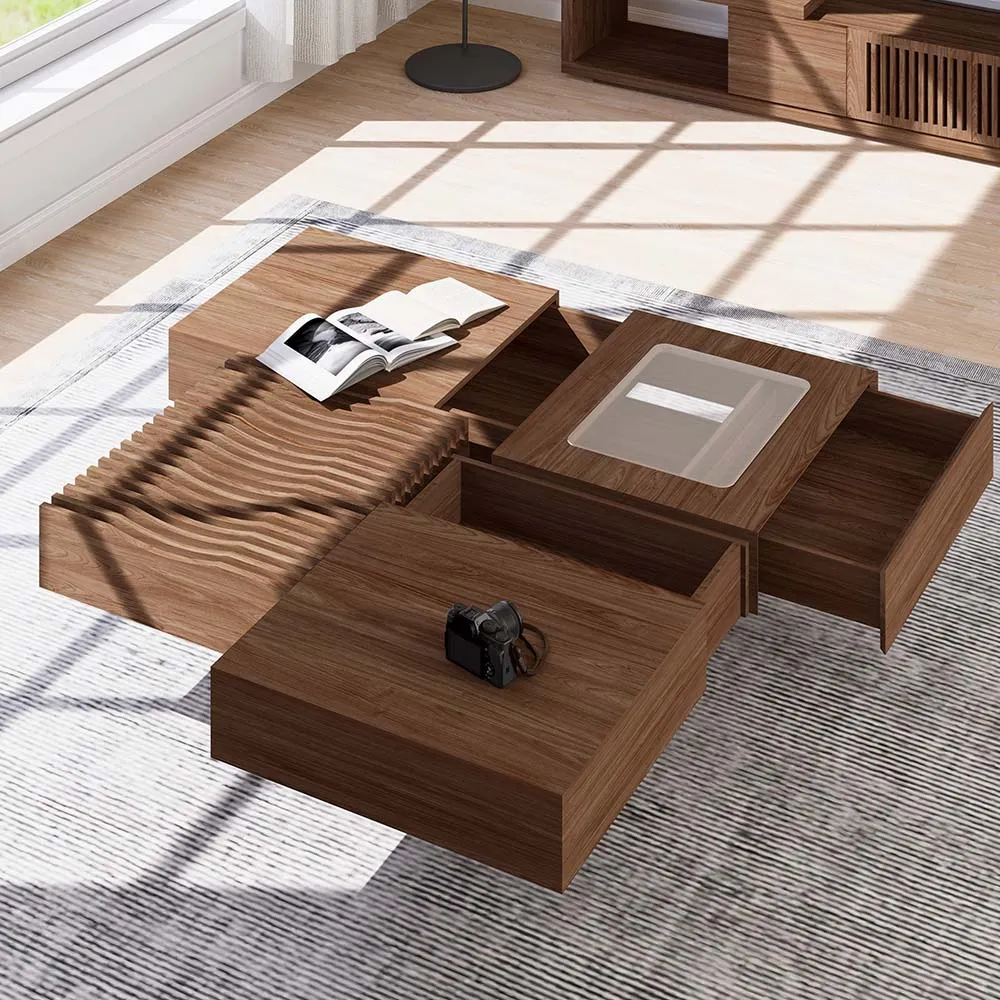
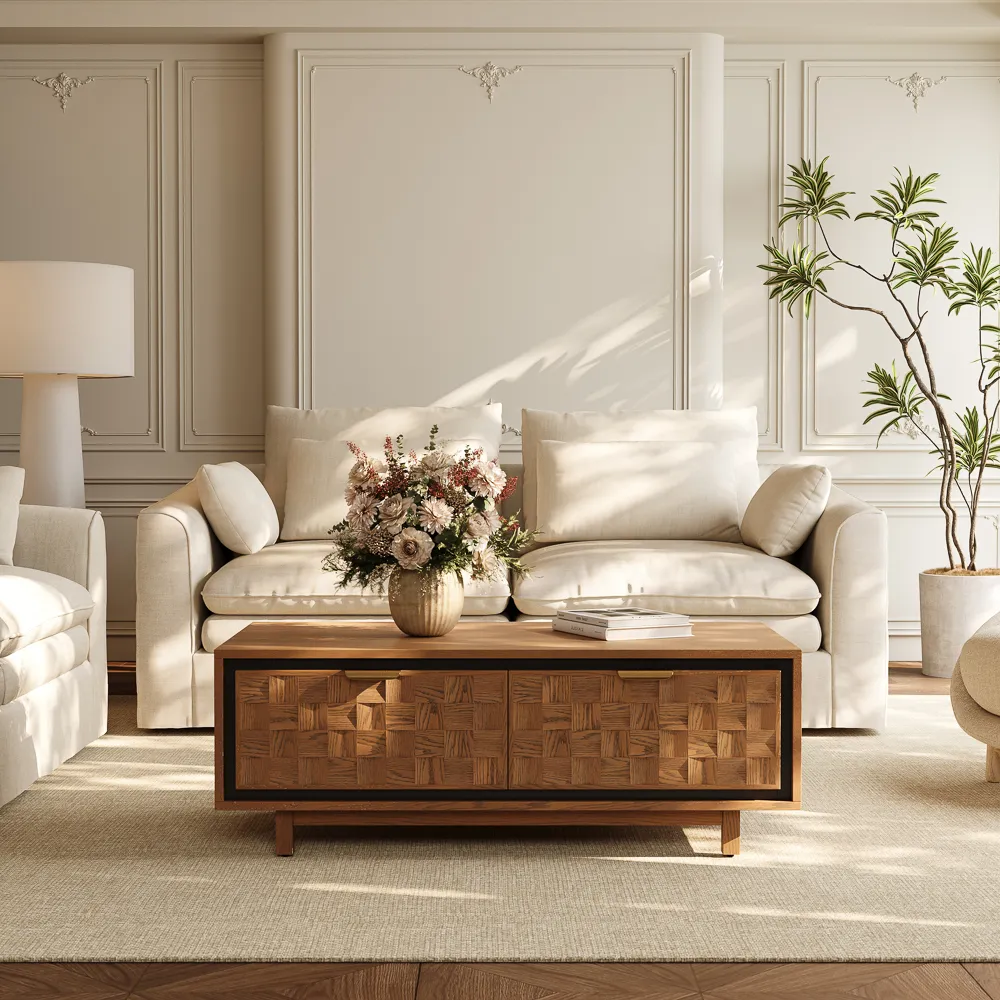
- Solid base panels with no leg exposure. A full-panel base with no visible legs reads as a block. The same internal volume in a table with tapered or metal legs reads as significantly lighter — your eye sees floor underneath it, and the room breathes. Same footprint. Different visual weight. This is the single most impactful design decision for small-space buyers.
- Back height above 18 inches. Standard coffee table height runs 16–18 inches. Anything above that, in a room with 8-foot ceilings, reads as taller than it is and makes the ceiling feel lower. Always check the spec sheet height, not the category description.
- Dark finishes in low-light rooms. A dark walnut or espresso table in a north-facing apartment makes the floor plane feel heavier. Mid-tone or lighter finishes — natural ash, white oak — let the room breathe. The storage mechanism doesn’t change this; the finish does.
- “Storage” tables with minimal actual storage. Some tables marketed as storage have a lower shelf 4 inches tall — enough for a magazine. The visual weight of the solid apron is still there; the useful hidden storage isn’t. Internal cavity dimensions, not just “storage” in the product name, are what you’re paying for. Always ask for or look up the internal measurements specifically.
The rule of thumb: if your sofa and TV stand already have substantial visual presence, choose a coffee table with maximum leg exposure and minimum apron depth. A table that floats visually makes the whole room feel more considered — even if its storage capacity is slightly lower.
FAQ
Is a storage coffee table worth it?
For most small living rooms: yes — with one condition. The storage has to solve something specific you’re already doing: clearing remotes and cables from the surface daily, stashing throws that migrate to the sofa, hiding kids’ toys before guests arrive. If you can name two or three things that would live there permanently, a storage table earns its cost over a standard table. If you’re buying storage as a general insurance policy, a cleaner-looking table with no mechanism will serve the space better and be easier to maintain.
Are lift-top coffee tables good for apartments?
They work well in apartments specifically because they consolidate workspace, surface, and storage into one footprint. The practical constraint is opening clearance — you need 10–14 inches between the table’s front edge and the sofa for the top to extend without hitting you. Measure this before ordering. Apartments with very compact sofa-to-wall configurations may not have this clearance, which makes the lift-top functionally unusable in practice even if the table fits the room.
What can I store in a coffee table?
In a lift-top (40–60L cavity): throws, tablets, charging cables, board games in flat boxes, kids’ activity kits, headphones. In a drawer (3–5 inches deep): remotes, cables, reading glasses, pens, small daily items. On an open shelf: books lying flat, baskets, low plants. The limiting factor is almost always internal height — measure the cavity depth specifically if you have items that need vertical clearance, because external dimensions in product listings don’t tell you this.
Does a storage coffee table make a room look smaller?
It can — when it has a solid base with no leg exposure, a dark finish in a low-light room, or a height above 18 inches. A storage table designed with tapered or metal legs, a mid-tone finish, and standard height (16–18 inches) doesn’t read as larger than a comparable non-storage table at the same footprint. The storage mechanism itself is invisible when the table is closed. The base design is what the room actually sees.
Conclusion
The five criteria I use to evaluate storage coffee tables for small spaces — mechanism quality, usable internal volume, hardware durability, visual weight in context, and material safety — give you a consistent way to compare options beyond “does it look good in the listing.”
The mechanism is the product. A gas-piston lift-top that holds at any angle is a fundamentally different purchase from a pivot hinge that develops play after six months. Ball-bearing drawer slides are a fundamentally different purchase from plastic runners. These details don’t show up in product photos. They show up six months in.
Do the tape test before ordering: mark the table’s footprint on your floor including the direction the lift-top extends or the drawer pulls out. Walk the room. If you step over the tape, the layout isn’t working. Get that right, and a storage coffee table is one of the more efficient investments a small living room can make — one piece handling what would otherwise require two or three.
Related Reading:


