 By Jenny Smith
A room can have beautiful pieces and still feel off. That usually happens when the layout ignores how people move, sit, and relax. The best living furniture layout ideas are not about filling every corner. They are about making the room feel easy to use every day. Whether you are planning a family TV zone, a better small living room layout, or simply collecting smarter living room layout ideas, the right arrangement helps the space look calmer, larger, and more comfortable from the moment you walk in.
Table of Contents
What makes a good living furniture layout?
Before you move a single chair, it helps to know what “good” actually looks like. A strong layout is not just balanced on paper. It supports the way you live, gives the room one clear direction, and leaves enough open space for everyday movement. That is the real base of smart living room furniture design layout planning.
Start with the room’s main job
Every layout gets easier once you define the room’s main use. Some living rooms are built for conversation. Others are mainly for TV, reading, or family lounging. When you know the top priority, the furniture stops fighting for attention.
A room that is meant for movie nights needs a different setup than one designed for hosting friends. I once tested two armchairs facing a window because they looked elegant in photos, but the room only started working when I turned the chairs inward toward the sofa and coffee table. It instantly felt less staged and more livable.
Choose one focal point
Most rooms feel better when seating responds to one visual anchor. That could be a TV wall, a fireplace, a large window, or a standout art piece. Once the focal point is clear, the rest of the furniture can support it instead of creating visual noise.
Protect traffic flow
A room can look stylish and still feel annoying if people have to sidestep around tables or squeeze past a sofa arm. Major walkways should stay open, and the center of the room should never feel blocked. Practical spacing guidelines such as keeping about 36 inches for main walkways and roughly 16 to 18 inches between a sofa and coffee table show up repeatedly in current living room layout guidance because they make rooms measurably easier to use.
How do you choose the best layout for your room shape?
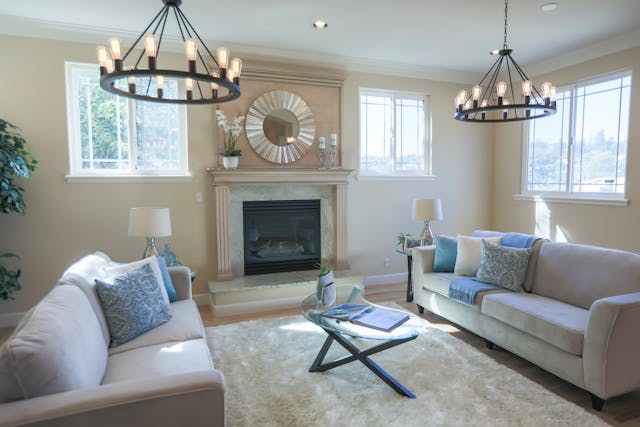
Room shape changes everything. A layout that feels polished in a square room can feel awkward in a narrow one. Instead of copying a picture, match the plan to the room you actually have. This step matters most when you are comparing designing a living room ideas across small, open, or oversized spaces.
Small living room
In a compact room, fewer but better-sized pieces usually win. Choose one main sofa, then add a slim chair or movable ottoman only if the walkway still feels clear. Use a smaller coffee table or nesting tables instead of one bulky piece.
For a more efficient small living room layout, focus on pieces that visually stay light. Sofas with exposed legs, round tables, and wall-mounted storage help the room breathe. A sentence that often gets ignored is this: not every wall needs furniture.
The logic behind many small living room ideas that make tight spaces feel open is simple: make every item earn its footprint.
Long or narrow room
A long room often feels like a hallway if all the furniture lines the walls. Break that effect by creating one clear seating zone. An L-shaped setup, a rug that defines the center, or a console table behind the sofa can help shorten the visual length.
Large or open-plan room
Large rooms need grouping, not wall-hugging. Pull seating inward so people can talk comfortably. In open layouts, the back of the sofa can act as a soft divider between the living zone and dining or kitchen area. Current design guidance often recommends sectionals, rugs, and floating furniture to define these zones without adding walls.
What are the best living furniture layout ideas to try?
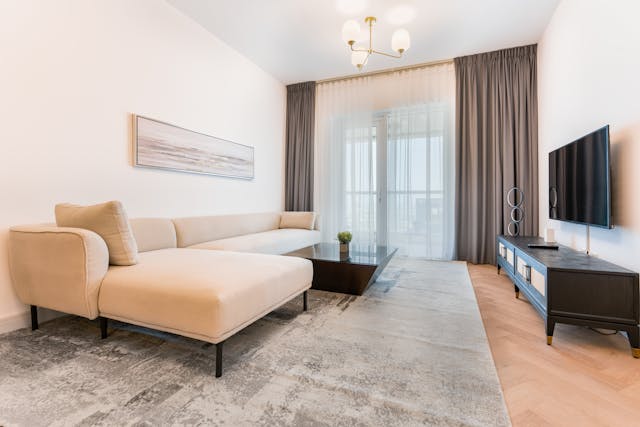
Once you know the room’s shape and main purpose, the next step is choosing a layout you can actually use. The most helpful options in the SERP tend to repeat the same themes: conversation seating, TV-centered planning, sectionals for corners, floating furniture, and zoning for open layouts.
1. Conversation layout
Place a sofa on one side, then set two chairs opposite or angled toward it. Keep a coffee table in the middle. This works best when the room is used for talking, reading, or casual hosting rather than constant TV watching.
2. TV-focused layout
Center the sofa across from the TV, then add one chair beside the sofa or at an angle. This keeps the screen easy to view while still making the room feel social instead of flat and overly screen-driven.
3. Sectional corner layout
Fit the sectional into one corner so it anchors the seating area without blocking circulation. Add a compact coffee table or ottoman in front. This layout is especially practical for family rooms and many small-to-medium spaces.
4. Floating sofa layout
Pull the sofa away from the wall and place it on a rug, with a console behind it if needed. This creates a clear seating zone and often works better in large rooms or open plans than pushing everything outward.
5. Zoned open-plan layout
Use the back of the sofa to divide the living area from the dining or kitchen space. Then anchor the zone with a rug and coffee table. This keeps an open room feeling organized without adding walls.
| Layout idea | How to arrange it | Best for | Main caution |
| Conversation layout | Sofa facing two chairs around a coffee table | Social living rooms | Don’t place seats too far apart |
| TV-focused layout | Sofa faces TV, chair sits to the side or angle | Family rooms | Don’t let the TV dominate everything |
| Sectional corner layout | Sectional tucked into one corner with open path around it | Smaller rooms, daily lounging | Avoid oversized sectionals |
| Floating sofa layout | Sofa pulled off the wall and centered on a rug | Large rooms, open plans | Leave enough space behind it |
| Zoned open-plan layout | Sofa back separates living and dining zones | Multi-use spaces | Use a rug so the zone feels clear |
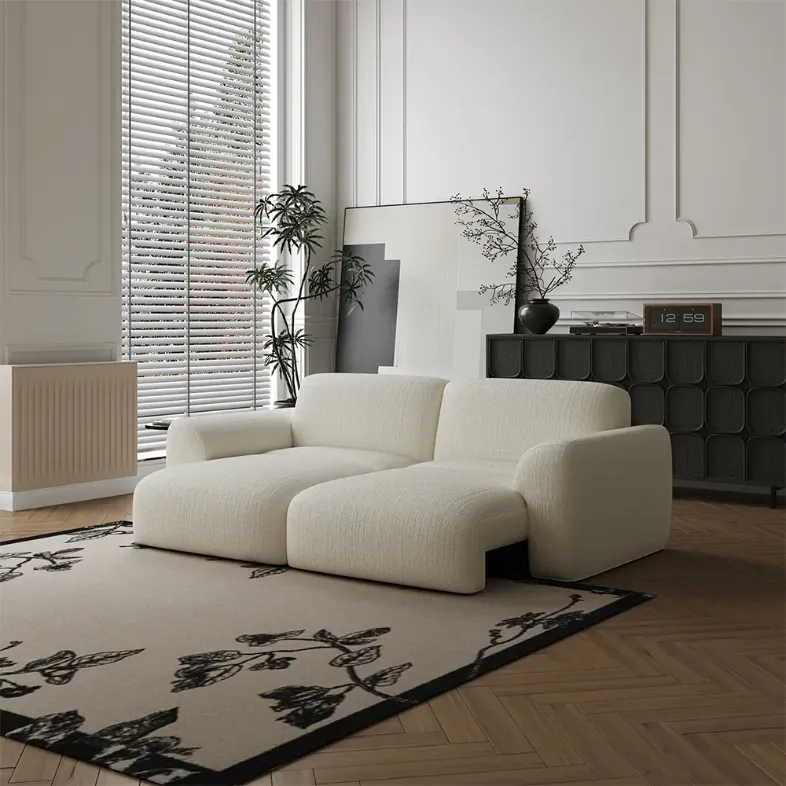
In open rooms, a retractable sofa can solve two needs at once. The Aurora power sleeper sofa uses a remote-controlled pull-out design, can sit close to the wall, and comes in scratch-resistant, pet-friendly chenille. That makes it useful in layouts where a sofa has to handle daily lounging and occasional overnight guests without eating up the whole floor plan.
If you are zoning a shared family room, ideas from modern living room ideas with storage for open-plan living can also help reduce visual clutter while keeping movement clear.
Why do some living room layouts feel awkward?
Most awkward rooms are not failing because of style. They are failing because of one or two simple planning mistakes. This section is short on purpose: if the room feels tense, blocked, or strangely empty, one of these issues is usually the reason.
Common layout mistakes to avoid
- Everything is pushed against the wall. This often makes the center feel empty instead of spacious.
- The walkway is blocked. If people have to twist around furniture, the room will always feel smaller.
- Furniture is too large. One oversized sofa or coffee table can throw off the whole plan.
- There is no clear focal point. When the TV, fireplace, and accent wall all compete, the layout loses direction.
One evening, I moved a coffee table just six inches farther from the sofa in a narrow room, and that tiny change made the entire space feel calmer. It is surprising how often awkwardness comes down to inches, not a full redesign.
How can you make your layout look better and work harder?
A workable layout is the first step. After that, the details shape how polished and effortless the room feels. This is where styling supports function. A few smart adjustments can make the same furniture arrangement look more intentional, more open, and much easier to live with every day.
Use these finishing moves
- Anchor the seating with a rug. Ideally, at least the front legs of major seating pieces should touch it for a more connected look.
- Mix fixed and flexible seating. A sofa plus one lightweight chair often works better than trying to match every piece.
- Choose low-profile furniture in tighter rooms. Lower backs preserve sightlines and help the space feel wider.
- Add storage where clutter collects. Hidden storage matters most in open family rooms and compact homes.
- Layer lighting around the zone. A ceiling light alone rarely makes a layout feel finished.
You can also borrow a few ideas from living room layout ideas with designer rules for flow when you want the room to feel more balanced without buying a full new set.
Conclusion
The best layouts are rarely the most complicated. They are the ones that support real life, fit the room shape, and leave enough breathing room for people to move naturally. When you start with purpose, choose one focal point, and respect scale, even simple living furniture layout ideas can transform the way a room feels. You do not need a full makeover to get better results. Often, the biggest difference comes from changing the position of one major piece and letting the room work the way it should.
FAQ
This final section covers the questions readers often ask after the main layout plan is done. These are practical follow-up concerns that can affect comfort, proportions, and styling, but they do not need long answers. A quick fix is often enough.
Should all living room furniture match?
No. Matching everything can make a room feel flat. It is usually better to repeat one or two elements, like wood tone or fabric color, while mixing shapes and textures. That creates a more layered and natural space.
How far should a sofa be from the TV?
It depends on screen size, but comfort matters more than symmetry. Start with a viewing distance that feels easy on your eyes, then adjust the sofa so the room still has clear walkways and enough space for side tables or a coffee table.
Is a round coffee table better for tight layouts?
Often, yes. A round table softens sharp traffic paths and makes movement easier in smaller rooms. It is especially useful when a sofa, chair, and walkway sit close together and you want the center of the room to feel less crowded.
Can I use a sectional in a small living room?
Yes, if the scale is right. A compact sectional can replace a sofa plus extra chairs and make the room feel simpler. The key is leaving enough open floor around it so the layout still feels easy to move through.


