 By Kelvin
You find a sofa, dining table, or TV stand that looks perfect online. The dimensions seem right, but will it actually work in your room? A sofa might fit the wall but block a walkway, while a dining table may leave too little room to pull out the chairs.
Learning how to measure room for furniture helps you avoid these problems before buying. With a tape measure, a simple floor plan, and a few clearance checks, you can work out where furniture will fit and how much space it needs for daily use.
Table of Contents
How Do You Measure a Room for Furniture in 6 Steps?
Start with a tape measure, pencil, and paper. A phone or laser measure can help record dimensions, but a basic tape measure is enough for most rooms. Keep all measurements in the same unit, preferably inches when comparing furniture sold in the U.S.
Step 1: Sketch Your Room Layout
Draw a simple bird’s-eye view of the room. It doesn’t need to be to scale. Outline the walls, then mark doors, windows, fireplaces, alcoves, and other fixed features.
Label each wall so you can add measurements without confusing one side of the room with another.
Step 2: Measure Walls and Ceiling Height
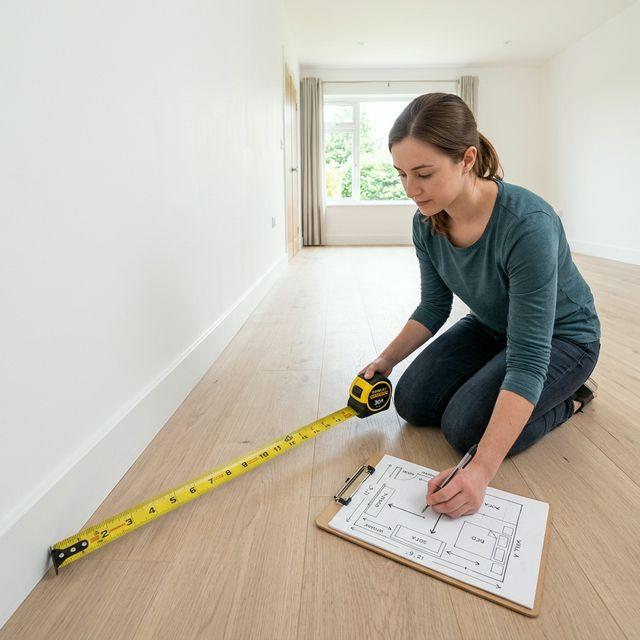
Measure the length and width from wall to wall, recording each number on your sketch. For older rooms or uneven walls, take measurements in more than one spot and note the narrowest usable dimension.
Measure the ceiling height, especially where tall cabinets or bookcases might stand. Watch for exposed beams, soffits, or changes in ceiling level.
Step 3: Record Doors and Windows
Measure each doorway’s clear width and height. Mark which direction the door opens and how far it swings into the room.
For windows, record their width, height, distance from the nearest corner, and sill height above the floor. These measurements help you avoid placing tall furniture where it blocks a window or interferes with curtains.
Step 4: Mark Fixed Obstacles
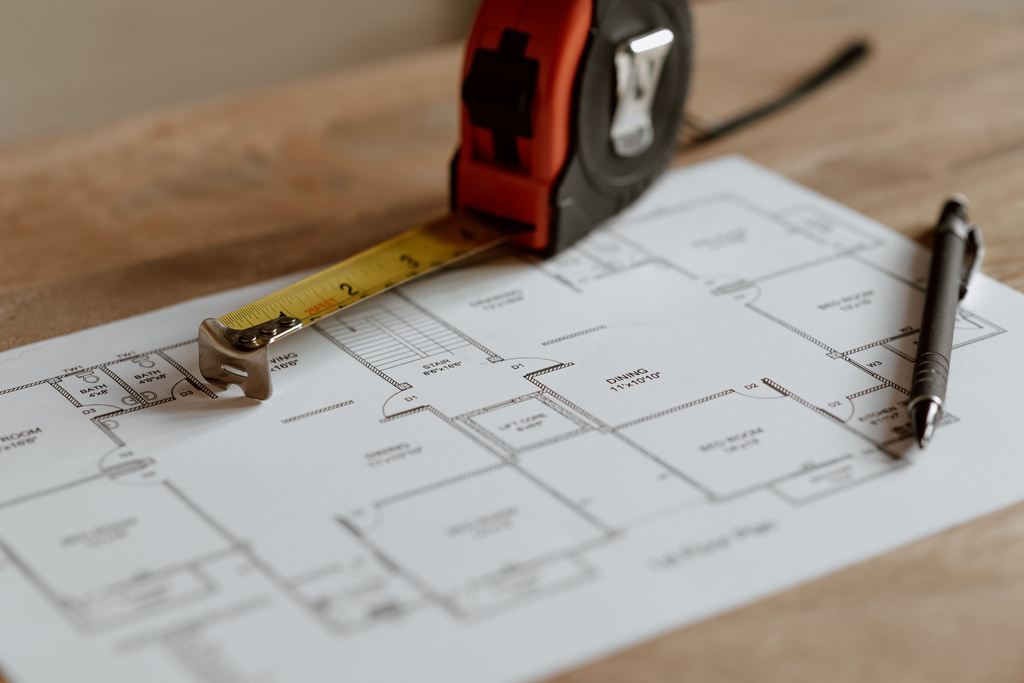
Add anything that reduces usable space: radiators, vents, columns, baseboards, fireplaces, wall outlets, and built-in cabinets.
Measure how far each feature projects into the room. A radiator or deep window recess can change where a sofa, cabinet, or dining table can sit, even when the wall appears long enough.
Step 5: Identify Usable Floor Space
Now look at the areas where furniture can actually go.
Exclude door-swing areas, fixed obstacles, and pathways that need to stay open. Mark the uninterrupted wall lengths and open floor areas on your sketch.
The goal isn’t simply to calculate square footage. It’s to identify the space available for furniture without interfering with how the room functions.
Step 6: Test Your Furniture Placement
Use painter’s tape to outline the furniture’s width and depth on the floor. For larger pieces, mark where arms, corners, or extended sections will reach.
Walk around the outline, open nearby doors, and check whether other furniture remains usable.
This simple test can reveal problems that aren’t obvious from room dimensions alone, especially in narrow living rooms or spaces with several doorways.
How Can You Tell If Furniture Will Fit Your Room?
Once you have the room measurements, compare them with the furniture’s actual size and the space it needs during use.
Compare Furniture Dimensions With Your Space
Product pages usually list width, depth, and height. Width is side to side. Depth is front to back. Height is floor to top.
Check the largest points, not just the clean rectangle in the product photo. Include sofa arms, angled legs, drawer fronts, decorative edges, and extended table leaves. For fully assembled furniture, also check the finished size and packaging size.
For dining tables, measure the table plus chair pull-out space; this pairs naturally with how to choose the right dining table size. For dressers, include drawer swing. For TV stands, check outlet position and viewing distance. For tall bookcases, check ceiling height.
Check the Space Furniture Will Actually Use
A furniture piece does not only use the space shown in its basic product dimensions. It may also need extra room to open, extend, recline, swivel, or be used comfortably.
Footprint: The floor area the furniture covers in its normal position.
Functional space: The extra room needed for drawers, cabinet doors, recliners, dining chairs, sleeper sections, or pull-out surfaces.
This matters most for furniture with moving parts. A dresser needs space in front for drawers to open. A dining table needs space behind each chair. A recliner or sofa bed needs front clearance when it changes position.
For example, imagine a 12′ × 15′ living room with an 84″W × 40″D sofa. The sofa may fit easily along the 15-foot wall, but you still need room for a coffee table and a comfortable walking path.
For an extendable sofa such as the Aurora Power Sofa Bed, mark the fully extended depth, not just its closed footprint. The coffee table and main walkway should remain usable when the sofa opens.
Use Clearance Rules Before You Add to Cart
Clearance is the open space around furniture that lets people move, sit, open drawers, and use the room without squeezing through tight spots. Use these numbers as a starting point before you compare final sizes.
| Furniture Area | Recommended Clearance | Why It Matters |
| Main walkway | 30–36 in | Keeps traffic flow comfortable |
| Sofa to coffee table | About 18 in | Easy to reach, still walkable |
| Dining table to wall | 36 in | Allows chairs to pull out |
| Around bed | 24–30 in | Easier to walk and make the bed |
| In front of dresser | Drawer depth + extra space | Drawers open fully |
| Entryway furniture | Keep walkway clear | Avoids blocking the door |
These are general planning references rather than universal minimums. Adjust them for the people using the room, furniture movement, and any accessibility requirements.
How Do You Measure Delivery Paths?
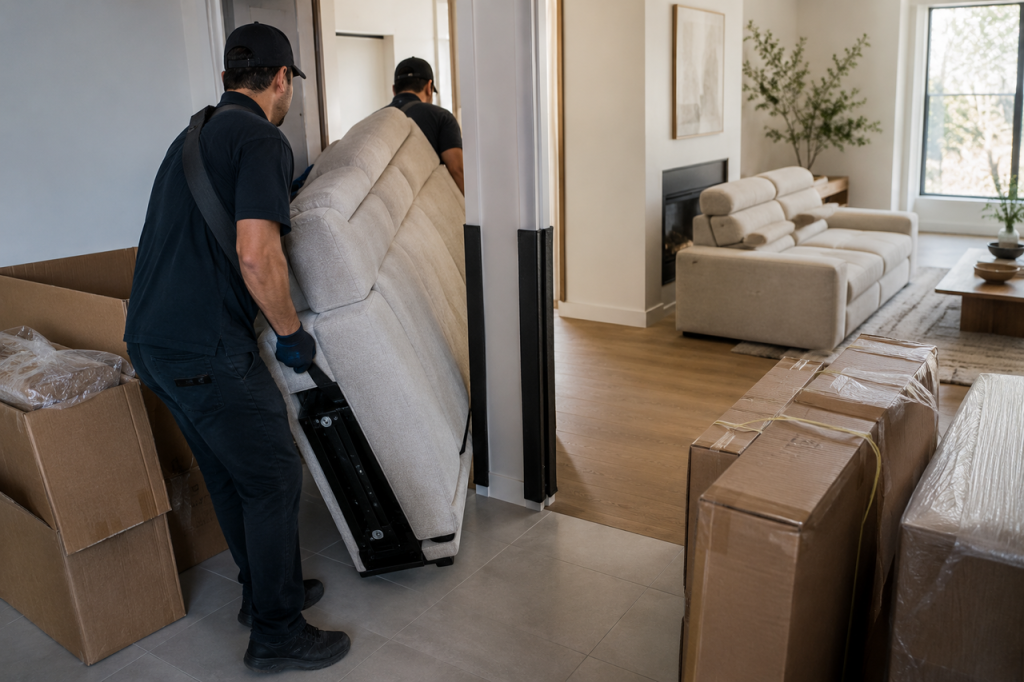
A common surprise is that the furniture fits the room but cannot reach the room. Large sofas, dressers, and tall cabinets may get stuck at a hallway turn, staircase, elevator, or final doorway.
Before checkout, walk the full route from outside your home to the final placement spot.
- Entryways and doorways: Measure the clear opening, including restrictions from trim, handles, and door swing.
- Hallways and turns: Record the narrowest width and the space available to rotate large pieces around corners.
- Stairs and elevators: Check stair width, landing dimensions, railings, ceiling height, elevator doors, and interior dimensions.
- Diagonal fit: Compare the furniture’s diagonal depth or height with the actual turning space. A diagonal measurement alone does not guarantee the piece can pass through.
For fully assembled furniture, compare both finished and packaging dimensions before ordering.
Povison offers Front Door Delivery and White Glove Delivery for eligible orders. Service options differ, but neither removes the need to confirm that furniture can physically pass through the delivery route.
What Are the Most Common Measuring Mistakes?
Most measuring problems come from checking one number and ignoring the rest. The room may fit, but the door may not. The wall may fit, but the drawers may not open. Use this quick mistake table as a final confidence check before you buy.
| Mistake | What Happens | Quick Fix |
| Measuring only the room | Furniture fits the wall but not the doorway | Measure the delivery path too |
| Ignoring clearance | Room feels crowded | Use clearance rules first |
| Forgetting drawer or door swing | Furniture opens halfway | Measure functional space |
| Not checking diagonal depth | Sofa cannot turn through doorway | Compare diagonal depth with doorway width |
| Measuring once only | Small error causes a big fit issue | Measure twice and use the smaller number |
| Ignoring ceiling height | Tall piece overwhelms the room | Test height visually |
Pre-Purchase Measurement Checklist
This final checklist turns measurement into a simple buying habit. Save the numbers on your phone, take room photos, and keep product dimensions beside your sketch. If you are learning how to measure room size before buying furniture, this checklist helps you compare the room, the product, and the delivery path in one place.
- Product width, depth, and height
- Packaging dimensions
- Room dimensions
- Clearance & traffic flow
- Delivery path access
- Painter’s tape test completed
Conclusion: Measure First, Buy With Confidence
Measuring is the easiest way to avoid returns, blocked walkways, and failed deliveries. Start with a simple room sketch, record the measurements that affect usable space, then compare furniture dimensions and clearance before checking the delivery path. With the right numbers, you can choose furniture that fits your space, routine, and style from day one. For fully assembled furniture, careful measuring helps your home feel ready to live in the moment your piece arrives.
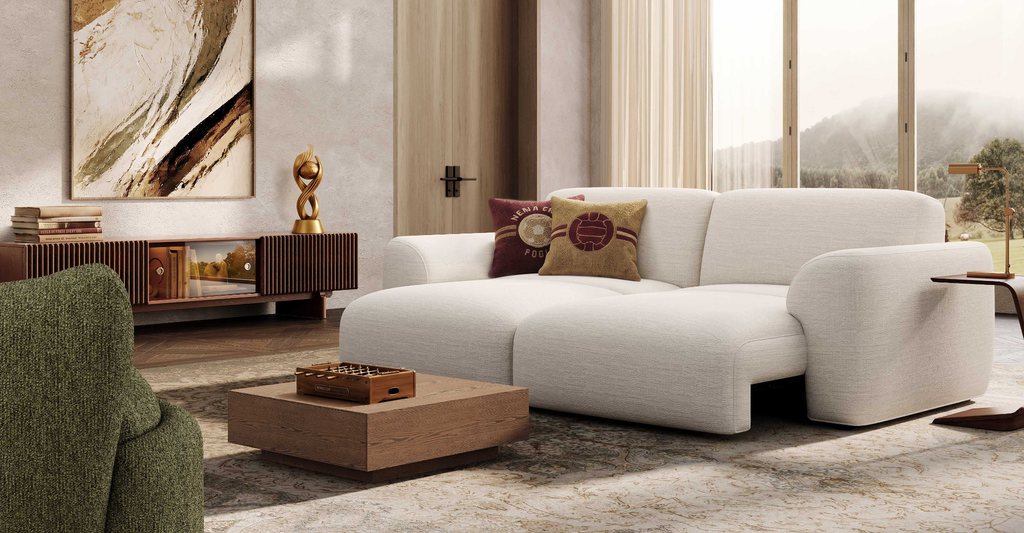
Find Furniture That Fits Your Space
Explore fully assembled furniture for different room sizes, layouts, and everyday needs.
Q&A
What if my room is not a perfect rectangle?
Break the room into smaller rectangles. Measure each section, then sketch odd corners, alcoves, or angled walls separately. For buying furniture, focus less on total square footage and more on clear floor area and usable wall space. In an L-shaped room, check the narrowest section before placing a large sofa or sectional across the opening.
How do I measure an open-concept room for furniture?
In an open-concept room, measure by zones instead of treating the entire floor as one large space. Mark where the living, dining, and walkway areas begin and end. Pay particular attention to shared paths between zones. A sectional or dining table should define its area without blocking movement between the kitchen, seating area, and entrances.
Should I round measurements up or down?
Round room and doorway measurements down for safety. Round furniture measurements up if the product page lists decimals or soft upholstery. This provides a small buffer for trim, fabric thickness, and measurement error. Keep the original precise measurements in your notes, and don’t rely on rounding when a large piece has only a fraction of an inch of clearance.
How do I measure a room with a sloped ceiling?
Measure the ceiling height at the exact location where the furniture will stand, not just at the room’s highest point. Record the lowest clearance across the furniture’s planned footprint. For tall cabinets or bookcases, also check the space needed to tilt or raise the piece into position. A cabinet that fits upright may still be impossible to install beneath a slope.
What if the furniture dimensions online seem unclear?
If dimensions are unclear, check whether the listing shows open and closed positions, not just the basic product size. For extendable sofas, sleeper sofas, and cabinets, ask for the missing measurement before buying. Also distinguish assembled dimensions from packaging dimensions. A product can fit perfectly in its final position but still be too large for the delivery route.


