 By Charles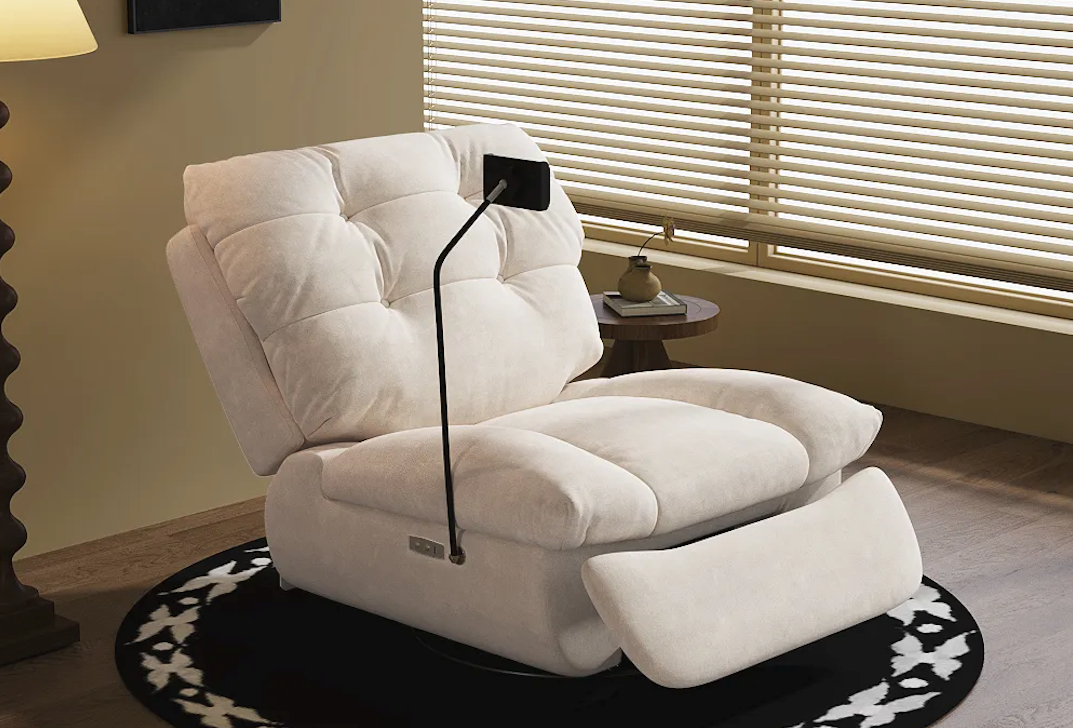
For three years, my wife and I shared one sofa and one armchair in our living room. Whoever got home first claimed the armchair. The other person got the middle of the sofa, which is fine for fifteen minutes and slowly becomes purgatory after that. Eventually, I did the math: I was spending two hours a night sitting in a position I didn’t choose, in a spot I didn’t pick, with a viewing angle I didn’t love.
I bought myself a swivel recliner. It was the best $900 I’ve spent on furniture, full stop.
A swivel recliner does something a regular armchair can’t — it lets you face the conversation, then face the TV, then face the window for reading, all without dragging the chair around or contorting your spine. In a household where the living room serves three or four functions, that flexibility is worth paying for.
But — and this is a real but — swivel recliners are also one of the easiest pieces of furniture to overbuy or underbuy online. The mechanism matters. The clearance matters. Manual versus power is not a small decision. Let’s walk through what I wish I’d understood before clicking buy.
What Makes a Swivel Recliner Different
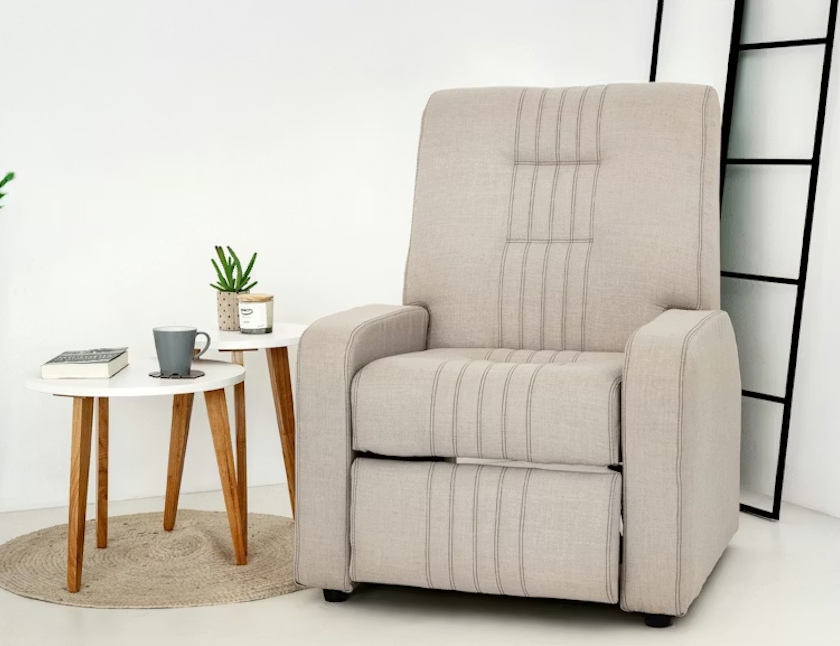
A swivel recliner combines two separate mechanisms into one chair: a 360-degree rotation base that lets the seat spin freely on a central post, and a reclining mechanism that tilts the back and extends a footrest. Either feature alone is useful. Together, they’re transformative for how a single chair functions in a room.
The rotation matters more than people expect. In a traditional living room, your seating is locked into one orientation — usually facing the TV. The moment a conversation happens with someone in the kitchen, or you want to read by the window, you’re stuck. A swivel recliner solves this with a quarter-turn of your hips.
The reclining mechanism matters too, but in a more conventional way: it adds three or four seating positions (upright, light recline, deep recline, footrest extended) instead of the one position a fixed chair gives you.
The trade-off is structural complexity. A standard armchair has a frame, padding, and legs. A swivel recliner has a frame, padding, a rotation bearing, a reclining mechanism with internal levers or motors, and (in power versions) electronics. More moving parts means more potential failure points. BIFMA’s general durability standards for seating cover the cycle testing manufacturers use to verify these mechanisms — most quality recliner mechanisms are tested for 25,000 to 30,000 cycles, which translates to roughly 10–15 years of daily home use if the chair is built well.
Who Should Consider a Swivel Recliner
This is the question buyers don’t ask themselves often enough. A swivel recliner is genuinely great for two specific use cases. Outside of those, it might be the wrong tool.
TV Corners and Reading Spots
If your living room has a corner that gets good natural light during the day and faces the TV at night, that corner has been waiting for a swivel recliner. The rotation lets you orient toward the window for reading, then pivot 90 to 180 degrees to face the screen for the evening — without moving the chair.
Reading position matters here. According to the American Optometric Association’s published guidance on visual ergonomics, reading distance and lighting angle affect eye fatigue significantly over time. A swivel chair lets you adjust your orientation to the light source, which a fixed armchair physically can’t do. Small thing, but if you read for an hour or more in the evening, it adds up.
Open-Plan Living Rooms
Open-plan layouts create a specific problem: living room seating tends to face the TV, but the kitchen and dining areas are often behind the seating. When someone’s cooking and you want to talk, you end up shouting over the back of the sofa. A swivel chair near the conversation boundary lets one person rotate toward the kitchen without leaving their seat.

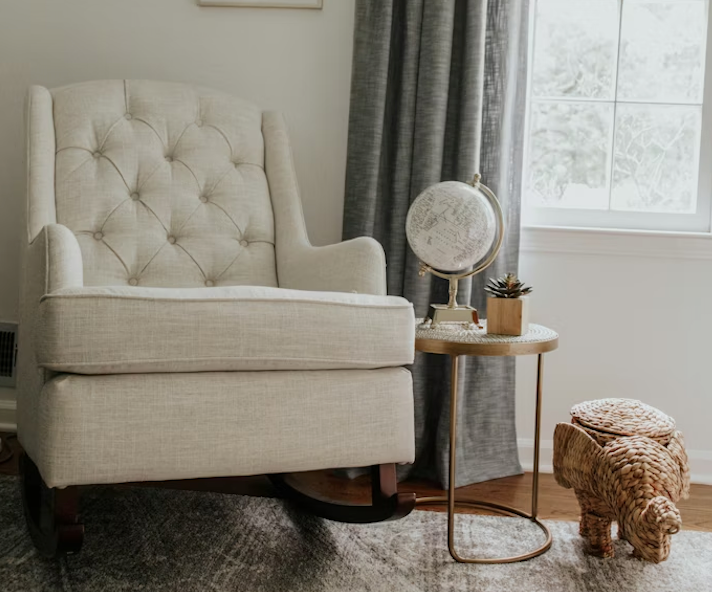
This is also where design cohesion starts to matter. A swivel recliner is going to be visible from every angle in an open-plan space — there’s no wall to anchor it against, and people will see the back of it as often as the front. The finish, leg style, and upholstery should pull from the same family as your sofa, not fight it. A leather sofa with a fabric swivel chair in a contrasting color usually reads as “two pieces that don’t know each other.” A leather sofa with a leather or warm-fabric swivel chair in a complementary tone reads as “intentional.”
If you’re shopping for a swivel chair to add to an existing setup, POVISON’s sofa and seating collection groups upholstery options by finish family — which makes pulling a coordinated single chair into the conversation much less guesswork than browsing by photo alone.
Manual vs Power Swivel Recliners
This is the decision most buyers struggle with. Both work. Both have real trade-offs. Here’s how to think about it.
| Factor | Manual | Power |
| Price | $400–$1,200 typical | $700–$2,500 typical |
| Recline control | Lever or push-back; usually 2–3 fixed positions | Buttons or touch panel; infinite positions |
| Speed of recline | Instant | 8–15 seconds end-to-end |
| Power requirement | None | Requires access to a nearby wall outlet for steady plug-in power |
| Weight | 60–90 lbs typical | 90–130 lbs typical (motors + steel) |
| Maintenance | Mechanical lever may loosen over years | Motor lifespan typically 20,000–30,000 cycles |
| Repair complexity | Lever or cable replacement is simple | Motor or control board replacement requires parts + service |
Pick manual if you: want lower cost, simpler long-term maintenance, no cord visible behind the chair, faster transitions, lighter weight for occasional rearranging. Manual recliners are mechanically simpler — fewer points of failure, easier to fix.
Pick power if you: want incremental position control (manual recliners typically lock at fixed angles, while power motors stop anywhere along the range), have any limitation that makes lever operation uncomfortable, or want USB charging ports or memory positions (common on premium power models).
One real consideration on power chairs: the motor is the most expensive component, and not all motors are equal. Look for motors with electrical safety certification — this signals the motor and control board have passed independent safety testing for residential use. Cheap unbranded motors can be the difference between a chair that lasts 15 years and one that fails in three.
The honest answer: most households are fine with manual. Power is genuinely better for some people, but it’s not categorically better. Don’t let upcharge marketing convince you otherwise.
How Much Clearance a Swivel Recliner Needs
This is where small-apartment buyers get caught. The chair fits the floor space — but the chair in motion doesn’t.
Three measurements matter:
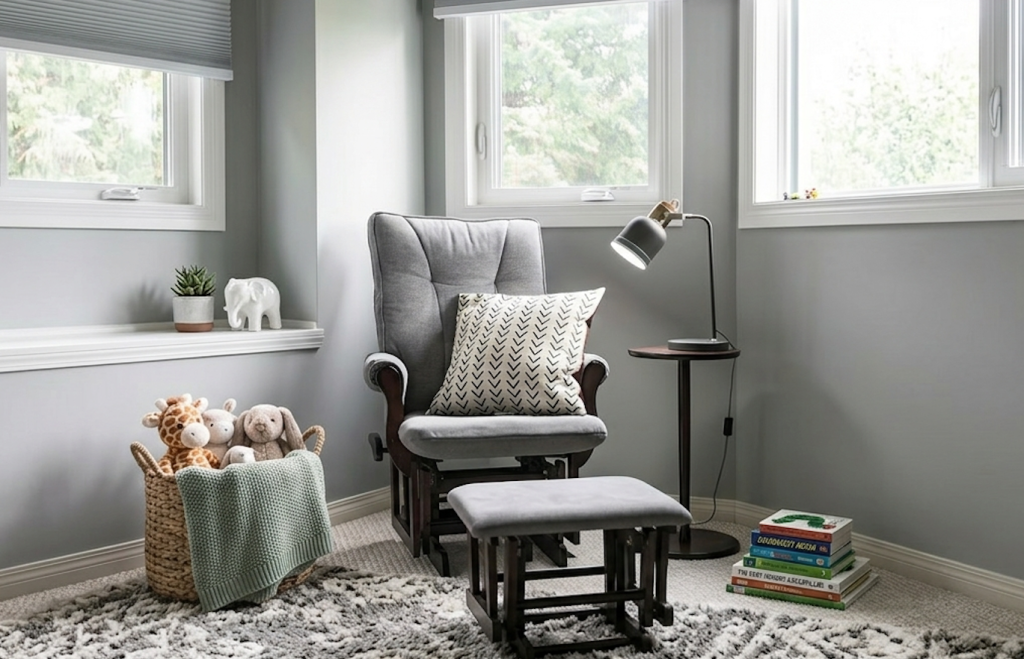
Rotation diameter. A swivel recliner needs roughly 40–48 inches of clear circular space around its central post for the seat and armrests to spin without hitting anything. That’s the diameter of the chair itself plus a few inches of swing. If your chair is 36 inches wide and the wall is 38 inches from the center post, the armrest will hit the wall on every rotation.
Recline depth. When fully reclined, most swivel recliners extend the back 18–24 inches behind the upright position, and the footrest extends 20–28 inches forward. So a chair that occupies a 36″ × 38″ footprint when upright actually occupies more like 36″ × 80″ when fully reclined. Measure both states before you commit.
Walking clearance. Around any seated furniture, you want at least 24 inches of walkway for normal traffic and 30–36 inches if it’s the main path through the room. A reclined chair that pushes into the walking path forces everyone to detour, which gets old fast.
The painter’s tape test, swivel edition: Before ordering, lay out the upright footprint with painter’s tape. Then add a second outline showing the reclined extension. Stand in the doorway and walk the room. If you have to step around the reclined outline, the chair is too big for the space.

What to Check Before Buying Online
Five things to verify on every product page before you click buy:
- Mechanism warranty length. This is the single best signal of build quality. Frame warranties are often “lifetime,” which sounds great but doesn’t tell you much. The mechanism warranty — usually 3 to 10 years for the reclining and rotation hardware — is what actually matters. If a manufacturer offers less than 3 years on the mechanism, that tells you what they think of it.
- Weight capacity. Standard swivel recliners typically support 250–300 lbs. Heavy-duty versions support 400–500 lbs. The number matters for two reasons: your safety, and the indirect quality signal. A chair rated for 300 lbs is built with thicker frame steel than one rated for 200 lbs, even if you’re well under either limit. Look for weight ratings explicitly published — vague language like “supports adult use” is a yellow flag.
- Foam density. Cushion foam below 1.8 lb/ft³ density breaks down in 2–3 years. Foam at 1.8–2.5 lb/ft³ holds shape for 8–10 years of daily use. Look for CertiPUR-US certified foam, which sets specific limits on heavy metals, formaldehyde, and total VOC emissions (less than 0.5 parts per million) — important for any seating you’ll spend hours in daily.
- Delivery and assembly. Swivel recliners ship in two configurations: fully assembled (the rotation base and reclining mechanism are pre-installed and pre-calibrated at the factory) or flat-pack (you attach the back to the seat, install the mechanism, and adjust tension yourself). The difference matters more here than on a regular armchair, because the reclining and swivel mechanisms are pre-tensioned at the factory. When you self-assemble, small alignment errors cause uneven recline, off-center rotation, or a wobble that gets worse over time. POVISON ships swivel recliners as fully assembled units — meaning the chair arrives ready to sit in, with the mechanism pre-calibrated.
- Return policy specifics. Read the actual return policy, not just the “30-day returns” headline. Specifically, look for who pays return shipping on a 90-pound chair (often the buyer, which can run $200–$400), whether there’s a restocking fee, and whether the original packaging is required. Recliner returns are notoriously expensive — knowing the policy in advance prevents surprises.
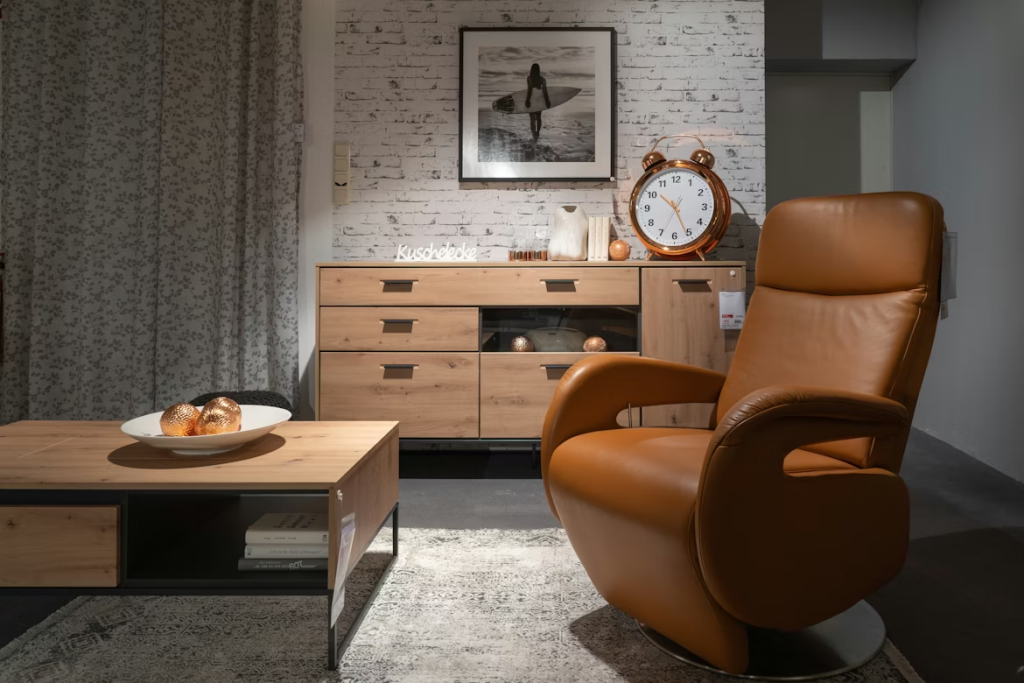
If you’re filtering options across multiple chair styles, POVISON’s living room collection breaks down delivery, warranty, and assembly status on every product page — which is the easiest way to compare without bouncing between tabs.
FAQ
Is a swivel recliner worth it for a living room?
A swivel recliner is worth it for living rooms where one person uses a single chair regularly — for reading, watching TV, or joining open-plan conversations from a fixed seat. The combination of rotation and recline replaces two pieces of furniture (an armchair plus an ottoman) and adapts to multiple uses without rearrangement. It’s less worth it in living rooms where seating is rarely used by one person at a time, or where the room is too small to allow the chair’s rotation and recline clearance.
How much space do you need behind a swivel recliner?
A swivel recliner needs roughly 18–24 inches of clearance behind the upright position to fully recline without hitting a wall. Some wall-hugger or “zero-wall” designs reduce this to 4–6 inches by sliding the seat forward as the back tilts back, but standard recliners need substantial rear space. The chair also needs 40–48 inches of total rotation diameter around the central post for the seat to spin freely. Measure both the recline depth and the rotation diameter before placing the chair against any wall.
Is a power recliner better than a manual recliner?
A power recliner offers infinite position adjustment and easier operation, but a manual recliner offers lower cost, simpler maintenance, and no power dependency. Power is meaningfully better if you want to stop the recline at exactly the angle that matches your TV viewing or reading position, or if a lever is hard to operate. Manual is meaningfully better if you want to minimize long-term repair complexity and avoid hiding a power cord. For most general living room use, manual recliners deliver 90% of the experience at 60–70% of the cost.
Can a swivel recliner work in a small apartment?
A swivel recliner can work in a small apartment if you choose a compact model and verify the rotation and recline clearances against your floor space. Compact swivel recliners run 30–34 inches wide and need a rotation diameter of about 38–42 inches plus recline clearance. In studio or one-bedroom apartments, a wall-hugger design saves significant rear clearance (4–6 inches versus 18–24 inches). Always tape out both the upright and reclined footprints before ordering — many returned recliners “fit the room” in upright position but couldn’t actually recline once the wall was in the way.
Conclusion
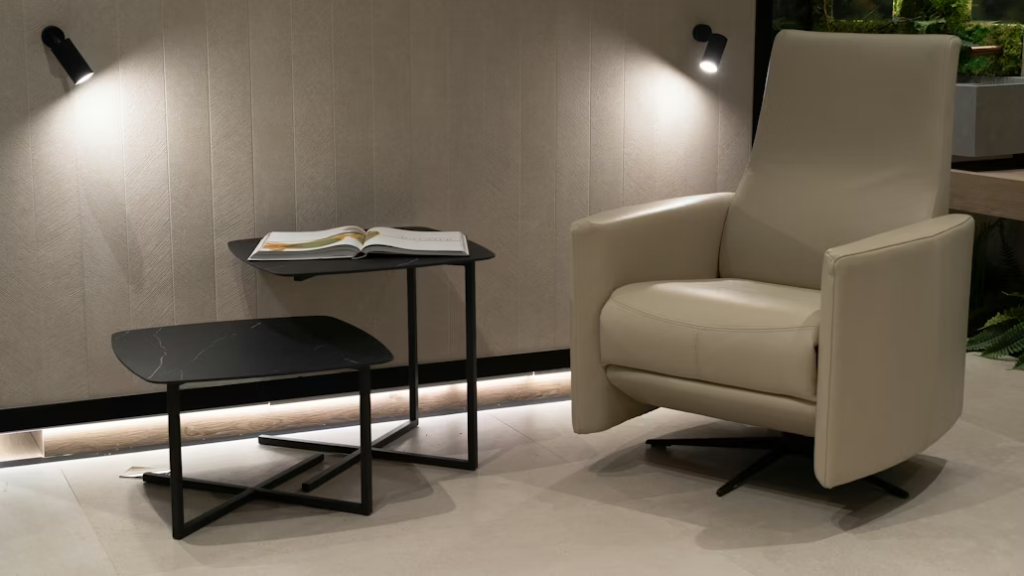
A swivel recliner is a real upgrade for living rooms with a clear use case — a reading corner, a TV nook, or an open-plan space where one person needs to face multiple directions. It’s an easy mistake when you buy one as a generic “comfy chair” without thinking about the rotation, the recline depth, or the role it’ll play in the room.
If I had to give you one piece of advice: measure for the chair in motion, not at rest. That single check would have prevented half the recliner regret stories I’ve heard from friends.
The other piece of advice: don’t overspend on power if manual would do the job. The mechanism quality matters more than whether it’s motorized. A well-built manual recliner from a reputable maker will outlast a cheap power recliner every time, no matter how impressive the buttons look in the showroom photo.
Get the rotation right. Get the clearance right. Get the warranty in writing. Then enjoy your own chair — you’ve earned it.
Related Reading:


