 By Charles
Hey there, fellow furniture survivors!
Charles here—your friendly neighborhood Recovering Flat-Pack Victim. After one too many Saturday mornings spent deciphering hieroglyphic instruction manuals (and questioning my life choices), I swore I’d never wrestle with an Allen wrench again.
Today, I’m diving into modular sofas: are they actually worth it for real homes with real chaos, or just another pretty trend that looks great on Pinterest but falls apart when your dog decides it’s a trampoline? Let’s find out together.
What Is a Modular Sofa?
A modular sofa is a couch made of separate sections (modules) that you can arrange in different layouts, like building blocks for adults, but without the tiny plastic pieces underfoot. Each module is a self-contained seat, chaise, or corner piece that connects to the others.
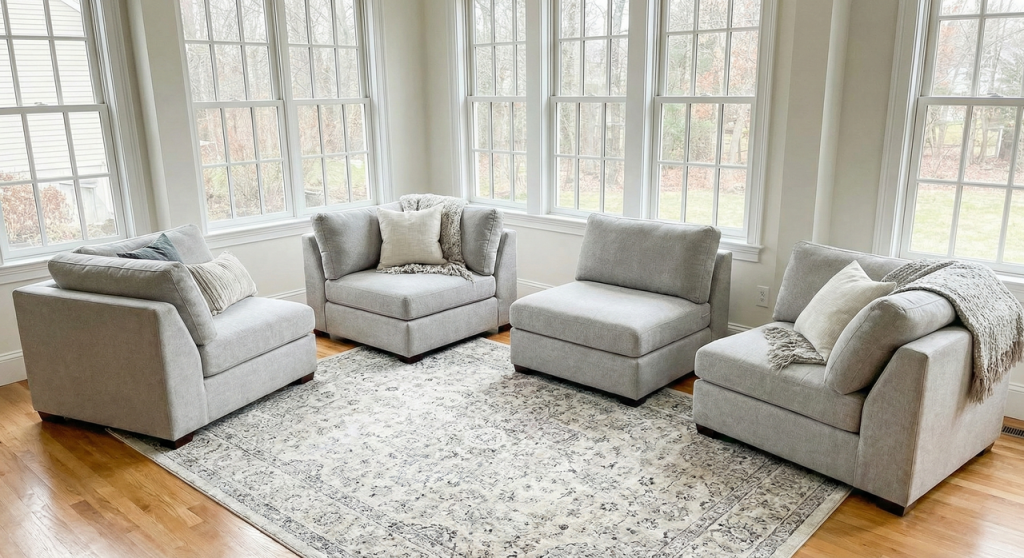
Instead of being stuck with one fixed shape, you can build a straight sofa, an L-shape, a U-shape, or even split the modules into a couple of smaller seating areas. The big win for you: your sofa adjusts as your life changes—new baby, bigger dog, or a move to a new place with a different layout.
Many modular sofas also give you options for storage, removable covers, and add-on pieces like ottomans or extra chaise sections, so you can scale up or down without replacing the whole thing. If you’ve been noticing modular furniture everywhere lately, it’s not just your algorithm—platforms like interior design trends tracked by Architectural Digest have been reflecting this shift for a while, especially among millennials and Gen X homeowners who want spaces that look good and still adapt to real life.
Pros of Modular Sofas
When you’re weighing a modular sofa against a traditional couch, it helps to look at the day-to-day reality, not just the showroom photos. For a busy household, the upsides usually fall into three big buckets: flexibility, easier moving, and room to grow.
Flexibility
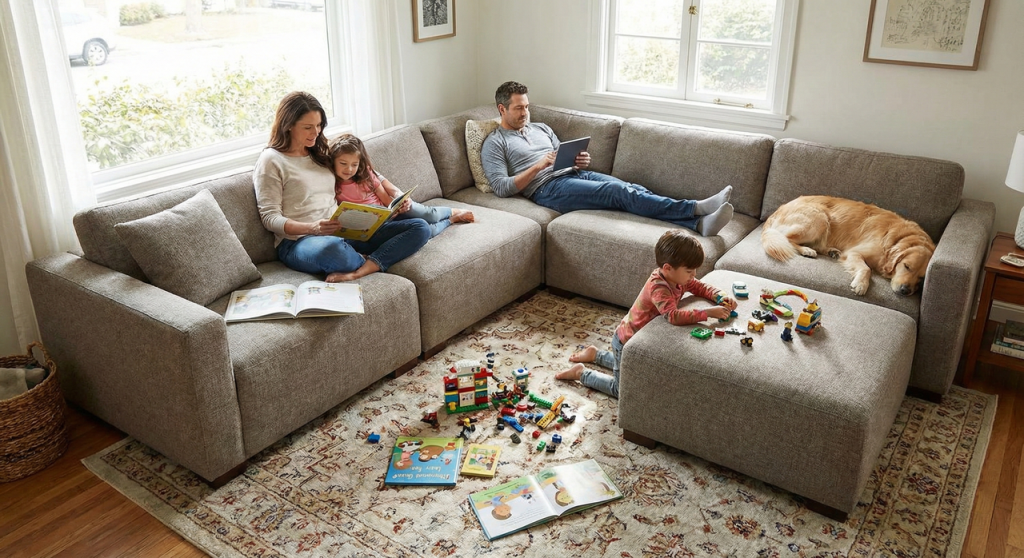
Flexibility is the main reason you’d choose a modular sofa over a standard couch. You can start with a simple 3-seat setup and later add a corner and a chaise to turn it into a full sectional.
Because each module is its own seat, you can:
- Switch from an L-shape to a straight sofa when you rearrange the room.
- Separate a piece to use as a reading chair or gaming spot.
- Slide modules around to open up floor space for parties or playtime.
If your life involves frequent furniture shuffles to make room for playpens, pet beds, or temporary home offices, that flexibility pays off quickly. If you browse enough real-home stories, you’ll see this point come up again and again—real-life modular sofa reviews are full of people saying flexibility is the thing that makes modular sofas actually worth owning long-term.
Pro tip: If you’re also thinking about your living room layout, understanding sofa seat depth is crucial—especially when you’re mixing and matching modules for maximum comfort.
Easy to Move
A full-size traditional sofa can easily weigh 150 lbs or more in one solid piece, which is not fun when you’re trying to pivot through a hallway at 9 p.m. A modular sofa breaks that bulk into smaller, lighter units so you can move one section at a time.
In practical terms, that means you can:
- Carry modules up stairs or around tight corners without hiring movers.
- Slide a single piece out to clean under it instead of wrestling the whole couch.
- Rearrange your living room solo instead of waiting for weekend help.
For city apartments, narrow entries, or multi-level homes, this alone can make a modular sofa worth it.
Expandable
A modular sofa lets you grow instead of replace. If you start with a 2- or 3-piece configuration, you can often add more corner, armless, or ottoman modules from the same collection years later.
That’s especially helpful when:
- You move from an apartment to a house and suddenly have more wall space.
- Your family grows and you need more actual seats, not just decorative pillows.
- You want a chaise or double chaise setup for movie nights without buying a new sofa.
Long term, this can save you money, because you’re upgrading piece by piece instead of starting from scratch every time your space changes. If you’re comparing different sofa types for your space, choosing the best sectional sofa can help you sort out when a traditional sectional makes more sense than going fully modular.
Cons of Modular Sofas
Modular sofas aren’t perfect, and you should know the trade-offs before you commit. The two biggest complaints usually come down to pieces shifting and a higher initial price tag.

Understanding these drawbacks helps you shop smarter, so you can choose a model that works for your family instead of fighting with it every time someone flops down.
Pieces Can Shift
Because a modular sofa is made of separate sections, some models tend to “walk” apart over time, especially if you have jumpy kids or a dog who launches onto the cushions.
To avoid a drifting gap in the middle of your couch, look for:
- Metal or rubber connectors that firmly lock modules together.
- Grippy feet that don’t slide easily on hardwood.
- Heavier frames (solid wood or metal) that stay put better than super-light ones.
If you already have slippery floors, adding a rug under the sofa also helps keep everything aligned. A lot of space-saving furniture solutions talk about this exact point: good anchoring is often what separates “fun modular” from “constantly fixing the couch.”
Higher Price Point
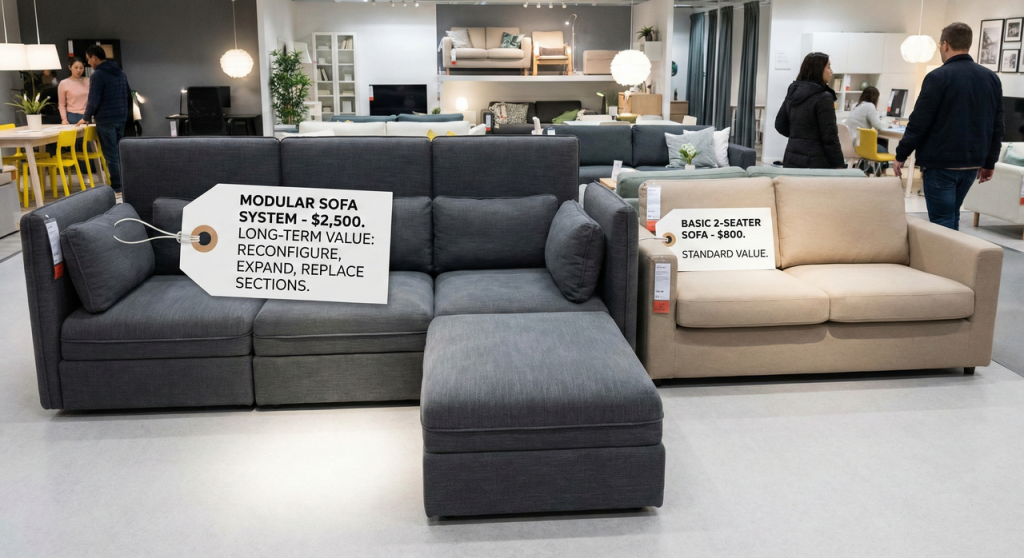
Modular sofas often cost more up front than a basic standard couch, especially when you choose durable performance fabric or solid wood frames. You’re paying for extra hardware, more complex design, and the ability to reconfigure.
The trade-off is lifespan. When you start digging into durability, you’ll notice the same pattern show up repeatedly—across long-term durability tests and real-world usage reports, a well-built modular sofa can realistically handle 10+ years of daily use, while cheaper fast-furniture couches often start sagging or peeling in just 3–5 years.
If what you’re really after is deep, sink-in comfort without paying for reconfiguration, it might also be worth looking at deep sofas or reclining options. They solve a different problem, but for some homes, they make more sense.
Best Configurations by Room
Choosing the right modular sofa configuration for your space comes down to room size, traffic flow, and how your family actually uses the seating. If you’ve ever gone down the living-room-layout rabbit hole, you’ve probably seen similar advice floating around on sites like The Spruce—most of it boils down to flow first, furniture second.
Small Living Rooms or Apartments
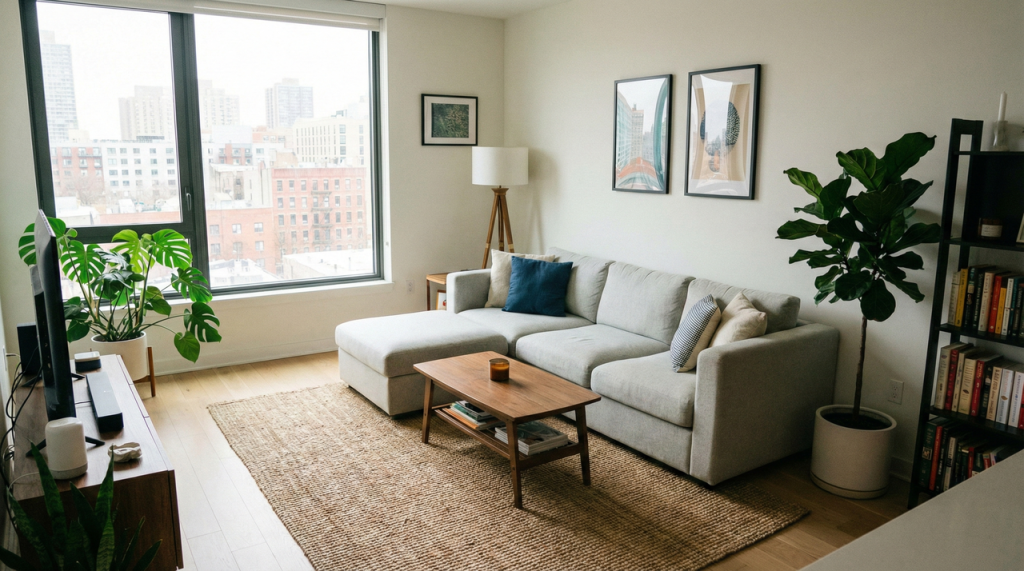
In a smaller space, a 2- or 3-piece modular sofa with a chaise works best. Aim to leave at least 30–36 inches of walkway between the sofa and other furniture so you’re not sidestepping just to reach the kitchen.
A layout that works for most apartments:
- One corner piece
- One armless seat
- One chaise
This gives you enough room to stretch out without overwhelming the room.
Bonus: Pair your compact modular with a round coffee table with storage—the curved edges save floor space and prevent those classic shin-bruising encounters in tight quarters.
Medium Family Rooms

For a typical family room, you can step up to an L-shape with 4–5 modules. That usually looks like:
- One corner at each end
- Two or three armless seats in the middle
- Optional ottoman in front for extra lounging
This shape fits a 3–4 person household comfortably and still leaves space for a coffee table and play area. If you’re building out your whole living room, choosing the right TV stand alongside your sofa can help keep the space balanced and functional.
Large or Open-Concept Spaces

In a big, open room, a U-shaped modular sofa anchors the space and creates a natural conversation zone. You might use:
- Two corners
- Three to four armless seats
- One or two chaises
This setup is ideal if you host often, have a larger family, or want a designated “movie night” zone where everyone has a real spot to sprawl out.
If you’re unsure where to start, measure your room, sketch a simple floor plan, and map out walkways first. Then choose the smallest configuration that gives you enough seats. You can always add modules later—that’s the beauty of going modular.
Styling Your Modular Sofa
Once you’ve nailed the configuration, the fun part begins: making it look like it belongs in your home, not a showroom. A modular sofa in a neutral tone (think grey, beige, or charcoal) gives you the most flexibility for seasonal updates.
For grey modular sofas specifically, layering textures is your best friend—mix linen throw pillows with a chunky knit blanket and a leather ottoman to keep things from looking flat. If you’re working with grey in particular, styling a grey sofa gets into color pairings, textures, and rug choices that actually hold up in real rooms.
When a Modular Sofa Might Not Be Right for You
Honesty hour: modular sofas aren’t the answer for every household. If you never rearrange your furniture, rarely move, and already have a couch you love, the extra cost and complexity might not make sense.
A few scenarios where you might want to skip modular and look at alternatives:
You need serious reclining comfort: Some modular sofas offer recliners, but traditional setups often win on pure adjustability and ergonomics. If that’s high on your list, power reclining vs. manual sofas are worth comparing first.
You frequently host overnight guests: In that case, a true sleeper sofa might serve you better than a modular layout.
Your layout is permanently fixed: Built-ins, fireplaces, and awkward corners sometimes work better with a custom-fit sectional than trying to force modular pieces into a rigid space.
Furniture should work for your life, not the other way around.
Modular Sofa FAQs
What is a modular sofa and how does it work?
A modular sofa is a couch made from separate sections—such as corner seats, armless seats, and chaises—that connect together. You can rearrange these modules into different layouts, like a straight sofa, L-shape, or U-shape, or even split them into smaller seating areas as your needs change.
What are the main pros and cons of a modular sofa for family homes?
Modular sofas offer big benefits for busy households: flexible layouts, easier moving through stairs and tight halls, and the ability to expand with extra modules over time. Downsides include a higher upfront price and the risk of sections shifting if the connectors, feet, or flooring aren’t optimized to keep pieces in place.
What modular sofa configuration is best for a small living room or apartment?
For small spaces, a compact modular sofa with 2–3 pieces and a chaise usually works best. A common setup is one corner unit, one armless seat, and one chaise. Aim to keep at least 30–36 inches of clear walkway around the sofa so the room doesn’t feel cramped.
How do I stop my modular sofa pieces from separating?
To keep modular sofa sections from drifting apart, look for models with sturdy metal or rubber connectors and non-slip feet. Heavier frames in solid wood or metal shift less than very light ones. On slick floors, placing a rug under the sofa helps prevent the modules from sliding over time.
Is a modular sofa worth the higher price compared to a standard couch?
A modular sofa often costs more upfront because of its flexible design, extra hardware, and durable construction. However, a well-built modular can last 10+ years and adapt to new rooms, families, and layouts. Spread over its lifespan, the cost per year is usually only slightly higher than cheaper, shorter-lived couches.
Is a Modular Sofa Right for You?
After years of wrestling with flat-pack furniture and living through three moves with traditional couches, I can honestly say modular sofas earn their keep if you value adaptability and hate the idea of hauling a 200-pound sofa down three flights of stairs again.
They’re not magic—you’ll pay more, and you’ll need to choose wisely to avoid the shifting problem. But for households that change, grow, or just like the option to shake things up without replacing everything, a quality modular sofa is one of those rare purchases that keeps paying dividends.
Ready to explore fully assembled options that actually hold up to real family life? We’ve done the homework so you don’t have to—no assembly nightmares, just honest furniture built for how you actually live.


