 By Charles
You’re weighing a power reclining sofa vs manual recliner because you want real comfort, not another fussy piece of furniture that adds to your to‑do list. You’re juggling work, kids or pets, and the last thing you need is a high‑maintenance chair that breaks, hums loudly, or needs a toolbox every six months. Let’s walk through how each option really behaves in a busy, lived‑in home so you can pick the one that matches your actual life, not just the showroom photos.
What Defines a Power Reclining Sofa?
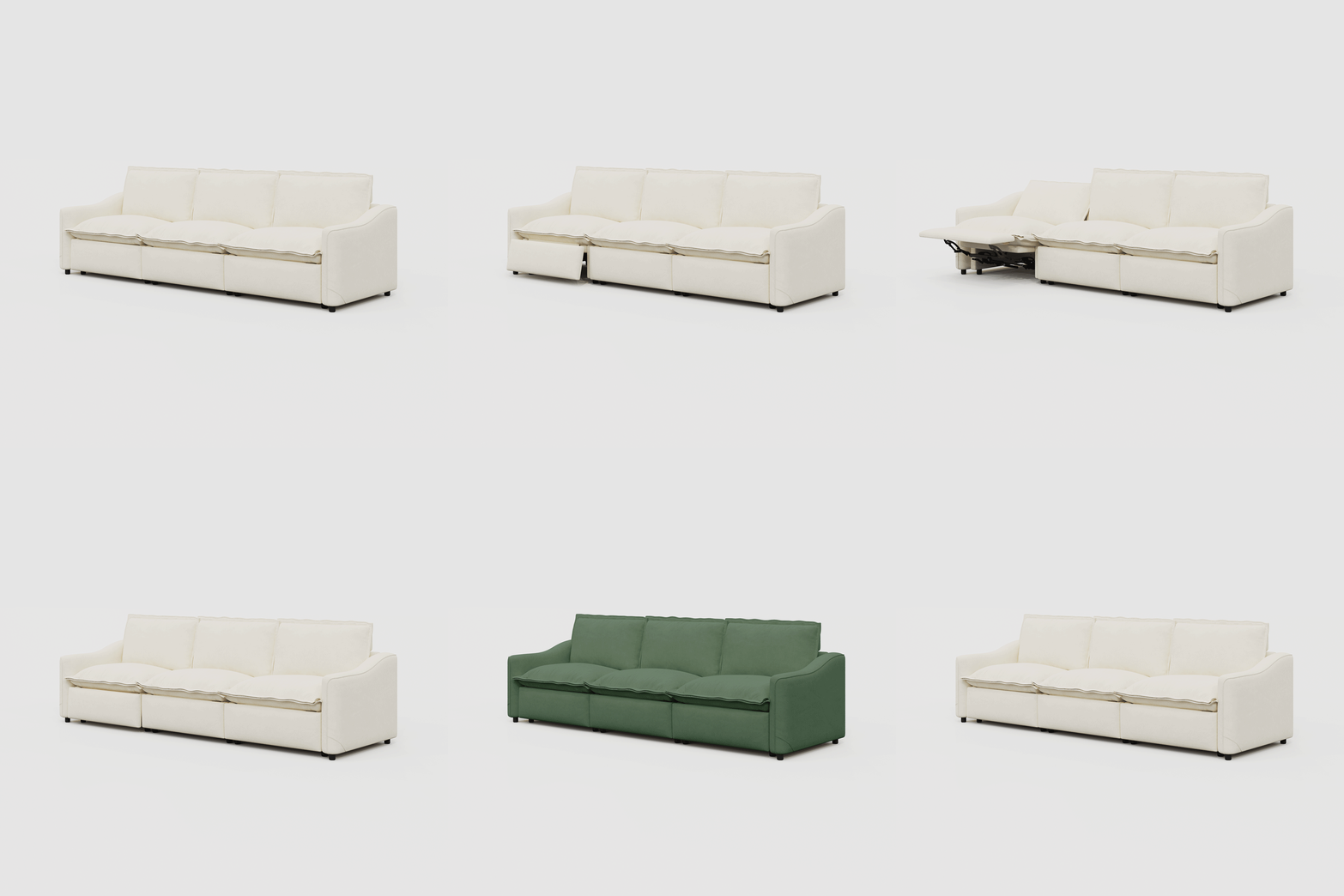
A power reclining sofa uses electric motors to move the seat, back, and sometimes the headrest and lumbar at the touch of a button. You plug it into a wall outlet, tap a control, and the chair does the work for you. No pushing, no fiddling with levers, just slow, controlled movement to your ideal position.
Power Recliners for Nurseries: Are They Quiet Enough for Babies?
Power reclining is designed to move smoothly and consistently, which matters when you finally get a baby or toddler down.
Based on our showroom tests, most quality power recliners:
- Move from upright to fully reclined in 8–12 seconds
- Run at around 40–55 decibels, similar to a quiet conversation
- Stop instantly when you release the button for safety
That slow, even motion means you’re not jerking your weight back like you do with a manual push‑back chair. If you’re holding a sleeping baby or you’ve got a light sleeper in the next room, that predictable movement and relatively low noise level help you shift positions without a full wake‑up.
The key is choosing a model with a reputable motor brand and good reviews mentioning noise. If reviewers say “whines” or “grinds,” skip it. You want a gentle hum at most, not a blender.
Why Choose Leather Upholstery for Pet Owners?
If you’ve got dogs or cats, upholstery can make or break how long your recliner actually looks decent.
For pet households, top‑grain leather or high‑quality faux leather usually beats basic fabric because:
- Claws are more likely to slide rather than snag
- Fur wipes off in under 30 seconds with a damp cloth
- Liquids bead on the surface for a few minutes instead of soaking in instantly
Fabric recliners can be great if you pick a tight weave and stain‑resistant finish, but you’ll spend more time vacuuming and spot‑cleaning. Leather (or good faux) gives you that “wipe and go” experience that matters when a 70‑lb dog decides the footrest is his new throne.
What Makes a Manual Recliner Different?
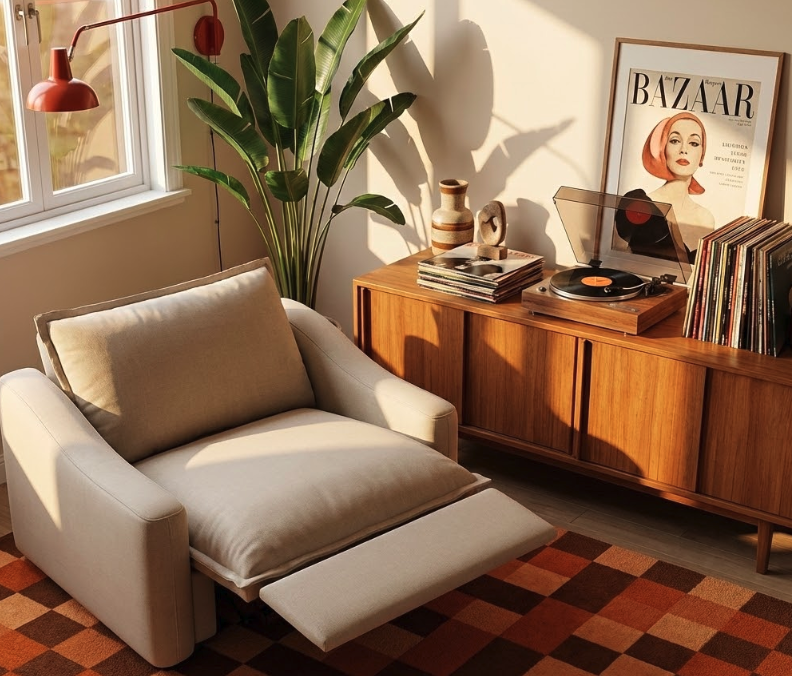
A manual recliner skips the motors entirely. You recline by pulling a lever or pushing back with your body weight. No cords, no power supply, and usually a lower price tag. You trade button‑controlled precision for simplicity and less that can break long‑term.
How Does Lever Operation Save $200 on Average?
Because manual recliners don’t use motors, wiring, or control panels, you cut out a chunk of manufacturing cost.
In most mid‑range brands, you’ll see something like:
- Manual recliner: $350–$600
- Comparable power recliner: $550–$900
That’s often a $150–$250 difference for the same frame and cushions. If you’re furnishing a whole room, say, a sofa plus a chair, that gap adds up fast. You’re paying less up front and you’re removing the risk of motor or electrical failure down the line.
Which Frame Materials Last 5+ Years with Kids?
For a busy home, the frame and base matter more than the cupholders.
Look for:
- Hardwood (kiln‑dried) or plywood frames, not particle board
- Sinuous springs or heavy‑duty webbing for seat support
- A metal reclining mechanism rated for 250–300 lbs per seat
A well‑built manual recliner with these specs can easily survive 5–10 years of daily use, even with kids turning it into a mini trampoline. If the label just says “wood frame” and you can’t find a weight rating, assume it’s not built for the long haul.
Comparison Table: Power vs. Manual Recliner (Speed, Cost, Durability)
When you compare a power reclining sofa vs manual recliner, you’re really weighing convenience against simplicity and long‑term maintenance. Power wins on effortless comfort and precise positioning: manual usually wins on cost, fewer failure points, and easier repairs.
Here’s a quick side‑by‑side snapshot using typical mid‑range models:
| Feature | Power Reclining Sofa | Manual Recliner | Winner |
| Recline Speed | Smooth glide (~8–12 sec) | Quick snap (~3–5 sec) | Manual (For speed) |
| Positioning | Infinite stops (Micro-adjustments) | 2-3 Fixed positions | Power (For comfort) |
| Maintenance | Moderate (Motor/Cord care) | Low (Mechanical only) | Manual (For longevity) |
| Noise Level | Whisper quiet (~45dB) | Silent (unless mechanism squeaks) | Draw |
| Pet Friendliness | High (No jerky movements to startle pets) | Medium (Push-back can be abrupt) | Power (For safety) |
| Price Point | $800 – $1,800+ | $350 – $900 | Manual (For budget) |
| Best For… | 👶 Nursing moms, Seniors, Movie buffs | 🏠 Renters, Tight budgets, Rural areas |
Still worried about the motor breaking? Don’t be. Our Power Recliners come Fully Assembled and backed by a 3-Year Motor Warranty. We handle the heavy lifting so you don’t have to.
👉 Browse Our ‘Reliable Comfort’ Collection
Which Offers Faster Recline in 10 Seconds?
If you care about pure speed, a manual recliner technically wins. When you lean back or pull a lever, you can go from upright to full recline in about 3–5 seconds.
A power recliner usually takes 8–12 seconds to fully recline. The trade‑off: power gives you micro‑adjustments. You can stop at the exact angle your back likes instead of “upright” or “all the way back.”
How Do 4 Durability Metrics Stack Up?
Think in terms of what actually fails first:
- Motors: Power models add 1–2 motors per seat: these can fail after 5–8 years if heavily used.
- Cushions: Both types compress over time: higher density foam (1.8+ lb/cu ft) lasts longer.
- Mechanism: Quality metal mechanisms can survive 20,000+ cycles.
- Upholstery: Leather often looks good past 10 years: basic polyester can show wear at 3–5 years with pets.
Power adds one more category of things to maintain, but the frame, springs, and fabric rules apply to both.
What Are the Pros and Cons of Each Type?
Both options have clear strengths. Your choice isn’t about which is “better” in a vacuum, it’s about which solves more of your everyday annoyances and fewer of your future headaches.
Why Power Models Boost Convenience for Busy Homeowners?
Power recliners shine when:
- You change positions often and want button‑control instead of pushing with your legs.
- Someone in your home has mobility issues and needs assisted movement.
- You love extras like USB ports, adjustable headrests, or lumbar support.
You’re paying for convenience and accessibility. If you regularly collapse onto the sofa after a long day, being able to tap a button instead of wrestling a lever feels surprisingly luxurious.
The downside: you have to place it near an outlet, manage cords, and accept the possibility of future motor repairs.
When Do Manual Options Outperform on Maintenance Costs?
Manual recliners usually win when you think about ownership costs over 5–10 years.
- Fewer parts means fewer things to break.
- Repairs (if needed) are usually mechanical and cheaper than motor replacements.
- No power cords to damage.
If you live in a rental, move often, or have kids who treat furniture like playground equipment, a well‑built manual recliner can be the lower‑stress option. You might give up the fancy controls, but you gain peace of mind that one electrical failure won’t turn your favorite seat into a very expensive non‑reclining chair.
Which Recliner Should You Buy Based on Lifestyle?
So which side of the power reclining sofa vs manual recliner debate fits your house? The answer comes down to your power reliability, who’s using the chair, and whether pets and kids are part of the daily chaos.
Who Should Avoid Power Models Due to Power Outages?
If your area loses power several times a year for hours, a fully power‑dependent recliner can be annoying. Some models include a manual override, but many don’t.
You might lean manual if:
- You’re in a rural or storm‑prone area
- You don’t have a convenient wall outlet near the spot where the recliner will sit.
- You rearrange rooms often and hate cord management
In those homes, a simple manual recliner is one less thing that depends on the grid.
Is Power Reclining Sofa Worth $300 Extra for Pet Families?
For pet families, that $300+ upcharge on a power reclining sofa with pet-friendly fabric can still be worth it if:
- You choose durable upholstery (top‑grain leather or heavy‑duty performance fabric)
- The mechanism is metal, not plastic, and rated for higher weight
- You value that “press, recline, and cuddle the dog” convenience every single night
Think about the math: if the sofa costs $1,200 instead of $900 and lasts 10 years, that’s an extra $30 per year for easier daily comfort. If you use it every evening, that’s pennies per movie night.
Love your pets, save your furniture. See the Leather Series that survives claws, paws, and spills—wipe clean in seconds.
👉 Explore the Pet-Proof Collection
If money is tight or you expect serious pet destruction (chewing cords, constant jumping, scratching), a robust manual recliner with pet‑friendly fabric may be the smarter, lower‑risk move.
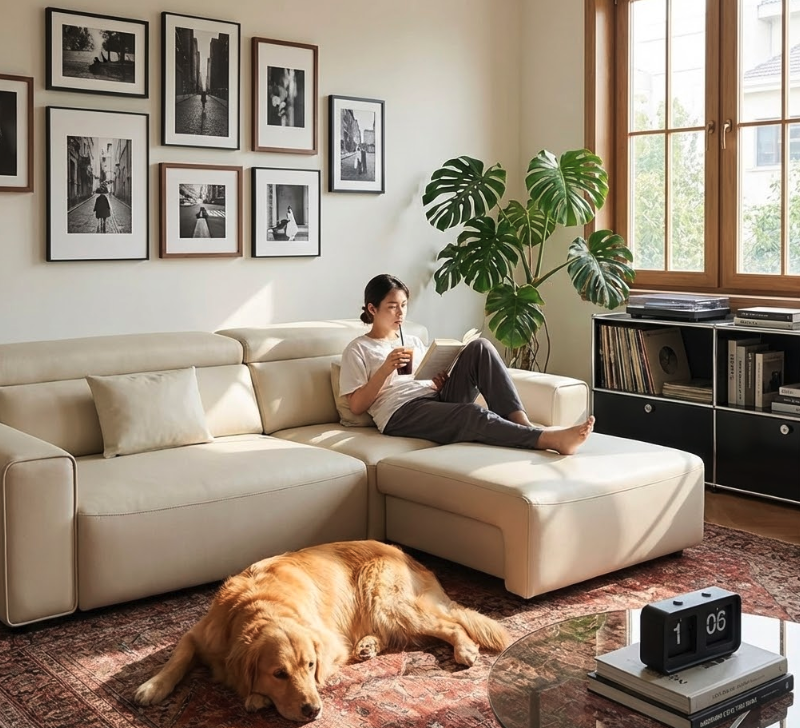
In the end, choose the option that protects your time and sanity. If you crave effortless comfort and you’re okay with a cord and potential repairs, go power. If you want simple, tough, and easier to live with during moves and power hiccups, go manual. Either way, focus on frame quality, upholstery, and weight ratings, those are what keep your favorite seat out of the curb pile.
For more guidance on choosing furniture that supports your physical comfort, check out our guide on selecting the best sofa for back pain. And if you’re wondering how to integrate your new recliner into your existing decor, our tips on styling a grey sofa can help create a cohesive look.
Frequently Asked Questions
What is the main difference between a power reclining sofa vs manual recliner?
A power reclining sofa uses electric motors to move the seat and back at the touch of a button, often with extras like USB ports and adjustable headrests. A manual recliner relies on a lever or your body weight, with fewer parts, no cords, and typically a lower price.
Is a power reclining sofa safe and quiet enough for babies or light sleepers?
Most quality power recliners move from upright to fully reclined in 8–12 seconds and operate around 40–55 decibels, similar to a quiet conversation. The motion is smooth and controlled, and they stop as soon as you release the button, helping you shift positions without jolting a sleeping baby awake.
Which lasts longer for families with kids: power reclining sofa or manual recliner?
Both can last many years if they use kiln‑dried hardwood or quality plywood frames, sturdy metal mechanisms, and dense foam. Power recliners add motors that may fail after 5–8 years of heavy use, while manual recliners have fewer failure points and generally lower, simpler repair costs over time.
Are power reclining sofas worth the extra cost for pet owners?
They can be, if you pair them with durable upholstery and a strong metal mechanism. Top‑grain or quality faux leather helps claws slide, fur wipe off quickly, and liquids bead on the surface. If cords, chewing, or rough play worry you, a tough manual recliner may be the safer budget choice. To see more expert recommendations for reclining sofas, explore independent reviews and testing results.
Which is better for seniors or people with mobility issues: power reclining sofa vs manual recliner?
For seniors or anyone with limited leg strength, a power reclining sofa is usually better. Button‑controlled movement reduces strain, makes standing and sitting easier, and allows fine‑tuned positioning. Manual recliners can be harder to push back or close, especially for people with joint pain or balance challenges.


I like how you focused on the day-to-day realities instead of just the technical differences — especially the point about how each option behaves in a busy home. One thing I’ve noticed is that the decision often comes down to whether you prioritize convenience or long-term simplicity, since motors add ease but also more potential upkeep. It’s helpful to see that distinction framed around real-life use rather than just features.