 By Charles
If you’ve ever bought a shiny new TV stand that wobbled within a year, this tv stand materials guide is for you. When you’ve got kids, pets, and a tight schedule, the material your TV stand is made from matters as much as how it looks. Let’s walk through what actually survives real life so you can buy once and relax.
What Material is Best for High-Traffic Homes?
When your living room doubles as a playroom, home office, and dog track, you need a TV stand that doesn’t flinch. The best material for high-traffic homes is usually solid or engineered wood paired with metal, because you get stability, weight, and impact resistance without babying the surface.
Think of it this way: light, hollow pieces shift every time someone bumps them. Heavier materials stay put, which means fewer scares when a toddler leans or a dog tail smacks into the corner. Look for:
- Solid or high-quality plywood frames (not honeycomb or cardboard cores)
- Powder-coated steel legs or base for extra stability
- A surface finish like polyurethane that resists water rings and snacks
If you want a simple rule: in high-traffic homes, mixed materials (wood + metal) usually outlast pure particle board or all-glass options by years, not months.
Is Solid Wood the Safest Choice for Kids?
Solid wood is one of the safest TV stand materials for homes with kids because it’s heavy, stable, and doesn’t shatter. It also ages better than cheaper boards, which means fewer sagging shelves under game consoles and stacks of DVDs.
The trade-off? You pay more up front and the stand will be heavier to move. But if you want something that won’t feel loose in two years, solid wood is a strong bet.
Oak vs. MDF: Which Resists Scratches Better?
In a direct kid-and-toy battle, oak wins over MDF almost every time. Oak is a hardwood with visible grain that hides minor scuffs. MDF (medium-density fiberboard) is made from wood fibers and resin: once the surface veneer chips, you can’t “fix” it easily.
Here’s the practical difference you’ll notice:
- Oak handles toy cars, remote drops, and the occasional shoe kick with small, shallow marks.
- MDF tends to chip or dent more deeply, especially at corners and edges.
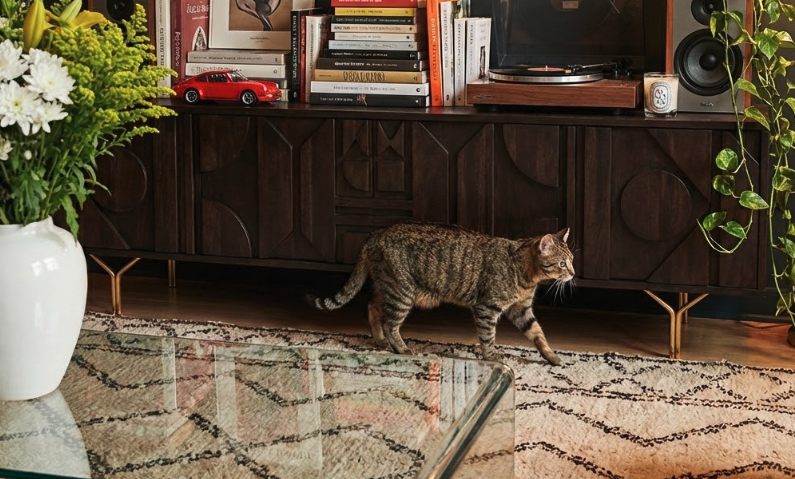
If your kids like to “park” toy trucks on every flat surface, oak or another hardwood will look presentable for much longer than MDF with a thin laminate.
Is Hardwood Worth the Extra $300 Investment? (The 10-Year Math)
Is an extra $300 worth it? If you hate assembling furniture, the answer is yes.
Think about the “Cost Per Year” (CPY). A cheap $180 particle board stand typically starts wobbling after 3 years. Over a decade, you’ll buy three of them ($540 total + 3 times the assembly frustration).
The Verdict:
- Economy Board: High replacement risk, edges chip easily. [Shop Budget-Friendly Starter Stands >]
- Solid Oak/Walnut: Can be sanded/refinished, lasts 10+ years. Effectively costs $45/year.
👉 Editor’s Pick:Check out our 78-74 Modern Minimalist Rolling Door TV Stand. It features a scratch-resistant finish for busy homes and, best of all, arrives fully assembled—so you can banish the hex key forever.
How Does Metal Perform Against Pet Claws?
If you have a dog that skids into furniture or a cat that treats everything as a scratching post, metal can save your sanity. Powder-coated steel in particular handles claws much better than soft wood or thin veneer.
Metal frames don’t chip the way particle board does, and most claw marks show up as light surface scuffs, not deep gouges. Dark matte finishes hide these marks better than shiny chrome.
Checking Industrial Steel for Sharp Edges
Before you commit to a metal-heavy stand, you’ll want to check the edges like a parent, not a catalog designer. Run your hand along corners and underside rails, rounded or beveled edges are kid-and-pet friendly, while raw square cuts can scrape small legs or curious paws.
Look for:
- Smooth welds at joints
- Corners with a slight radius, not razor-sharp angles
- Legs with protective caps or pads to keep floors scratch-free
If you shop online, zoom in on product photos and read reviews that mention “sharp corners” or “industrial edges.” Those comments matter more when you have little ones or pets racing around.
Who Should Strictly Avoid Glass TV Stands?
Glass TV stands can look sleek, but in real family rooms they’re often more stress than they’re worth. You should avoid glass stands if you have kids under 10, big energetic dogs, or a high-traffic living room where people constantly pass by the TV.
Even tempered glass, which is stronger and designed to crumble instead of shatter, introduces three very real headaches.
3 Risks of Tempered Glass in Family Rooms
Tempered glass is safer than regular glass, but it still brings noticeable risks in busy homes. The three biggest concerns are impact, fingerprints, and visibility of clutter.
- Impact risk: A hard toy or dropped game controller can chip or crack corners.
- Smudge magnet: Every fingerprint, nose print, and drip shows up instantly.
- Visual clutter: See-through shelves put every cable and device on display.
If your living room is more “soccer practice staging area” than showroom, glass usually just adds anxiety and constant cleaning to your to-do list.
How Do These 4 Materials Compare on Maintenance?
When you’re already stretched thin, the best TV stand material is the one you barely have to think about. Maintenance comes down to how often you clean, what you clean with, and how forgiving the surface is to spills and dust.
In real life, sealed wood, metal, and laminate are all easier than glass. Wood with a good clear coat lets you wipe up juice or coffee without panicking. Metal frames just need a quick dust and occasional wipe. Glass demands the most frequent polishing to look “clean.”
Cleaning Test: 7-Day Dust Accumulation Results
Imagine this simple test: you set up four stands, solid wood, wood veneer over MDF, metal-and-wood combo, and glass, and don’t touch them for 7 days. In a normal home, they’ll all collect dust at about the same rate, but you’ll notice it most on glass and glossy black finishes.
Here’s how your weekly cleaning usually breaks down:
- Wood/veneer: Quick wipe with a microfiber cloth: deep clean every few weeks.
- Metal: Dusting plus occasional damp cloth, especially on flat surfaces.
- Glass: Fingerprints and smudges mean you’re reaching for spray and towels several times a week.
If you want “wipe once, done,” go for matte wood tones and metal accents. Save the all-glass look for rooms that don’t see daily kid chaos or dog zoomies.
Quick Comparison: Which Material Survives Your Living Room?
Can’t decide? Here is the cheat sheet comparing how the most popular materials handle the chaos of “real life” (kids, pets, and accidents).
| Material | Best For… | Kid & Pet Safety | Durability & Repair | Maintenance Level | The “Real Life” Verdict |
| Solid Wood (Oak/Walnut) | Long-term Value. People who want to buy once and keep it for 10+ years. | ⭐⭐⭐⭐⭐ (Excellent) Heavy & stable. No shatter risk. Edges are usually rounded. | High. Scratches blend into the grain. Can be sanded and refinished. | Low. Hides dust well. Quick wipe with microfiber. | ✅ The Winner. Costs more upfront but survives toys, spills, and bumps best. |
| Metal (Powder-Coated Steel) | Indestructible Stability. Homes with active dogs or climbers. | ⭐⭐⭐⭐ (Great) Very stable. Check for sharp corners before buying. | High. Resists claws and kicks. Won’t chip like veneer. Hard to dent. | Very Low. Just dust it. Matte finishes hide smudges. | ✅ The Tank. Pair with wood shelves for the ultimate kid-proof combo. |
| MDF / Particle Board | Budget / Temp Use. First apartments or low-traffic guest rooms. | ⭐⭐⭐ (Average) Safe from shattering, but lightweight frames may tip easier. | Low. Corners chip easily upon impact. Water spills cause swelling. | Low. Easy to clean, but surfaces wear down fast. | ⚠️ The “Rental”. Good for now, but expect to replace it in 2-3 years. |
| Glass (Tempered) | Showrooms. Adult-only spaces with minimal traffic. | ⭐ (Poor) Even tempered glass can break. Corners are hard/sharp. | Medium. Hard surfaces, but fingerprints are highly visible. | High. Shows every fingerprint, dog nose print, and dust mote. | ❌ The Stress Maker. Constant cleaning and anxiety in a busy family room. |
💡 Pro Tip: If you want the “Winner” combination, look for a stand with a solid wood top and metal legs. You get the warmth and repairability of wood, plus the rock-solid stability of a steel base.
👉 Ready to invest in quality? Explore our complete range of durable, family-proof TV stands tailored for modern homes.
For more guidance on choosing the right size and style, check out our comprehensive TV stand size guide and explore mid-century modern TV stand options that blend durability with timeless design.
TV Stand Materials Guide: Frequently Asked Questions
What is the most durable material for a TV stand in a busy family home?
For high-traffic homes, the most durable TV stand materials are solid or engineered wood combined with metal. A sturdy wood frame with powder-coated steel legs provides weight, stability, and impact resistance. This mix typically outlasts particle board or all-glass stands by years, especially with kids and pets around.
Is solid wood really safer than glass for a TV stand with kids and pets?
Yes. Solid wood is heavy, stable, and won’t shatter, making it one of the safest TV stand materials for homes with kids and pets. Glass, even tempered glass, carries impact risks, shows fingerprints easily, and exposes clutter, which can add stress in a busy family room.
In this TV stand materials guide, how does oak compare to MDF for scratch resistance?
Oak, a hardwood with visible grain, resists everyday dings better and hides minor scuffs. MDF, made from wood fibers and resin, chips and dents more easily, especially at edges. Once MDF’s thin veneer is damaged, it’s hard to repair, while oak better withstands toy cars, remotes, and shoe bumps.
Is hardwood worth paying $300 more for a TV stand?
Hardwood is usually worth the extra $300 if you plan to keep the TV stand 8–10 years. It offers longer lifespan and can often be sanded and refinished after minor damage. Replacing a cheaper MDF stand every few years often ends up costing more than buying one quality hardwood piece.
What should I consider when choosing TV stand materials for wall-mounted vs. non-mounted TVs?
For wall-mounted TVs, the stand mainly supports devices and décor, so you can choose lighter materials like quality MDF or laminate plus metal. For non-mounted TVs, prioritize heavier, more stable options like solid wood or wood-and-metal designs with a wide base to reduce tipping risk and wobble.


