 By Hana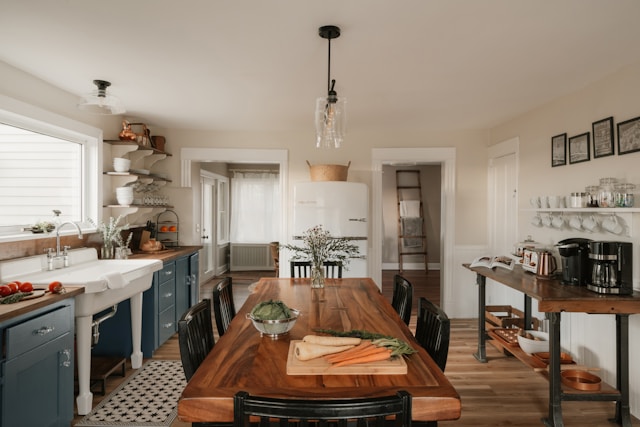
Introduction: Why Dining Table Style Matters
The dining table quietly sets the tone for every meal, laptop session, and late-night catch-up. Pick the right dining table styles and your space feels intentional; pick the wrong one and something always feels slightly “off.” With so many options—from mid-century icons to cozy farmhouse pieces—it helps to decode the main looks, learn how to match them to your decor, and understand how to mix styles without turning your dining room into a visual argument.
Overview of Popular Dining Table Styles
As the choice of styles explodes, it helps to know the basics before you start scrolling. The global dining table market was worth roughly USD 8.68 billion in 2025 and is expected to keep growing steadily through 2031 (Mordor Intelligence, 2026). This growth means more shapes, finishes, and hybrids every year – great for inspiration, but overwhelming if you don’t have a simple style framework in mind.
Modern & Contemporary Dining Tables
Modern and contemporary tables favor clean lines, geometric silhouettes, and a mix of wood, metal, and glass. Slim legs, rectangular tops, and monochrome finishes suit design-forward apartments and open-plan spaces. A modern rectangle or bar style dining table works well next to a kitchen island, especially with low-profile chairs or stools and sculptural lighting. If you love bold art and statement pendants, a simple modern table gives you a calm base to build around.
Mid-Century Modern (MCM) Dining Tables
A mid century style dining table is easy to spot: tapered legs, warm woods like walnut or teak, and soft shapes—oval, round, or boat-shaped. A mid century modern style dining table feels timeless yet relaxed, especially when paired with simple upholstered or shell chairs. Many people layer MCM tables with a few retro style dining table touches such as colored glassware or graphic art. It’s a great choice if you like “collected over time” interiors rather than everything matching perfectly.
Rustic, Farmhouse & Industrial Dining Tables
Rustic and farmhouse style dining tables lean into chunky wood, visible grain, and matte finishes. A farm style dining table with a trestle base or X-legs plus a bench on one side instantly makes family dinners feel more casual. For larger spaces, a farmhouse style dining room table or farm style dining room table can be styled with a mix of chairs and a bench style dining table setup that mimics a relaxed picnic style dining table vibe. Industrial tables add darker metal frames and reclaimed tops—perfect if you love loft energy and moody colors.
Minimal & Scandinavian Dining Table Styles
Minimal and Scandinavian looks are popular because they make rooms feel calmer without being boring. Search interest in Japanese-influenced interiors has surged—Pinterest searches for Japanese living room design jumped about 135% recently, reflecting a craving for serene, clutter-free spaces ( Better Homes & Gardens, 2024 ).
What Makes a Minimalist Dining Table
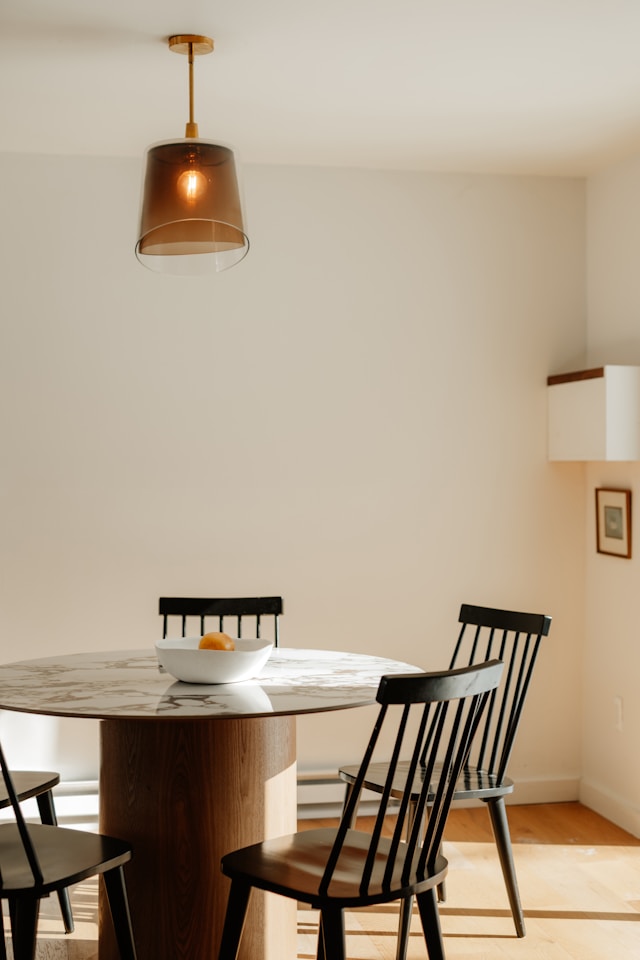
A minimalist table strips everything back to essentials: ultra-clean lines, slim tops, simple legs, and almost no visible hardware. Think black or white finishes, light oak, or a single stone slab on a quiet pedestal base. This style suits busy professionals who want their dining area to double as a tidy work zone. A bar style dining table with minimal detailing also works when your dining corner shares space with the kitchen or living room.
Scandinavian Warmth: Minimal, But Not Cold
Scandinavian tables share minimalism’s simplicity but add warmth: pale woods, rounded corners, and inviting silhouettes. Pair a light-wood boho style dining table or Scandi piece with woven seats, linen runners, and greenery for that “effortless but cozy” feeling. In my last apartment, swapping a dark rectangle for a pale oval Scandi table instantly made the room feel bigger and friends stopped bumping into corners. If you like Japandi, a japanese style dining table or low japanese style dining room table blends beautifully with this look.
How to Match Dining Table Style With Your Home Decor
Start With Your Architecture, Floors & Walls
Before falling for a specific table, read the room’s “bones”: flooring, wall color, window style, and ceiling height. Warm wood floors plus white walls? An MCM or Scandinavian table will echo that warmth. Polished concrete or dark tile suggests modern or industrial. Repeating one element—a wood tone, black metal, or stone color—from your room in the table creates instant harmony. If you’re still deciding on shapes, Povison’s dining table shape guide walks through how round, oval, and rectangular tops behave in real life.
Coordinate With Chairs, Lighting & Adjacent Spaces
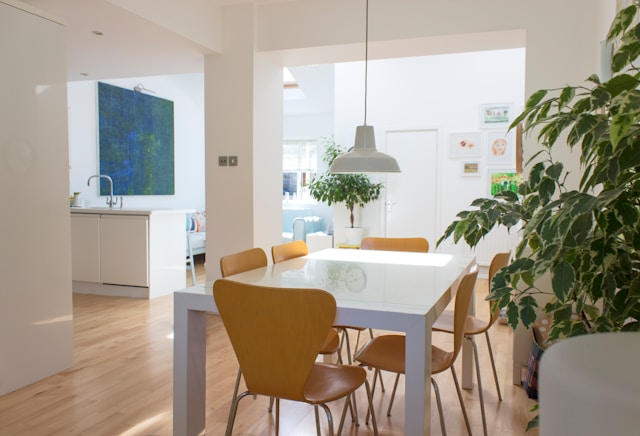
Once the table makes sense with the architecture, look at chairs, lighting, and what you see from nearby rooms. Matching sets always feel safe; mixing a sleek modern table with softer upholstered chairs adds warmth without chaos. In an open-plan layout, a bar style dining room table might echo your island stools while a lower dining set stays visually lighter. Aim for two to three main materials and one dominant color family so your eye can rest.
Mixing Dining Table Styles Without Clashing
Style Combos That Almost Always Work
Some pairings are almost foolproof:
- Modern table + vintage or MCM chairs
- Rustic farmhouse style dining tables + slim modern chairs
- Minimal table + bold lighting or art
Choose one hero—the table or the chairs—and let everything else support it. I often start with a simple wood table, then add personality through chairs I’d happily move around the house over time.
Design Rules to Keep Mixed Styles Cohesive
To keep mixed styles from feeling random, make sure at least one element ties them together: similar wood tones, all rounded silhouettes, or matching metal finishes. Limit yourself to three distinct styles in a small space. In a tiny apartment, you might pair a minimal table with vintage chairs and a modern pendant; in a lofty space, a mission style dining table can sit confidently beside industrial shelving if you repeat the same deep wood tone.
Practical Considerations When Choosing a Dining Table Style
Space, Seating & Everyday Lifestyle
Lifestyle matters as much as looks. Think about how many people you seat on a typical weeknight, how often you host larger gatherings, and how much circulation space you need around the table. Nearly 80% of designers working on new home communities say formal dining rooms have become less important than they were just a year ago (Axios, 2025), which mirrors the shift toward flexible, multiuse spaces. That’s why extendable or bench-style dining tables work so well in compact homes or hybrid kitchen-work areas; for mechanisms and layout ideas, Povison’s extendable dining table flexible living guide is a helpful deep dive.
Materials, Maintenance & Longevity
Your choice of material affects both mood and maintenance. Solid wood feels warm and can often be refinished; veneer offers a similar look at lower cost; glass opens up small spaces but shows fingerprints; stone is dramatic yet heavy. Wood still accounts for about 39% of the global dining table market, largely because people value its durability and repairability (Mordor Intelligence, 2026). If you care about longevity and sustainability, Povison’s solid wood dining table guide and high-quality dining table buying guide unpack finishes, joinery, and eco-friendly choices.
Conclusion: Bringing Your Dining Room Together
Once you understand the main dining table styles—from modern and MCM to farmhouse, industrial, and minimalist—it becomes much easier to create a space that feels like you. Start with your architecture and lifestyle, then choose a table that anchors the room and supports how you really live, not just how you imagine dinner parties on Pinterest. From there, layer in chairs, lighting, and textiles until the room feels both intentional and effortless every day.
FAQs About Dining Table Styles
Which dining table style works best in a small apartment?
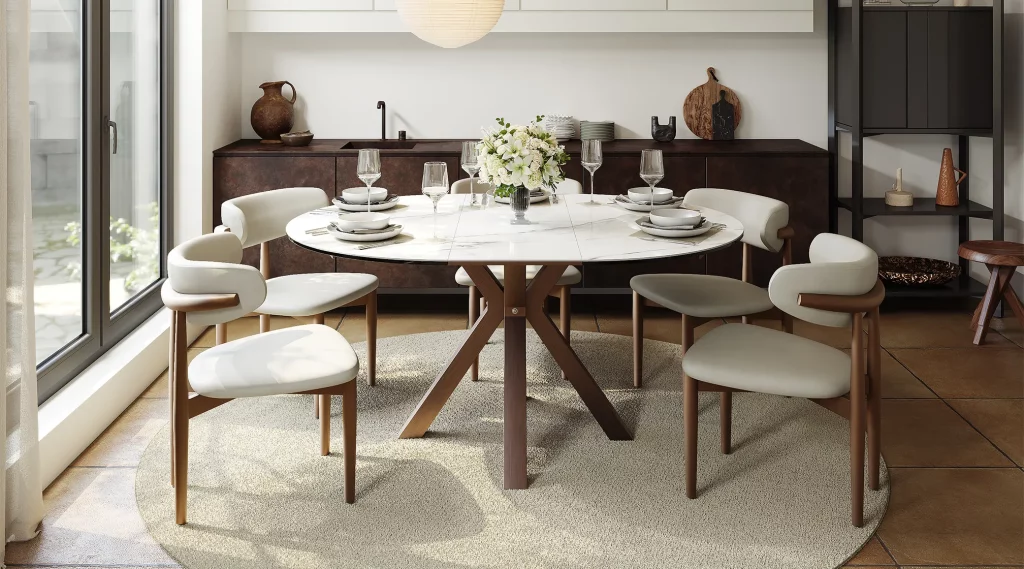
In compact spaces, a minimal or Scandinavian round or oval table keeps circulation smooth and corners out of the way. Slim legs and lighter finishes visually “shrink” the table, while an extendable top gives you occasional extra seats without claiming permanent floor space. A compact bar style dining table against a wall is another smart option in studio layouts.
Can I mix different wood tones between my dining table and chairs?
Yes—mixed woods can look intentional as long as you keep them in the same warm or cool family. Try one dominant tone (for example, a medium oak dining table styles base) and then repeat a darker or lighter accent on chair legs or picture frames. Using a rug between table and floor also softens minor mismatches.
Are glass-top dining tables still in style?
Glass-top tables are still popular in modern, urban homes because they bounce light around and make tight rooms feel bigger. They suit contemporary or mid century style dining table bases perfectly. Just remember they’re higher maintenance with kids or frequent entertaining, since fingerprints and smudges show more than on matte wood or stone surfaces.


