 By Kelvin
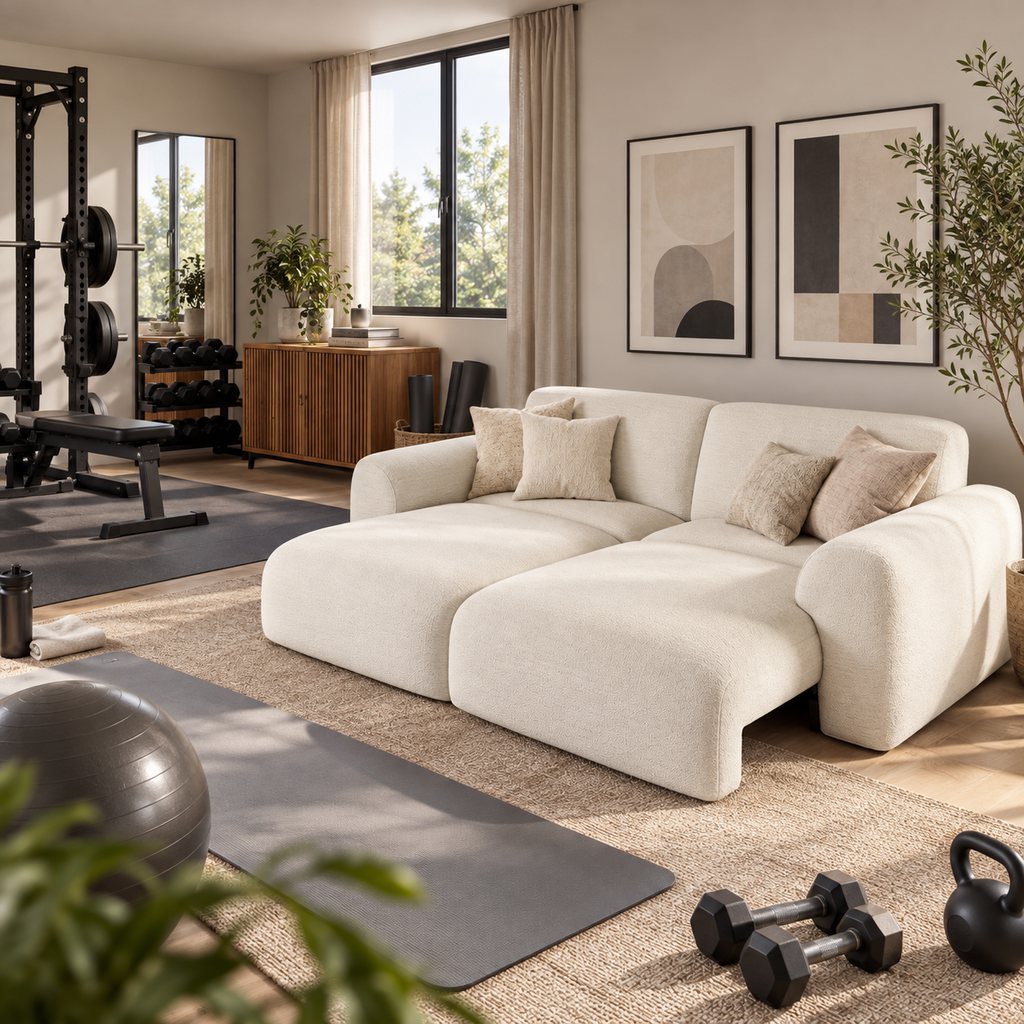
A home gym guest room combo needs to support workouts on ordinary days and provide a usable sleeping space when visitors arrive. The goal is not to fit as much furniture as possible into one room; it is to choose a sleeping setup that leaves enough clear floor for exercise and can be reset without moving heavy pieces. These four layouts cover different priorities, from a compact spare bedroom to a larger space with separate workout and guest zones. Start by measuring both room modes, then match the sleeping furniture to how often you host.
Table of Contents
How Should You Plan a Home Gym Guest Room Combo?
Start with the function that deserves the most permanent space. If you exercise most days and host guests a few times a year, protect the open training area and use a sleeping solution that can be folded or stored away. If relatives stay regularly, a sleeper sofa or wall bed may justify a permanent footprint.
Before deciding how to combine a home gym with a guest room, measure the equipment’s actual movement range, not just its parked dimensions. A treadmill, adjustable bench, or exercise bike may need additional clearance when unfolded or in use.
Use this planning checklist:
- Define the primary activity: Decide whether workouts or overnight stays take priority.
- Map the equipment zone: Account for the movements required by your actual exercises.
- Choose a sleeping arrangement: Compare its everyday footprint with its fully opened configuration.
- Plan storage and access: Keep doors, closets, outlets, and walking routes accessible.
Furniture should support the routine rather than compete with it. A practical overview of home gym furniture for multipurpose rooms can help you evaluate supporting pieces without filling the room with unnecessary storage or equipment.
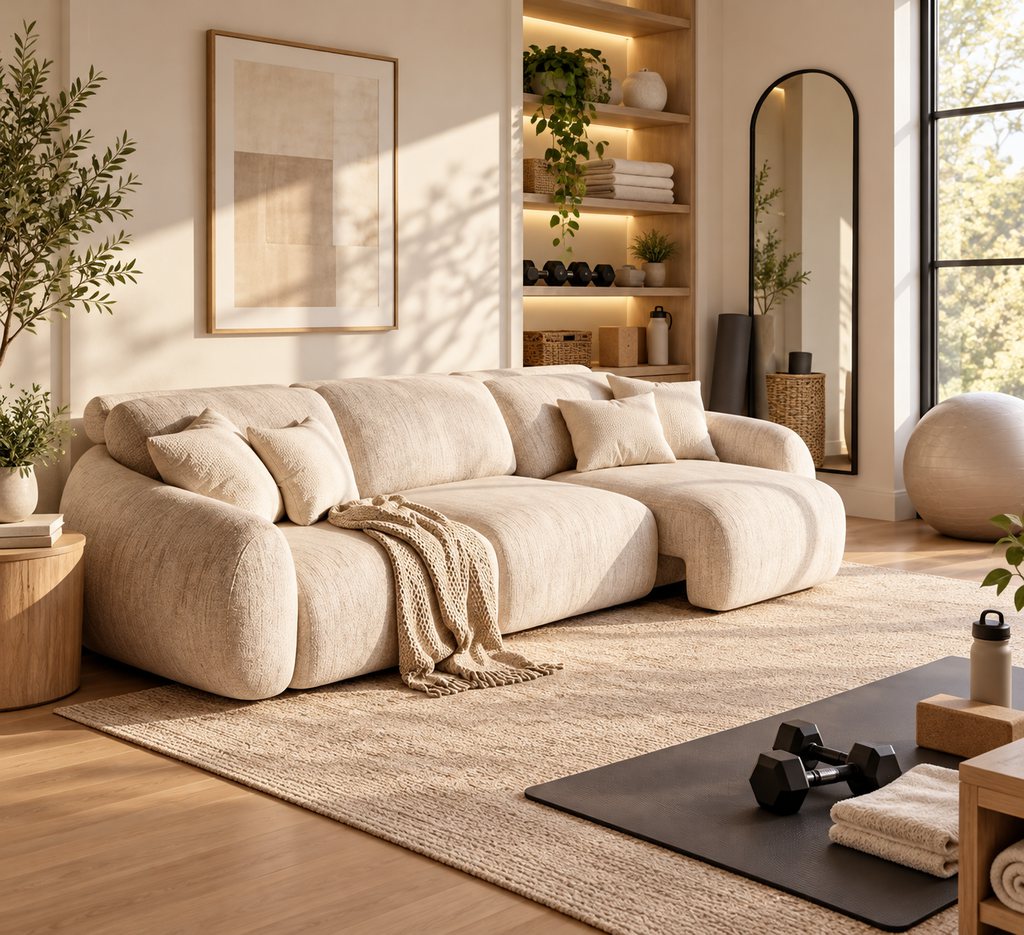
Which Sleeping Option Works Best for Your Room?
The right sleeping furniture depends on how often you host guests, whether you need daytime seating, and how much floor space must remain open for workouts. Compare the options by their everyday function and conversion requirements before committing to one.
| Sleeping Option | Works Best For | Main Trade-Off |
| Murphy or wall bed | Frequent workouts and occasional guests | Requires suitable installation and clearance when opened |
| Power or traditional sofa bed | Rooms that also need everyday seating | Occupies a permanent footprint and needs space to extend |
| Folding guest bed | Infrequent overnight stays | Requires a separate storage location |
| Daybed | Single guests and rooms with a fixed sleeping zone | Continues to occupy floor space throughout the day |
A wall bed is worth considering when freeing the central floor area is the main priority and the room supports proper installation. A folding guest bed makes more sense when visitors arrive infrequently and storage is available. A daybed suits households that accept a permanent sleeping area.
A sofa bed is more useful when the room needs comfortable seating even when nobody is visiting. It reduces the need for a separate bed, although it does not eliminate the space needed for sleeping.
What Layout Works Best for Your Room?
Choose a layout by identifying the room’s limiting factor: available floor area, guest frequency, or the amount of equipment that stays in place. The arrangements below serve different routines rather than offering four versions of the same setup. Check each layout’s limitation before applying it to a room with different dimensions or training needs.
1. A Compact Room With a Wall Bed
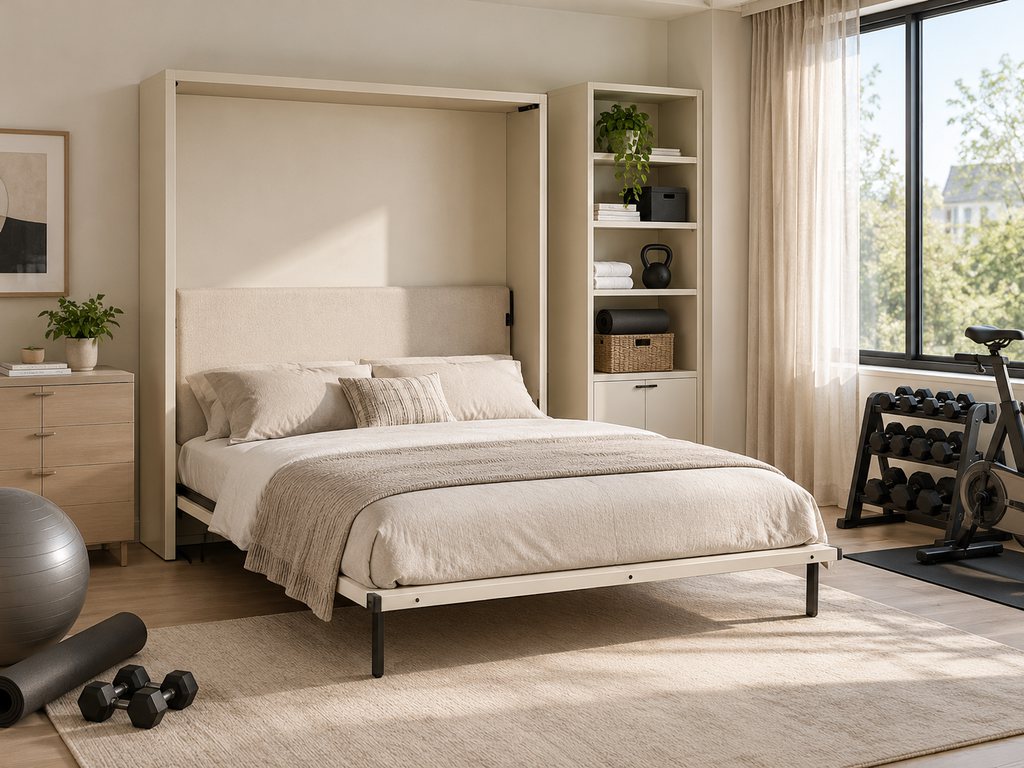
Best for: Small spare bedrooms with occasional guests.
Place the wall bed along a suitable wall, keeping the surrounding area clear enough for it to open fully. When the bed is stored, the released floor space can accommodate a workout mat, adjustable bench, or compact exercise equipment.
Keep smaller accessories in a closet or dedicated storage area rather than scattering them across the floor. A wall-mounted mirror can support bodyweight exercises, provided it is securely installed and positioned away from equipment movement.
This arrangement works well when exercise is frequent but overnight guests are occasional. Its main limitation is installation: the wall, mounting system, and opening clearance must meet the bed manufacturer’s requirements. A wall bed is not automatically the most practical solution for every rental or room configuration.
2. A Workout-First Room With Foldable Equipment
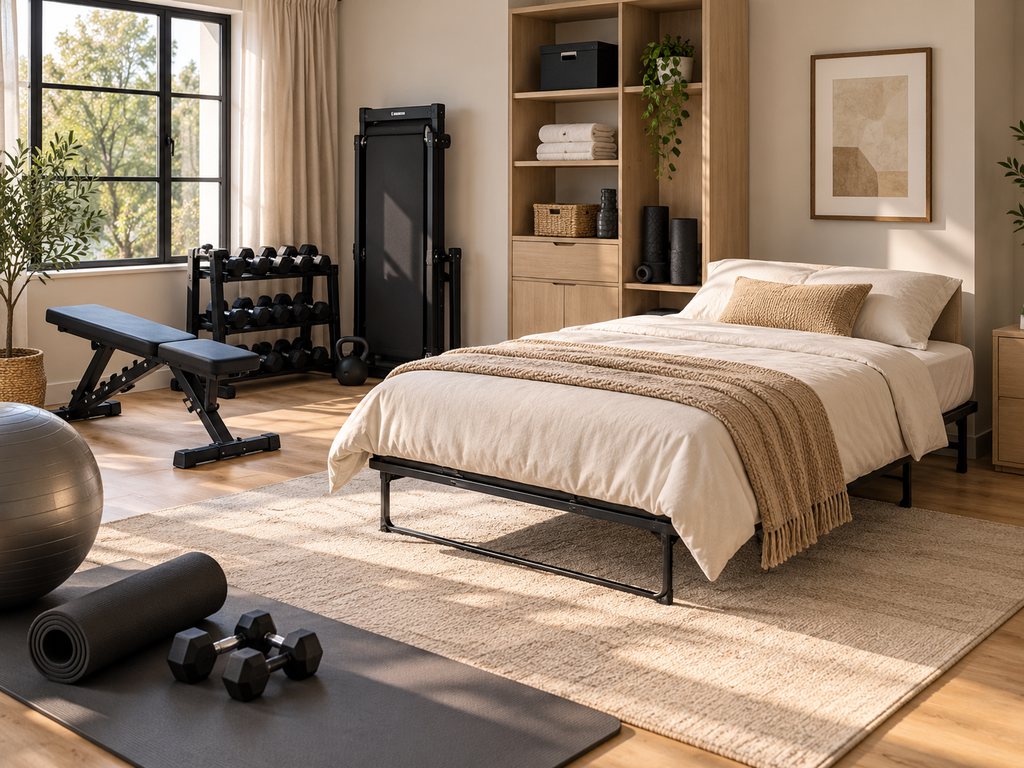
Best for: Frequent workouts and infrequent overnight stays.
Keep the primary exercise area open and choose equipment that can be folded or stored when not in use. A foldable bench, resistance bands, yoga mat, and compact accessories are easier to manage than a room dominated by permanently installed machines.
For example, someone who follows online strength workouts during the week but hosts a sibling a few times a year can keep the training setup in place most days. Before the visit, smaller equipment can be stored and a folding guest bed brought out.
Give every item a designated storage location before buying more furniture. If a piece is too heavy to move safely or too large to store, plan around its permanent footprint instead. This layout is less suitable for rooms that require a large rack, substantial free-weight storage, or several machines that cannot be folded away.
3. A Guest-First Room With a Sofa Bed
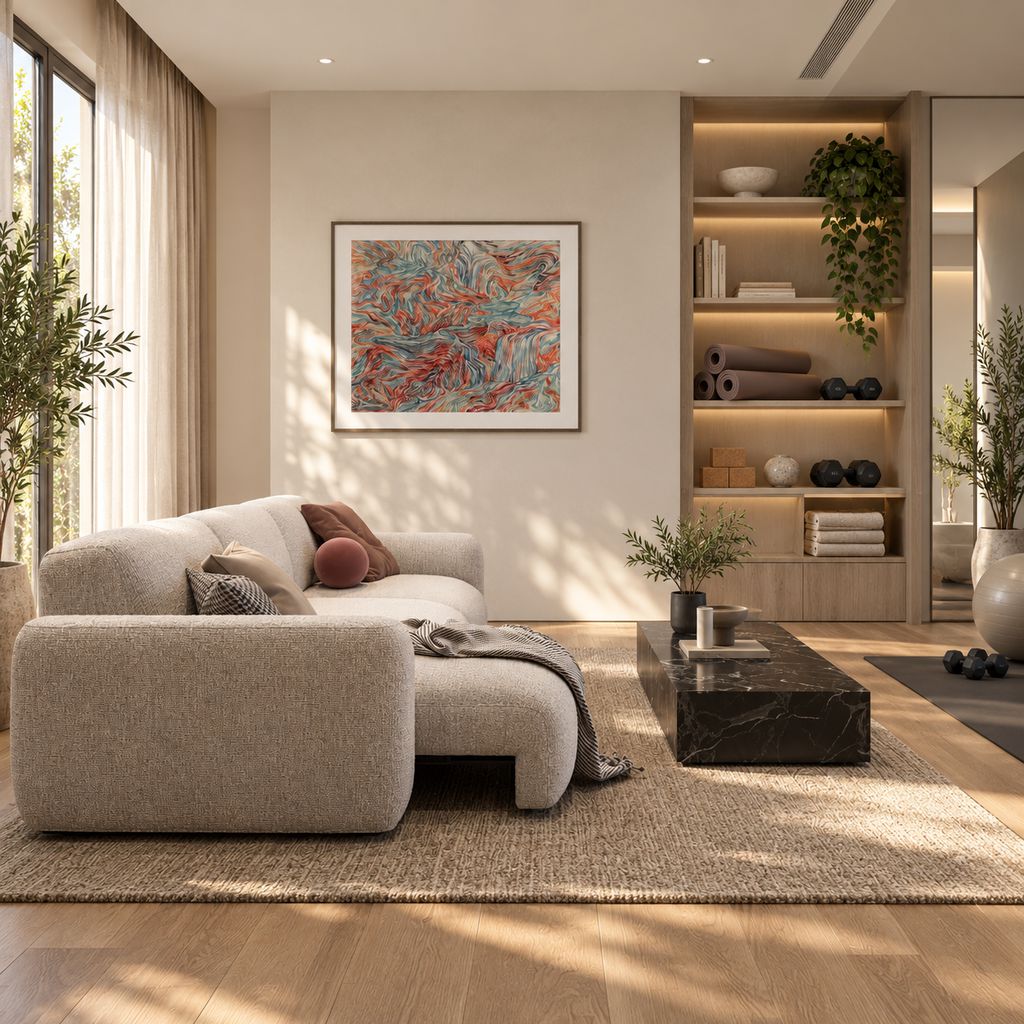
Best for: Rooms that need everyday seating and occasional guest sleeping.
Position the sofa bed against a wall, leaving the central floor available for exercise. Store light equipment in a closet or cabinet, and avoid placing a large coffee table in the area needed when the bed extends.
This arrangement works particularly well when the spare room also serves as a reading lounge or a place to relax between workouts. A powered sleeper can reduce the effort involved in adjusting the seating configuration, but it still needs enough open floor for its extended position.
For households that regularly use the room for sitting and occasional overnight stays, the Aurora Power Sofa Bed offers adjustable seating without the need to move a separate bed frame. Its powered seat depth extends from 27 to 45.5 inches, allowing the room to shift between upright seating and deeper lounging while keeping the sofa against the wall.
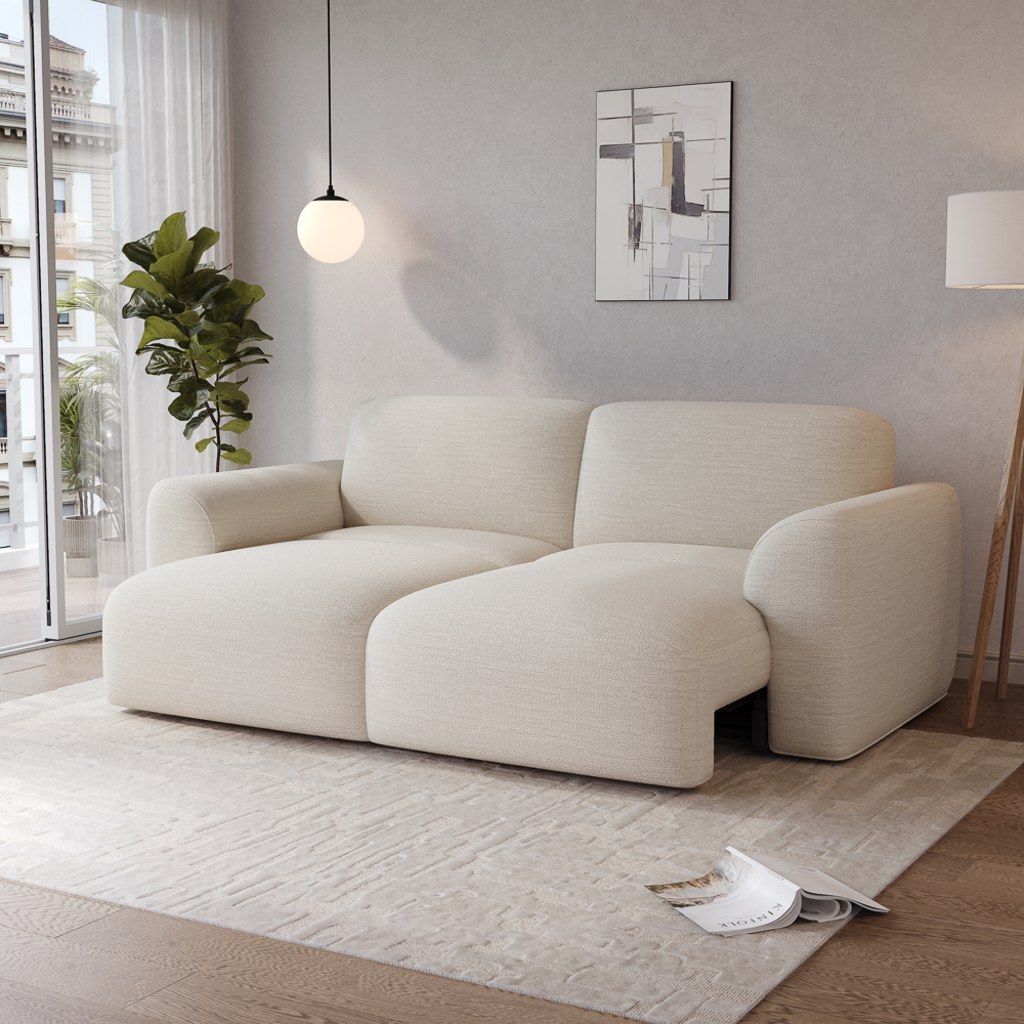
Aurora Power Sofa Bed
Combines daily lounging and occasional sleep without requiring a separate bed footprint.
👍 Best for: Guest-first rooms needing flexible seating
✨ Stepless 27–45.5-inch seat extension
✨ Wall-hugging placement design
✨ Water- and scratch-resistant chenille
Before choosing a model, measure the full extension area and check the location of outlets and power cords. If opening the sleeper blocks the only usable exercise zone or requires moving several heavy pieces, consider a wall bed or folding guest bed instead.
4. A Larger Room With Separate Activity Zones
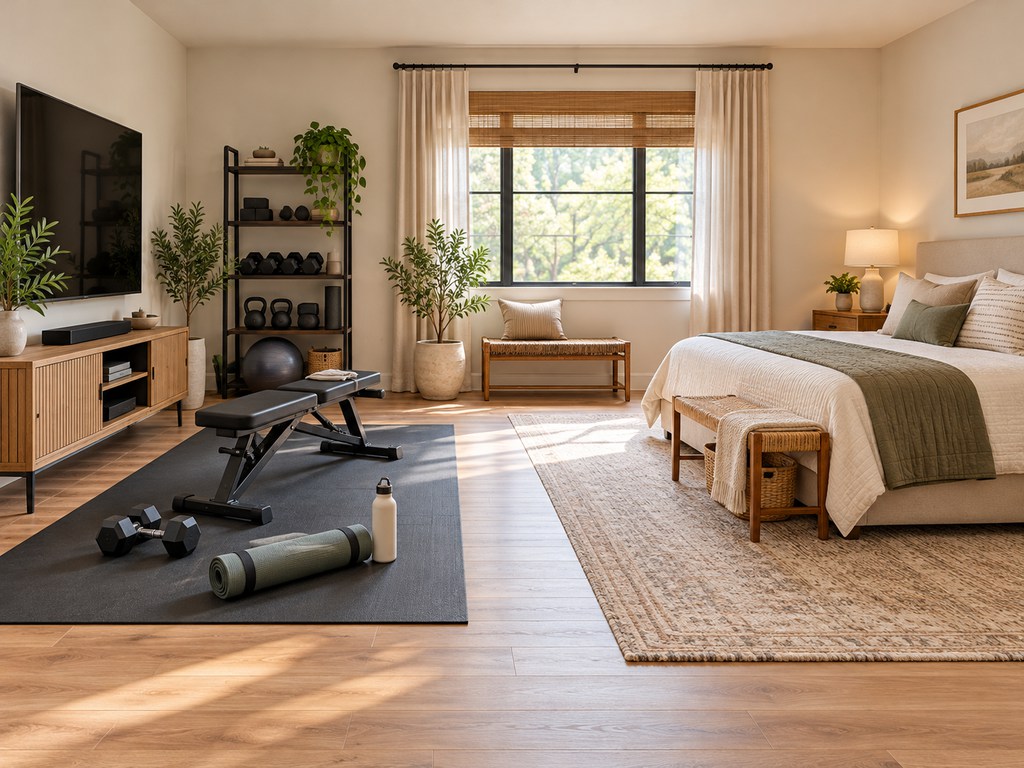
Best for: Rooms with enough space for dedicated workout and guest areas.
A larger spare bedroom can support distinct exercise and guest zones. Keep the training equipment on one side and position the sleeping furniture along another wall. This reduces the need to reorganize the entire room when visitors arrive.
If you follow workouts on a television, keep the screen and connected devices against a dedicated wall. Avoid placing the display where a bench, mat, or moving equipment could obstruct access.
Screen-led workouts need a stable place for the television and connected devices, without cables trailing into the mat area. The Delven Verse Mid-Century Modern TV Stand provides three enclosed cabinets, removable shelves, and dedicated cable openings for AV equipment. Its 21.85-inch depth takes meaningful floor space, so reserve it for a larger room where the media wall will not reduce the clear workout zone.
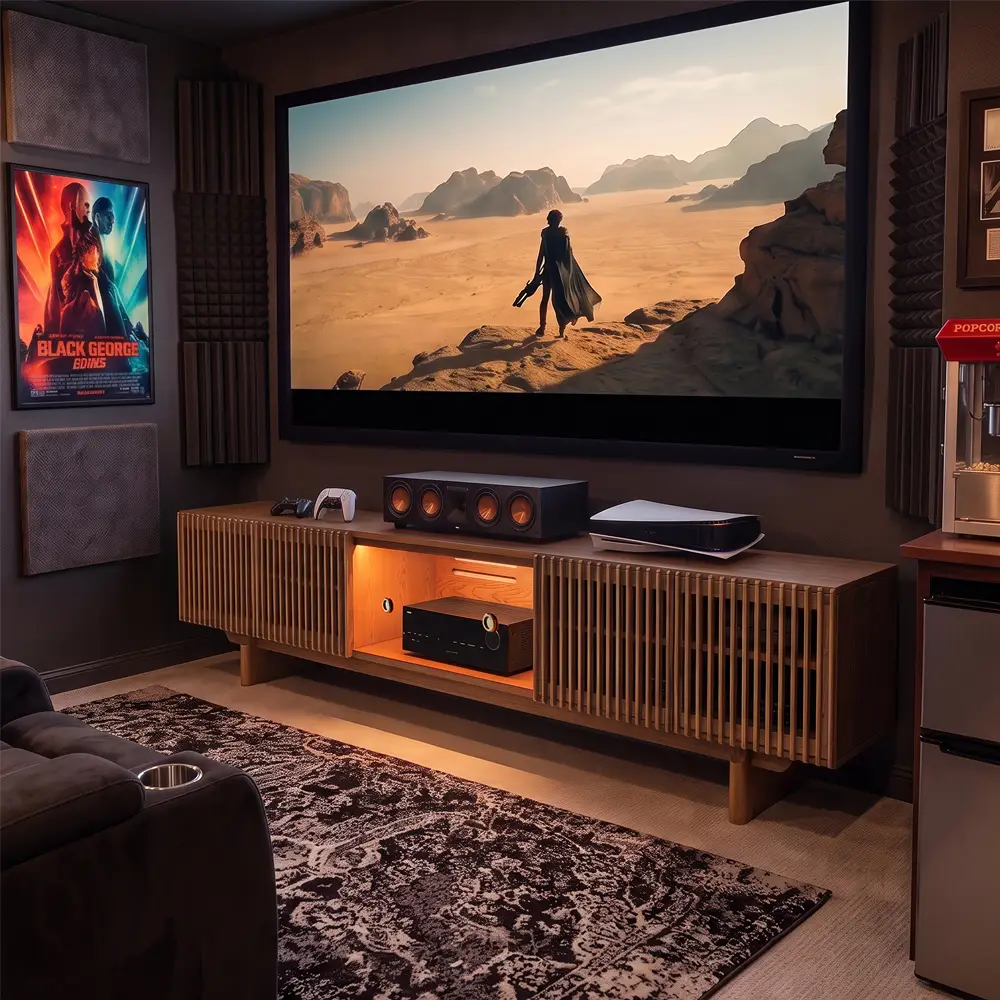
Delven Verse TV Stand
Keeps guided-workout screens and media equipment organized along a dedicated wall.
👍 Best for: Larger rooms with screen-led workouts
✨ Three enclosed storage compartments
✨ Six internal cable openings
✨ Removable shelves for AV gear
The main limitation is that a larger room can still become overcrowded if every wall receives furniture. Preserve enough open space for the intended exercises, and make sure the guest sleeping area remains accessible without crossing through the equipment zone.
How Can You Check That Both Layouts Actually Fit?
A furniture arrangement should work in both everyday and overnight modes. Measuring only the room’s empty dimensions is not enough because beds, adjustable seating, doors, and exercise equipment can all change the available space.
Use this three-step check before buying:
- Mark the complete footprint. Use painter’s tape to outline the furniture in its stored and fully extended positions.
- Test the activity area. Simulate the movements required for your workout, including the space needed to mount, dismount, or reposition equipment.
- Check access and clearance. Open doors, closets, and drawers. Confirm that the exit and route to the sleeping area remain accessible in both configurations.
If you are still comparing guest-room furniture by use and fit, consider how often the room serves each purpose and which pieces must stay in place.
A useful rule is to reject a layout that works only when furniture is partially opened or essential access points are blocked. If switching modes requires repeatedly moving heavy furniture, revise the arrangement before purchasing.
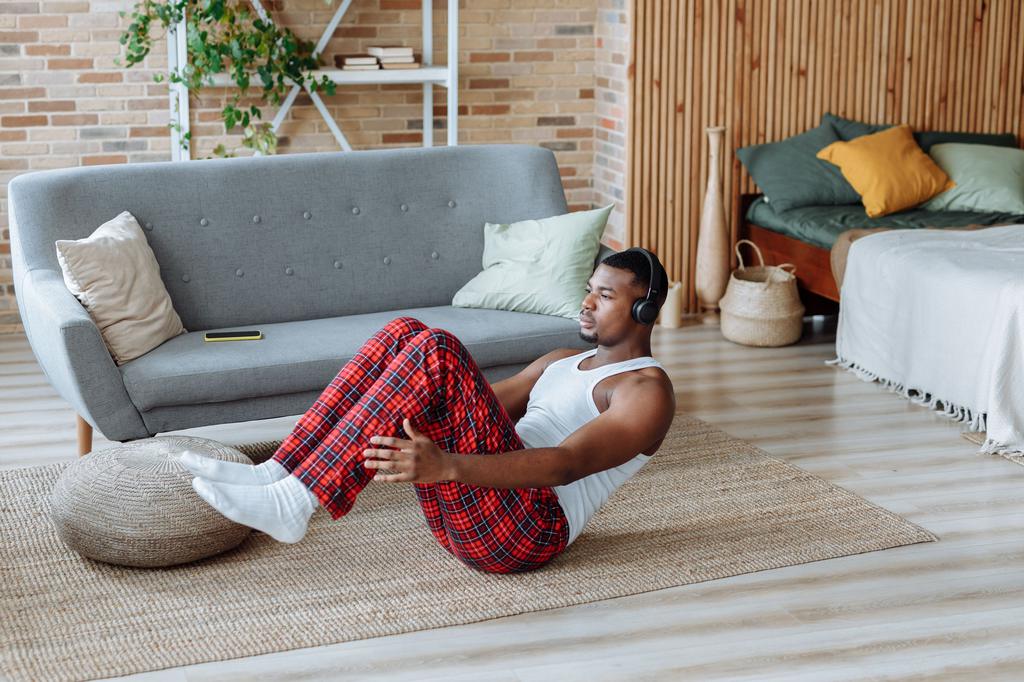
How Can You Keep the Room Safe and Guest-Ready?
The room should be easy to reset without creating hazards or leaving exercise equipment mixed with clean bedding. Focus on storage, floor protection, and a clear route between the door and sleeping area.
- Protect the floor: Use mats suitable for the equipment, flooring type, and intended exercise.
- Separate clean and used items: Let damp towels and workout mats dry before storing them near guest linens.
- Store equipment appropriately: Keep heavy weights on racks or surfaces rated for their loads rather than assuming a decorative cabinet can support them.
- Control cables: Route power cords away from walking paths and moving furniture.
- Prepare for overnight use: Clear the sleeping area, provide accessible lighting, and make sure guests can reach the door safely.
Once a workout ends, bands, towels, and small accessories should not spill into the guest area. The Selene LED Horizontal Slatted Storage Cabinet arrives fully assembled and combines enclosed compartments with two drawers for lighter gear and clean guest linens. Adjustable LED lighting adds a display function, but heavy weights belong on properly rated equipment rather than in a cabinet without verified shelf-level capacity.
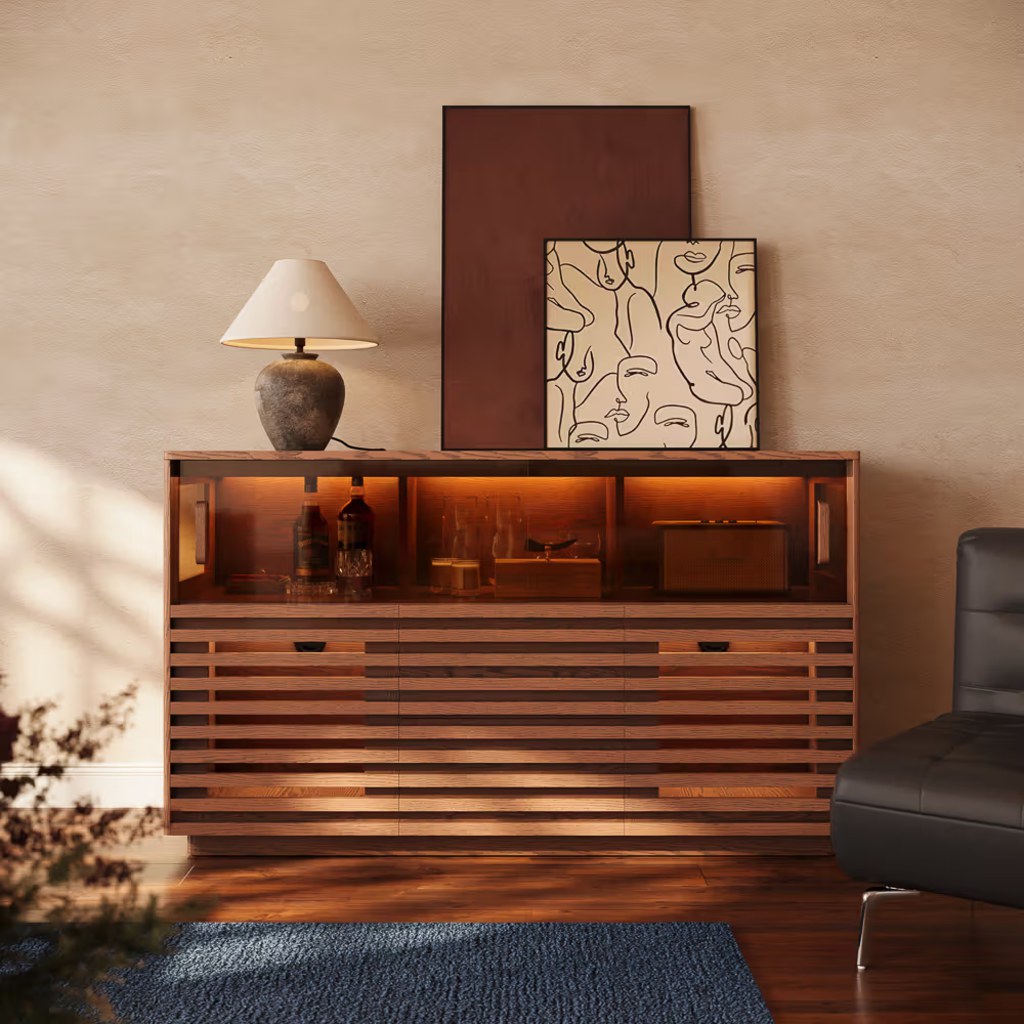
Selene LED Cabinet
Fully assembled cabinet separates light workout accessories from clean guest essentials.
👍 Best for: Workout rooms with light gear
✨ Five enclosed cabinet compartments
✨ Two drawers for small accessories
✨ Adjustable LED lighting
Before guests arrive, return portable equipment to its designated location and check the full sleeping footprint again. If the room cannot be made guest-ready without shifting heavy equipment or blocking the exercise area, simplify the setup rather than adding more storage furniture.
Conclusion
A successful home gym guest room combo starts with the room’s primary purpose, then matches the sleeping furniture to the available floor space and guest frequency. Wall beds, folding guest beds, and sleeper seating each solve different space problems, but none eliminates the need to measure the complete layout. Keep exercise equipment safely stored, preserve clear walking routes, and test both room configurations before committing to furniture. For households considering powered seating, power sofa beds for more ways to live can help inform the next step in choosing a flexible setup.
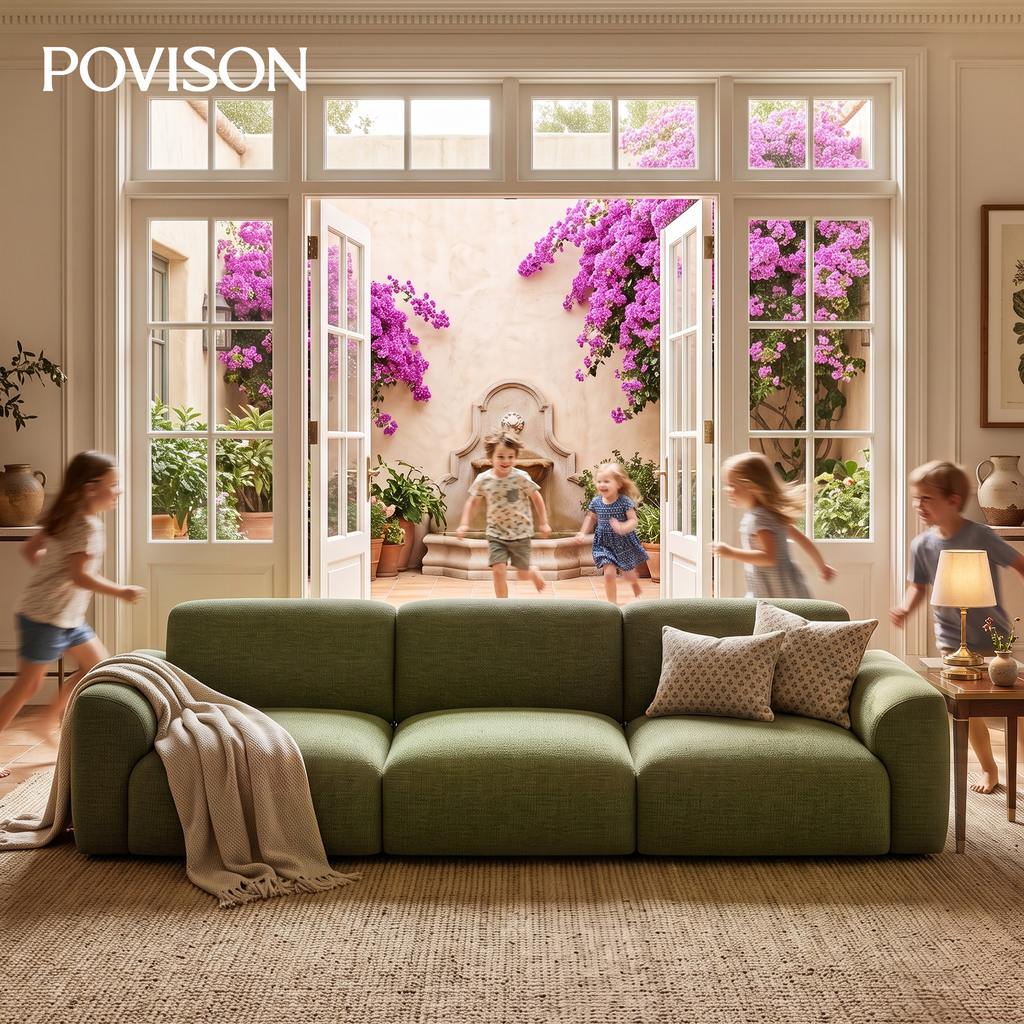
Find Furniture for Everyday Living
Explore thoughtfully designed furniture for modern homes, flexible spaces, and everyday comfort.
Frequently Asked Questions
Can a Home Gym Guest Room Include a Treadmill?
Yes, if the treadmill can be folded or parked without blocking the bed, door, closet, or workout route. Measure its stored footprint and the clearance needed to unfold it. Before guests arrive, switch it off, secure the console, and keep power cords out of the path to the sleeping area.
How Can You Reduce Workout Noise When Guests Are Sleeping?
Use an exercise mat designed for the equipment and floor type, and place vibration-producing machines away from shared walls when possible. Avoid dropping weights, especially late at night, and check the equipment manual for floor and installation requirements. A thick rug alone is not a substitute for suitable gym flooring.
Should a Home Gym Guest Room Have a Mirror?
A mirror can help with form checks and make bodyweight workouts easier to follow, but it should not sit where free weights or moving equipment could strike it. Use a securely mounted mirror or a stable, purpose-built alternative, and keep its placement outside the equipment’s movement path.
How Early Should You Prepare a Sleeper for Overnight Guests?
Open the sleeper before guests arrive so you can test the mechanism, fit bedding, air the sleep surface, and clear nearby furniture. A simple routine for when to set up a sofa bed for overnight guests can help you catch problems before bedtime.
Is a Sleeper Sofa Suitable for a Week-Long Guest Stay?
It depends on the sleeper’s intended use, sleep surface, and how often it will be used. For a week-long stay, check whether the extended surface feels supportive and whether guests can get in and out comfortably. If long or frequent stays are common, a dedicated bed may be more practical.


[…] Aurora Power Sleeper Sofa earns its footprint only when the workout room also serves as a lounge or guest room. Its powered extension moves continuously from 27 to 45.5 inches, creating an 18.5-inch adjustment […]
[…] mattress can be stored between visits without reserving space for a permanent frame. It suits a guest room that doubles as an exercise or hobby space, provided there is a clean, dry place to keep the folded […]
[…] you want an open floor for exercise, hobbies, or children’s activities, look for a bed that can be stored away. If the room […]