 By Kelvin
Introduction
If you keep pushing sofa sections back into place only to see a gap return after movie night, the problem is not always “slippery furniture.” People searching “how to keep modular sofa together” usually need to identify what is moving before choosing a fix. This guide separates connector problems, floor-grip problems, and alignment problems so you can correct the cause instead of adding random hardware. Start with the existing connection system, then check the floor and module alignment, and add new hardware only when those checks point there.
Table of Contents
Why Does Your Modular Sofa Keep Separating?
A modular sofa can open a gap for different reasons. The connector may not be fully engaged, two brackets may sit at different heights, one module may have a loose foot, or the whole setup may lack grip on a smooth floor. An exposed chaise or end seat can also take more sideways force because it has no neighboring module on one side.
That matters because modular seating is designed to separate and reconfigure. Understanding how modular sofas differ from fixed sectionals helps explain why connection points need regular attention.
Before buying pads or brackets, watch what happens when someone sits near the problem seam. The direction of movement usually tells you more than the size of the gap.
What Is Actually Moving?
The first step in how to keep modular sofa from separating is to classify the movement. A seam that opens between two seats points to a different problem from a sofa that slides backward as one unit. Check the sofa during normal use rather than pulling on the pieces by hand.
| What you notice | Likely cause | Start with |
| Gap opens between two modules | Connector not fully engaged or worn | Inspect that joint |
| One end seat drifts outward | Low floor grip or unsupported end | Check feet and flooring |
| Whole sofa moves together | Sofa-to-floor friction | Check floor contact |
| Two seats sit forward/back | Alignment or leg-height issue | Level the modules |
| Gaps return after rearranging | Connection not reset correctly | Reconnect each seam |
| Same joint repeatedly opens | Hardware or attachment-point wear | Inspect hardware |
Mark the front position of each module with painter’s tape, sit as you normally would, then recheck the marks. If one section crosses its mark, focus there. If all pieces move together, the connector may be working and the floor interface may be the real issue.

How Should You Check the Existing Connectors First?
Do not add a second connector before confirming that the original one works. Separate only the affected modules and inspect the seam, underside, and visible hardware. Look for hooks, plates, fork-and-pin brackets, clips, or manufacturer-specific locking parts. Do not pry under upholstery to search for hidden hardware.
Use this order:
- Push the modules together to remove tension.
- Release the connector according to the sofa instructions.
- Check for bent metal, loose fasteners, debris, or misalignment.
- Place both modules flat on the same surface.
- Reconnect them without forcing the hardware.
- Sit near the seam and check whether the gap returns.
If the joint must be released for inspection, knowing how to take apart a sectional sofa safely matters because some connectors lift vertically while others slide or unbolt. Forcing the wrong motion can bend a bracket or damage the frame.
If two connector plates no longer line up while both modules sit flat, first check for a loose leg, uneven rug edge, or shifted frame.

What If the Connectors Work but the Sofa Still Moves?
A connected sofa can still move because the connection system controls the modules relative to one another, not necessarily the sofa relative to the floor. The next check depends on the surface underneath. Treat hard flooring, rugs, and carpet differently so you do not solve one movement problem while creating another.
Hardwood or Tile
If all connected modules slide in the same direction, focus on floor contact rather than stronger connectors. Clean dust from the feet and floor first. If more grip is needed, use furniture pads labeled compatible with your flooring and test one in a hidden area.
This is how to keep modular sofa from sliding on a hard surface without relying on improvised adhesives that may leave residue or affect the finish.
Area Rug
Check whether the modules are sliding across the rug or the rug itself is moving across the floor. If the rug shifts as one unit, extra grip under the sofa feet will not solve the real problem.
Also check rug placement. A thick rug edge under only one module can raise it enough to affect connector alignment.
Carpet
Carpet provides more friction, so repeated separation deserves a closer look at the joint and module alignment. Deep pile can let one section rock or sit slightly higher than the next. A connector may engage while unloaded, then loosen when weight compresses the carpet differently under neighboring modules.
Avoid stacking pads under one seat unless you are correcting a confirmed height difference.

When Should You Add or Replace a Connector?
Additional hardware makes sense only after you know the original connection is missing, damaged, or inadequate for a layout you plan to keep.
Consider replacement or additional hardware when:
- the sofa has no connection system between adjacent modules;
- a factory connector is bent, cracked, loose, or no longer locks;
- the same seam repeatedly separates while other joints stay stable;
- the layout will remain fixed and the manufacturer allows compatible hardware.
Do not add hardware when the floor is moving under the sofa, one module sits higher than another, or you have not identified the frame structure. Drilling into an upholstered base without knowing where the structural rail sits can damage fabric, wood, wiring, or reclining components.
For damaged factory hardware, start with the manufacturer or a furniture repair professional rather than assuming a generic bracket will fit.
How Do You Keep It Stable Without Losing Modularity?
Stability and reconfiguration are related but different goals. A sofa that stays in one layout can use a more fixed connection strategy. A sofa that regularly changes from an L-shape to separate seats needs connections that can be released and reset without damaging the frame.
Match the solution to your routine:
- Rarely rearrange: prioritize secure factory-approved connections and stable floor contact.
- Rearrange a few times a year: favor easily released original hardware.
- Change layouts often: avoid permanent modifications.
- Rent or expect to move: favor reversible floor-grip solutions and manufacturer connections.
If future flexibility matters, check whether adding or removing modular sofa sections later is supported before making the current layout more permanent.
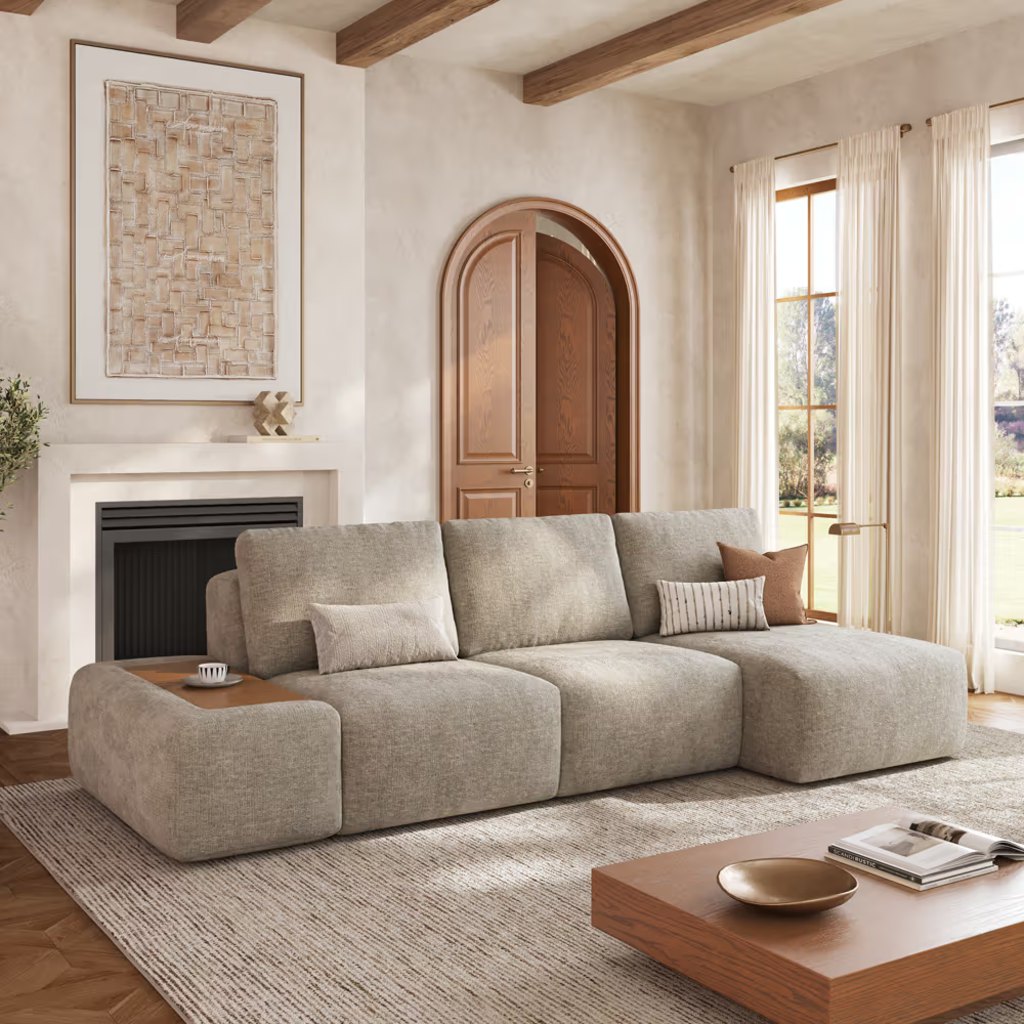
For frequent rearranging, the Moku Modular Block Sofa uses detachable individual modules that are easier to relocate through tight halls, while its multifunctional armrest can become a side table, footrest, wider seat, or pet resting spot. Its 100% polyester chenille suits everyday family-room use. This flexibility does not replace connector checks, but it keeps reconfiguration practical.
Moku Modular Block Sofa
Explore modular sofas designed for easy rearranging, everyday comfort, and changing room layouts.
In What Order Should You Fix a Separating Modular Sofa?
The practical answer to how to keep modular sofa together is to fix the simplest verified cause first, then retest before moving on.
- Identify the movement. Is one module, one seam, or the whole sofa shifting?
- Reset the connection. Reconnect the affected joint correctly.
- Check alignment. Confirm neighboring modules sit level and flush.
- Inspect floor contact. Look for dust, moving rugs, uneven feet, or low traction.
- Add reversible grip if needed. Use floor-compatible products.
- Escalate to hardware only when justified. Replace or add a connector only after the earlier checks fail.
After each change, use the sofa normally for several sitting cycles. A successful fix keeps the same seam aligned without causing rocking, floor marks, or a new gap elsewhere.
Conclusion
Learning how to keep modular sofa together starts with identifying the movement, not buying the strongest bracket. A gap between two seats, one drifting chaise, and an entire sectional sliding across the floor require different fixes. Reset the original connector first, confirm the modules sit level, then address floor grip. Add or replace hardware only when the joint itself is the verified problem. That order keeps the sofa stable while preserving the flexibility that made modular seating useful in the first place.
FAQs About Keeping Modular Sofas Together
Can zip ties safely hold modular sofa sections together?
Zip ties may work temporarily around sturdy, exposed frame points that can handle the load. Never route them through upholstery, wiring, reclining parts, or thin supports. For long-term use, manufacturer-approved connectors are safer because overtightened ties can damage materials or force already misaligned modules into position.
Do heavier modular sofas still need connectors?
Yes. Sofa weight may reduce movement across the floor, but it does not prevent individual modules from separating under sideways pressure. Heavy sections can still open at the seams when someone sits near an edge. When buying a modular sofa, evaluate its connection system separately from its overall weight.
How often should modular sofa connectors be inspected?
Check connectors after moving or rearranging the sofa and whenever a new gap appears. For an otherwise stable setup, inspecting them during seasonal cleaning is a practical routine. Look for loose screws, bent brackets, worn slots, or movement around attachment points before small changes develop into recurring separation.
Can children or pets make modular sections separate faster?
Yes. Jumping, climbing, or repeatedly pushing off an outer seat can put more sideways force on modular sections than ordinary sitting. In active family rooms, inspect exposed chaise and end modules more often. Correct widening gaps promptly so toys, paws, or small fingers are less likely to become caught between sections.
Will a new modular section work with existing connectors?
Not necessarily. Before adding another section, confirm that the model, connector type, mounting position, base height, and seat height are compatible with your existing modules. Similar-looking pieces may use different hardware. Avoid modifying the frame simply to make an incompatible section fit, especially when electrical or reclining components are inside.


