 By Kelvin
Introduction
Choosing between a TV stand and a full entertainment center is mainly a question of structure, equipment, and how permanently you want to commit to one wall. This TV stand vs entertainment center comparison explains the practical difference, including storage quality, television upgrades, installation, and room flexibility. A TV stand usually works better for a simpler or changing setup. An entertainment center makes more sense when the television wall also needs substantial display and household storage.
Table of Contents
What Is the Main Difference?
The difference between TV stand and entertainment center designs is structural, not simply a matter of size. In a TV stand vs entertainment center comparison, a TV stand is one low-profile unit placed below the screen. It may support the television or sit beneath a wall-mounted TV, with shelves, drawers, or cabinets for equipment.
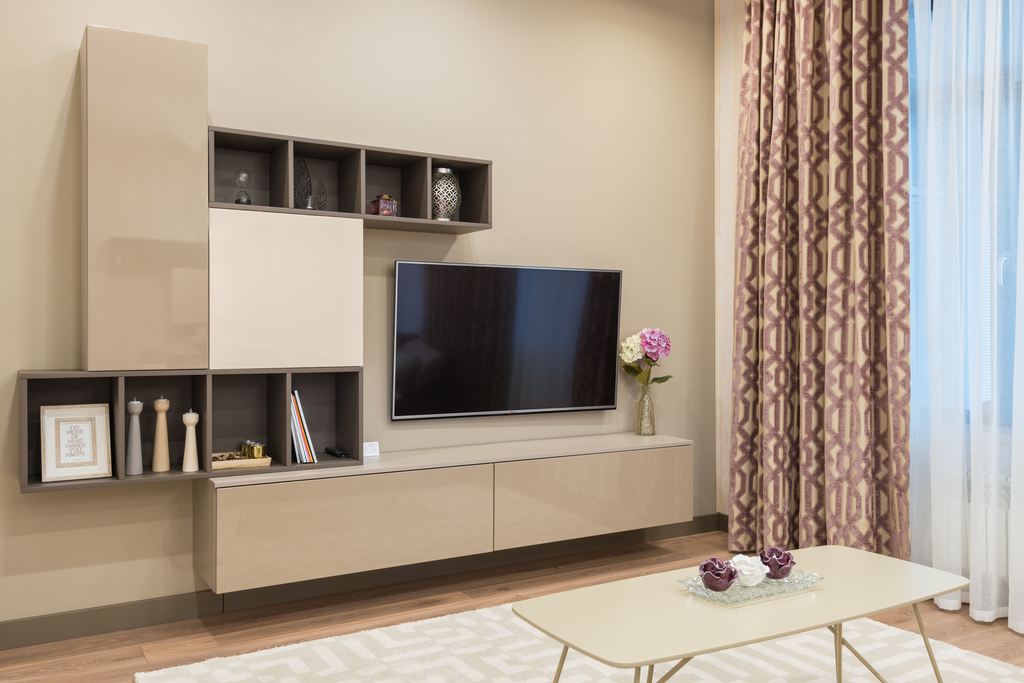
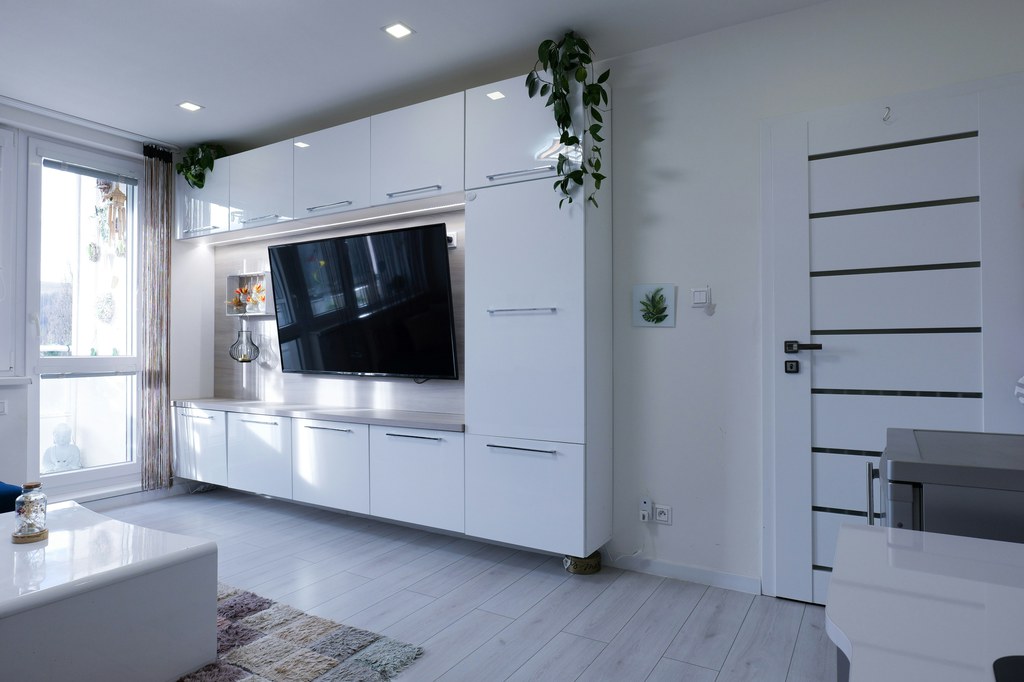
An entertainment center is a coordinated system that frames the television within a broader wall composition. It commonly combines a base console with side cabinets, upper shelving, a bridge cabinet, or connected modules. The surrounding furniture may create a fixed TV opening.
When shoppers compare an entertainment center vs TV stand, they should judge the actual construction rather than the product name. Retailers sometimes use “TV stand,” “media console,” and “entertainment center” interchangeably. Here, a single horizontal cabinet remains a TV stand or media console; a system that surrounds the screen is an entertainment center.
How Do Their Size and Structure Compare?
Compare how much of the wall each option controls and whether it creates a fixed television zone. Identify that structural commitment before comparing finishes.
| Comparison | TV Stand | Entertainment Center |
| Basic form | One low horizontal unit | Base unit plus side, upper, or connected modules |
| TV position | On the top or mounted above | Usually placed within a defined central zone |
| Wall coverage | Preserves more open wall area | Uses more vertical and horizontal wall space |
| Storage pattern | Concentrated near the floor | Combines equipment storage with display or household storage |
| TV upgrade flexibility | Usually high | May be limited by a fixed opening |
| Installation | Position the unit; some models require mounting | Often involves several pieces, alignment, and anchoring |
| Moving later | Easier to relocate | Often requires partial disassembly |
| Strongest use case | Apartments, flexible rooms, streamlined setups | Large family rooms, long-term layouts, storage-heavy walls |
A TV stand vs wall unit entertainment center comparison should start with the television zone, not total width. Measure doors, vents, outlets, windows, and circulation space. Detailed TV stand size planning can handle screen-to-console proportion, while this decision depends more on whether the entire wall should become permanent media storage.
Which One Works Better for Your Equipment?
More compartments do not guarantee a better media setup. An entertainment center may hold books and accessories yet provide shallow or poorly ventilated spaces for electronics. Receivers, consoles, routers, and amplifiers need usable depth after cables are connected, plus room for airflow.
Before choosing either format, inventory the installed setup:
- Measure the deepest device with its power, HDMI, and speaker cables attached.
- Check whether doors allow remote signals to reach concealed equipment.
- Keep heat-producing components out of tightly stacked compartments.
- Reserve an open position for a soundbar or center speaker.
- Confirm that rear panels can be reached when equipment changes.
A TV, soundbar, and streaming box may gain little from tall side towers. A receiver-based system can benefit more from a deep, ventilated console than from a larger wall unit with unsuitable shelves. These media console for an AV receiver checks help distinguish exterior cabinet size from usable equipment capacity.
Which One Is Easier to Move or Upgrade?
A TV stand keeps more decisions reversible. It can move to another wall or remain beneath a larger wall-mounted screen. When the TV sits on top, verify the surface width and weight capacity.
An entertainment center creates more dependencies. A larger future TV may not fit between the side towers or beneath the bridge cabinet. Removing one section can also leave unfinished edges, unmatched heights, or missing structural connections.
This matters in ordinary life. A family replacing a 65-inch TV with an 85-inch model may be able to keep a wide console and remount the screen. With a fitted entertainment center, the same upgrade could require removing the upper structure or replacing the entire system. Renters should also consider doorway turns, wall repairs, and whether modules separate without damage.
When Should You Choose a TV Stand or Entertainment Center?
The right answer depends on what the furniture must solve beyond holding a screen. Choose the smaller format when flexibility is the priority. Choose the larger system when the wall must organize a substantial mix of media, display items, and closed storage for several years.
Choose a TV Stand When Flexibility Matters
A TV stand is usually the better fit when the room is small, open-plan, rented, or likely to change. It also suits households with a wall-mounted television and a focused equipment list. The lower profile preserves open wall area and generally makes cable access and future TV changes easier.
It is also the more practical direction when the main problem is electronic equipment. A carefully designed console can provide deep bays, ventilation, and rear access without adding shelves that the household does not need.
Choose an Entertainment Center When the Wall Needs More Storage
An entertainment center earns its footprint when one wall must handle several jobs at once. It can combine the TV area with closed cabinets for games and household items, open shelving for books or display pieces, and tall storage that would otherwise require separate furniture.
The wall must accommodate the full composition without covering windows, returns, switches, or circulation space. It works best when the television and room layout are unlikely to change soon.
What Is the Middle-Ground Option?
An extra-wide or deeper media console can bridge the gap between a basic stand and a full wall unit, adding equipment storage while keeping the upper wall open. A floating TV stand can also free the floor without becoming an entertainment center.
Structure remains the deciding factor: one low cabinet is still a console; several upper and side modules form a media wall. A floating entertainment center buying guide becomes relevant only when the plan extends beyond the base cabinet and requires coordinated wall-mounted modules.
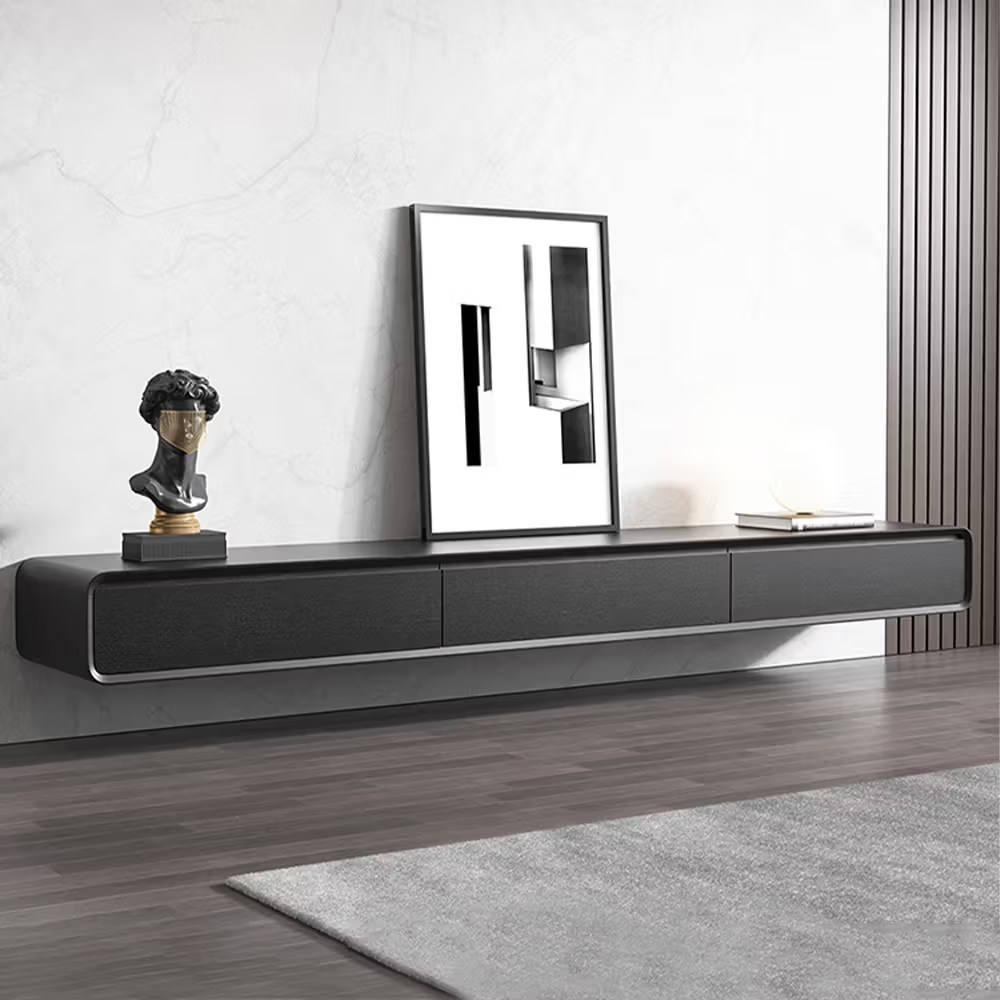
Merrin Black Floating TV Stand
For rooms that need enclosed storage without a full wall system, Merrin keeps the floor open and the TV wall visually lighter.
4 Best POVISON TV Stands as Entertainment Center Alternatives
These four consoles address different reasons shoppers consider a full entertainment center, including AV equipment depth, concealed storage, display space, and floor clearance. Each remains a single horizontal unit, so it keeps the wall above the television open and avoids the fixed screen opening created by side towers or upper cabinets.
🏅 Arboren Deep Vented Rolling Media Console
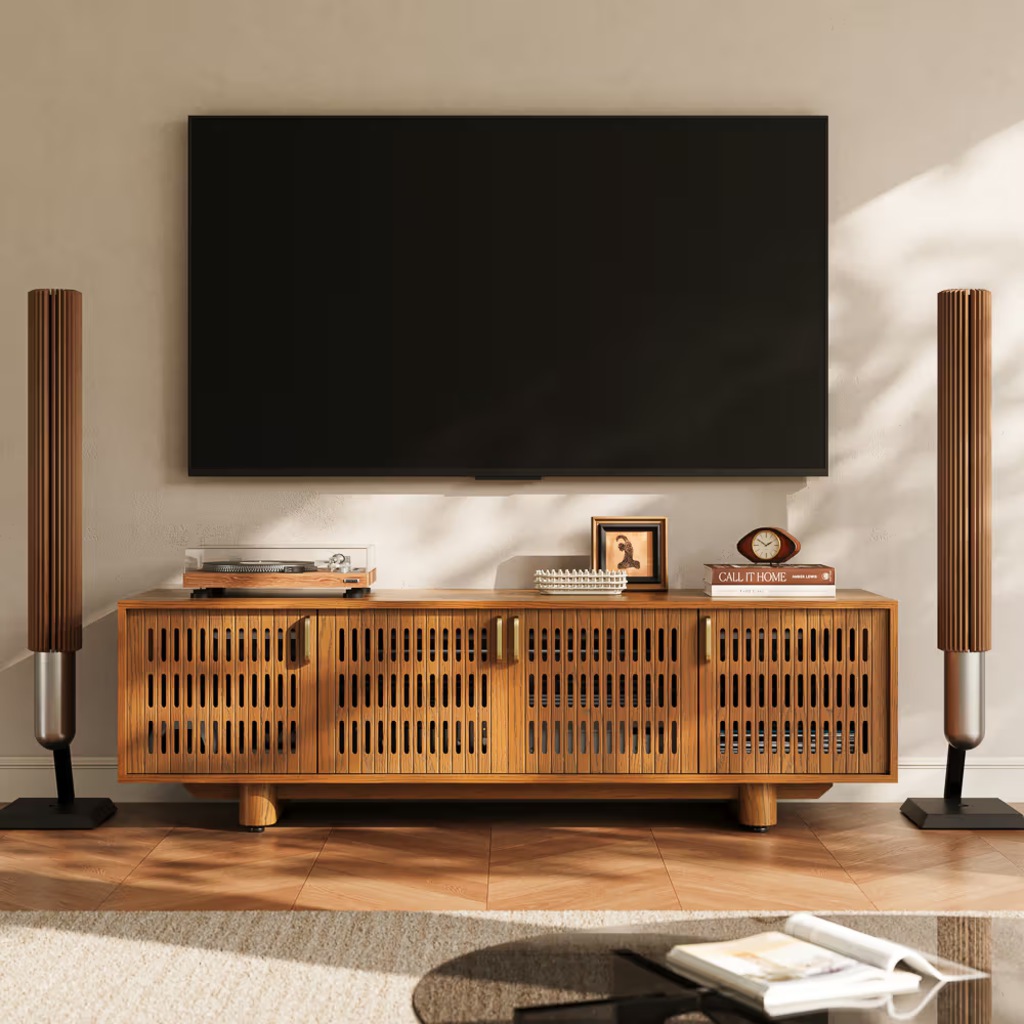
Arboren Deep Vented Rolling Media Console
Deep, ventilated storage and concealed wheels support oversized AV equipment while keeping cable access practical behind the cabinet.
👍 Best for: Home theaters with oversized receivers and frequent cable changes
✨ Highlights
- 17.7″ of usable interior depth
- Ventilated metal shelves help release equipment heat
- Slatted doors support infrared remote signals
- Six internal and three rear cable openings
- Concealed locking wheels simplify rear access
🎯 Features
This console addresses a problem many basic TV stands miss: the installed depth required by connected AV equipment. Its 17.7″ interior accommodates many larger receivers, while ventilated metal shelves and slotted openings improve airflow. Signal-friendly doors conceal devices without interrupting remote operation. Hidden wheels allow the cabinet to move forward for rewiring, cleaning, or replacing components, providing stronger equipment support without surrounding the television with a wall unit.
🗨️ Buyer Review
“Inside, there’s enough space for my receiver, game console, and media player without feeling cramped.” — Leia
🏅 Selene Horizontal Slatted TV Stand with Adjustable LED Lights
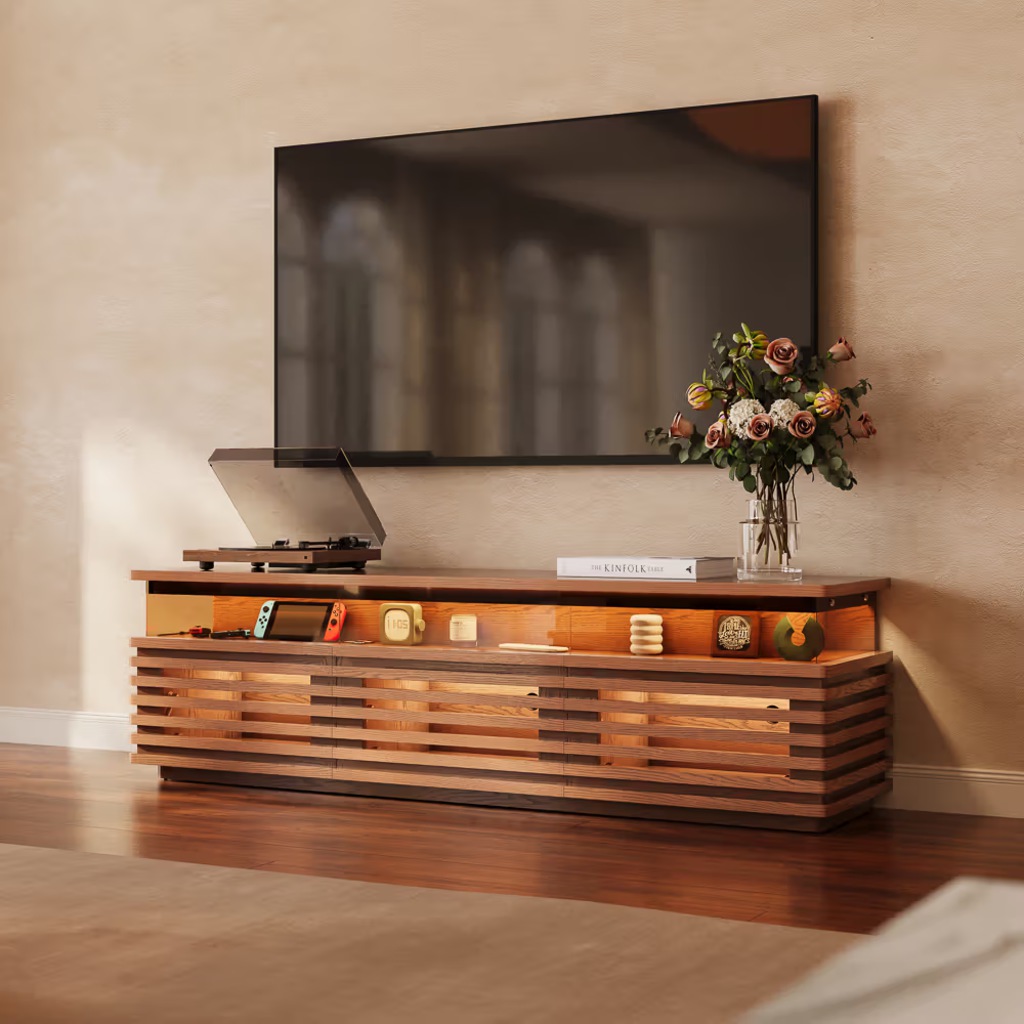
Selene Horizontal Slatted TV Stand
Slatted doors, adjustable lighting, and closed storage create a media-focused wall without adding upper cabinets or side towers.
👍 Best for: Living rooms combining concealed electronics with illuminated display storage
✨ Highlights
- Slatted fronts transmit infrared signals and sound
- Six brightness settings illuminate the display area
- USB-powered lighting reduces additional outlet use
- Closed cabinets separate equipment and accessories
- Main cabinet arrives fully assembled
🎯 Features
Selene combines equipment storage with a lighted display zone, making it useful when a basic stand feels too plain but a full entertainment center would dominate the wall. The slatted front allows remotes and audio to function while components remain behind closed doors. Adjustable USB-powered lighting highlights collectibles or media accessories without requiring upper shelving, and the assembled cabinet avoids the multi-piece setup associated with a larger wall system.
🗨️ Buyer Review
“The 6-level adjustable lighting is an absolute game-changer for setting the perfect mood at night.” — Maya
🏅 Eos Modern Tambour Door TV Stand
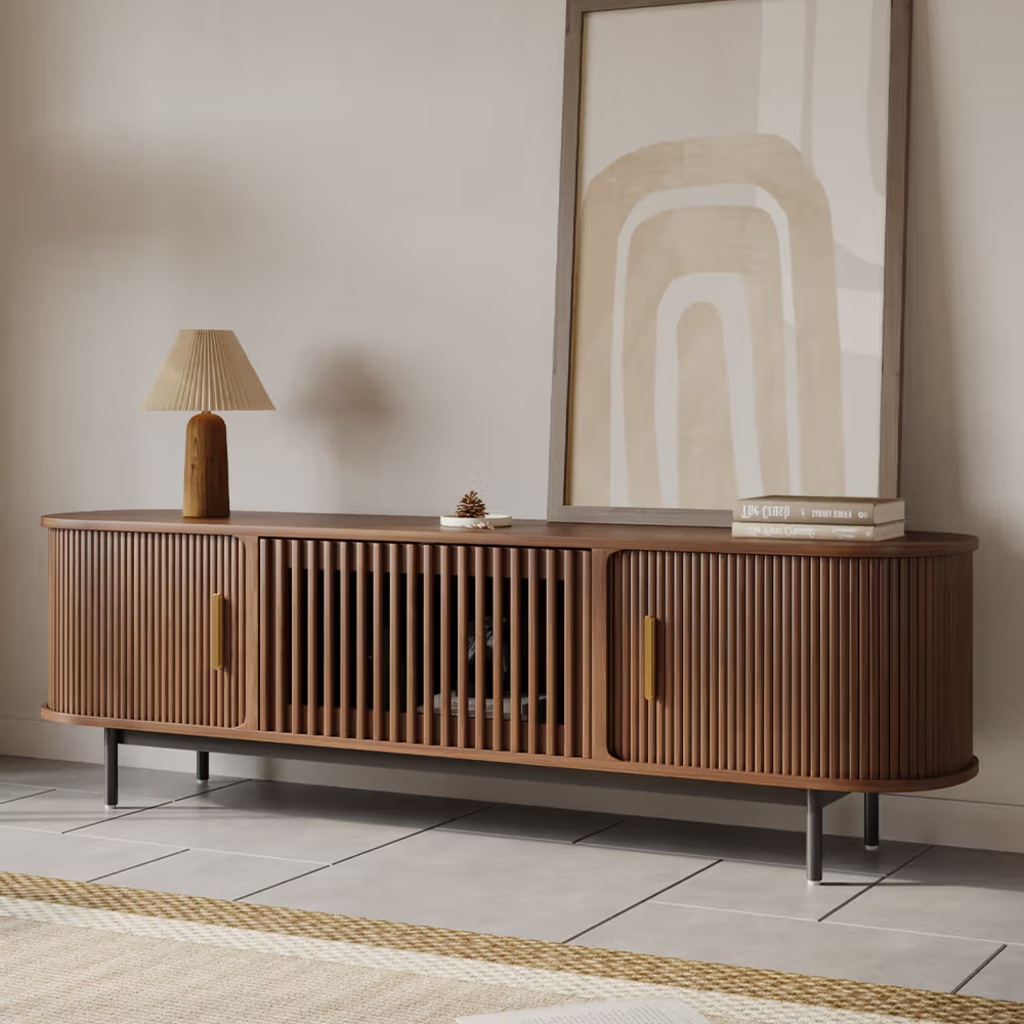
Eos Modern Tambour Door TV Stand
Tambour doors conceal everyday clutter while rounded edges and raised clearance keep a busy family room easier to maintain.
👍 Best for: Family rooms needing broad concealed storage and easier floor cleaning
✨ Highlights
- Curved ash tambour doors
- Rounded corners suit high-traffic layouts
- Adjustable or removable horizontal shelves
- 5.5″ clearance accommodates many robot vacuums
- Top surface supports up to 250 lbs.
🎯 Features
Eos is designed for households that need storage more than specialized AV depth. Its tambour doors move across the cabinet front without projecting into the walking area, helping where hinged doors would interrupt circulation. Adjustable shelves organize games, smaller electronics, books, and media accessories, while the raised base supports routine floor cleaning. It creates a long storage anchor without introducing tall side towers or display shelves above the television.
🗨️ Buyer Review
“It is very well made. The material is high quality and a great value compared to something from West Elm.” — Carolina
🏅 Arboren Mid-Century Modern TV Stand with Storage
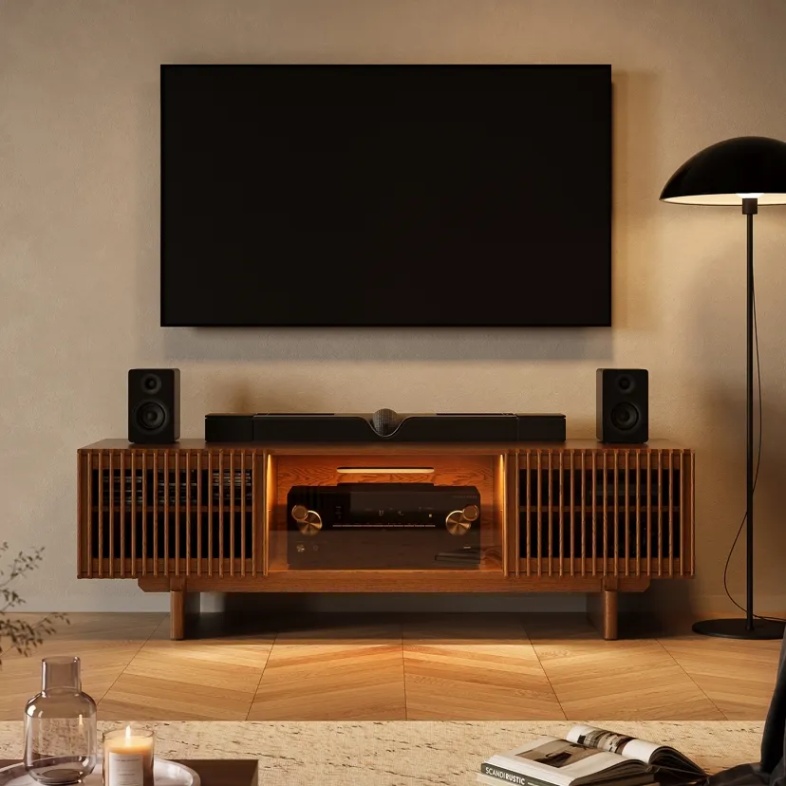
Arboren Mid-Century Modern TV Stand
Extra-deep compartments organize receivers, speakers, and records inside one low-profile cabinet rather than a surrounding wall system.
👍 Best for: Mixed AV equipment, speakers, records, and larger media collections
✨ Highlights
- 22″ cabinet body with 18.3″ usable interior depth
- Removable shelves accommodate taller components
- Signal-friendly door sections support remote use
- Rear ventilation supports heat-producing electronics
- Six internal and three rear cable openings
🎯 Features
This Arboren model offers a strong middle ground for a storage-heavy media wall. Its deep cabinet and removable shelves can accommodate receivers, speakers, record players, and media collections that may not fit inside standard consoles. Signal-friendly doors, rear vents, and multiple cable openings support connected equipment. Unlike a full entertainment center, all storage remains below the screen, preserving flexibility for a larger television or a future change in wall layout.
🗨️ Buyer Review
“There was still room left to add other components on top of the speakers.” — Victoria
Final Decision Checklist
Before choosing a TV stand or entertainment center, confirm five points:
- Wall commitment: Do you want furniture above and beside the screen for several years?
- TV opening: Could a larger future television fit without removing modules?
- Equipment fit: Do the usable compartments support connected depth, airflow, and remote access?
- Storage purpose: Are the extra shelves solving a real need or creating display space to maintain?
- Delivery and installation: Can every section pass through the route and be secured to the intended wall?
Choose based on the most difficult requirement. A large equipment setup may need a deeper console, not a taller system. A storage-heavy family room may justify an entertainment center even when the electronics themselves are simple.
Conclusion
The TV stand vs entertainment center decision comes down to flexibility versus wall-wide organization. Choose a TV stand when you want easier television upgrades, simpler moving, open wall space, or storage designed mainly for electronics. Choose an entertainment center when a stable, spacious room needs coordinated upper, side, and closed storage around the screen. For many households, a deep or extra-wide media console provides the useful middle ground: more capacity than a basic stand without the fixed TV opening and installation demands of a full wall system.
Frequently Asked Questions
Should the Unit Center on the Wall or the Seating?
Align the television and furniture with the primary viewing position rather than automatically centering them on the wall. In an open-plan room, the setup may appear slightly off-center architecturally. Before choosing a TV stand or entertainment center, check screen sightlines from the main sofa and make sure the new position does not narrow nearby walkways.
How Do Baseboards Affect Installation?
Baseboards can prevent a cabinet from sitting flush against the wall and increase the visible gap behind it. Measure their height and projection before ordering. A recessed lower back or adjustable wall bracket may accommodate the trim. Do not remove baseboards or cut the cabinet unless the installation instructions specifically allow it.
Where Should Power Strips Be Placed?
Place power strips where the switch, plugs, and surge indicator remain accessible without removing heavy equipment. Avoid sealing them inside a poorly ventilated compartment or routing cords through sharp openings. Leave enough cable slack to pull components forward for service, and never connect one power strip to another.
Can Integrated Lighting Cause Screen Glare?
Yes. Lighting beside or above the television can reflect on glossy screens, especially during darker viewing. Choose dimmable lighting and test each brightness setting from the main seat before completing the cable setup. Direct the light toward shelves or the rear wall rather than toward the screen, and keep the transformer accessible.
Which Finish Works Better in Direct Sunlight?
Low-sheen woodgrain or UV-resistant finishes generally show glare and uneven fading less than high-gloss panels. Strong daily sunlight can still discolor wood, veneer, and displayed objects over time. Use window coverings during peak hours and avoid placing one side of a wide entertainment center in constant sun while the other remains shaded.


