 By Stephanie
Summer turns the living room into a casual retreat for movie nights, afternoon naps, cold drinks, and visiting friends. A floor sofa fits that mood, but its relaxed look can hide practical problems: difficulty standing up, blocked walkways, trapped dust, shifting modules, or limited back support. The right choice depends on how the seat meets the floor, how your body uses it, and how the room changes when it unfolds. This guide gives you a clear way to compare types, measure space, test comfort, and plan easy summer upkeep before buying.
Table of Contents
Floor Sofa Definition: What Counts and What Does Not
A true floor sofa has an upholstered base, foam body, or cushion system that rests directly on the floor. It does not use conventional legs to raise the seating structure. Some models contain an internal frame, so “frameless” and “floor sofa” do not always mean the same thing.
Use the base—not the product name—to identify the category:
- A boneless couch counts as a floor sofa when its foam body sits directly on the floor. Some models still contain springs or a concealed platform that changes the firmness.
- A folding floor sofa bed uses hinged cushions or an adjustable backrest to switch between sitting and sleeping positions.
- A Japanese floor chair, or zaisu chair, is single-person floor seating rather than a sofa.
- A low-profile sofa uses short legs, a recessed plinth, or a raised frame. It may look close to the floor, but its seating body does not rest directly on it.
The simplest distinction is structural: when the seating body touches the floor, it is floor seating; when a base raises it, it is a low-profile sofa.
This structural difference affects seat height, stability, and everyday handling. Product labels such as cloud, lounge, or floor-hugging do not explain how the sofa is actually built.
A low-profile couch for everyday lounging may deliver the same grounded visual effect without qualifying as a true floor sofa. Once the construction type is clear, the next decision is whether that seating style fits the room’s normal routine.
Matching Floor Seating to Daily Life
A floor sofa should match how the room works on an average weekday, not only how inviting it looks during a summer weekend. Base the decision on the room’s main activity, the needs of regular users, and the amount of upright support required each day.
Choose Floor Seating for Lounge-First Rooms
Floor seating works well when reclining is more important than formal posture. It fits movie rooms, gaming spaces, reading areas, and casual family lounges.
A modular floor sofa can form one large surface for group viewing or separate into individual seats. Choose this setup when:
- Regular users can rise from a low seat comfortably.
- Most time on the sofa is spent reclining or sitting cross-legged.
- Firm arm support is not required.
- The sofa will not serve as a daily work chair.
- Reconfiguring separate sections will be useful rather than inconvenient.
A folding model can also work in an occasional guest room, provided sleeping is a secondary function rather than an everyday need.
Choose a Framed Sofa for Mixed Daily Use
A low-profile framed sofa is usually more practical when one room must handle working, upright conversation, family seating, and long periods of daily use. Its firmer seat edge and stable arms can also help users who need support when standing.
| Primary room use | Better starting choice |
| Movie room or gaming space | Modular floor sofa |
| Casual playroom | Stable floor sofa |
| Occasional guest room | Folding floor sofa bed |
| Home office and guest room | Structured convertible sofa |
| Main family living room | Low-profile framed sofa |
One family enjoyed its soft floor seating during Saturday movie nights but avoided it during the workweek because the cushions offered too little support for laptop use. The sofa was not defective; the room required a wider range of sitting positions than the design could provide.
The Three-Step Fit Test Before You Buy
Listed width and depth only describe a sofa at rest. They do not show what happens when the back reclines, modules separate, or someone tries to walk past. Test the sofa in three steps—room movement, floor contact, and body movement—before deciding that it fits.
Step 1: Map the Full Use Zone
Use painter’s tape to mark the sofa in its smallest position. Add a second outline for every larger configuration:
- Reclined backrests or extended footrests
- Folded-flat or sleeper mode
- Separated modular sections
Leave the tape in place for one normal evening. Open the doors, use nearby storage, walk to the television, and move the coffee table as you normally would.
The layout works only when:
- Doors, cabinets, and balcony access remain usable.
- One clear route crosses the room in every sofa position.
- The open sofa does not trap a person or another piece of furniture.
- Power cords stay outside the walking path.
- Displaced cushions, tables, or ottomans have a practical place to go.
If another large piece must be moved every time the sofa opens, the configuration is too large for daily use.
Step 2: Inspect the Base-to-Floor Interface
The underside determines how the sofa behaves on your flooring. Request a clear base photo when the product listing does not show it.
| What to inspect | What to confirm |
| Support | The seat rests evenly on foam, springs, a platform, or a frame |
| Stability | Modules use connectors or a non-slip base |
| Flooring | The base is compatible with wood, tile, laminate, or carpet |
| Handling | The sofa can be shifted without pulling loose upholstery |
| Back support | The backrest stands securely in the planned position |
This check is especially important with a low to the ground sofa sold as several independent modules. A continuous appearance in product photos does not guarantee that the pieces will stay aligned on a smooth floor.
Choose another configuration when thick carpet makes the sections uneven, the backrest requires a wall that is not available, or the seller cannot explain how the modules stay together.
Step 3: Rehearse Real Use
Recreate the listed seat height with firm cushions, a low bench, or stacked exercise mats. Ask each regular user to complete four actions:
- Sit down and stand three times without pulling on nearby furniture.
- Remain upright for ten minutes with comfortable back support.
- Reach for a drink, remote, or laptop without twisting.
- Move from sitting to reclining while another person walks past.
Place a tray where the coffee table will sit and test the viewing angle from the proposed seat height. A coffee table height that works with a low sofa should allow a natural reach without forcing the user to bend deeply or lift the shoulders.
The sofa fits only when both the body and the room continue to function while it is being used. If the test requires awkward standing, repeated furniture moving, or a blocked walkway, reduce the module count, choose a shallower design, or move to a framed low-profile sofa.
Floor Sofa vs. Low-Profile Sofa: Use Your Test Results
At this point, the choice should come from the fit test rather than appearance. Use the results to identify which compromise your household can comfortably accept.
| Test result | True floor sofa | Low-profile framed sofa |
| Standing | All regular users rise comfortably | A firm edge or arms are needed |
| Room function | The space is mainly used for lounging | The room supports several daily activities |
| Floor behavior | Modules remain stable | One anchored structure is preferred |
| Sitting posture | Reclining is the priority | Upright and relaxed sitting both matter |
| Conversion | Reconfiguration is simple | A built-in mechanism is more practical |
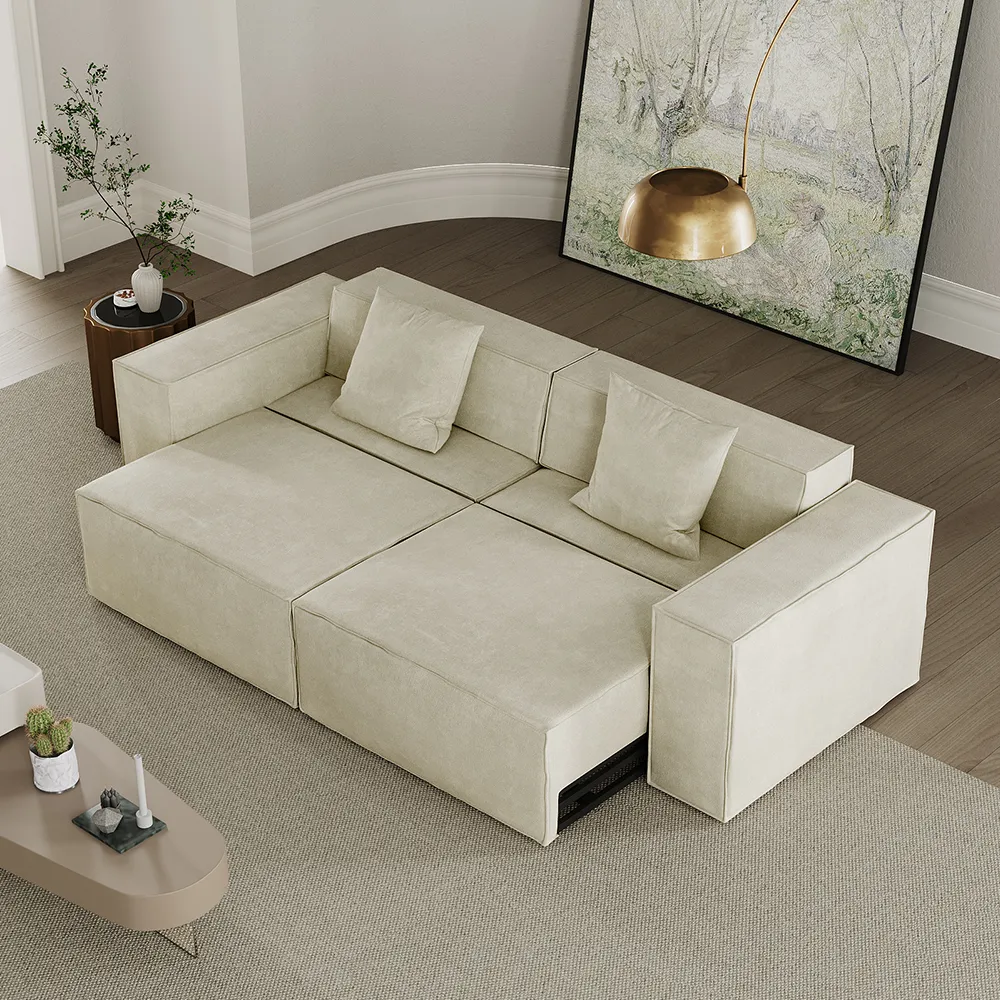
When the tests point toward a framed option, the room can still keep a grounded, relaxed look. The Barrett Power Sofa Bed suits a family room that changes from daytime seating to summer movie nights or occasional guest use. Its low seat maintains the visual profile, while the powered extension creates a broader lounging surface. Spill- and scratch-resistant upholstery also addresses the everyday risks of drinks, children, and pets.
Treat it as a low-profile convertible sofa, not a true floor sofa. Its fully extended depth must leave the main route open, and the power outlet should be reachable without placing a cord across the floor.
Summer Setup and Maintenance
Summer brings stronger sun, cold drinks, higher humidity, and more time spent in the living room. Because floor-level upholstery sits close to dust and the flooring surface, focus on the areas that are easy to overlook.
Keep the sofa away from harsh afternoon sun unless the fabric is rated for prolonged exposure. Close curtains during peak hours and monitor humid rooms with a hygrometer. The U.S. Environmental Protection Agency recommends keeping indoor relative humidity below 60%, ideally between 30% and 50%, to limit moisture-related problems (U.S. Environmental Protection Agency).
For easier summer care:
- Use a stable side table for iced drinks.
- Blot spills promptly according to the care label.
- Choose a low-pile rug when modules need grip.
- Avoid thick-pile rugs that make separate sections tilt.
- Lift movable sections weekly during humid periods.
- Vacuum and briefly air the hidden base.
In one coastal apartment, a weekly underside check revealed crumbs and a faint damp odor before either caused a lasting problem. The routine takes only a few minutes because the area is inspected before buildup becomes visible from above.
Final Buying Decision
Before ordering, answer four questions:
- Does the sofa suit the room’s primary daily use?
- Can every regular user sit and stand comfortably?
- Does every operating position preserve a usable room?
- Can the household manage its stability and care requirements?
Make the decision this way:
- Buy when all four answers are yes.
- Pause when one answer depends on missing product information.
- Choose another design when one answer is clearly no or when two remain uncertain.
Do not buy on the assumption that the household will adjust later. The sofa should work without constant repositioning or assistance.
Conclusion
A floor sofa works when its low position supports the way the room is actually used. True floor seating suits casual lounge zones, while folding models add occasional guest flexibility. A framed low-profile sofa is often the stronger choice for mixed activities, varied mobility needs, and predictable everyday support. Look beyond the product name: identify the base, test the full use zone, rehearse normal body movement, and plan realistic upkeep. The best choice is not simply the lowest sofa. It is the one that keeps the entire room comfortable and functional.
FAQs
Can a Floor Sofa Cover a Floor Vent?
No. Blocking a supply or return vent can disrupt airflow and expose upholstery to concentrated heat or moisture. Reposition the sofa so the entire grille stays open. When only one wall works, choose a shorter configuration instead of covering the vent with foam, fabric, or a rug.
Can a Floor Sofa Be Used on Radiant-Heated Floors?
Only when both manufacturers allow it. Continuous heat can affect foam, adhesives, backing, and upholstery. Ask for an approved surface-temperature range and any required barrier. Do not assume a rug makes the setup safe; it may trap additional heat beneath the sofa.
Which Upholstery Feels Cooler in Summer?
A smooth, tightly woven fabric usually feels lighter than sherpa, thick boucle, or long-pile velvet. Performance polyester handles spills well, while linen blends may feel airy but need more careful stain treatment. Judge the weave, pile, backing, and care method rather than the fiber name alone.
Is Floor Seating Safe for Toddlers?
The low height reduces climbing distance but does not remove hazards. Secure modules so gaps do not open, keep power mechanisms and cords inaccessible, and avoid unstable backrests. Check the product’s age guidance, and never allow children to use a convertible mechanism as play equipment.
How Can Renters Protect Hard Floors?
Vacuum underneath regularly because trapped grit can scratch wood or laminate when modules shift. Use a manufacturer-approved, non-marking pad rather than adhesive tape or rubber that may discolor the finish. Test the pad in a hidden area and photograph the floor before installation.


