 By Stephanie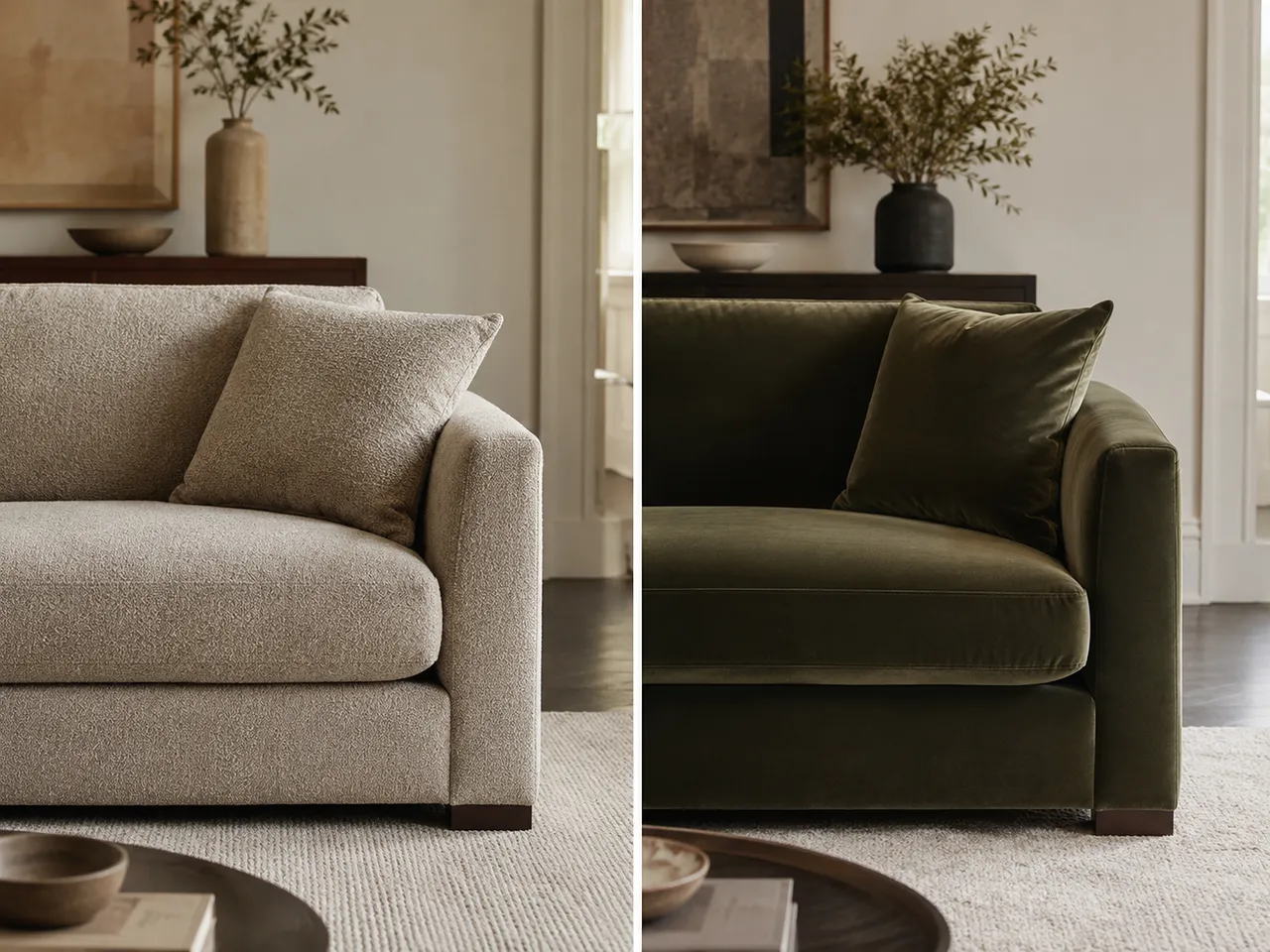
A chenille vs velvet comparison should help you predict how a sofa will feel, look, and wear over time—not simply define two fabrics. The real question is whether chenille or velvet is better for daily lounging, a home with children or pets, frequent entertaining, or occasional seating. This guide compares visible wear, cleaning demands, comfort, everyday household use, and fabric specifications. By the end, the chenille vs velvet sofa decision should come down to your habits and the exact upholstery—not a general rule about which fabric is superior.
Table of Contents
Chenille vs Velvet: Which Is Better for Your Sofa?
Choose tightly woven performance chenille for relaxed, high-contact lounging when you want a softer texture with less directional shading. Choose short-pile velvet when stronger color depth and a smoother surface matter more. For children, pets, hot rooms, or heavy daily use, the fabric name alone is not enough; compare the exact construction, treatment, and care requirements.
| If This Describes Your Home | Start With | What to Verify |
| The sofa is used daily for TV, stretching out, and naps | Tightly woven performance chenille | Pilling resistance, snag risk, and spot-cleaning instructions |
| A cat frequently scratches upholstered furniture | Short-pile, densely constructed velvet | Published abrasion or scratch-resistance information |
| Children regularly eat or drink on the sofa | Whichever fabric has documented water- or stain-resistant treatment | The exact care code and approved spot-cleaning method |
| You want a dark sofa with rich color and visible sheen | Velvet | Pile direction, pressure shading, and sunlight care |
| You dislike handprints or directional color changes | Chenille | Weave density, pilling risk, and raised fibers that may snag |
| You live in a hot climate or sit for long periods | No automatic winner | Pile density, backing, cushion fill, and room temperature |
These are starting points, not fixed winners. Chenille may be easier to live with visually but still pill or snag. Velvet may show more pressure marks while offering a dense surface with fewer loose fibers.
Choose Chenille When Daily Comfort Comes First
Chenille often fits rooms centered on movie nights, afternoon naps, and casual lounging. Its textured surface scatters light, so minor pressure changes may be less noticeable than they would be on directional velvet.
Consider chenille when you prefer:
- A soft, warm surface
- A matte or lightly textured appearance
- Casual seating used throughout the day
- Less visible shading when someone brushes the fabric in a different direction
A family that stretches out on the sofa every evening may prefer this relaxed appearance. However, raised fibers can still catch on cat claws, rough clothing hardware, or sharp objects. Look for tightly constructed performance chenille rather than assuming every chenille sofa can handle the same level of use.
Choose Velvet When Visual Depth Matters More
Velvet works well when the sofa needs to carry more of the room’s visual character. Its directional pile reflects light differently as the viewing angle changes, giving saturated colors greater depth.
Choose velvet when you want:
- Rich blue, green, brown, or orange upholstery
- A smooth surface with noticeable light-and-shadow changes
- A polished sofa for entertaining or adult-focused seating
- Tufting or curved forms that benefit from a continuous sheen
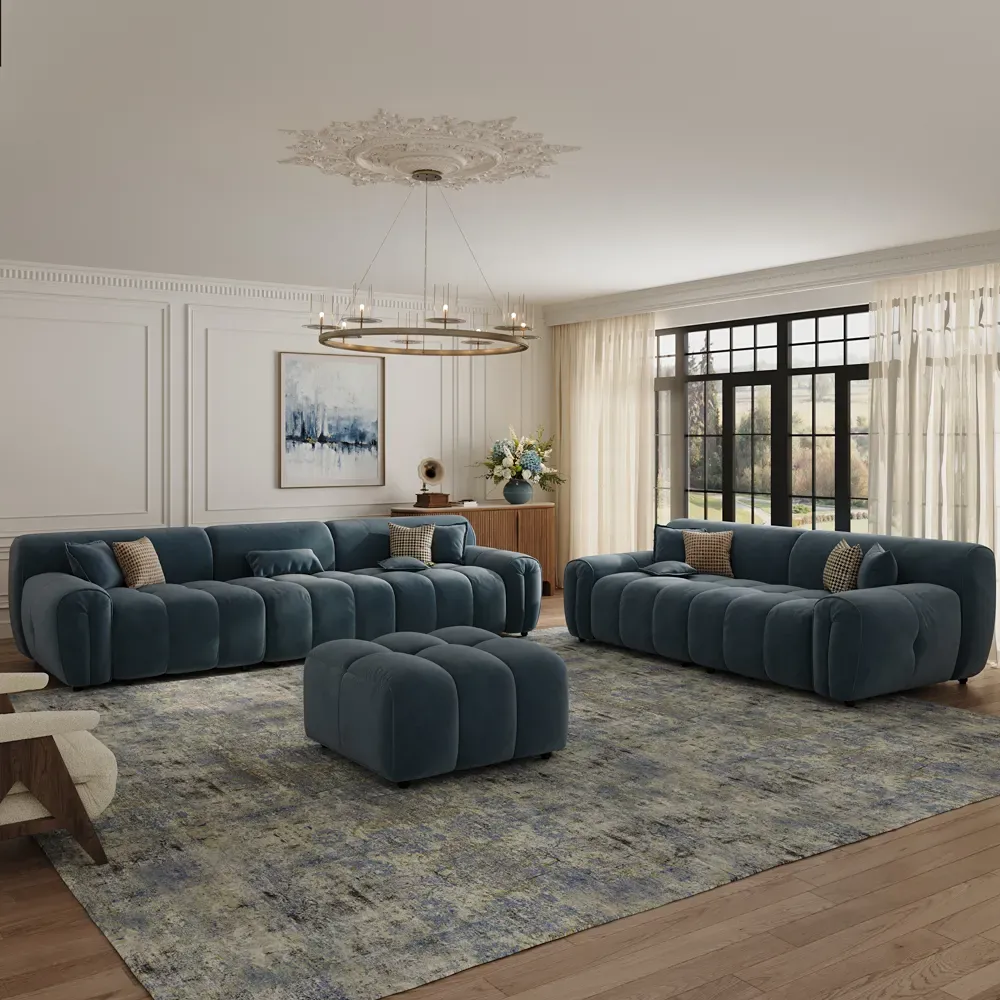
For a front living room where the sofa is meant to anchor the space, the Silva Mid-Century Tufted Sofa Set uses 100% polyester velvet with a rich sheen that emphasizes its curved, hand-tufted form. Its 29-inch seat depth also gives guests room to settle in, supporting both a polished look and deeper lounging.
For frequent use, prioritize a short, dense pile and practical care instructions. Do not assume that every velvet sofa is either delicate or easy to maintain.
How Will Each Fabric Handle Daily Life?
The most useful chenille vs velvet judgment is not which sample feels softer for ten seconds. Chenille’s raised yarns and velvet’s directional pile respond differently to sitting, pet contact, spills, light, and body heat. Evaluate visible aging separately from structural durability: a fabric can remain intact while still developing changes you dislike.
High-Traffic Use and Long-Term Appearance
Chenille and velvet tend to show daily use in different ways. Chenille may develop pilling, pulled fibers, or flattened texture in frequently used areas. Velvet is more likely to show pressure shading, brushed lines, handprints, and pile crushing. These changes do not always mean the fabric has failed, but they can affect how the sofa looks during everyday use and over time.
Use the fabric name to identify likely risks, not to assign a durability rank. When available, compare product-specific abrasion, pilling, and colorfastness results. The ACT upholstery performance guidelines also treat overall durability as a combination of factors rather than a single abrasion score. If those results are not published, do not infer them from claims such as water-resistant, scratch-resistant, or performance fabric. Each claim describes a different type of protection.
Sofa design also affects where wear develops. Movable or extendable seats expose the upholstery to repeated contact across more positions than a fixed-seat sofa.
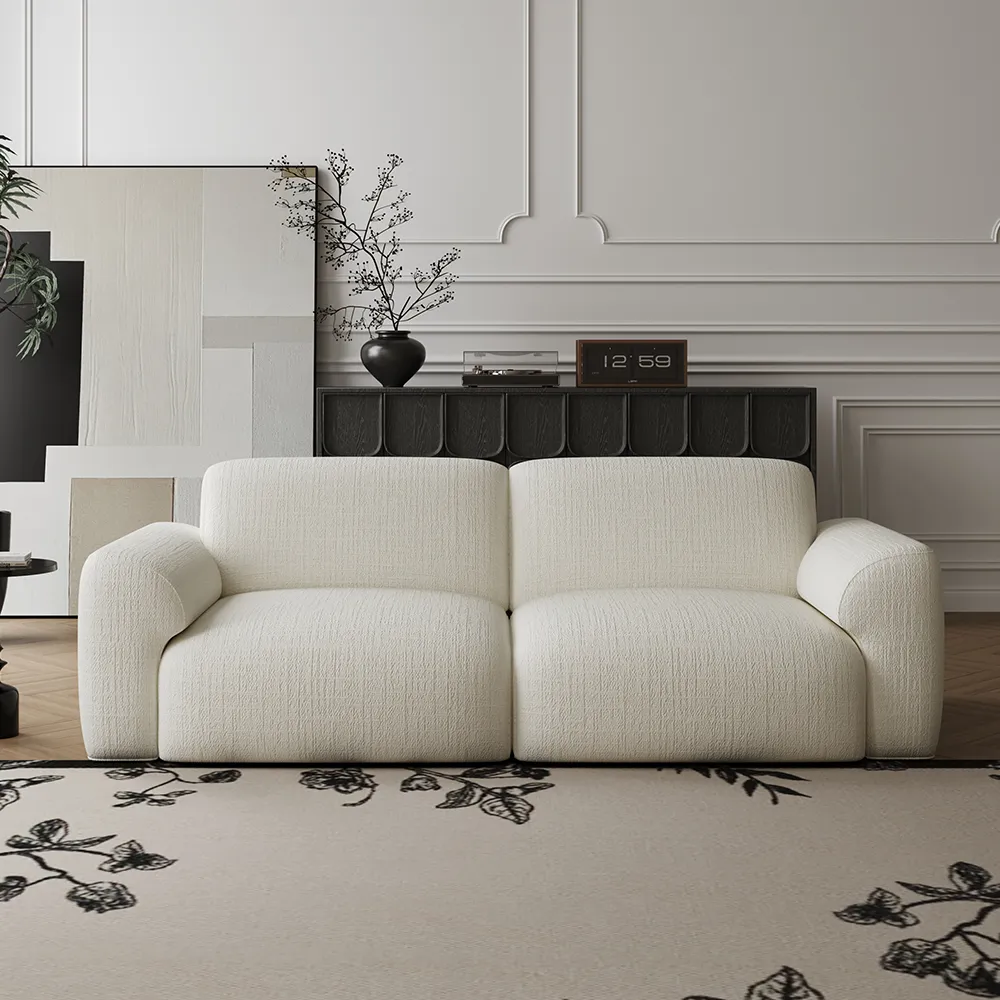
For nightly TV, naps, and occasional overnight use, the Aurora Power Sofa Bed moves between upright sitting, deep lounging, and sleeping. Its white version features 100% polyester performance chenille with a matte, textured-velvet look and water- and scratch-resistant properties. The motorized seat adjusts from 27 to 45.5 inches to support each position.
Those claims describe the fabric treatment and intended use, not published abrasion or pilling scores. Evaluate those performance measures separately when the data is available.
Kids, Pets, and Everyday Spills
“Pet-friendly” should be divided into three separate questions: claws, shedding, and accidents. Chenille’s raised fibers may catch sharp claws, while short, dense velvet can reduce obvious snag points. Velvet can still show pet hair, paw marks, and brushed areas, especially when the animal’s coat contrasts with the sofa color.
For homes with children, the material name matters less than:
- A clearly stated water- or stain-resistant treatment
- A care code that permits practical spot cleaning
- Tight surface construction
- A color that does not reveal every crumb or dried mark
- Fast access to the manufacturer’s cleaning instructions
When a drink spills, blot it rather than rubbing it across the pile. “Water-resistant” buys reaction time; it does not make upholstery waterproof or eliminate the need to clean the spill.
Heat, Light, and Everyday Comfort
Velvet is not automatically hotter than chenille, and chenille is not automatically breathable. Perceived warmth depends on pile density, fiber content, cushion construction, room temperature, clothing, and how long the body remains against the surface.
Chenille often feels warmer and more enveloping because of its fuzzy texture. Velvet may feel smoother against the skin, but dense synthetic versions can still hold warmth during extended lounging.
Light affects the two fabrics differently as well. Velvet’s directional pile creates stronger shifts between lighter and darker areas, while chenille usually produces a softer variation. Both can fade near a sunny window, so check colorfastness information and use shades or curtains during strong direct exposure.
Chenille and Velvet Buying Checklist
Product pages and fabric swatches should provide enough detail to judge the exact upholstery rather than relying on broad chenille and velvet stereotypes.
Check these points before ordering:
- Fiber composition: Polyester versions may be easier to engineer for frequent use than delicate natural-fiber versions, but composition alone does not prove durability.
- Performance treatment: Look for precise water-, stain-, or scratch-resistant claims rather than vague “family-friendly” wording.
- Abrasion and pilling results: Compare actual test results when available.
- Cleaning code: Confirm whether the fabric requires water-based cleaner, solvent, professional care, or vacuuming only.
- Removable covers: A removable cover is not necessarily machine washable.
- Pile or weave density: Loose fibers and long piles generally create different maintenance risks than dense, short surfaces.
- Sunlight instructions: Note whether the manufacturer warns against direct exposure.
- Swatch availability: Test the material in the room where the sofa will be placed.
Use a swatch in both daylight and evening light. Brush it in two directions, press it firmly for several seconds, and observe how quickly the surface recovers. Place a few clean fibers similar to your pet’s hair on it and test whether a vacuum attachment or lint brush removes them easily.
The same checks help determine whether a velvet sofa is practical for everyday use instead of judging velvet only by its formal appearance.
Conclusion
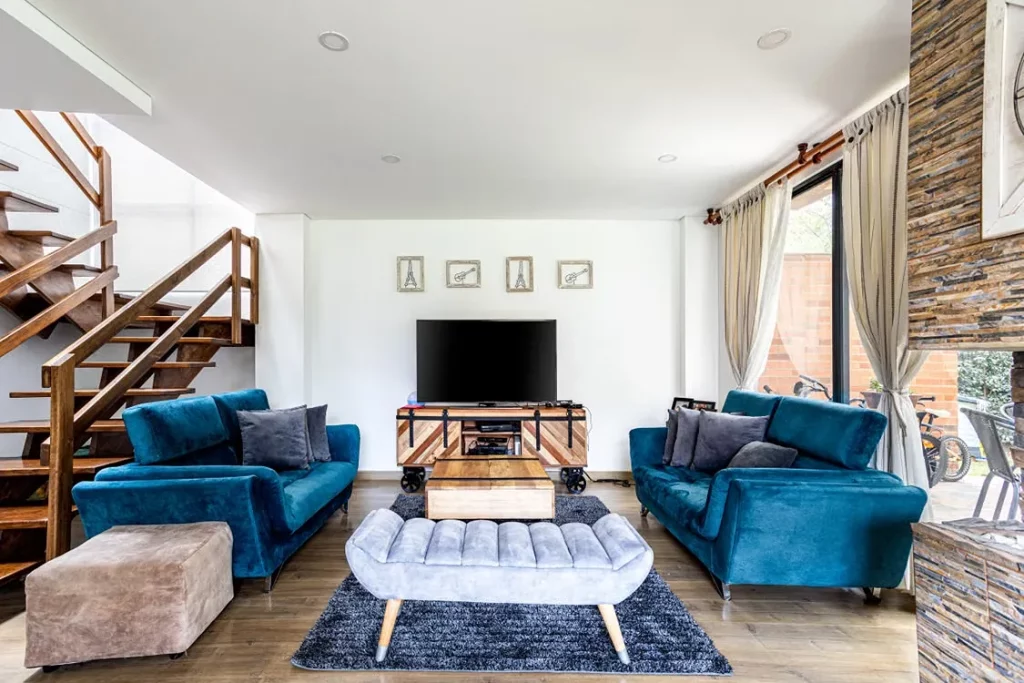
The right chenille vs velvet choice depends on how the sofa will be used and which visible changes you are willing to maintain. Chenille favors a textured, relaxed look and frequent lounging, while velvet offers smoother color depth and a stronger statement effect. Neither label guarantees durability, easy cleaning, or pet resistance. Compare fiber composition, construction, performance treatments, testing, care codes, and swatches before deciding. The strongest purchase is the exact upholstery that matches your household—not the fabric with the better general reputation.
Q&A
Is tufted velvet harder to clean than flat velvet?
It can be. Tufting creates seams and recessed points where dust, crumbs, and hair collect. Use a low-suction upholstery attachment around each indentation and avoid pressing liquid deeper into the folds. A flat velvet panel generally takes less time to vacuum, although both surfaces still require the product’s specified cleaning method.
Can I use a steam cleaner on either fabric?
Only when the manufacturer explicitly permits steam cleaning. Heat and moisture can distort chenille fibers, leave water marks on velvet, affect adhesives, or change the pile direction. Test an inconspicuous area first, keep the tool moving, and never treat a “water-resistant” claim as permission to steam the upholstery.
Do dark colors hide wear better than light colors?
Not in every case. Dark velvet may conceal food marks but show lint, pale pet hair, and directional shading. Light chenille may hide dust yet reveal dark spills. Choose color by the contrast with common household debris and pet hair, then inspect the sample under the room’s daytime and nighttime lighting.
Should sofa cushions be rotated to protect the fabric?
Yes, when the cushions are removable and the manufacturer allows rotation. Switching positions distributes body pressure, friction, and sunlight more evenly. Do not flip a one-sided cushion or force a directional velvet cushion into a visibly mismatched orientation. Fixed cushions should instead be vacuumed and gently brushed on a consistent schedule.


