 By Kelvin
Introduction
An ottoman can replace a coffee table only when its top, base, and tray work together as a stable surface. This guide explains how to use an ottoman as a coffee table without balancing drinks on a cushion, blocking storage, or losing the footrest you use every evening. You will learn how to test the ottoman you already own, choose a setup for its specific top, identify why a tray moves, and create a simple routine for switching between table, seating, storage, and lounging modes.
Table of Contents
Can Your Existing Ottoman Work as a Coffee Table?
The first step in learning how to use an ottoman as a coffee table is not buying a decorative tray. It is checking whether the furniture can support one consistently. A top that looks flat in a product photo may compress unevenly under a loaded tray, while a firm ottoman may still slide across the floor when someone bumps it.
Run a 30-Second Stability Check
Place an empty rigid tray where you expect to use it, then press lightly on each corner. Check whether:
- All four corners remain in contact with the top.
- The cushion sinks more on one side than the other.
- The upholstery or slipcover shifts beneath the tray.
- The entire ottoman moves when pushed gently.
- The tray raises the working surface above a comfortable reach.
- A storage lid can still open without a complicated reset.
Use the result to decide whether the ottoman is ready, adjustable, or unsuitable.
| Ottoman condition | Practical judgment | Setup to try |
| Firm, flat top | Suitable for regular table use | Rigid tray with raised edges |
| Light button tufting | Usually adjustable | Wide tray plus a thin non-slip liner |
| Deep tufting | Limited without added support | Rigid insert beneath the tray |
| Loose, very soft cushion | Better for light objects only | Avoid uncovered drinks |
| Rounded or domed top | Poor daily table surface | Use a nearby side table |
| Reversible hard lid | Closest to a standard table | Lock the lid before loading it |
Do not judge suitability by appearance alone. A plush ottoman can work when the tray spans a firm internal frame, while a slimmer cushion may wobble if its fill moves freely.
How to Set Up Different Ottoman Tops
Using an ottoman as a coffee table requires a solution matched to the surface beneath the tray. Friction solves sliding, but it does not correct uneven compression. A hard insert spreads weight, but it cannot stabilize an ottoman that rolls across the floor. Identify the top type before adding accessories.
Firm, Flat Upholstered Tops
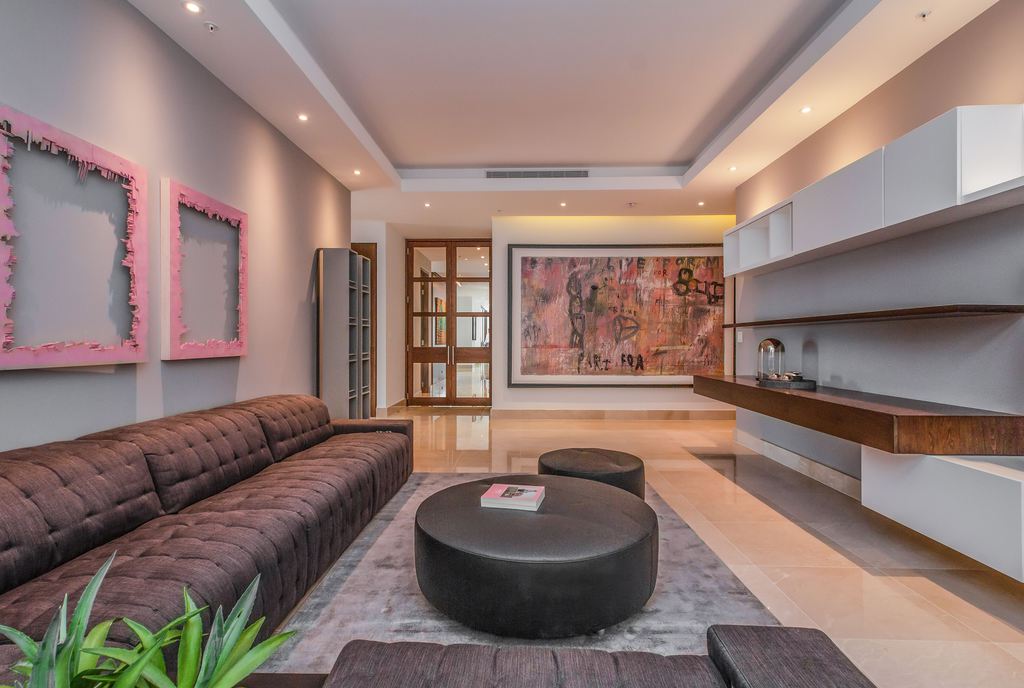
A firm top usually needs only a rigid tray. Choose a full, flat bottom rather than narrow feet that can press into the fabric. Raised edges help contain a tipped mug, and handles make the tray easier to clear when someone wants to put their feet up. Keep the entire tray inside the upholstered perimeter.
Lightly Tufted Tops
Shallow buttons or seams are often manageable if the tray spans across them instead of resting inside the depressions. Add a thin non-slip liner only after confirming that all corners sit at the same height. If the tray rocks when touched, the issue is compression, not a lack of grip.
Deeply Tufted or Soft Cushion Tops
A deeply tufted ottoman may need a thin rigid insert under the tray to distribute pressure across a wider area. The insert must stay fully within the ottoman’s edges and should not have sharp corners or a rough underside. Even with support, avoid stemware, open containers, and heavy objects if the cushion continues to flex.
Reversible or Hard-Lid Ottomans
A reversible lid provides the most table-like setup because the load rests on a designed hard surface. Confirm that the lid is properly seated before placing drinks on it. If the ottoman stores blankets or games, keep the setup light enough that opening the compartment does not become a two-person task.
Rounded or Domed Tops
A domed top does not offer a reliable platform for drinks, even when the tray appears level while empty. Use it for a book, folded throw, or lightweight decor instead. A side table is safer for a mug or laptop because it does not depend on compressible upholstery.
Why Does the Tray Slide, Wobble, or Move?
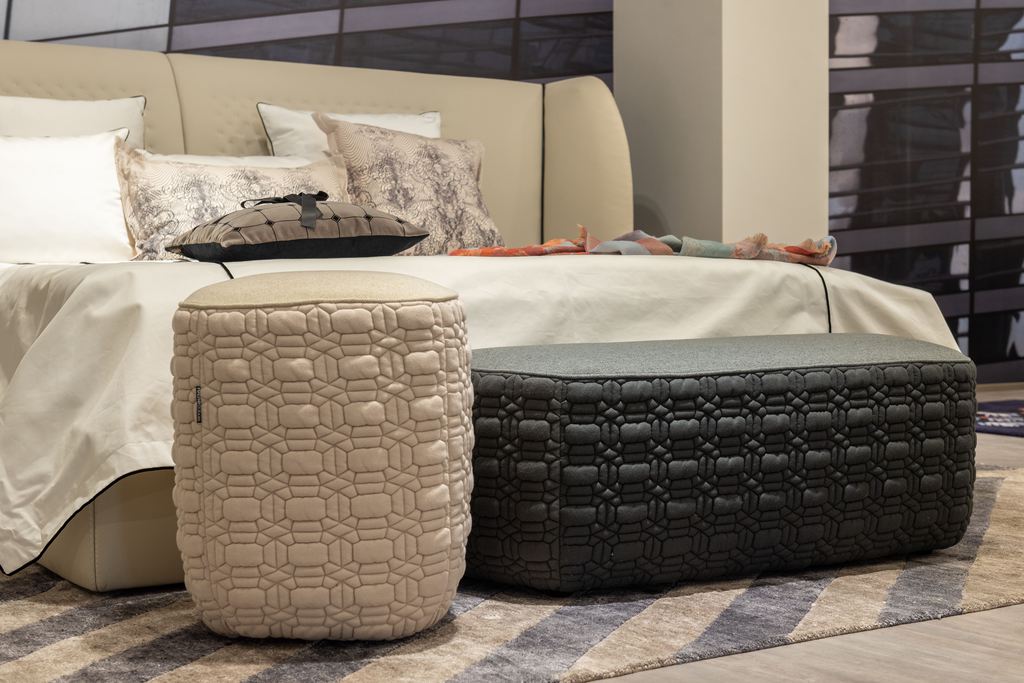
A moving tray is not one problem. Diagnose what actually shifts before adding pads or buying another tray.
- The tray slides sideways: The tray bottom lacks friction against the fabric. Add a thin non-slip liner or use a tray with a grippy underside.
- The tray rocks when touched: The cushion compresses unevenly. Use a rigid insert, move the tray to a firmer zone, or stop placing liquids there.
- The ottoman moves with the tray: The base is shifting on the floor. Lock casters where provided or use floor-appropriate furniture grippers.
- Objects lean in one direction: The ottoman or floor may be uneven. Level the furniture instead of stacking small pads beneath one tray corner.
- The tray shifts when someone sits: The table zone and seating cushion share the same moving surface. Remove the tray before anyone uses that area as a seat.
A Friday movie-night setup makes the difference easy to see. A tray that slides while someone reaches for popcorn needs grip. A tray that tilts when another person rests a foot on the cushion needs structural support—or a separate hard surface.
How Should You Measure the Usable Tray Area?
Measure the area where the tray can sit evenly, not the ottoman’s full outer dimensions. On a tufted top, the usable flat zone may be much smaller than the visible cushion.
Place four small pieces of painter’s tape where the tray corners would land. Press each point and move any marker that drops into a seam, button depression, or rounded edge. Measure the stable rectangle or circle created by those points. Choose a tray that fits inside it without overhang and leaves room to grasp the handles.
Also check reach from the primary seats. Start with roughly 12 to 18 inches between the sofa and ottoman, then adjust for seat depth, legroom, and the path through the room. A detailed round ottoman coffee table layout becomes especially useful when several sectional seats must reach the same central surface.

How Do You Switch Between Table and Ottoman Modes?
A successful setup must be easy to clear. If every change requires moving five decorative objects, a support board, and two drinks, the ottoman will stop functioning as flexible furniture. Limit the table zone and decide where the complete tray goes before using it.
Create a Tray Parking Spot
Choose a nearby surface or shelf that can hold the whole tray without unloading it. A console, low cabinet, media console shelf, or nesting table can work. Avoid placing a loaded tray on the floor, where it becomes a spill and tripping risk.
Use a Simple Reset Routine
In table mode, keep drinks, coasters, remotes, and one low decorative object inside the tray. For footrest mode, move the entire tray rather than pushing a mug toward the edge. For seating mode, clear the whole top and confirm that the manufacturer permits sitting. For storage mode, remove liquids before lifting the lid.
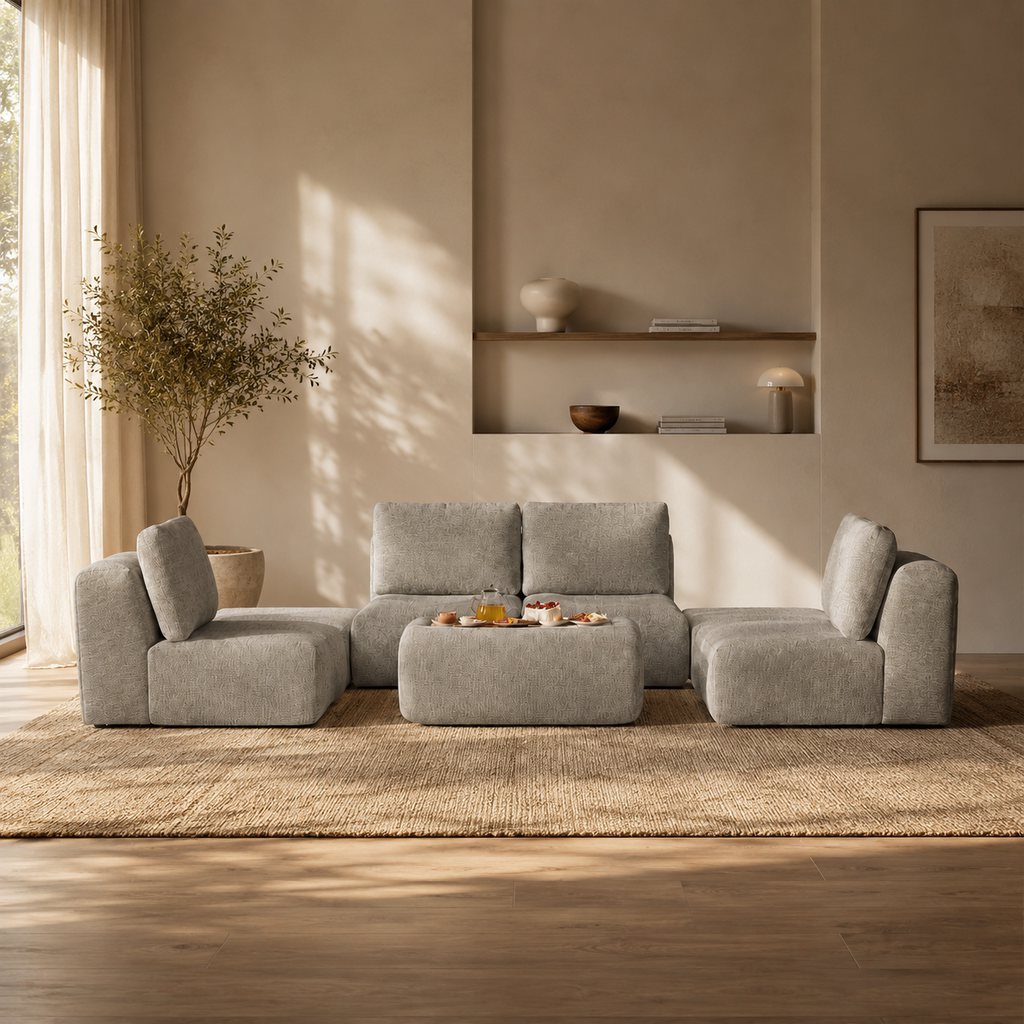
When a household keeps moving a tray because people want a footrest and a reliable drink surface at the same time, building the hard surface into the seating can reduce that conflict. The Moku Modular Block Sofa Single Arm Unit uses a multi-functional armrest that flips into a side table, wider seat, or footrest, while its modular units can be rearranged as the room’s routine changes.
When Should You Stop Using It as a Coffee Table?
An upholstered ottoman may not work as the room’s only table when you use a laptop from the sofa every day, serve full meals, host several uncovered drinks, or need a flat surface for puzzles and board games. It is also a poor solution when the cushion remains unstable after reasonable adjustments.
At that point, the real decision becomes ottoman vs coffee table: soft flexibility or dependable hard-surface function. A small side table can sometimes preserve both without adding another large piece to the center of the room.
Conclusion
Knowing how to use an ottoman as a coffee table starts with stability, not styling. Test the top and base, match the setup to the cushion structure, and measure the usable flat zone before choosing a tray. Separate sliding, wobbling, and whole-ottoman movement because each requires a different fix. Finally, give the tray a nearby parking spot so the furniture can return to footrest, seating, or storage mode without a complicated reset. If the surface never becomes dependable, keep the ottoman soft and add a fixed table nearby.
FAQs
Can a tray leave permanent marks on ottoman upholstery?
Yes. A heavy tray left in one position may compress soft filling, while a rough or dark underside can abrade the fabric or transfer color. Remove the tray regularly, rotate its position when possible, and use a clean, colorfast barrier that does not trap moisture against the upholstery.
Can a low ottoman still work as a coffee table?
A slightly lower ottoman can work if seated users can reach the tray without leaning far forward. Measure the finished height after adding the tray, not the cushion alone. If reaching for drinks feels uncomfortable or knees contact the tray edge, keep frequently handled items on a taller side table.
Should the tray match the ottoman’s shape?
No. A round tray can work on a square ottoman, while a rectangular tray may fit a wide round top. The complete tray base must remain inside the stable surface without overhang, unsupported corners, or handles that are too close to the ottoman edge to grasp safely.
Can pets share the ottoman while a tray stays on it?
Only when the pet uses a separate section without compressing or shifting the tray area. Test whether stepping onto the cushion causes the tray to tilt. In active households, remove uncovered drinks and fragile objects before allowing pets onto the ottoman, even when the surface appears divided.
Is a glass tray suitable for an upholstered ottoman?
Tempered glass can provide a rigid surface, but it is heavier and less forgiving when the cushion shifts. Use only a finished tray with smooth edges and a non-slip base. Wood or durable composite is generally easier to handle when the ottoman frequently changes between table and seating modes.


