 By Stephanie
An ottoman that creeps away from the sofa every time you put your feet up usually needs a better floor-contact solution, not a permanent attachment. If you are figuring out how to keep ottoman from sliding, the right fix depends on how the ottoman meets the floor and what job it needs to do in the room. This guide covers practical ways to stop unwanted movement without taking away the flexibility that makes an ottoman useful in the first place.
How Do You Keep an Ottoman From Sliding?
The simplest answer to how to keep ottoman from sliding is to increase friction at the points that actually carry the ottoman’s weight. Rubber or silicone grippers work well under defined legs on smooth floors, while a broad base, casters, or thick carpet usually needs a different approach. Clean the floor and the underside first, then use the least permanent fix that provides full contact.
| Ottoman setup | Start with | Why it works | Main watch-out |
| Defined legs on hardwood or tile | Fitted rubber or silicone grippers | Adds friction directly under each foot | Pad must cover the full contact area |
| Broad or hidden base | Full-footprint non-slip mat | Supports more of the load-bearing surface | Keep the mat inside the ottoman footprint |
| Casters or small wheels | Locking casters or fitted caster cups | Stops rolling instead of relying on flat pads | Check cup size and wheel fit |
| Ottoman on an area rug | Stable rug pad beneath the rug | Stops the rug and ottoman from creeping together | Confirm the rug is the moving layer first |
| Low-pile carpet | Carpet-compatible grippers or wider cups | Gives the base a firmer contact point | Tiny pads can disappear into the pile |
If you are specifically working out how to keep ottoman from sliding on hardwood floor, the extra consideration is the finish beneath it. Choose a non-marking gripper explicitly compatible with that flooring rather than assuming every rubber, silicone, or adhesive product is safe. The same material-compatibility checks used to protect hardwood floors from furniture apply here.
Why Does Your Ottoman Still Slide After Adding Grippers?
When a gripper does not work, adding a second layer of adhesive is rarely the best next move. Most failures come from poor contact, movement somewhere else in the setup, or a dirty surface. Check those three causes before replacing the pad with something stronger.
The Pad Does Not Match the Foot
A small square pad may look centered under a leg but still leave part of a rounded, tapered, or angled foot unsupported. Sideways pressure can then twist the pad or peel it loose. Choose a cup or gripper that supports the full contact area, especially when the foot is curved rather than flat.
The Rug Is Moving, Not the Ottoman
If the ottoman and rug shift together, more grip under the ottoman will not solve the problem. Mark the rug edge with painter’s tape, use the ottoman normally, and check which layer crossed the mark. Stabilize the rug first, then decide whether the ottoman still needs extra traction.
Dust or Pet Hair Has Reduced the Grip
Fine dust, hair, and grit can collect between a pad and the floor, reducing friction and creating a scratch risk on hard surfaces. Remove the ottoman, clean both contact surfaces, and reinstall the pads only after everything is dry. Replace pads that have curled, hardened, compressed, or shifted off-center.
Should Your Ottoman Stay Fixed or Be Easy to Move?
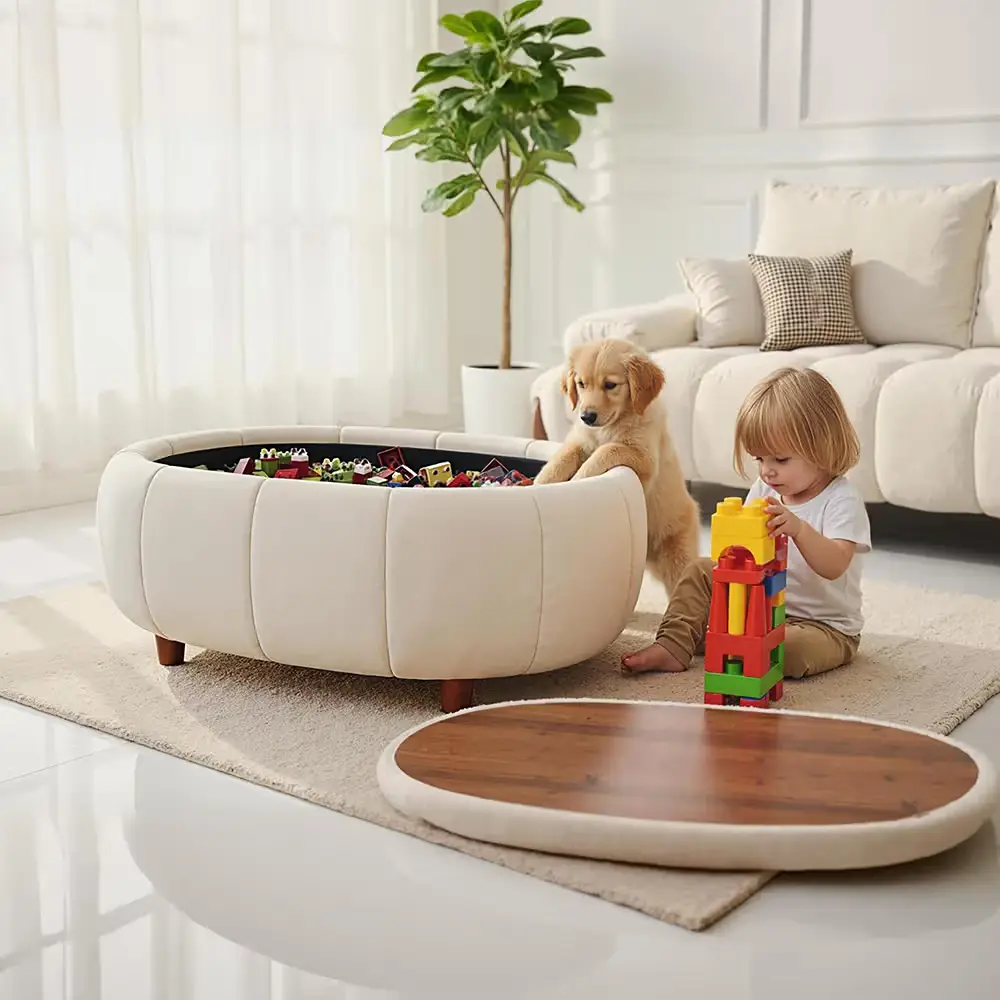
The right amount of grip depends on how you normally use the ottoman. A dedicated footrest takes repeated pressure that can push it away from the sofa, while a multipurpose ottoman still needs to move easily between different positions. Instead of aiming for maximum grip, choose a solution that keeps it stable during use without making intentional repositioning difficult.
If It Works Mainly as a Footrest or Chaise
A footrest or chaise-style ottoman takes repeated horizontal pressure as you extend or shift your legs. That makes stronger removable traction useful, especially when the piece normally stays beside the same sofa. If you are trying to keep a sectional ottoman from sliding, first make sure the ottoman is moving independently rather than the adjoining sofa modules separating.
When the gap is coming from the sectional itself, the checks used to keep a modular sofa together without constant readjusting are more relevant than adding stronger pads beneath the ottoman. Avoid permanently connecting an ottoman unless the furniture was designed for compatible hardware.
If It Changes Jobs Around the Room
A multipurpose ottoman may move from the sofa to a reading chair, open floor space, or another seat during the same week. In that setup, controlled resistance matters more than maximum hold. Removable cups or grippers should resist normal foot pressure but release cleanly when you intentionally reposition the piece, without peeling away or forcing you to drag it.
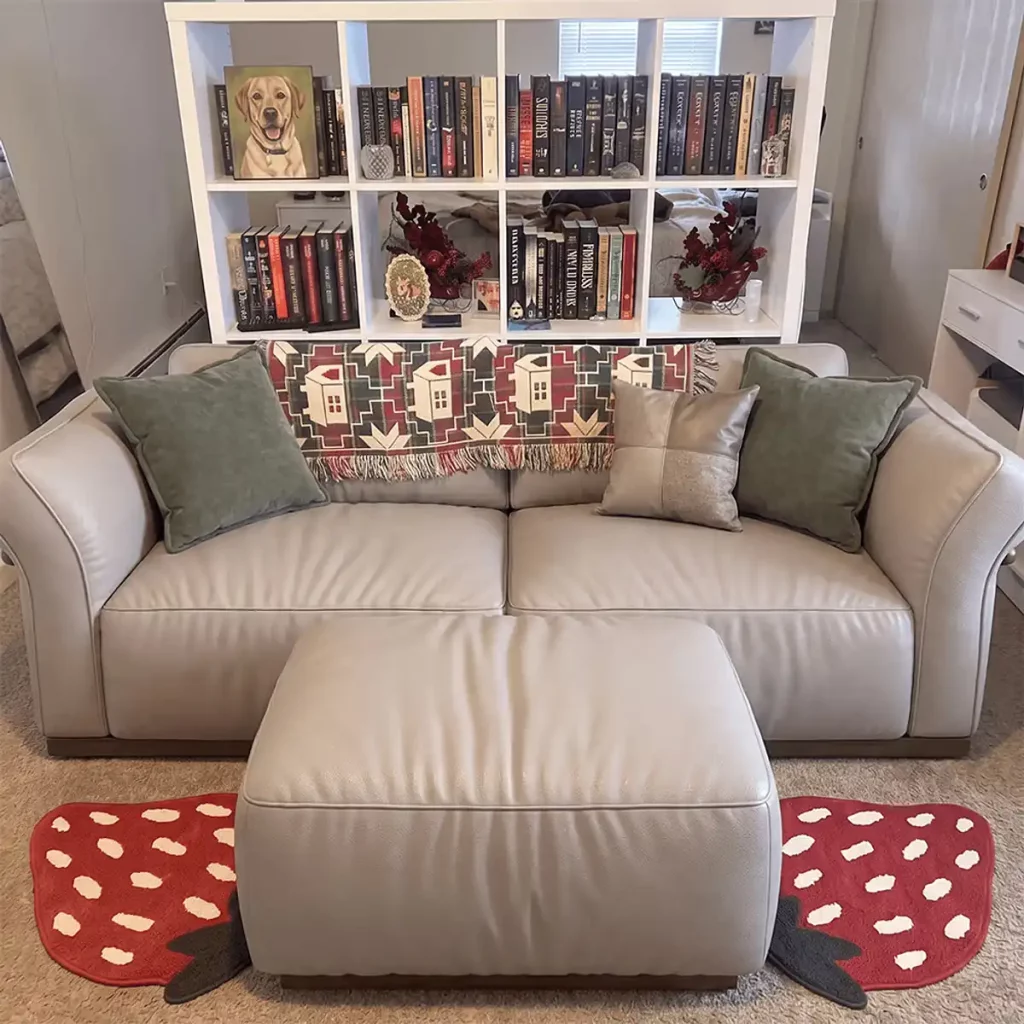
Cronus Modular Sofa with Ottoman
Best for: Flexible lounging and changing layouts
Works well if you want one ottoman to cover more than one job, from putting your feet up to adding an extra seat.
How Should You Test an Anti-Slip Fix in Daily Use?
Do not judge a gripper by pushing the empty ottoman once. Test it under the forces that normally caused the movement:
- Footrest test: Sit in your usual position and place your feet on the ottoman several times. It should stay where you positioned it without a gradual gap opening.
- Repositioning test: Move the ottoman intentionally, then check whether each removable gripper stays centered instead of peeling or rolling underneath the base.
- Floor check: After a day or two of normal use, lift the ottoman and look for adhesive residue, discoloration, marks, or a pad that has shifted out of position.
If the fix stops movement but creates rocking, damages the finish, or makes normal repositioning impractical, change the grip method rather than adding another layer underneath it.
When Is a Sofa Bed Better Than a Movable Ottoman?
Sometimes the repeated sliding is really a sign that the ottoman is being used to create a deeper seat every day. If you pull it toward the sofa each evening, push it away to clear the walkway, then repeat the same routine the next day, changing the seating configuration may remove the friction point rather than continually treating it.
The Aurora Power Sofa Bed adjusts its seat depth from 27 to 45.5 inches with a powered extension. You can keep it more compact when you need walking space, then extend the seat while you are sitting when you want more room to stretch out. That removes the need to pull a separate ottoman into position or keep realigning it during use.

Aurora Power Sleeper Sofa
A better fit if you’re tired of repositioning an ottoman just to stretch out. It keeps the everyday setup simpler with one less piece to manage.
Conclusion
Knowing how to keep ottoman from sliding is less about making the piece immovable and more about controlling movement during real use. A footrest should resist the pressure from your legs, while a multipurpose ottoman should still move when you deliberately rearrange the room. Start with a floor-compatible solution, then keep it only if the ottoman stays stable without wobbling or damaging the surface below. If repositioning the ottoman itself has become a daily chore, an integrated lounging setup may fit the routine better.
FAQ
Can Anti-Slip Pads Make an Ottoman Wobble?
Yes. Pads of different thicknesses, a missing pad, or a gripper that supports only part of one foot can make the ottoman sit unevenly. Use the same thickness at equivalent load-bearing points. If the ottoman still rocks on a level floor, inspect the legs or frame instead of stacking more pads.
Is Double-Sided Tape Safe Under an Ottoman?
Treat it as a last resort rather than a routine anti-slip fix. Sideways pressure can loosen the tape, and some adhesives may leave residue on flooring or furniture feet. Use it only when both surfaces are listed as compatible; removable grippers or fitted cups are easier to inspect and replace.
What If Only One Ottoman Leg Keeps Sliding?
Check that leg before replacing all four grippers. A loose fastener, worn factory foot cap, damaged leveler, or uneven spot in the floor can make one corner drift first. Compare it with the other legs and tighten only manufacturer-accessible hardware. Do not hide a mechanical problem by stacking extra grip material underneath it.
How Much Floor Space Does a Power Sofa Bed Need?
Measure the sofa in both its closed and fully extended positions. The important number is not just sofa width but how far the seat projects into the room when opened. Leave enough space for normal walking paths, nearby tables, and doors so extending the seat does not create a new circulation problem.
Is a Power Sofa Bed Better for Small Spaces Than an Ottoman?
It can be when an ottoman frequently blocks a walkway or needs to be moved before and after lounging. A retractable seat keeps the extra depth within one furniture setup, but the sofa still needs enough clearance when extended. Compare the open footprint with the space your sofa-and-ottoman arrangement currently occupies.


