 By Stephanie
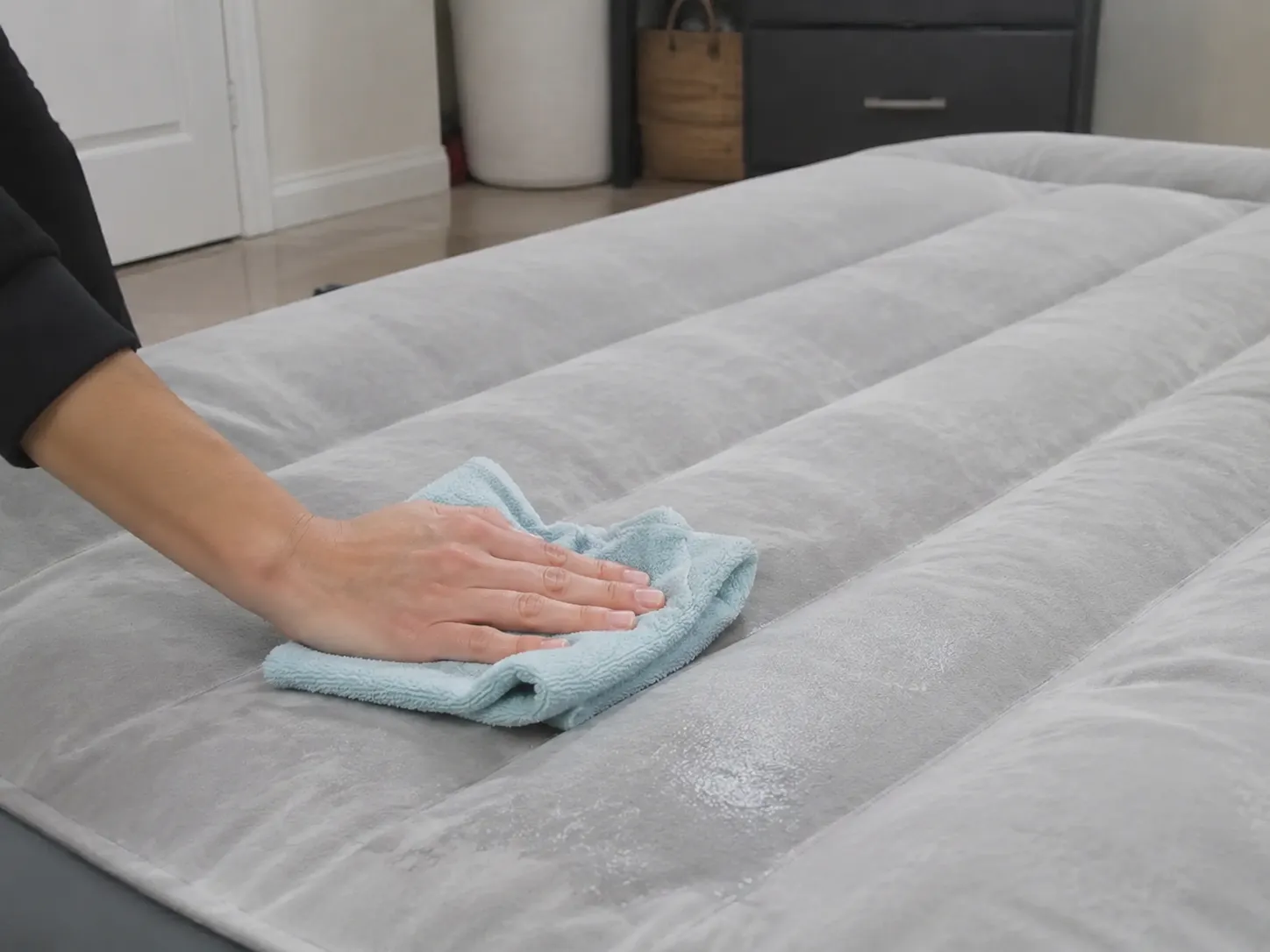
Knowing how to clean an air mattress starts with checking its surface material and pump setup before adding water. If you’re wondering how to wash an air mattress, most models need gentle surface cleaning rather than soaking or washing machine. A lightly damp cloth and mild soap may suit some models, but flocked tops and built-in pumps can have stricter care limits. The steps below cover everyday dirt, stains, mold, and drying between guest stays, including when a mattress should no longer be used.
Table of Contents
How to Clean an Air Mattress in 4 Simple Steps
Before you begin, check whether your model should be inflated or deflated for cleaning and how its flocked top should be treated. Unplug a built-in pump and keep water away from the housing, controls, vents, and valve opening.
Step 1: Remove Bedding and Loose Debris
Take off sheets, blankets, pillows, and removable covers. Wash them according to their care labels. Move the air mattress to a clean, dry surface where you can reach its sides and underside without dragging it across the floor.
Lift crumbs and hair by hand or use a handheld vacuum on low suction with a soft brush attachment on smooth surfaces. For flocked fabric, use a soft, dry cloth to remove loose debris without pulling at the fibers. Keep the vacuum nozzle away from seams and the valve.
Step 2: Wipe With an Approved Mild Cleaner
For smooth PVC surfaces, mix a few drops of mild dish soap into lukewarm water. Dip a clean microfiber cloth into the solution and wring it out until barely damp. Wipe small sections at a time, working gently to lift dirt without leaving excess moisture.
Never pour water onto the mattress or spray cleaner directly over it. For a flocked top, use the surface-specific spot-cleaning method rather than automatically applying the same wet-wiping technique.
Step 3: Remove Residue and Blot
On smooth PVC surfaces, wipe away soap residue with a second cloth lightly dampened with clean water. Follow with a dry towel to absorb remaining moisture. Avoid pouring or spraying rinse water onto the mattress. For flocked areas, blot away excess moisture instead of wet-rinsing or scrubbing the fabric.
Step 4: Let It Dry Completely
Leave the mattress in a well-ventilated room and allow both sides to dry. A fan can improve airflow around seams and folds. Do not fold or pack it while any area feels damp. Avoid direct heat, a hot hair dryer, or prolonged sun exposure, which can affect the mattress material.

How to Handle Stains, Odors, and Mold on an Air Mattress
Start by absorbing spills rather than rubbing them into the surface. The cleaning approach also depends on the type of stain: food residue, body oils, and liquid accidents need slightly different handling. The following methods address common household messes without repeating the full cleaning process.
Food, Drinks, Sweat, and Body Oils
Lift dried food crumbs gently instead of scraping them across the surface. For drinks, press an absorbent towel against the spill to remove excess liquid, then blot from the outside toward the center to keep the mark from spreading.
Sweat and body oils can leave residue on areas that come into frequent contact with skin. On smooth PVC, wipe the affected area with a barely damp microfiber cloth and mild soapy water, then remove residue with a clean, damp cloth. Blot dry with a towel.

Urine and Pet Accidents
Urine needs prompt attention because liquid can spread beyond the visible stain. Remove the bedding and press an absorbent towel firmly against the affected area. Replace the towel as it becomes wet until little moisture transfers to the fabric. Avoid rubbing or pouring water over the spot.
Once the excess liquid is absorbed, clean wipeable PVC surfaces with the same mild-soap method used for everyday dirt. Avoid applying enzyme-based pet stain removers unless the product specifically states that they are safe for your mattress material. If urine reaches a seam or valve, or the odor remains after surface cleaning, stop using the mattress and contact the manufacturer.
Mold and Mildew on an Air Mattress
Visible mold requires more than routine surface cleaning. EPA guidance distinguishes hard surfaces, which can generally be cleaned with detergent and water, from porous materials where mold may be difficult or impossible to remove completely. A small spot on smooth PVC may be manageable with an appropriate surface-cleaning method, but mold on flocked fabric, inside seams, or within the air chamber is a different concern. Stop using the mattress and contact the manufacturer about replacement rather than trying to treat embedded growth with household chemicals.
Keep an Air Mattress Clean Between Guest Stays
A few simple habits can help keep an air mattress in good condition when it’s used for occasional overnight guests. Focus on protecting the sleeping surface during each stay and keeping bedding fresh between visits.
- Use a properly fitted sheet: Choose a fitted sheet or mattress cover designed for your mattress size. Avoid covers that pull tightly at the corners, shift during sleep, or block the pump and valve.
- Keep food and drinks away from the sleeping area: Snacks and drinks can leave stains that become harder to remove once they dry. Place a side table nearby so guests have somewhere to set their belongings.
- Keep pets and shoes off the mattress: Pet hair, outdoor dirt, and sharp claws can make the surface harder to maintain. Provide a separate resting spot for pets if needed.
- Refresh bedding and store the mattress properly: Remove used sheets after each stay and wash them according to their care labels. When it’s time to put the mattress away, follow the manufacturer’s instructions for how to deflate and fold an air mattress.
A Power Sofa Bed Alternative to a Hard-to-Maintain Air Mattress
An air mattress works for occasional guests, but cleaning and storing it after each stay can become a chore. For frequent hosts, a power sofa bed offers a more convenient option: it stays in the living room as everyday seating and adjusts at the touch of a button to provide extra room for lounging or sleeping.
The Aurora Smart Sofa Bed in White Chenille makes everyday upkeep more manageable with 100% polyester chenille upholstery that’s water-resistant and scratch-resistant. Its spot-clean care makes it easier to address localized spills and marks without washing the entire upholstery. The remote-controlled extension adjusts from 27 to 45.5 inches, giving guests more room to lounge or sleep while keeping the living room functional for everyday use.

POVISON Aurora Smart Sofa Bed
A practical fit for frequent hosts who want guest sleeping space without another mattress to maintain.
Conclusion
Knowing how to clean an air mattress starts with its care instructions, not a one-size-fits-all recipe. Remove loose dirt, use an approved mild cleaner, keep moisture away from pumps and valves, and dry every cleaned area before storage. Visible mold or a recurring musty smell is a reason to stop and reassess, not use a stronger chemical. If hosting becomes frequent, compare a sofa bed vs. air mattress for recurring guest stays before changing your setup. That routine helps prevent damage from unnecessary moisture or harsh products.

A Guest-Ready Space, Without the Extra Setup
Explore power sofa beds that bring everyday seating and overnight guest accommodations together.
Frequently Asked Questions
Can You Put an Air Mattress in the Washing Machine?
No. Most air mattresses are not designed for machine washing or full submersion. Agitation and excess water can stress seams, valves, and built-in pump components. Unless the manufacturer explicitly says otherwise, clean only the surfaces permitted by the care instructions.
Do You Need to Clean a New Air Mattress Before First Use?
Usually, no deep clean is needed if a new air mattress arrives clean and undamaged. Unpack it in a ventilated room, check for dust or unusual odors, and wipe visibly dirty areas using an approved method before adding bedding.
Can You Clean the Inside of an Air Mattress?
No. Do not pour water, soap, or disinfectant into the air chamber or pump opening. Liquid can remain trapped or affect internal components. If moisture or a persistent musty odor seems to come from inside, stop using the mattress and contact the manufacturer.
Can You Use Disinfecting Wipes on an Air Mattress?
Only if the manufacturer specifically approves them. Disinfecting wipes may contain ingredients that affect PVC, flocking, seams, or adhesives. If the manual recommends mild soapy water, follow that method rather than substituting an unapproved disinfectant.
Can Baking Soda Remove Odors From an Air Mattress?
Baking soda may absorb some surface odors, but fine powder can settle into flocked fabric and become difficult to remove. Use it only if the manufacturer approves it. If the odor comes from trapped moisture or mold, baking soda will not fix the underlying problem.


