 By Stephanie
A bumper chaise sectional can look like the perfect compromise: more support than a standard chaise, less visual bulk than an enclosed corner sofa. Yet product names are inconsistent, and a layout that looks generous online can block a doorway, waste a seat, or force someone to twist toward the TV. This guide explains how to recognize the structure, compare it with other sectionals, test the real seating capacity, and measure the return against your room’s traffic paths. The goal is simple: choose a sectional sofa that works after delivery, not only in photographs.
Table of Contents
Bumper Chaise Sectional Basics
A bumper chaise sectional is an L-shaped sofa with an extended return that provides more side or back support than a traditional chaise. Instead of ending as a simple flat lounging surface, the return usually includes a short back, a low bumper arm, or a partially open terminal end. This allows the extension to serve as both a place to stretch out and a more supportive sitting area.
The term is not used consistently across the furniture industry. Retailers may describe similar layouts as a bumper chaise, terminal chaise, open-end sectional, or bumper sectional, even when the frames differ. For that reason, the product name should be treated as a starting point rather than a complete description of the layout.
The main distinction is functional: a standard chaise is primarily designed for forward-facing lounging, while a bumper return offers more support for upright or side-facing seating. The exact back, arm, and terminal construction should be confirmed later through the product images and configuration diagram.
Bumper Chaise vs. Regular Chaise and Corner Sectionals
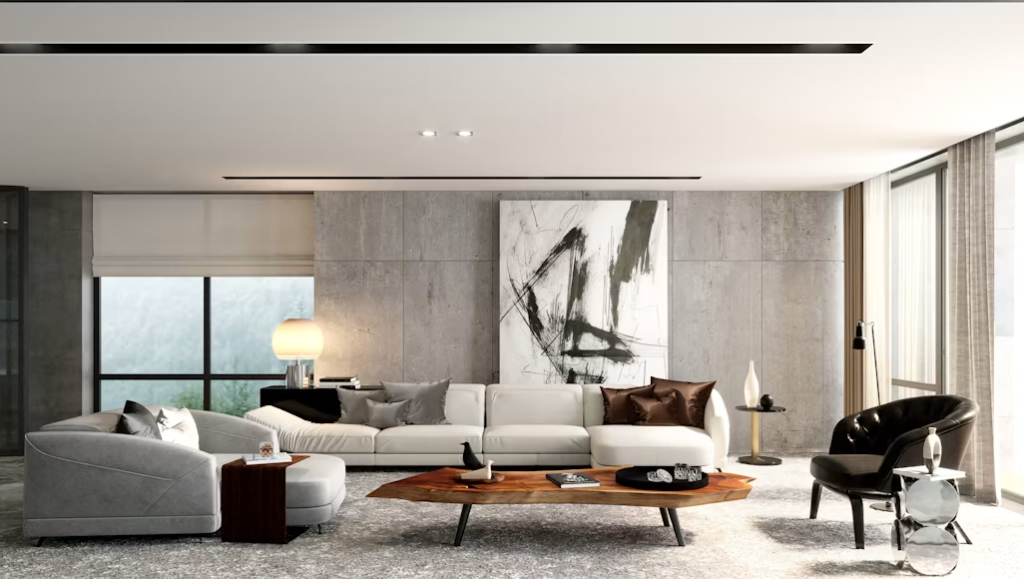
These three layouts can all form an L, but they distribute support, seating, and visual weight differently. The right choice depends on what happens in the room after 6 p.m.—one person stretching out, a family watching TV, or guests turning toward one another with drinks and snacks.
Structural and Seating Differences
Use the return, not the outer silhouette, as the deciding feature.
| Feature | Bumper Chaise | Regular Chaise | Corner Sectional |
| Return support | Partial or extended back support | Usually little side support | Full corner and side support |
| Best use | Sitting, side lounging, overflow seating | Full-leg lounging | Group conversation |
| Terminal feel | Open or visually light | Most open | Most enclosed |
| Effective seats | Often more than a chaise | Drops when someone lies down | Usually highest |
| Room effect | Defines a zone without fully closing it | Keeps the lightest footprint | Creates the strongest boundary |
Match the Layout to the Routine
Choose a sectional with bumper chaise when family members regularly sit across the L rather than treating the extension as one person’s permanent lounge.
A standard chaise is better for nightly reading, naps, or one tall user who wants uninterrupted legroom. A full corner sectional sofa makes more sense when conversation and maximum supported seating matter more than openness. The final orientation should protect the main entrance path; the same room-flow logic used for a right-facing vs. left-facing sectional orientation applies to the bumper return.
Best Rooms and Households for a Bumper Layout
A bumper layout works best in homes where the return adds a useful seat without visually closing off the room. It is especially practical in TV rooms, open living-dining areas, and households where three to five people regularly share the sofa. The open terminal end can also create a lighter boundary between the seating area and the rest of the space.
In a 12-by-16-foot family room with adequate doorway and walkway clearance, two adults might use the main sofa while a teenager sits on the return with a laptop. A guest can approach from the open end without walking around a large arm. That small improvement in access can make the room feel easier to use during movie nights, homework sessions, or casual gatherings.
A bumper layout may be less suitable when:
- Two people regularly want separate places to put their feet up
- The household expects to move or rearrange the room frequently
- Every seat needs independent power reclining
- The room requires a sectional that can switch easily between left- and right-facing layouts
In those situations, a reversible chaise, modular sectional, or reclining configuration may offer more flexibility.
Reading Product Photos and Configuration Diagrams
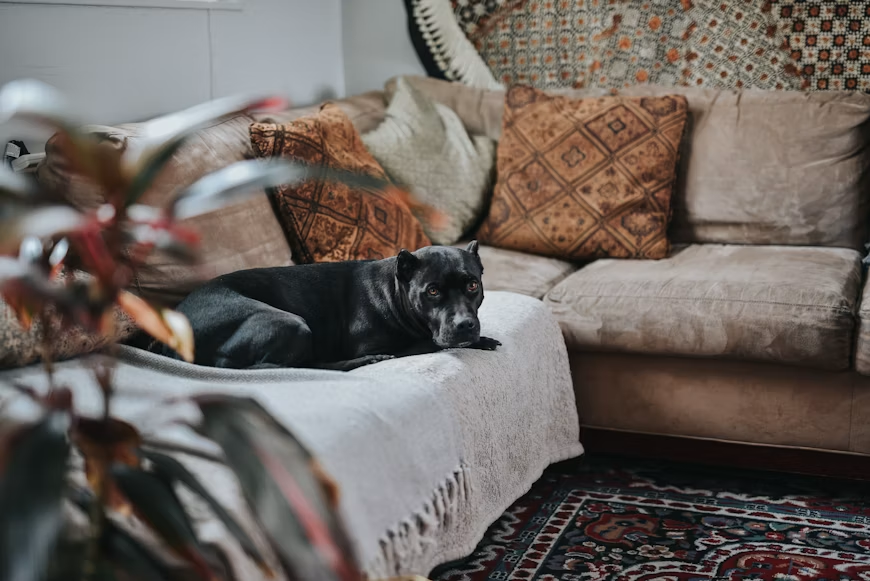
Lifestyle photography can hide the exact point where the back stops or make an ottoman look connected to the frame. Product identification should therefore follow a repeatable visual check. Use the overhead view first, then confirm the result against the component list and side photographs.
The Top-View Test
Open the largest overhead image and trace the return from the inside corner to the terminal end.
- Locate every section with a back cushion.
- Note where continuous back support ends.
- Check whether the terminal piece has no arm, a low bumper, or a full arm.
- Compare usable seat depth with the main sofa seats.
- Look for seams showing that an ottoman is separate.
A functionally supported return should allow an adult to sit without relying on a loose decorative pillow for back support.
The Component-List Test
Configuration names often reveal what the room image does not. Look for terms such as corner unit, one-arm sofa, armless chair, terminal unit, or bumper unit. A corner unit followed by an armless seat usually creates more supported seating than a sofa joined only to a chaise base.
Do not automatically classify these as bumper layouts:
- A straight sofa with a movable ottoman
- A traditional chaise with no return back
- Two separate sofas arranged in an L
- A footrest surface too narrow for upright seating
Measuring, Seat Count, and TV Sightlines
Once the structure is clear, test whether it works at full scale. Measure the entire return, not just the long sofa side. Then simulate how people walk, sit, reach the table, and look at the screen. This turns dimensions into a realistic picture of daily use.
Tape the Footprint and Delivery Route
Mark the sofa’s outer width, return depth, and terminal edge with painter’s tape. Add the coffee table and open every nearby door. Start with about 16 to 18 inches between the seat edge and the coffee table. Then sit down, stand up, and walk through the space to confirm that the table is easy to reach without restricting legroom or movement.
The reach, walkway, and visual-weight checks in a coffee table size guide for sectionals in 2026 are especially useful with an asymmetrical return.
During one weekend test, a family discovered that a return cleared the hallway when everyone walked normally but blocked it whenever someone carried a laundry basket. Moving the taped outline four inches toward the window fixed the route before any furniture was ordered.
Also measure every doorway, hall, stair turn, and elevator between the curb and the final room—not only the destination wall (Consumer Reports).
Count Supported Seats and Test the Screen
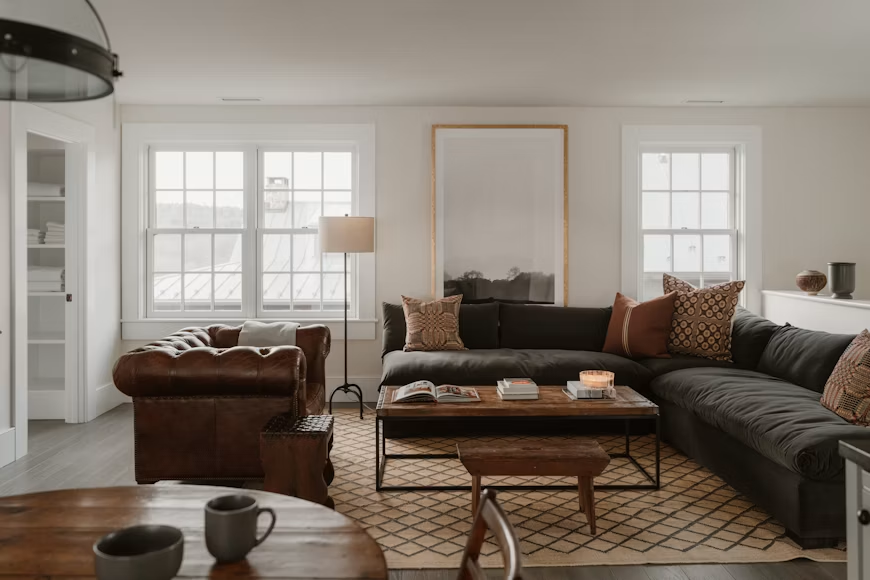
Ignore the advertised seat count for a moment. Count positions with a usable seat, stable back support, and enough shoulder room. Treat the lounging surface as an extra seat only when an adult can sit there without blocking the corner or another person’s legs.
Next, place dining chairs inside the taped outline. Sit at the inside corner, middle return, and terminal end. Check whether each person can see the TV without holding the neck at an angle. The coffee table should remain reachable, and the main walkway should not pass between viewers and the screen.
A room can technically fit five seats while offering only three comfortable TV positions. That is the number that should guide the purchase.
Bumper-Style Alternatives and Final Buying Checks
After completing the seat-count, sightline, and floor-tape tests, some buyers may find that they need generous back-supported seating more than an open terminal bumper. In that case, it makes sense to compare nearby L-shaped alternatives by usable seating, upholstery, comfort, and footprint rather than choosing by the product label alone.
Match Function, Not the Label
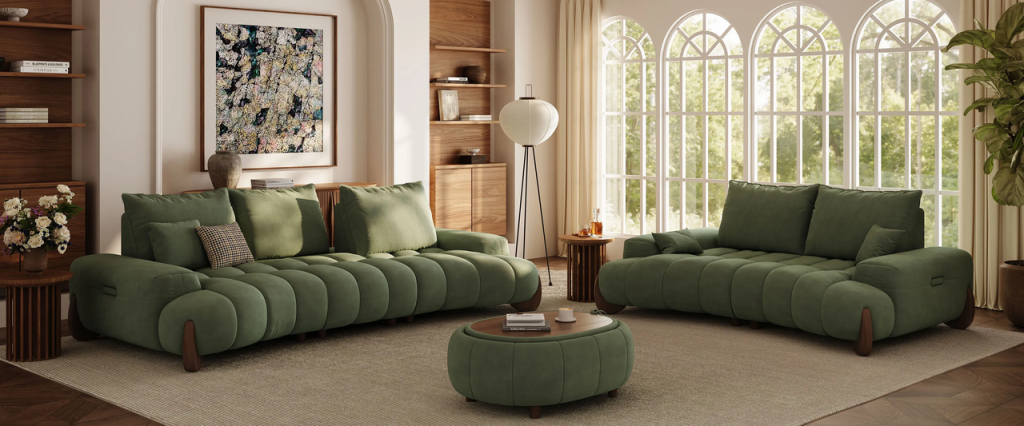
For a household that uses the sofa for family movie nights, reading, pets, and long movie nights and occasional naps, the Arlo Mid Century L-shaped Sofa offers a spacious, back-supported layout with deep adjustable cushions and short-pile pet-friendly fabric for easier everyday care. It is best suited to buyers who value continuous back support more than an open terminal end.
Pet households should also compare weave density, snag resistance, and cleaning requirements—the key factors covered in a pet-friendly couch buying guide for 2026.
Confirm Before Ordering
Save the product diagram and verify every item below with the retailer:
- Exact left- or right-facing orientation
- Back support along the full return
- Usable width of the terminal seat
- Arm height and assistance for standing
- Overall width and return depth
- Connector or locking hardware between modules
- Carton dimensions and delivery access
- Cushion-cover and spot-cleaning instructions
- Return rules for fixed or customized configurations
Do not order until the diagram, listed dimensions, and taped room outline agree.
Conclusion
A bumper chaise sectional works best when its return creates a supported seat without closing the room or interrupting traffic. Choose it for shared TV time, casual hosting, and open-plan zoning; choose a regular chaise for uninterrupted lounging, a corner sectional for maximum wraparound seating, or a modular layout for future changes. Before ordering, verify the overhead diagram, tape the full footprint, count only genuinely supported seats, test every TV angle, and measure the delivery route. The label can help you search, but how the sectional works in your room matters far more.
FAQs
Can a bumper chaise sectional include a sleeper?
Yes. Some models place a pull-out mattress under the main sofa while keeping the bumper return fixed. Measure the sectional in both sofa and bed positions. Confirm that the open mattress leaves a usable route to the doorway and does not trap the person sleeping closest to the return.
What upholstery works best on the bumper return?
The return usually receives more sideways sitting, shoes, pet contact, and hand pressure than a standard seat. Choose a tight weave or performance upholstery that can be spot-cleaned without leaving rings. Avoid loose bouclé or open basket weaves when claws, jewelry, or rough denim are common in the home.
Can an ottoman be added to a bumper sectional?
An ottoman can add flexible leg support, but it should not close the only entrance to the seating area. Tape its footprint in front of the main seats and return. A round or compact movable ottoman is often easier to reposition than a wide rectangle in an already asymmetrical layout.
Can a bumper sectional sit in front of a window?
It can, provided the back does not cover operable hardware, block a required vent, or prevent curtain movement. Check the back height against the sill and leave enough space to clean the glass. Sun-sensitive upholstery may also need UV-filtering shades to reduce uneven fading along the return.


