 By Charles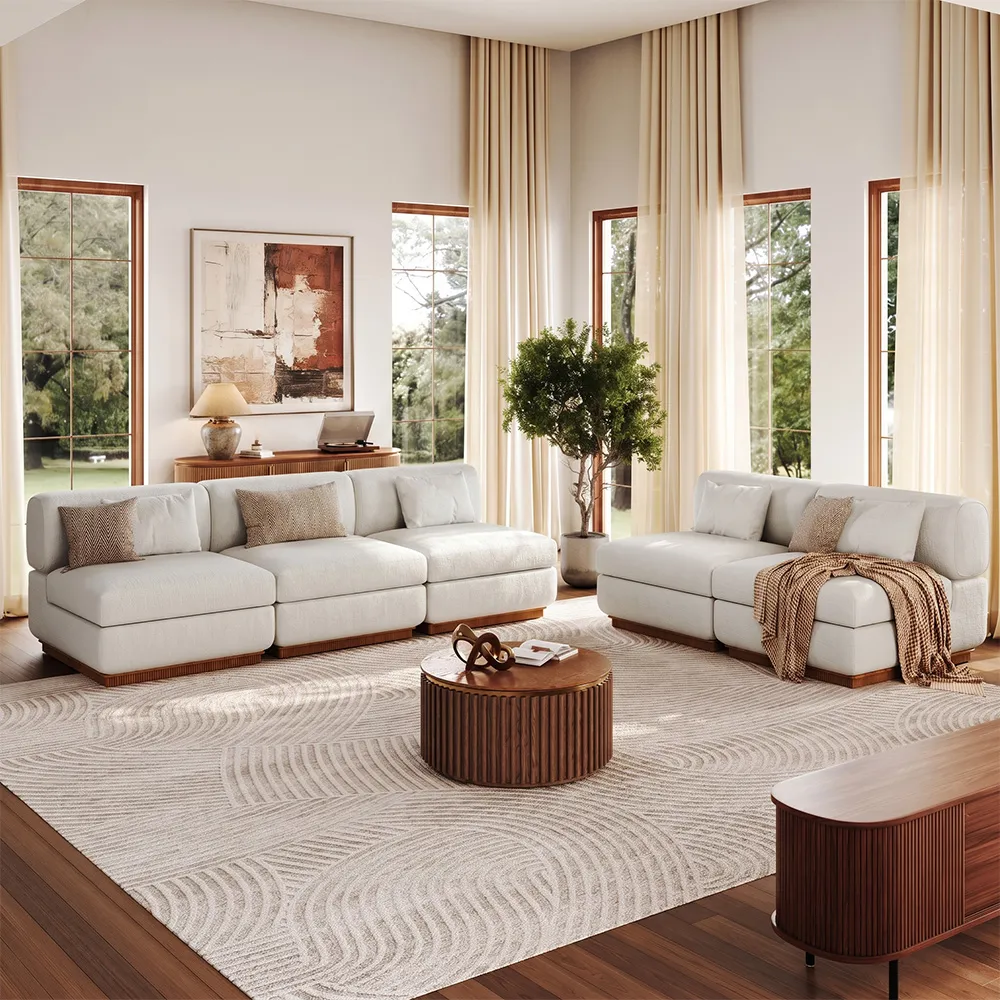
Hey fellows! Here’s a confession. After I finally got the right sectional in my last home, I spent another nine months living on a coffee table that didn’t work. It looked fine in the photos. It looked terrible in the room.
The problem wasn’t the table itself. It was that I’d shopped for a coffee table the way you shop for a regular sofa companion — pick something pretty, make sure it’s not enormous, call it done. That logic doesn’t work with sectionals. Sectionals change the geometry of the room, and the coffee table has to follow that geometry, not the other way around.
If you’ve already got a sectional (or you’re about to take delivery on one), this is the part of the puzzle that nobody warns you about. Let’s get into it.
Why Sectionals Need a Different Coffee Table Plan
A regular sofa is a straight line. The coffee table sits in front of it, parallel, end of story. Easy.
A sectional is an L or a U. There’s a chaise sticking out, or two arms wrapping around, or modules at different depths. The coffee table now has to serve multiple seating positions at multiple angles — and somehow not block the walking path between the chaise and the rest of the room.
That’s the part most online buying guides skip. They give you the standard “two-thirds the length of your sofa” rule and move on. But two-thirds of what on a sectional? The long side? The full perimeter? The combined seating?
Quick answer: it’s two-thirds of the longest seating side, not counting the chaise. I’ll explain why in a minute. But the bigger point is this — coffee tables for sectionals need to be evaluated on three things, in this order: reach, walkway, visual weight. Get those right and the styling part is easy.
How to Measure the Right Coffee Table Size
Before you start scrolling through tables, grab a tape measure and write down four numbers:
- The length of your longest sofa side (the part without the chaise)
- The depth of the chaise
- The distance from the sofa seat edge to the nearest walkway or wall
- The seat height of the cushions
Those four numbers determine 90% of your decision. Everything else — material, finish, base style — is secondary.
Length Compared With the Sectional
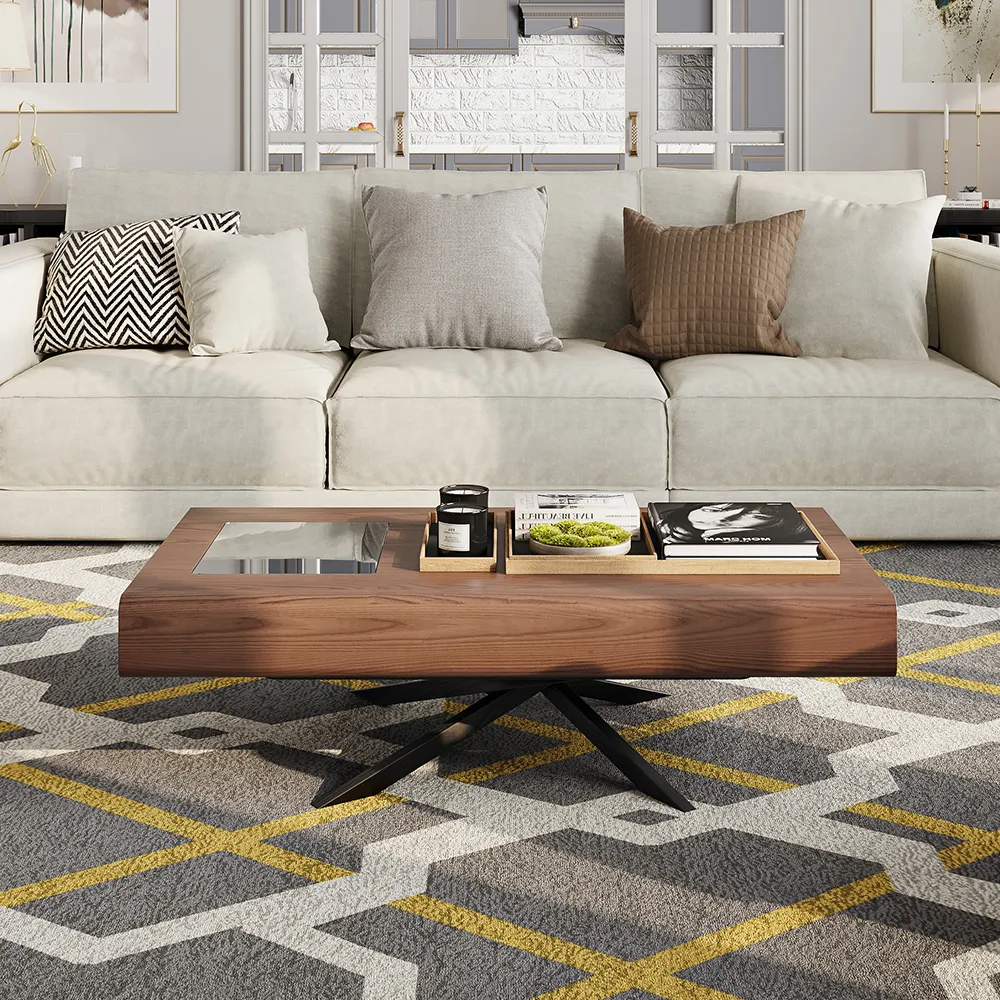
The “two-thirds rule” is a decent starting point, but for sectionals you have to apply it carefully. The rule says your coffee table should be roughly two-thirds the length of the seating it serves.
For a sectional, that means:
- Measure the longest straight sofa side (usually 84–96 inches on most L-shaped sectionals)
- Multiply by 0.66 — that’s your target table length
- Don’t include the chaise in this calculation, because the chaise is served by either the table’s end or a side table, not by the table’s length
Example: if your sectional’s main side is 90 inches, you’re looking for a coffee table around 54–60 inches long. Go shorter and the table looks lost in front of the sofa. Go longer and you start blocking the chaise’s walkway.
For U-shaped sectionals, the rule shifts. You’re now serving three seating sides, so the table can be more square or rectangular and closer to the sofa’s footprint — usually 48–54 inches wide and 30–40 inches deep. Anything bigger and you’ve created an obstacle course in your own living room.
If you want a sanity check on your numbers, Dimensions’ coffee table reference data covers the typical size brackets and gives you a baseline before you commit.
Distance From Sofa Seats
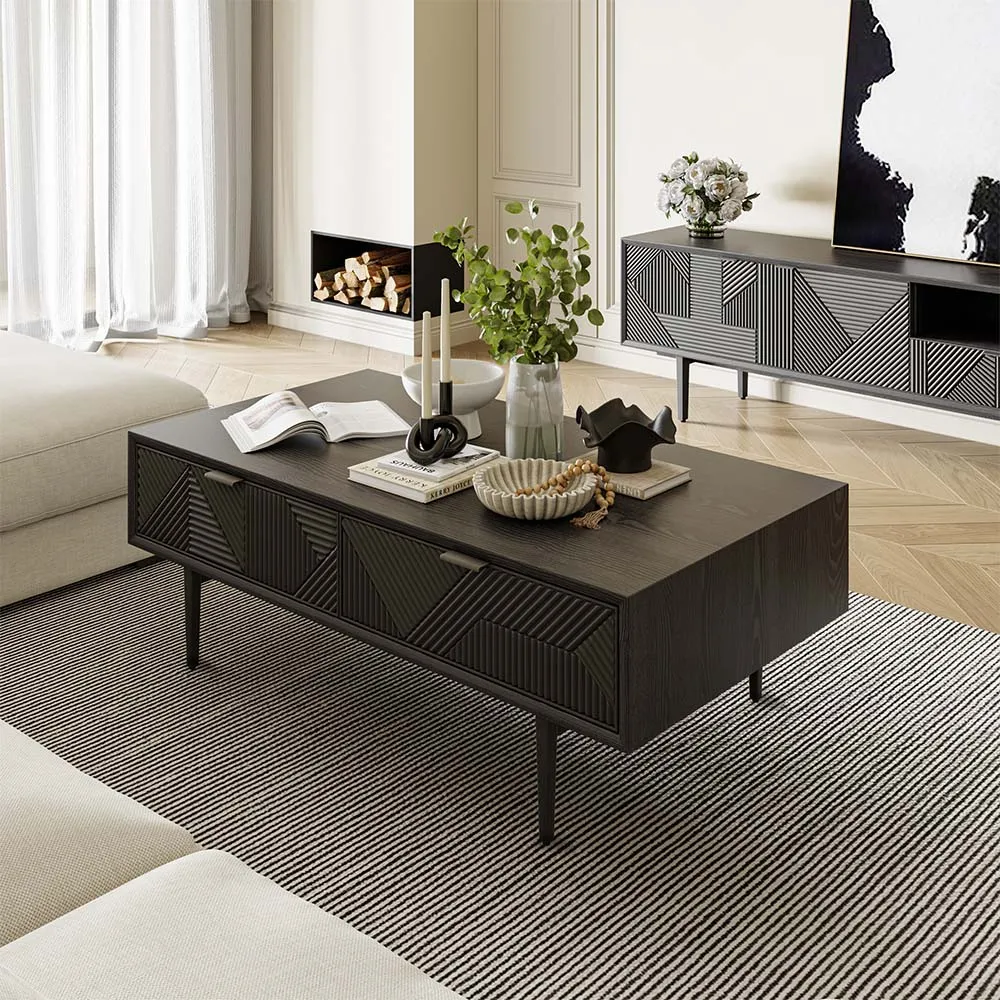
This is the metric most people get wrong. The coffee table should sit 14 to 18 inches from the front edge of the sofa cushion — close enough that you can reach a glass without standing up, far enough that you can walk past without barking your shins.
Why does this matter more for sectionals? Because the chaise changes math. If you’ve got an L-shape with a chaise, the coffee table can’t sit centered on the long side anymore — it’ll either be too far from the chaise to reach, or it’ll block the chaise’s “open” end. The fix is to shift the table about 6–10 inches toward the chaise side, so the chaise occupant can still set down a coffee cup.
The painter’s-tape test works perfectly here. Mark the table’s footprint on the floor with blue tape, then sit in every position on the sectional. Reach for an imaginary glass. Stand up and walk past. If anyone in the room can’t easily reach the table from where they sit, it’s the wrong size or the wrong position.
For seat height vs. table height: industry guidance from interior design organizations like ASID’s professional residential interior standards generally recommends keeping the coffee table either level with or 1–2 inches lower than the sofa seat cushion. Higher than the cushion and it looks awkward — like the table’s elbowing the sofa for attention. Most sectional cushions sit 17–19 inches off the floor, which puts your target coffee table height around 15–18 inches.
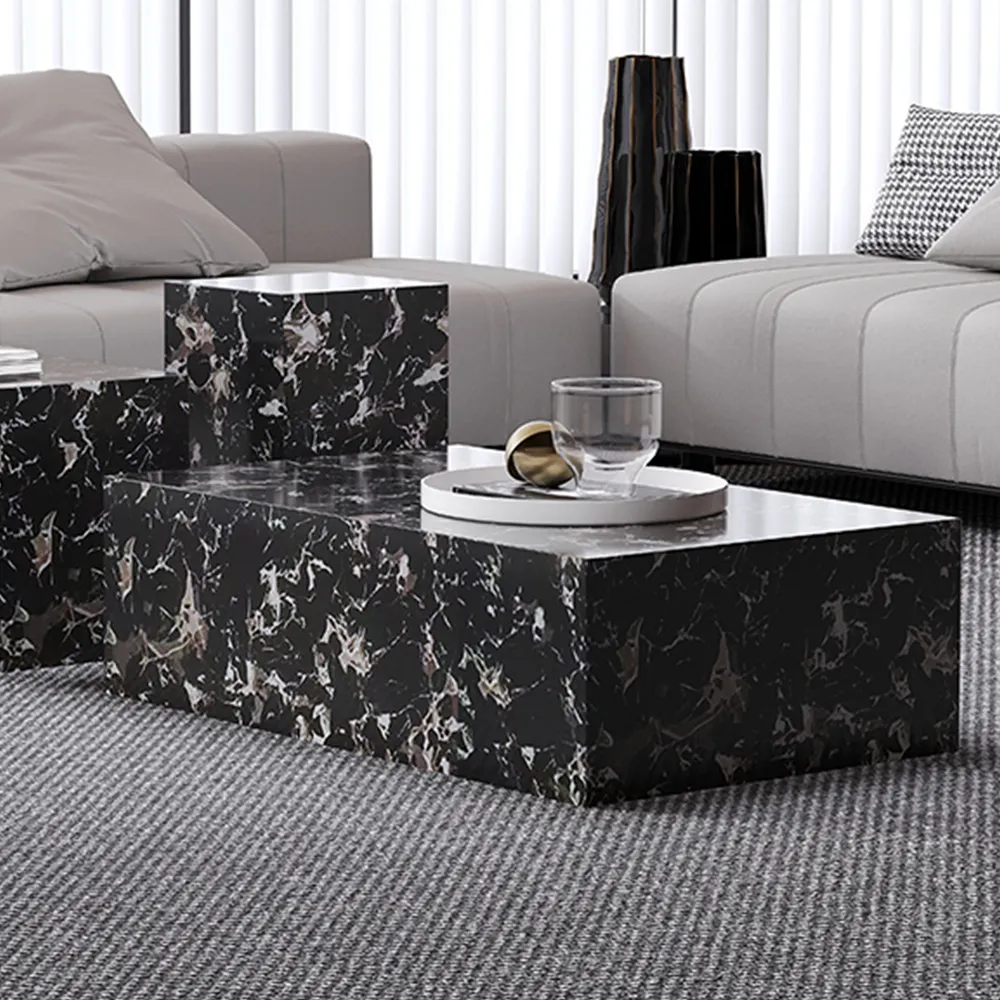
Best Shapes for L-Shaped and U-Shaped Sectionals
This is where shape matters more than size.
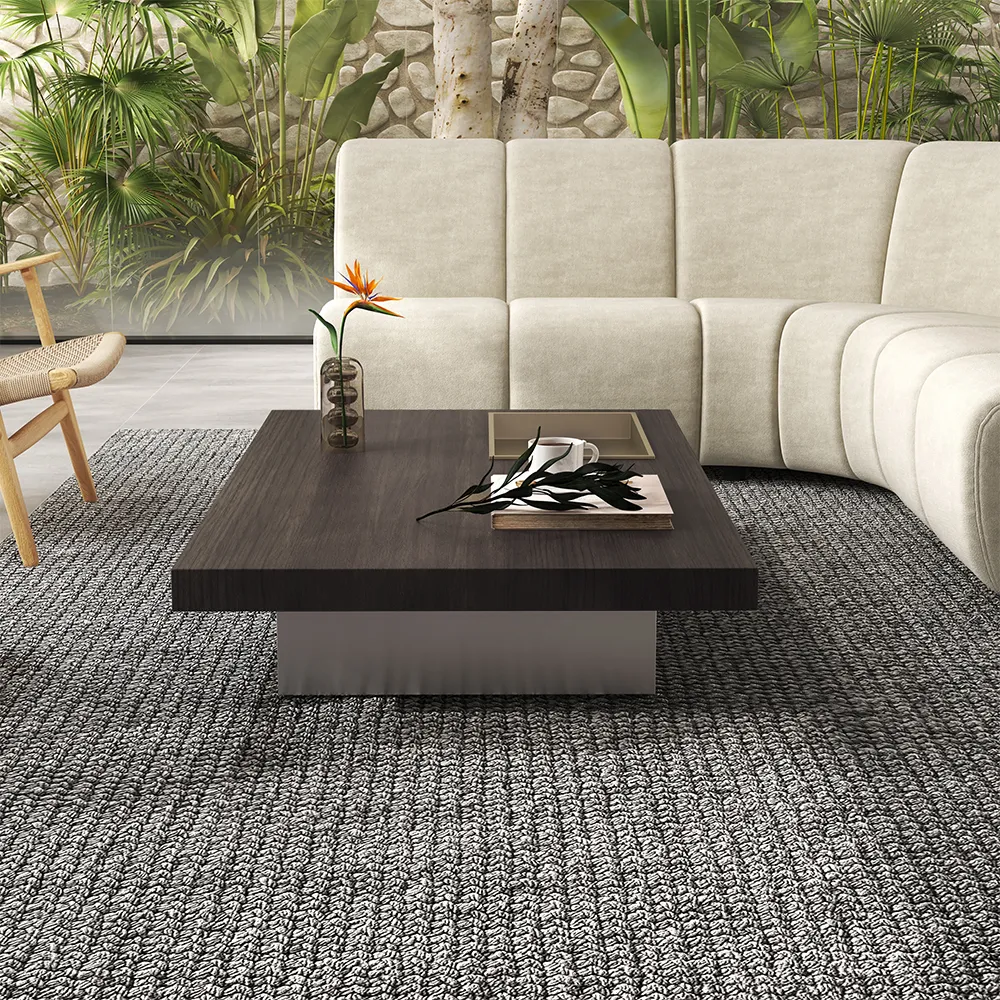
L-shaped sectionals work best with rectangular or oval coffee tables. The rectangle echoes the sofa’s straight side, and the table’s length can be tuned to match. Oval tables soften the corner where the L meets — useful if you have kids or you bump into table corners more often than you’d like to admit.
What doesn’t work as well on L-shapes: small square tables. They look orphaned in front of a 90-inch sofa side. If you really want a square shape, scale up to at least 40×40 inches — anything smaller reads as “side table that wandered into the wrong job.”
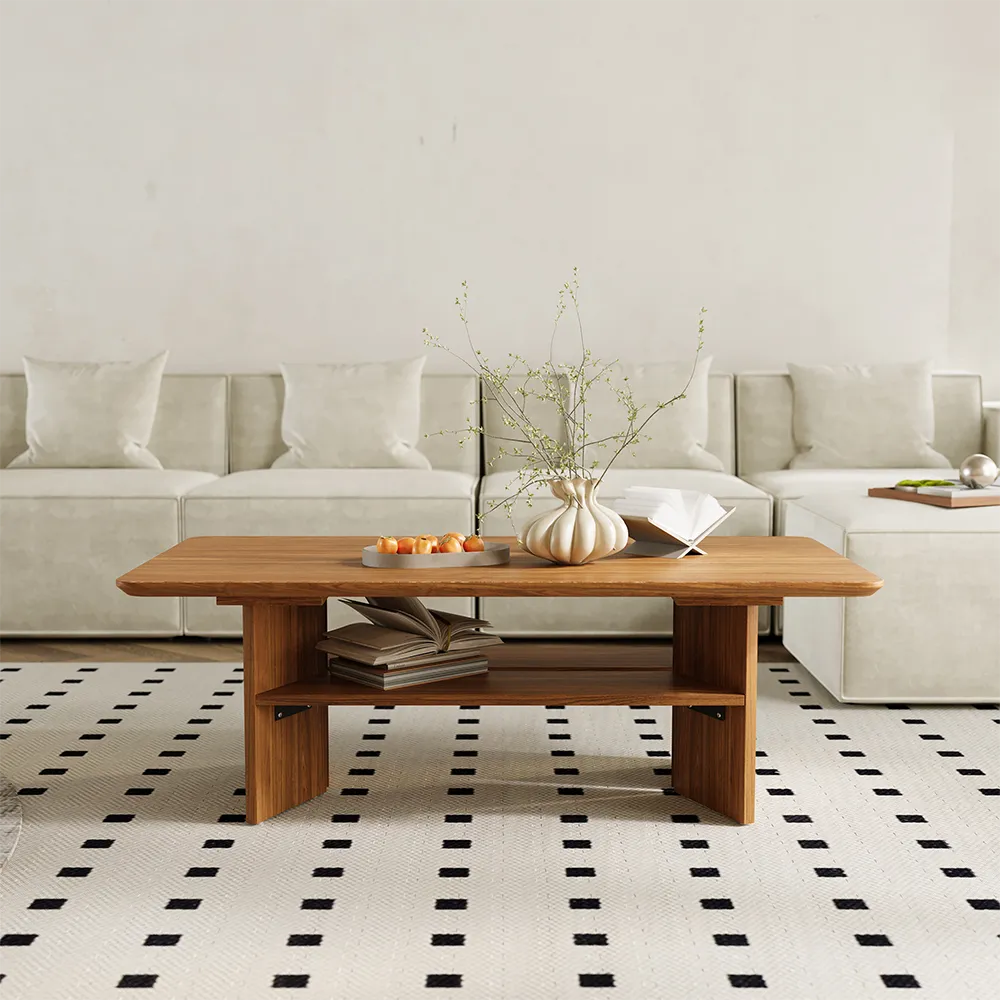
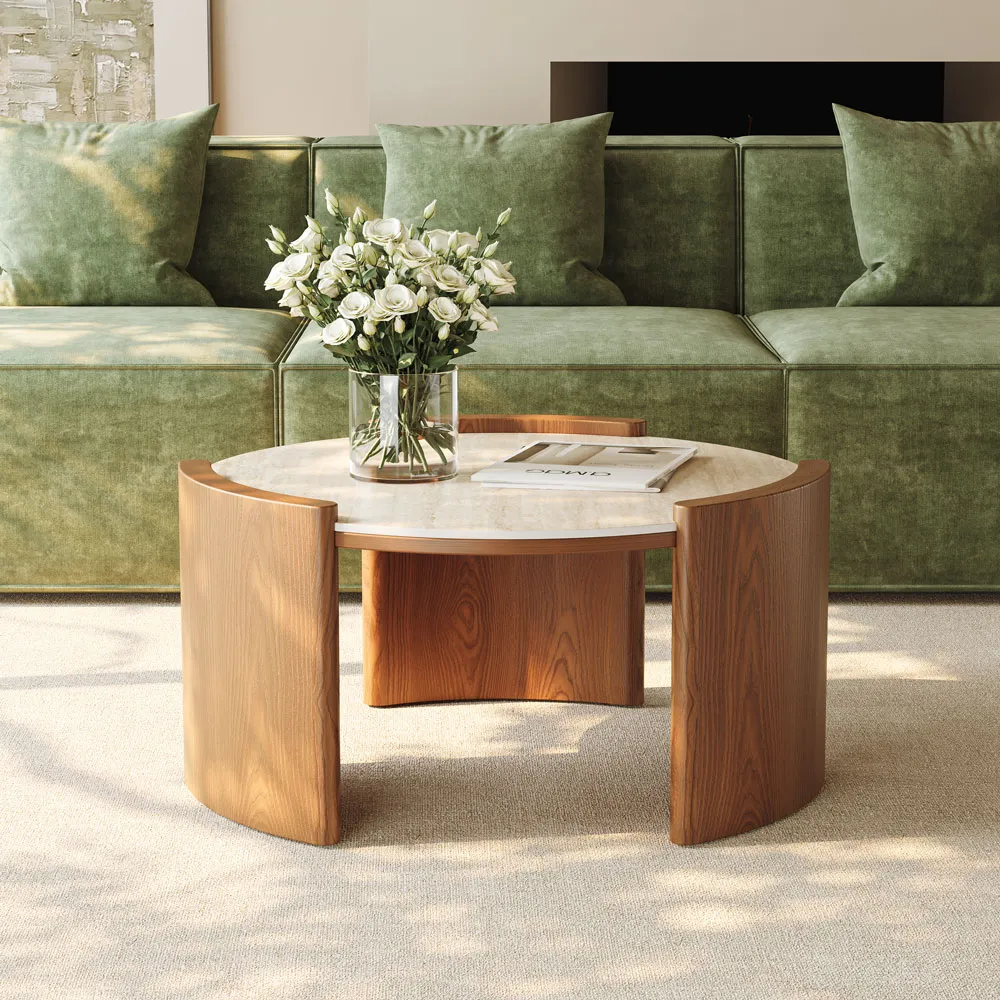
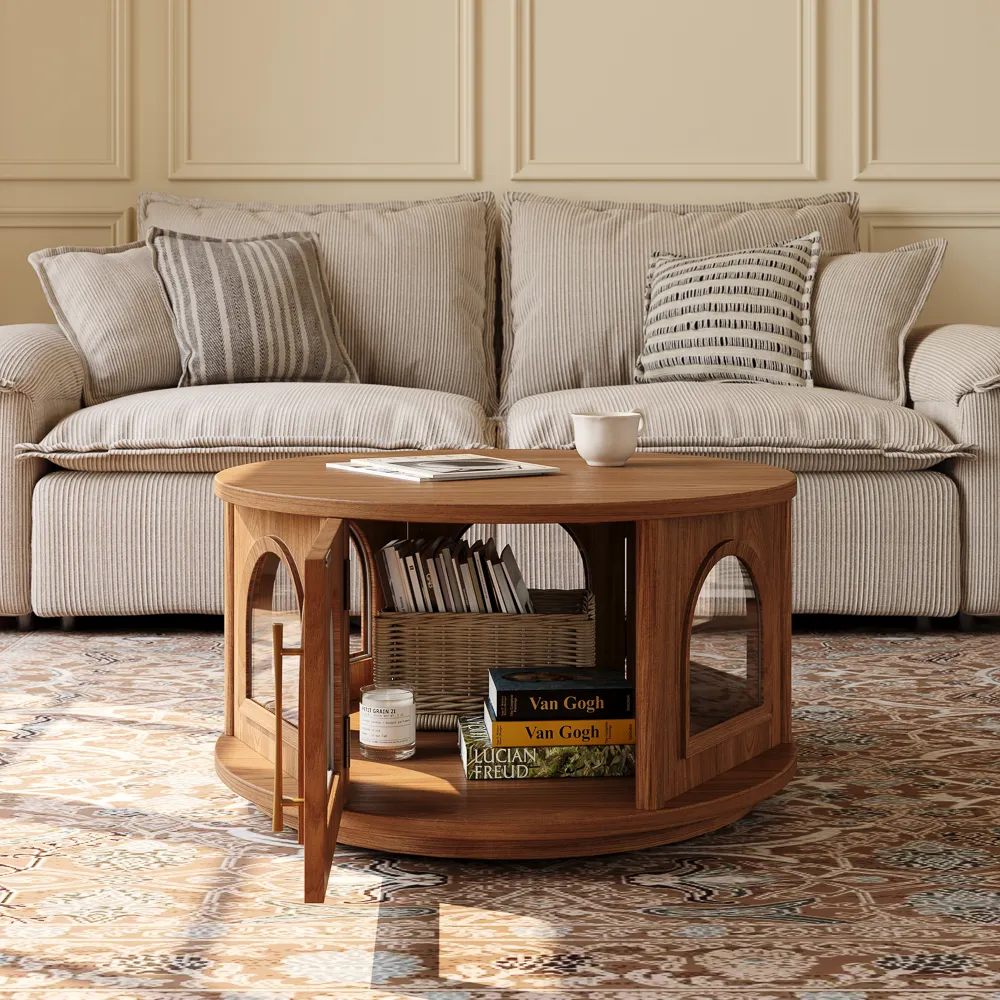
U-shaped sectionals flip the logic. Now you’ve got seating on three sides, and the coffee table is the focal point of the conversation circle. Round or square tables almost always win here, because every seat has equal access to the table edge. A long rectangle in a U-shape leaves the side seats reaching across awkwardly.
For U-shapes specifically, I’d look at round tables in the 42–48 inch diameter range, or squares around 40–44 inches. POVISON’s coffee table collection sorts by shape, which makes the L-vs-U decision easier than scrolling through a mixed list.
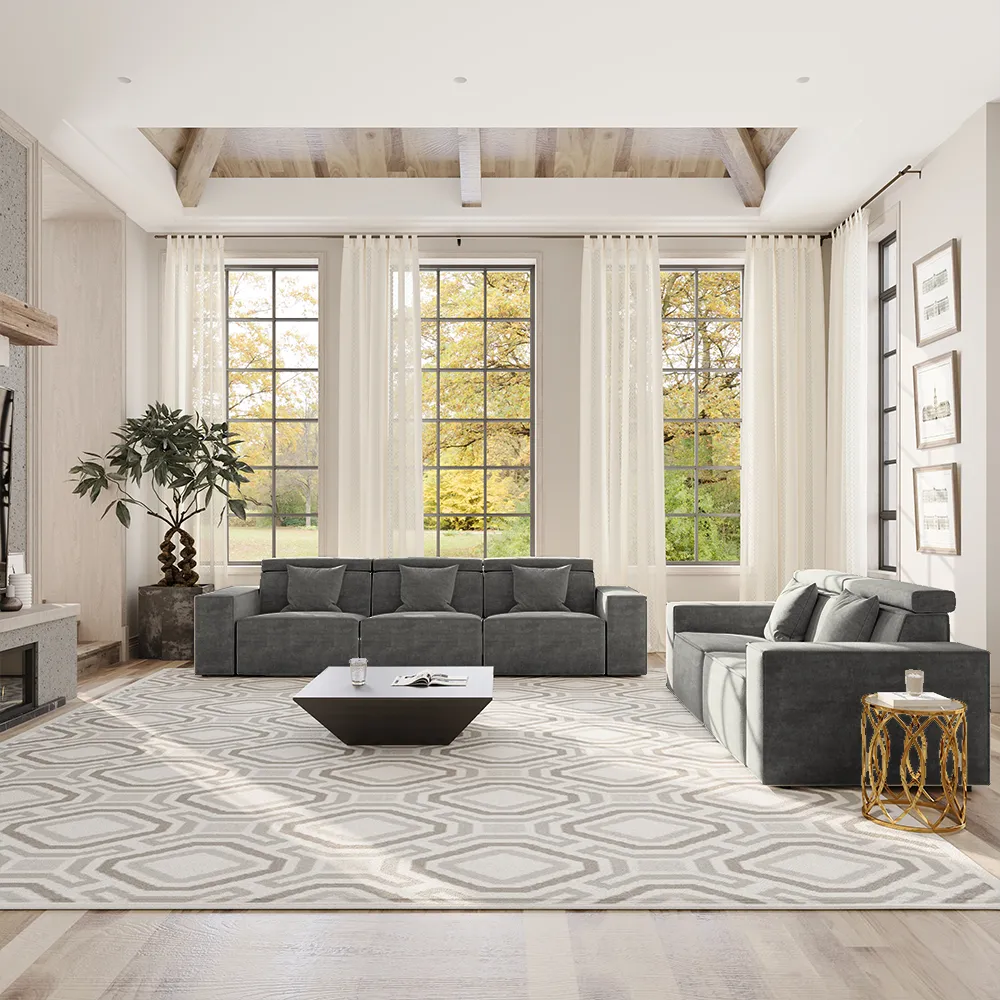
For small living rooms with sectionals, the under-discussed option is a nesting set — two or three small tables that tuck under each other. You pull one out for movie night, push them back together when you need walking space. They handle the “sectional eats my floor space” problem better than any single fixed table.
Common Layout Mistakes
I’ve made all of these. So have most of my friends. Here are the patterns I see over and over.
Mistake 1: Buying the table before measuring the sectional in place. People order both at the same time, online, based on photos. Then the sectional arrives, the room shifts, and the table they ordered is suddenly too long, too small, or too far from the chaise. Fix: always live with the sectional for at least two weeks before you commit to a coffee table.
Mistake 2: Matching woods exactly. Most people assume the coffee table wood should match the TV stand or sectional legs exactly. It almost never works — slight tone differences look like mistakes. The better strategy is to stay in the same finish family (warm woods together, cool woods together) but vary the species or grain. Walnut coffee table + oak TV stand reads intentionally. Walnut coffee table + slightly-different-walnut TV stand reads as broken.
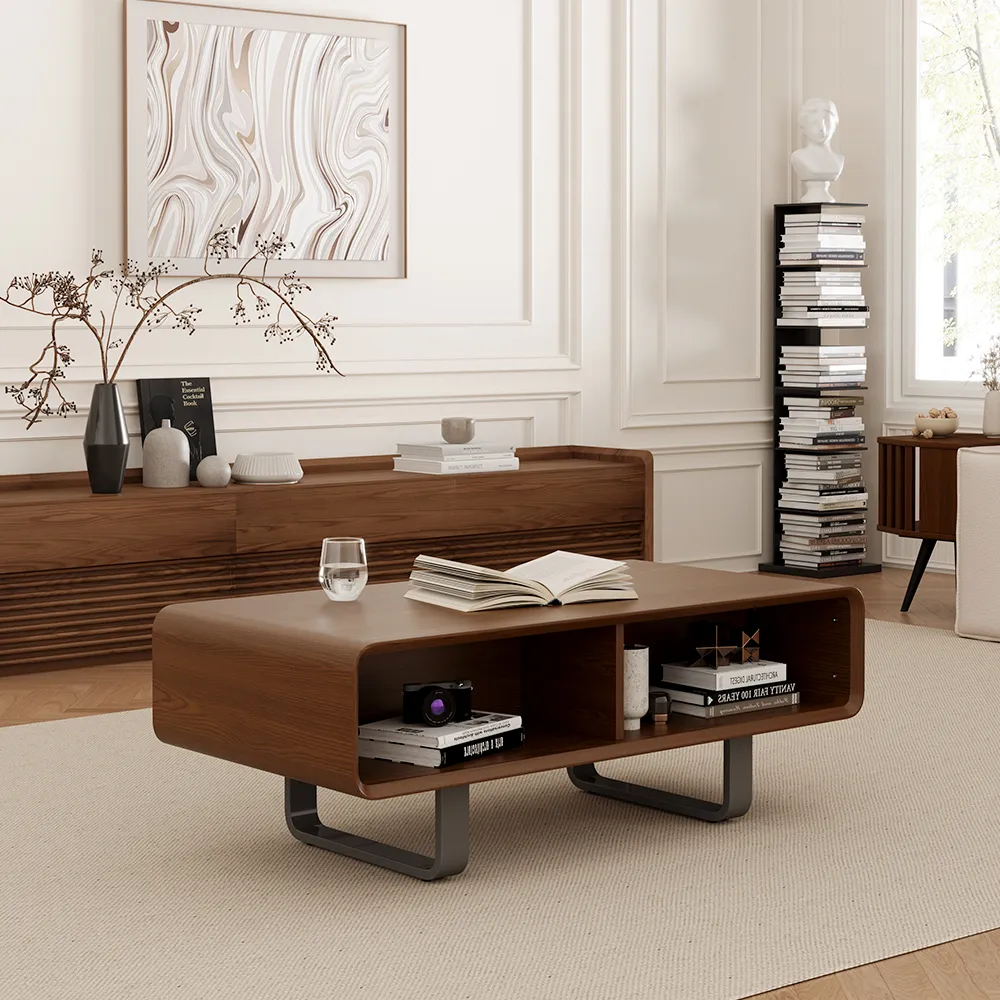
Mistake 3: Ignoring visual weight. A heavy stone or thick wood table in a small room with a deep sectional makes the whole space feel compressed. In tight rooms, a glass-top or open-base coffee table keeps the floor visually clear. Go heavy only when you’ve got the floor space to balance it. If you’ve got young kids in the household, also factor in stability — guidance from the CPSC’s furniture stability program reminds us that low, wide, and grounded tables are safer than tall narrow ones around climbing toddlers.
Mistake 4: Wrong height. I see coffee tables that are 22 inches tall paired with 17-inch-deep sofa cushions. The table looks like a desk. The rule is simple: stay within 2 inches of the cushion height, under preferred to over.
Mistake 5: Centering the table on the wrong axis. With an L-shape, the table should be centered on the long sofa side, then nudged a few inches toward the chaise — not centered on the sofa-plus-chaise combined footprint. Centering on the combined footprint makes the table feel adrift relative to the main seating.
FAQ
What size coffee table goes with a sectional?
A coffee table for a sectional should be roughly two-thirds the length of the longest sofa side, not counting the chaise. For a typical L-shaped sectional with a 90-inch main side, that puts the table around 54–60 inches long and 28–32 inches deep. For U-shaped sectionals, square or round tables around 40–48 inches usually work better than long rectangles, because all three seating sides need equal access to the table edge.
Is a round coffee table good with a sectional?
A round coffee table works very well with U-shaped sectionals and small L-shaped sectionals. Round tables soften the angular geometry of a sectional and give every seat equal reach to the table edge — useful when you’ve got people sitting on three different sides. Round tables are less ideal for long L-shaped sectionals, where a rectangle or oval visually balances the long sofa side better.
How far should a coffee table be from a sectional?
A coffee table should sit 14 to 18 inches from the front edge of the sofa cushion. Less than 14 inches and you’ll bump your knees standing up; more than 18 inches and you can’t comfortably reach a glass while seated. For sectionals with a chaise, shift the table 6–10 inches toward the chaise side so the chaise occupant can also reach it without leaning forward awkwardly.
Should a coffee table be lower than the couch?
A coffee table should be either level with or 1–2 inches lower than the sofa seat cushion. Most sectional seat cushions sit 17–19 inches off the floor, which puts your target table height between 15 and 18 inches. Tables taller than the cushion look awkward — like the table is competing with the sofa for visual prominence. Lower tables read as calmer and more grounded, which is usually what you want in a living room.
Conclusion
Pairing a coffee table with a sectional isn’t really a styling decision. It’s a geometry problem. Once you’ve got the four numbers — sofa length, chaise depth, walkway clearance, cushion height — the right table almost picks itself.
The biggest mistake I’ve made (more than once) is shopping for the look first and the dimensions second. With sectionals, that order doesn’t work. Measure the sectional in place. Tape out the table footprint. Sit in every seat and reach for an imaginary glass. If everyone can reach without leaning, you’ve found your size.
Once size and shape are locked, then the fun part starts — material, finish, and how the table fits into the broader living room composition. But not before. Style only works when the geometry is right underneath it.
Related Reading:


[…] For sectionals, measure the primary usable seating run rather than the full perimeter; a dedicated coffee table size guide for sectionals can help when a chaise or U-shape changes the […]