 By Kelvin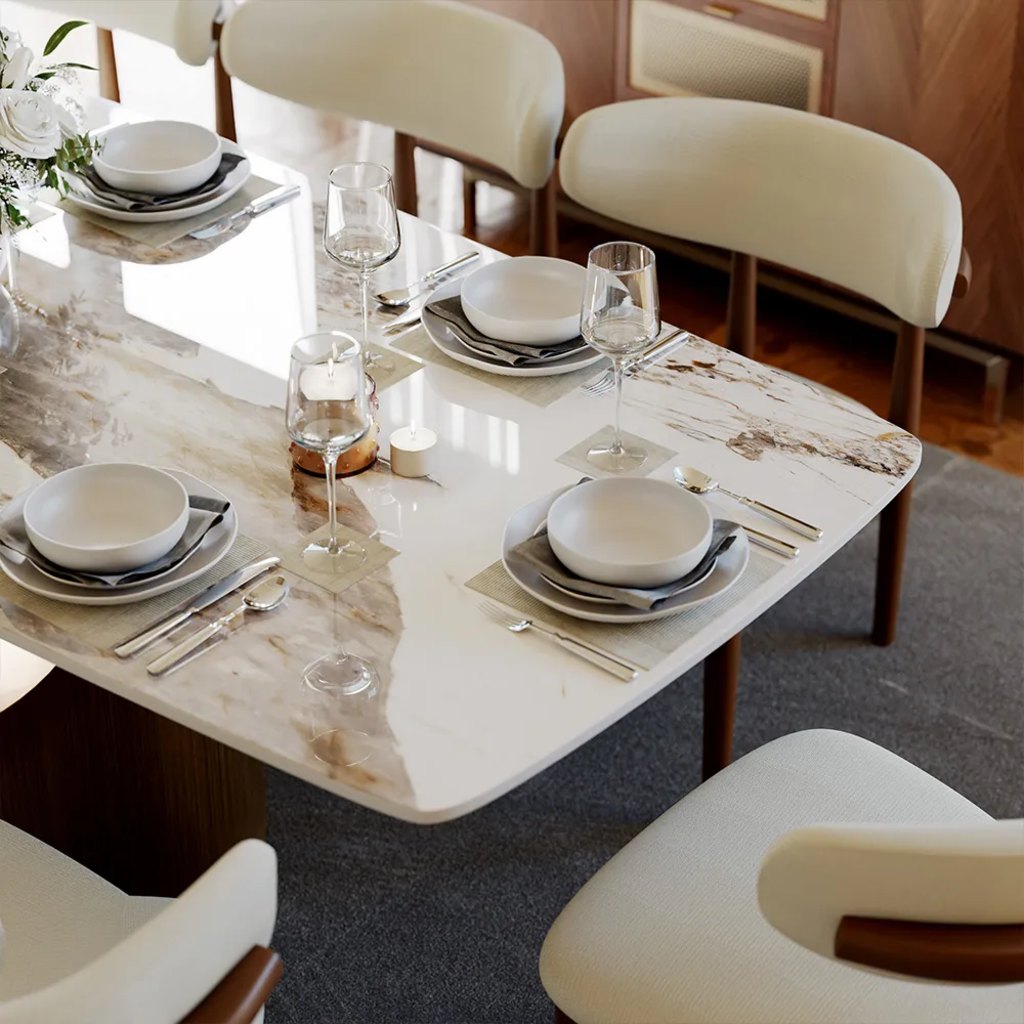
Introduction
A stone dining table can bring lasting visual weight to a dining room, but the word “stone” does not tell you how the surface will look, age, or handle daily meals. The real decision is often between natural stone, with one-of-a-kind variation and visible character, and sintered stone, with controlled patterns and easier upkeep. This comparison explains how each material creates a different kind of modern luxury, which households each one suits, and what to inspect before ordering. It also shows how finish, edge, and base design change the final effect.
Table of Contents
What Is the Real Difference Between Natural and Sintered Stone?
Natural stone is quarried from the earth and cut into slabs. Marble, travertine, granite, and quartzite all fall into this category, although their porosity, hardness, and care requirements are not identical. A natural stone dining table therefore carries variations that cannot be reproduced exactly: veins may change direction, color may shift across the slab, and small mineral marks may remain visible.
Sintered stone is manufactured from mineral-based materials that are compacted and fired into a dense surface. Its pattern, finish, and color can be managed more consistently, which helps buyers know what visual effect to expect. It is often selected by households that like a marble-inspired look but do not want the same sensitivity to acidic foods, moisture, or routine cleaning.
The clearest distinction is not “real versus fake.” Natural stone offers geological variation and develops character through use. Sintered stone offers a designed stone appearance with more predictable performance. A closer look at how sintered stone compares with marble can help clarify the care differences without turning this decision into a manufacturing lesson.
Which Stone Dining Table Creates the Right Luxury Look?
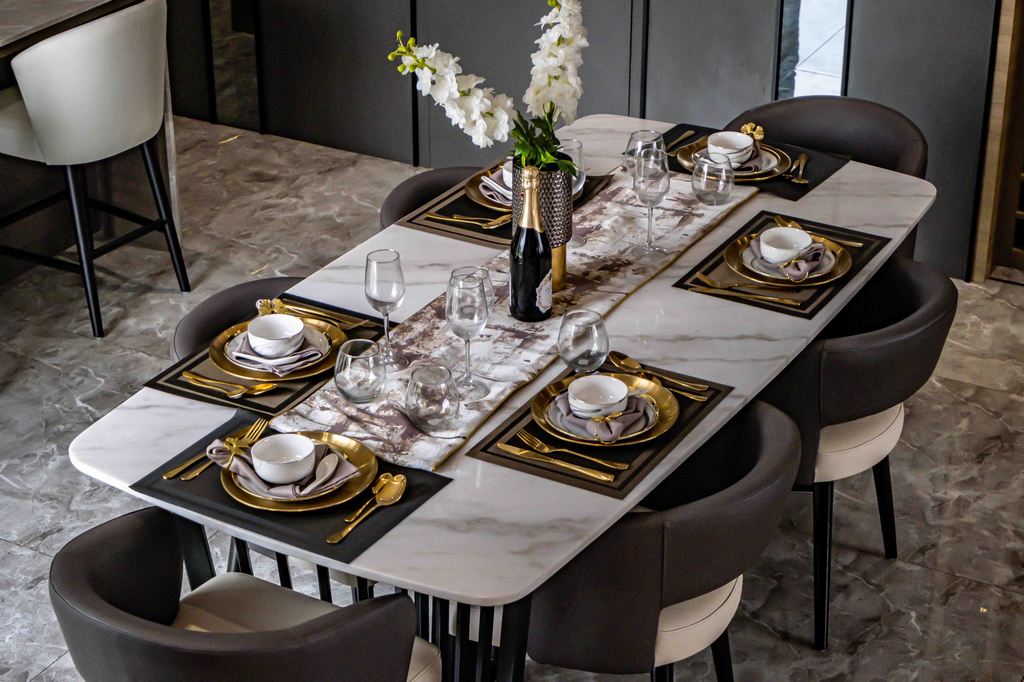
Luxury does not come from the material name alone. It comes from how the surface, proportions, base, lighting, and surrounding furniture work together. Natural stone tends to feel collected and individual because no two slabs are identical. Sintered stone tends to feel cleaner and more architectural because the veining and color are selected as part of an intentional design.
| Decision Factor | Natural Stone | Sintered Stone |
| Pattern | Unique veining, mineral marks, and natural variation | More controlled pattern and color consistency |
| Overall Mood | Organic, timeless, collected | Clean, contemporary, architectural |
| Aging | May develop etching, patina, or other visible signs of use | More likely to retain a consistent appearance with routine care |
| Buyer Expectation | Values individuality and accepts variation | Wants a stone look with fewer daily-care concerns |
| Strongest Setting | Formal dining rooms, design-led interiors, low-to-moderate daily wear | Family dining areas, open-plan homes, frequent entertaining |
A highly figured marble top can become the main decorative element in a quiet room. It needs little more than restrained chairs and a low centerpiece. A sintered surface with softer veining can support a luxury dining table in an open kitchen without competing with cabinet finishes, lighting, and nearby living-room furniture.
The better choice depends on the kind of refinement you want. Choose natural stone when irregularity is part of the appeal. Choose sintered stone when you want the room to look composed and consistent from one viewing angle to another.
How Does Daily Use Change the Better Choice?
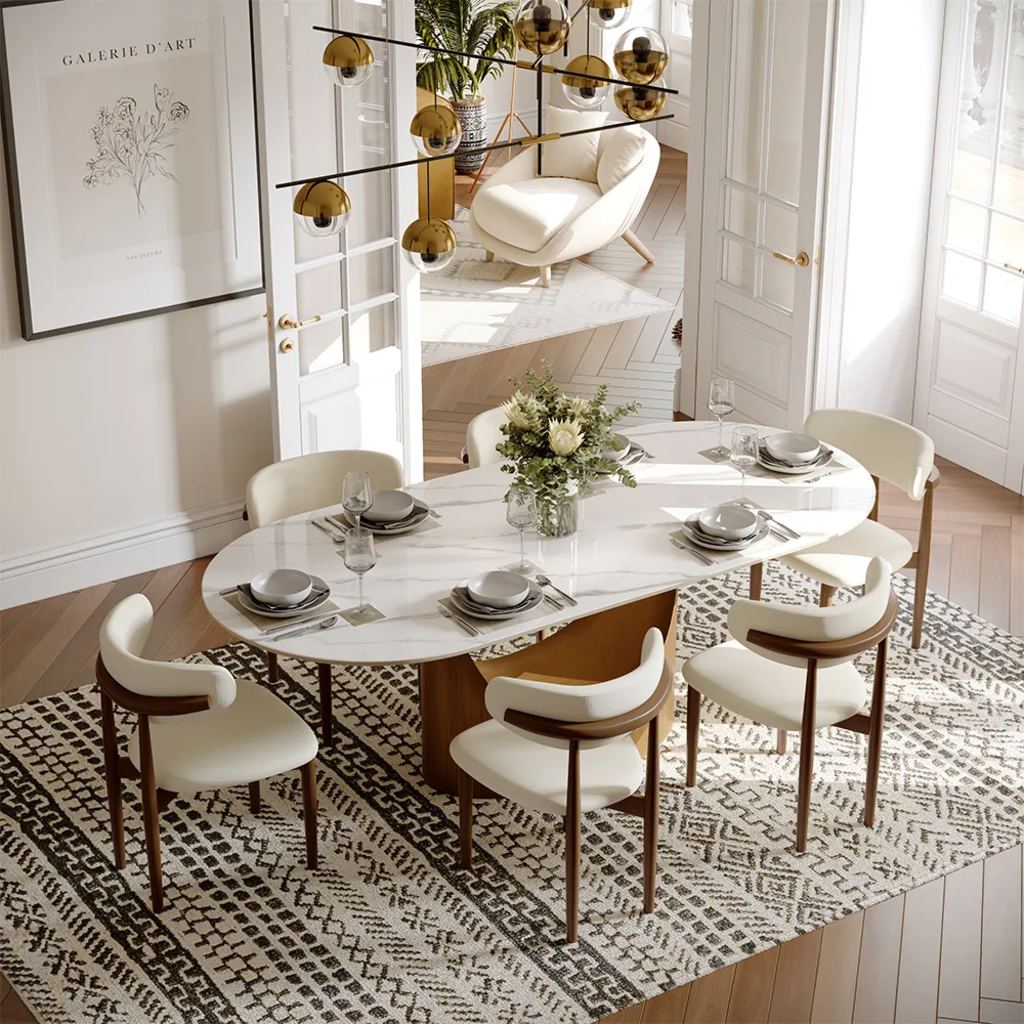
The surface should match what happens at the table after the styled photos are taken. A formal dining room used for holidays can accommodate more careful routines. A table used for breakfast, homework, takeout, and weekend projects needs a surface that tolerates frequent wiping and less controlled behavior.
Natural stone works well for buyers who are comfortable using coasters, cleaning spills quickly, and following material-specific sealing guidance. That trade-off may feel reasonable when the unique slab is the feature they value most. It may feel frustrating in a household where citrus, tomato sauce, coffee, and craft supplies regularly stay on the table longer than planned.
A sintered surface is usually the more practical route for high-frequency dining. It is especially useful when the table sits beside the kitchen and serves several jobs throughout the day. A family might clear breakfast plates, open two laptops for schoolwork, and set out serving dishes that evening without wanting a different protection routine for every activity.
Use these household signals to narrow the choice:
- Choose natural stone when visual uniqueness matters more than uniformity.
- Choose sintered stone when daily cleanup and appearance consistency carry more weight.
- Reconsider both when the table must be moved often or carried through a difficult access route.
- Check the exact care instructions rather than assuming every marble, travertine, or engineered surface behaves the same way.
How Do Finish, Edge, and Base Shape Modern Luxury?
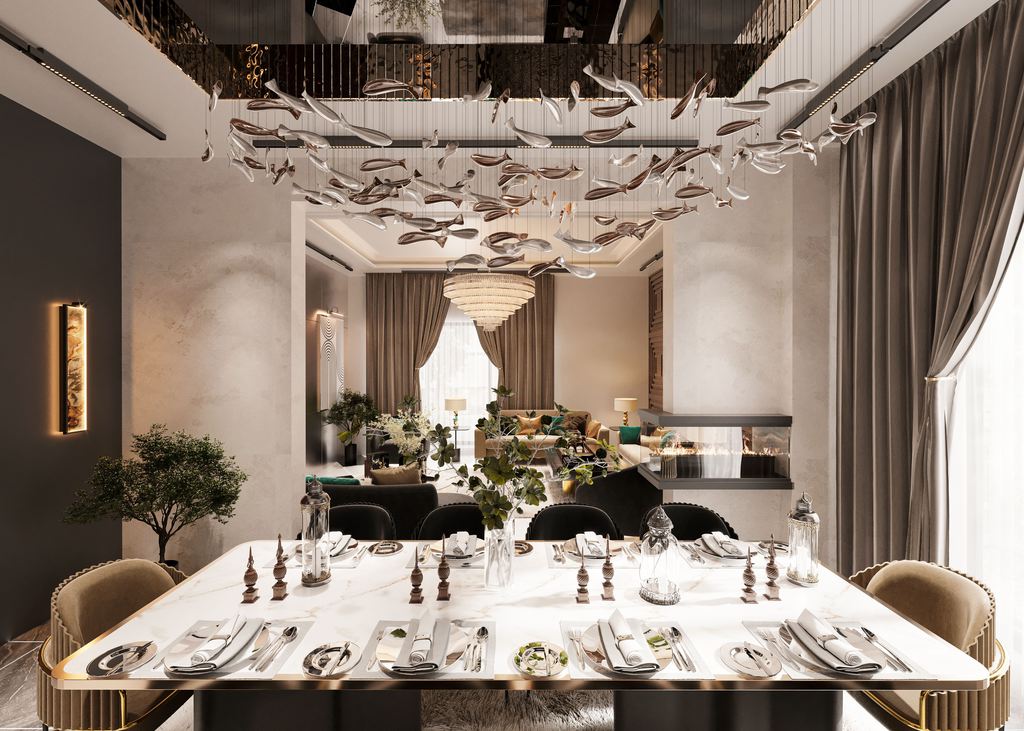
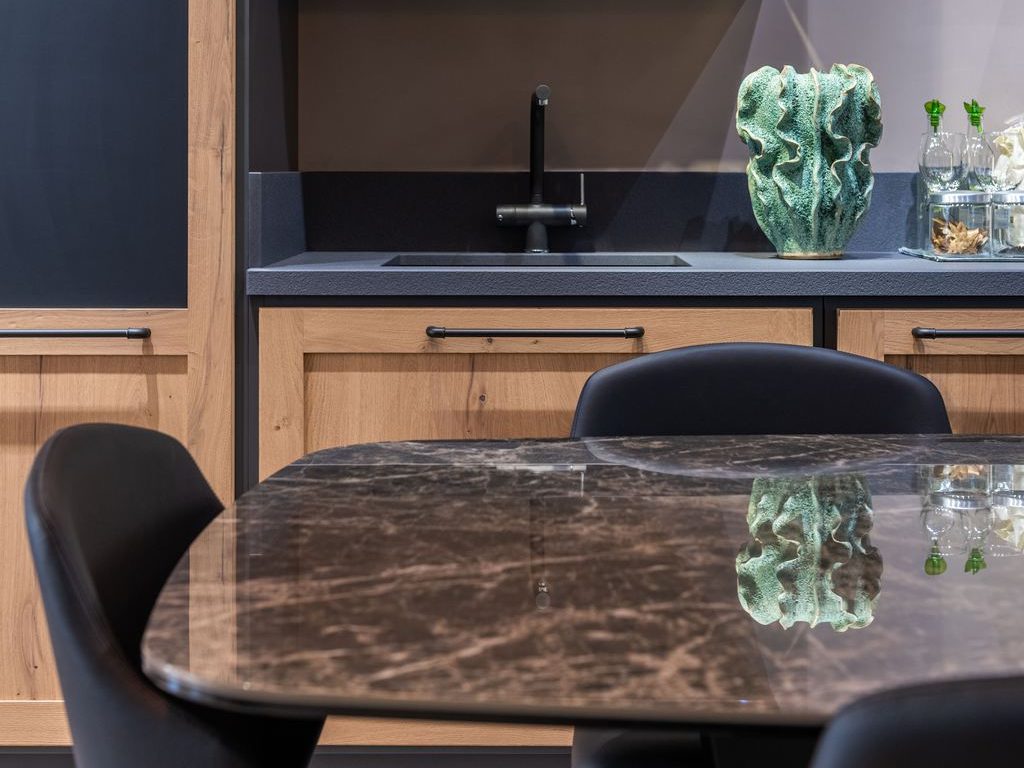
The same material can look restrained, dramatic, warm, or commercial depending on its finish and construction. A polished surface reflects light and makes veining more noticeable. It can brighten a darker dining room, but strong daylight may also reveal fingerprints and reflections. Matte or honed-looking surfaces soften the pattern and tend to sit more quietly beside textured upholstery and warm wood.
Edges change the perceived weight. A thin, straight profile feels crisp and architectural. A thicker slab edge creates a more monumental effect. Rounded corners make a substantial top feel less severe and are easier to move around in a busy dining zone. The best finish for a sintered stone dining table depends on the room’s lighting and how much visible surface maintenance you will tolerate.
The base should support the visual idea rather than simply hold the top. Wood introduces warmth, slim dark metal adds definition, and bronze-toned metal can connect the table to lighting or cabinet hardware. A pedestal can create a sculptural center, but its footprint still needs to leave comfortable knee and chair space.
Which Look Fits Your Dining Room Style?
Start with the mood of the room rather than selecting the busiest pattern available. Stone should connect with the surrounding materials, not make every other finish look accidental.
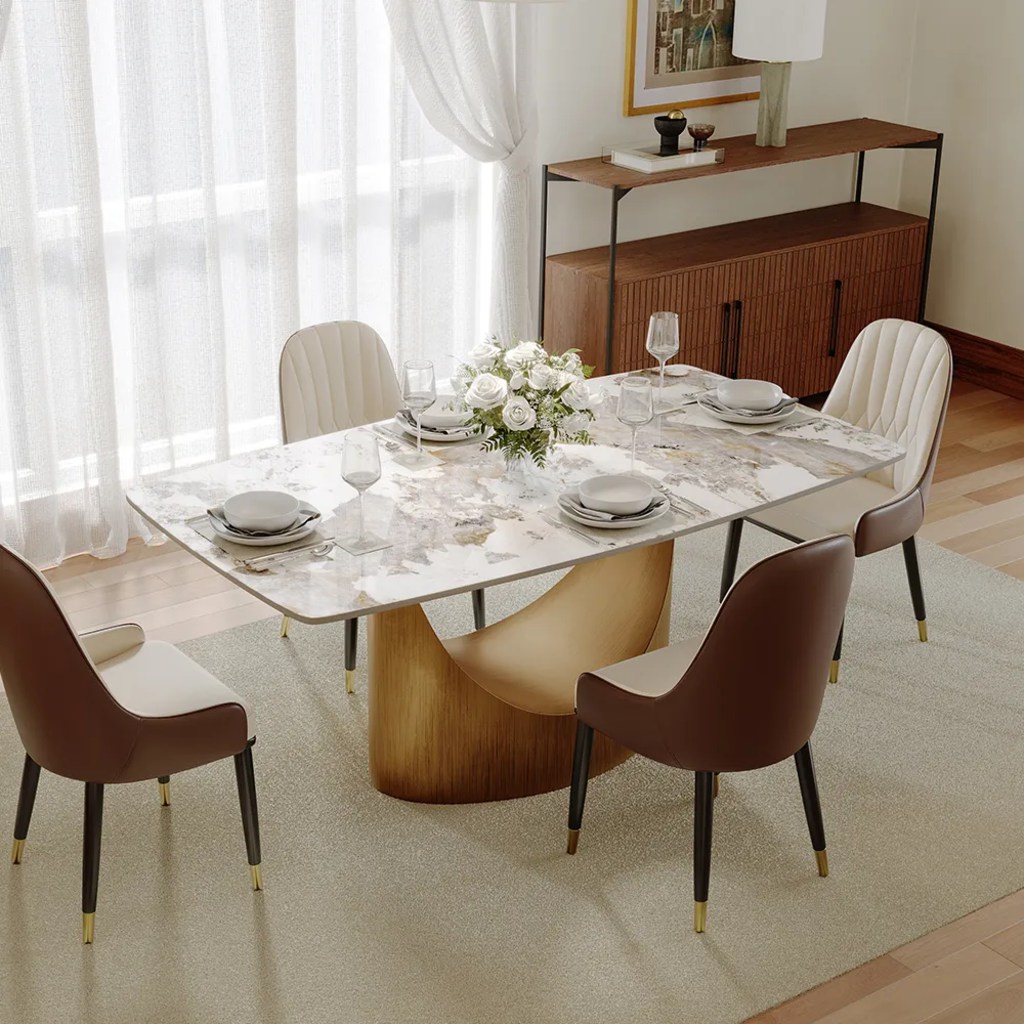
White stone with visible gray veining suits formal modern and transitional rooms. Keep the chair shapes simple when the pattern is strong. Upholstered taupe, charcoal, or warm-white chairs can soften the cool surface.
Beige, cream, or travertine-inspired stone works naturally in organic modern and warm minimalist interiors. Pair it with walnut, oak, woven textures, and low-contrast lighting. A matte surface keeps the room calm, while a polished one pushes the look toward hotel-style glamour.
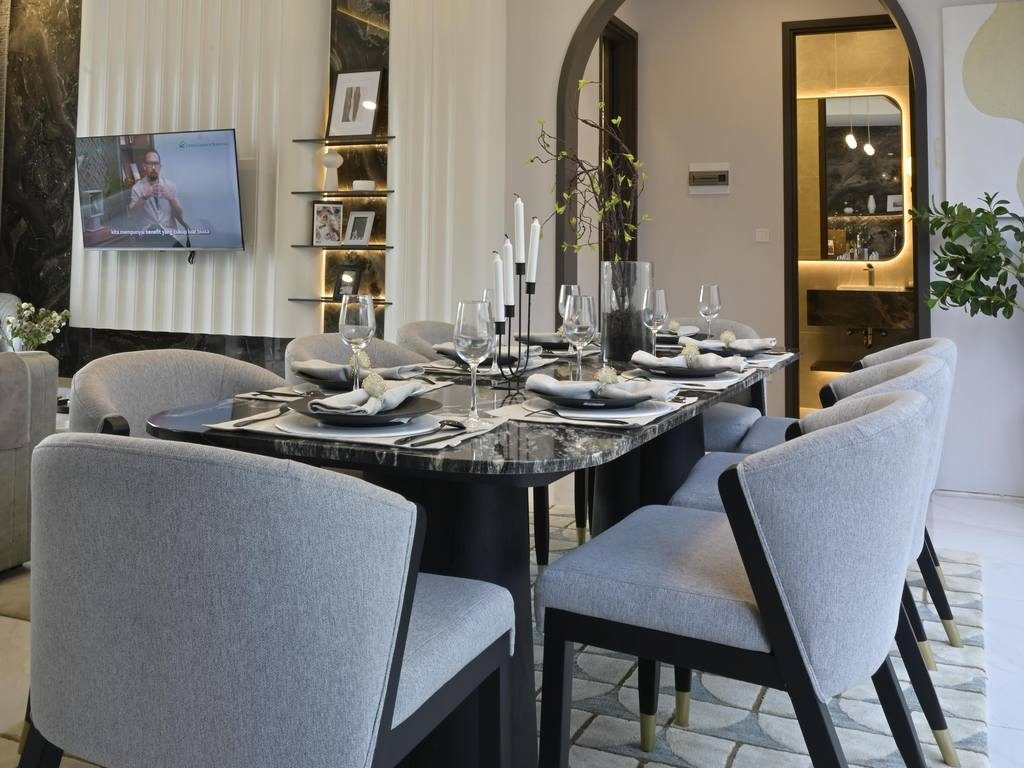
Black or charcoal stone creates a stronger contemporary statement. It works best when the dining area has enough light and some visual relief through pale walls, brushed metal, glass, or lighter upholstery.
Soft gray, lightly veined sintered surfaces are useful in open-plan homes. They can connect stainless appliances, neutral sofas, and mixed wood tones without making the dining zone feel disconnected from the rest of the room.
For a dining room that handles weekday meals but still needs a polished focal point, the Hobart-Rectangular Sintered Stone Dining Table pairs a glossy sintered surface with a bronze-toned stainless steel base. The controlled veining keeps the design composed, while the sculptural support adds presence without requiring ornate chairs or heavy decorative styling.
What Should You Check Before Buying?
Online images can communicate color and mood, but they do not answer every practical question. Before ordering, verify what the tabletop actually is and how the complete table will enter and function in the room.
- Material wording: Look for natural marble, travertine, granite, quartzite, sintered stone, porcelain, or stone-look veneer. Do not rely on “marble finish” alone.
- Pattern variation: Confirm whether the photographed slab is the exact surface or a representation. Natural stone normally varies from piece to piece.
- Finish and edge: Check whether the surface is glossy, matte, textured, or honed-looking, and whether the corners are sharp or softened.
- Base clearance: Compare the base position with your chair width and preferred seating arrangement.
- Care expectations: Confirm sealing guidance, approved cleaners, heat precautions, and impact warnings.
- Delivery access: Measure doors, hallways, elevators, stair turns, and the route from the truck to the dining area.
- Package details: Review how many cartons arrive, which components require assembly, and whether professional or two-person handling is recommended.
- Return conditions: Large, heavy furniture may involve different return costs or packaging requirements than smaller household items.
Weight can make a table feel stable once installed, but it also changes delivery, floor protection, and future rearranging. Reviewing the weight of sintered stone tables is particularly useful for apartments, upstairs dining rooms, and homes with narrow turns between the entrance and the final placement area.
Conclusion
Natural and sintered surfaces can both create a modern luxury dining room, but they serve different priorities. Natural stone offers unrepeatable pattern and material character, while sintered stone offers a more controlled look and simpler daily expectations. Before choosing a stone dining table, decide how much variation and visible aging you welcome, then evaluate the finish, edge, base, care instructions, and delivery route. The most successful choice is not the surface that looks richest in isolation, but the one that continues to suit the room and the way your household actually uses it.
Q&A
Can a natural stone tabletop be refinished if it becomes dull?
Often, yes, but the method depends on the stone and the type of damage. A stone professional may be able to polish minor wear or address localized etching. Deep stains, cracks, and heavily textured finishes require a different assessment. Do not use a generic polishing compound before confirming the stone type.
Will a stone tabletop make dishes feel noisy?
It can. Hard tableware placed directly on stone produces a sharper contact sound than it would on wood. Thin felt-backed placemats, linen mats, or a table runner can reduce noise and soften the dining experience without hiding most of the surface.
Can a heavy stone table damage wood or tile flooring?
A stationary stone table usually causes fewer problems than one that is dragged or supported by narrow pressure points. Place floor-safe pads beneath every contact area, keep the base level, and lift rather than slide the table. Wide pedestals and narrow metal feet may require different floor-protection solutions.
Can a chipped stone edge be repaired?
Small chips in some natural stones can be filled and color-matched by a professional, although the repair may remain visible at close range. Sintered edges can be harder to restore seamlessly. Photograph delivery damage immediately and review the seller’s replacement, warranty, and claim requirements before attempting a repair.
Does every natural stone dining table need to be sealed?
Not every natural stone dining table needs sealing. Porous stones such as marble and travertine commonly benefit from an impregnating sealer, while some dense stones may not. Follow the manufacturer’s care instructions; a water-drop test can indicate absorption. Sintered stone generally requires no sealing, and sealing does not prevent acid etching.


