 By Kelvin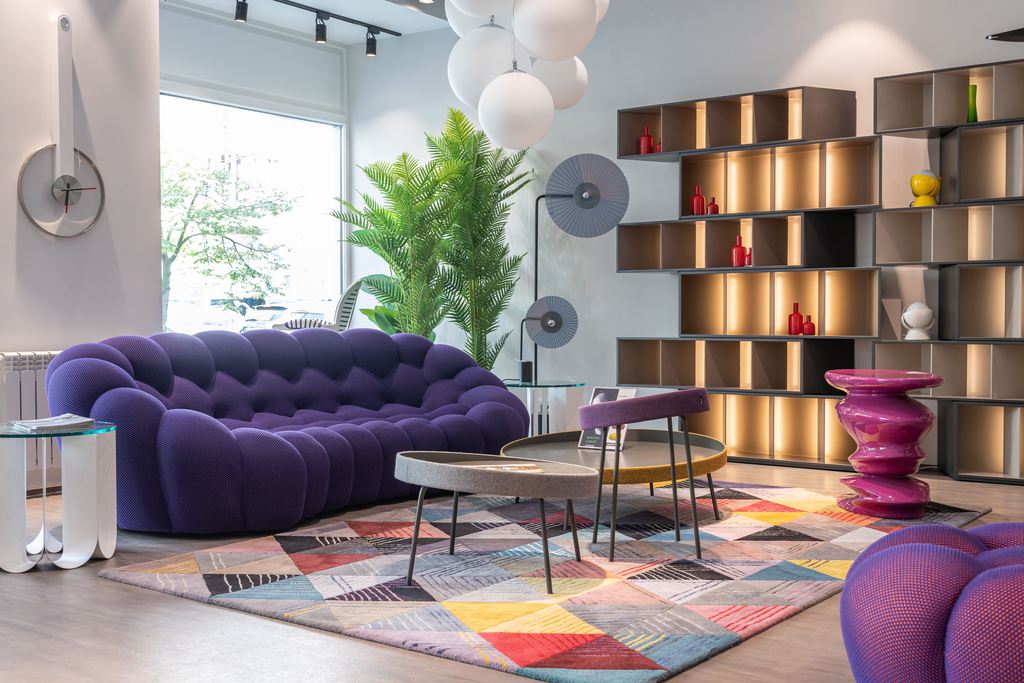
Introduction
Postmodern interior design gives you permission to use bold shapes, unexpected materials, and furniture with a strong personality—but the room still needs to support daily life. This guide explains how to recognize the style, choose pieces that fit your space, and create contrast without making every surface compete for attention. You will also learn how to connect different furniture styles, decide how much postmodern influence suits your home, and evaluate statement furniture before bringing it into a real living room or dining area.
Table of Contents
What Is Postmodern Interior Design?
Postmodern interior design is an expressive style that challenges the strict function, simplicity, and visual order associated with modernism. It uses exaggerated forms, decorative references, mixed materials, bold color, and visual humor to make a room feel individual rather than standardized. The essential principle is intentional contrast: an unexpected object, shape, or finish should look deliberately placed rather than randomly added.
The movement became especially visible during the 1970s and 1980s, when designers began questioning the idea that decoration should always follow function. The Victoria and Albert Museum’s overview of postmodernism explains how designers reintroduced ornament, symbolism, historical references, and popular culture.
What Makes an Interior Look Postmodern?
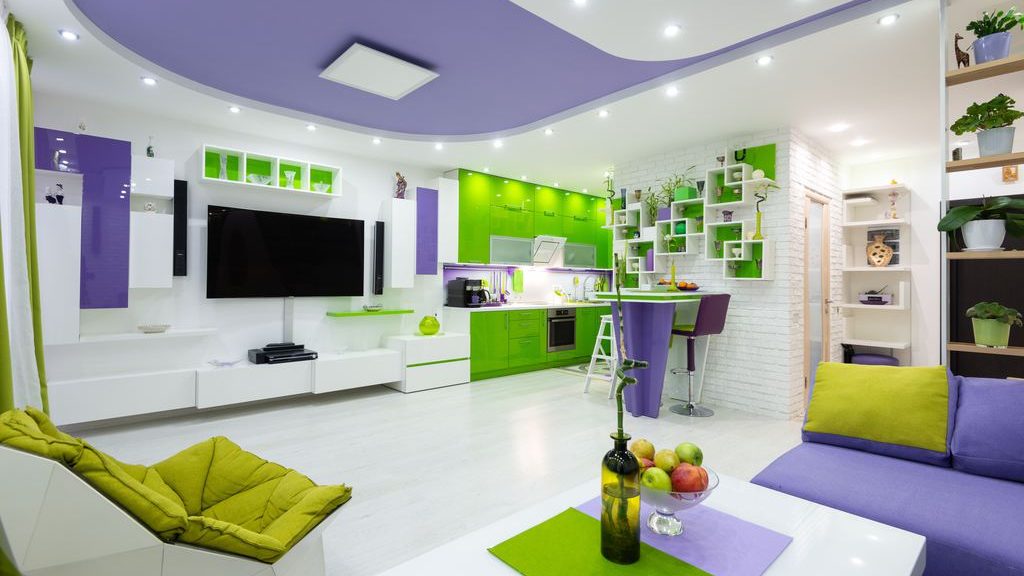
A postmodern room normally combines several recognizable elements rather than relying on one color palette. Sculptural furniture, geometric forms, contrasting materials, historical references, and playful details are common, but you do not need to use all of them at once.
| Design element | What it looks like | Practical way to use it |
| Sculptural shape | Curves, arches, oversized geometry, unusual bases | Choose one sofa, chair, or table as the main form |
| Unexpected color | One saturated accent or an unusual pairing | Use upholstery, artwork, or a large rug |
| Material contrast | Gloss beside matte, stone beside metal, wood beside acrylic | Repeat two or three finishes across the room |
| Geometric pattern | Stripes, grids, abstract blocks, circles, or squiggles | Keep the largest pattern on one main surface |
| Historical reference | A familiar or traditional form altered through scale or finish | Use one recognizable reference rather than creating a theme |
| Asymmetry | Different objects carrying similar visual weight | Balance a large seat with art, lighting, or a smaller chair |
The strongest clue is usually not brightness but deliberate tension. A neutral living room with an oversized curved sofa and a glossy geometric table may look more postmodern than a colorful room filled with conventional furniture.
How Is Postmodern Different From Similar Styles?
Postmodern design overlaps with several styles that use mixed periods, expressive furniture, or strong decoration. The clearest difference is the intention behind those choices.
| Style | Primary design goal | Typical appearance | Key difference |
| Modern | Create functional order and visual simplicity | Clean lines, restrained color, limited ornament | Reduces visual contradiction |
| Postmodern | Challenge predictable design rules | Sculptural forms, mixed references, visual surprise | Uses contradiction as part of the design |
| Eclectic | Combine different sources into a coordinated whole | Mixed periods, materials, and personal objects | Prioritizes harmony between different pieces |
| Maximalist | Create richness through abundance and layering | Multiple patterns, colors, books, art, and accessories | Focuses more on visual fullness than conceptual contrast |
| Memphis | Express playful, graphic postmodern ideas | Bright color, laminate, bold geometry, irregular patterns | A recognizable branch of postmodernism, not the entire style |
A postmodern contemporary interior design scheme does not need to reproduce a full 1980s Memphis room. Current furniture, a restrained backdrop, and one or two unconventional forms can create a more adaptable version of the style.
How Do You Choose Postmodern Furniture for a Livable Room?
A successful room begins with the furniture that supports its main activity, not with a collection of unusual objects. First decide what the room needs to do, then select one piece that establishes the visual direction. Supporting furniture should either reinforce that idea or remain quiet enough to keep the layout functional.
Start With One Functional Anchor
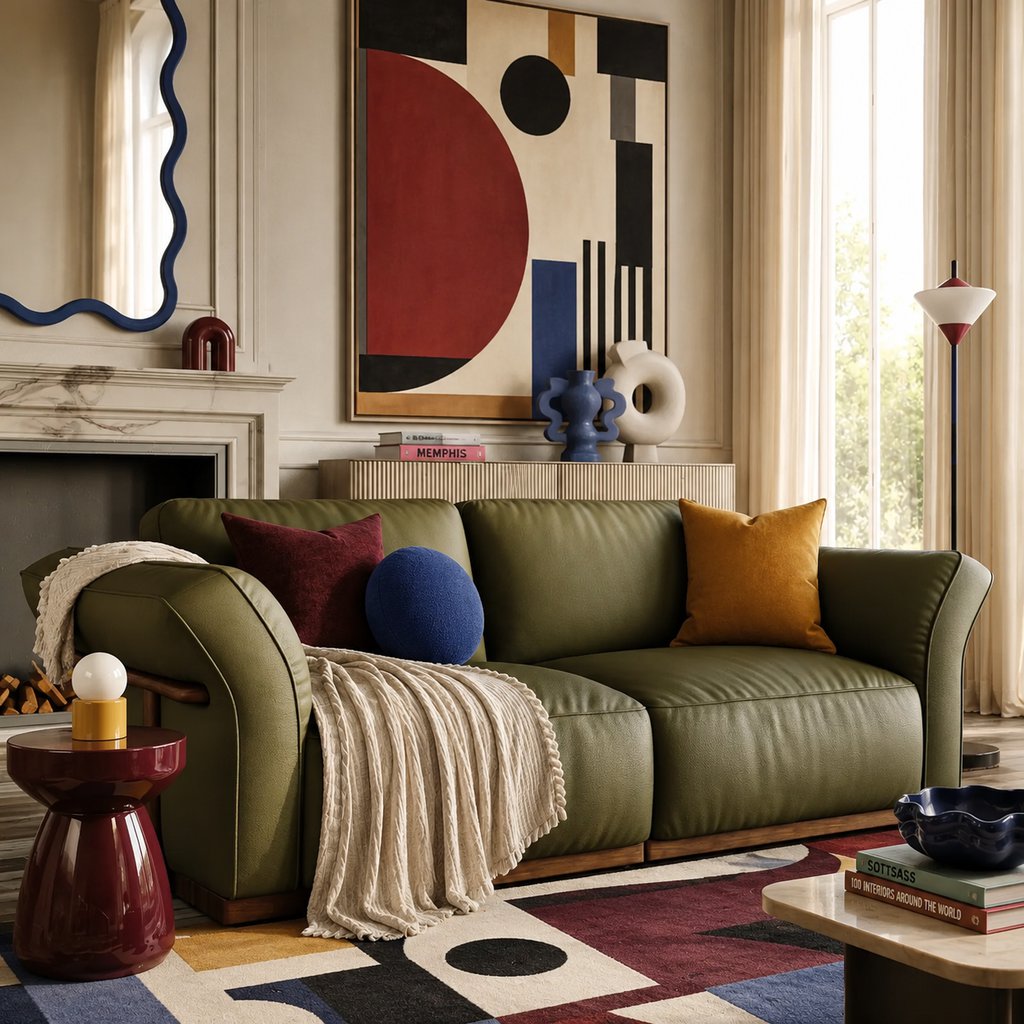
Choose the large piece that supports the room’s main routine. In a living room, this is usually the sofa. In a dining room, it may be the table. The anchor can have a curved silhouette, an unusual base, or a bold finish, but it must still fit the room and work comfortably.
In a family living room, for example, a rounded sofa can establish the style while offering enough seating for evening television. A simpler rug and closed-storage media console can then control cables, remotes, and toys so everyday objects do not compete with the sofa.
Choose Furniture According to Its Role
Different furniture types influence a postmodern room in different ways.
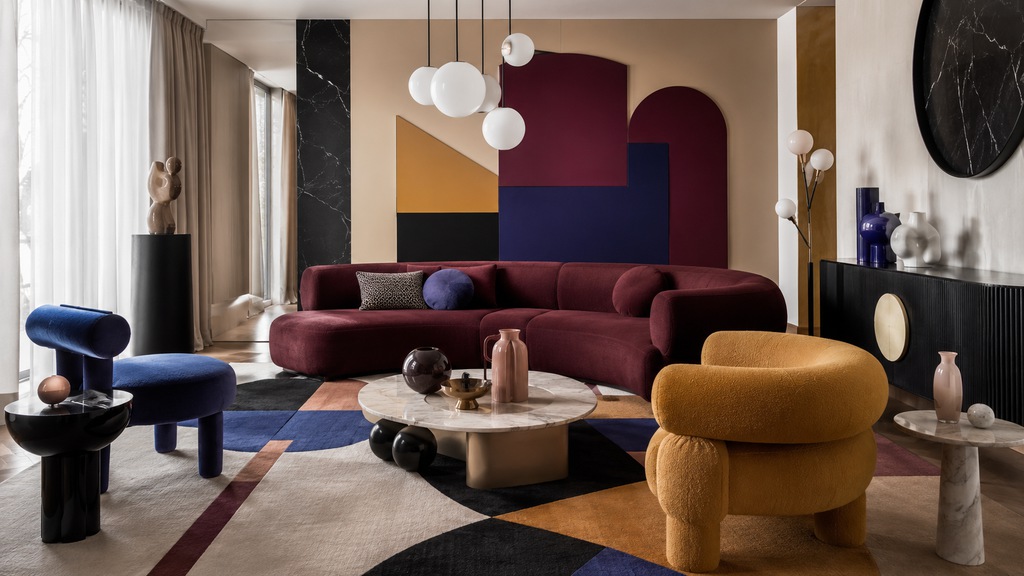
Sculptural seating has the strongest visual impact because it controls the room’s scale and silhouette. Curved sofas, rounded lounge chairs, oversized arms, and unusual seat profiles can establish the style without requiring highly patterned walls or flooring.
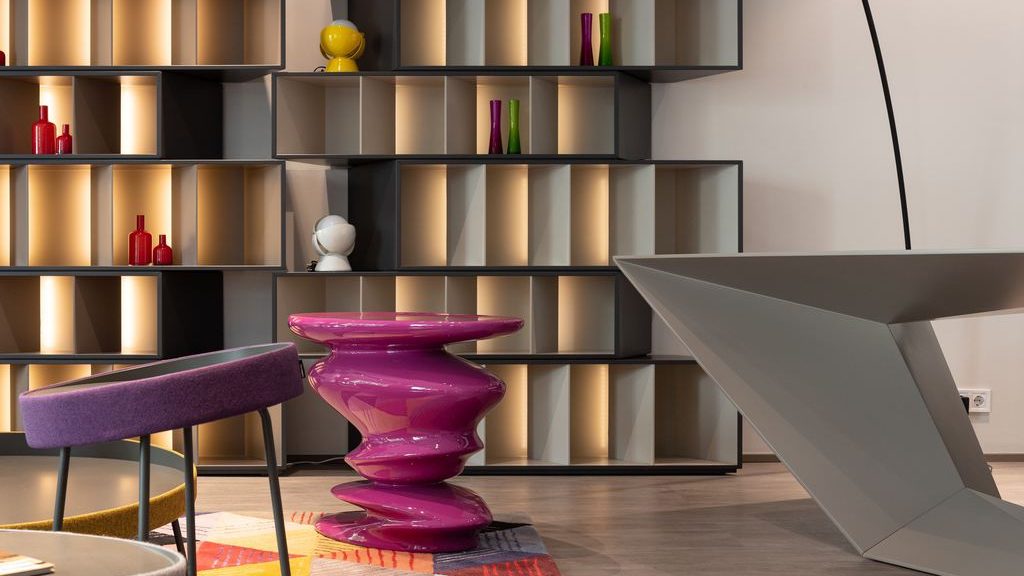
Geometric coffee and side tables offer a lower-commitment way to introduce circles, ovals, stacked forms, asymmetrical tops, or contrasting bases. Their shape should still suit the seating plan. A round table may improve movement around a sectional, while an irregular table may provide less usable surface than its widest measurement suggests.
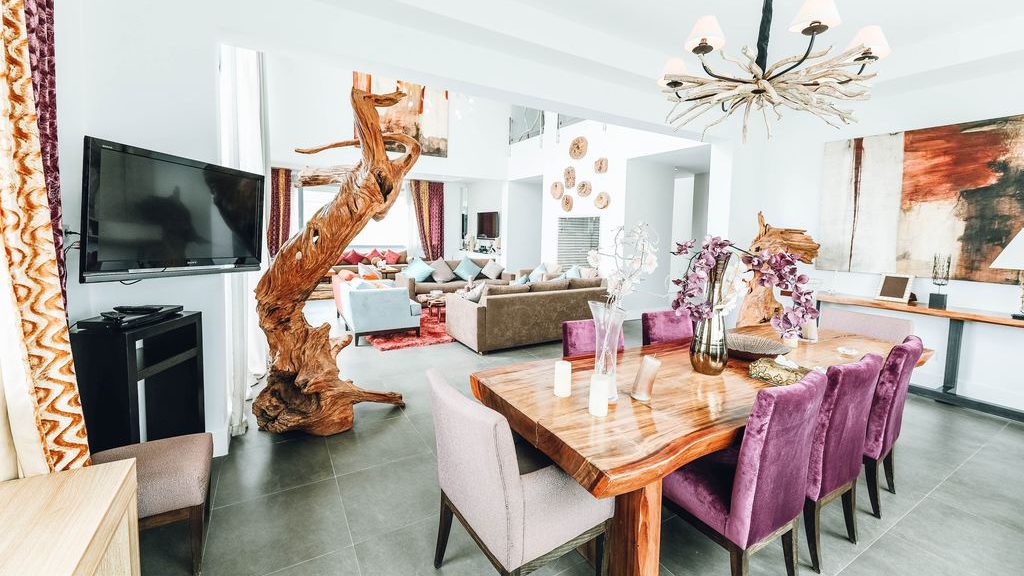
Statement dining tables can create contrast through an oval top, sculptural pedestal, glossy stone surface, or metal base. Check that chairs fit between the supports and that the base leaves enough knee room when every seat is occupied.
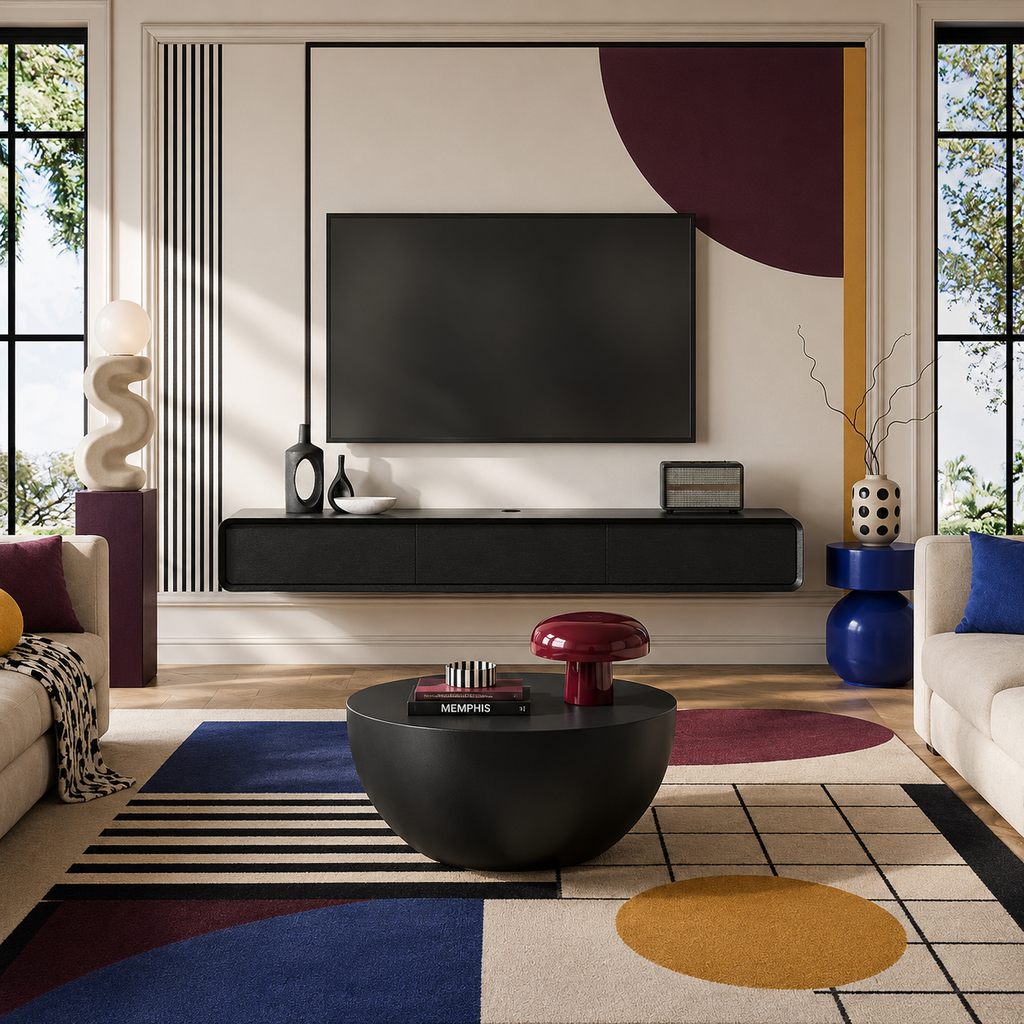
Storage furniture can play a quieter role. A media console or sideboard with rounded corners, slatted doors, or a contrasting top can support the style while hiding the smaller objects that otherwise make an expressive room look disorganized.
Add One Main Source of Contrast
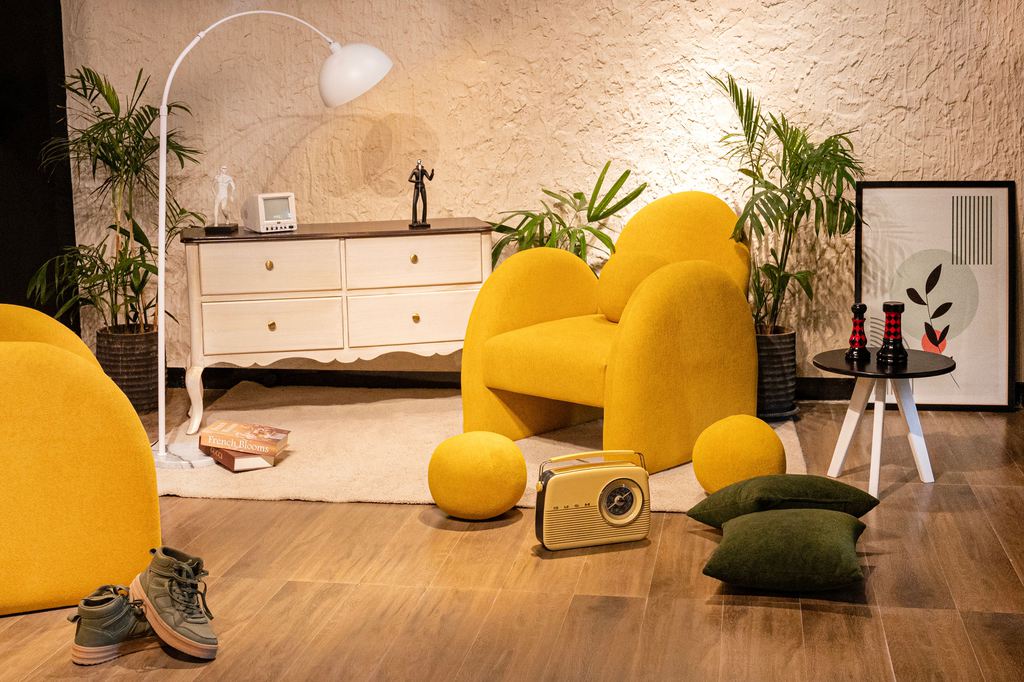
Choose one primary contrast instead of introducing several unrelated ideas at once. Useful combinations include:
- A curved sofa with a rectangular coffee table
- Warm wood beside glossy stone or metal
- Neutral walls with one saturated upholstery color
- A low horizontal cabinet below tall graphic artwork
- A traditional furniture shape in an unexpected finish
Once that contrast is established, additional furniture should repeat part of it or remain visually restrained. A bright sofa, patterned rug, irregular table, sculptural lamp, and oversized artwork can all work individually, but using them together without a hierarchy makes it difficult to identify the room’s focal point.
Repeat One Visual Cue
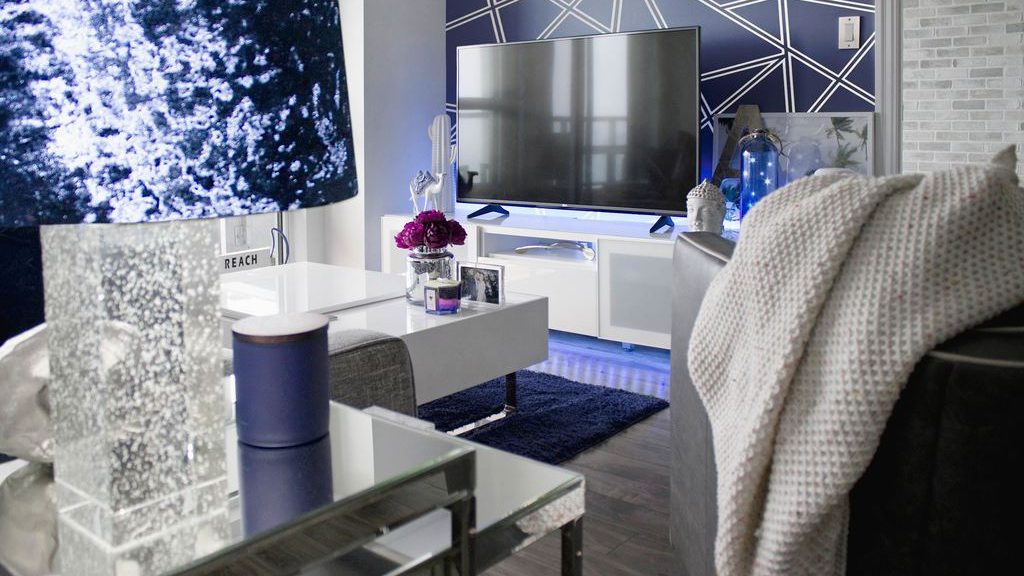
Repetition explains why different pieces belong together. Carry the curve of a sofa into a round lamp or oval table, repeat a metal finish across lighting and furniture bases, or use one accent color in both artwork and upholstery.
The same principle applies to line definition in interior design. Repeating curved, horizontal, vertical, or diagonal lines can connect furniture that differs in age, material, and color.
Keep Some Surfaces Quiet
Not every surface needs to communicate the style. If the sofa is bright and sculptural, a plain rug may give it enough visual space. If the floor has a strong geometric pattern, simpler upholstery can keep the room usable and easier to update.
Closed storage also matters. It allows intentional shapes and colors to remain visible without competing with paperwork, chargers, game controllers, and other everyday items. This is especially important in smaller rooms where open shelves and numerous small decorations quickly increase visual density.
What Should You Check Before Buying Statement Furniture?
A statement piece should pass the same practical tests as quieter furniture. Visual impact does not compensate for blocked movement, uncomfortable seating, limited table space, or a finish that does not suit the household.
Before buying, check:
- Full footprint: Mark the maximum width and depth on the floor, including projecting arms, curved corners, and irregular bases.
- Walking clearance: Test the actual route between the furniture, doorway, storage, and other seats.
- Primary function: Sit, dine, open doors, or use the table as you normally would.
- Usable dimensions: Check the seat area, table surface, storage capacity, and knee room rather than relying only on overall dimensions.
- Material care: Consider whether fingerprints, scratches, pet hair, or spills will be highly visible.
- Visual role: Decide whether the piece is the main focal point or another supporting element.
- Connection to existing furniture: Identify at least one shared color, curve, line, material, or finish.
Asymmetrical balance in interior design can help when a new piece is larger, darker, or more visually complex than the furniture around it. Visual weight can be balanced with lighting, artwork, or a smaller chair without purchasing a matching pair.
How Much Postmodern Style Should You Add?
The right amount depends on your room size, budget, existing furniture, and willingness to live with a strong visual statement.
- Low commitment: Begin with artwork, a lamp, cushions, or a compact side table. This works well in rentals and rooms where the main furniture needs to remain neutral.
- Medium commitment: Use an accent chair, coffee table, rug, or mirror to establish a recognizable focal point without controlling the entire room.
- High commitment: Build the room around a sofa, dining table, wall treatment, or architectural storage piece. Keep more of the supporting surfaces restrained.
In a small apartment, one distinctive chair beside a simple sofa may create more impact than several small decorative objects. In a larger room, the main statement can be stronger, but it still needs quieter furniture and open surfaces around it.
Conclusion
Postmodern interior design works best when visual surprise is supported by clear function. Begin with one anchor that fits your real routine, choose a deliberate source of contrast, and repeat one recognizable cue across the room. You do not need a complete 1980s-inspired makeover or a statement on every surface. A sculptural sofa, geometric table, or distinctive storage piece can establish the direction when its dimensions, comfort, maintenance, and relationship to the existing furniture have all been considered.
Q&A
Can mismatched dining chairs work around a postmodern table?
Yes, but confirm that every chair works comfortably with the table. Keep seat heights within about one inch of each other, check whether armrests slide beneath the tabletop, and compare chair widths before deciding how many will fit. Different back shapes can work together as long as they do not restrict movement or reduce usable seating.
Can modular furniture work in a postmodern interior?
Yes. Modular furniture can support the style when its sections create a clear curve, stepped profile, or asymmetrical arrangement. Before buying, check whether the modules lock together securely and whether exposed seams remain neat after rearranging. Too many small sections can make the overall silhouette feel fragmented rather than sculptural.
How can you prevent bold upholstery from fading near a window?
Check the fabric’s lightfastness information before placing saturated upholstery in direct sun. Use UV-filtering window film, lined curtains, or adjustable shades during the brightest hours. Rotating removable cushions can reduce uneven fading, but delicate or highly saturated fabrics may still be better positioned away from strong afternoon sunlight.
What should you ask about replacement parts before buying unusual furniture?
Ask whether custom legs, hardware, electrical controls, hinges, or molded components can be ordered separately. Confirm the warranty period and whether repairs require an authorized technician. Repair access matters more when the furniture’s appearance or function depends on specialized parts that cannot be replaced with standard hardware.
What should you check in the return policy before ordering statement furniture?
Confirm whether custom colors, special fabrics, or made-to-order pieces are final sale. Check return shipping costs, restocking fees, packaging requirements, and the deadline for reporting delivery damage. Large sculptural furniture can be expensive to send back, especially when white-glove delivery charges are nonrefundable.


