 By Kelvin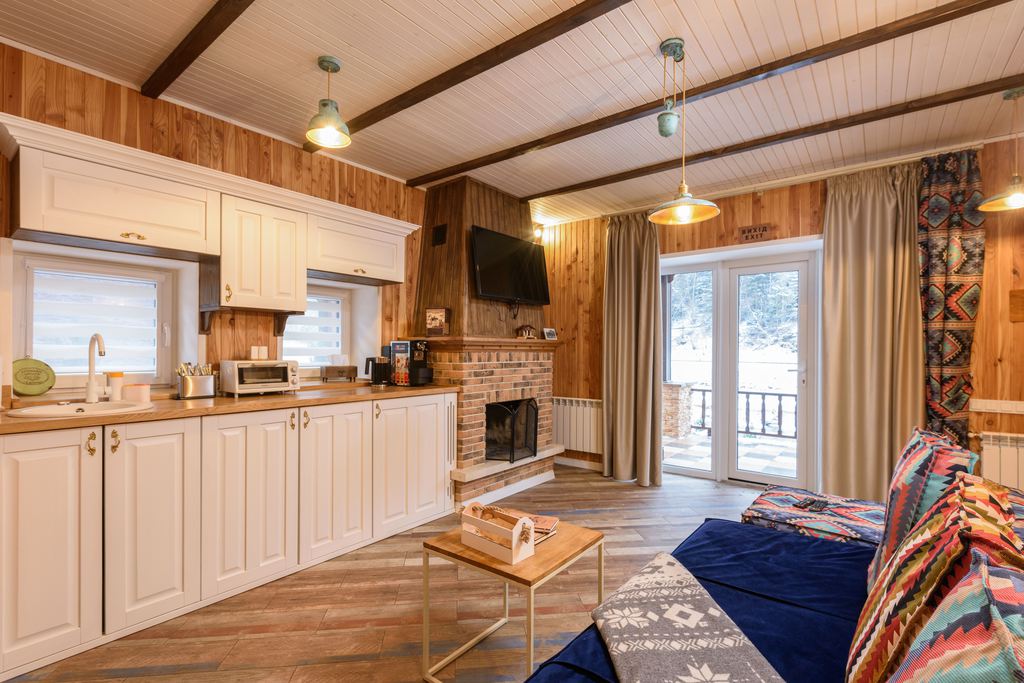
Introduction
Tiny home interiors need more than cute decor and clever storage baskets. The real goal is to make a small home feel open, easy to move through, and useful for daily life. If you are planning a tiny house, studio, guest cottage, or compact ADU, every furniture choice has to earn its space. This guide focuses on layout, light, storage, and furniture decisions that help a tiny home look calm and work harder without feeling crowded.
Table of Contents
What Should Tiny Home Interiors Solve First?
Good tiny home interior design starts with function before style. A tiny home usually asks one area to do several jobs: living room, dining space, workspace, storage zone, and sometimes guest room. If the layout cannot support those routines, even beautiful finishes will feel frustrating.
Start with four priorities:
- Keep one clear walking path through the main living area.
- Let daylight move through the space without tall furniture blocking windows.
- Give daily items a closed or easy-to-reach storage place.
- Choose furniture that can support more than one routine.
This does not mean the home has to look empty. It means the main pieces should reduce friction. A sofa should not block a cabinet. A table should not trap chairs against a wall. Storage should not be so deep or awkward that it becomes a place where things disappear.
A good first test is simple: can you walk from the entry to the kitchen, bathroom, sofa, and sleeping area without turning sideways? If not, the design problem is probably layout, not decor.
How Can You Make a Tiny Home Feel Larger?
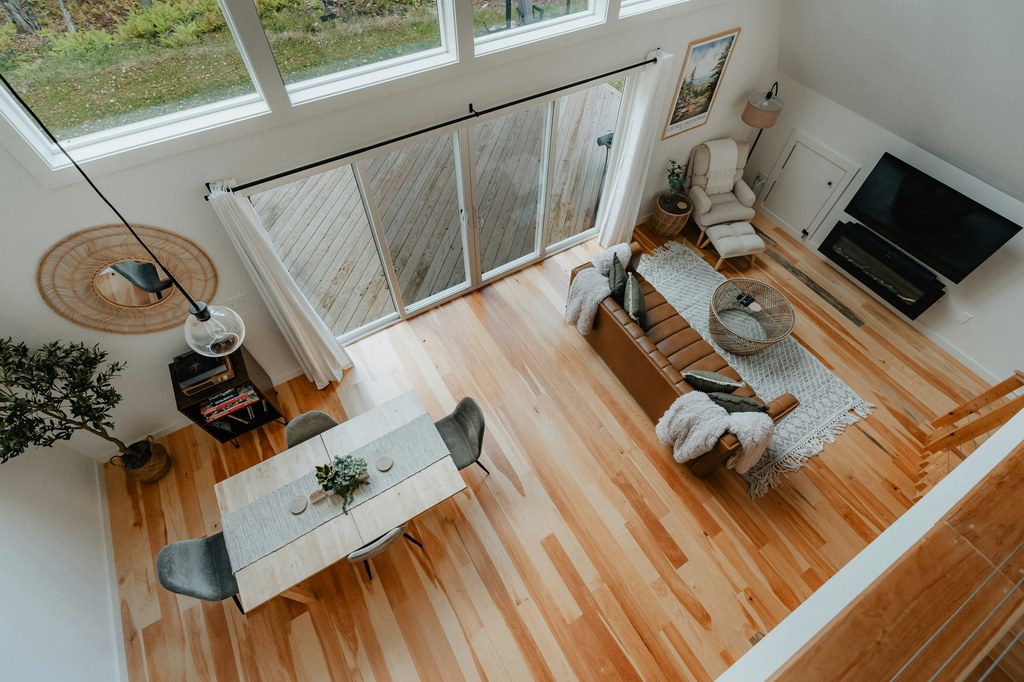
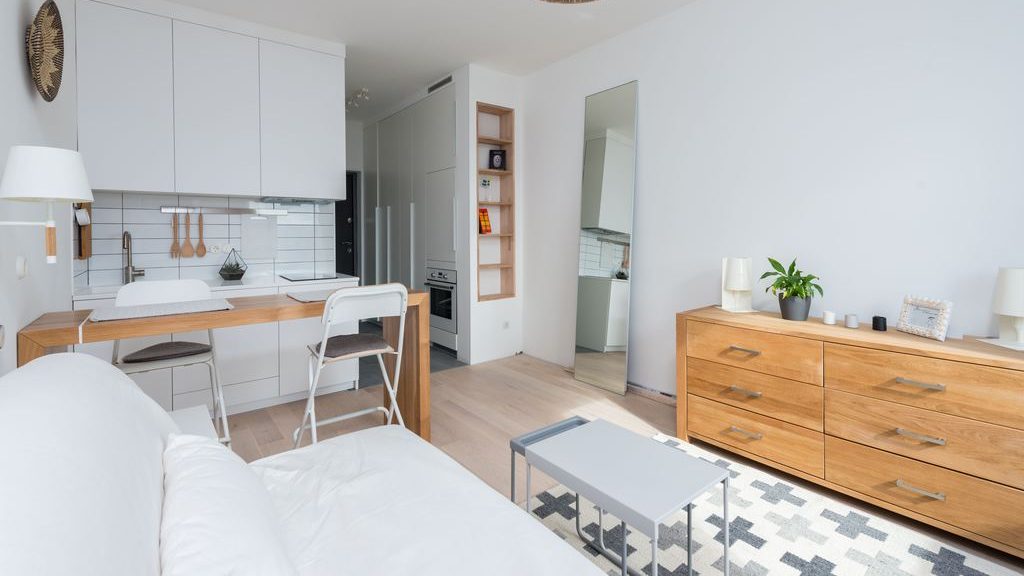
Many tiny home interior ideas focus on color, mirrors, and natural light because these choices change how the space feels before you add more furniture. The key is not to make everything white. It is to reduce visual breaks, use height well, and keep the eye moving through the room.
Use a Light Base, Not a Flat White Box
Light walls, pale wood, cream upholstery, and soft neutrals can help a tiny home feel calmer because they reflect more light and reduce contrast between surfaces. But an all-white room can feel unfinished if it has no texture. Add warmth through wood grain, woven baskets, linen, or a soft rug.
A small amount of darker color can still work. Use it as an anchor on a cabinet, chair, rug, or accent wall instead of covering every main surface.
Keep Windows Visually Open
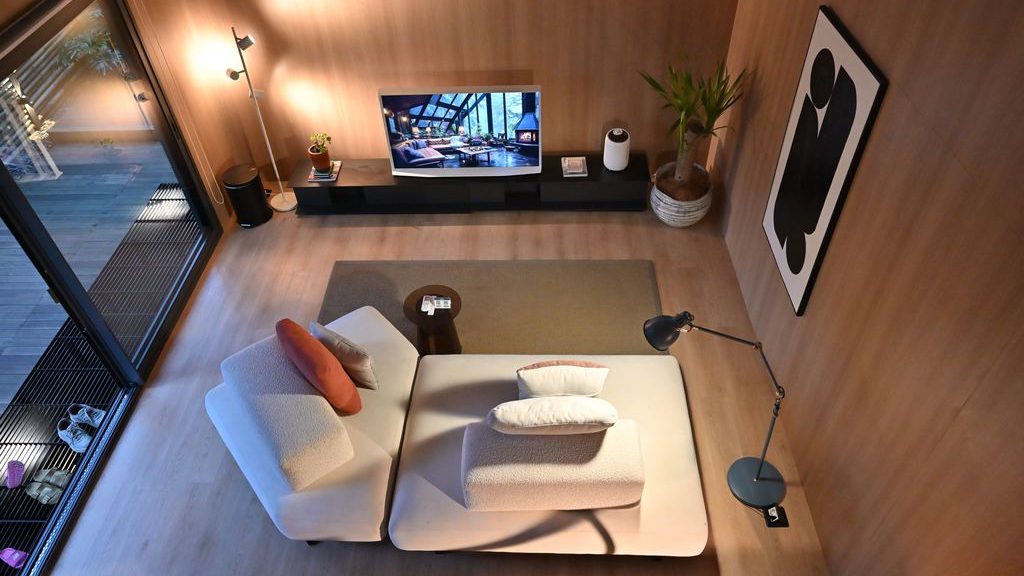
Natural light matters most when it can travel. Avoid placing tall cabinets, bulky bookcases, or heavy drapes directly beside small windows. If privacy is needed, choose shades or curtains that can open fully during the day.
In a tiny home living area, a low sofa under a window often works better than a tall storage piece. The sofa gives the wall a purpose without cutting off light.
Use Mirrors Where They Reflect Light
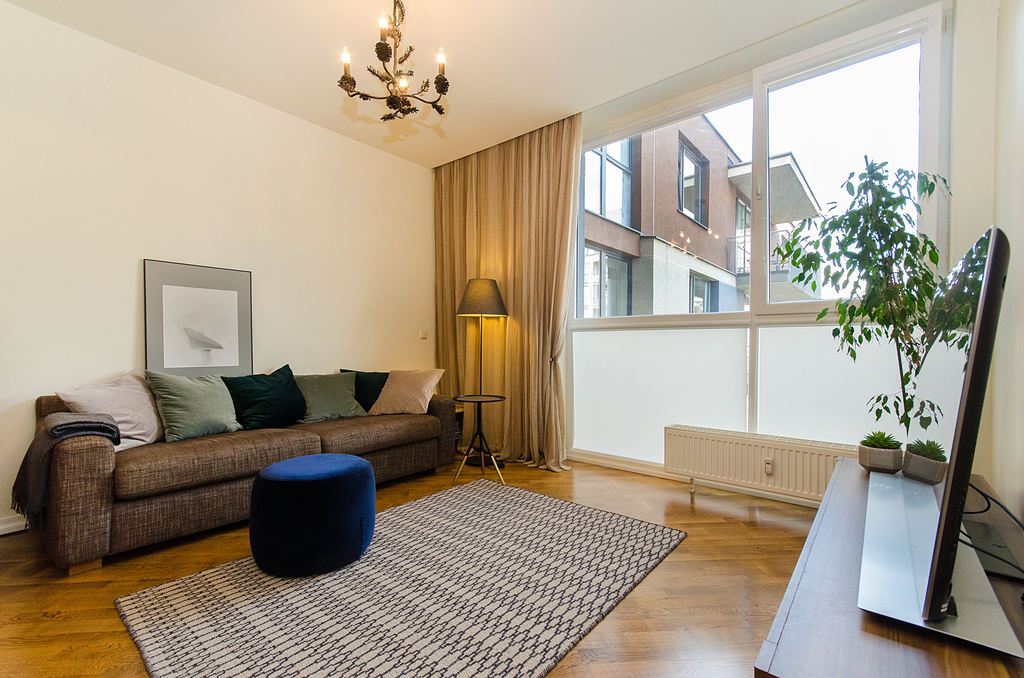
A mirror can make a small space feel wider, but only when it reflects something useful: a window, a clean wall, a lamp, or a calm seating area. If it reflects open shelves, clutter, or a cramped kitchen counter, it may double the visual noise instead.
For narrow rooms, a tall mirror near a window usually works better than several small decorative mirrors.
Create Height With Vertical Lines
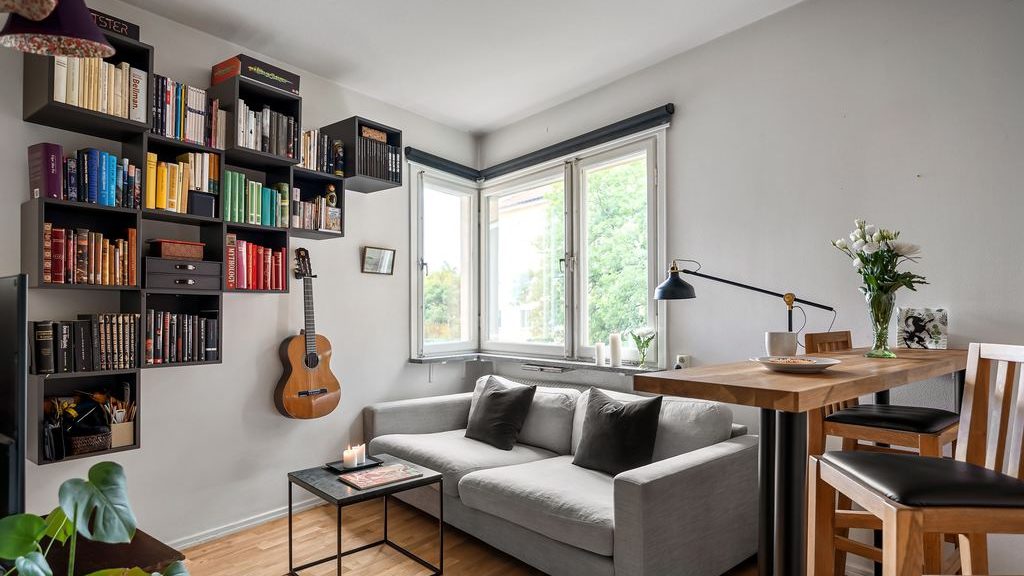
Tiny homes often have limited floor space, so vertical design choices help the room feel taller. Try tall curtains, wall-mounted shelves, vertical cabinet doors, slim floor lamps, and artwork hung slightly higher than usual.
The goal is to draw the eye upward without filling every inch of wall. One tall storage zone usually looks cleaner than several short shelves scattered around the room.
How Should Furniture Work in a Tiny Home?
Furniture in a tiny home should solve daily problems, not just fill a floor plan. Before choosing a piece, ask what job it does when the home is busy: eating dinner, working on a laptop, watching TV, folding laundry, hosting a guest, or cleaning up fast.
For example, a dining table in a tiny home may also serve as a desk or prep surface. A coffee table may need hidden storage. A sofa may need to support lounging and overnight guests. The more roles one piece can handle, the fewer extra pieces you need.
| Furniture Piece | Best Tiny Home Role | What to Check Before Buying |
| Sofa or sofa bed | Daily seating, lounging, occasional sleep | Closed depth, opened depth, walkway clearance |
| Coffee table | Storage, laptop surface, casual meals | Lift height, drawer access, edge shape |
| Dining table | Meals, work, prep, hobbies | Chair pull-out space and everyday seating needs |
| Media console | TV support, cable control, hidden storage | Cabinet depth, cord holes, door clearance |
| Storage cabinet | Visual cleanup for daily clutter | Door swing, shelf height, access from main path |
| Bench or ottoman | Extra seat and hidden storage | Whether it replaces another seat or table |
If eating, working, and daily cleanup all happen in one corner, a small dining table for small spaces should be judged by chair clearance first, not just tabletop size. A 36-inch table can still feel too large if the chair backs block the main walkway.
The same rule applies to living room furniture. Small does not always mean better. A sofa that is slightly larger but replaces a chair, guest bed, or separate lounge piece can be more useful than several tiny pieces that crowd the room.
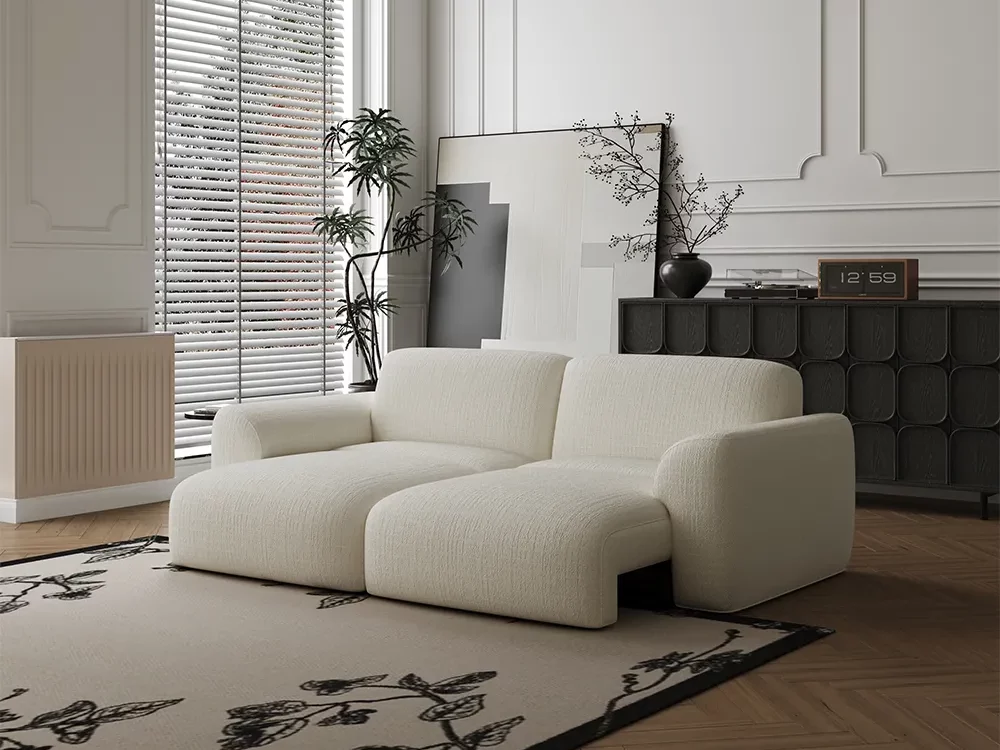
In a tiny home where the sofa is the main seat, lounge spot, and occasional guest bed, the Aurora-Power Sofa Bed supports the “fewer pieces, more function” approach. Its power retractable design helps the seating area shift from everyday sitting to deeper lounging or temporary sleep without adding a separate chair or guest setup.
Which Storage Ideas Keep a Tiny Home Livable?
Storage in a tiny home should be planned by how often items are used. Daily items need quick access. Seasonal or backup items can go higher, deeper, or under furniture. This keeps the home easy to reset after normal routines instead of turning storage into another chore.
Use this simple storage order:
- Daily items: closed cabinets, shallow drawers, baskets near the activity zone.
- Weekly items: bench storage, under-bed drawers, cabinet shelves.
- Seasonal items: high shelves, loft storage, labeled bins, vacuum bags.
- Display items: limited open shelves for attractive or frequently used pieces.
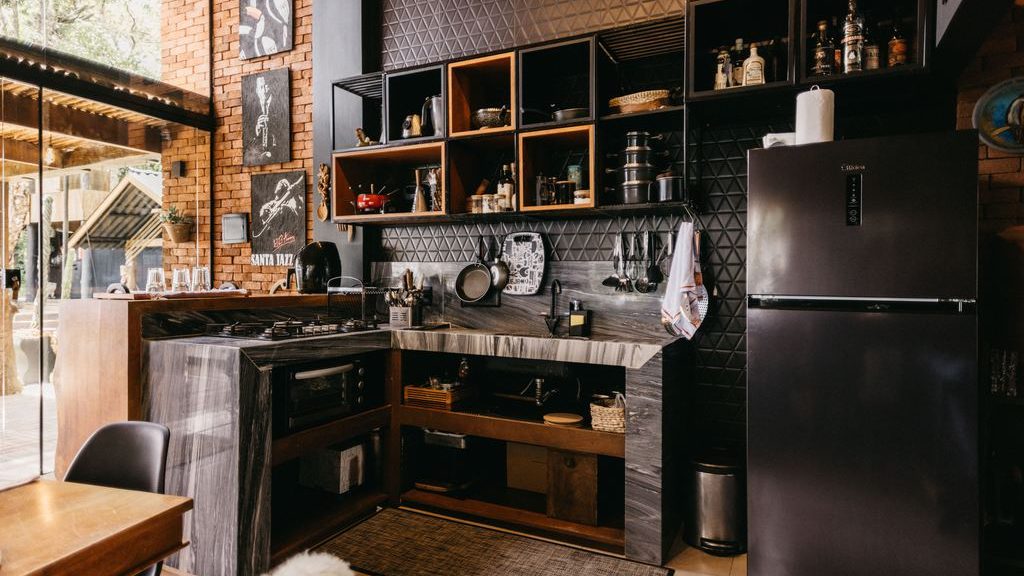
Open shelving can make a tiny home feel personal, but too much of it becomes visual clutter. Closed storage is often better for cables, cleaning supplies, extra linens, pet items, and anything with mixed colors or packaging.
A practical tiny home interior design idea is to assign storage by routine. Remotes and chargers should live near the sofa. Dish towels and placemats should sit near the dining surface. Extra bedding should stay close to the sofa bed or sleeping area, not in a cabinet across the home.
What Layout Choices Prevent a Tiny Home From Feeling Cramped?
Tiny home layout should be tested in motion, not only on a floor plan. A room can look balanced from above but fail when a chair is pulled out, a cabinet door opens, or a sofa bed extends.
Use these checks before finalizing the layout:
- Keep the main walkway clear from the entry to the kitchen and bathroom.
- Avoid placing large furniture where it blocks windows or door swings.
- Use rugs, lighting, or furniture backs to create zones instead of adding dividers.
- Choose sliding, folding, or wall-mounted pieces where swing space is limited.
- Test furniture in both closed and open positions.
A compact living area may look fine until the coffee table moves, a guest opens the sofa bed, and someone needs to reach the fridge. That is why tiny home layouts should be planned around the busiest version of the room, not the neatest version.
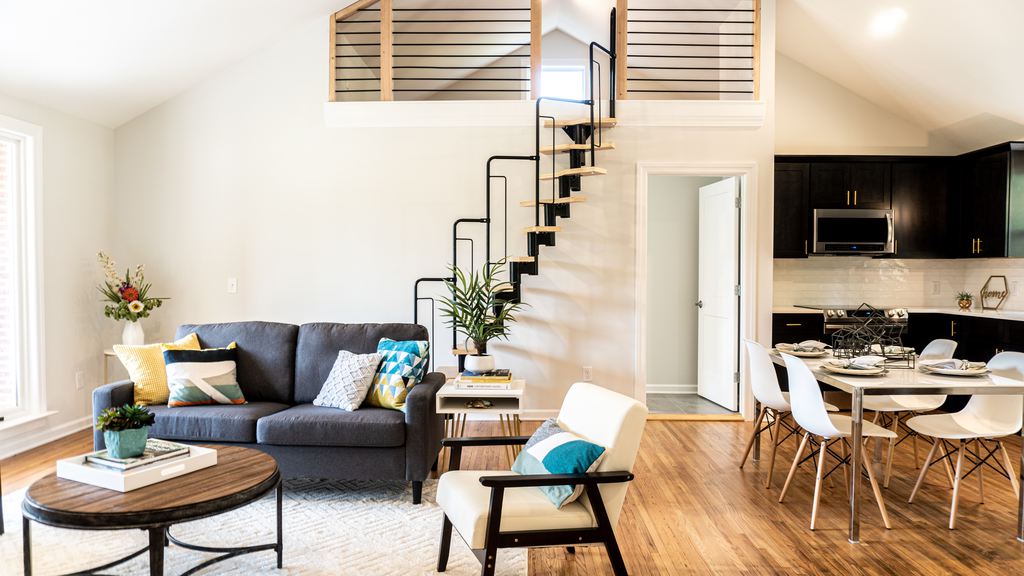
If your tiny home has a living area that also works as a TV room or guest zone, small living room layout ideas can help you think through traffic flow before you buy furniture.
What Should You Check Before Buying Furniture for a Tiny Home?
The best furniture for tiny homes is not simply compact. It is compact in the right direction. A narrow cabinet can still be too tall. A small table can still block chairs. A sofa bed can still fail if it opens into the only walkway.
Before buying, check:
- Closed size: how much floor space it uses every day.
- Open size: how far it extends, lifts, reclines, or swings.
- Delivery path: whether it fits through doors, stairs, and tight turns.
- Storage access: whether drawers or doors open without moving other furniture.
- Visual weight: whether the piece looks bulky from the main entry.
- Daily function: whether it replaces another item or creates a new obstacle.
- Cleaning space: whether you can reach around or under it.
- Outlet location: whether power furniture, lamps, or chargers can be used safely.
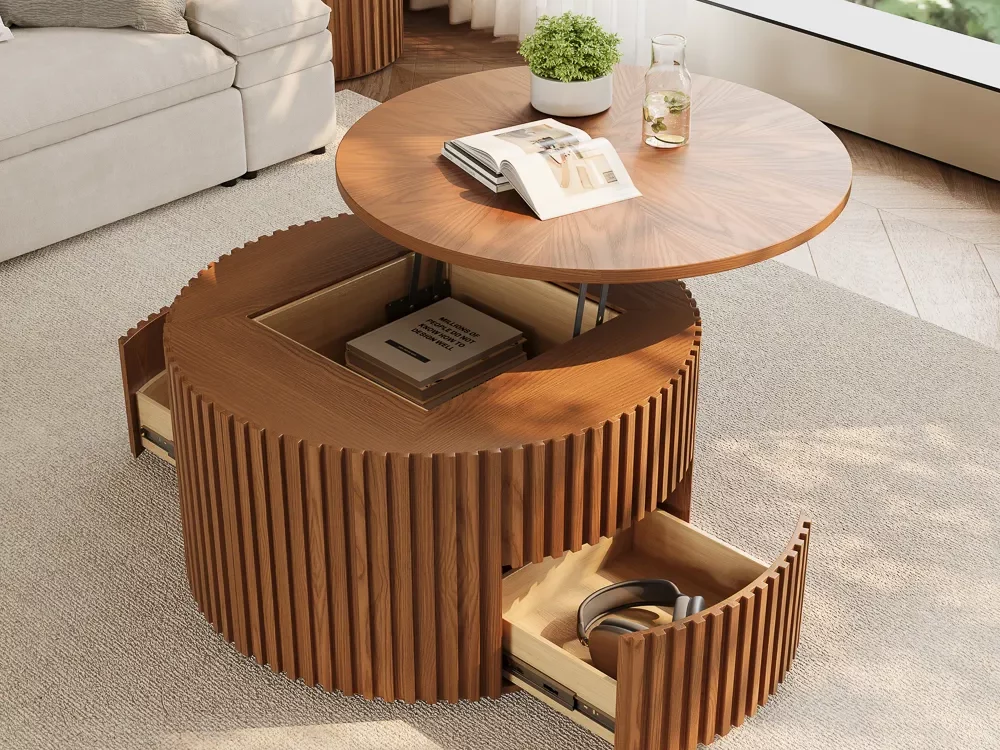
This is especially important with multifunctional pieces. If you use a coffee table as a work surface, check whether the lift height feels comfortable from the sofa. If you need storage, make sure the compartment opens in the direction you actually sit. A coffee table for small living room should make daily routines easier, not just look lighter in photos.
For a tiny home seating area that also handles laptop work, snacks, and quick cleanup, the Silva Lift-Top Round Coffee Table fits this kind of everyday use. Its lift-top design creates a raised surface near the sofa, while the round shape and walnut finish help the table feel softer and less visually heavy in a compact living zone.
Tiny Home Interior Mistakes to Avoid
Tiny home interior design ideas can become overwhelming when every tip sounds useful. The better approach is to avoid choices that make a small home harder to live in.
Common mistakes include:
- Buying furniture only because it is small, without checking comfort or function.
- Choosing too many open shelves and leaving daily items exposed.
- Decorating before solving storage.
- Blocking windows with tall furniture.
- Forgetting how far furniture opens, extends, or reclines.
- Using too many small accent pieces instead of fewer useful pieces.
- Saving space for rare guests while making daily life uncomfortable.
A tiny home should serve the people who live there most often. Guest seating, holiday decor, and extra storage should support daily life, not take it over.
Conclusion
Tiny home interiors work best when layout, storage, light, and furniture support real routines. Start with the main path through the home, then choose pieces that solve more than one problem without blocking doors, windows, or storage access. Light colors and mirrors can help, but daily comfort comes from better decisions: closed storage where clutter collects, furniture that opens without trouble, and fewer pieces that do more. A tiny home does not need to feel bare. It needs to feel easy to live in.
FAQ
Is built-in furniture always better for a tiny home?
Not always. Built-ins are useful for long-term homes with fixed routines, but freestanding furniture is better if you rent, move often, or may change the layout later. Choose built-ins for daily functions that will not change, such as a bench, bed platform, or entry storage.
What lighting works best after dark in a tiny home?
Layered lighting works better than one bright ceiling light. Use a ceiling fixture for general light, a table or wall lamp near the sofa, and under-cabinet lighting in the kitchen if possible. This keeps small zones usable without making the whole home feel harsh at night.
Can a tiny home have more than one seating area?
Yes, but each seating area should have a different purpose. One seat may support TV watching, while a small chair near a window can work for reading or morning coffee. Avoid creating two similar lounge zones, because repeated functions waste space in a tiny home.
How do you make a tiny home comfortable for two people?
Give each person a landing spot for daily items, even if the home is shared. That could mean two drawers, two hooks, two reading lights, or separate sides of a storage bench. Shared tiny home interiors work better when personal clutter has a defined place.
How many finishes should a tiny home interior use?
A tiny home usually feels calmer with two or three main finishes. For example, use one wood tone, one light wall color, and one accent material such as black metal, woven texture, or stone-look surfaces. Too many finishes can make a small room feel visually broken.


