 By Stephanie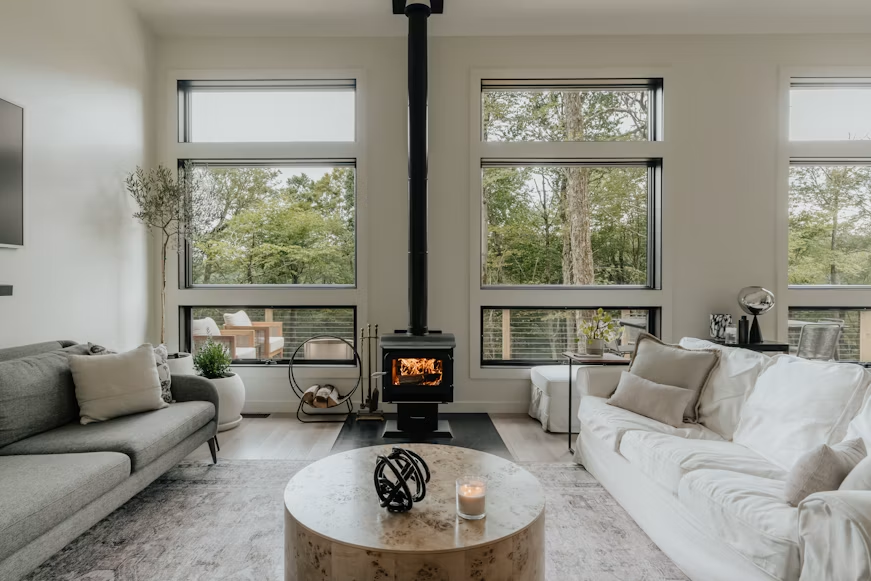
Introduction
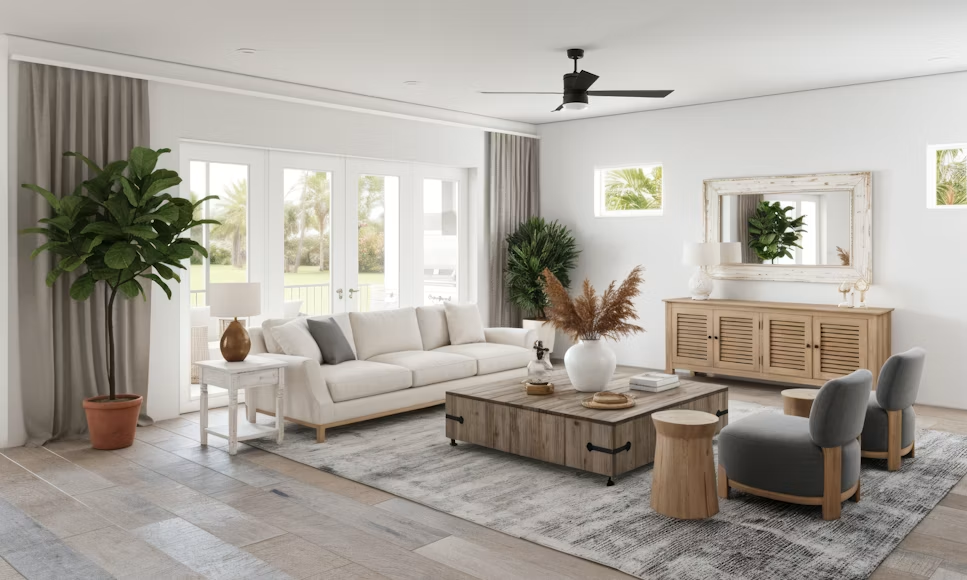
An organic modern living room should feel peaceful, useful, and personal—not like a pale showroom where nobody can relax. The look works when clean lines and natural materials support real routines: streaming after dinner, reading near a window, setting down a cold drink, or making room for an overnight guest. This guide shows how to create an organic modern living room with a clear layout, a calmer TV wall, comfortable furniture, and enough texture to keep the space warm in real life through bright summer days and ordinary weeknights.
Table of Contents
What Makes an Organic Modern Living Room Feel Warm, Not Empty?
Organic modern is not a cream sofa, one plant, and a few ceramic vessels. It is a living room where clean structure, natural materials, and everyday functions work together. The difference between “minimal” and “unfinished” usually comes down to visual weight, tactile contrast, and storage that keeps daily clutter out of sight.
Start with low-profile furniture, open floor space, and simple silhouettes. Then add visible wood grain, woven fibers, linen, wool, matte ceramics, and a few rounded forms. The goal is not to fill the room. It is to give it enough warmth and variation that it feels settled.
Use five layers instead of collecting matching beige pieces:
- Quiet base: Warm white, oatmeal, sand, or soft taupe.
- Wood anchor: One medium or dark wood tone that grounds the room.
- Soft seating: Upholstery chosen for how people actually lounge.
- Tactile texture: A woven rug, linen curtain, nubby throw, or ceramic lamp.
- Visual calm: Closed storage for remotes, cords, devices, and daily clutter.
A broader organic modern interior design approach for a warm, natural home can shape the overall look; the rest of this plan focuses on making the living room work every day.
Create a TV Wall That Feels Calm, Not Technical
Before finalizing the full furniture plan, establish the room’s viewing wall and main seating direction. You do not need every piece in place yet, but you do need to know where people will sit, where the screen will be most comfortable to watch, and how media storage can support the room without taking over visually.
Plan the TV Wall as a Functional Zone
Start with the screen, not the styling. From the main sofa position, check that the TV will not block a window, interrupt the route to the kitchen or patio, or catch direct glare at the time of day when the room is used most. Then list what needs to live nearby: a streaming box, router, game console, soundbar, remotes, chargers, and spare cables.
Different rooms need different levels of storage. A quiet apartment lounge may only need space for a streaming device and a few remotes. A family room used for weekend movies, gaming, and casual hosting needs enclosed storage that keeps more equipment accessible but out of sight.
Before choosing a console, check these essentials:
| TV Wall Element | What to Check | Why It Matters |
| TV screen | Width, viewing height, and glare | Keeps the wall comfortable to use |
| Console | Width, depth, storage, and ventilation | Prevents the media zone from feeling crowded |
| Equipment | Plug placement and device size | Makes daily access easier |
Choose a console that is wider than the TV, not narrower. A broader horizontal base gives the screen visual support and keeps the wall from looking top-heavy. A stand at least 6–10 inches wider than the TV is a useful starting point, then adjust for the scale of the room.
Use Closed Storage as the Warm Wood Anchor
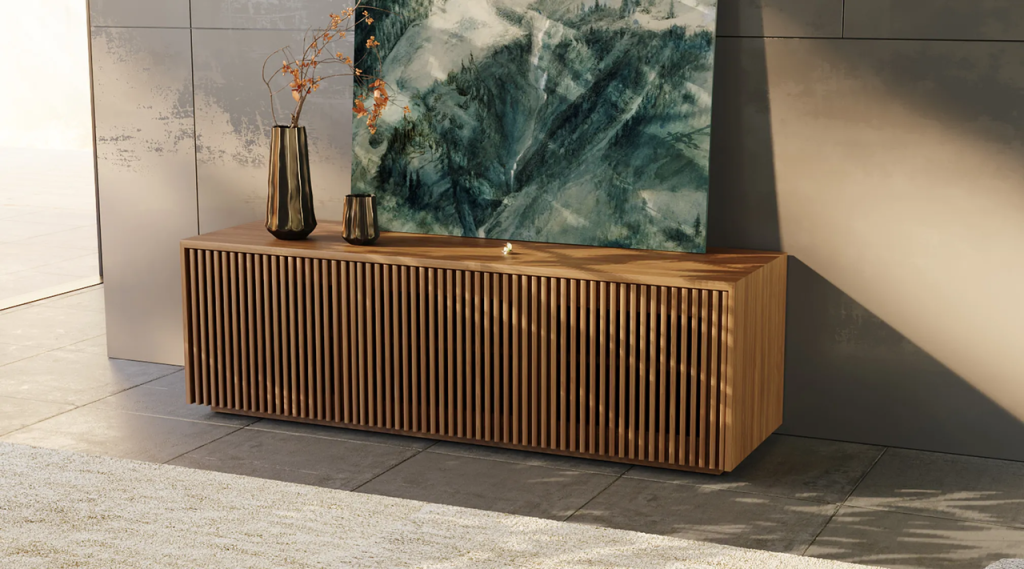
The TV is usually the darkest and most technical-looking object in an organic modern living room. A low, closed console gives it a visual base while hiding the small items that tend to spread across the coffee table by the end of the week.
That is where a darker wood finish becomes useful rather than decorative. In a compact TV zone, the fully assembled Aeolus Modern Wood TV Stand creates a low walnut-color foundation beneath the screen. Its three enclosed cabinets keep remotes and streaming devices off the tabletop, while grille-style doors allow remote signals to pass through. The result is a media wall that feels calmer during the day and stays simple to use for movie nights.
Organize Devices Before Styling the Surface
Put everyday devices in the easiest-to-reach cabinet, then store spare HDMI cables, batteries, manuals, and seasonal electronics farther back. Leave room around equipment for airflow, and keep cables manageable from the beginning:
- Connect and test power, HDMI, and speaker cables before adding decor.
- Label cords and use reusable ties to prevent excess cable from pooling behind the console.
- Keep chargers inside a cabinet or nearby drawer instead of on the tabletop.
- Leave enough slack to remove a router or streaming box without disconnecting everything.
In homes with children or active pets, secure TVs and furniture according to manufacturer instructions. The U.S. Consumer Product Safety Commission recommends anchoring TVs and furniture to help reduce tip-over risks.
Once the practical work is done, keep the console top simple: a low ceramic bowl, one vase, or a short stack of books is enough. The goal is not to hide the TV behind decor. It is to give technology a quieter place in a room designed for everyday living.
Plan the Layout Around Real Life
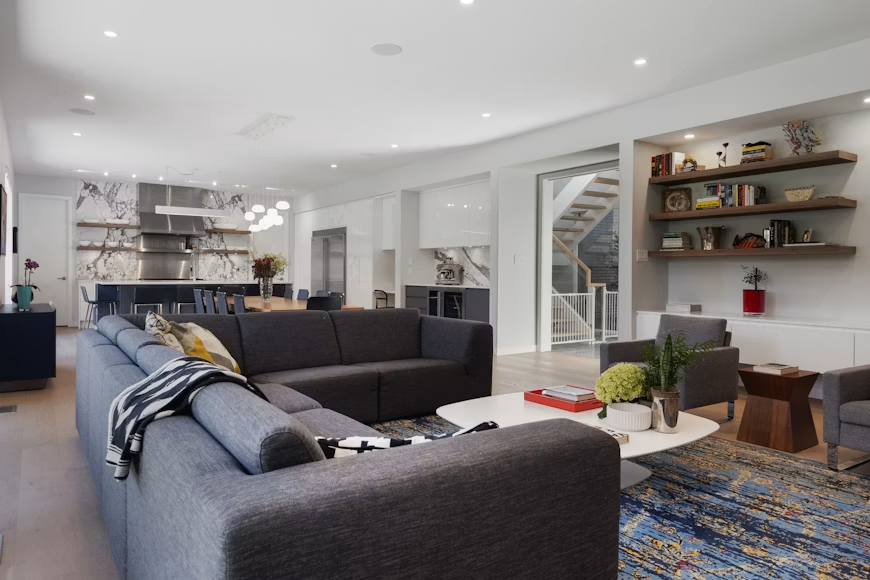
With the viewing wall established, arrange the rest of the room around how people sit, move, and gather. The layout should keep the TV comfortable to watch while leaving room for conversation, open doors, coffee tables, and everyday traffic. Furniture should support those routines instead of forcing people to squeeze around it.
Set the Room’s Priorities and Zones
Give the room one main job and one supporting job. A TV-first room may need deeper seating and more hidden storage. A conversation-first room needs seats that face people as well as the screen. In a small or open-plan living room, clear movement and lower-profile furniture usually matter most.
Then protect three practical zones:
- Seating zone: Sofa, chairs, side tables, and coffee table.
- Media zone: TV, console, speakers, and daily devices.
- Circulation zone: The route to doors, windows, the kitchen, or the patio.
Keep the main walkway outside the seating group whenever possible. In a compact room, a rounded coffee table and one moveable accent chair often create more flexibility than two large chairs that narrow the path. A living room furniture layout for comfort and flow should make every seat useful without turning the center of the room into a passageway.
Test the Layout Before You Buy
Use painter’s tape or flattened cardboard to mark the sofa, coffee table, and console before ordering. Walk the room as you would on a normal day: open the patio door, carry a laundry basket from the hall, sit on the sofa, and reach toward the coffee table.
Use these as practical starting points:
- Leave 14–18 inches between the sofa and coffee table.
- Keep major walkways around 30–36 inches wide.
- Choose a coffee table about one-half to two-thirds the sofa’s length.
- Let the rug extend under the sofa’s front legs to connect the seating area.
On a warm July evening, this quick floor test can reveal that a chaise blocks the patio door or that guests need to squeeze around the coffee table to reach the sofa. Fixing that before delivery protects both the room’s function and its calm, open feel.
Choose Organic Modern Furniture for Everyday Use
Once the TV wall and main pathways are set, choose furniture based on how the room is used most often. The strongest organic modern furniture does more than match a palette. It gives people a comfortable place to sit, a surface for drinks and books, and flexibility for quiet nights, summer visitors, and daily downtime.
Select Seating for How People Actually Lounge
Choose a sofa for the household’s longest use period, not its quickest photo moment. A conversation room may need a more upright seat, while a TV-first room benefits from deeper support and a softer back. Before choosing an extendable sofa, confirm that it can open without pushing the coffee table into the main walkway.
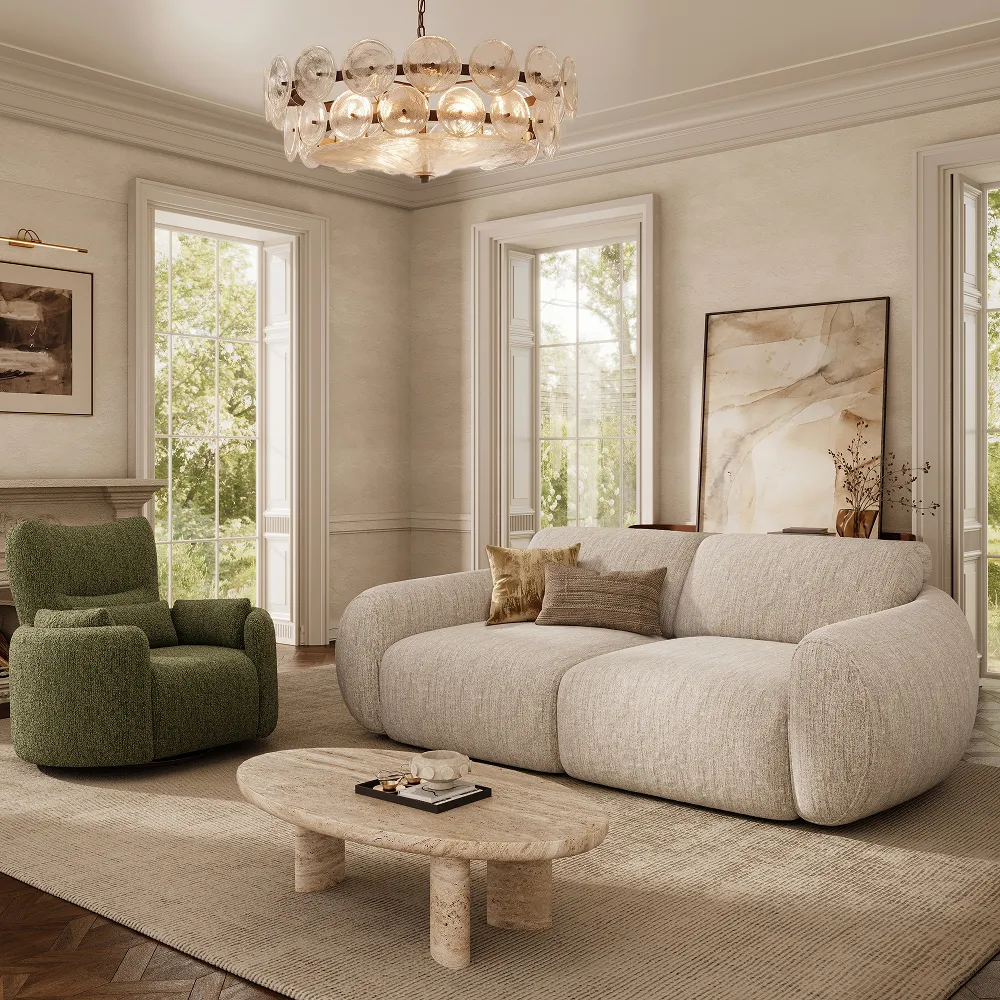
That distinction matters when a summer patio dinner runs late and a guest decides to stay over. The Mila Power Sofa Bed shifts from upright conversation to a deeper lounge or flat sleep surface, so one seating zone can serve several routines. Its textured tweed chenille brings softness to a neutral room, while the power backrest adjusts from 105° to 180° and the seat depth extends from 31 to 59 inches.
Match Table Shape to Movement
Choose shape before finish. A round or oval table makes tight walkways easier to navigate and works well with curved seating. A rectangular table suits a standard sofa or sectional because it follows the longer seating line. Nesting tables add extra surface space when friends visit, then tuck away when the room needs a more open floor.
For an organic modern coffee table, choose matte wood, stone-look, or lightly textured finishes instead of mirrored glass. It should be useful for drinks, books, remotes, and a summer evening snack—not placed in the center only to complete a photo.
Build Warmth With Contrast, Texture, and Summer Light
After the layout and main furniture are in place, use color, material, and light to make the room feel finished. Build the palette with three values: a light base, a middle layer, and one grounding dark. Ivory walls and a sand rug can form the light layer; oak, flax, or camel upholstery can sit in the middle; walnut, olive, charcoal, or clay can provide depth.
Repeat the darkest tone in two places so it feels intentional. A walnut media console and a dark ceramic lamp create a stronger connection than one isolated dark object.
Keep organic modern decor purposeful. Choose no more than three or four visible textures, then repeat them with restraint. A woven rug, linen throw, handmade bowl, framed landscape, or one substantial plant can add depth without crowding the room or turning every surface into a display.
Summer light deserves the same attention as color. Use woven shades or lined linen drapes to soften direct afternoon sun on the brightest windows. The U.S. Department of Energy notes that properly operated window coverings can reduce unwanted summer heat gain while still allowing daylight where direct sun is not an issue. After sunset, use a floor lamp and table lamp at different heights instead of relying only on a ceiling fixture.
Avoid the Details That Make the Room Look Unfinished
Most spaces look unfinished because daily clutter stays visible, wood tones compete, and there is no easy reset routine—not because they need more decor. Match undertones instead of trying to match every wood finish exactly. Warm walnut can sit comfortably with honey oak, while pale ash generally works best with neutral or cooler-toned woods. Limit the room to two main wood tones, then repeat one in a small detail such as a lamp base, tray, or frame.
Give daily items a clear home: a basket for throws, a tray or lidded box for remotes and chargers, and one designated place for mail or small items that usually land on the coffee table. Before guests arrive, the room should take less than five minutes to reset:
- Put remotes, chargers, and loose cables away.
- Clear cups, snacks, and mail from the coffee table.
- Fold one throw and leave visible surfaces partly open.
- Turn on one floor lamp and one table lamp.
That final restraint keeps the room warm, lived-in, and easy to maintain without making it feel overstyled.
Conclusion
A warm organic modern living room is not built by buying every neutral object in sight. It starts with a plan that respects movement, comfort, media storage, and the way the household actually gathers. Give the room a wood anchor, protect clear paths, choose seating that supports real downtime, and use texture with restraint. When the TV wall hides the technical clutter and every visible piece earns its place, the room feels finished without feeling precious. It becomes easier to relax in, easier to reset, and ready for ordinary life.
FAQs
Does Organic Modern Work With a Fireplace?
Yes. Let the fireplace and TV wall share visual weight rather than compete. Use a low console, simple mantel styling, and chairs angled toward the feature used most. Keep fireplace decor restrained so wood, stone, or plaster remains visible instead of getting buried under seasonal accessories.
Can Black Metal Work in an Organic Modern Room?
Yes, as a small outlining element. A black floor lamp, picture frame, or slim table base can sharpen a neutral palette. Keep it matte and pair it with wood, fabric, or ceramic nearby. Large glossy black furniture can pull the room toward industrial rather than organic modern.
Are Faux Plants Okay in This Style?
They can be practical in low-light rooms or homes where plant care is not realistic. Choose one generous, natural-looking faux plant in a matte ceramic pot or woven basket. Avoid several small plastic plants; their repeated shine and artificial color can weaken the room’s calm material palette.
What Art Works Best in an Organic Modern Living Room?
Choose art with natural movement, muted color, or generous negative space. Abstract landscapes, charcoal studies, textured fiber art, and quiet photography work well. Use one larger piece instead of a crowded gallery wall, especially above a sofa or console, so the room keeps its open, settled feeling.


[…] approach helps maintain the open, balanced look associated with organic modern living room furniture without giving up valuable floor space for a feature that rarely gets […]