 By Kelvin
Introduction
Round dining room table centerpiece ideas work best when they make the table feel finished without taking over the place where people actually eat. The challenge is not finding a vase, bowl, or candleholder. It is choosing a setup that looks balanced from every chair, leaves a clear ring for plates and shared dishes, and can be moved without a major reset. The ideas below focus on everyday dining rooms, breakfast nooks, and open-plan homes where style has to hold up to weeknight pasta, school papers, and an unplanned visit from friends.
Table of Contents
What Makes a Centerpiece Work on a Round Dining Table?
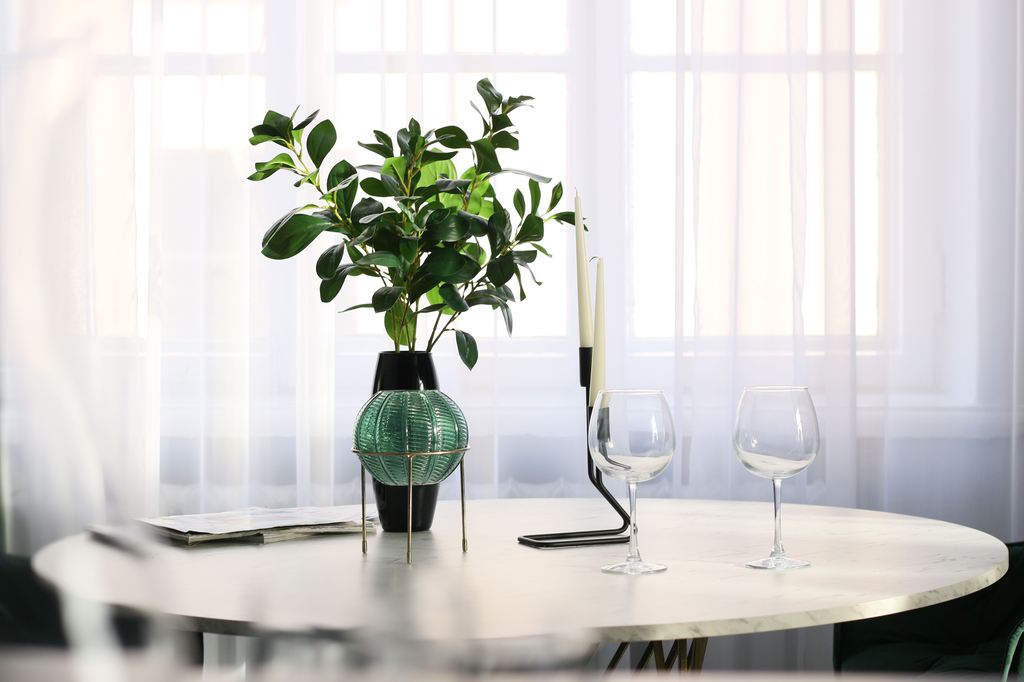
The direct answer is simple: use one contained arrangement at the center, keep it low or visually open, and leave the outer edge of the tabletop for dining. Good round dining room table centerpiece ideas follow the table’s natural geometry. Instead of arranging decor in a line or spreading small objects toward every seat, bring the visual weight inward.
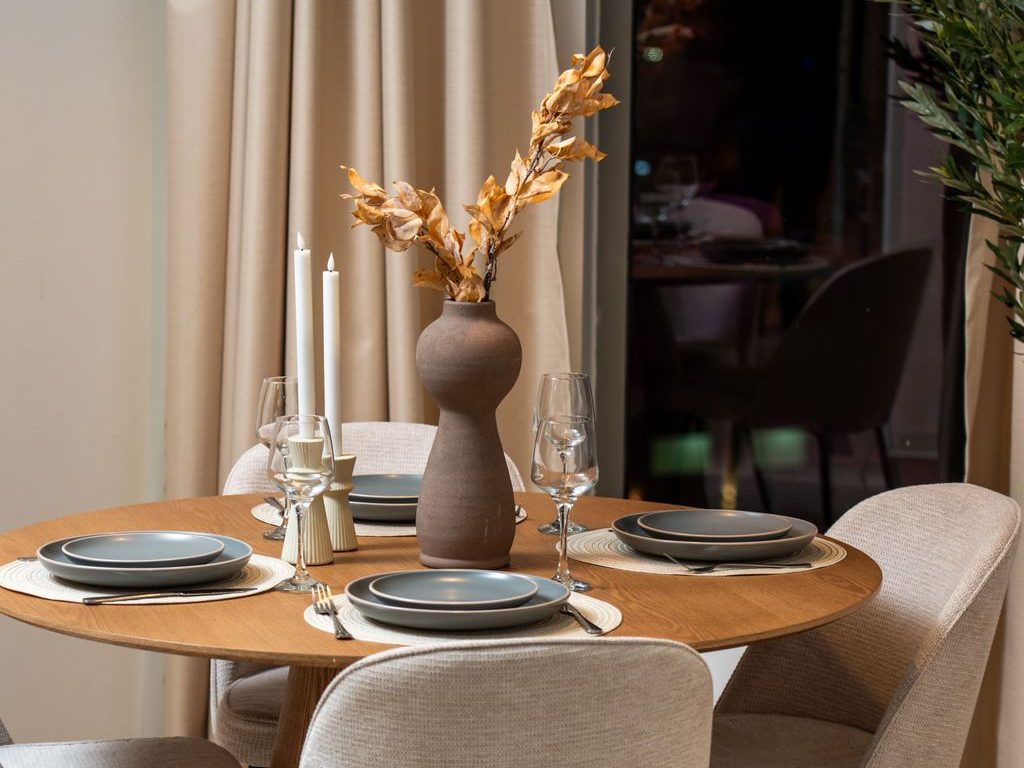
The centerpiece itself does not have to be circular. A square tray, a rectangular sculpture, or three small vessels can work when they read as one compact group. What matters is the footprint. A wooden bowl of pears, a low ceramic vase with loose branches, or a tray holding two candleholders gives the eye a clear landing spot without making the table feel staged.
For round dining room table decor, think in rings: the middle holds the anchor, while the space around it stays open for everyday use.
How Big Should a Round Dining Table Centerpiece Be?
A centerpiece should feel substantial enough to ground the tabletop, but not so wide that it reaches into place-setting territory. Start by measuring the base of the whole arrangement, not the airy tips of flowers or branches. Then decide how often the table needs to serve a full meal.
A round dining table size guide can help confirm the table itself suits the room before you plan the tabletop. Once the table is in place, use these ranges as a practical starting point.
| Round Table Diameter | Suggested Decorative Footprint | Everyday Setup That Fits | Usually Too Much |
| 36–42 in. | 10–12 in. | One low bowl, compact vase, or small tray | Several separate objects or a wide planter |
| 43–54 in. | 12–16 in. | Bowl plus two small candleholders, or one tray arrangement | A dense floral display that blocks the center |
| 55–60 in. | 16–20 in. | Larger low bowl, broad vase, or contained cluster | Tiny decor that looks lost, or a long runner layout |
| 61 in. and up | 18–22 in. | A generous low vessel or grouped arrangement | Filling the full middle with decor |
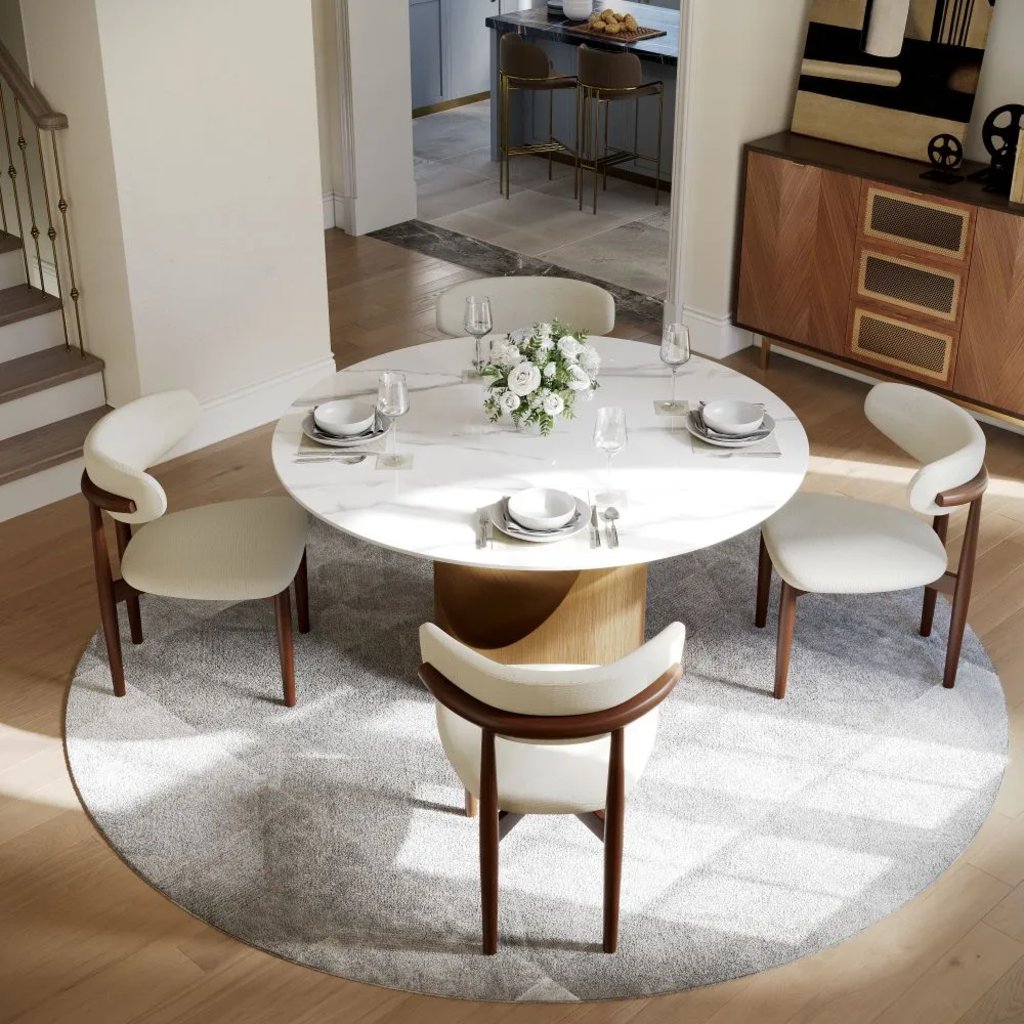
For a dining area that opens onto the living room but still handles everyday meals, the Hobart Round Matte Sintered Stone Dining Table gives the centerpiece room to read clearly without taking over the table. Its black matte sintered-stone top is available in 47-, 51-, and 59-inch sizes, so a low bowl or contained tray can stay visually grounded while leaving the outer edge free for place settings. The scratch-, heat-, and stain-resistant surface also makes sense for a centerpiece that is moved aside for family meals or shared dishes.
If your household serves shared dishes family-style, use the smaller end of the range. The centerpiece should leave enough of a clear outer ring for a serving bowl to land without someone pushing a candle aside.
Four Centerpiece Formulas by Daily Use
How to decorate a round dining room table depends less on one design style than on what happens there most often. A table used only for Sunday dinner can carry more visual layering than a breakfast table that needs clearing before school. Choose a formula that matches the routine first, then change its materials with the season.
A Low Bowl for a Table Used Every Day
A broad, shallow bowl is a forgiving option for decorating a round dining room table. Fill it with citrus, pears, moss, or a few clipped branches, and it stays low enough for conversation. Choose ceramic, wood, stone, or matte metal with enough visual weight for the table. One type of fruit or a single shade of greenery looks calmer than a crowded mix.
One Compact Vessel for a Small Round Table
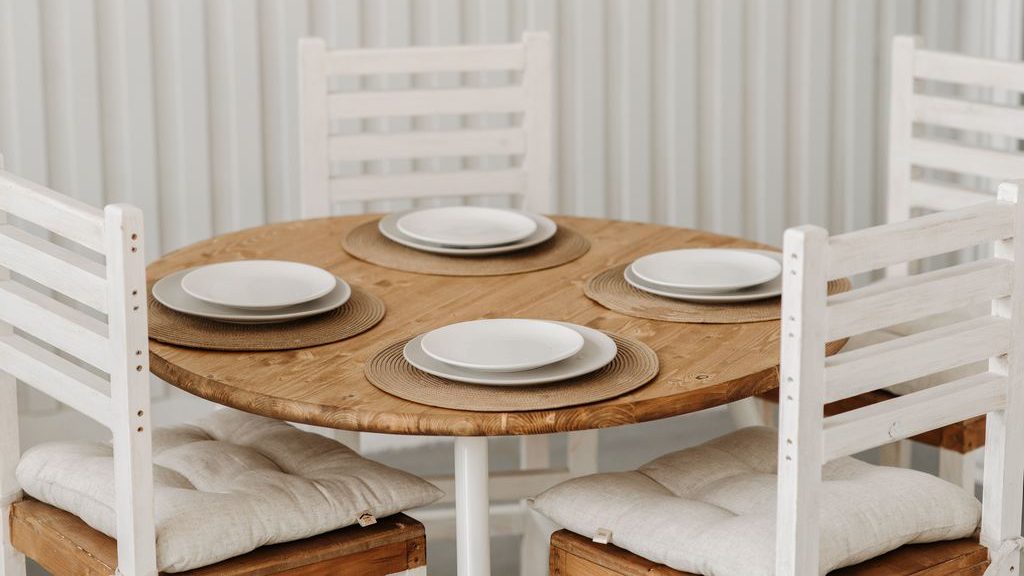
On a 36- to 42-inch table, one compact vase, footed bowl, or sculptural object is enough. It leaves room for breakfast plates and coffee mugs, which matters in an apartment nook. A narrow vessel can hold a few stems, but avoid a top-heavy bouquet that blocks the person across from you. For small-space routines, everyday dining table decor ideas work best when the arrangement can be lifted in one hand.
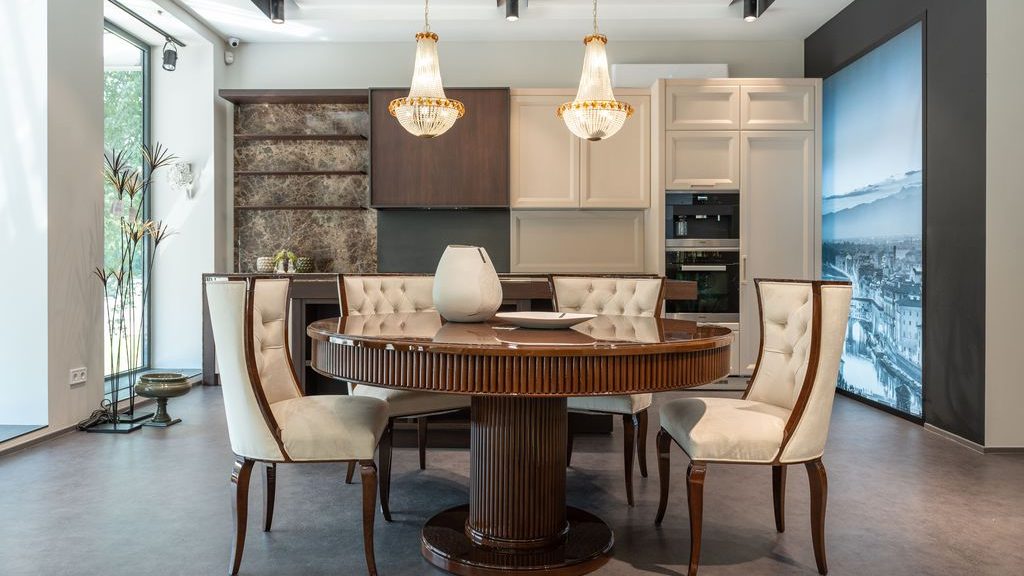
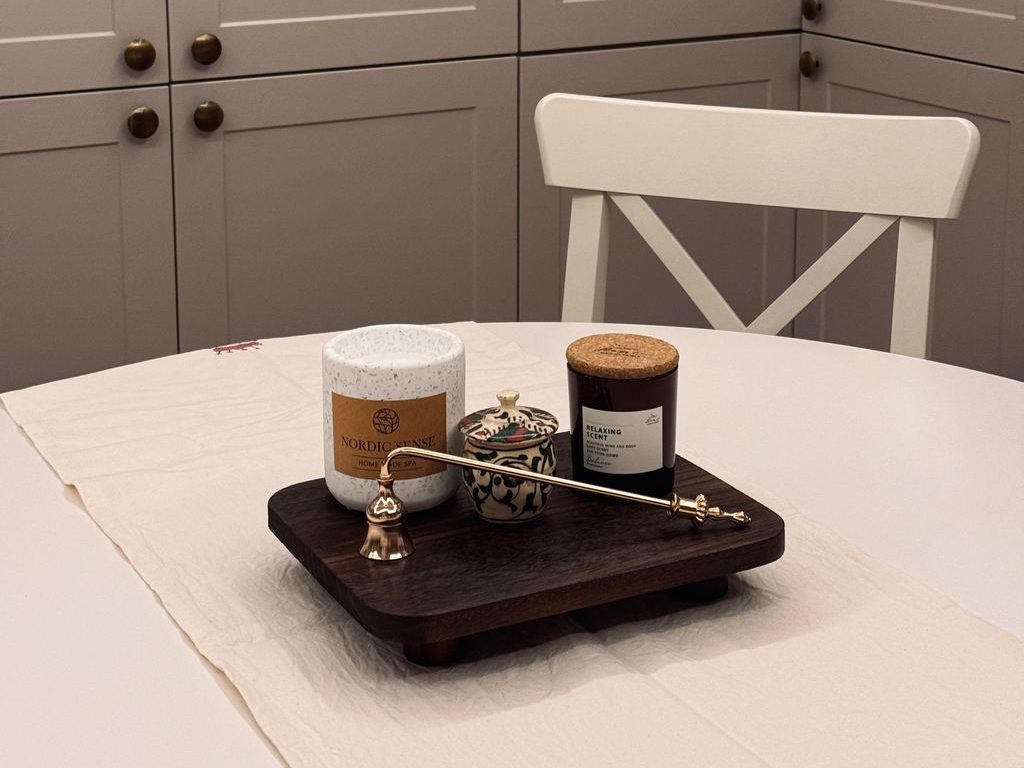
A Tray Setup for Easy Hosting Resets
A low tray gives a few objects a boundary. Start with one vase or low bowl, then add two short candleholders or a small decorative box. It makes the pieces feel intentional and gives you one thing to move when friends arrive and the table needs to hold drinks, bread, or serving platters.
This formula works well for a 47- to 54-inch round table in an open-plan room. Use a tray with a slight lip so the objects stay stable when carried to a sideboard.
A Sculptural Centerpiece When You Do Not Want Flowers
Fresh flowers are not required. A single sculptural bowl, ceramic vessel, or low art object can be enough, especially in a modern or mid-century room. This choice adds texture without maintenance, fragrance, or a weekly grocery-store task.
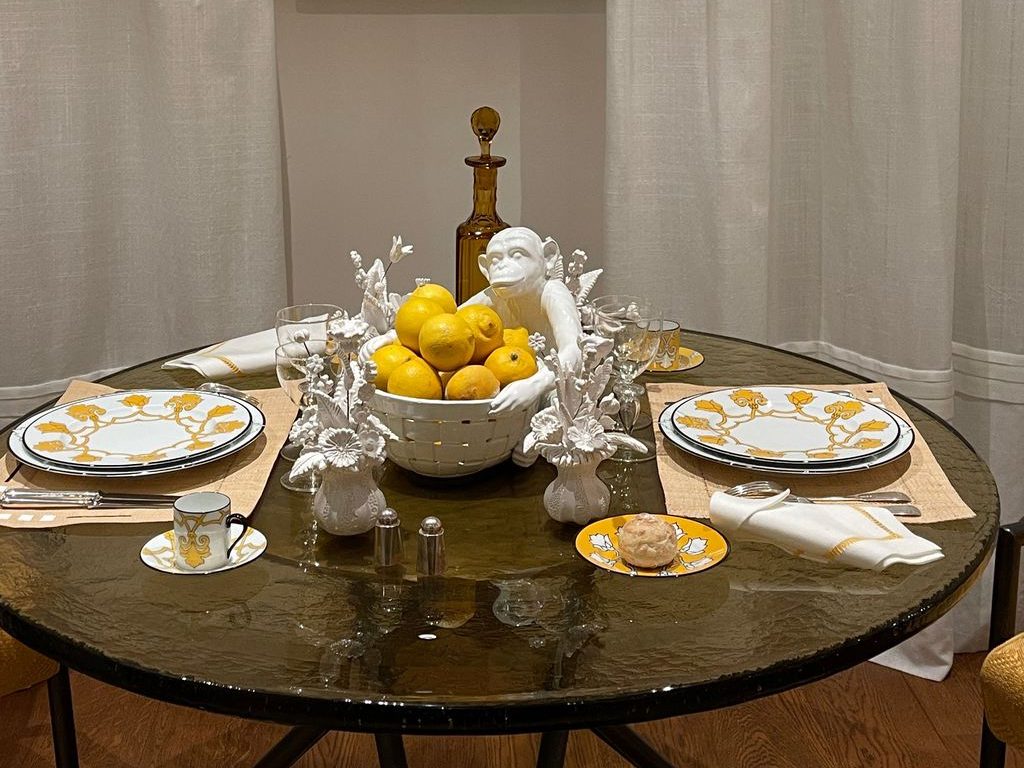
Match the object to the table surface rather than every color in the room. A matte ceramic bowl softens glossy stone; a warm wood or brass object can keep glass or a dark table from feeling flat. Choose something with interest from every angle because a round table is viewed from every chair.
How Do You Keep a Centerpiece From Crowding the Table?
Use a meal-ready check before you decide an arrangement belongs there. It is more useful than judging it only from the doorway, because a centerpiece that photographs well can still make dinner awkward.
- Lift test: One person should be able to remove the full arrangement without separating five loose pieces.
- Sightline test: Seated diners should be able to see one another without moving flowers or ducking around branches.
- Outer-ring test: There should be space for plates, glasses, and at least one shared dish around the centerpiece.
- All-seat test: Walk around the table. The arrangement should look balanced from every chair, not only from the room entrance.
When Should You Leave a Round Table Bare?
Leave the table bare when its main job changes by the hour. A small table used for homework, remote work, crafts, or large family-style meals does not need permanent decor to look intentional. A clean surface can be the more welcoming choice when the tabletop itself already brings warmth or pattern.
This is also a good call when a lazy Susan needs to turn freely, a large pendant already creates the focal point, or the table is under about 42 inches wide. In a compact nook, a pedestal dining table for small dining rooms can preserve legroom and flexibility, but a wide centerpiece can give back the usable space that design saves.
Common Round Table Centerpiece Mistakes
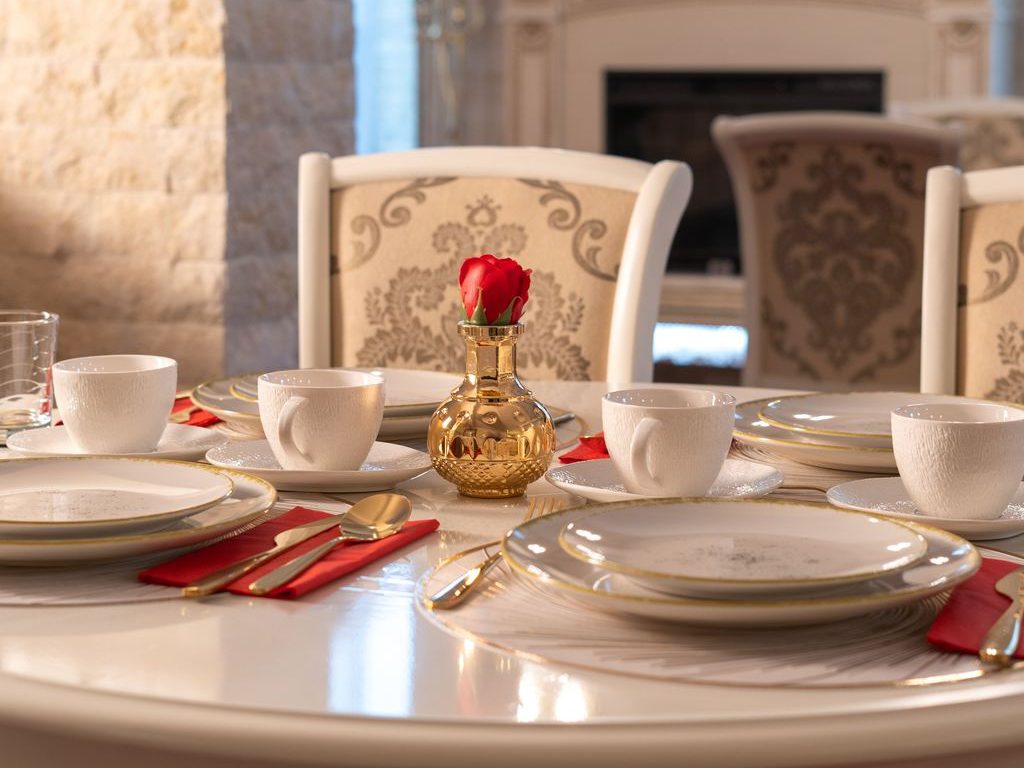
The most common mistake is copying a long-table layout onto a round top. A runner with objects marching outward divides the table into awkward zones. Keep decor gathered near the center.
Other pitfalls include:
- using many small items that drift toward each place setting;
- choosing tall, dense flowers for a table used for conversation;
- letting a large pendant and a tall centerpiece compete for attention;
- placing fragile candles or glass near a turning lazy Susan;
- keeping a display so complicated that it has to be dismantled before every meal.
When in doubt, remove one piece. If the arrangement looks calmer and the table works better, that extra object was not doing enough.
Conclusion
The most useful round dining room table centerpiece ideas do not ask the table to become a display shelf. They give the eye one grounded focal point, leave the outer edge open for meals, and can step aside when the room gets busy. Start with the table diameter, choose one formula that fits your routine, and keep the arrangement low enough for conversation. A bowl, tray, vase, or sculptural object can all work when it has a clear boundary and earns its place on the tabletop.
FAQ
How often should I refresh an everyday centerpiece?
Refresh it when it starts to look tired or no longer suits the season, not on a fixed weekly schedule. Fresh flowers may need attention every few days, while a bowl, tray, or sculptural object can stay for months. Change one element—fruit, stems, or candle color—rather than rebuilding the whole display.
Can I keep a centerpiece on an extendable round dining table?
Yes, but it should be easy to remove before opening the table. Clear the center before adding leaves so the mechanism and extra place settings stay unobstructed. A compact tray works well because it can move as one piece, unlike several loose objects that need to be gathered before guests arrive.
What should I put under a centerpiece to protect a wood dining table?
Use a felt pad, cork base, or lined tray beneath anything that may scratch, sweat, or transfer moisture. Avoid leaving wet planters, rough ceramic bases, or metal objects directly on wood. Check the underside of a bowl or vase before keeping it on the table for several days.
Can I use a tablecloth with a round dining table centerpiece?
Yes, but keep the centerpiece simple enough for the cloth to remain part of the visual balance. A full round tablecloth works well with one low bowl or vase. On a patterned or textured cloth, use fewer objects and avoid adding a long runner that makes the tabletop feel crowded.
Where should I put the centerpiece when I clear the table for dinner?
Give it a regular landing spot on a sideboard, buffet, or nearby console so it does not become another item to manage during meals. A shallow tray or handled basket makes transport easier and protects smaller pieces. Keep fragile glass, candles, and loose stems together rather than moving them one at a time.
Can scented candles stay on a dining table?
They can stay on the table when it is not being used, but unscented candles are usually better during meals. Strong fragrance can compete with food, and open flames need more clearance around children, pets, dried foliage, and flowing linens. Store matches and lighters away from the dining surface.


