 By Stephanie
A sofa can still fit your room, feel good at the end of a long day, and hold up to everyday use—yet look out of place once its color fades or your decor changes. That is why people search for how to dye a sofa instead of replacing one they otherwise like. Dyeing can work, but only under specific conditions. A removable cotton slipcover is very different from a fixed polyester sectional. Before you choose a color, check the fabric, care label, and construction. That small bit of homework can save a weekend and a sofa.
Table of Contents
Can You Dye a Sofa?
A successful result starts with an honest answer: not every sofa should be dyed. The process depends on water, heat, movement, and drying time, so it works best when the upholstery can be removed and treated as fabric—not when it is wrapped around foam, wood, or electronics.
The Best Candidates for Sofa Dyeing
The safest candidate is a light-colored, fully removable slipcover made mostly from cotton, linen, rayon, or another natural fiber that the care label allows you to wash. It should be in decent condition, free of heavy staining, and able to move freely during the dyeing process.
Look for these green flags before you begin:
- The cover comes off the frame and every cushion.
- The care label permits water washing.
- The original color is lighter than the shade you want.
- The fabric does not have a water-repellent, stain-resistant, or unknown coating.
- You can treat all visible pieces under the same conditions.
Dye adds color to the color already there. A cream slipcover can become moss green, rust, or charcoal. A navy or espresso sofa will not reliably turn pale sand, blush, or ivory.
Four Checks Before You Spend Money
Start with the fiber tag, not the marketing label. “Linen-look” can still mean polyester, and “easy-clean” may point to a finish that resists dye as well as spills. Then check the care label. A dry-clean-only cover is not a good dye candidate just because it has a zipper.
Next, inspect the fabric in natural daylight. Bleach spots, oily headrests, pet stains, and sun-faded cushions can absorb color differently from the surrounding material. Finally, look at the color change you want. Going darker is usually realistic; turning a dark or uneven sofa into a light neutral is not.
If the cover is dry-clean-only, heavily faded or stained, and too dark for your target color, dye is unlikely to solve the real problem. In that case, replacing the sofa may be the more practical choice—especially when you need upholstery that better fits daily life, such as a water-repellent fabric, a pet-friendly weave, or a color and texture that already work with the room.
Which Sofa Materials Can Be Dyed?
Marketing terms rarely tell the whole story. Fiber content, finish, and care instructions matter more than a fabric’s name or showroom look. Use the comparison below to decide whether you have a realistic dye project or a sofa that needs a different kind of color update.
Compare Your Fabric Before You Begin
| Sofa Material or Construction | DIY Dye Outlook | Most Sensible Next Step |
| White or light cotton slipcover | Strong candidate | Test first, then dye the full cover set |
| Linen or rayon-rich slipcover | Possible | Test for shrinkage and color variation |
| Cotton-rich blend | Mixed | Expect a softer, heathered finish |
| Polyester or microfiber | Poor candidate | Avoid standard immersion dyeing |
| Performance fabric | Poor candidate | Follow the care tag; consider a cover |
| Velvet or bouclé | High risk | Reupholster or use a fitted slipcover |
| Leather or faux leather | Not suitable | Use color-matched repair or professional care |
| Fixed or powered sofa | Not suitable | Do not soak, spray-dye, or heat-treat |
Natural fibers generally accept dye more readily than synthetic ones. Polyester needs prolonged, near-boiling heat to take color. Many dyes formulated for synthetic fibers require sustained heat of about 200°F (93°C) and enough water for the fabric to move freely—conditions an assembled sofa cannot meet.
Why Performance Fabric Needs Extra Caution
Performance fabric is a category, not a single fiber. It may combine synthetic yarns, tight weaving, solution-dyed color, stain resistance, or water-repellent finishes. That is why what performance fabric means for sofa care matters before you choose a DIY method.
If your label lists polyester, microfiber, or a treated performance blend, do not treat it as a DIY dye project. Move to the lower-risk color-update options below instead.
How to Dye a Removable Sofa Slipcover
Once your cover clears the fabric and care-label checks, focus on even color rather than speed. Large covers need space, steady handling, and time to dry. Patchy results usually happen because the fabric was crowded, folded, or treated in batches that did not match.
Prepare the Cover and Work Area
Wash the cover first to remove dust, body oils, and residue that can block dye absorption. Unless the dye instructions say otherwise, start with slightly damp fabric; it usually takes color more evenly than bone-dry fabric.
Use the same label-first habits you would follow when learning how to clean a fabric sofa without damaging it. Test a hidden flap, zipper facing, or spare cushion cover before you treat the complete set.
Set up your work area with:
- Gloves, old towels, and floor protection
- Dye made for the actual fiber type
- Mild detergent for pre-washing
- A timer and measuring cup
- A container large enough for the cover to move freely
- White cloths for dry and damp color-transfer tests
Do not treat a large cover like a load of laundry that can be packed into a small washer. The fabric needs room to circulate if you want a consistent result.
Dye, Rinse, and Test as One Project
Keep the shell, seat-cushion covers, back-cushion covers, and arm covers together whenever possible. If one batch is impossible, repeat the same dye amount, water level, temperature, and timing for every piece.
- Prepare the dye exactly as directed for the fiber.
- Add the damp cover only when it can move freely.
- Open folds and reposition seams regularly.
- Keep matching pieces in the dye for the same amount of time.
- Rinse until the runoff is nearly clear, then wash as directed.
- Dry every piece completely before deciding whether the color needs another pass.
Wet fabric looks darker than dry fabric. Do not judge the final result while the cover is still damp.
One renter refreshed a pale cotton loveseat before a fall move, dyeing the outer shell and every cushion cover in the same session. After drying overnight, the pieces settled into one deep olive shade instead of several almost-matching greens. That consistency matters more than chasing the darkest possible color.
Before reinstalling the cover, rub an inconspicuous section with a dry white cloth, then a lightly damp one. If color transfers, continue rinsing or use the dye maker’s recommended fixative before returning the sofa to daily use.
Why Fixed Upholstery Usually Fails
A fixed sofa is not just fabric. Under the visible layer are foam, batting, lining, thread, webbing, wood, and sometimes moving or electronic parts. That layered construction makes it hard to control where liquid travels, whether every panel takes color, and how long the inside stays damp.
Uneven Absorption Is Only the Beginning
Liquid pools around piping, seams, tufting, and corners while stretched seat panels may take less color. The result can be dark edges, pale centers, visible overlap marks, or arms that look different from the cushions.
An upholstery fabric dye cannot reset damaged fibers. Sun-bleached areas, old water rings, oily armrests, and worn seat centers already react differently from the surrounding material. A sofa may look even on day one, then reveal darker arms or lighter seat centers after movie nights, pet naps, and routine spot cleaning.
This is especially frustrating on a sofa that gets heavy use. The exact places where people sit, lean, or rest a blanket are often the places that show color variation first.
Surface Coloring Is Not the Same as Dyeing
Using a spray bottle, brush, or paint sprayer for coloring sofa upholstery is surface coloring, not true fiber dyeing. It may change the appearance at first, but it can stiffen the fabric, dull the texture, and transfer color when the surface gets damp.
Avoid spray methods on:
- Reclining sofas
- Power sofas with USB ports or controls
- Sofa beds with moving metal components
- Sectionals with deep seams and attached cushions
- Upholstery with unknown cleaning codes
A fixed sectional may look fine immediately after a spray application. Daily friction, pet hair, cleaning, and direct sunlight can reveal streaks or uneven wear later. When the original upholstery cannot be removed, a removable layer or professional service is usually the safer choice.

Better Ways to Change a Sofa’s Color
Changing a sofa’s color should make the room feel more finished—not turn into a time-consuming repair project. Before altering the upholstery, separate a styling issue from a furniture issue. A sofa that is still comfortable and well built may only need a visual reset. A sofa that feels worn, cramped, or difficult to maintain may need more than a new color.
Start With Reversible Updates
Try the least permanent option before changing the original upholstery. These updates are especially useful when the sofa is still comfortable, the frame feels solid, and the color is the only thing that no longer works in the room.
- Use a fitted slipcover in a color that works with your walls, rug, or curtains.
- Replace removable cushion covers when matching sizes are available.
- Add pillows and a throw that repeats colors from artwork or flooring.
- Choose a rug that softens an undertone you no longer love.
- Repair a small leather scuff with a color-matched treatment instead of recoloring the whole piece.
In a west-facing living room, a caramel sofa can look much more orange in late-afternoon sun than it does in the morning. A muted green rug, cream throw, and olive pillows can calm that warmth and make the sofa feel intentional again, without changing the fabric itself.
These updates work well for renters, busy households, or anyone who wants a seasonal change without committing to a permanent result.
When a New Sofa Makes More Sense Than DIY Dyeing
Dyeing may seem like the lower-cost option at first, but the total effort can add up quickly. A large slipcover project may require cleaning supplies, test fabric, protective materials, enough space to work, and time to wash, rinse, dry, and reinstall every piece. If the color turns out uneven, you may still be left with a sofa that does not look or feel the way you hoped.
Dyeing can be worthwhile when the sofa is comfortable, structurally sound, and covered in a removable natural-fiber slipcover. It becomes a poor value when color is only one of several problems.
A new sofa is often the better long-term choice when:
- The cushions have lost support or flatten quickly after use.
- The frame creaks, shifts, or no longer feels stable.
- The fabric is thinning, pilling, or worn through on the arms and seat.
- The size, shape, or seat depth no longer works for the room.
- The sofa feels dated beyond its color alone.
- Your household needs fabric that handles pets, kids, sunlight, or frequent cleaning more easily.
Replacing a sofa costs more upfront, but it gives you a more complete reset. Instead of working around an old frame and faded upholstery, you can choose a color that already works with the room, a texture that fits your style, and a seat that feels right for the way you actually use the space.
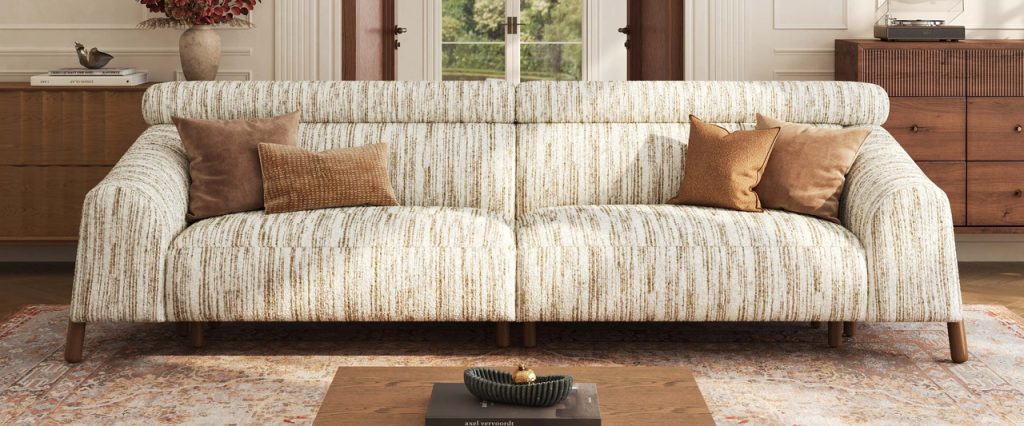
It can also give you a chance to solve the style and comfort issues that dye cannot touch. The fabric sofa with high back support comes in brown, green, and black textured tweed options, so the color is built into the design rather than layered over worn upholstery. Its richly textured fabric, high-density cushioning, and dual-tier backrest make it easier to refresh a room while choosing more structured support for reading, movie nights, or everyday lounging.
Conclusion
Dyeing a sofa is worth considering when you have a light, removable, washable cover made from dye-friendly fibers and a realistic plan to go darker. It is not a safe shortcut for polyester performance fabric, leather, fixed upholstery, or powered seating. Let the fiber label and care instructions guide the decision—not the color you wish the sofa could become. When dyeing is not the right fit, a slipcover, reupholstery, or a well-planned room update can bring the space back together while protecting the comfort and lifespan of the sofa you already use every day.
FAQs About Dyeing a Sofa
Does Dye Make a Sofa Cover Feel Stiff?
It can, especially when too much dye or surface colorant is used, or when the cover is not rinsed thoroughly. A properly dyed natural-fiber slipcover should still feel flexible after washing and drying. Test one hidden area first, then compare its hand feel with an untreated section.
How Long Should You Wait Before Sitting on a Dyed Slipcover?
Wait until every layer is fully dry, then complete dry- and damp-cloth transfer tests. That often takes at least a full day, depending on humidity and cover thickness. Sitting too soon can stretch damp seams or transfer color onto cushions, throws, and clothing.
Can You Dye Only the Cushion Covers?
You can, but the cushion covers may not match the main sofa shell. Cushions usually get more friction, body oil, and sunlight, so they can take color differently from the rest of the upholstery. Dye only the cushions when you are comfortable with a deliberate contrast rather than an exact match.
Will a Dyed Slipcover Fade in Sunlight?
Yes. Strong daylight fades most textiles over time, and DIY-dyed fabric may not match the lightfastness of solution-dyed upholstery. Keep the sofa out of prolonged direct sun when possible, rotate cushions, and use curtains or UV-filtering shades during peak hours.


