 By Kelvin
Introduction
An accent chair can look right in a showroom and still feel dropped into your living room once it sits beside the sofa. How to style an accent chair is really a question of relationship: what job it does, what it connects to, and whether people can move around it comfortably. Start there, not with a throw pillow. The result is a useful seat that makes the whole room feel more settled.
Table of Contents
What Should Your Accent Chair Do in the Room?
Give the chair one primary job before choosing its color or silhouette. A seat used for a guest during movie night needs a different shape from a reading chair beside the window. A chair that balances a large sectional should usually look lighter than one meant to anchor an empty corner.
Choose the role that reflects daily life:
- Conversation seat: faces the sofa or coffee table and joins the group easily.
- Reading chair: supports longer sitting and needs a reachable surface and task light.
- TV chair: faces the screen without blocking a main route.
- Visual counterweight: brings height, curve, or texture to a long, low sofa.
- Flexible open-plan seat: can turn toward more than one activity zone.
A chair with no role tends to become a landing place for bags or laundry. A chair with a clear role earns its footprint.
How to Style an Accent Chair With a Sofa, Not Against It
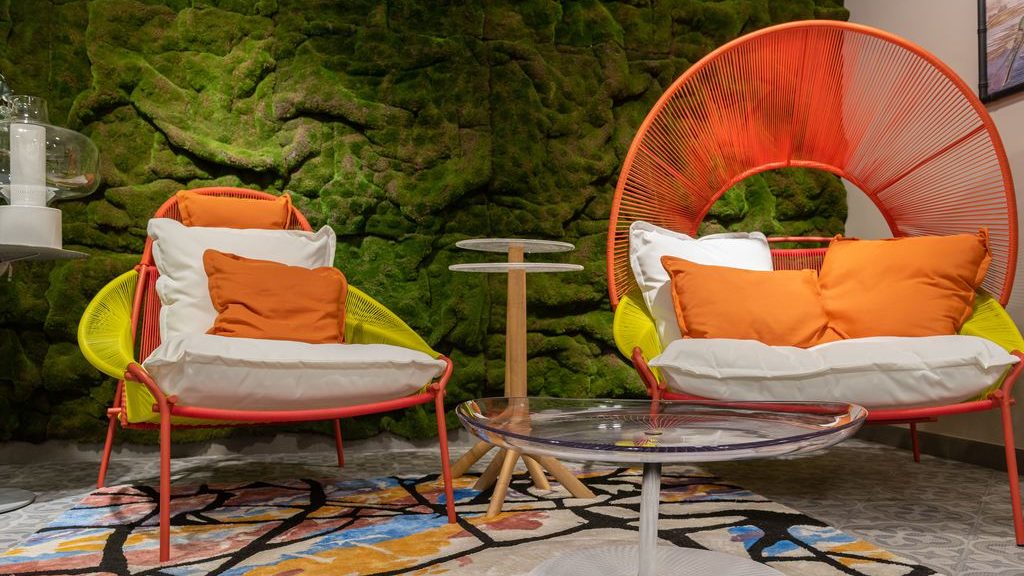
Once the role is clear, style the chair through its relationship to the sofa rather than by trying to make every upholstered piece match. A room feels considered when the seating shares a visual language yet varies enough to avoid a catalog-set look. Use color, shape, material, and visual weight as separate controls; changing one or two is usually enough.
Keep One Link Between the Sofa and Chair
Pick one feature that makes the chair feel connected to the room. It could be the warm undertone of a camel leather sofa repeated in the chair’s wood finish, a cream rug that echoes a neutral chair, or a black metal lamp that relates to the chair legs. An accent chair that complements your sofa does not need identical upholstery. It needs one recognizable point of connection.
Add One Contrast So the Seating Does Not Look Like a Set
Then choose one way for the chair to differ. A rounded barrel chair can soften a track-arm sofa. A woven or chenille chair can add warmth beside smooth leather. A slim, open-base chair can relieve the heaviness of a deep sectional. Avoid changing everything at once: a bold pattern, high-contrast color, oversized scale, and unrelated style can make the chair feel disconnected.
| If Your Sofa Feels… | Let the Chair Do This | A Useful Direction |
| Deep and visually heavy | Create breathing room | Raised legs, slimmer arms, or an open base |
| Straight and low | Introduce softness | Rounded back or curved arms |
| Leather and tailored | Add touchable texture | Woven fabric, chenille, or a textured cushion |
| Neutral and quiet | Carry some personality | Muted color or a sculptural silhouette |
| Bold in color or pattern | Stabilize the group | Calm upholstery and simpler lines |
Which Accent Chair Layout Works for Your Room?
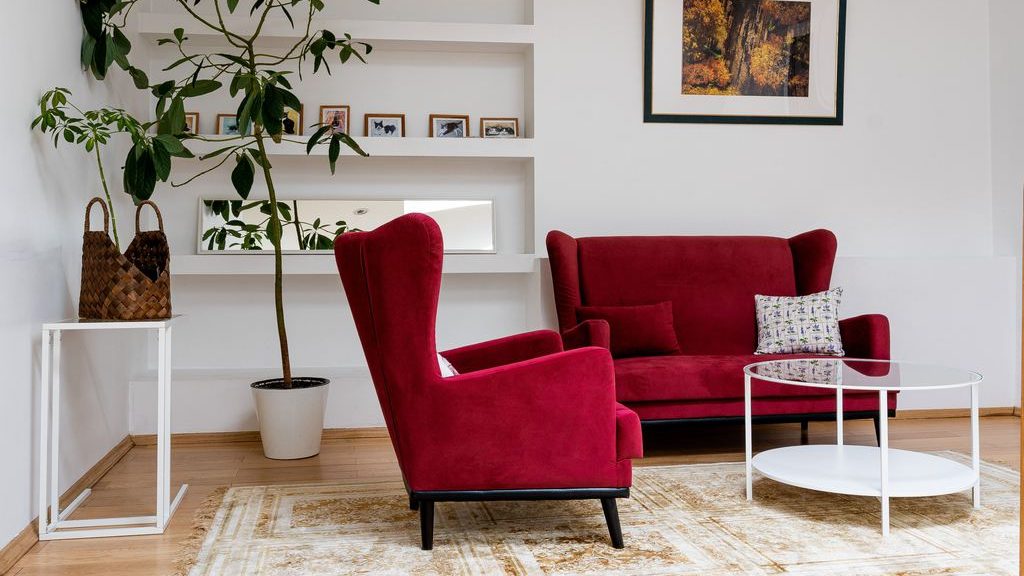
Placement should follow the way the room is used, not the habit of pushing every piece against a wall. The strongest layouts give the chair someone or something to face, preserve a clear path, and leave it close enough to the main seating to join the room. These arrangements cover most living rooms without forcing a formal furniture set.
Beside the Sofa for an Easy Conversation Seat
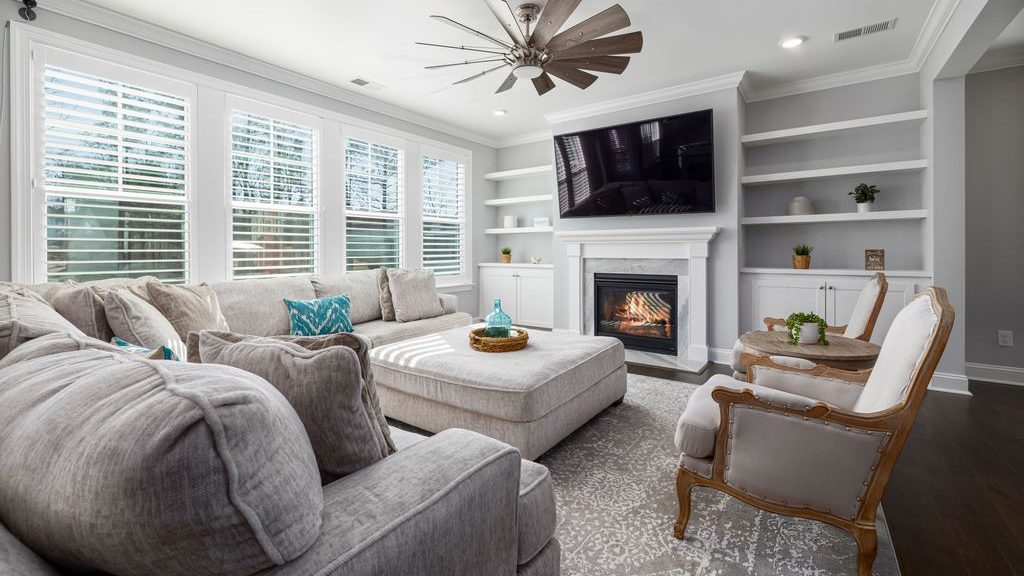
Place one chair beside the sofa, angled slightly inward, when the room needs an extra seat without becoming a formal pair. This works well in a compact living room where a chair straight across from the sofa would narrow the center. Turning it toward the coffee table makes it part of the conversation instead of a wall decoration.
Across From the Sofa for a Social Layout
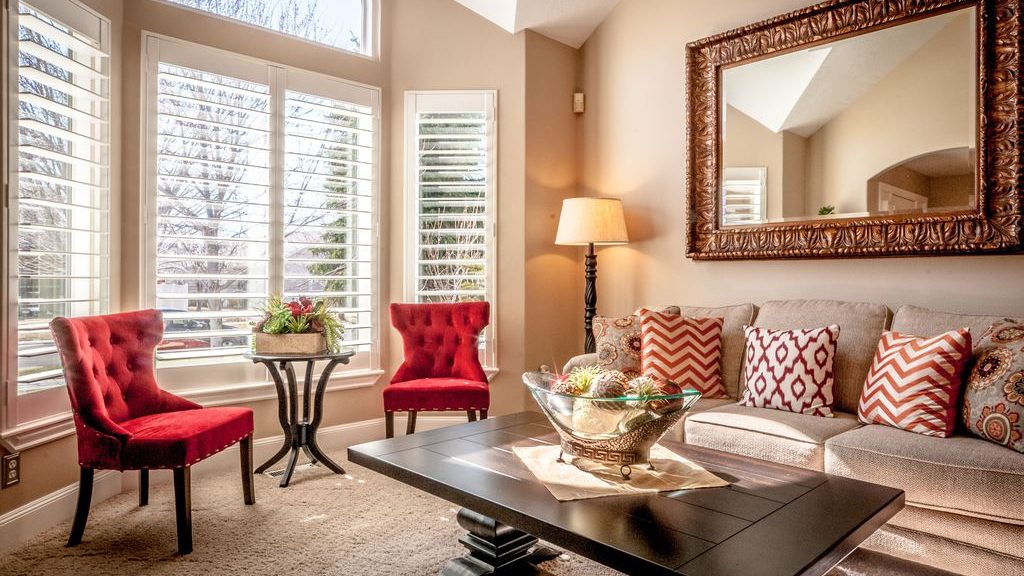
Use one generous chair or two lighter chairs across from the sofa when the coffee table is the center of the room. This supports guests because nobody has to twist sideways to talk. Before committing to a pair, test the route from the entry to the next room; extra seating is not helpful when everyone has to squeeze around it.
Turn a Corner Into a Zone With a Reason to Exist
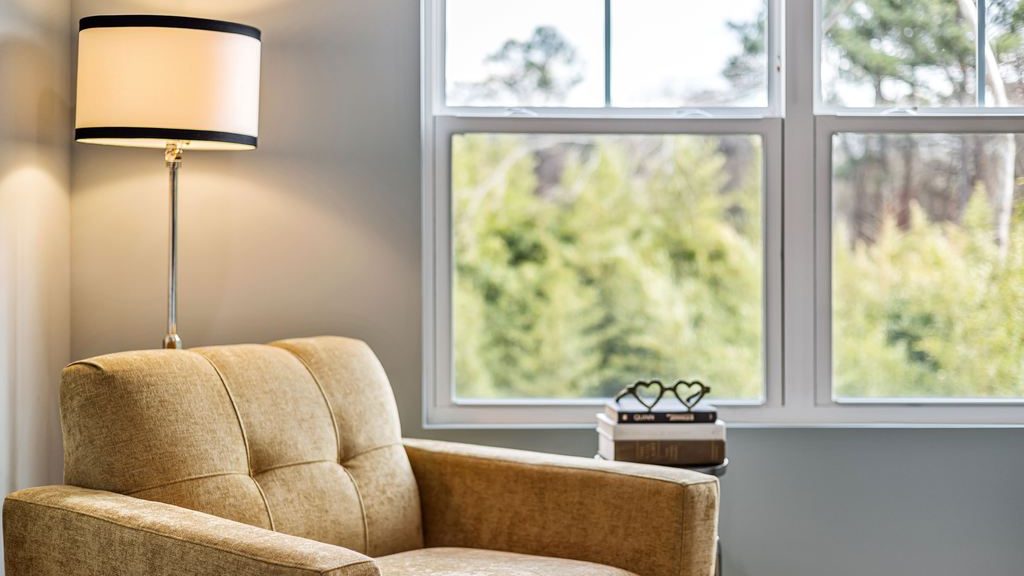
An empty corner becomes useful when the chair has support. Add a small table for a drink or book and a lamp that reaches the seat. In a family room, this can be the spot someone uses to read while others watch a show. These living room layout ideas for better flow work best when the secondary zone is clear but still connected to the main seating group.
Use a Swivel Chair When the Room Has More Than One Focus
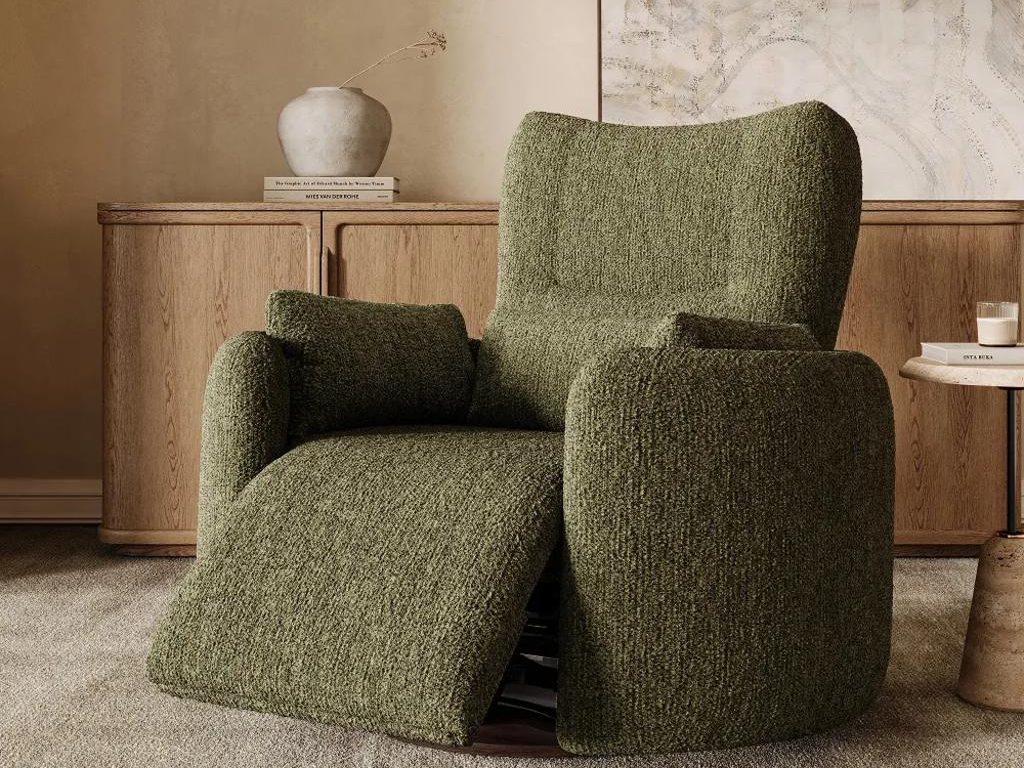
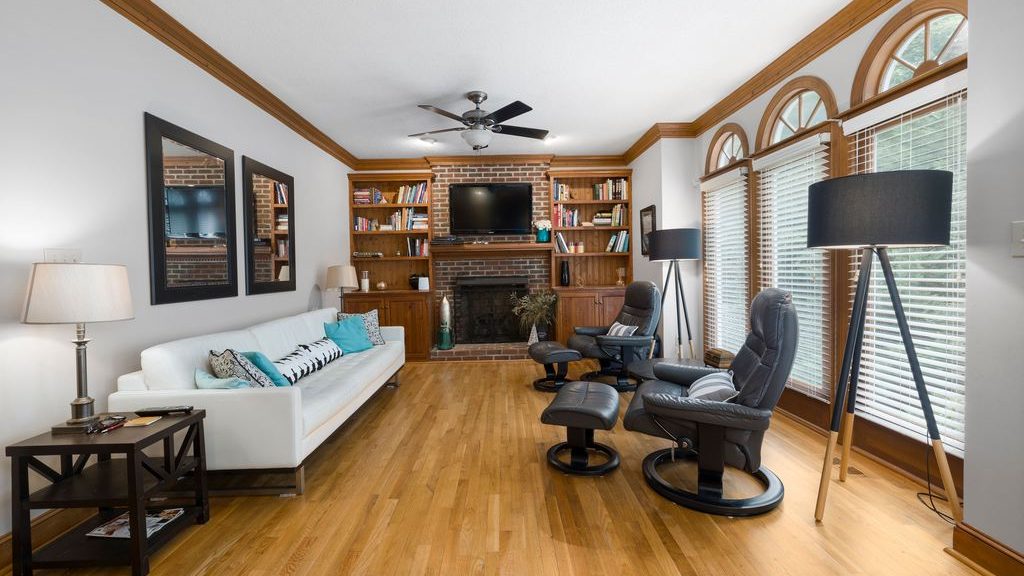
A swivel chair earns its place when people turn between the TV, a conversation area, and a window view. In that setting, the Oliver-Swivel Power Barrel Recliner offers a 270° swivel, 90°–145° power recline, and a 23.5-inch seat depth. Its 43.3-inch width is substantial, so mark its footprint and turning path before ordering.
What Size and Spacing Keep the Chair Useful?
A chair can technically fit in a room and still make it harder to live there. Check its full outside dimensions, not only the seat width. Thick arms, a high back, and a deep seat all change how much space the chair claims. If it reclines or swivels, account for its moving parts rather than measuring it only upright.
Before ordering, use painter’s tape to mark the chair’s outside width and depth on the floor. Sit in the outline if possible. Reach toward the coffee table, walk from the doorway to the sofa, and open nearby doors or drawers. A chair should allow you to approach it without moving another piece first.
Use this quick check:
- Keep the chair close enough to the coffee table that a drink is reachable without standing.
- Leave a full, comfortable pass-through where people naturally enter or cross the room.
- Compare the chair’s seat and back height with the sofa before relying on a product photo.
- Test the full swivel or recline path with tape, including the space behind and beside the chair.
- Operate nearby drapes, doors, and floor vents during the test.
How Do You Finish the Chair Area Without Over-Styling It?
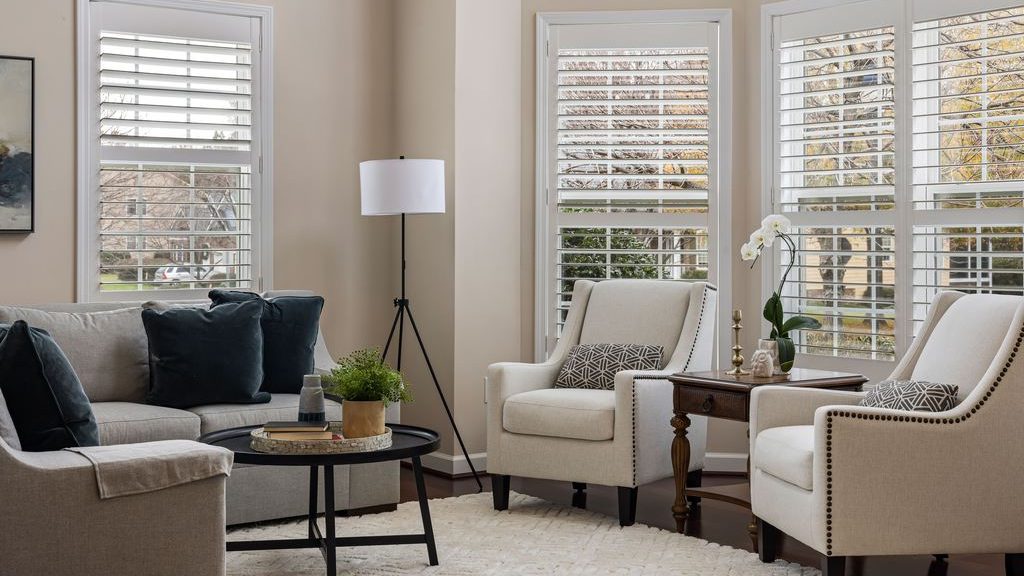
When people ask how to decorate an accent chair, they often start with pillows and throws. Those can help, but the chair first needs a simple support system. Use the “seat + surface + light or boundary” formula: the chair is the seat, a side table or small ottoman provides a useful surface, and a floor lamp, rug edge, bookcase, or art piece gives the area a visual boundary.
Keep accessories proportional to the chair. A patterned or deeply textured chair may need only a plain pillow or no pillow at all. A quiet neutral chair can take one cushion that repeats a color from the sofa, rug, or art. For a reading chair, the lamp and table do more work than decorative layers.
Before You Buy, Check Whether the Chair Fits Real Life
Style should not override use. A low, sculptural chair may look right beside a sofa but disappoint as the seat someone takes for two hours every evening. Before deciding, consider how often the chair will be occupied, who uses it, and how much upkeep you are prepared to do.
For everyday lounging, prioritize support, an appropriate depth, and upholstery you can maintain. For a room with kids or pets, choose a color and texture that do not show every mark, then follow the maker’s care instructions. In a sunny corner, consider fading and heat as well as the view.
Conclusion
The best answer to how to style an accent chair is not to start with decor. Start with use, then connect the chair to the sofa with one shared element and one considered contrast. Choose a layout that invites people to sit, measure the complete footprint before buying, and add only the support pieces the chair needs. Once the chair works for conversation, reading, TV time, or a quiet window view, it will look like it belonged in the room all along.
Q&A
Can an accent chair sit in front of a window?
Yes, an accent chair can sit in front of a window when the window still opens, curtains move, and it does not block light or ventilation. Compare the chair’s back height with the sill and visible glass, not just seat height. The same checks apply when you place furniture in front of a window.
Do two accent chairs need to be identical?
No, two accent chairs do not have to be identical. Matching chairs are the simplest choice for symmetry around a fireplace or across from a sofa. In a more relaxed layout, different chairs can work when they share one feature, such as seat height, wood tone, color family, or overall visual weight.
Should I buy an ottoman with an accent chair?
Buy an ottoman when the chair is intended for reading, TV watching, or longer periods of relaxation and the room has enough clear floor space. Choose a movable ottoman in a smaller room so it can shift aside for guests or serve as an extra perch. Skip it when it would interrupt the main walking path.
How do I keep a bedroom accent chair from becoming a clothes pile?
Give the chair a specific job and remove the nearby temptation. Use it for putting on shoes, reading, or laying out tomorrow’s outfit, then add a hamper, hooks, or a small wardrobe valet for everything else. A compact side table also keeps books, glasses, and a phone from landing on the seat.
Can one accent chair replace a loveseat in a small living room?
Sometimes. One substantial accent chair can be a better choice than a loveseat when the room already has a full sofa and only needs one flexible extra seat. Choose this option when preserving a walkway matters more than maximizing seat count. A loveseat is more useful when two people regularly need to sit together.
Should I choose a high-back or low-back accent chair for a TV room?
Choose a high-back chair when head support and longer viewing sessions matter most. Choose a lower-back chair when you need to preserve sightlines across an open room or avoid making a low sofa look smaller. Compare the chair’s full height with the TV, window line, and nearby shelving before buying.


