 By Stephanie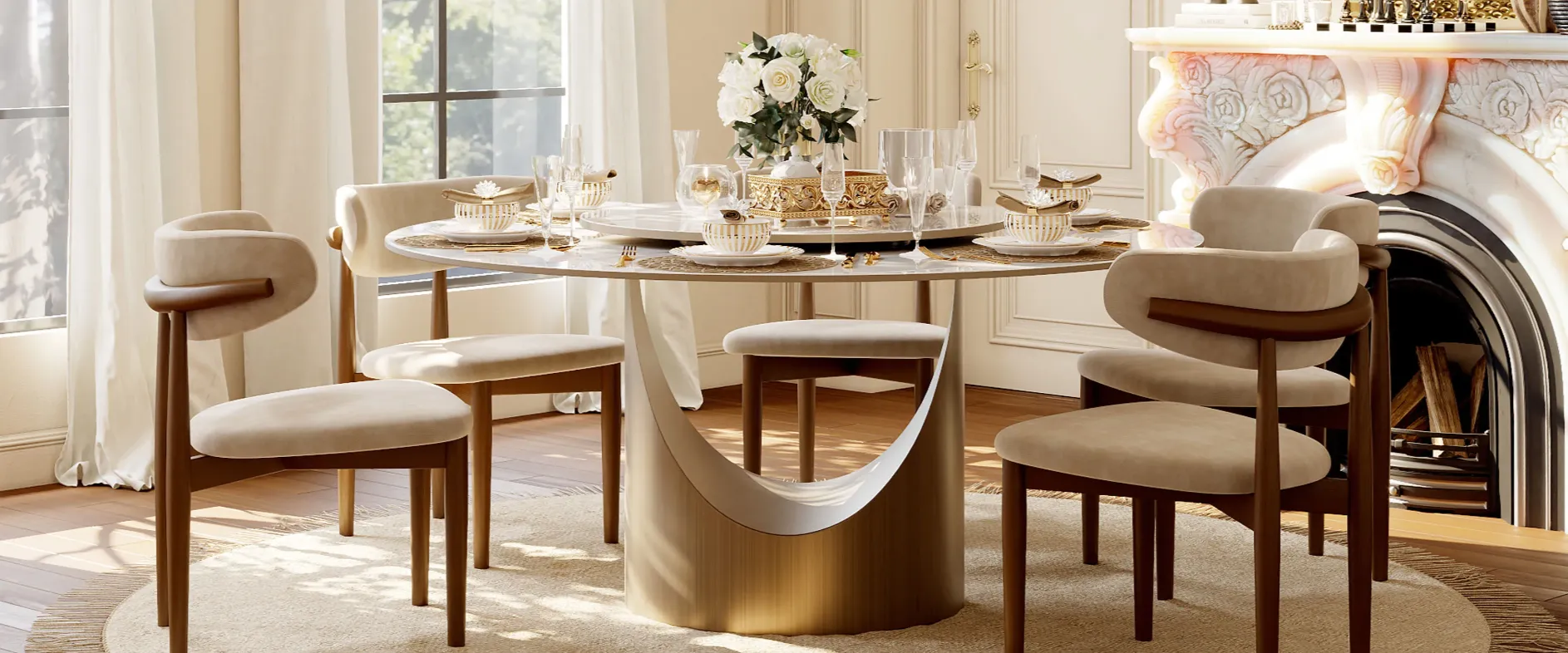
A beautiful dining room is not built around one perfect photo. It works because the table fits the room, the people who use it, and the pace of everyday life. The best dining table ideas account for rushed breakfasts, laptop afternoons, weeknight homework, and summer gatherings—not just holiday dinners. Start with a table that protects circulation and serves your usual headcount. Then build the chairs, lighting, and decor around it. These six setups make that process easier, whether you have a compact nook, an open-plan home, or a dining area that doubles as a busy walkway.
Table of Contents
Start With the Room and Your Daily Routine
Before choosing a silhouette, decide what the table needs to do on an ordinary week. The best table shape, size, and surface change when the dining zone also serves as a workspace, a homework station, or a place where friends gather. Two practical checks should come first.
Choose for Weekdays Before Special Occasions
Start with the number of people who use the table most often, not the largest group you host once or twice a year. A table that feels oversized every day will make the room harder to use, even if it looks impressive when guests arrive.
Think through the table’s real job:
- Daily meals: How many people usually sit down at once?
- Flexible use: Will someone spread out a laptop, schoolwork, or a craft project?
- Hosting: Do you entertain monthly, seasonally, or only on holidays?
- Maintenance: Will the surface see spills, hot dishes, art supplies, or frequent takeout?
A couple who occasionally hosts friends may be better served by an extendable design than a permanently large table. A family that eats together every evening should prioritize chair comfort and a surface that is easy to reset after a busy day.
Measure the Usable Zone, Not the Empty Floor
A dining table uses more space than its product dimensions suggest. Chairs need room to slide back. People need a clear route to the kitchen, patio door, or living room. Nearby cabinets and drawers still need to open.
Mark the tabletop footprint on the floor with painter’s tape. Then add the chair zone around it. Walk through the space as you normally would: carry a plate from the kitchen, open the patio door, or pass behind a seated person. That quick test often reveals more than a room measurement alone.
Following how to choose the right dining table size for your space helps you account for chair pull-out room, nearby furniture, and the table’s visual scale before it arrives.
Choose the Shape That Protects Flow
Table shape is not only a style choice. It affects how people move, where chairs can sit, and whether the dining area feels inviting or cramped. Use the room’s proportions as your first filter, then consider how often the table needs to expand for guests.
| Your Room or Routine | Best Starting Shape | Why It Works |
| Square dining area or breakfast nook | Round | Softens corners and keeps movement smooth |
| Long, narrow dining room | Rectangular | Uses the room’s length efficiently |
| Open-plan living and dining room | Rectangular or oval | Defines the dining zone without closing it off |
| Table near a patio door or main route | Oval | Preserves length while reducing sharp corners |
| Small household with frequent guests | Extendable round or oval | Keeps the everyday footprint smaller |
Let the Floor Plan Set the Shape
A round table works especially well in a square nook, a compact kitchen corner, or a small open-plan zone. Its curved edge makes it easier to move around, and everyone at the table can see one another without reaching across a long surface.
A rectangular table usually makes better use of a long room. It can seat more people in a clear row and often aligns naturally with a kitchen island, rug, or wall. An oval table offers a useful middle ground: it keeps the serving space of a rectangle while making a narrow path feel less abrupt.
Check the Base Before You Choose Chairs
The tabletop gets most of the attention, but the base determines how flexible the seating feels. A pedestal base gives chairs more freedom because there are no corner legs to work around. That can make a compact table more comfortable, especially when an extra guest pulls up a chair.
Traditional four-leg tables can still be a strong choice in larger rooms. Just check where the legs fall once chairs are in place. If a chair arm hits a table leg every time someone sits down, the setup will feel frustrating no matter how good it looks.
Six Dining Table Setups for the Way You Live
The most useful dining rooms solve a real problem: a square nook that feels boxed in, an open plan without clear zones, or a family that needs flexible seating without permanent clutter. Start with the setup that sounds most like your home, then adapt its scale, materials, and seating to fit your routine.
1. Use a Round Pedestal Table in a Square Nook
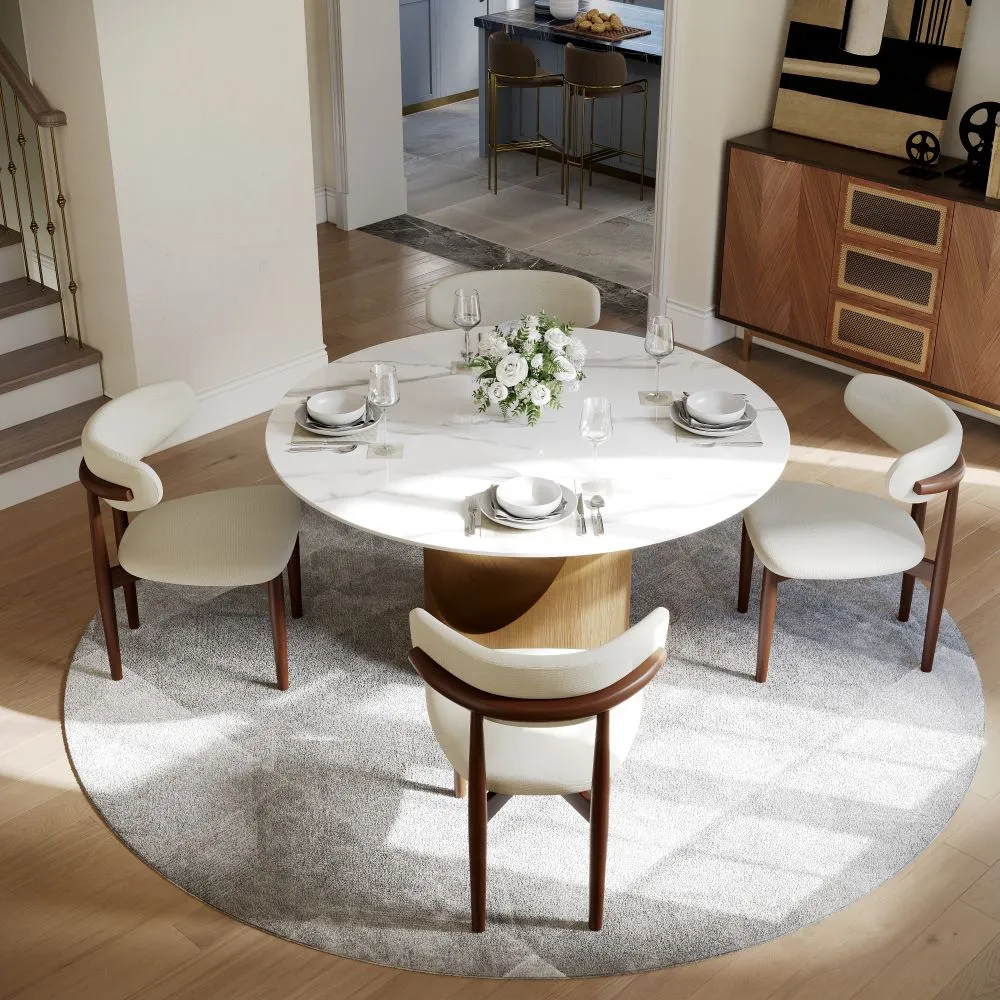
A round pedestal table is one of the smartest choices for a square dining area. It softens the room’s hard edges, keeps the floor plan from looking crowded, and lets chairs move more freely around the base. Pair it with armless chairs so the seating can tuck in easily when the area is not in use.
Keep the rest of the setup simple: one centered pendant, a low bowl or vase, and a rug that does not visually overwhelm the compact footprint. This approach works well in a breakfast nook, a small apartment kitchen, or the dining corner of an open living space.
When the nook needs a stronger focal point without adding visual bulk, the Hobart Round Sintered Stone Dining Table is available in 47-, 51-, and 59-inch round sizes. In a compact nook, the 47- or 51-inch option is usually easier to live with than the 59-inch version. Its pedestal-style base keeps the table perimeter clearer, so chairs can shift more easily in a compact dining zone. The linked black matte sintered stone option also gives busy households a low-glare, easy-care surface for everyday meals.
Avoid: thick armchairs around a small round table. They consume floor space quickly and make the nook feel closed in.
2. Choose an Extendable Table for Weeknight Meals and Match-Day Guests
An extendable table makes sense when your home has two rhythms: quiet weekday dinners and fuller weekends. Keep it compact for normal meals, then open it when cousins stop by, friends come over for a summer dinner, or everyone gathers for a World Cup match.
The key is to plan the extra seats before guests arrive. Store two lightweight side chairs in a nearby room, or use a bench along the wall side of the table. A bench can slide under the table after dinner, which gives the room back its breathing space.
Picture a Saturday afternoon when the match is on, the kitchen island holds drinks, and the table holds sliders, fruit, and a few extra plates. The room works because the table expanded only when the occasion called for it—not because it dominates the space every day.
Avoid: buying a large fixed table to solve an occasional hosting problem. It can make daily circulation feel tighter than it needs to be.
3. Define an Open-Plan Dining Zone With a Rectangular Table
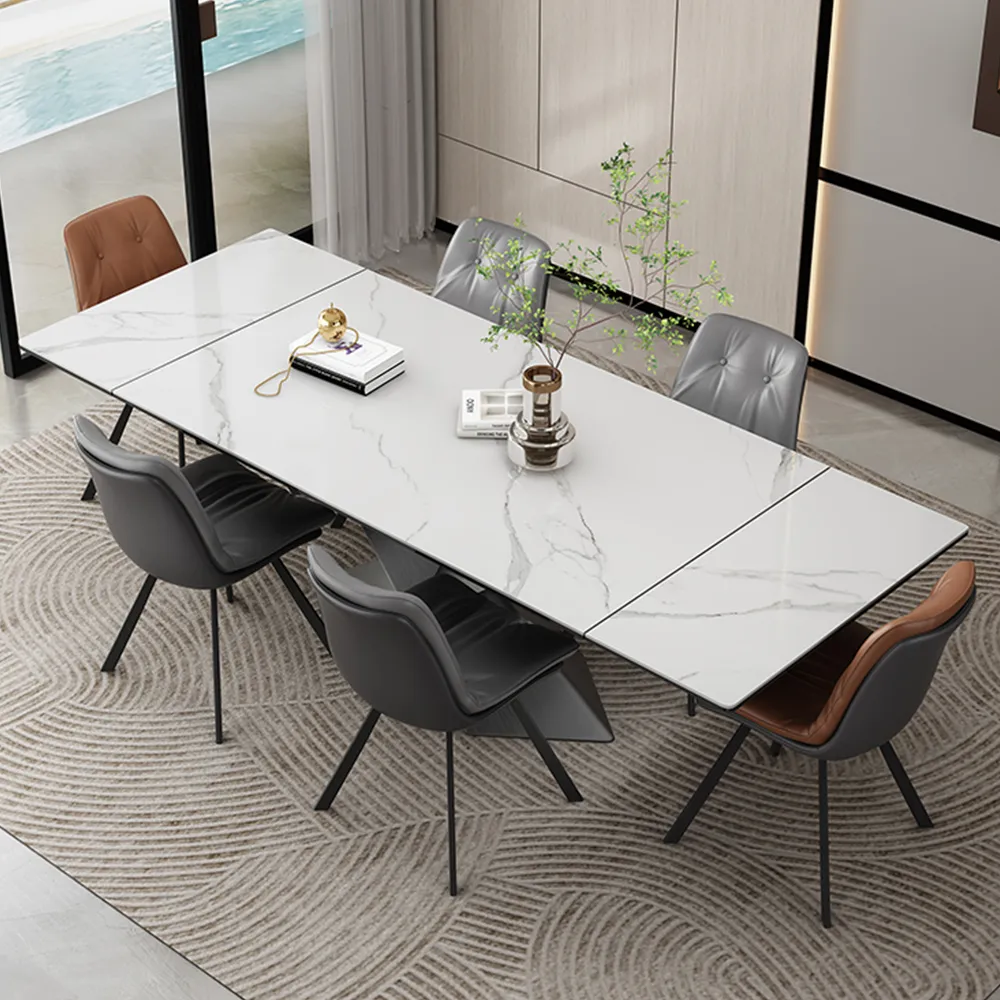
In an open-plan home, the dining table should do more than provide seats. It should help the room read as a series of clear zones: cooking, dining, and relaxing. A long rectangular table does this well when it runs parallel to the kitchen island or follows the room’s longest line.
Center the pendant light over the tabletop rather than the middle of the whole room. Then use a rug or a low sideboard to visually frame the dining area. This creates a boundary without blocking sightlines between the kitchen and living room.
For an open space that needs a defined dining axis, the Hobart Rectangular Sintered Stone Dining Table gives four to six people a generous everyday surface without overwhelming the room. Its 63-by-35.4-inch profile works naturally beside a kitchen island or along the room’s longest line, while the matte sintered stone top is practical for serving platters, homework, and a crowded game-night spread.
Avoid: placing the table directly behind a sofa without enough room to walk or pull out chairs. A dining zone needs its own circulation path.
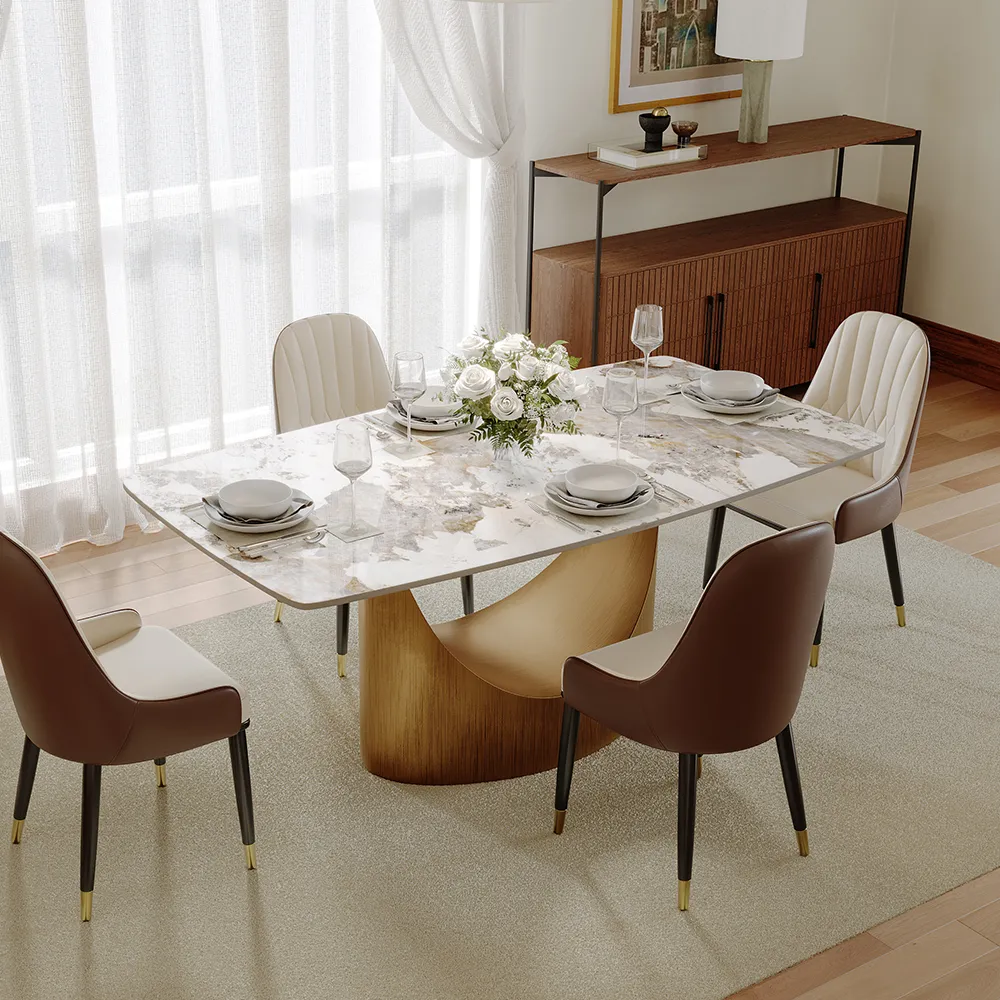
4. Pair a Light Stone Table With Upholstered Chairs for Everyday Polish
A light stone table can make a dining area feel brighter and more finished, especially beside dark cabinets, medium wood floors, or a charcoal sofa. The important part is balancing the hard tabletop with softer seating. Upholstered chairs in oatmeal, warm gray, muted olive, or camel help the room feel comfortable rather than overly formal.
This setup works well for households where the table gets used constantly. At 6:15 on a Tuesday, a family may be clearing pasta bowls, a water bottle, and a half-finished spelling worksheet at the same time. A calm color palette and a wipeable surface make that normal mess feel manageable instead of disruptive.
Choose chairs with a slim silhouette and supportive back. They should feel comfortable for dinner but still tuck in easily when the room needs to shift into work, cleanup, or play mode.
Avoid: combining a pale stone table with bulky dark chairs, a large black pendant, and a dark sideboard. Too many heavy elements can make the dining zone lose its brightness.
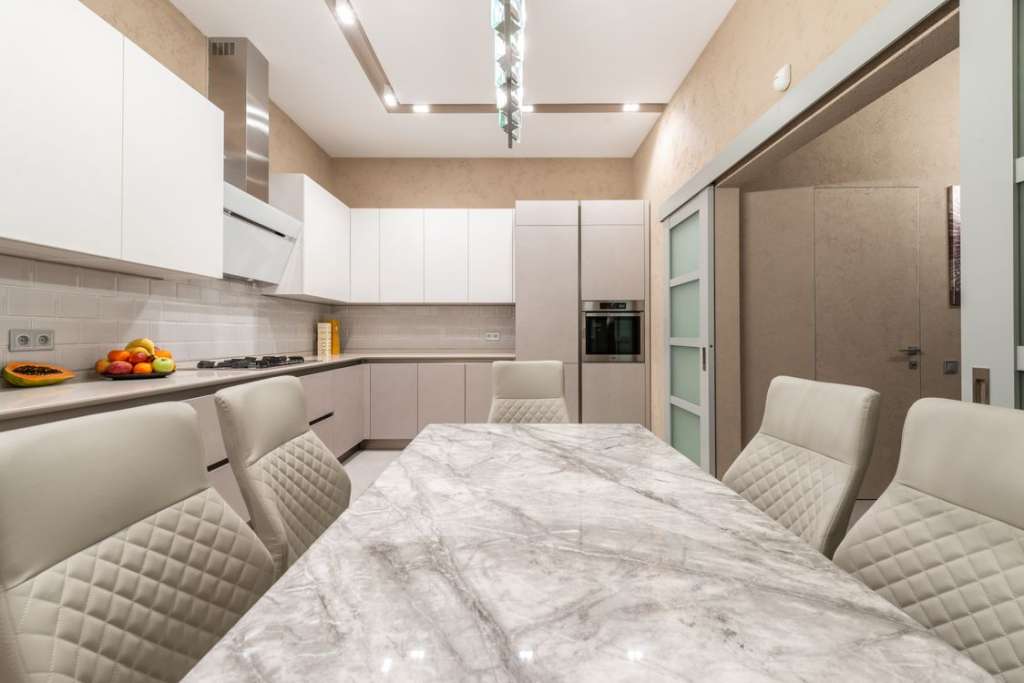
5. Use a Dark Table to Create Contrast in a Light Room
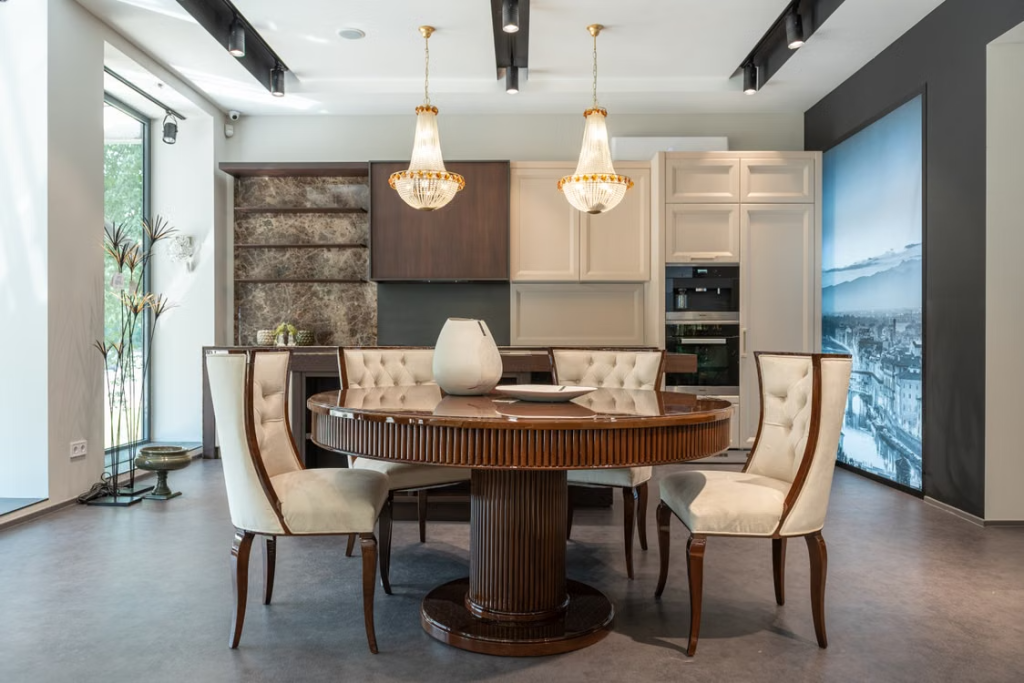
A dark dining table can give a pale room the definition it is missing. In a space with white walls, light oak floors, cream upholstery, or soft neutral cabinetry, a black or deep walnut table creates a visual anchor without requiring a dramatic accent wall.
The rest of the room should stay visually light. Use slim chair legs, woven textures, soft upholstery, or a light-toned sideboard to keep the contrast balanced. A warm metal pendant or milk-glass fixture can soften the darker table and make the dining area feel more inviting at night.
The best ways to keep a black dining table from making a light room feel heavy usually come down to contrast control: give the table one or two darker companions, not an entire room full of them.
Avoid: layering dark furniture, dark walls, dark rugs, and dark lighting in a small or low-light room. The table should create focus, not absorb the whole space.
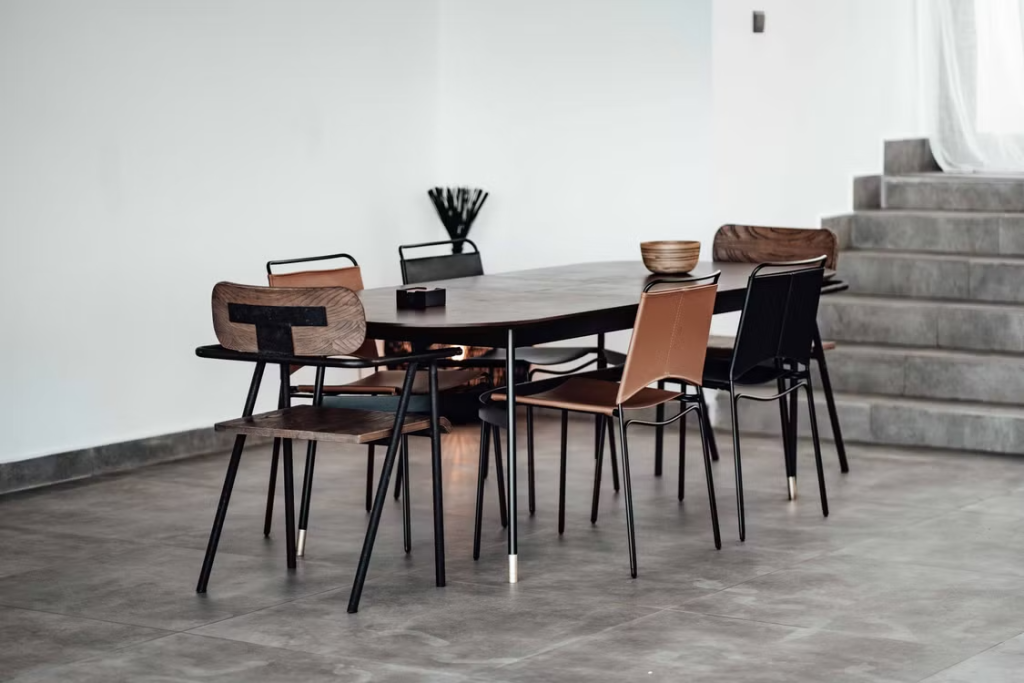
6. Combine an Oval Table With Mixed Seating Near a Busy Route
An oval table is especially useful near a patio door, kitchen passage, large window, or high-traffic route. It keeps the usable length of a rectangular table but removes the sharp corners that tend to interrupt movement.
Mixed seating adds flexibility without making the dining area look accidental. Use matching side chairs along the long edges, then add two more distinctive end chairs or a bench against the wall. The bench can slide under the table when it is not needed, freeing up circulation immediately.
This setup also feels more relaxed for summer hosting. It can seat a family comfortably during the week, then make room for extra guests without requiring every chair to match exactly.
Avoid: mixing too many unrelated chair styles. Keep one common detail—such as similar wood tones, black metal legs, or warm neutral upholstery—so the group still feels intentional.
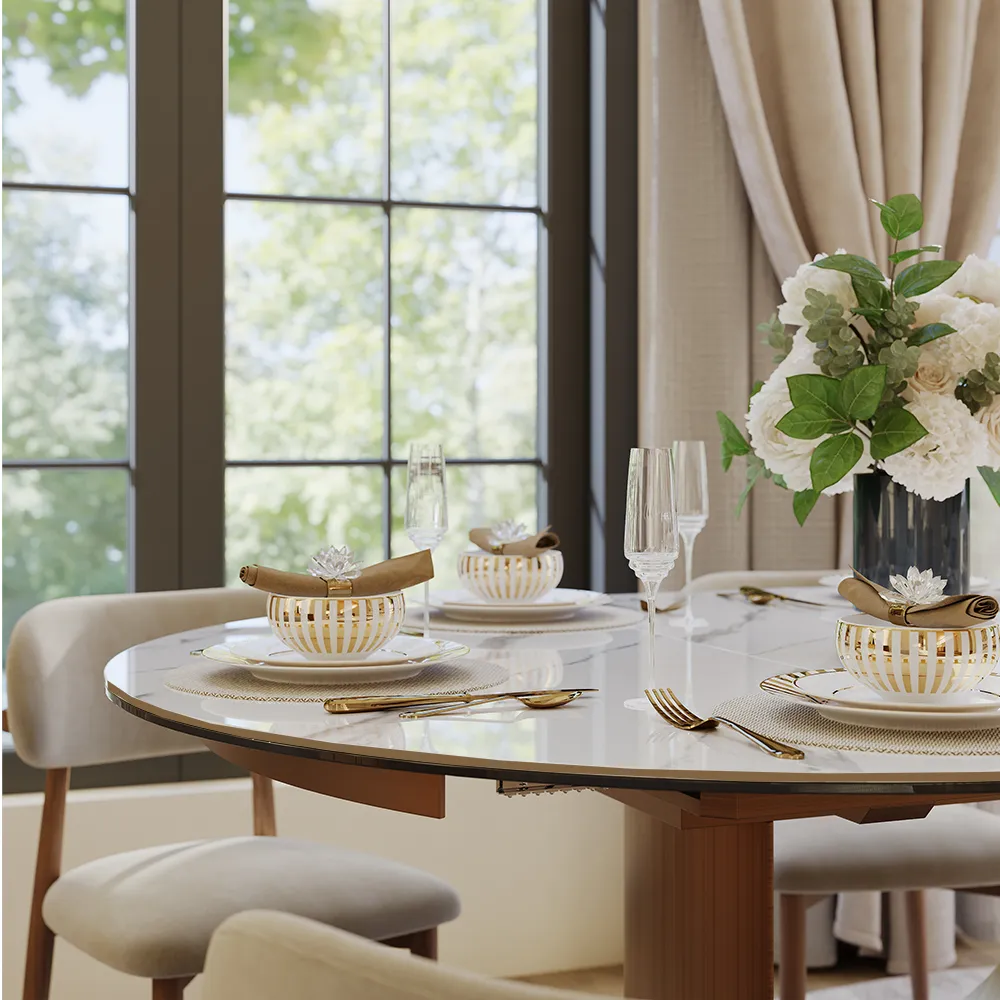
Finish the Dining Zone Without Overdecorating
After the table, shape, and seating are settled, the surrounding layers should support the room’s function. Lighting, rugs, storage, and tabletop decor are most effective when they make meals easier, define the dining zone, or help the room reset quickly after use.
Add Lighting, a Rug, and Storage in That Order
Start with the light fixture. A pendant should visually center over the table, even if the table is not centered in the entire room. That alignment makes the dining zone look deliberate.
Next, decide whether a rug adds value. In an open plan, it can help separate dining from lounging. In a busy family home, a low-pile, easy-clean rug may be more practical than a thick woven option. Make sure chairs stay on the rug when pulled back.
Add a sideboard last. It is useful for plates, glasses, and serving pieces, but it should never compromise chair movement or block the main route.
Keep Tabletop Decor Easy to Clear
The best dining table decor ideas leave enough open space for actual meals. Choose one low, movable layer rather than a permanent centerpiece that makes serving dishes awkward. A shallow bowl, a tray with a small vase, or a pair of candleholders is usually enough.
Knowing how to decorate a dining room table for everyday meals helps you keep the surface welcoming without treating it like a display shelf. For summer dinners or World Cup viewing, move tall arrangements to the sideboard and keep the center clear for shared food, coasters, and conversation.
Test the Setup Before You Buy
A dining room should work in motion, not just in a saved image. Before ordering, test the table footprint in your actual room. A few minutes with tape and household chairs can reveal whether a favorite design truly fits the way your home functions.
Run a Painter’s Tape Test
Mark the tabletop size on the floor with painter’s tape. Add space around it for pulled-out chairs, then walk through your normal routes. Open nearby doors, stand where a guest would sit, and imagine carrying a serving dish from the kitchen.
Check these points:
- Chairs can pull back without blocking the main route.
- The table does not interfere with doors, drawers, or curtains.
- Extra seats still have a practical place during gatherings.
- The room remains comfortable when someone uses the table for work or homework.
Choose Materials for the Mess You Actually Have
Choose your tabletop based on everyday behavior, not only the look you like online. Wood adds warmth and character, but it may need more care around standing water and hot cookware. Glass can make a small room feel lighter, though fingerprints show quickly. Sintered stone and similar hard surfaces are often easier to wipe after busy meals, snacks, or craft sessions.
The right material should make the table easier to use. If you hesitate every time someone sets down a hot bowl or spills lemonade, the surface is working against the household instead of supporting it.
Conclusion
The best dining table ideas do more than make a room look finished. They make breakfast easier, keep walkways clear, support busy evenings, and give guests a comfortable place to stay longer. Start with the room’s real shape, the number of people you seat most often, and the mess your table needs to handle. Then choose the form, material, and seating plan that work on an ordinary Tuesday. When the table fits daily life, it will also be ready for summer dinners, watch parties, holidays, and every spontaneous gathering in between.
FAQs
Can a Dining Table Double as a Home Office?
Yes, especially when the table has enough depth for a laptop, notebook, and meal without crowding the surface. Keep chargers, papers, and pens in a nearby basket or sideboard drawer. Clearing work items at the end of the day helps the table return to its dining role.
Should a Dining Table Match the Kitchen Island?
It does not need to match exactly. A better approach is to repeat one element, such as a wood tone, metal finish, or neutral color family. This creates connection without making the kitchen and dining area look like a single furniture set.
Is a Dining Rug Necessary?
No. A rug is helpful when it defines an open-plan dining zone, warms a hard floor, or softens sound. Skip it when frequent spills, pets, or heavy chair movement would make it more work than value. Function should decide the answer.
Where Should Extra Dining Chairs Go Between Gatherings?
Keep them close enough to use but out of the everyday path. A spare bedroom, entry wall, nearby office, or closet can work well. Lightweight chairs are easiest to bring out for guests and return afterward without making the dining area feel permanently crowded.
Is Matte or Glossy Better for a Dining Table?
Matte surfaces usually hide glare and minor fingerprints better, while glossy finishes reflect more light and can make a darker room feel brighter. Choose matte for a quieter, low-maintenance look and glossy when you want the tabletop to feel more polished and reflective.


