 By Kelvin
Introduction
If your sofa pillows look flat, your back cushions sag, or your living room couch feels less supportive than it used to, this guide will help you fix the problem without jumping straight to replacement. Learning how to fluff a pillow on a sofa is really about restoring shape, redistributing fill, and knowing when a cushion needs more than a quick pat.
Table of Contents
Why Do Sofa Pillows and Cushions Go Flat?
Sofa pillows and cushions go flat because daily pressure pushes the fill downward, compresses foam, and stretches covers over time. The most-used seat usually shows it first. A TV-watching spot, a favorite reading corner, or the side where a pet naps every afternoon can start to look lower than the rest of the sofa.
Several things can make the problem worse:
- Loose fiber fill shifts toward the bottom of back pillows.
- Foam seat cushions slowly lose rebound after repeated sitting.
- Throw pillow inserts may be too small for the covers.
- Dust, moisture, and body oils can make fill clump together.
- Fixed cushions cannot be flipped, so one area takes more pressure.
A flat sofa pillow is not always a sign of poor quality. Some soft, relaxed cushions are designed to need light reshaping. The key is knowing whether the cushion needs fluffing, rotating, restuffing, or replacement.
What Is the Fastest Way to Fluff a Pillow on a Sofa?
The fastest way to fluff a pillow on a sofa is to remove it if possible, press opposite sides inward, shake the fill loose, pat from the bottom upward, and smooth the cover before placing it back. This works best for loose-fill back pillows, throw pillows, and soft removable sofa cushions.
Try this quick 5-minute refresh:
- Remove the pillow or cushion from the sofa if it is removable.
- Hold two opposite sides and press them toward the center.
- Rotate the pillow and repeat on the other two sides.
- Shake it gently to loosen fill that has settled at the bottom.
- Pat from the lower edge upward so the fill moves back into shape.
- Push fill into corners, then smooth the cover and seams.
This basic method also helps if you came here wondering how to fluff couch cushions before guests arrive. It will not rebuild worn foam, but it can make a sofa look cleaner, fuller, and more cared for in a few minutes.
How Should You Fluff Different Sofa Pillows and Cushions?
Not every sofa cushion should be handled the same way. A loose back pillow, a foam seat cushion, a decorative throw pillow, and a fixed cushion each flatten for different reasons. Use the cushion type first, then choose the method. This prevents over-fluffing, seam stress, and wasted effort on cushions that actually need new fill.
| Sofa Pillow or Cushion Type | Best Fluffing Method | When Fluffing Is Not Enough |
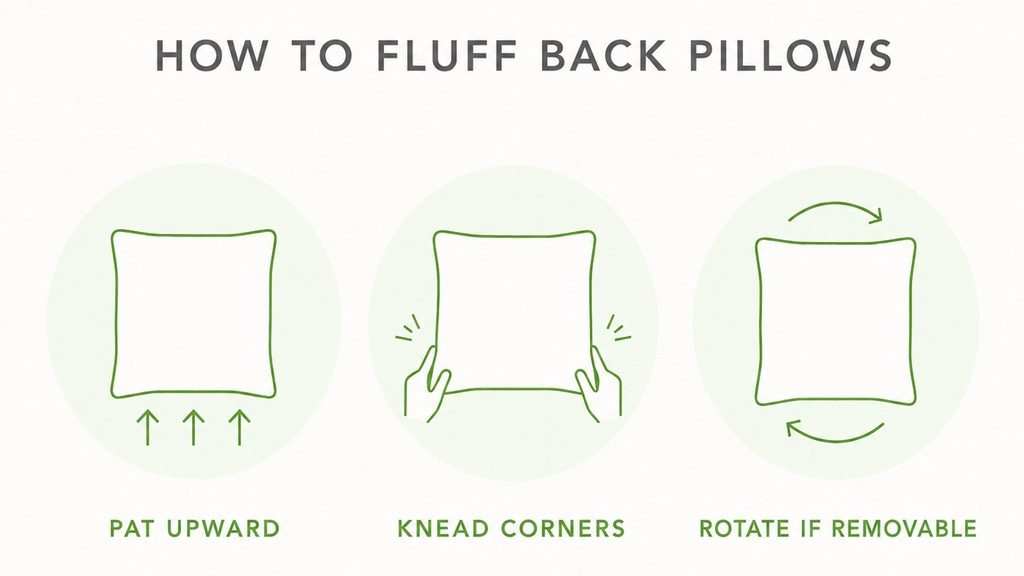
| Back pillows | Pat from the bottom upward, knead corners, rotate if removable | Fill stays at the bottom or feels clumped |
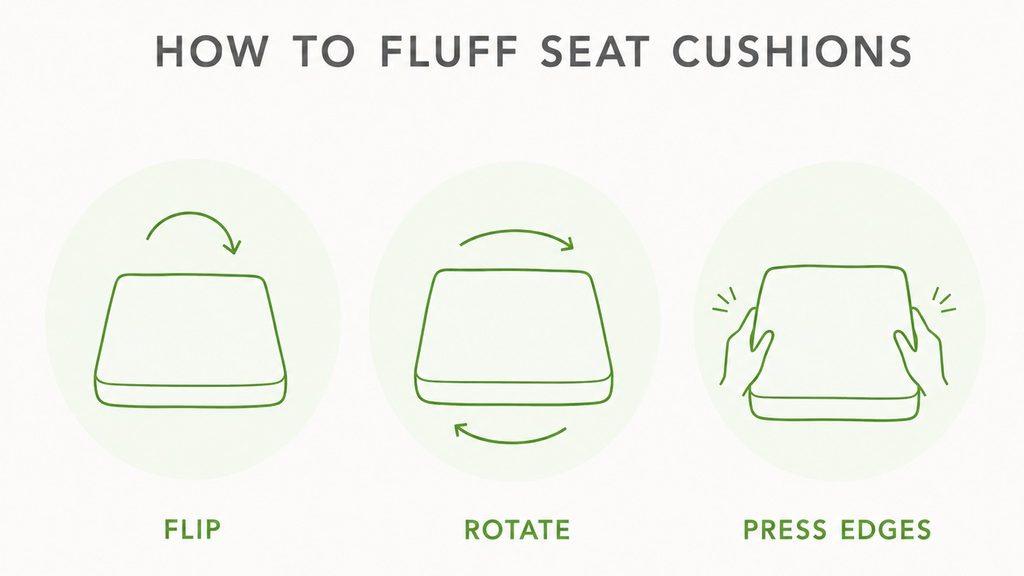
| Seat cushions | Flip, rotate, press edges back into shape | Foam stays dented after sitting |
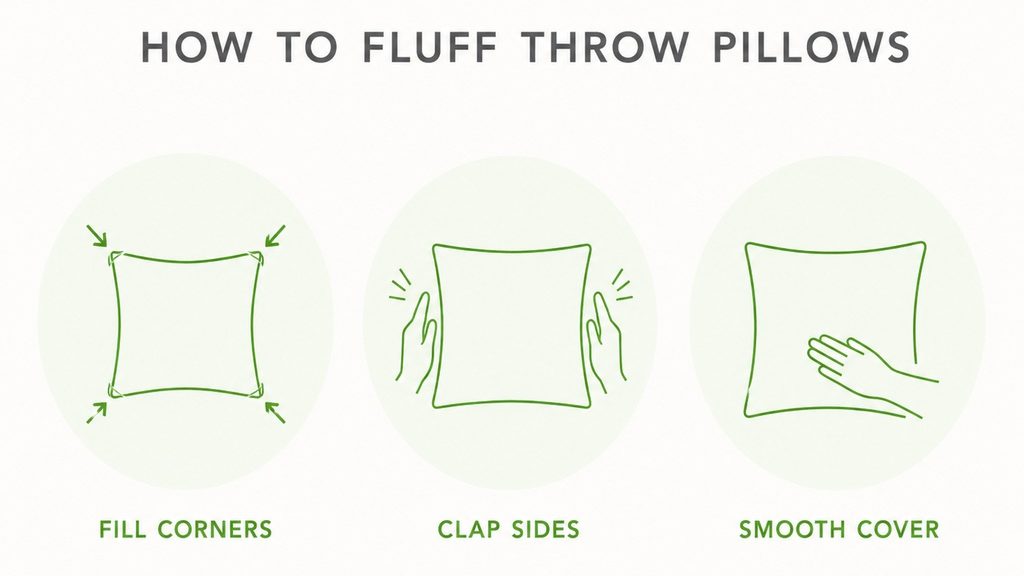
| Throw pillows | Push fill into corners, clap sides, smooth the cover | Insert is too small for the cover |
| Fixed cushions | Press, pat, smooth by hand, vacuum seams | Cushion has deep sagging or no access point |
| Modular sofa cushions | Swap high-use and low-use positions | One module always carries the same daily pressure |
Back Pillows
Back pillows often sag because the fill slides downward as people lean against them. Hold the pillow upright, then pat from the bottom toward the top. If there is a zipper and the design allows access, gently redistribute the fill by hand instead of only hitting the outside.
For a living room sofa used every night, this small habit can keep the back line from looking tired. It also makes the sofa feel more supportive when people sit down after dinner or watch a long game.
Seat Cushions
Seat cushions usually need rotation more than fluffing. If the cushion is removable and finished on both sides, flip it and rotate its position. If only one side is designed for sitting, rotate left and right if the shape allows.
To learn how to refluff couch cushions, look at the seat surface after someone stands up. If it slowly rises back, reshaping and rotation may help. If it stays deeply dented, the foam or support layer may be worn.
Throw Pillows
Throw pillows are more about shape and styling. Push the fill into all four corners, clap the sides gently, and smooth the cover. If the pillow looks empty at the corners, the issue may be insert size, not your fluffing method.
A slightly fuller insert often gives a better look than adding more pillows. If you are also adjusting the room’s styling, a balanced approach to how to decorate sofas with pillows can keep the sofa looking finished without making it crowded.
Fixed Cushions
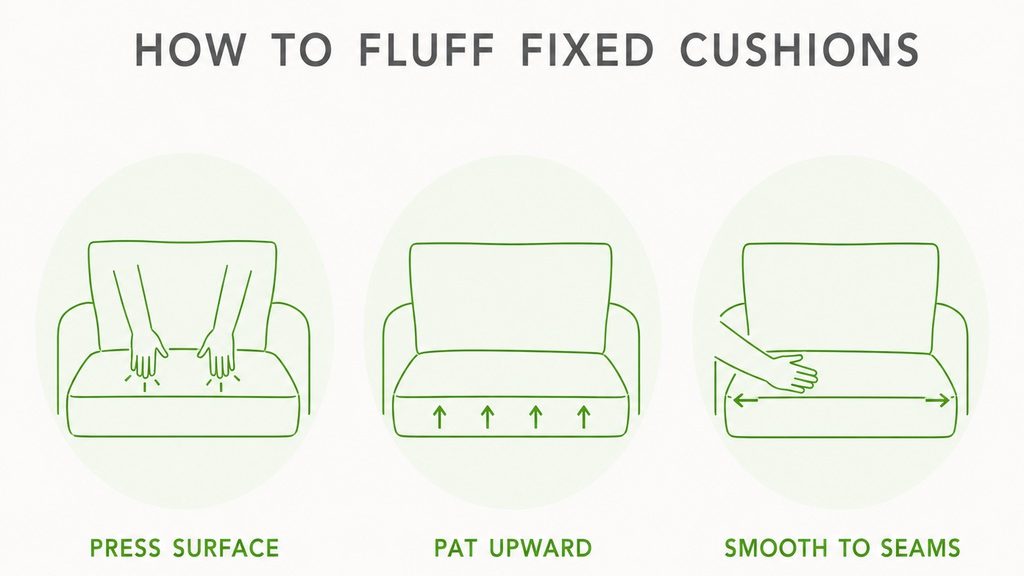
If you need to know how to fluff up couch cushions that are attached, start with what you can safely reach. Do not pull hard on seams or force open upholstery. Press the cushion surface with both hands, pat from the lower area upward, and smooth the fabric toward the seams.
Fixed cushions are harder to restore because you cannot shake or flip them. If the cushion has a hidden zipper, you may be able to adjust the fill. If not, deeper repairs may require upholstery help.
How Often Should You Fluff Sofa Pillows and Cushions?
For a daily-use sofa, lightly fluff back pillows and throw pillows every few days. Rotate removable seat cushions every one to two weeks if the sofa design allows it. A formal living room sofa may only need reshaping before guests arrive, while a family room sofa used for TV nights may need weekly attention.
Use frequency as a practical guide:
- Daily-use sofa: light fluffing every few days.
- Sectional or modular sofa: rotate high-use seats weekly or biweekly.
- Throw pillows: reshape whenever they look flat or folded.
- Down or fiber-filled back pillows: fluff more often.
- Firm foam seat cushions: rotate more than you pat.
If a sofa always feels too deep, too shallow, or hard to sit upright on, the issue may not be pillow fluffing at all. In that case, a sofa seat depth guide can help explain why the seating position affects daily comfort.
What Mistakes Make Sofa Pillows and Cushions Look Worse?
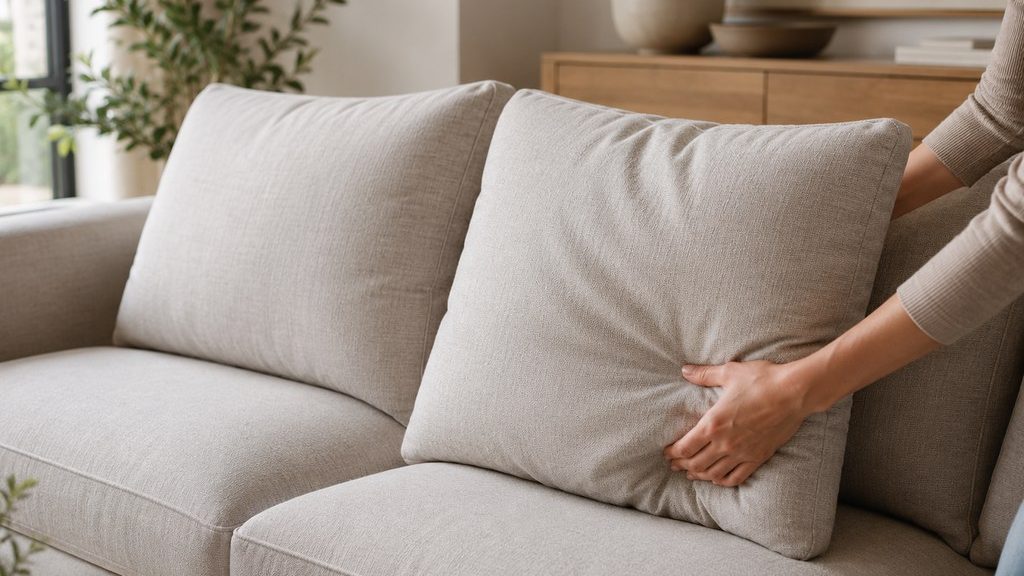
The most common mistake is using too much force. Hard punching may temporarily move the fill, but it can also stress seams, distort corners, or make the cover look uneven. Controlled pressure works better than aggressive hitting.
Avoid these mistakes:
- Ignoring the care label before cleaning, drying, or opening a cushion.
- Putting foam seat cushions or delicate covers in the dryer.
- Pulling hard on zippers that are tight or not meant for frequent access.
- Never rotating removable cushions.
- Using throw pillow inserts that are too small.
- Hiding sagging cushions under too many decorative pillows.
- Overusing the “karate chop” look on pillows that need corner support.
A sofa should still be comfortable after it is styled. If pillows make the seat hard to use, remove one or two rather than adding more to cover sagging areas.
Quick Sofa Refresh Checklist Before Guests Arrive
A fast sofa refresh can make the whole living room feel more pulled together. This is especially useful before a casual dinner, movie night, or weekend visit when the sofa has been used all week.
Use this checklist:
- Remove blankets, toys, remotes, and extra pillows.
- Fluff back pillows from the bottom upward.
- Rotate removable seat cushions if possible.
- Push throw pillow fill into the corners.
- Smooth seams and straighten covers.
- Vacuum crumbs from cushion gaps.
- Remove any pillow that blocks comfortable sitting.
The goal is not to make the sofa look staged. It should look full, clean, and ready for people to sit down comfortably.
Conclusion
Learning how to fluff a pillow on a sofa starts with a simple question: is the cushion flat because the fill shifted, or because the support has worn down? Hand fluffing, corner reshaping, rotation, and careful smoothing can restore many sofa pillows and couch cushions. But if foam stays dented, inserts look empty, or attached cushions no longer rebound, fluffing is only a temporary fix. Keep the routine gentle, match the method to the cushion type, and let comfort guide the next step.
FAQ
Can You Fluff Sofa Cushions in the Dryer?
Only some removable throw pillow inserts can be fluffed in the dryer, and only if the care label allows it. Most sofa seat cushions, foam cores, attached cushions, and upholstery covers should not go in the dryer. Heat can shrink fabric, damage foam, or distort shape. For safer maintenance, start with hand reshaping and proper sofa cushion cleaning care.
How Can You Make Sagging Sofa Cushions Look Fuller?
You can make sagging sofa cushions look fuller by redistributing fill, smoothing the cover, rotating removable cushions, or adding batting if the cushion allows it. If the cushion stays dented after pressure is released, the foam or support layer may be worn. In that case, knowing how to refluff a pillow helps the look, but not the seating support.
When Should You Replace the Insert, Cushion Fill, or Sofa?
Replace the insert when throw pillows look empty, refill back cushions when the fill stays at the bottom, and consider a new sofa when the same seat keeps sinking after rotation. In a daily-use living room, the Cronus Genuine Leather Modular Sofa is more relevant when the issue is no longer surface fluffing, with a solid wood frame, genuine leather upholstery, and soft down-filled comfort for relaxed seating.
Should Sofa Cushions Be Firm or Fluffy?
Sofa cushions should feel supportive first and soft second. A fluffy cushion that collapses when you sit is not giving enough support. Seat cushions usually need resilient foam or a stable core, while back pillows and throw pillows can be softer and easier to reshape.
Can I Add More Filling to Sofa Pillows?
Yes, you can add more filling if the pillow has a removable cover or accessible insert. Add fill gradually, spread it evenly, and check the shape before adding more. Overstuffing can strain seams, make the pillow stiff, and reduce the relaxed look of the sofa.
Is It Normal for New Sofa Cushions to Flatten?
A small amount of softening is normal as new sofa cushions break in. Deep dents, uneven sinking, or loss of support within a short time are different. That may point to low-resilience fill, a cushion construction issue, or a seating area taking too much daily pressure.


[…] removing a small amount of fill and save it in case you need to restore the original shape. Regular fluffing of sofa pillows and cushions can also help maintain an even […]
[…] fluffing of sofa pillows and cushions helps loose-fill designs maintain their shape, but it won’t make a solid foam core break in […]