 By Kelvin
Introduction
When you notice mold on furniture, you usually need two answers fast: can this piece be cleaned, and how do you keep the problem from returning? This guide explains what causes mold, how to remove it from wood, leather, fabric, and outdoor furniture, and when DIY cleaning is no longer the safest choice. It also covers prevention habits that matter in real homes, from a sofa pushed against a cold wall to a wood cabinet stored in a damp basement.
Table of Contents
Why Does Mold Grow on Furniture, and Is It Safe to Clean?
Mold needs moisture, airflow problems, and a surface to grow on. In most homes, mold on furniture is linked to high humidity, water damage, damp storage, or pieces placed too close to cold exterior walls. Because mold can grow on wood, dust, fabric, upholstery, and leather when moisture is present, a humid basement couch, a wood dresser near a leaky window, or a leather chair stored in a garage can develop spots even when the room looks clean.
Mold on furniture is usually safe to clean only when the affected area is small, surface-level, and on a material that can be dried completely. The EPA says that if the moldy area is less than about 10 square feet, many homeowners can handle cleanup themselves, but larger or more complex cases may need professional help.
| Situation | Best Next Step |
| Small spots on sealed wood, metal, plastic, or stone | DIY cleaning may be reasonable |
| Light surface spots on leather | Clean gently, spot test first, and dry fully |
| Mold inside sofa cushions or deep upholstery | Consider professional cleaning or replacement |
| Mold after flooding or sewage exposure | Do not DIY; call a professional |
| Mold keeps coming back after cleaning | Fix the moisture source before cleaning again |
| Strong musty smell remains after drying | Inspect hidden areas and soft materials |
| Someone at home has asthma, allergies, or immune concerns | Avoid direct exposure and consider professional help |
Before cleaning, move the piece away from other furniture if possible. Wear gloves, eye protection, and a well-fitting mask, and open windows for airflow. Do not brush mold indoors in a way that spreads dry spores through the room.
How to Remove Mold from Furniture by Material
Different materials react differently to water and cleaning products. A sealed wood table can often handle gentle wiping and quick drying. Leather needs less moisture and more care. Fabric and upholstered pieces are harder because mold can move beneath the surface. Start with the material first, then choose the method.
Wood Furniture
If you are searching how to remove mold from wood furniture, first check whether the surface is sealed, painted, veneered, or unfinished. Sealed wood is easier to clean because mold is more likely to stay on the surface. Unfinished or damaged wood may absorb moisture and spores more deeply.
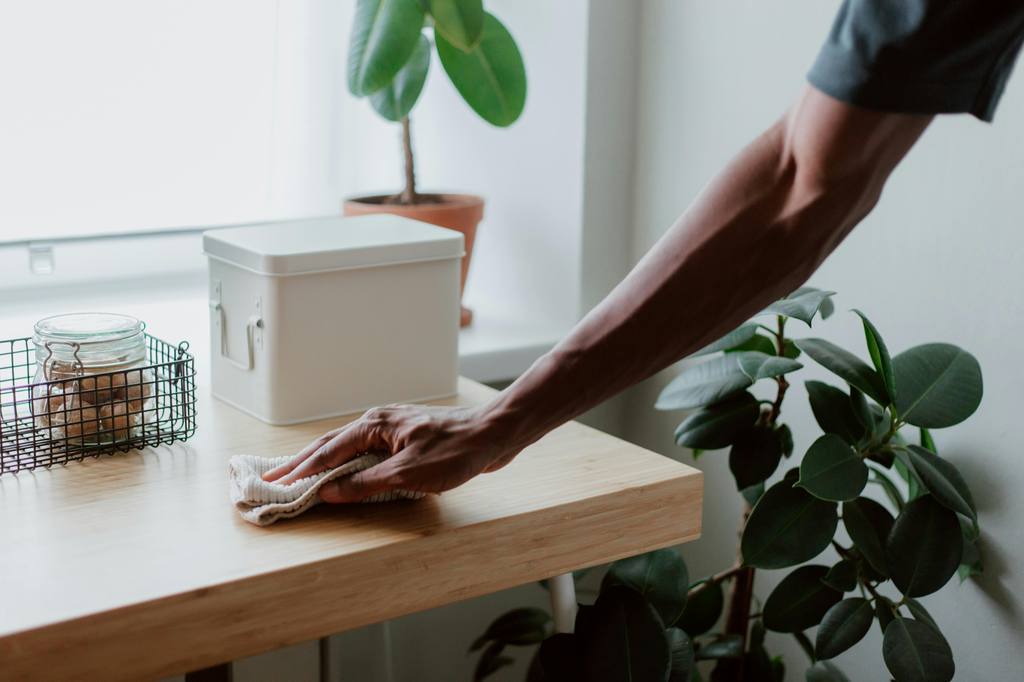
For light mold on wood furniture, move the piece to a ventilated area. Brush loose surface growth gently with a soft brush or dry cloth, preferably outdoors. Then wipe with a mild dish soap and water solution, using a damp cloth rather than soaking the surface. Dry immediately with a clean towel.
If you need to know how to clean mold off wood more safely, avoid flooding the surface with vinegar or bleach. Too much liquid can swell wood, lift veneer, dull finishes, or push moisture into seams. For ongoing care, learning how to clean wood furniture safely without damaging the finish helps prevent future moisture-related problems.
Leather Furniture
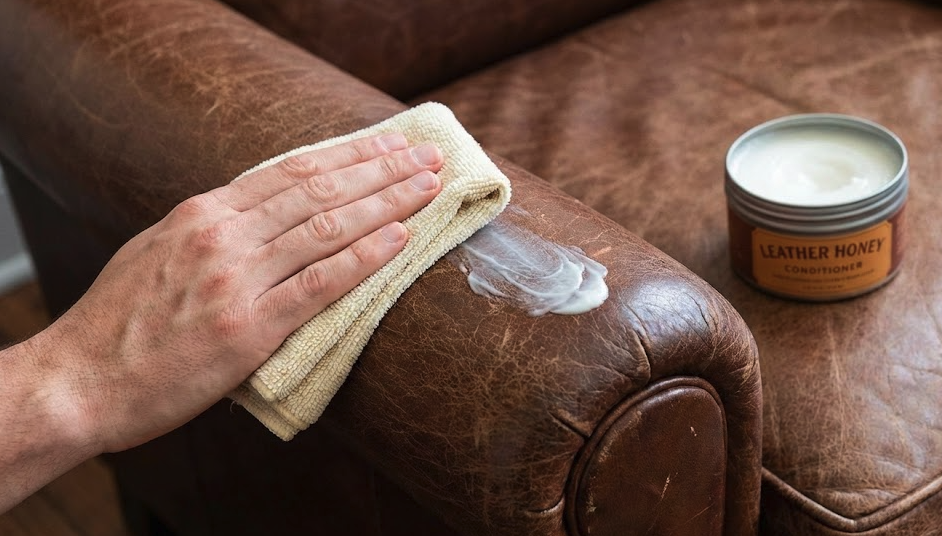
For mold on leather furniture, the safest approach is low moisture, gentle pressure, and a spot test. Leather can crack, fade, or lose its finish if scrubbed with harsh cleaners or soaked with water.
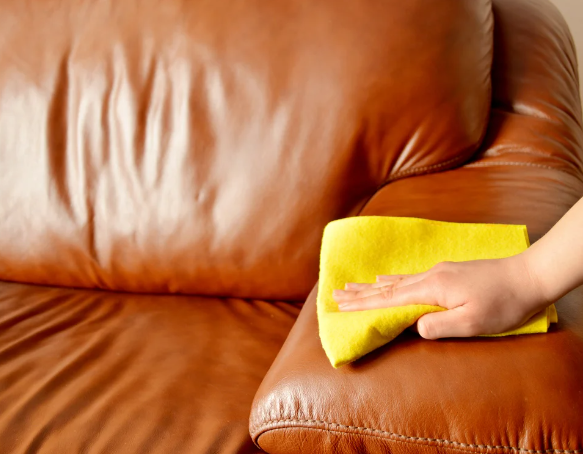
To handle light surface mold, take the furniture to a well-ventilated area. Wipe loose spores with a dry microfiber cloth. Then use a leather-safe cleaner or a very lightly damp cloth with mild soap, depending on the manufacturer’s care instructions. Wipe again with a clean damp cloth, then dry with a soft towel.
If you are comparing methods for how to clean mold off leather, avoid abrasive brushes, alcohol-heavy cleaners, ammonia, and direct sunlight drying. People also search how to clean leather with mold, but the answer depends on the leather type. Protected leather is more forgiving than suede, nubuck, or cracked leather, which may need professional cleaning.
Fabric Sofas and Upholstered Furniture
A small spot of mold on couch fabric is more complicated than a spot on a hard table. Upholstery can hold moisture in the cover, padding, seams, and cushion fill. If the mold is only on a removable cover and the care label allows washing, clean and dry it completely before putting it back.
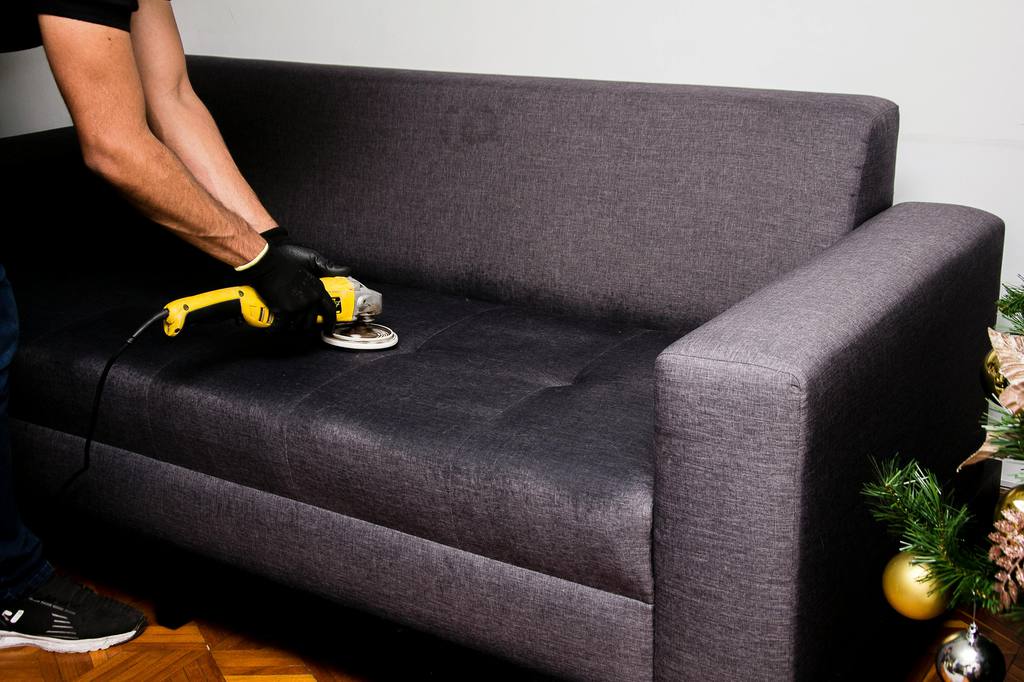
For light surface mold on sofa upholstery, vacuum carefully with a HEPA-filter vacuum if available, then use a fabric-safe cleaner only after testing a hidden area. Keep liquid minimal. Fans, open windows, and dry towels matter as much as the cleaner because trapped moisture can restart the problem.
If cushions smell musty after cleaning, feel damp inside, or show growth on multiple sides, the issue may be deeper than the cover. In that case, surface cleaning may hide the problem rather than fix it.
Outdoor, Rattan, and Hard-Surface Furniture
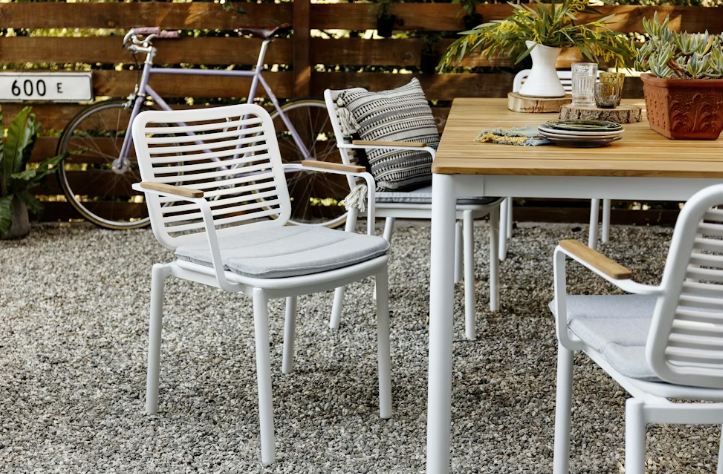
Outdoor furniture often develops mildew after rain, leaf buildup, or storage under a cover before it is fully dry. For patio pieces, remove loose dirt first, wash with mild soap and water, scrub seams or woven areas gently, rinse if the material allows it, and dry fully before covering.
The same logic applies to dining chairs, metal frames, stone tops, and plastic surfaces: clean the surface, remove organic debris, and dry quickly. A piece that is stored damp will often grow mildew again, even if it looked clean when you put it away. For seasonal pieces, how to clean patio furniture step by step is especially useful before storage.
What Should You Avoid When Cleaning Moldy Furniture?
Cleaning mistakes can damage the furniture or make the mold problem harder to control. For hard surfaces, scrub visible mold with detergent and water, then dry the area completely. For porous materials like fabric, unfinished wood, or cushion filling, mold may be difficult to remove fully once it grows beneath the surface.
Avoid these common mistakes:
- Do not soak wood, veneer, leather, or upholstery.
- Do not mix bleach with ammonia, vinegar, or other cleaners.
- If bleach is used on an appropriate hard surface, ventilate the area and follow the product directions carefully.
- Do not use bleach on leather or fabric unless the care label clearly allows it.
- Do not scrub leather with stiff brushes.
- Do not dry leather in direct sun or next to high heat.
- Do not paint, cover, or decorate over visible mold.
- Do not keep using soft furniture that smells moldy after cleaning.
How Can You Prevent Mold and Mildew on Furniture?
Preventing mildew on furniture is mostly about controlling moisture and airflow. The best way to control mold growth is to control moisture. Cleaning without fixing humidity, leaks, or condensation usually leads to the same problem returning.
Focus on habits that reduce trapped moisture:
- Keep indoor humidity under control, especially in basements and coastal climates.
- Leave space between large furniture and exterior walls.
- Dry spills immediately, including under cushions and table mats.
- Avoid storing furniture in plastic wrap if it may trap moisture.
- Vacuum upholstery and dust wood surfaces regularly.
- Check the backs of cabinets, TV stands, and sofas during humid months.
A simple living room example: if a sofa sits against a north-facing wall and the room often feels humid, pull it forward slightly and check the wall and sofa back every few weeks. That small airflow gap can make a bigger difference than repeatedly spraying the same spot.
What Furniture Choices Work Better in Humid Rooms?
No furniture is truly mold-proof, but some choices are easier to maintain in humid homes. Smooth, sealed, wipeable surfaces are usually easier to clean than highly textured or absorbent ones. Raised legs can also help airflow under sofas, cabinets, and media units.
Before buying furniture for a damp-prone room, ask:
- Can the surface be wiped without soaking?
- Are the care instructions clear?
- Will air move behind and under the piece?
- Is the room already prone to condensation?
- Are cushions removable or easier to air out?
- Will the piece sit on damp carpet or near a window?
The best long-term choice is not only about material. It is the combination of material, placement, cleaning habits, and room humidity.
Conclusion
Mold on furniture is usually a moisture problem before it is a cleaning problem. Start by checking the material, the size of the affected area, and whether the growth is only on the surface. Wood, leather, fabric, and outdoor furniture all need different methods, but every successful cleanup ends the same way: remove visible growth, dry fully, and improve airflow or humidity control. If the mold is widespread, recurring, deep in upholstery, or linked to water damage, professional help is the safer next step.
FAQ
Is moldy furniture always ruined?
No, moldy furniture is not always ruined. Small surface spots on sealed wood, metal, stone, or plastic are often cleanable. Soft furniture is different because mold can move into fabric, seams, and cushion fill. If the piece still smells musty after cleaning and drying, it may need professional evaluation or replacement.
Can new furniture get mold in storage or shipping?
Yes, new furniture can develop mold if it is exposed to moisture during storage, shipping, or unpacking. Damp packaging, poor airflow, or a humid room can all create the right conditions. If a new piece arrives with a strong musty smell, visible spots, or wet packaging, document it before cleaning.
Why does mold come back after I clean furniture?
Mold comes back when the moisture problem remains. The furniture may still be damp inside, the room humidity may be too high, or the piece may sit too close to a cold wall. Repeated growth usually means the source is environmental, not just a dirty surface.
Can I use the same cleaner on wood, leather, and fabric?
No, one cleaner should not be used across all furniture materials. Wood can swell, leather can dry or discolor, and fabric can trap moisture. Always check the care label, spot test first, and use the least wet method that works for the material.
How far should furniture sit from the wall to reduce mold risk?
Furniture should not sit tightly against cold or damp exterior walls. In humid rooms, leave at least a small airflow gap behind large pieces like sofas, dressers, TV stands, and storage cabinets. The goal is not a fixed measurement, but enough clearance for air to move and moisture to dry instead of staying trapped.
What should I do if a sofa still smells musty?
A sofa that still smells musty may have moisture or mold below the surface. Vacuuming, airing, and odor absorption can help with light smells, but persistent odor needs a deeper check of cushions, seams, frame, and nearby walls. General ways to get odor out of a sofa can help only after the moisture source is fixed.


