 By Jenny Smith
Outdoor pieces take a beating—pollen, sunscreen, bird droppings, grill smoke, and surprise rain all add up. The good news: once you know how to clean patio furniture the right way, it becomes a quick routine instead of a weekend project. This guide walks you through materials, frames, cushions, and how to clean patio furniture covers without stripping finishes or trapping moisture. A little consistency also helps you keep patio furniture clean longer, so you spend more time relaxing and less time scrubbing.
Before You Start – Tools, Products & Safety
Quick Pre-Clean Checklist
Use this quick checklist to prevent damage and avoid “cleaning twice” later:
- Inspect furniture for loose screws, cracked slats, rust spots, frayed wicker, or ripped seams.
- Check cushion and cover tags for “machine-washable,” “spot clean only,” water temperature icons, and bleach warnings.
- Pick a dry, breezy day so everything dries fully (this matters more than you think for mildew prevention).
Essential Tools & DIY Cleaning Solutions
Most outdoor sets can be cleaned with gentle basics. A soft-bristle brush, microfiber cloths, a bucket, garden hose with a spray nozzle, vacuum with a brush attachment, and rubber gloves cover almost everything. For tight corners (like scrollwork or how to clean patio furniture mesh), keep an old toothbrush or small detail brush.
For DIY solutions, start with mild dish soap + warm water. White vinegar diluted with water works well for deodorizing and light mildew. For fabrics, oxygen bleach (not chlorine bleach) can be a safe boost when the label allows it. Safety note: never mix bleach with vinegar, and avoid harsh cleaners near pets, kids, and garden beds.
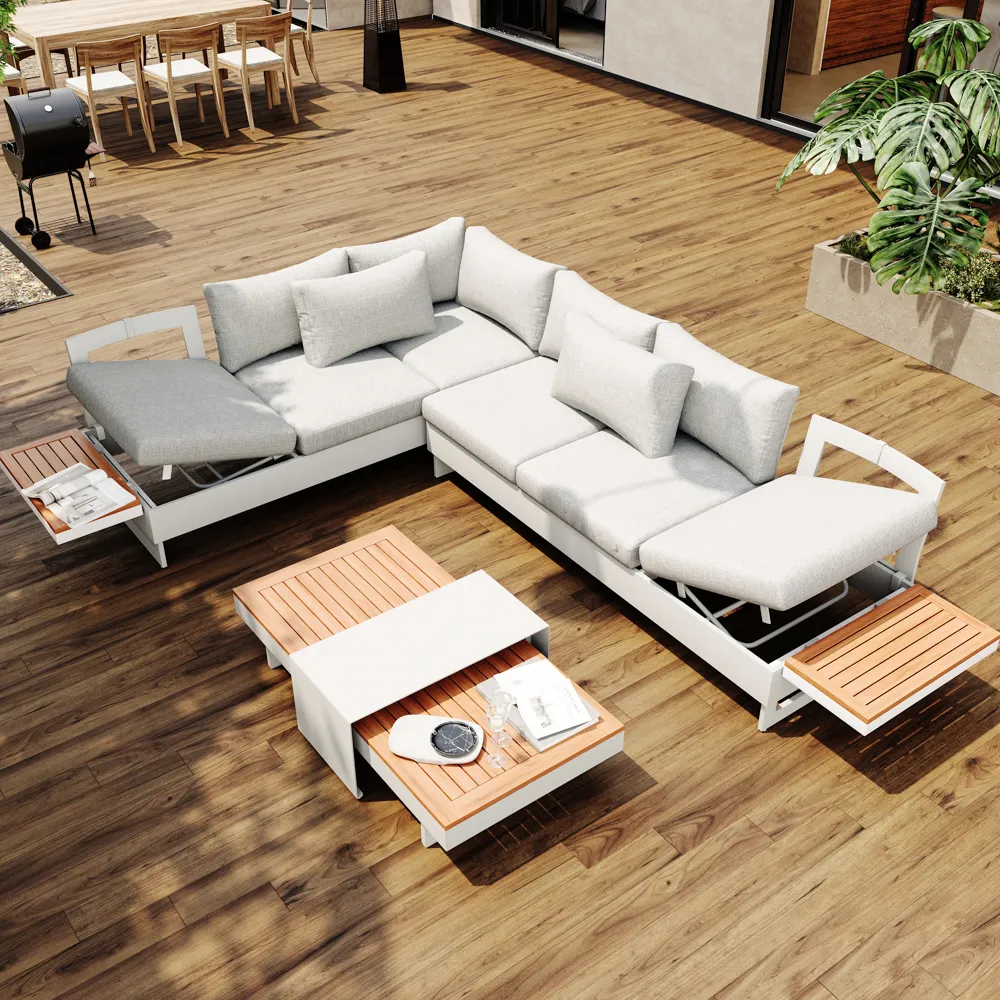
Step 1 – Know Your Patio Furniture Materials
How to Identify Your Furniture Materials at a Glance
A quick touch-and-look test usually tells you what you’re working with. Metal frames feel cool and rigid; aluminum is lighter than steel. Wicker can be natural (plant-based) or synthetic resin (often labeled “all-weather”). Wood shows grain and may feel slightly porous. Plastic/resin looks molded and smooth. Sling chairs use taut fabric stretched across a frame.
If you’re unsure, check the underside for a sticker or stamp. Knowing the material is the biggest shortcut for cleaning outdoor patio furniture safely—especially with coated metals and woven pieces.
What Each Material Can (and Can’t) Handle
Here’s a simple comparison to keep you from accidentally stripping paint or fuzzing up wicker.
| Material | Safe cleaners | What to avoid |
| Metal (steel/iron) | Soapy water, soft brush; rust remover spot use | Harsh abrasives, leaving water on joints |
| Aluminum / cast aluminum | Soapy water; vinegar-water for water marks | Strong acids, scouring pads |
| Powder-coated aluminum | Mild soap only; gentle rinse | Abrasives, aggressive degreasers |
| Wood | Mild soap; wood-specific cleaner | Pressure washing, soaking, bleach |
| Wicker (natural) | Low-moisture wipe; gentle brush | Over-wetting, high pressure |
| Resin wicker / faux rattan | Soapy water; soft brush | Solvents, stiff wire brushes |
| Plastic/resin | Soapy water; baking soda paste for stains | Harsh solvents, rough scrubbing |
| Fabric slings/mesh | Gentle soap; soft brush; rinse well | High pressure, strong bleach (unless label ok) |
Step 2 – How to Clean Patio Furniture Frames (by Material)
Metal & Aluminum Frames – Dirt, Rust & Water Marks
For everyday grime on how to clean metal patio furniture, start with a hose rinse, then wash with warm soapy water using a soft brush. Rinse thoroughly and towel-dry joints and screw heads—this is where rust starts on steel and how to clean iron patio furniture pieces.
If you’re dealing with how to clean oxidized metal patio furniture (chalky white haze, common on older aluminum), use a vinegar-water wipe or a dedicated aluminum cleaner, then rinse and dry. For light rust on how to clean wrought iron patio furniture, gently scrub the spot, dry it, and touch up with rust-inhibiting paint to prevent the rust from returning.
Wood & Wicker – Gentle Cleaning Without Damage
For how to clean wood patio furniture, avoid soaking. Instead, wipe with a damp (not dripping) cloth and mild soap solution, following the grain. Rinse with a barely-wet cloth and dry immediately. If the surface looks dry or faded after cleaning, a wood protectant or oil (appropriate to your finish) helps restore water resistance.
For wicker, use a vacuum brush first to lift dust from the weave. Then lightly scrub with a soft brush and sudsy water. Keep water minimal—especially on natural wicker—because trapped moisture can warp fibers. I once left a wicker side chair to “air dry” in a shady corner, and it stayed damp for two days—hello, musty smell. Sun + airflow fixed it fast.
Plastic, Resin & Faux Rattan – Dealing With Dullness & Stains
When learning how to clean plastic patio furniture, the trick is patience, not force. Wash with soapy water first. For stubborn stains, use a baking soda paste (baking soda + a little water), rub gently, then rinse. This brightens without scratching like abrasive powders can.
For resin wicker and faux rattan, use a soft brush to reach crevices and rinse well so soap doesn’t dry into a dull film. If your pieces look chalky, finish with a clean-water wipe and dry with microfiber to bring back a cleaner sheen.

Step 3 – How to Clean Patio Cushions & Fabrics
Removable Cushion Covers – When You Can (and Can’t) Machine-Wash
If you’re figuring out how to clean patio furniture cushions, the care label is the boss. “Machine-washable” covers can usually handle a gentle cycle, but prep matters: vacuum off pollen and grit first (grit acts like sandpaper in the wash). Pre-treat stains with mild detergent; use oxygen bleach only if the label allows.
Wash on gentle, in cold or warm water as directed, and skip high heat. Air-dry flat or over a rack so the fabric keeps its shape. For some common outdoor fabrics like Sunbrella, the brand’s care guidance notes machine washing cold on delicate with mild detergent and air drying. (Sunbrella, 2023)
Non-Removable Cushions – Deep Cleaning in Place
For cushions you can’t unzip, vacuum first, then lightly mist with a soap-and-water solution and scrub with a soft brush. Rinse thoroughly—leftover soap attracts dirt. Press (don’t wring) with towels to remove water, then stand cushions on edge so air hits both sides. This drying step is crucial: the EPA notes wet items should be dried within 24–48 hours to help prevent mold growth. (U.S. EPA, 2025)
If you’re cleaning how to clean patio furniture cushions and canvas, spot-test any cleaner first. Canvas can hold detergent residue, so rinse longer than you think you need.
Mold, Mildew & Tough Stains on Outdoor Fabrics
Mildew usually means moisture sat too long. Brush off dry spores outdoors (so you don’t spread them inside), then clean with mild soap and water. If the label allows, oxygen bleach can help lift set-in staining. For odors, a vinegar-water rinse can reduce mustiness, followed by a full rinse and fast drying.
One practical “real life” tip: after a humid week, I’ll prop cushions vertically near a sunny wall for 30 minutes—just enough airflow to prevent that damp, closed-up smell without fading them.
Step 4 – How to Clean Patio Furniture Covers
Read the Label First – Washing Symbols & “Spot Clean Only” Covers
This section is specifically for how to clean patio furniture covers—the big protective shells and the fitted ones. Covers often have coatings for water resistance, and “spot clean only” usually means full machine washing can strip that coating or warp the fit. Laundry symbols typically tell you: machine wash vs hand wash, water temperature, tumble dry vs line dry, bleach permissions, and ironing limits.
If it says “spot clean only,” treat stains where they are, rinse thoroughly, and let the cover air dry completely before putting it back on furniture.
Machine-Washing vs Hand-Washing Patio Furniture Covers
For machine-safe covers, shake off leaves and dirt first, then close zippers/Velcro so nothing snags. Wash 1–2 covers at a time with mild detergent on gentle, and skip fabric softener (it can reduce water repellency). Air drying is safest for shape and coatings.
For hand-wash-only covers, use a tub of lukewarm water + mild soap. Swish gently, then use a soft brush on heavily soiled areas. Rinse until the water runs clear—soap left behind becomes a dirt magnet the next time you use the cover.
Drying, Deodorizing & Preventing Mold Inside Covers
Covers trap humidity like a mini greenhouse. The goal is “bone dry” before storage or re-covering. Hang covers so air can circulate inside folds, and flip them once during drying. If odors linger, a light vinegar-water mist can help, but always rinse and dry after.Remember: mold prevention is mostly about moisture control and drying speed, not stronger chemicals.

Step 5 – Drying, Protecting & Storing for Longer Life
How to Dry Everything Properly
Drying is the step people rush—and it’s the step that decides whether mildew returns. Towel-dry metal joints and screws. Stand cushions on edge, rotate them, and keep them off grass (grass holds moisture). If you cleaned sling/mesh seating, let it drip-dry, then wipe the frame connections.
If you only do one “maintenance habit,” do this: after rain, wipe pooled water off tables and chair seats. That small action dramatically reduces water marks and oxidation on how to clean aluminum patio furniture and how to clean cast aluminum patio furniture over time.
Covers vs Indoor Storage – What’s Best for You?
Covers are convenient, but they work best when furniture is already clean and fully dry. If you live in a humid or rainy climate, indoor storage (garage, shed) often beats covering—less trapped moisture, less mildew risk. If indoor storage isn’t possible, choose breathable covers and vent them occasionally.
Outdoor upkeep isn’t just cosmetic. In a National Association of REALTORS® report, 97% of members said curb appeal is important for attracting a buyer. (NAR, 2023) Clean, well-kept patios support that “this home is cared for” feeling.
Conclusion
Once you know your materials and follow a simple routine, cleaning outdoor patio furniture is straightforward: gentle soap, the right brush, thorough rinsing, and fast drying. Treat cushions and covers like moisture-sensitive items (because they are), and handle metals with a “clean + dry + protect” mindset to prevent rust and oxidation. Do it a few times per season, and your set stays inviting, lasts longer, and is always ready for a last-minute dinner outside.
FAQs About How to Clean Patio Furniture
How often should I clean my patio furniture and covers?
For most homes, a light clean every 2–4 weeks in peak season is enough, with a deeper clean at the start and end of the season. Covers should be cleaned whenever you see grime or mildew spots—dirty covers can transfer stains back onto clean frames and cushions.
Can I use a pressure washer on patio furniture?
Sometimes, but carefully. High pressure can strip paint, fray wicker, and force water into joints and cushion seams. If you must, use a wide fan tip, keep distance, and avoid wood, natural wicker, and any fabric. A hose with a spray nozzle is safer for most sets.
What’s the safest way to clean patio furniture if I have kids or pets?
Stick to mild dish soap and warm water, rinse thoroughly, and let everything dry completely before use. Avoid harsh disinfectants and strong bleach. If you need deodorizing, a diluted vinegar rinse can help—just keep pets away until you’ve rinsed and dried the surface.
How do I keep patio furniture clean during pollen season?
Use a quick “dry clean” routine first: vacuum cushions, brush off frames, and wipe with a damp microfiber cloth. Pollen turns into a sticky film once it gets wet, so removing it dry (or barely damp) prevents streaks and saves you from heavier scrubbing later.


