 By Jenny Smith
After a long day, you sink into your leather recliner sofa recliner, kick the footrest out, and instantly feel the stress drop—until you notice new creases, tiny cracks, or a sticky stain on the arm. In 2026, leather furniture is a serious investment: the global leather furniture market was worth about $11.45 billion in 2024 and is still growing, driven by demand for durable, long-lasting pieces (Data Bridge Market Research).With the right leather reclining sofa care routine, you can protect both comfort and value, learn how to clean leather sofa surfaces safely, and keep every moving part working smoothly. Always check your manufacturer’s care labels and instructions first before trying any cleaner or method.
Understand Your Leather Recliner Sofa (Types & Care Basics)
Common Leather Types in Recliner Sofas
Not all recliner sofa materials age the same, so first identify what you’re sitting on. Quality full-grain and top-grain leather can last 15–25 years or more, while bonded and many faux leathers typically show wear in 3–7 years; some fabric sofas need replacing after around 5 years.(Adobe Interiors) Use the feel and finish of your recliner sofa recliner to match it to the table below, then follow the “safe zone” for cleaning.
| Leather type | Feel & look | Durability & lifespan* | Sensitivity to cleaners / water |
| Full-grain / Top-grain | Supple, natural grain, warms with use | Highest; often 15–25+ years | Sensitive to harsh chemicals and to soaking |
| Corrected / Coated | Smooth, more uniform | High; coating adds protection | Handles mild cleaners; avoid strong or solvent-based ones |
| Bonded leather | Slightly plasticky, thinner | Lower; often 3–7 years | Very sensitive; over-wetting can cause peeling |
| Faux / PU “leather” | Even, sometimes shiny, cooler to touch | Moderate, prone to cracking | Sensitive to heat and oils; prefers pH-neutral cleaners |
*With normal household use and basic care.
Recommended Care by Material Type
- Full-grain / top-grain leather
Use a dedicated leather cleaner and conditioner; apply sparingly in thin layers. Avoid dish soaps, bleach, alcohol wipes, or any strong alkaline cleaner that can strip oils. - Corrected / coated leather
The sealed surface tolerates slightly more frequent wipe-downs with a damp microfiber cloth, but you should still avoid abrasive scrubs or solvent-based products that could cloud the coating. - Bonded leather
Treat as fragile: minimal moisture, no scrubbing, and only very gentle cleaner. Too much conditioner can actually loosen the bonded layer and speed up peeling. - Faux / PU leather
Stick to mild, pH-neutral cleaner and a slightly damp cloth, then dry well. Traditional leather oils usually aren’t needed and may leave the surface tacky.

Everyday Leather Reclining Sofa Care (Daily to Monthly Routine)
Simple Routine to Keep Your Recliner Sofa Recliner Fresh
Think of leather reclining sofa care as three quick rhythms: 1 minute daily, 5 minutes weekly, 15 minutes every month or two. On busy days, smooth and reposition cushions when you stand up and dab any fresh spills with a soft dry cloth. Once a week, vacuum the seat, back, arms and, with the recliner fully open, the crumbs around the mechanism and between moving parts. Every 2–3 months, lightly clean and condition full-grain or top-grain leather, while coated, bonded or PU surfaces just get a gentle wipe-down. One reader told us she keeps a microfiber cloth and leather wipes in the side table; now her kids know the Sunday rule: “Recline, wipe, then movie.” For more inspiration, see our ultimate leather sofa care guide.
Deep Cleaning: How to Clean Leather Sofa Safely (Recliner Edition)
Preparation and Safety Check
Plan a deeper clean every 3–6 months, depending on how much you use the sofa, whether you have kids or pets, and your climate. Choose a cleaner formulated for your exact leather or PU type and always patch-test it on a hidden spot, then wait 24 hours to check for fading, stiffness or stickiness. Move rugs and throws out of the splash zone, and unplug power recliners before cleaning around buttons or USB ports. If the test patch looks wrong in any way, stop and call a professional instead of experimenting.
Step-by-Step Deep Cleaning for Leather Reclining Sofas
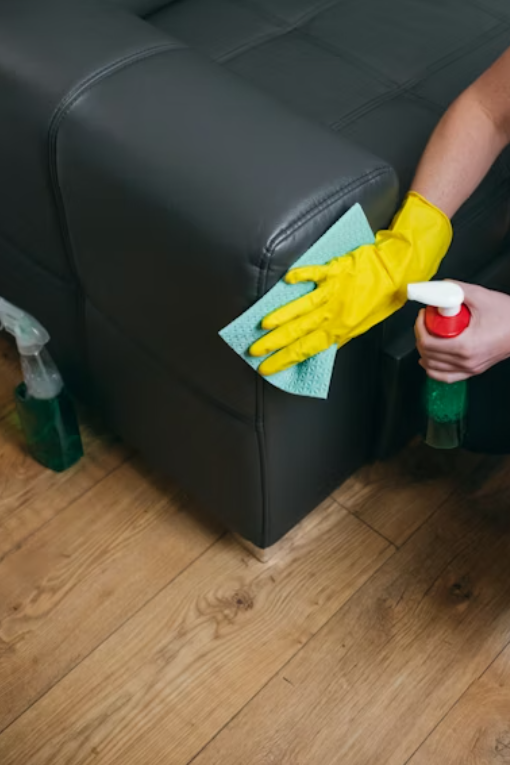
Open the recliner fully to expose creases, the footrest and hidden folds, then vacuum carefully around seams and mechanisms. Apply a small amount of leather-safe cleaner to a soft cloth (never directly onto the leather), and work in small sections—seat, back, arms, then footrest—using gentle circular motions. Wipe off residue with a clean, slightly damp cloth, then dry immediately with a towel. For full-grain or top-grain leather, finish with a thin, even layer of conditioner, especially on flex points that bend when the footrest moves. Finally, open and close each seat a few times so no moisture stays trapped in the folds. Avoid soaking the leather, and never use a heater or hairdryer to speed drying; rapid heat is a fast track to shrinking and cracking. If you want more visual guidance, pair this routine with our reclining sofa buying and setup guide.

Preventing Stains, Scratches and Cracks on a Leather Reclining Sofa
Handling Spills, Food, Ink and Pet Accidents on a Recliner
For everyday stains, fast, gentle “first aid” is best. Water-based drinks like coffee or soda should be blotted, not rubbed, with a dry cloth, then treated with a suitable cleaner if needed and dried thoroughly. Oily or greasy spots shouldn’t be flushed with water; blot the excess and follow with a leather-safe degreasing cleaner. Ink or marker stains are tricky—skip nail polish remover or pure alcohol, which can remove color; test any specialist ink remover in a hidden spot or call a pro. Pet accidents need immediate blotting with paper towels and a mild cleaner so odors don’t soak into foam.
| Stain type | Immediate steps | Call a pro when… |
| Water-based drinks | Blot dry, then mild cleaner if needed | A dark ring or stiff patch remains |
| Oils / grease | Blot only, then leather-safe degreaser | Stain spreads, finish looks dull |
| Ink / marker | Test gentle ink remover; don’t scrub | Mark is large, on headrest or arm front |
| Pet accidents | Blot quickly, clean, let fully dry | Odor persists or leather feels rough |
Because recliners live hard lives, pay extra attention to footrests where shoes rest and to the gap between seat and footrest; grit and crumbs there can act like sandpaper every time you close the recliner.
Sunlight, Heat and Dryness – Keeping Leather From Cracking
Light and temperature slowly pull moisture out of leather, so that buttery-soft feel can turn stiff and crackly if your sofa bakes in front of a window or heater. Real full-grain and top-grain leather benefit from periodic conditioning to replenish natural oils, while PU or faux leather needs shade and stable temperature more than heavy oils. Try to keep your recliner out of strong direct sun or filter it with blinds, and leave space between the back and radiators or fireplaces. In very dry climates, a small humidifier plus one extra conditioning session on the creased footrest and knee areas during the driest month can make a big difference. Our style guide on leather sofa luxury and easy care shows how well-placed leather can stay beautiful without constant fuss.
Conclusion
When you know exactly what your recliner is made from, leather reclining sofa care becomes less scary and more like a simple habit. A quick daily smooth-down, a weekly vacuum (including the footrests and mechanisms), and a light clean every couple of months will keep leather surfaces supple and smooth. Deep clean gently, shield your sofa from harsh sun and heat, and bring in a professional when damage goes beyond surface marks. Even if your leather recliner already shows some creasing or wear, starting a consistent routine today can slow future damage and stretch years of comfort and value from the piece you love. If you’re still choosing the right model, check our latest picks in Best Reclining Sofa 2026 to match care-friendly materials with your lifestyle.
FAQ
How often should I clean my leather reclining sofa?
Do light maintenance weekly—vacuuming, wiping high-touch areas, and smoothing cushions. Plan a deeper clean every 3–6 months, depending on how often you use it, your climate, and whether you have kids or pets. High-quality leather cared for this way is much more likely to reach that 15–20+ year lifespan.
Can I use regular household cleaners to clean leather sofa surfaces?
Avoid most all-purpose sprays, disinfectant wipes, bleach, or ammonia cleaners on leather; they’re often too harsh and can strip color and oils. Instead, use a cleaner specifically labeled for leather or a pH-neutral solution recommended by your sofa’s manufacturer, and always test in a hidden area first.
How do I stop my leather recliner from cracking in the creases?
Cracks usually come from dryness plus friction. Keep the recliner out of direct sun and away from heaters, wipe away grit that can scratch flex points, and condition real leather lightly but regularly—especially where the seat, back and footrest fold. For faux or PU leather, focus more on temperature control and gentle cleaning than on heavy conditioners.
Is leather reclining sofa care different for faux leather vs real leather?
Yes. Real leather (full-grain or top-grain) likes periodic conditioning and can develop a soft patina over time. Faux and PU leather are more sensitive to heat and oils; they usually do best with mild, pH-neutral cleaners, very little moisture, and careful protection from direct sun. Using real-leather products on PU can make it sticky or cloudy.
When is it better to repair or replace a damaged leather recliner sofa?
If the frame is sturdy, the mechanism works, and damage is mostly surface-level—scuffs, small stains, minor color loss—professional repair is often worthwhile, especially on higher-end leather. If you see widespread peeling, deep structural sagging, or repeated motor failures out of warranty, replacement may be more cost-effective than ongoing fixes.


