 By Stephanie
After a summer game night, the last thing anyone wants to find is gum pressed into a favorite seat. The safest answer to how to get gum out of sofa is simple: make it hard before you try to remove it. A sealed ice pack, a plastic card, and a little patience are far safer than heat or hard scrubbing. What matters most is knowing when to stop—especially with leather, bouclé, velvet, or gum that has worked its way into a cushion seam.
Table of Contents
The Safest Way to Remove Gum From Upholstery
Fresh gum is easier to handle when it is cold, firm, and no longer stretchy. Rather than trying to dissolve it or wipe it away, focus on lifting it off the surface in small pieces. This keeps the sticky material from spreading into the upholstery.
Freeze, Lift, and Vacuum Without Damaging Upholstery
Put ice cubes or a slim ice pack inside a sealed zip-top bag. Hold it against the gum until the gum feels firm and brittle. Keeping the ice contained matters because direct moisture can leave a water mark on fabric or seep into cushion padding.
Once the gum hardens, slide a plastic card or the back of a spoon under the outer edge. Lift slowly in short motions. Do not drag the tool across the fabric or press down into the cushion.
- Chill: Wait until the gum no longer bends or stretches.
- Lift: Start at the edge instead of scraping across the middle.
- Vacuum: Use a crevice or upholstery attachment to remove loose flakes before they warm up and stick again.
If the gum softens while you work, stop and reapply the cold pack. Trying to force soft gum loose usually makes the spot bigger.
Use the Least Aggressive Tool First
A white microfiber cloth is useful because it makes color transfer easier to spot. A flexible plastic edge is safer than a metal blade, which can snag fabric, scratch coated leather, or flatten a delicate pile.
Start gently and stay patient. If the gum does not release after it has fully hardened, do not jump to a knife, stiff brush, or stronger cleaner. Re-chill the area first. If the fabric starts pulling, flattening, or changing color, pause before doing more.
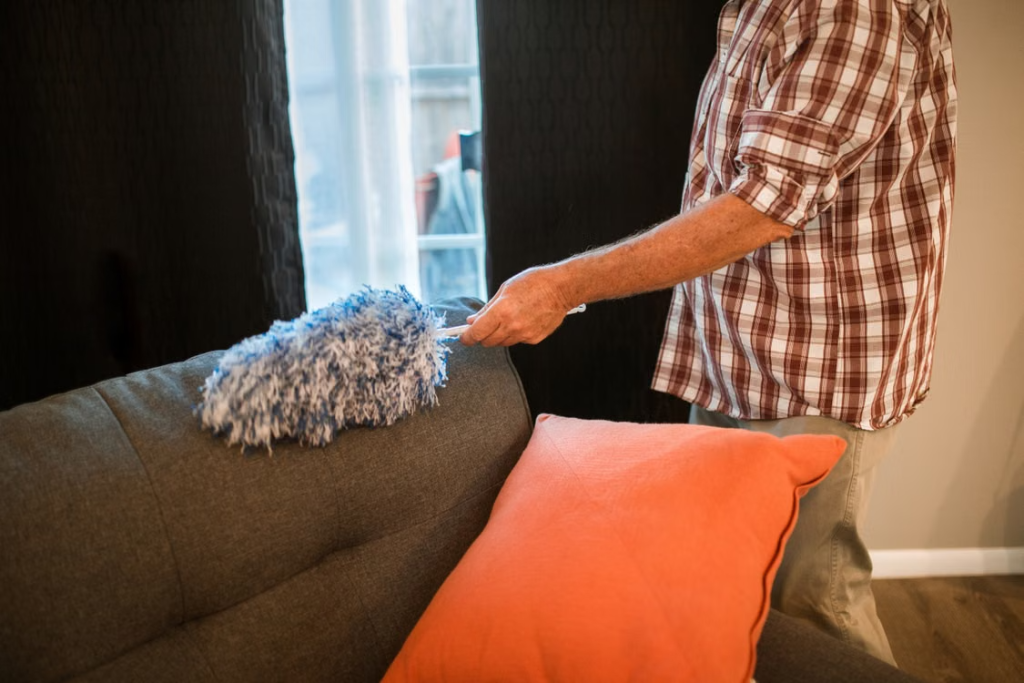
How to Remove Gum From a Fabric Sofa
Most fabric sofas respond well to freezing and lifting, but the final cleanup depends on the weave and the amount of residue left behind. Keep the work area small, use as little moisture as possible, and avoid turning a small spot into a damp patch.
Lift Gum Without Pulling the Weave
For anyone searching how to get chewing gum out of couch cushions, the important move is lifting upward rather than scraping sideways. Keep the cold pack in place until the gum turns crisp, then ease the plastic card beneath one edge.
Remove only what comes free. If the rest bends instead of breaking, re-chill it before continuing. Once the solid pieces are gone, vacuum around cushion piping, seams, and edges where small flakes can hide.
Tight woven fabrics usually handle this better than loose or heavily textured upholstery, but every fabric benefits from slow, controlled movements.
Treat Light Residue With Minimal Moisture
If the spot still feels slightly tacky after the gum is gone, apply a small amount of upholstery-safe cleaner or diluted mild soap to a white cloth—not directly to the cushion. Blot gently, follow with a barely damp cloth, then press the area with a dry towel.
Let the fabric air-dry before deciding whether more cleaning is needed. The same low-moisture approach used to clean a fabric sofa without damaging it helps reduce the chance of water rings and damp padding.
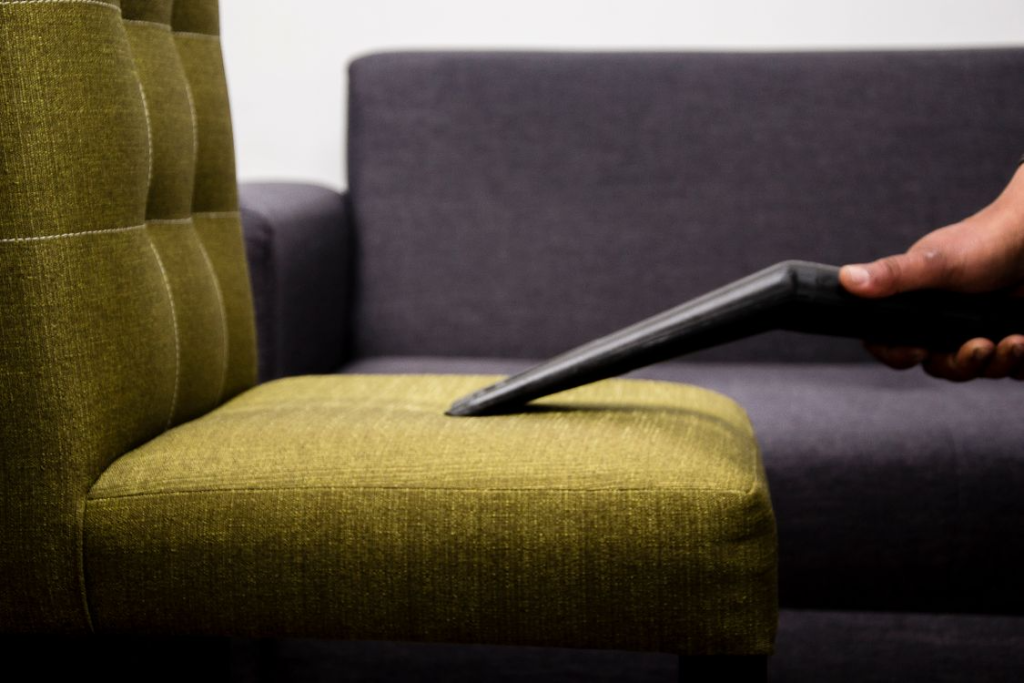
How to Remove Gum From Leather and Faux Leather
Leather does not trap gum in fibers the way fabric does, but its surface can still be scratched, discolored, or dulled by the wrong tool or cleaner. Treat this as a light surface-care task: remove the solid gum first, then use the gentlest possible follow-up method.
Lift Gum Without Damaging the Finish
Place a sealed cold pack over the gum for a few minutes. Then hold a plastic card almost flat against the surface and ease the gum away. Do not dig at it with a fingernail or use a sharp edge to pry it loose.
If a faint mark remains, wipe it with a barely damp microfiber cloth and dry it immediately. Leather should not stay wet for long, especially around seams where moisture can settle below the surface.
Adjust the Cleanup for Real and Faux Leather
Protected leather and faux leather may look similar, but they do not always respond the same way. Genuine leather usually needs less moisture and more caution. Faux leather can often handle a gentle damp wipe when the care instructions allow it, but it can crack or peel under aggressive scrubbing.
For both materials, avoid soaking the seat, using harsh household cleaners, or applying traditional leather conditioner to faux leather. Knowing how to clean a leather couch safely at home starts with the same practical rule: test first, use very little product, and dry the surface right away.
What to Do With Gum in Bouclé, Velvet, and Sofa Seams
Texture changes the risk level. Gum caught in bouclé loops, velvet pile, chenille yarns, or deep seams may not release cleanly with a plastic card. In these cases, protecting the fabric matters more than removing every last bit in one attempt.
Use a Material Risk Check Before You Continue
Before moving from physical removal to residue cleaning, use this quick comparison to decide whether it is safe to keep going on your own.
| Sofa surface | Safe first move | Continue DIY only if… | Call a pro if… |
| Tight woven fabric | Freeze and lift | Gum stays near the surface | Fibers begin to pull or color transfers |
| Smooth polyester | Freeze, lift, then spot clean lightly | The residue is small and not spreading | A dark ring appears after blotting |
| Protected leather | Chill briefly and lift flat | The finish looks unchanged | The surface turns cloudy, dull, or sticky |
| Bouclé or chenille | Remove loose surface pieces only | Gum has not wrapped around loops | Threads or loops start to pull |
| Velvet, suede, or nubuck | Chill surface gum only | The pile stays undisturbed | The pile changes direction or the gum sinks in |
| Deep seams or tufting | Chill and vacuum around the edge | Gum remains close to the surface | Gum has been pushed below the seam line |
Know When a Seam or Texture Needs a Pro
For gum in a seam, chill the spot and vacuum beside it with a crevice tool. Do not force a card into the gap, since that can push gum farther down or separate stitching.
Stop DIY attempts if the gum has wrapped around bouclé loops, changed the direction of velvet pile, or settled into suede or nubuck. Take a close-up photo, find the care label, and note what products have already touched the area. That gives an upholstery cleaner a much better starting point.
What Not to Do When Removing Gum From a Sofa
Most gum-removal mistakes happen because people try to fix the problem too quickly. Heat, pressure, and untested products may seem helpful at first, but they can spread the gum, leave a second stain, or damage the upholstery finish.
Why Heat and Rubbing Spread Gum
Skip the hair dryer, steam cleaner, iron, and hot towel while visible gum is still on the sofa. Heat softens gum, making it easier for the sticky material to stretch into the weave or settle around piping and seams.
Rubbing causes the same problem. During a late watch party, someone may reach for a warm, wet cloth after spotting gum on the cushion. It sounds sensible at the moment, but that quick fix can leave the area wider, shinier, and much harder to lift cleanly.
Why Oils and Solvents Can Leave a Second Stain
Oil, peanut butter, WD-40, bleach, acetone, and strong adhesive removers may loosen gum on hard surfaces, but upholstery is less forgiving. They can leave an oily ring, dull a coating, or affect the color of fabric and leather.
Avoid alcohol, vinegar, or any solvent on an unknown surface. Check the care instructions first, and test a product in a hidden area before it goes near the gum spot. The original gum is usually easier to fix than a solvent mark.
How to Make Future Game-Night Cleanup Easier
After dealing with gum in a deep seam or textured weave, it is easy to see why upholstery choice matters long before a spill happens. In a living room used for snacks, pets, kids, and crowded game nights, fabrics with straightforward care instructions can make everyday messes feel much less stressful.
Choose a Fabric With Straightforward Care
Highly looped or heavily textured upholstery can give crumbs and sticky residue more places to settle. For a room that gets regular use, a short-pile fabric can be a more practical choice because it offers a smooth feel without the raised loops that make small messes harder to inspect and manage.
For homes that use the living room this way, straightforward fabric care can make the sofa easier to live with over time. The pet-friendly fabric sofa with adjustable cushions is upholstered in a premium short-pile fabric that feels soft, smooth, and comfortable to the touch. Made from 100% polyester, it is suitable for spot cleaning and dry cleaning—practical care options for a family room that sees regular snacks, pets, and weekend gatherings.

Keep a Simple Post-Game Reset Routine
The fabric matters, but a few small habits also make a difference after guests leave. Keep napkins, a lidded snack bowl, and a small trash bin within reach of the coffee table so wrappers and sticky treats do not end up on the cushions.
A quick reset can take less than five minutes: clear cups, check the seams, vacuum crumbs, and blot fresh spills before they dry. That simple routine keeps the room ready for the next match, movie night, or family get-together.
Conclusion
Getting gum out of a sofa is less about finding the strongest cleaner and more about following the right order. Chill the gum, lift it slowly, remove the loose bits, and handle any last trace with the material in mind. That calm approach protects the seat for the next round of snacks, movie nights, and summer match days. When gum has settled deep into a delicate weave or left a changing mark, stopping early is often the smarter move. A good sofa is made for real life—not for worrying over every small mess.
FAQs About Gum on Sofas
How long should ice stay on gum?
Keep the sealed ice pack on the gum until it feels firm and brittle instead of stretchy. In a warm room, that may take several minutes and may require a second round. Do not rush the lift. Gum that is still soft is more likely to smear into the upholstery.
Can a removable cushion cover go in the freezer?
Only do this when the care label allows it and the cover separates cleanly from the insert. Place the cover in a sealed bag to protect it from moisture and freezer odors. Do not freeze the entire foam cushion unless the manufacturer specifically says that it is safe.
Will a steam cleaner remove gum from a couch?
Steam is not the best first step. It can soften gum and send it deeper into a woven surface or seam. Remove the solid gum with cold first. Consider steam only after the sticky material is gone and only when the sofa’s care instructions allow it.
Can Goo Gone Be Used on a Sofa?
Treat Goo Gone and similar adhesive removers as a last resort, not a default. They may leave an oily mark or affect dyes and protective coatings. Check the upholstery label, follow the cleaner’s directions, and test a hidden area before using any adhesive remover.


