 By Jenny Smith
Leather is forgiving—until it isn’t. The safest how to clean leather couch routine is gentle, low-moisture, and built around your sofa’s leather type. That way you remove dust, skin oils, and spills without stripping finishes, creating water spots, or drying the hide. The good news: most everyday messes come off with simple tools you already have, as long as you do the right checks first.
What Should You Check Before You Clean a Leather Couch?
Before you touch water or soap, take two minutes to “read” your couch. Leather finishes behave very differently, and the wrong method can turn a small smudge into a permanent mark. If you’re cleaning inside with any product scent or aerosol, crack a window too—EPA notes indoor pollutant levels can be 2–5x higher than outdoors in many homes. (EPA, 2025).
How Can You Tell What Type of Leather Couch You Have?
Start with the basics: check the tag, the manual, or the brand website for leather terms like “pigmented,” “aniline,” “nubuck,” or “PU.” Then do a quick water-drop test in a hidden spot: place one tiny drop of distilled water and wait 30 seconds. If it beads up, you likely have protected leather; if it darkens quickly, it’s more absorbent and needs extra caution.
| Leather type | Look & feel | How absorbent it is | Safe way to clean leather couch of this type |
| Protected / pigmented | Smooth, slightly “coated,” even color | Low | Damp microfiber + mild soap solution (sparingly), then dry |
| Aniline / unfinished | Soft, natural, visible grain variation | High | Minimal moisture; use leather-specific cleaner; blot fast |
| Nubuck / suede | Velvety nap, matte | Very high | Dry brush + nubuck cleaner; avoid water whenever possible |
| Faux leather (PU/PVC/vegan) | Uniform surface, “plastic-leather” feel | Low–medium | Mild dish soap + warm water wipe; rinse; dry well |
What Safety Steps Keep Your Leather Couch Cleaner and Safer?
Do a colorfastness test first: dampen a white cloth, dab an inconspicuous area, and check for dye transfer. Also avoid common “kitchen-sink cleaners” that can harm finishes—many care guides specifically warn against bleach, ammonia, acetone, and alcohol-based products on leather.
Pre-clean checklist for a cleaner leather couch
- Two clean microfiber cloths (one for wiping, one for drying)
- Soft brush (or vacuum brush attachment)
- Distilled water
- Mild soap (or pH-balanced leather cleaner)
- Leather conditioner (real leather only)
- A timer (so you don’t over-wet or over-rub one spot)
How to Clean Leather Couch Safely at Home (Day-to-Day Routine)
Most people don’t need a “deep clean” every week. A light routine removes grit that acts like sandpaper over time—especially on armrests and headrests.
What Is the Best Way to Clean a Protected Leather Couch?
If your couch is smooth and water beads up, you likely have protected/pigmented leather—the most common type in family living rooms. Here’s the best way to clean leather couch surfaces week to week:
- Vacuum using a soft brush attachment (get seams and creases).
- Wipe with a barely-damp microfiber cloth using distilled water.
- Dry immediately with a second cloth to prevent water spots.
Monthly, you can add a mild soap mix (a few drops in a bowl of water). The key is to wring the cloth until it’s almost dry—your goal is “wipe,” not “wash.”
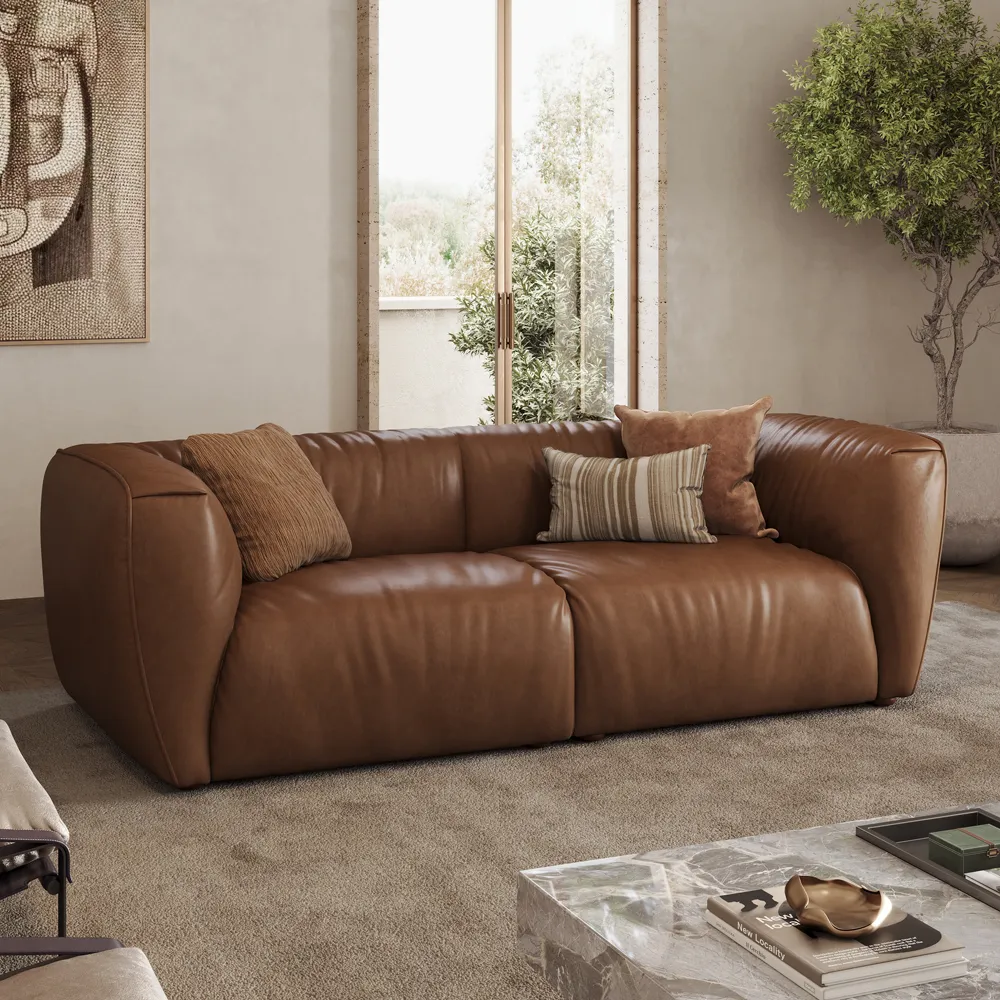
A practical example is Povison’s top-grain leather sofa that’s designed to wipe clean quickly—its surface is described as waterproof and stain-resistant, so common spills like coffee or soda don’t have to become a project. Pairing a durable coated leather with the gentle routine above fits a “ready to live in” home: less fuss, more time actually enjoying the room.
How Should You Clean Delicate or Unfinished Leather Couch?
Aniline, nubuck, and suede are the “beautiful-but-sensitive” group. They absorb moisture fast, and water can leave dark halos. For these, stick to very minimal moisture and use a brand-recommended cleaner in small sections. Dry immediately—never let water sit.
I learned this the hard way on a friend’s aniline chair: I used a cloth that felt “just damp,” and it still left a faint edge where I paused mid-wipe. Since then, I treat unfinished leather like a camera lens—light touch, tiny sections, and stop early.
How can I clean Leather Sofa Stains Without Damage?
Stains are where people panic—and panic causes rubbing, scrubbing, and over-wetting. A better mindset: leather stain removal is mostly about speed, blotting, and matching the method to the leather finish. Also, you’re not alone: ACI’s survey data shows 80% of Americans spring clean at least once a year, which is when many people finally notice old couch marks. (ACI, 2025).
How to Deal with Fresh Spills on a Leather Couch?
Do this immediately (blot, don’t rub):
- Press a clean dry cloth or paper towel onto the spill to absorb liquid.
- For protected leather: follow with a lightly damp cloth, then dry.
- For aniline/nubuck: keep it dry—absorb only, then use a specialty product later.
First 60 seconds to keep a cleaner leather couch after a spill:
Blot → rotate to a clean spot of the towel → blot again → check seams → dry cloth finish. If you’re unsure what leather it is, treat it like unfinished leather (less moisture) until proven otherwise.
In real life, this matters: once I spilled iced coffee near a seam, and blotting the seam first prevented that slow “wicking” stain that shows up an hour later.
How to Handle Grease, Ink, and Other Tough Stains?
Grease and ink behave differently than juice or water. Grease spreads when you add water; ink can set when you use the wrong solvent. Use this quick guide:
| Stain type | Do this | Avoid this | DIY or pro? |
| Grease/oil | Blot; let absorb into paper; use leather cleaner on protected leather | Water first, heavy rubbing | DIY for protected; pro for aniline |
| Ink/marker/denim dye | Stop rubbing; test a leather ink remover in hidden spot | Alcohol, nail polish remover | Often pro (especially aniline) |
| Pet accidents/odor | Blot dry; use leather-safe deodorizer (lightly) | Soaking, harsh enzyme sprays not rated for leather | DIY if mild; pro if repeated |
| Old dark stains | Try gentle cleaner; stop if color lifts | Abrasives, magic erasers | Pro recommended |
If the stain has soaked in, the color is lifting, or it’s aniline/nubuck, that’s beyond the “best way to clean leather couch at home” zone—professional help is safer than experimenting.
For a related scenario like ink, it’s useful to remember that even a “simple” clean leather couch fix can be stain-type specific, which is why this phrase shows up so often in care questions like clean leather couch routines.

How to Clean Faux Leather Couch and Sofa Properly?
Many people search “how to clean leather sofa” and later realize their piece is faux leather. The good news is faux leather is usually more water-tolerant—but it can crack or peel if you use harsh chemicals or aggressive scrubbing. Think gentle wipe-downs, no heavy conditioners, and quick drying.
What Makes Faux Leather Couch Different from Real Leather?
Faux leather is typically PU or PVC layered over fabric. It’s often cheaper and easier to clean day to day, but its top layer can break down if you use strong cleaners, alcohol-heavy wipes, or rough scouring. Always check the brand’s care notes—“vegan leather” isn’t one single material.
How to Clean Faux Leather Couch Step by Step?
- Vacuum and dust first (crumbs scratch when you wipe).
- Wipe with warm water + a few drops of mild dish soap (cloth damp, not wet).
- Wipe again with clean water to remove residue.
- Dry thoroughly to prevent spotting.
Faux leather Do & Don’t
- Do: gentle pressure, quick drying, spot test first
- Don’t: soak seams, use bleach/ammonia, apply traditional leather conditioner
This same routine often works if you’re searching for how to clean leather sofa but your piece is actually PU or PVC.
How Can You Keep Your Leather Couch Cleaner for Longer?
Cleaning is easier when your couch is protected from the things that cause grime to stick: heat, sun, skin oils, and dye transfer. A little prevention also keeps you from needing harsher products later—especially in busy homes with kids, pets, or frequent guests.
How Often Should You Condition or Protect a Leather Couch?
For real leather, conditioning about every 6–12 months is a solid baseline (more in dry climates, less if the sofa is rarely used). Over-conditioning can make the surface tacky and attract dust. For faux leather, skip traditional conditioner; if needed, use a protectant made for PU/PVC.
If you own a sofa made from pure-aniline Italian top-grain leather—like Povison’s leather power reclining sofa model—the care mindset shifts: keep moisture minimal, blot fast, and avoid soaps or polishes unless the maker says otherwise. Aniline develops a natural patina over time, so gentle, consistent habits protect that character instead of fighting it. Simple placement changes—like keeping your sofa away from direct sun and heat vents—often prevent dryness and fading long before you ever need a stronger cleaner, especially in bright living rooms with big windows like in this mid-century modern sofa layout.

What Everyday Habits Help Maintain a Cleaner Leather Couch?
Avoid direct sunlight and heat vents, which dry leather and speed fading. Add throws or washable covers on high-contact spots. Also watch for dye transfer—dark denim is a repeat offender. If you host often, do a quick vacuum + dry wipe before and after gatherings; it’s the smallest habit that makes the couch look “always cared for.”
Conclusion
A safe routine keeps leather beautiful because it’s consistent, not aggressive. Identify the leather type, spot test, and stay low-moisture—especially on aniline and suede-like finishes. For everyday upkeep, vacuum first, wipe lightly, and dry right away. Handle spills with fast blotting, and treat tough stains cautiously so you don’t trade a spot for a faded patch. Once you get the rhythm, keeping a leather couch clean becomes a two-cloth habit, not a weekend chore.
FAQs: How to Clean Leather Couch?
How can I clean leather couch quickly before guests arrive?
Vacuum seams fast, then wipe with a barely damp microfiber cloth (distilled water) and dry right away. Skip soap unless there’s a visible smudge—speed matters more than “deep cleaning” when you’re on the clock.
What is the safest cleaner for leather couch if I don’t want harsh chemicals?
For protected leather, distilled water plus a tiny amount of mild soap is usually enough. If you want a product, choose a pH-balanced leather cleaner and always spot test first—harsh household sprays can strip finishes.
Is there a difference between how to clean leather couch and how to clean leather sofa?
Not really—the steps depend on leather type (protected vs. aniline), not whether you call it a couch or sofa. The only difference is size: larger pieces have more seams, so vacuuming and drying thoroughly matters more.
What’s the best way to clean leather couch if it smells like pets or mildew?
First remove the source: vacuum creases and under cushions. Then lightly wipe protected leather and dry well. For odor, use a leather-safe deodorizer sparingly and improve airflow; lingering musty smells may need professional cleaning.
Can I use the same product to clean leather couch and faux leather couch?
Usually no. Real leather can benefit from conditioning; faux leather often shouldn’t be conditioned because it can leave an oily film. Mild soap-and-water wiping works for both, but specialty products should match the material.
How often should I deep clean and condition my leather couch?
Light cleaning weekly (vacuum + wipe) is enough for most homes. Deep clean only when needed, and condition real leather about every 6–12 months. If your couch feels sticky or attracts dust, you may be overdoing products.


