 By Stephanie
A sofa can look flawless at delivery, then develop tiny fuzzy balls across the favorite seat months later. That surface change is known as fabric pilling, and it does not automatically mean the upholstery is failing. Friction, loose fibers, clothing, throws, pets, and fabric construction can all play a role. The key is identifying what is actually on the surface before reaching for a razor or cleaner. This guide explains why sofas pill, how to remove pills safely, how to slow their return, and what to check before buying upholstery.
Table of Contents
What Is Fabric Pilling, and Is It a Defect?
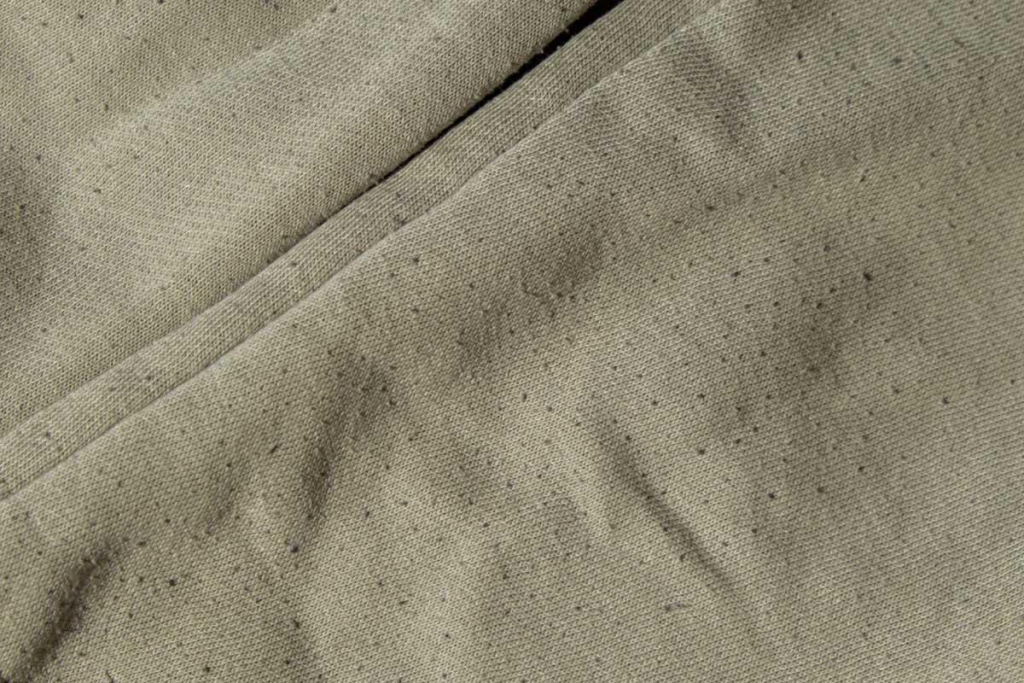
Fabric pilling happens when loose or broken fibers rise to the surface, twist together, and form small balls that remain attached to the material. Mild pilling is often cosmetic rather than structural. Before treating it, however, check whether the surface shows true pills, removable lint, pulled yarns, or compressed pile.
| Surface change | What it looks like | Quick check | Best response |
| Pilling | Attached fiber balls | Does not lift off easily | Use a fabric-safe depilling tool |
| Loose lint | Fluffy fibers resting on top | Lifts with vacuuming or a lint roller | Remove without shaving |
| Snagging | Raised loop or pulled thread | One yarn extends from the weave | Do not cut before checking the construction |
| Matting | Flattened or clumped pile | Texture shifts when gently brushed | Follow care directions for the pile |
Pills alone do not prove poor quality. Concern rises when the upholstery also thins, develops bare patches, opens at the seams, or exposes broken yarns. Looped bouclé, chenille, velvet, and other raised surfaces need extra caution because a shaver may mistake intentional texture for unwanted fuzz.
Common Causes of Fabric Pilling on Sofas
A sofa concentrates body weight and movement in the same places every day. That contact loosens surface fibers, while nearby materials can add fibers of their own. Looking at where the pills appear, what color they are, and how quickly they formed usually reveals more than the fiber label alone.
Friction Builds Up in High-Contact Areas
Seat fronts, armrests, headrests, and one frequently used cushion often pill first. Sitting, shifting, and standing repeatedly rub clothing against the upholstery.
After three months of nightly use, a left corner occupied by someone wearing heavy denim may show gray pills while the untouched right cushion stays smooth. That uneven pattern points to concentrated friction rather than a problem affecting the entire sofa.
Clothing, Throws, and Pets Transfer Fibers
Dark denim, fleece blankets, knit sweaters, pet hair, and shedding pillows can settle on a sofa and twist into its fibers. A pale couch covered with charcoal pills after winter movie nights may be collecting material from a dark throw.
Even a throw marketed as anti pill fleece fabric can reduce shedding without eliminating the friction created when the blanket repeatedly drags across a seat. If the pills differ noticeably from the sofa’s color, check nearby textiles before assuming all the fibers came from the upholstery.
Why Some Fabrics Hold Pills Longer
Pilling starts when loose fibers work their way to the surface, but whether those fibers fall away or stay attached depends on the yarn and fabric structure. Stronger fibers can keep a pill anchored to the surface, while weaker fibers may break off sooner. That is why some fabrics look fuzzy for a while, while others develop more noticeable little balls.
Fiber content still matters, but it is only part of the picture. The yarn twist, weave density, surface finish, and amount of daily friction all affect how visible pilling becomes over time.
Which Upholstery Fabrics Are More Likely to Pill?
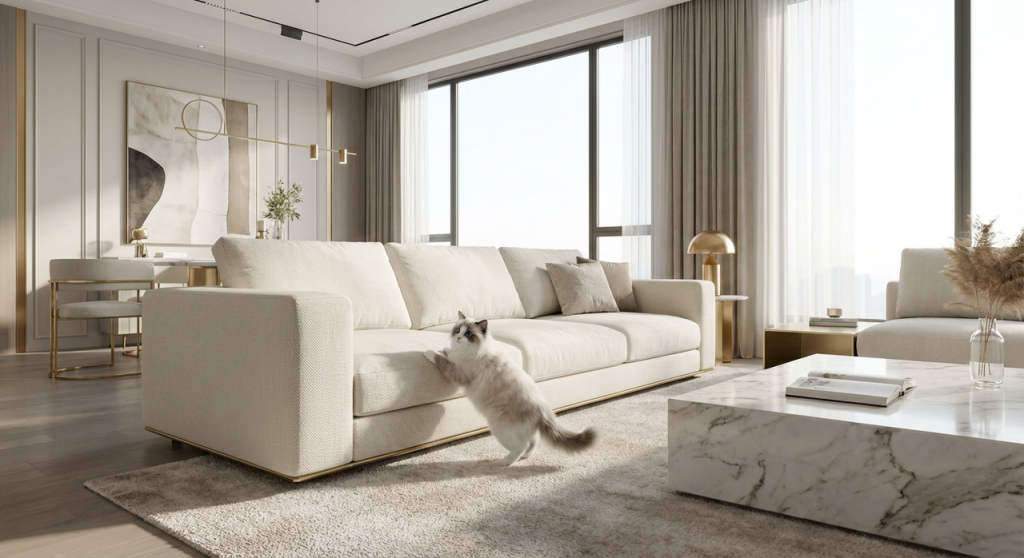
Fiber content is a useful starting point, but it does not tell the whole story. Two polyester fabrics can wear very differently: one may have a dense, smooth short pile, while another has a loose, brushed surface that releases fibers more easily. When comparing upholstery, look at the fabric’s construction, surface texture, intended use, and any pilling test result available for that specific option.
A stable surface with fewer exposed fiber ends is generally less likely to show visible pills. Tightly held yarns, dense weaves, and short, even piles tend to hold up better in busy living rooms than loose loops, open weaves, or heavily brushed finishes. A sofa fabric guide can also help separate pilling resistance from cleaning codes and abrasion ratings, which measure different aspects of performance.
Certain upholstery styles deserve a closer look before they go into a busy living room:
- Loose or open weaves, including some linen-look and basket-weave fabrics, can let yarns shift more easily under repeated friction.
- Bouclé, nubby looped fabrics, and chunky chenille can show fuzzing or pills more visibly because their raised texture exposes more yarn to the surface. In homes with pets, those loops may also be more vulnerable to snags.
- Heavily brushed or fuzzy finishes have more loose surface fibers, which can make pills easier to spot over time.
- Soft cotton-, wool-, or mixed-fiber fabrics made with shorter staple fibers may pill more readily in high-contact areas, although a denser weave and better yarn construction can improve how they hold up.
That does not mean these fabrics are poor choices across the board. A well-made bouclé or chenille can perform better than a loosely constructed fabric in another category. For a sofa that will see daily use, especially in a home with pets, a tightly woven flat fabric or a dense, low-pile upholstery is usually the safer place to start. Then check the pilling result for the exact fabric rather than relying on the material name alone.
Safe Methods for Removing Fabric Pilling Without Damage
The safest method depends on the upholstery surface. Flat, tightly woven fabric usually handles a depilling tool better than loose loops, deep piles, or heavily textured materials. Start by checking the care label and choosing a tool that matches the fabric. A few light passes are safer than trying to clear an entire cushion at once.
Choose the Right Tool for the Surface
A fabric shaver for pilling works best on flat, firmly woven upholstery when its guard or cutting height can be adjusted.
- Adjustable fabric shaver: Fast on flat areas, but pressure may nick loose fabric.
- Sweater comb: Offers control over light pills, but may catch loops.
- Small scissors: Useful for isolated pills, but can cut the base cloth.
- Lint roller: Clears loose debris and trimmed fibers, not attached pills.
- Disposable razor: Carries the highest risk of cuts and snags.
Avoid using a comb or shaver on bouclé, loose chenille, open knits, or decorative looped upholstery unless the manufacturer specifically approves the method.
Follow a Five-Step Removal Process
- Vacuum first. Remove crumbs, hair, and loose lint with low suction and a soft upholstery attachment.
- Test out of sight. Try the tool on a back edge or cushion underside, then inspect the area after it dries.
- Flatten the surface. Keep the fabric taut without pulling on seams.
- Work lightly. Use short passes without pressing down or repeatedly shaving one spot.
- Clean up. Remove the trimmed fibers and stop if the texture, color, or pile height changes.
On a beige cushion, a test may look fine under warm lamplight but reveal a slightly lighter patch beside a window the next morning. Inspecting the dry area in daylight can prevent a small grooming job from leaving a permanent visible mark.
Never pull pills off by hand. Fibers that are still connected to the yarn may be drawn farther out of the weave, making the surface fuzzier rather than cleaner.
Preventing Fabric Pilling on Sofas
Removing pills can improve the look of a cushion, but everyday use determines how quickly they come back. The goal is not to make a sofa permanently pill-proof. It is to reduce unnecessary friction, keep shedding materials off the upholstery, and avoid cleaning habits that rough up the fabric over time.
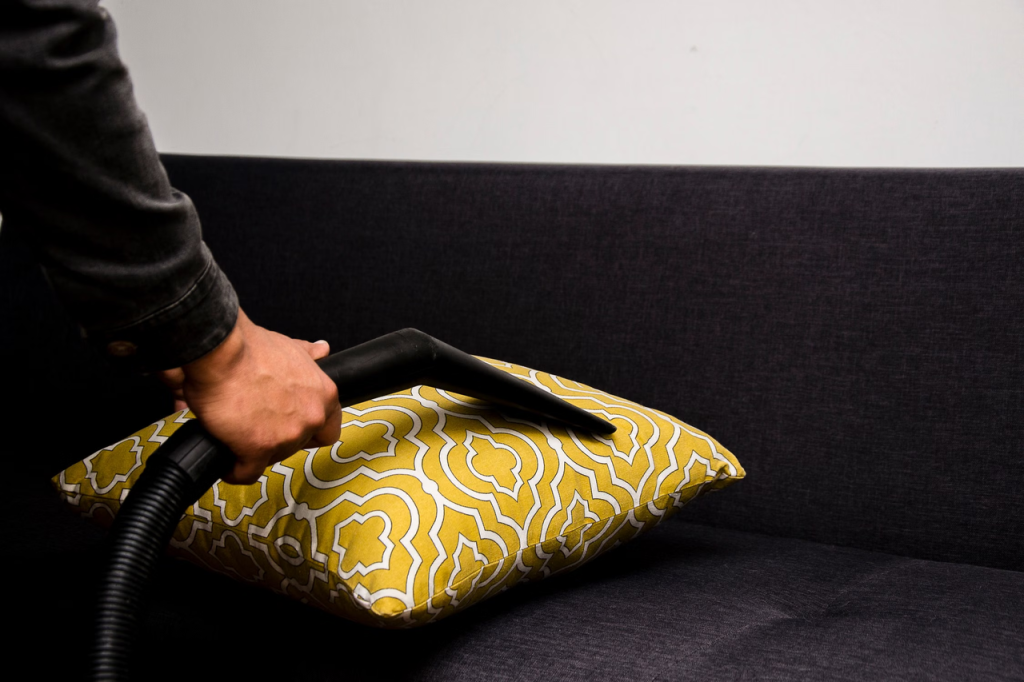
- Vacuum with low suction and a soft upholstery attachment to remove loose hair, lint, and crumbs before they work into the fabric.
- Rotate and flip removable cushions so the same seat does not take all the daily wear.
- Keep coarse throws, rough knits, and heavily shedding blankets off the cushions people use most.
- Trim pet nails and remove loose pet hair regularly, especially from textured upholstery.
- Blot spills instead of scrubbing them. Rubbing can raise fibers and make a small area look worn.
- Use only cleaners approved for upholstery, and avoid over-cleaning the same spot.
- Remove pills only when they are visible. Repeated shaving can gradually change the surface of the fabric.
The same care habits used for how to clean a fabric sofa without damaging it can also help limit surface wear during stain removal. A small spill is usually easier on the fabric than aggressive scrubbing around it.
If a throw starts leaving visible fibers behind, wash it or replace it before those fibers work into the upholstery. Keeping the most-used cushion free of shedding textiles can make a noticeable difference over time.
When Pilling Becomes More Than Normal Surface Wear
Light pilling on a favorite cushion is usually a cosmetic issue. It deserves a closer look when it appears quickly, spreads beyond the areas people actually sit on, or shows up alongside damage to the fabric itself. In those cases, shaving the surface may make the sofa look better temporarily without solving the real problem.
Contact the retailer before treating the upholstery if you notice:
- Heavy pilling across a new sofa after only limited use
- Thinning fabric, bare spots, or visible backing
- Pulled loops, holes, or broken yarns around the pills
- Open seams or fabric pulling away from the frame
- Pills that return quickly after careful removal
Take close-up photos as well as one wider photo of the full seating area. Save the delivery date, fabric name, approximate use, and the date you first notice the issue. Those details make it easier to show whether the problem is concentrated everyday wear or something more unusual.
In homes with pets, it also helps to separate pilling from claw damage. Choosing the best sofa fabric for dogs means looking at snag resistance, loose hair, stains, and surface texture together instead of expecting one fabric feature to handle every kind of wear.
What to Check Before Buying Upholstery
Terms such as “performance fabric,” “pet-friendly,” and “durable” can be useful, but none of them automatically means a sofa will never pill. A more reliable comparison looks at the exact upholstery fabric, its surface construction, its approved cleaning method, and any available pilling test result.
Understanding Pilling Ratings
A pilling rating is most useful as a screening tool for the exact upholstery you are considering. ASTM pilling tests use a visual scale from 5 to 1, with 5 meaning no visible pilling and 1 meaning very severe pilling. Compare ratings only when the fabrics were tested using the same method, since the test setup can affect the result.
Use the rating as a practical guide:
- Grade 4 or 5: A stronger starting point for a sofa that will be used every day.
- Grade 3: Not necessarily a dealbreaker, especially for a lower-use piece or a textured fabric you love, but inspect the swatch closely and expect that surface changes may be easier to see.
- No published pilling rating: Ask the retailer before assuming that “performance fabric” or a high abrasion number answers the question.
Abrasion resistance and pilling resistance are not the same thing. Abrasion testing looks at how well a fabric withstands repeated rubbing before it wears through. A pilling rating tells you how the surface looks after fibers fuzz and tangle. For a busy household, both matter, but the pilling rating is the number that speaks directly to this concern.
Questions to Ask Before You Buy
Before ordering a fabric sofa, ask:
- Was this exact upholstery fabric and color tested for pilling?
- Which test method was used, and what rating did it receive?
- Is the published number for pilling resistance or abrasion resistance?
- Can the fabric swatch be viewed and gently rubbed in daylight?
- What cleaning method is approved for the finished sofa?
- Does the surface have raised loops, a brushed finish, or a dense short pile?
Once you have those answers, use the product page to see how the fabric may fit into everyday life. The Modular Sofa Set uses soft, smooth, short-pile upholstery made from 100% polyester. It is designed for spot cleaning, is dry-clean safe, and should be kept away from direct sunlight and heat. Those details do not predict pilling by themselves, but they help buyers judge the fabric’s texture, care needs, and fit for everyday use.

Conclusion
Fabric pilling is usually the result of loose fibers meeting repeated friction, not automatic proof that a sofa is defective. Start by separating attached pills from lint, snags, and matted pile. Then match the tool to the surface, test discreetly, and use light passes rather than force. Regular vacuuming, cushion rotation, and less abrasive throws can slow recurrence. When buying, compare the exact fabric’s construction, care directions, test method, and pilling grade instead of trusting a material name or broad performance label alone for a clearer picture of long-term performance.
FAQs
Does a Sofa Warranty Usually Cover Fabric Pilling?
Coverage depends on the warranty terms. Many brands treat ordinary pilling as expected surface wear, especially in high-use areas. Coverage is more likely to be reviewed when the fabric changes unusually fast or shows thinning, holes, broken yarns, or seam problems. Check the warranty exclusions before assuming pilling is covered.
Can Fabric Protector Spray Prevent Pilling?
Most protector sprays manage liquid or stains rather than stopping fibers from loosening under friction. An incompatible coating may also alter color, texture, or cleanability. Check the upholstery instructions and product compatibility first. Stain resistance and pilling resistance are separate performance claims.
Will Washing Removable Cushion Covers Remove Pills?
Washing rarely removes attached pills and may create more friction if the cycle, temperature, or drying method is wrong. Wash only when the label permits it, close zippers, and follow drying directions. Treat existing pills separately rather than expecting laundering to shave them away.
Can Professional Upholstery Cleaning Remove Pilling?
Standard steam or extraction cleaning removes soil but usually does not cut away attached pills. Some upholstery professionals offer separate fabric grooming or depilling services. Confirm that they have experience with the specific weave or pile, especially when the sofa uses bouclé, chenille, velvet, or another textured material.


