 By Kelvin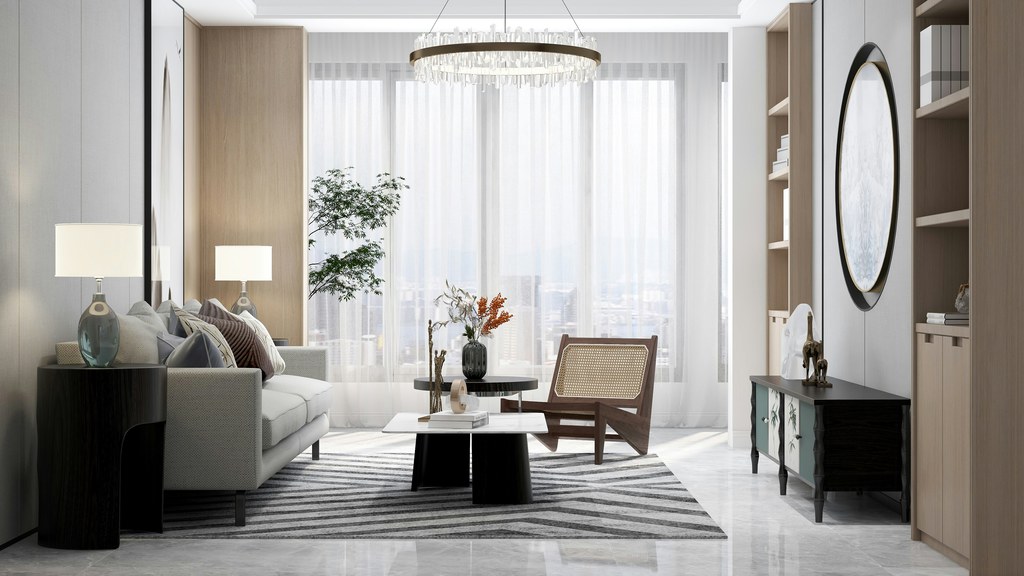
Introduction
A bright room can still feel crowded, while a small room can feel surprisingly open. The difference often comes down to sightlines, furniture weight, visible floor area, and how everyday clutter is handled. Effective light and airy living room decor is therefore not about filling the room with white furniture. This guide shows how to make a living room feel brighter and more open while keeping enough warmth, comfort, storage, and contrast for real daily life.
Table of Contents
What Actually Makes a Living Room Feel Light and Airy?
A light and airy room combines brightness with visual breathing room. Natural light matters, but so do the size, height, shape, and placement of furniture. A room with white walls can still feel heavy when a tall sofa, bulky coffee table, and large cabinet form several solid visual blocks.
Use four factors to diagnose the room:
| Check | What to Look For | If the Room Feels Heavy |
| Sightlines | Clear views across the room | Lower or reposition tall furniture |
| Visual weight | Size, color, and solidity of furniture | Balance bulky pieces with lighter profiles |
| Floor visibility | Open floor between and around pieces | Reduce unnecessary furniture or oversized footprints |
| Visual clutter | Cords, remotes, books, small objects | Consolidate them into concealed storage |
This makes light and airy living room decor more useful as a design framework than a simple color palette.
Start With Sightlines, Not White Paint
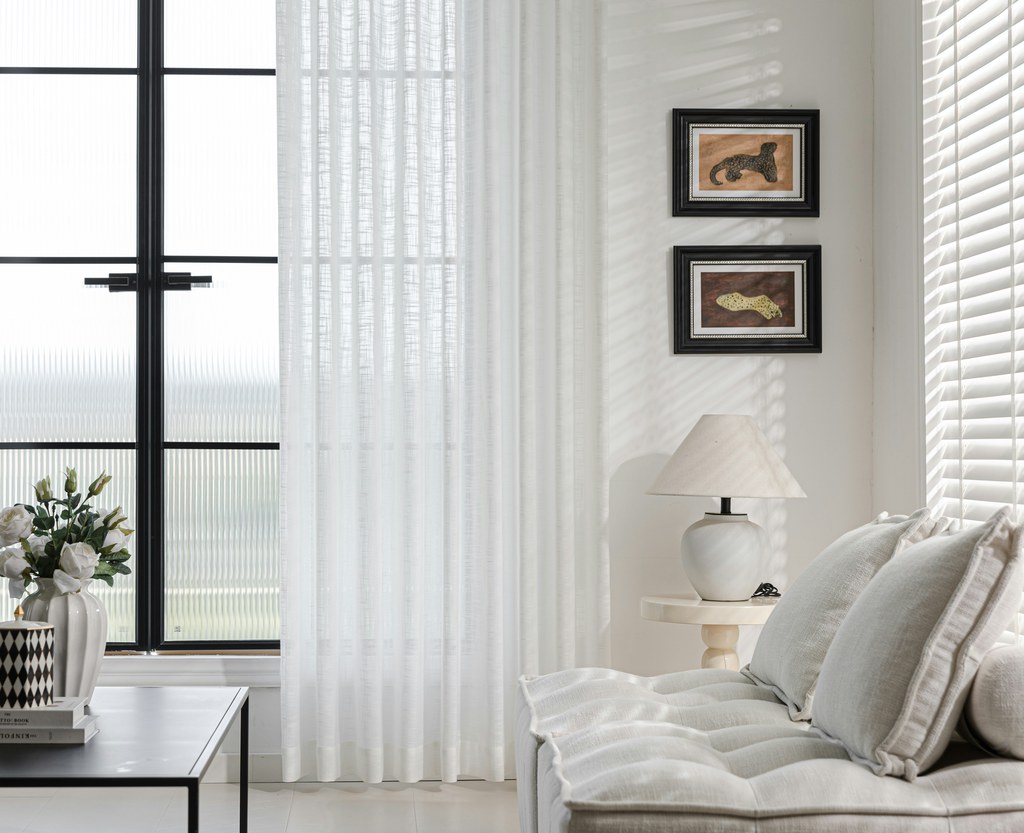
Before changing wall colors, stand at the living room entrance and look toward the windows, sofa, and television. The more large objects that interrupt those views, the more enclosed the room can feel.
Keep tall furniture away from major daylight paths and avoid stacking several high-backed pieces across the same sightline. If the window area itself is the problem, addressing how to brighten a dark room can help you separate a daylight problem from a furniture-layout problem.
A useful test is to sit in the room as you normally would. You should be able to see beyond the nearest furniture rather than feeling surrounded by a continuous wall of upholstery and cabinetry.
Which Furniture Shapes Make a Room Feel Visually Lighter?
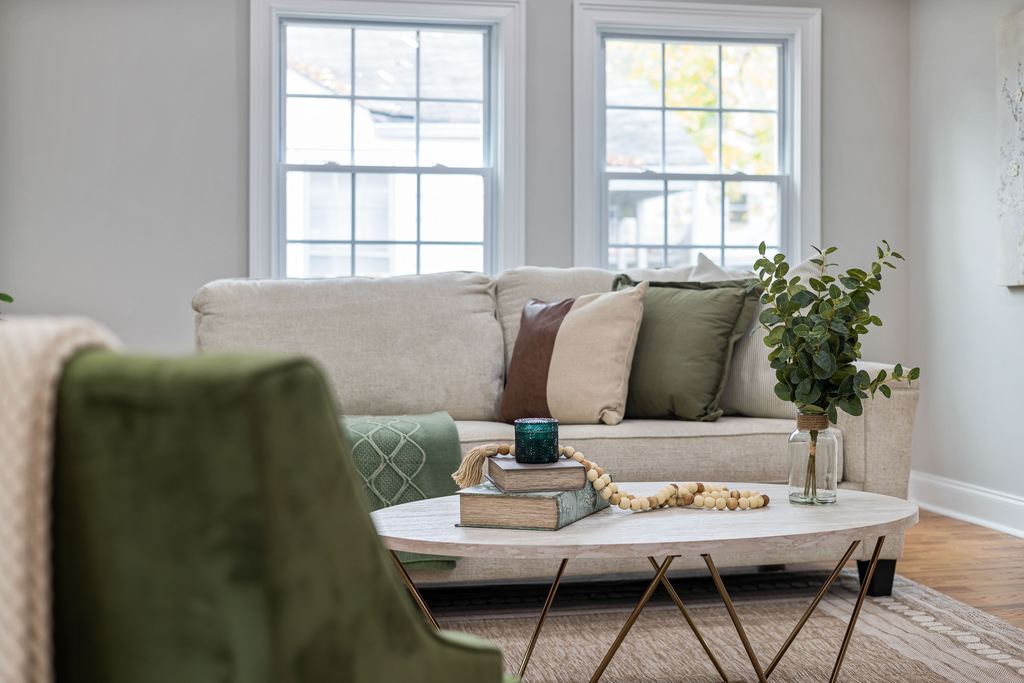
Furniture does not have to be physically small to look lighter. Shape affects how much visual territory a piece appears to occupy.
Look for:
- Lower backs where full-height support is not necessary.
- Rounded corners instead of several large, boxy forms.
- Softer or slimmer arms that reduce width without reducing seating.
- Visible gaps between separate pieces.
- Simple silhouettes rather than multiple projecting details.
This matters most with the sofa because it usually creates the room’s largest upholstered surface. In a cozy living room, comfort still comes first, but choosing a calmer color and cleaner silhouette can keep deep seating from dominating the space.
How Much Open Floor Should You Be Able to See?
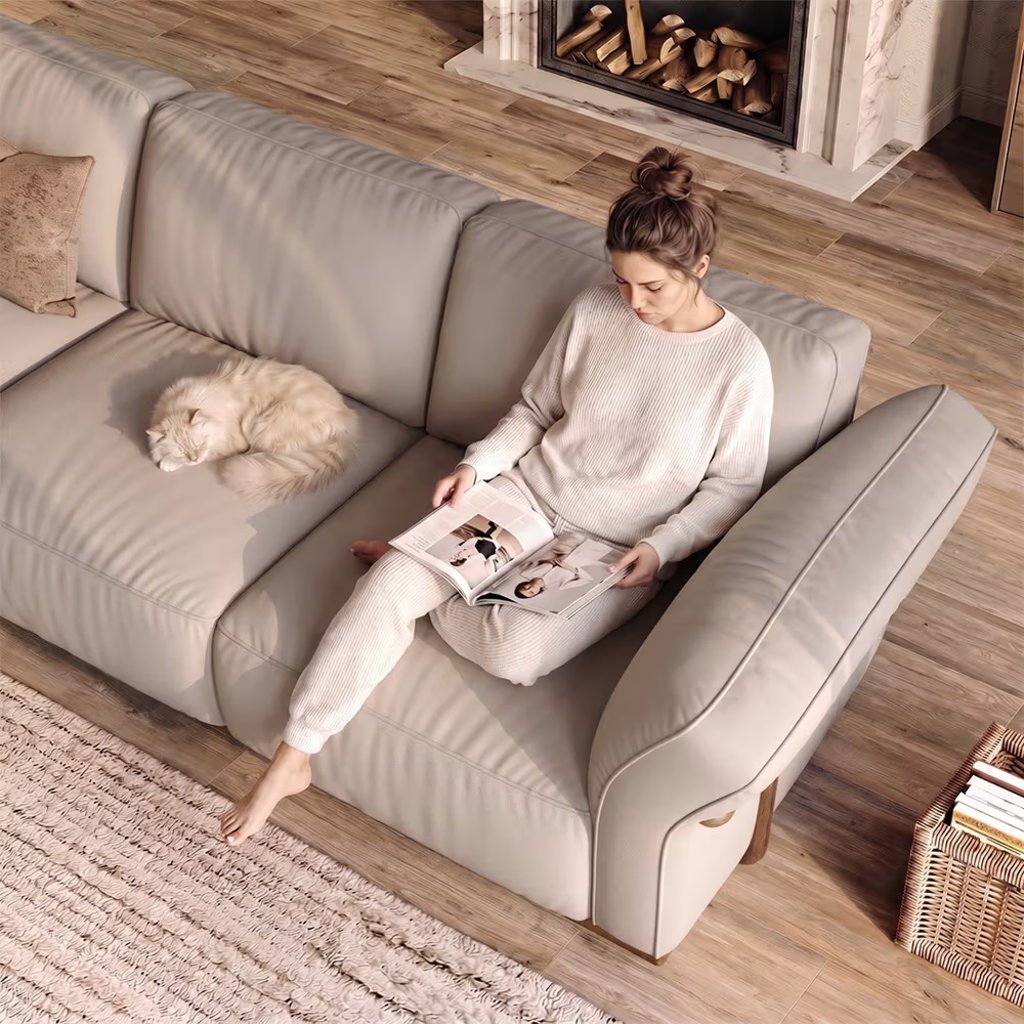
There is no universal percentage of visible floor that makes a room airy. What matters is whether open floor connects major parts of the room instead of surviving only in small leftover gaps.
Protect space around:
- Main walking routes.
- Door and cabinet openings.
- The front and sides of the sofa.
- The transition between the living and dining areas.
- Furniture that needs to recline, swivel, or extend.
A useful negative space interior design approach is to judge empty space by how people actually move through the room, rather than treating every unfilled corner as a decorating opportunity.
A round table can be especially useful when the middle of the seating area feels crowded. Its curved perimeter removes projecting corners from common walking paths, while an appropriately scaled footprint still gives the sofa a functional surface.
The POVISON Silva Lifting Top Round Coffee Table works well where the room needs both warmth and concealed function. The round footprint is easier to circulate around than a large rectangular center table, while a lift top, hidden compartment, and two drawers keep frequently used items from spreading across the surface.
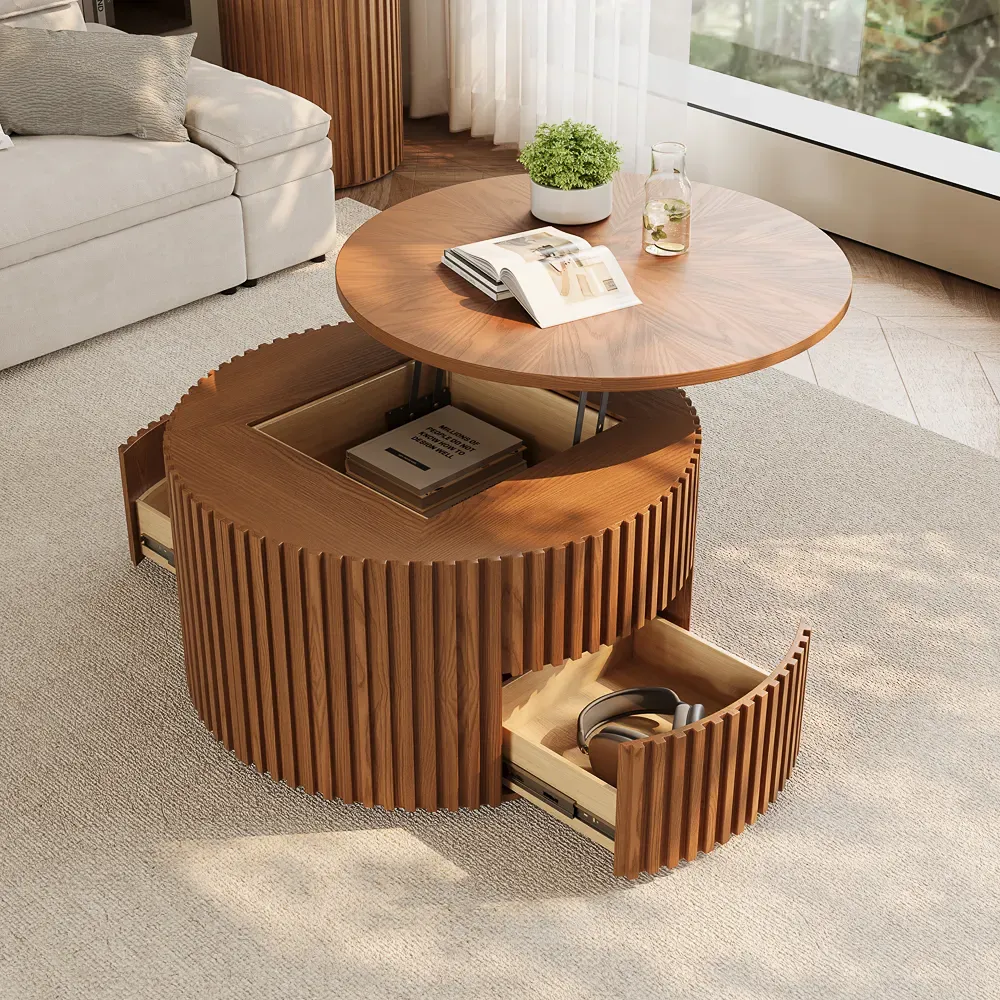
Silva Lifting Top Round Coffee Table
Round lift-top storage keeps the center useful, warm, and visually organized.
👍 Best for: Compact central seating zones
✨ Rounded 31.5-inch footprint
✨ Lift-top hidden storage
✨ Two integrated drawers
How Do You Keep Large Furniture From Feeling Heavy?
Do not evaluate a large piece in isolation. Ask what surrounds it.
A substantial sofa feels lighter against an open wall and restrained coffee table than it does beside two bulky chairs, a tall cabinet, and several side tables. Likewise, one darker walnut piece can add useful definition when the rest of the room is lighter.
Additional seating is where airy layouts often become crowded. Instead of automatically adding another loveseat, consider whether a single chair can provide the seat you need while preserving separation between furniture.
For a reading corner or secondary seat, the POVISON Swayford Plush Power Recliner uses grayish-white top-grain leather rather than a dark upholstery block. Its 90–130° electric recline and 270° swivel let one chair serve several seating positions, which can reduce the need to orient multiple accent chairs around different parts of the room.
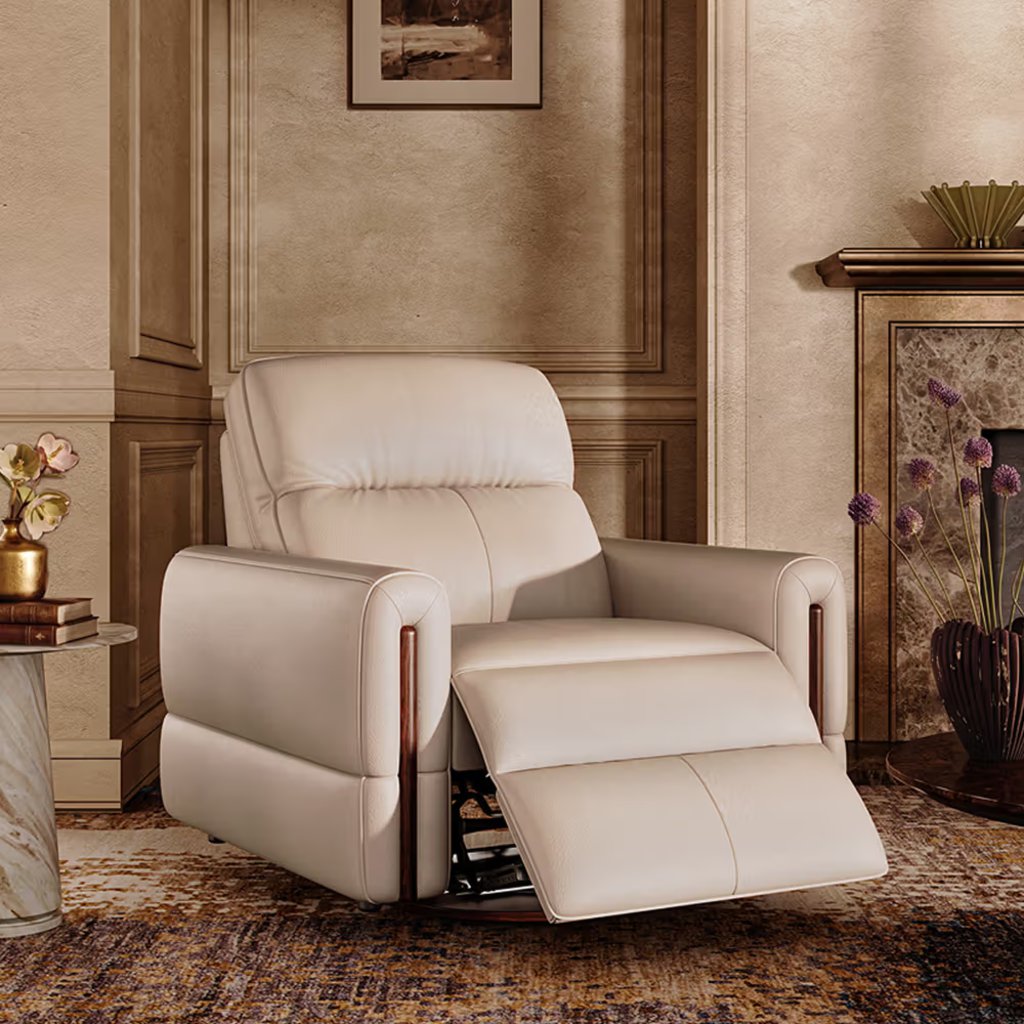
Swayford Plush Power Recliner
Light leather reclining adds comfort without introducing a dark visual anchor.
👍 Best for: Flexible reading and lounging
✨ Grayish-white top-grain leather
✨ 90–130° power recline
✨ 270° swivel movement
How Should Color and Wood Tone Support an Airy Room?
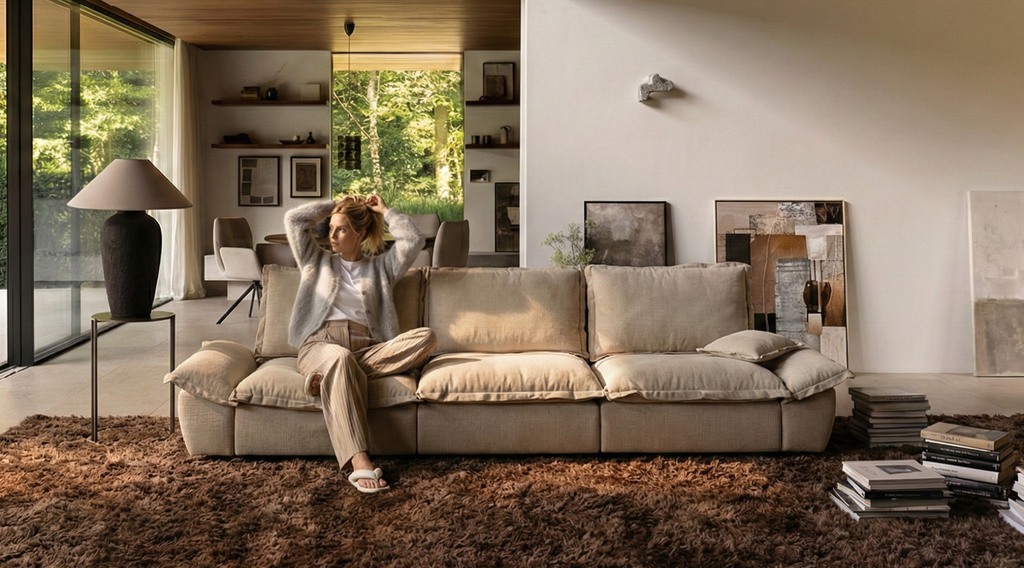
Use color to support openness rather than making every object equally pale. Cream, beige, warm white, and light upholstery can reduce contrast across large surfaces, while wood prevents the room from feeling washed out.
The key is controlled variation. A warm wood table, slightly deeper rug, or darker lamp gives pale upholstery definition. Existing neutral living room ideas work especially well when tone, material, shape, and contrast are varied instead of matching every surface.
This is also where many warm cozy living room ideas work better than an all-white palette. Use linen, leather, wood grain, woven textiles, and soft upholstery to create warmth through texture instead of adding several competing colors.
How Do You Keep an Airy Living Room Practical?
An airy room should survive an ordinary evening. Remotes, chargers, controllers, cables, books, and blankets still need somewhere to go.
The solution is not necessarily less storage. It is less visible storage activity.
Favor furniture that consolidates daily items rather than adding several baskets, stands, and open shelves. Around a television, this matters even more because the screen, speakers, consoles, receivers, and wiring can turn one wall into the busiest visual area in the room.
For equipment-heavy setups, the POVISON Delven Axis Deep Vented Rolling Media Console contains that complexity inside one low cabinet. Its 18.7-inch usable interior depth accommodates deeper AV equipment, while removable rear panels, cable openings, slatted ventilation, and concealed locking wheels simplify wiring and equipment access without leaving components scattered around the TV wall.
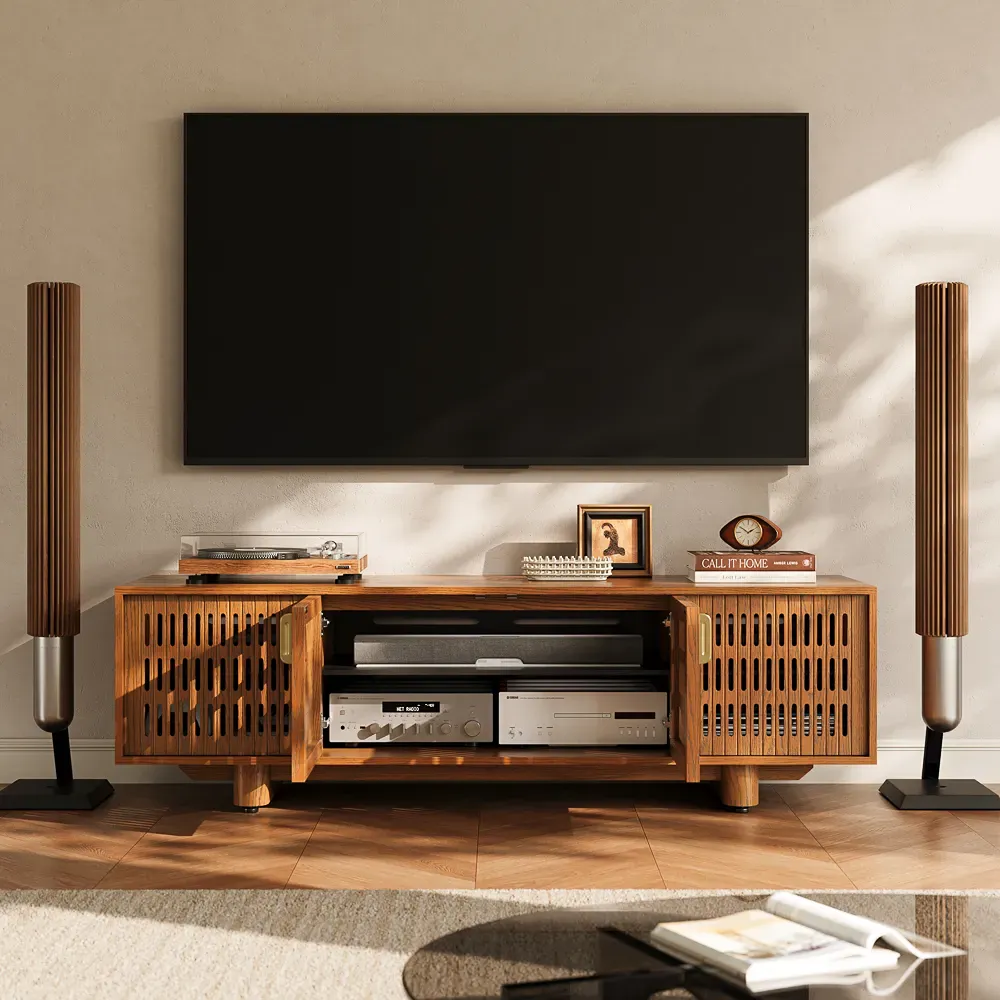
Delven Axis Deep Vented Rolling Media Console
Deep concealed media storage reduces cable clutter around a busy TV wall.
👍 Best for: Organized AV-heavy living rooms
✨ 18.7-inch usable interior depth
✨ Removable rear panels
✨ Hidden locking wheels
What Makes a Light Living Room Feel Flat or Empty?
Airy does not mean unfinished. Once the room has clear sightlines and enough breathing space, add warmth through a few deliberate layers rather than filling every surface.
Start with texture: a woven rug, leather or textured upholstery, curtains, wood grain, and one or two soft throws. Then introduce a small amount of tonal contrast. A walnut table, darker frame, ceramic object, or muted artwork can keep pale walls and upholstery from blending together.
This distinction is useful if you like a chill aesthetic room but still want it to feel lived in. A relaxed room needs comfortable seating, accessible surfaces, and familiar materials—not a large number of decorative objects.
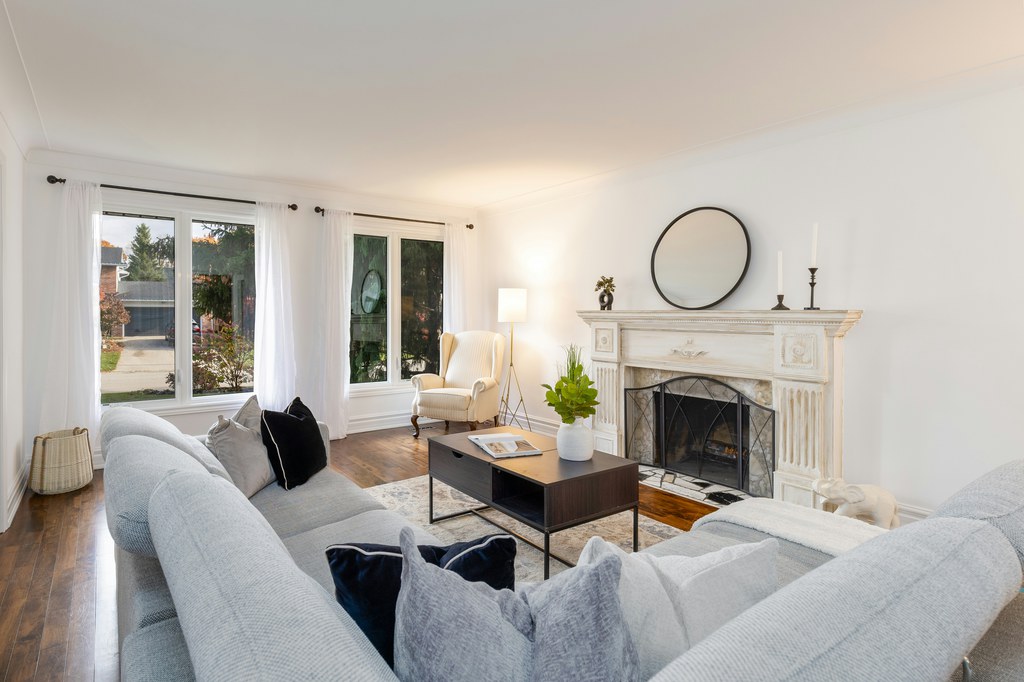
For example, a cream sofa beside a window may already provide the light foundation. Adding a warm wood coffee table, one textured rug, and a darker lamp can finish the room more effectively than covering the sofa with six different pillows and filling the table with decor.
Conclusion
Successful light and airy living room decor comes from making the room easier for the eye and body to move through, not simply making everything white. Protect sightlines, leave purposeful floor space, control the visual weight of large furniture, and contain everyday clutter before adding more decor. Then bring back warmth through wood, texture, comfortable seating, and selective contrast. The result can feel open without feeling sparse—and relaxed enough to work as a real living room rather than a staged one.
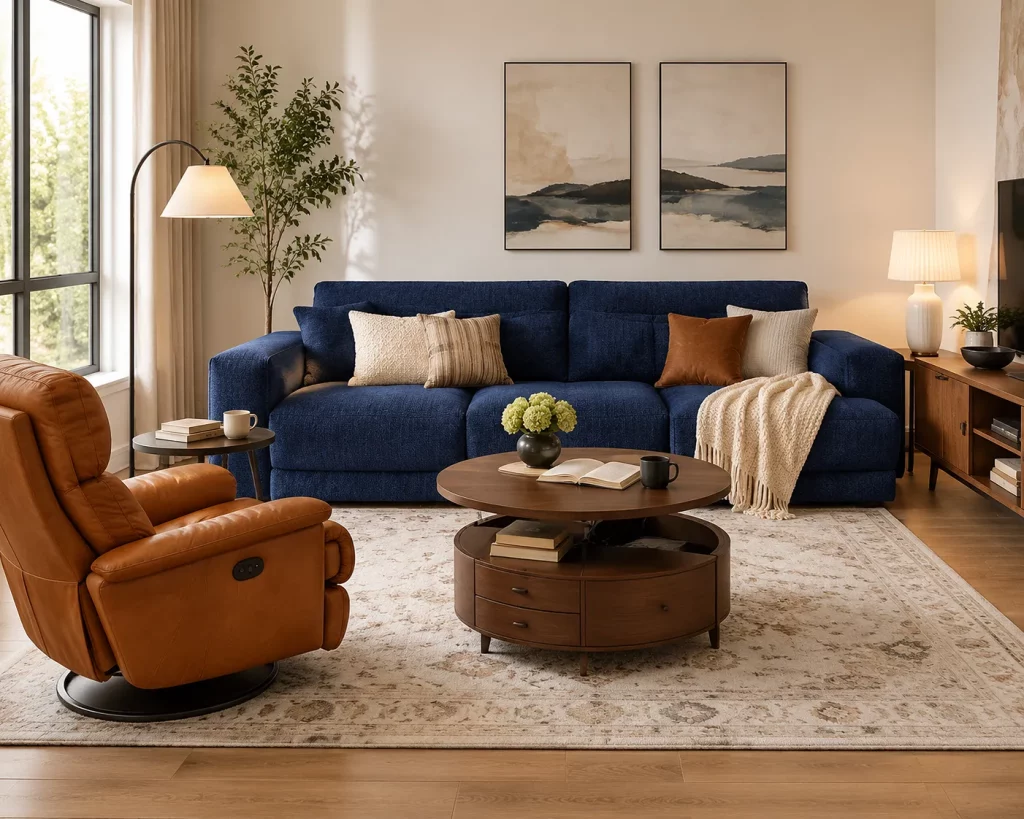
Find the Right Living Room Furniture
Explore designs for different room sizes, layouts, and everyday needs.
FAQ
Can light and airy decor work with dark floors?
Yes. Let the floor become the grounding layer and keep some larger surfaces lighter, such as the sofa, rug, or curtains. Avoid repeating the same dark finish across every major furniture piece. A medium or light rug can also create visual separation between dark flooring and substantial seating.
What rug color works in a light and airy living room?
Choose a rug that creates gentle separation from both the sofa and floor. Cream, oatmeal, light greige, and softly patterned neutrals are flexible options, but avoid matching the sofa exactly. If the room already has very pale furniture, a slightly warmer or deeper rug can prevent the space from looking flat.
Can a small living room use a deep sofa?
Yes, if the complete footprint leaves the main walking route usable. Measure sofa depth rather than width alone, then check the space remaining between the sofa and coffee table or opposite furniture. A deeper sofa can still support light and airy living room decor when surrounding pieces stay restrained.
How do you choose curtains for an airy living room?
Choose curtains that do not block more glass than necessary when open. Lightweight linen blends, sheers, or light-filtering panels work well when privacy needs are moderate. Mounting the rod wider than the window can let panels stack beside the glass instead of covering daylight during the day.
Can an airy living room still use a large TV?
Yes. The TV itself can remain a strong dark element, so avoid surrounding it with several other heavy visual blocks. A low media console, restrained decor, and some open wall space around the screen can help a large TV feel integrated rather than visually dominant.


[…] create a room that feels soft, grounded, and personal from the minute you walk in. Whether you love airy neutrals, moodier tones, or practical cozy apartment living room ideas, the goal is the same: comfort that […]