 By Stephanie
A neutral living room should feel calm, comfortable, and intentional—not empty, cold, or like every surface is the same shade of beige. The most effective neutral living room ideas focus on how furniture, materials, lighting, and everyday storage work together. This guide explains how to build a layered neutral space by choosing the right foundation, balancing visual weight, and selecting pieces that still work when the room is used every day.
Table of Contents
What Makes a Neutral Living Room Feel Designed, Not Flat?
A successful neutral living room is not created by choosing more neutral colors. It works because different elements create separation and balance.
The easiest way to evaluate a neutral space is through four design factors:
- Tone: Large surfaces such as walls, sofas, rugs, and curtains should have enough variation to avoid blending together.
- Material: Materials should create enough variation that the room feels layered even when the color palette stays restrained.
- Shape: Different silhouettes, such as curved tables or softer seating profiles, prevent the room from feeling too rigid.
- Contrast: A darker or richer element gives the eye a place to rest, whether it comes from walnut wood, charcoal, deep brown, or another grounding finish.
The biggest mistake in neutral rooms is making every piece equally light and equally smooth. A cream sofa, white rug, pale curtains, and light coffee table may look clean at first, but the room can lose definition over time.
The goal of neutral living room ideas is not to remove contrast. It is to control contrast so space feels relaxed rather than busy.
How Do You Choose the Right Neutral Palette for Your Room?
Before choosing new furniture, start with the elements that already define the room. Flooring, wall color, natural light, fireplace materials, and existing furniture all influence which neutrals will feel balanced rather than disconnected.
The right palette works with your home’s existing conditions instead of forcing a new look onto the space.
Step 1: Start With What You Cannot Easily Change
Look at the room as a whole before focusing on individual products.
For example:
1. Warm wood floors often pair well with cream, taupe, mushroom, and soft beige.
2. Cool gray flooring usually works better with balanced neutrals such as greige or softer whites.
3. Rooms with darker architectural features may need lighter upholstery to keep the space open.
Many warm neutral living room ideas succeed because the major pieces share a similar feeling without matching exactly. A sofa, media cabinet, and coffee table should relate to each other, but they should not disappear into one large color block.
Understanding how colors interact with furniture choices also helps when planning a modern living room color palette. The goal is not simply selecting attractive colors, but creating a balanced relationship between every major surface.
Step 2: Check the Room in Daylight and Evening Light
A neutral room should be evaluated at different times of day because lighting changes how materials appear.
Check furniture samples:
1. Near windows during daylight.
2. In the afternoon when natural light is strongest.
3. After sunset with the lights normally used in the room.
A cream fabric may look soft and balanced during the day but become noticeably warmer under yellow lighting at night. If a room changes dramatically between morning and evening, the issue may be lighting rather than the furniture itself.
This simple check can prevent choosing a sofa, rug, or curtain that looks right only under one type of light.
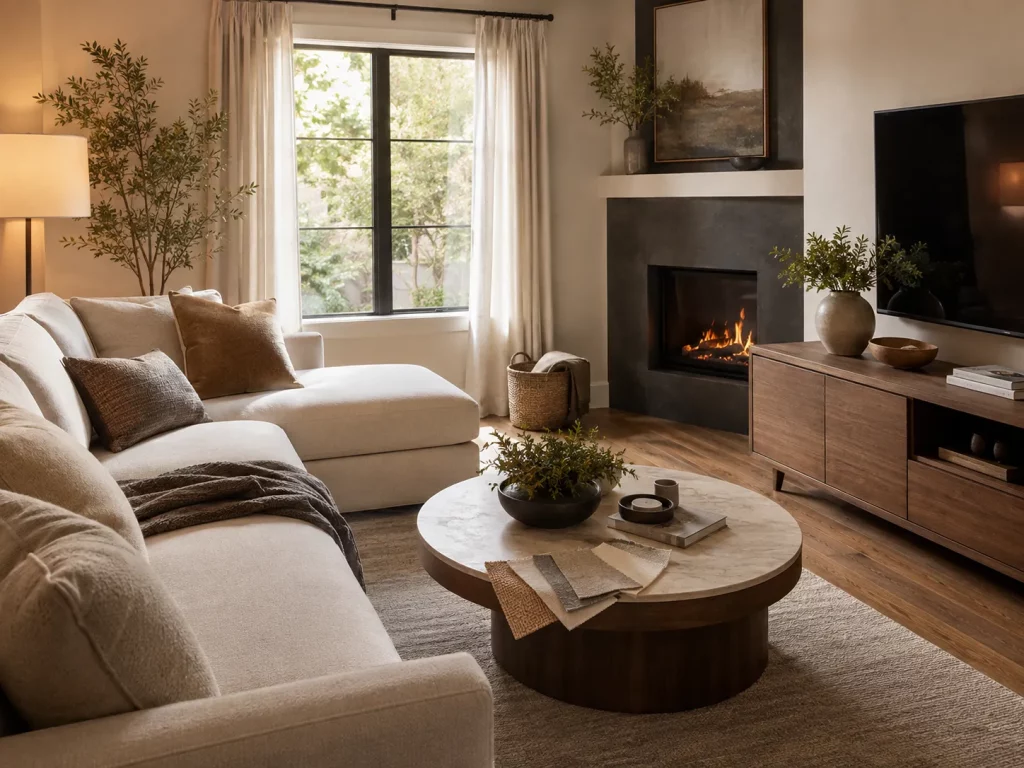
How Do You Layer Neutral Furniture Without Making Everything Match?
Furniture creates the largest visual areas in a living room, so each piece should have a clear role. Instead of buying several similar neutral pieces, build the room in layers: choose the largest upholstered piece first, then add one grounding casegood and one smaller material-focused accent. This approach creates balance without making every finish look identical.
Choose One Large Neutral Anchor
The sofa usually becomes the largest upholstered surface in the room, so it should establish the overall mood.
A good neutral sofa does not need to match the wall or rug. It should create enough separation through tone, texture, or shape while remaining flexible with future changes.
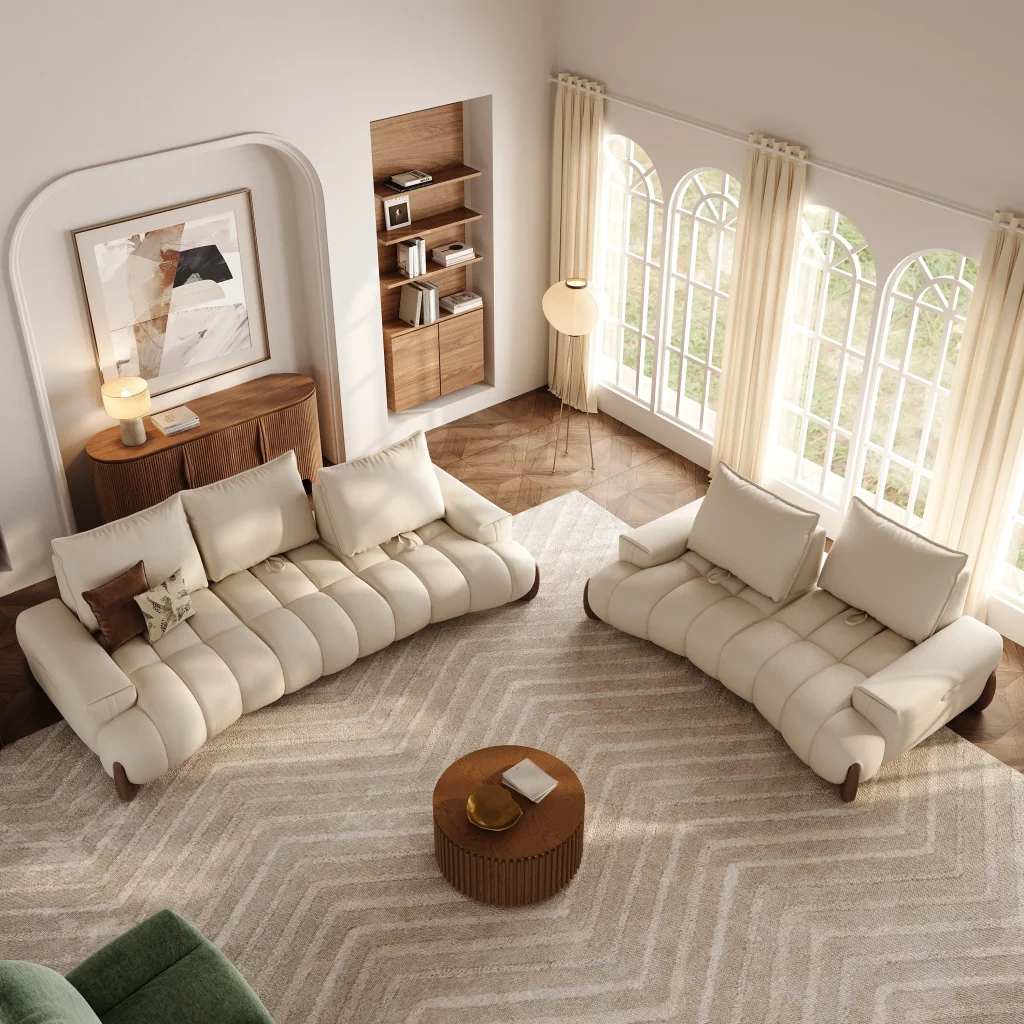
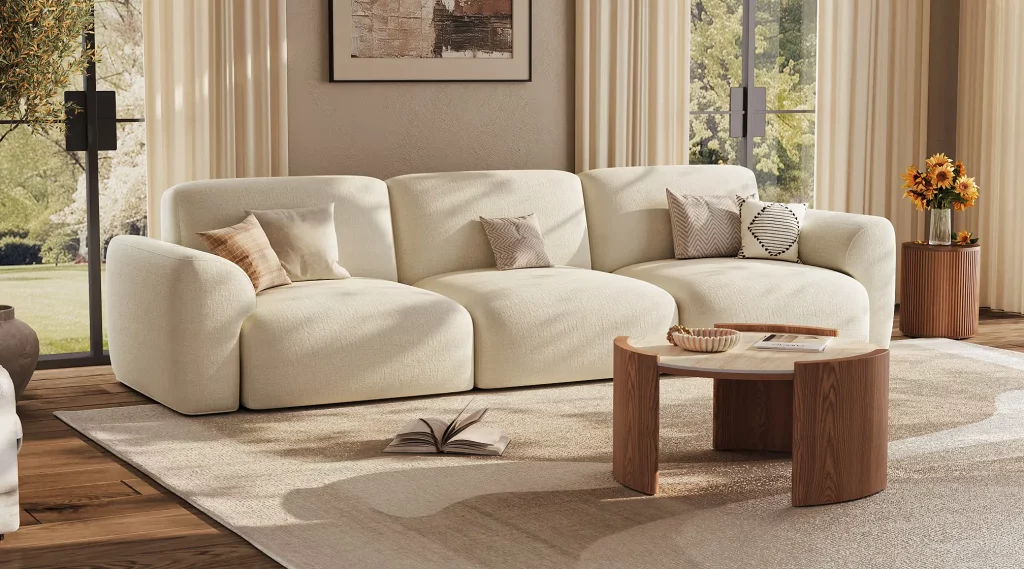
For a living room that needs a comfortable everyday foundation, the POVISON Arlo Mid-Century Deep Sofa creates a soft neutral anchor without making the space feel overly formal. Its beige pet-friendly fabric provides a relaxed base, while deep seating and adjustable cushions support everyday lounging. Solid wood legs add a warmer visual break from lighter upholstery, helping the sofa feel grounded within a layered neutral room.
Add a Mid-Tone Piece to Ground the Space
After selecting the largest upholstered piece, add furniture that introduces a stronger visual anchor.
This is especially important in rooms with cream or light beige seating. Without a medium or darker element, the room can feel unfinished even when the colors are coordinated.
A media console is often the ideal place to add this layer because it balances the large dark surface of the television while providing practical storage.
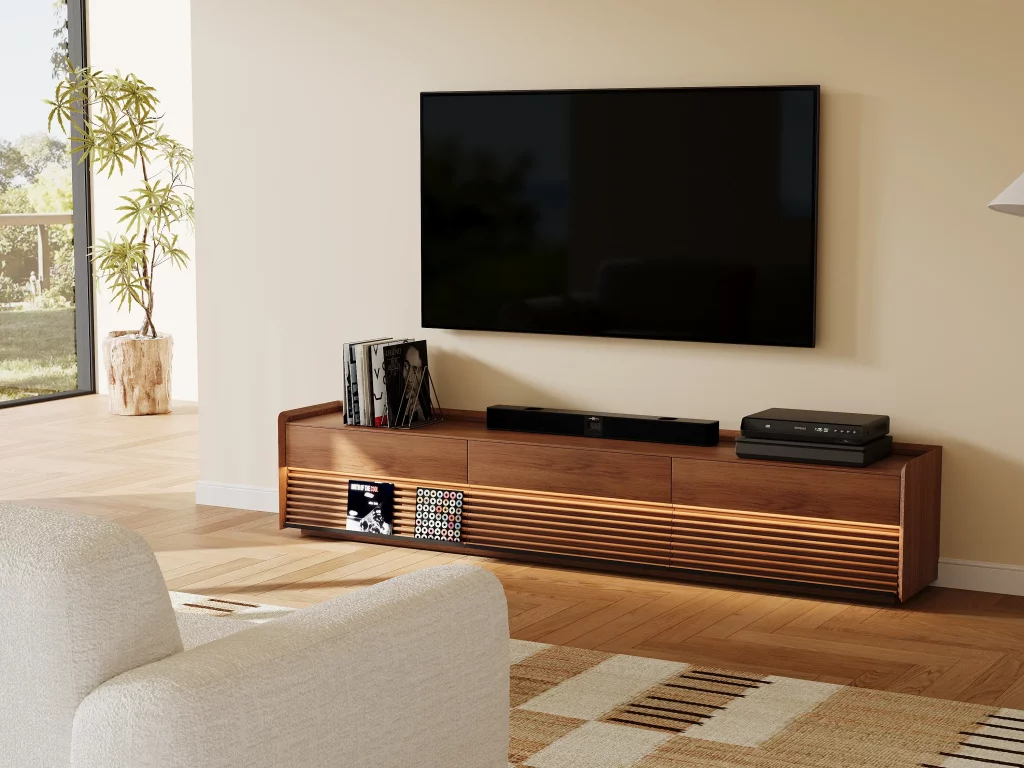
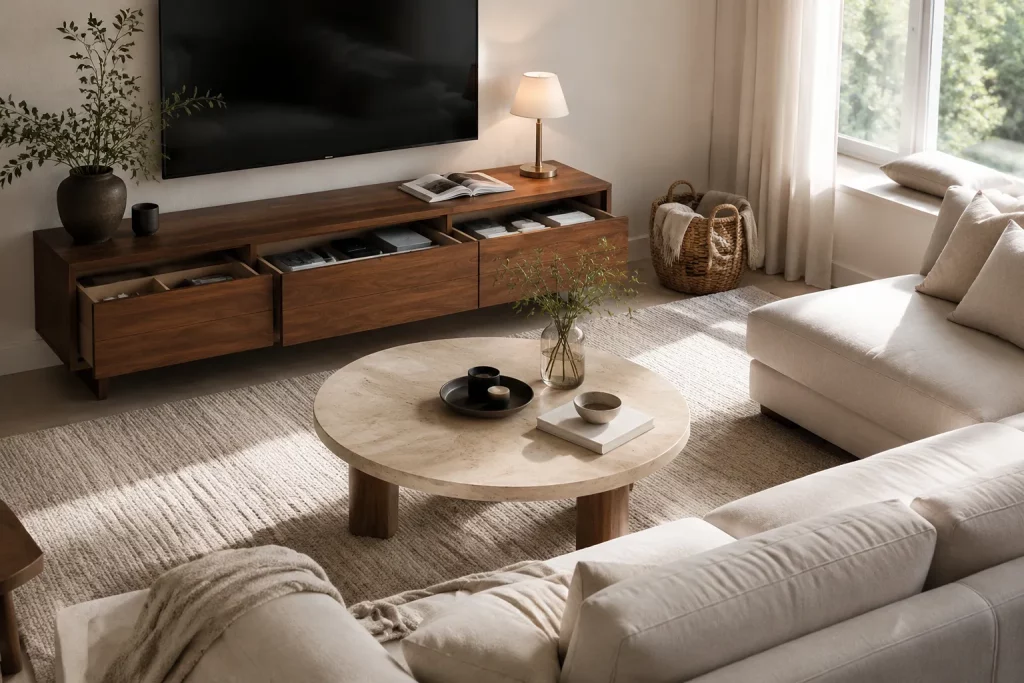
The POVISON Ansel Mid-Century TV Stand adds a warmer visual anchor beneath a neutral media wall through its walnut finish and low-profile silhouette. Its 70.86-inch width provides a balanced foundation for larger TVs, while the 19.29-inch height keeps the room feeling open rather than visually heavy. Six concealed drawers store remotes, controllers, and everyday media items, helping maintain the clean lines that make neutral spaces feel intentional.
Add Material Contrast Before Adding More Color
When a neutral room feels plain, the solution is often not another accent color. Instead, introduce surfaces that create visual interest through texture and pattern.
Stone, wood grain, woven fabric, and natural finishes can make the room feel richer while keeping the palette controlled.
A round coffee table is particularly useful in neutral spaces because it adds shape contrast to sofas, media cabinets, and other rectangular furniture.
The POVISON Round Matte Sintered Stone Coffee Table combines a travertine-look sintered stone surface with walnut-finish wood legs to add material contrast without changing the room’s neutral palette. The 31.5-inch round tabletop softens spaces dominated by rectangular furniture, while the stone pattern introduces visual interest without relying on brighter colors.
How Do You Keep a Neutral Living Room Calm in Daily Use?
A neutral room should not require constant styling to look good. The best designs account for everyday habits, including storage needs, electronics, blankets, books, and frequently used items.
A space can have the right colors and materials but still feel cluttered if daily objects do not have a place to go.
Hide Visual Clutter Before Adding More Decor
Neutral rooms often make clutter more noticeable because there are fewer competing colors.
Before adding decorative objects, solve practical issues:
- Store remotes and chargers in a consistent location.
- Keep blankets contained instead of leaving multiple fabrics visible.
- Organize cables around entertainment areas.
- Leave some open surface space instead of filling every table.
This approach is especially helpful around media furniture. A clean entertainment setup depends on both styling and function, which is why planning TV stand decor ideas without clutter often starts with storage rather than accessories.
Keep Large Surfaces Simple
A neutral room does not need every surface decorated.
Coffee tables, consoles, and shelves usually look more intentional when they contain fewer, larger items rather than many small objects. This also makes the room easier to maintain after daily use.
For example, a coffee table should still have enough open space for drinks, books, or a laptop. A living room designed for real life should look finished even after people spend time in it.
What Is Your Neutral Living Room Actually Missing?
When a neutral room does not feel right, identify the problem before buying another decorative item. The issue may come from scale, contrast, lighting, or material balance.
| If the Room Feels… | Likely Cause | First Adjustment |
| Washed out | Too many equally light surfaces | Add one medium or darker anchor such as walnut or charcoal |
| Cold | Cool undertones or lighting dominate | Add warmer materials and reassess evening lighting |
| Too beige | Similar colors and surfaces repeat too often | Add stone, wood grain, or textured upholstery |
| Heavy | Furniture pieces have similar visual mass | Introduce lighter shapes or a round element |
| Busy | Too many small decorative items compete | Remove accessories before adding new ones |
| Like a showroom | Everything matches but lacks personality | Add meaningful artwork, books, or personal objects |
A useful way to diagnose and fix bad interior design is to look at function, proportion, and visual connection together. The same approach works for neutral rooms because the problem is often not the color itself, but how the pieces relate.
Conclusion
The best neutral living room ideas are not about removing color—they are about creating balance. Start with the pieces that already define your room, choose furniture by visual role, and use materials, contrast, and storage to support everyday life. When a sofa, media piece, and accent furniture work together, a neutral living room can feel calm, personal, and practical without looking flat. If you are building the room from the ground up, choosing coordinated pieces from POVISON can make it easier to create a cohesive look across your entire space.
Q&A
Can You Mix Warm and Cool Neutrals?
Yes. The key is keeping one undertone family dominant. A warm neutral room can include a cooler gray chair or artwork when the larger elements, such as flooring, sofa, and furniture finishes, maintain a consistent direction.
Should Curtains Be Lighter or Darker Than the Sofa?
It depends on the room. Lighter curtains can help small or darker rooms feel more open, while slightly darker curtains can add definition when the sofa and walls blend together. Avoid making every large surface identical.
Can a Gray Sofa Work in a Warm Neutral Room?
Yes. Balance a gray sofa with warmer surrounding elements such as cream textiles, walnut furniture, taupe rugs, or warm lighting. The biggest risk is combining cool gray upholstery with cool flooring and cool lighting at the same time.
Does a Neutral Living Room Need Black Accents?
No. Black is only one option for contrast. Walnut, espresso brown, charcoal, bronze, or deep green can create a similar grounding effect while fitting better with certain furniture styles.
Can Colorful Art Still Work in a Neutral Room?
Yes. A single colorful artwork can work well because it creates a focal point without changing the room’s overall palette. The bigger risk is adding many small colorful accessories that compete with the neutral foundation. Keep larger surfaces restrained and let one statement piece provide contrast.


[…] wall decoration ideas for living room spaces with neutral furniture, artwork can carry the room’s strongest color. Repeat one or two shades in a pillow, throw, or […]