 By Jenny Smith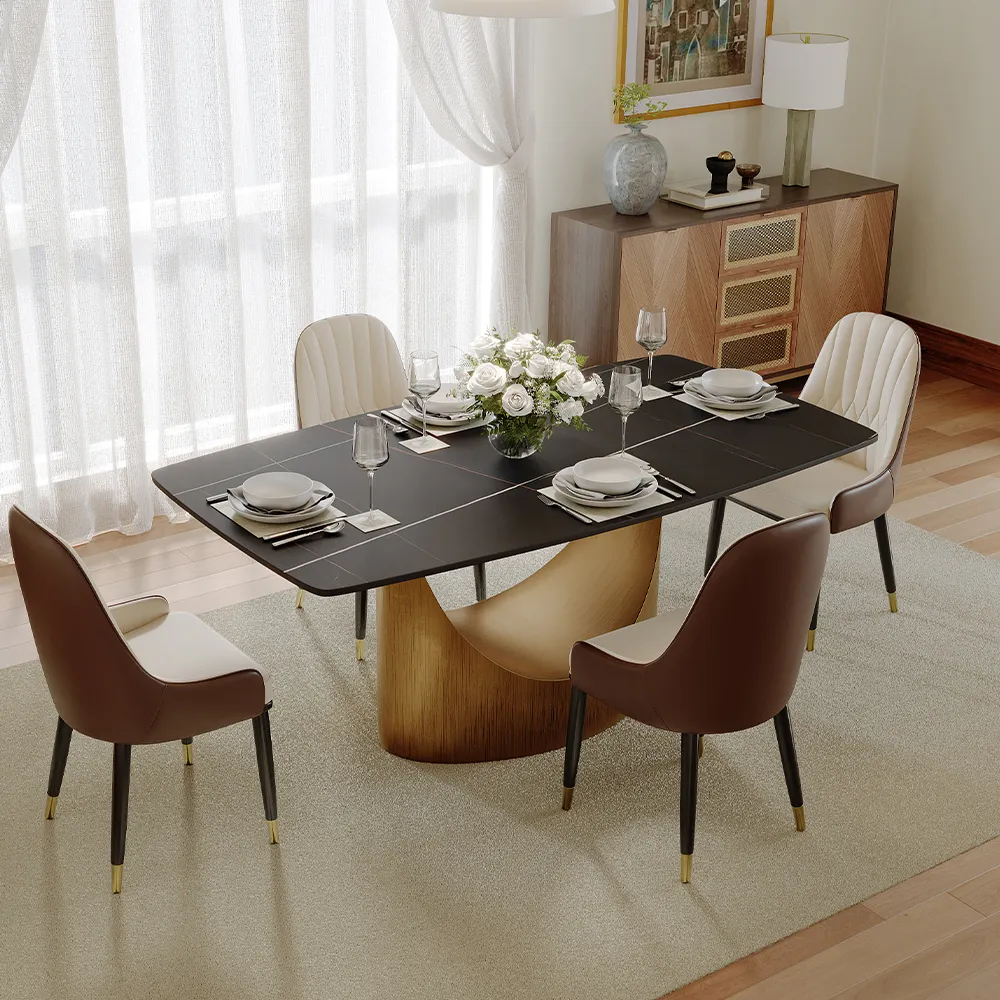
For a long time, luxury dining tables looked amazing but demanded constant worry: coasters under every glass, tablecloths at every meal, and a strict “no red wine near the marble” rule. Sintered stone is quietly rewriting that script. It gives you the look of high-end stone with the resilience of a professional kitchen surface, so your luxury dining table can finally handle real family life—birthdays, weeknight pasta, homework, and all.
What Exactly Is Sintered Stone – and Why It Matters for Luxury Dining Tables
Sintered stone is an ultra-compact surface made by fusing minerals (like those found in natural stone, glass, and porcelain) under extreme heat and pressure. Unlike marble or solid wood, it’s not quarried in slabs or cut from trees. It’s engineered: powders are pressed, “sintered” at very high temperatures, and turned into large-format slabs that are dense, stable, and non-porous. This process creates a material that behaves more like a high-performance tool than a fragile showpiece.
That helps explain why sintered stone furniture is moving fast from niche to mainstream. One market study estimates the global sintered stone furniture market at around $3 billion in 2024, with a projection of $6.2 billion by 2033—a compound annual growth rate of about 7.8%. (Business Research Insight) Designers aren’t just experimenting with sintered stone; they are building full luxury dining collections around it.
The Performance Advantage – How Sintered Stone Outperforms Other Luxury Dining Table Materials
Durability Under Real Life: Scratches, Stains, Heat & Impact
Because sintered stone is so dense and compact, everyday wear barely registers. Knives, serving platters, or kids sliding plates across the surface are unlikely to leave visible marks. The material is also engineered to tolerate high heat without warping or discoloring, so a hot casserole dish placed directly on the table will not leave a burn ring the way wood or some resins might. I’ve heard from one young family who simply moved their cast-iron pot from stove to sintered stone table during weeknight dinners—no trivet, no drama.
Here’s how sintered stone compares with other common luxury dining table materials:
| Property | Sintered Stone | Marble | Solid Wood | Glass | Ceramic Top |
| Scratch resistance | Very high | Medium–low | Medium | Medium | High |
| Heat resistance | Very high | Medium | Low | Medium | High |
| Stain resistance | Very high | Low (porous) | Medium | Medium–high | High |
| Maintenance level | Low | High | Medium–high | Medium | Low–medium |
| Lifespan | Long | Long if pampered | Long if maintained | Long but fragile | Long |
| Family-friendliness | Excellent | Fussy | Good but sensitive | Good but fragile | Good |
Effortless Maintenance vs. High-Maintenance “Traditional” Luxury
Traditional luxury materials often come with strict care routines: sealing marble, oiling wood, and babying delicate finishes. Sintered stone flips that. It doesn’t need sealing, and most spills wipe away with mild soap and water. Even stubborn offenders like tomato sauce or coffee are far less likely to leave a trace when the surface is non-porous.
For busy households, that low-maintenance aspect is its quiet superpower. If you’re already juggling work, kids, and a social life, the last thing you want is a table that adds another “project” to your weekly to-do list. Sintered stone lets your luxury dining table stay in the background, doing its job, instead of demanding constant attention.
Hygiene, Safety & Sustainability Advantages
Because sintered stone is effectively non-porous, it doesn’t give stains or bacteria much to cling to. Porcelain—one of the closest relatives to sintered stone—is defined by the ANSI A137.1 standard as having a water absorption rate of 0.5% or less when tested under ASTM C373, which is considered “impervious.” (The ANSI Blog) Sintered stone products are engineered to meet or outperform this threshold, which is why they are widely used in hygienic surfaces like countertops and commercial kitchens.
On the sustainability side, many sintered stone slabs use natural minerals, recycled content, and low-emission binders, and they don’t off-gas like some resin-heavy composites. Combined with their long lifespan, that makes sintered stone a strong choice for homeowners who want fewer replacements and a healthier indoor environment—especially important if you’re sharing the table with kids.
Design & Aesthetic Benefits for Luxury Dining Room Tables
Marble-Inspired Looks Without the Stress
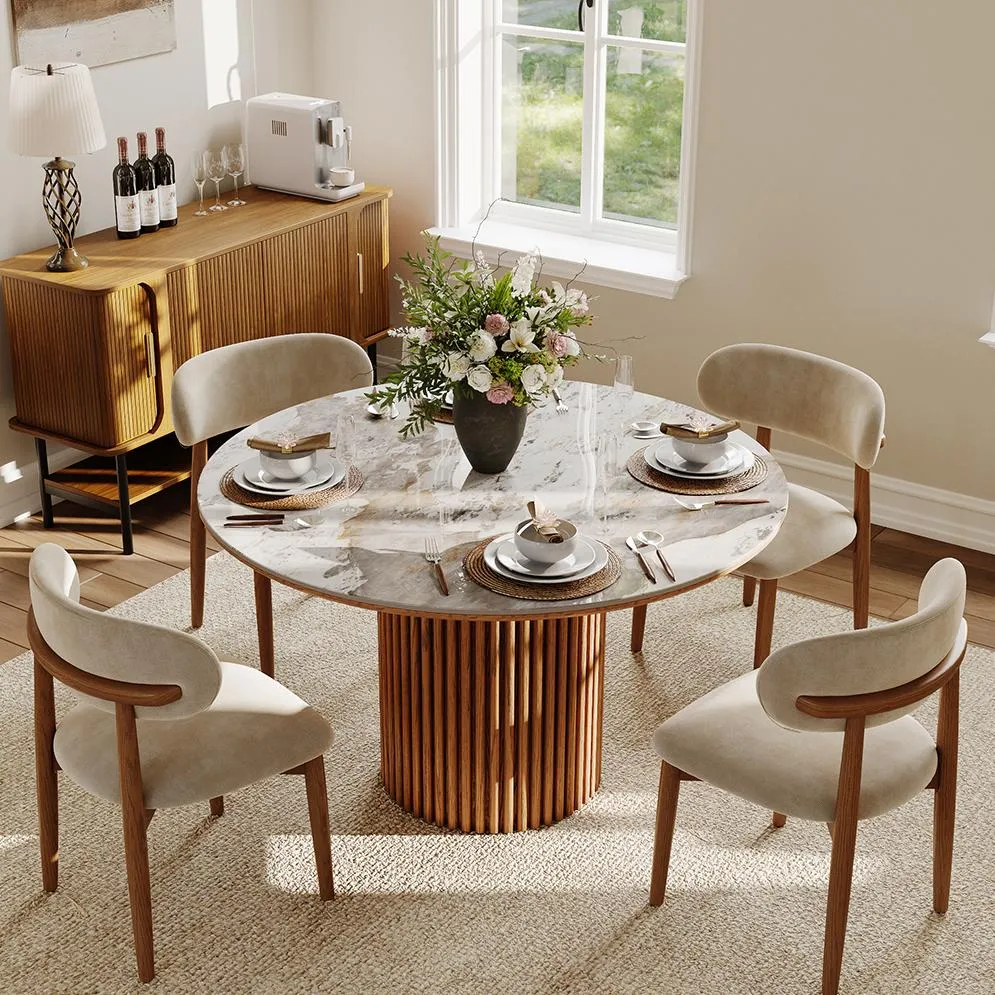
Sintered stone can convincingly mimic high-end marbles—think Calacatta veining, soft Carrara clouds, or dramatic dark stone—without inheriting marble’s softness and sensitivity. The veining, tone, and movement are printed and fused into the material, so you get consistent, controllable aesthetics. That’s a big relief if you’re ordering a large luxury dining room table online and don’t want “mystery” slabs showing up.
You can also go beyond stone imitations. Matte concrete looks, ultra-white minimalist slabs, or warm taupe neutrals are common, all within the same material. It’s like having a whole design library in one category, which makes it easier to find a look that works with your flooring, walls, and existing furniture without sacrificing performance.
Freedom in Size, Shape & Edge Details for Luxury Dining Room Table Sets
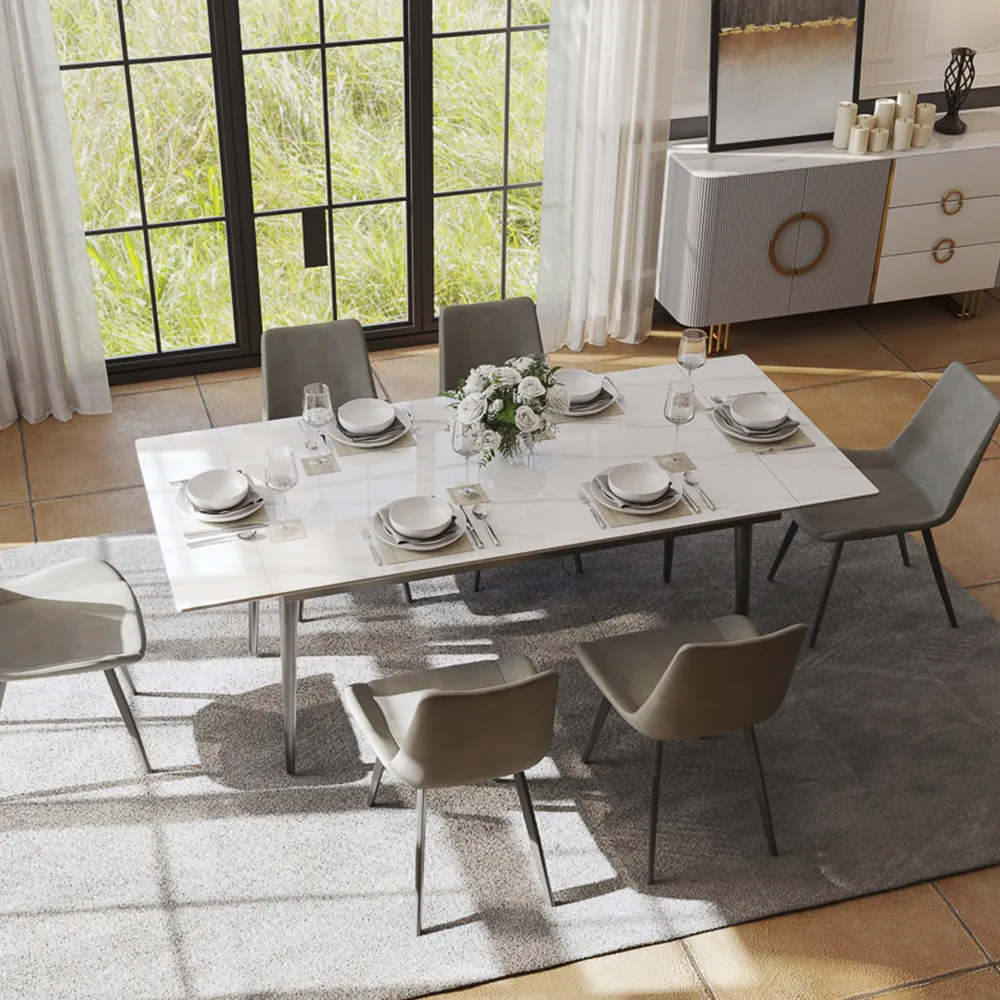
Because sintered stone is produced in large sheets, it’s easier to create long rectangular tables, generous round tops, or even racetrack ovals without excessive seams. This is ideal for luxury dining room table sets, where proportion and symmetry matter just as much as finish. Need a 94-inch table for a long room or a sophisticated round table for a compact city dining nook? The same material can handle both.
Edge profiling is another subtle luxury detail. With sintered stone, you can usually choose between thin modern profiles, chamfered edges, or slightly rounded bullnose-style edges that feel soft to the touch. One designer described using a slim-edge sintered stone table in a downtown loft: “It kept the dining area visually light, but the table itself still felt solid and substantial.”
Matching Bases, Chairs & Storage Pieces
Sintered stone tops pair well with a range of base materials—powder-coated steel for a modern look, wood for warmth, or sculptural stone and resin bases for statement pieces. Many luxury dining room table sets now coordinate the table with matching sideboards, consoles, or bar cabinets, using the same sintered stone finish as a common thread.
This makes it much easier to build a cohesive dining room without hunting piece by piece; a five-piece dining furniture set with a sintered stone-topped table, matching chairs, and a buffet can instantly pull the room together. The result feels curated and “designer,” even if you assembled it from a ready-made collection.
How to Choose the Right Sintered Stone Luxury Dining Room Table Set
Decide on Size, Shape & Seating Capacity First
Start with your space, not the catalog photo. Measure the room, note doorways and windows, and make sure there’s comfortable circulation around the table—ideally at least 36 inches between the edge of the table and walls or large furniture. Round tables work beautifully in square rooms and for conversational dinners; rectangular tables suit long rooms and larger families; extendable tops are perfect if you only host big gatherings occasionally.
Use this simple 3-step measuring guide before you fall in love with any design:
- Measure the room and mark a minimum 36″–42″ walkway around where the table will sit.
- Choose the ideal table size that leaves this clearance on all sides.
- Check your chair depth (including when pulled out) to confirm people can sit and stand comfortably.
Choose Color, Pattern & Finish That Match Your Existing Decor
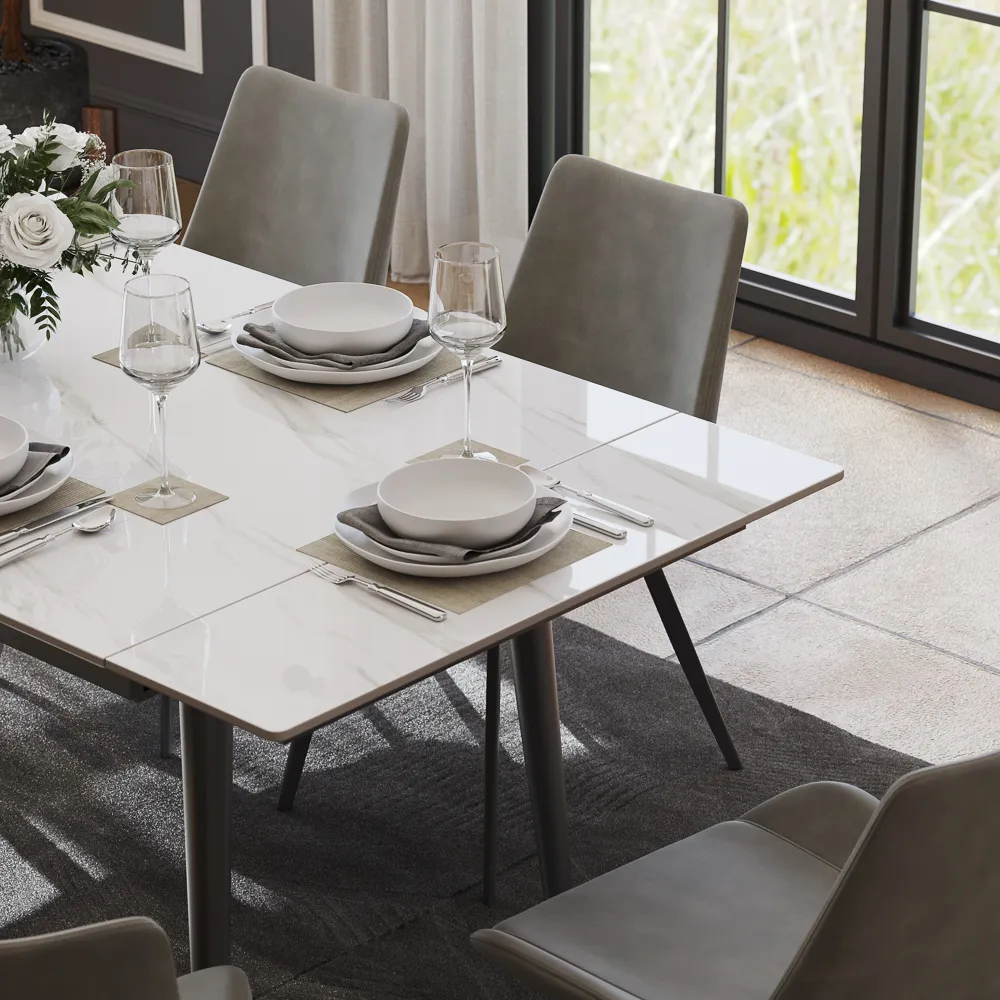
When selecting a sintered stone top, look at your flooring, wall color, and nearby big pieces like buffets or sofas. Light stone works well with dark wood floors or black metal accents, while darker, dramatic veining can anchor a bright, airy space. Safe pairings include light stone with dark wood bases, warm beige or gold veining with brass hardware, and cool grey tones with black or charcoal metal.
Finish matters, too. Matte surfaces hide fingerprints better and feel calmer in everyday light, while polished finishes bounce light around and can look more formal. If your dining room faces a big window or you entertain often, think about smudges and cleaning frequency when choosing between the two. In a busy home with young kids, a soft-matte finish is often the sweet spot between glamour and practicality.
Quality & Practical Details Before You Buy
A well-made sintered stone luxury dining table should have a top that feels substantial (even if it’s a “thin” modern profile), precise edge finishing, and a base that’s engineered to carry the weight without wobbling. Pay attention to how the top is fixed to the base and whether the base design allows comfortable legroom for everyone.
Conclusion – The New Standard for Luxury Dining Tables
Sintered stone is quickly becoming the new benchmark for luxury dining tables because it bridges a gap that used to feel impossible: the beauty and presence of high-end stone with the durability and ease of a professional-grade work surface. It lets you host freely, live normally, and still enjoy a dining room that looks pulled from a design magazine. For many modern households, that balance of aesthetics, performance, and low maintenance is exactly what “luxury” looks like now.
FAQs About Sintered Stone Luxury Dining Tables
Is a Sintered Stone Table Really Worth It vs. Marble or Solid Wood?
If you want the look of stone but don’t want to baby it, yes. Sintered stone resists stains, scratches, and heat far better than most marble and doesn’t need sealing. Compared with wood, it won’t swell, warp, or show water rings. You’re paying for long-term ease as much as for appearance.
Will a Sintered Stone Dining Table Scratch or Stain Over Time?
No material is truly indestructible, but sintered stone is about as close as it gets for home use. Normal cutlery, plates, and serving dishes should not leave marks, and common food and drink spills wipe away easily. Deep scratches could happen with very sharp or heavy metal objects, but they’re uncommon in everyday dining.
Can I Put Hot Pots and Pans Directly on the Table?
Most sintered stone tops are engineered to handle high temperatures, similar to or better than porcelain and natural stone. Brief contact with hot pots or pans is usually fine. Still, using trivets for very hot cookware is a smart habit—it protects not just the surface, but also any finishes on bases or placemats.
Is Sintered Stone Safe and Eco-Friendly for My Home?
Sintered stone is made from inorganic minerals under high heat, so it doesn’t rely on heavy resins or emit strong odors. Its very low porosity helps limit bacterial growth, and its long lifespan reduces the need for frequent replacements. For maximum peace of mind, look for brands that publish third-party emissions or sustainability certifications.
How Do I Clean and Care for a Sintered Stone Luxury Dining Table?
Daily care is simple: wipe with a soft cloth and mild dish soap diluted in water. Avoid harsh abrasives or strong acids—they’re unnecessary and can dull some finishes over time. For dried-on messes, let a damp cloth sit for a few minutes, then wipe. That’s usually all it takes to keep the surface looking new.


