 By Charles
Last spring I helped a friend in Brooklyn replace the seating in her 14-by-16 living room. She’d been pacing between a sofa set, a sectional, and a “let’s just mix what we like” approach for three weeks. The cart kept changing. The Pinterest board kept growing. The room stayed empty.
Here’s the thing — once we measured the actual usable wall (not the listed wall, the usable wall after the doorway and the radiator), the choice took about ninety seconds. So this guide is for the version of you that’s already decided: you want seating, not a whole living room overhaul. You’re picking between a sofa set, a sectional, or a mix. That’s the only fork in the road we’re working through here.
What Makes a Sofa Set Different From a Living Room Set
A sofa set covers seating only — usually a sofa plus a loveseat, or a sofa plus accent chairs. A living room set goes wider: it adds the coffee table, end tables, and sometimes a TV stand into one coordinated purchase. Same finish family, multiple pieces, one cart.
The reason this matters: a sofa set is what you buy when you already love your coffee table. Or when your TV console is fine and you just need to fix the seating. You’re not redoing the room; you’re replacing the part of the room that’s broken or worn out.
If you’re starting from a blank room — new home, full reset — the wider set is usually the smarter math. If two of the four pieces in your room are still doing their job, a seating-only sofa set saves you from over-buying. I’ve made the mistake the other direction, where I bought a whole matched set and ended up storing a perfectly good side table in the garage for two years.
Best Rooms for Sofa Sets
Two kinds of rooms make a sofa set the obvious answer.
Family Living Rooms
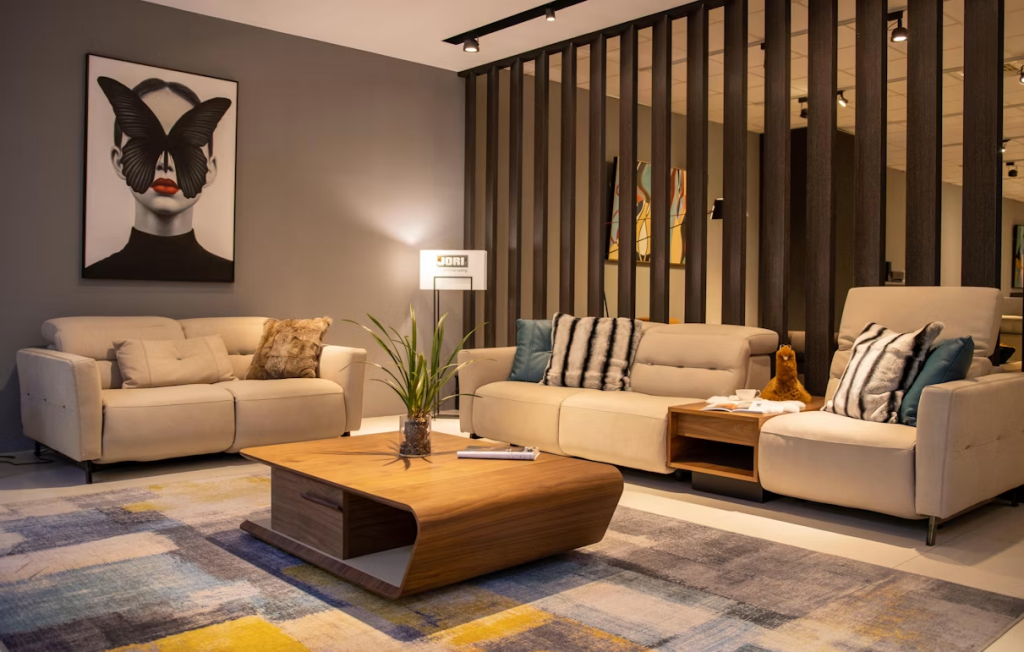
A sofa-and-loveseat pairing seats four to six people without anyone fighting for the long side. The split-piece layout also handles the reality of kids and pets better than one giant sectional. When the dog claims the loveseat (and the dog will claim the loveseat), the sofa still feels like an adult zone. One piece is easier to clean around than a single 110-inch sectional that has to be wrestled away from the wall every time something rolls under it.
In rooms between 180 and 280 square feet — the family-room middle ground — a sofa set leaves about a third more floor space than a comparable sectional. That floor space is where toys live, where the dog sprawls, where you actually walk.
Apartment Seating Zones
In a long, narrow apartment living room, two smaller pieces almost always beat one big one. A 78-inch sofa against the long wall plus a 58-inch loveseat at 90 degrees gives you a defined seating zone without blocking the walkway to the kitchen. A sectional in the same footprint usually turns the room into a single piece of furniture with a TV.
The other apartment advantage is delivery. A sofa and loveseat go through doorways and up stairs as two separate items. A 100-inch sectional is one of the most common returns in online furniture — not because the sofa is bad, but because it didn’t fit through the door. We’ll come back to this in the delivery section.
Sofa and Loveseat Sets vs Modular Seating
This is where the actual decision usually lives. Both approaches give you a similar amount of seating. They feel different to live with.
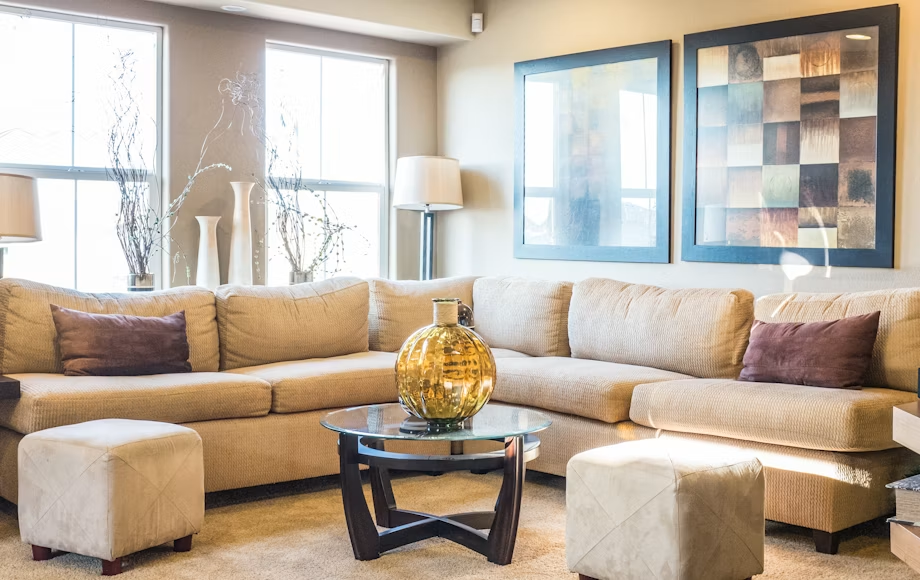
A sofa and loveseat set is two committed pieces. The sofa is a sofa, the loveseat is a loveseat, and they’re staying that way. You arrange them once and they look exactly like that for the next decade. The benefit is visual: matched finish family, consistent arm style, no awkward seams between modules. The room reads as intentional.
A modular sofa or sectional is reconfigurable. You can pull the chaise from the right side to the left side. You can split it back into two smaller pieces for a different room. The benefit is flexibility: when life changes, the furniture follows.
Here’s the rule I use after watching this play out across a dozen friends’ houses:
| Decision factor | Sofa + loveseat wins | Modular sectional wins |
| Room shape | Long and narrow; defined zones | Open-plan; one big lounging area |
| Hosting style | Multiple small groups, conversation-focused | One crowd, movie-mode |
| Move plans | Staying put 5+ years | Might move or rearrange within 3 years |
| Cleaning access | Want to vacuum under and behind | Don’t mind moving modules |
| Finish discipline | Want everything to match perfectly | Comfortable with seam joins |
POVISON’s sofa and loveseat collection is built around matched finish families specifically because the most common regret with sofa sets is mismatched undertones — a warm-walnut sofa frame next to a cool-grey loveseat reads as two different purchases instead of one. The pre-assembled side is the bigger time saver, though. Both pieces arrive ready to place, no tools required.
If your room actually wants one connected zone instead of two pieces, the modular sectional route is the better starting point. Don’t force a sofa set into an open-plan layout that’s begging for a sectional.
Measuring a Sofa and Loveseat Set Before Ordering
Here’s the part I never skip, no matter how confident the customer is in their head measurements.
Take painter’s tape and outline both pieces on the floor in the exact spots you plan to put them. Outline the coffee table too. Then walk through the room normally for forty-eight hours. Make coffee in the morning. Carry laundry. Bring groceries in. If the tape outline gets in the way of any of that, the real furniture will get in the way harder.
According to Dimensions’ loveseat standards, most loveseats fall between 48 and 72 inches wide — that 24-inch swing is the difference between “fits the wall perfectly” and “sticks out past the doorway.” Don’t trust the category label; measure the specific product.
Three more measurements people forget:
- Door swing. A door that opens 90 degrees into the room takes a 32-inch bite out of your usable wall. Mark the swing arc on the floor.
- Radiator or vent clearance. Most upholstered sofa backs need at least 4 inches of breathing room from a heat source. Closer than that and the back fabric ages faster on one side.
- Outlet access. The lamp behind the loveseat needs to plug into something. Map the outlet locations before you commit to the layout.
Leather Sofa Sets vs Fabric Sofa Sets
The leather-versus-fabric question is the one that gets the most “it depends” answers in online forums, which is unhelpful. Let me give you the version that’s not vague.
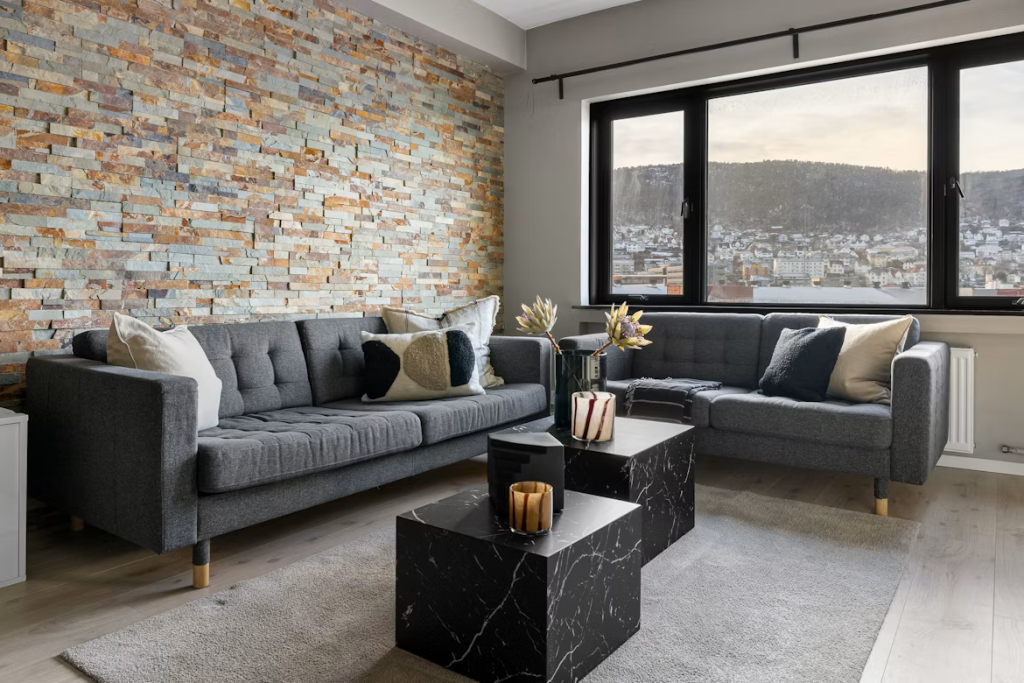
Leather sofa sets wear in, not out. The finish gets a patina over five to ten years that fabric doesn’t replicate. Spills wipe off the surface in seconds — important for households with toddlers and red wine. Pet hair doesn’t cling. Leather also costs more upfront, usually $400 to $900 more than a comparable fabric set, depending on grade.
Fabric sofa sets are softer to sit on day one, more forgiving for naps, and easier to coordinate with existing décor. Performance fabrics — the polyester-blend weaves engineered for stain resistance — have closed most of the durability gap that used to favor leather. Higher abrasion ratings on the spec sheet correlate with longer service life, though the Association for Contract Textiles’ Wyzenbeek guidelines note that numbers above 100,000 double rubs don’t actually predict extra lifespan. For residential use, 15,000 to 30,000 double rubs is the sweet spot.
Heat, Stickiness, Kids, Pets, and Cleaning Trade-Offs
The summer stickiness question deserves a real answer. Leather does sit warmer than fabric in a hot, humid room — your skin sticks to the surface for the first thirty seconds after you sit down on a 90-degree afternoon. Quality leather with a breathable finish and a throw blanket as a buffer mostly solves it. Cheap bonded leather doesn’t breathe the same way, and that’s where the sticky-and-cracking horror stories come from.
For kids: leather wins on spills, fabric wins on landings. A toddler face-planting onto the cushion edge has a softer experience on fabric. A juice box exploding onto the seat has a faster cleanup on leather.
For pets: fabric is more forgiving of claws if you choose a tight weave; leather shows scratches more visibly but doesn’t shed hair clinging. The ASPCA’s pet-friendly home guide specifically recommends darker patterns and tweeds for showing fewer stains and fur on upholstered furniture — a useful nudge if you’re stuck between two fabric colors.
Cleaning, in plain numbers:
- Leather: weekly wipe with a dry cloth; quarterly leather conditioner; spot-clean spills immediately.
- Performance fabric: weekly vacuum; spot-clean as needed; some have removable, machine-washable covers.
- Standard linen or cotton: weekly vacuum; professional cleaning every 12–18 months for visible wear.
Delivery, Fit, and Setup Checks Before Buying Online
This is where online sofa purchases go sideways. Three things to confirm before you click order.
Doorway clearance. Measure the narrowest door the sofa has to pass through, including the front entrance, hallway turns, and the living room door itself. Compare against the sofa’s diagonal depth (the diagonal measurement from corner to corner when tipped), not just its listed depth. Most fit failures happen at the turn into the hallway, not the front door.
Elevator and stairwell limits. If you’re on the third floor, the loveseat needs to fit either the elevator or the stairwell landing turn. A 78-inch sofa often won’t make a tight stairwell turn — that’s a 100-pound piece going back down the stairs to the truck.
Setup expectations. POVISON sofa sets ship fully assembled, which is the part that genuinely saves a weekend. A typical flat-pack sectional needs 90 to 180 minutes per piece plus an Allen key and a second person. Fully assembled means open the packaging, lift into place, done. The trade-off is bulkier shipping boxes — usually delivered with curbside or threshold drop, with white-glove available for an upgrade fee on larger sets.
Damage policy. Read the actual policy before ordering, not after a corner shows up dinged. The window is usually 24 to 72 hours from delivery to report shipping damage. After that window, your options narrow.
FAQ
How do I measure my living room to make sure a sofa and loveseat set will fit?
Start with the wall length where the sofa will sit, then subtract anything that eats into that wall — door swings, radiators, vents, outlets you need access to. Tape out the full footprint of both the sofa and the loveseat on the floor in the position you plan to use them. Leave at least 30 to 36 inches of walking space around the seating zone, and confirm the diagonal depth of each piece fits through your narrowest doorway and stairwell turn.
Do leather sofa sets get too hot or sticky in warm weather?
Quality leather sofa sets sit slightly warmer than fabric in hot, humid weather — your skin touches a less-breathable surface for the first thirty seconds. A breathable leather finish and a light throw blanket as a buffer mostly solves it. Bonded leather and very cheap finishes are where the persistent stickiness complaints come from. In air-conditioned rooms, the difference is barely noticeable.
Is it difficult to clean fabric sofa sets when you have kids or pets?
Cleaning fabric sofa sets with kids or pets is mostly about choosing the right fabric upfront, not heroic cleaning routines later. Performance polyester blends and tight-weave fabrics handle weekly vacuuming and spot cleaning with no drama. Linen and untreated cotton stain more easily. Removable, machine-washable covers — when offered — are the cheat code for households with frequent spills.
Should I buy a sofa set if I might move to a different place in a couple of years?
If you’re likely moving within two years, a sofa set is reasonable as long as the pieces fit standard doorways and elevators in the kind of place you’d move to. Two separate pieces move far easier than a single sectional — that’s the practical edge. The risk is the new room’s shape: a sofa-and-loveseat set that worked in a long, narrow apartment might not fit a square family room without rearranging. A modular configuration hedges against that better than a fixed pair.
What is the biggest regret people have after buying a sofa and loveseat set?
The most common regret I hear is finish-family mismatch — the sofa and loveseat were sold as a set but the wood frames or upholstery undertones don’t actually match in daylight. The second is buying too much sofa for the room: an 88-inch sofa next to a 64-inch loveseat in a small space turns the room into seating-only, with no breathing room for a coffee table or walkway. Both regrets are fixable upfront with the painter’s-tape test before ordering.
Conclusion
The sofa set decision comes down to three honest answers. Do you want the room to look intentional and matched, or flexible and reconfigurable? Do you have the wall length to actually place a sofa plus a loveseat, or are you forcing two pieces into a space that wants one sectional? And can the pieces physically get into your living room — through the door, around the turn, up the stairs?
If you’ve measured the room, taped the footprint, and the answer is still a sofa set, the rest is mostly choosing finishes and fabric. Tape-out before buying. Read the damage window before clicking order. And give yourself the gift of fully assembled pieces if your weekends are already overcommitted — that’s the unglamorous part of furniture buying that pays off every single time.
Related Reading:


