 By Kelvin
Introduction
Choosing the right media console depth is less about finding one universal number and more about checking whether each device can fit, connect, and run safely. This guide compares PS5, Xbox, Nintendo Switch docks, and full-size AV receivers, then shows how doors, rear panels, cables, and ventilation change usable space. You will also learn which device should determine depth in a mixed setup and when an open equipment rack is safer than a closed TV stand.
Table of Contents
Media Console Depth at a Glance
A gaming TV stand must accommodate the connected device, not just its case. Published dimensions are a starting point; plugs, cable bends, doors, and manufacturer ventilation instructions determine whether the installation works.
| Device | Official Body or Dock Size | Main Clearance Issue | Practical Cabinet Direction |
|---|---|---|---|
| PS5 Slim with Disc Drive | About 14.1″W × 3.8″H × 8.5″D, excluding projecting parts | Rear cables and open airflow | Open or strongly ventilated shelf |
| PS5 Pro without optional Disc Drive | About 15.3″W × 3.5″H × 8.5″D | Rear cables; remeasure if adding the optional drive | Open bay with model-specific clearance |
| Xbox Series X | About 5.94″W × 5.94″D × 11.85″H when vertical | Top and rear ventilation | Open shelf with clear space around vents |
| Xbox Series S | About 10.8″W × 5.9″D × 2.6″H when horizontal | Large black exhaust vent | Open shelf rather than a sealed bay |
| Original Nintendo Switch Dock | About 6.8″W × 4.1″H × 2.12″D | Top docking access and rear cables | Standard shelf with usable height above |
| Nintendo Switch OLED Dock | About 6.9″W × 4.1″H × 2.0″D | Top access, HDMI, power, and LAN routing | Standard shelf with rear cable access |
| Nintendo Switch 2 Dock | About 7.9″W × 4.5″H × 2.0″D | Wider dock, top access, and rear connections | Standard shelf with additional width |
Check Physical, Connected, and Operating Fit
A shelf can pass one test and fail the next.
Physical fit: Measure the narrowest usable width, height, and depth. Include hinges, face frames, shelf lips, and rear supports. Confirm the device’s approved orientation.
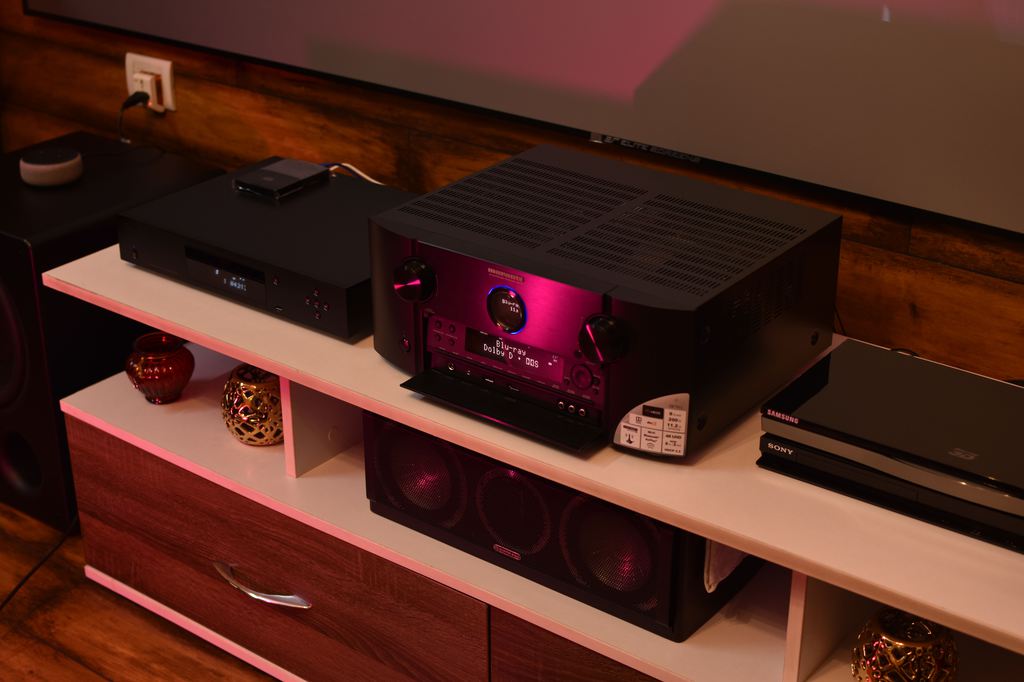
Connected fit: Add HDMI plugs, power connectors, Ethernet cables, speaker terminals, and comfortable cable bends. A practical AV receiver cabinet depth check should be made with the receiver fully wired because its installed depth exceeds the case measurement.
Operating fit: Follow the manual for intake, exhaust, and surrounding clearance. If heat lacks a clear exit path, use an open bay or separate rack rather than relying on a closed door.
Depth Requirements by Device
Each category creates a different constraint. Consoles may be shallow but strict about airflow, while receivers become deeper after rear connections are installed. These checks explain what changes the decision rather than repeating the table.
PS5 Slim and PS5 Pro
The media console depth for PS5 must account for its 8.5-inch body depth, rear cables, and Sony’s clearance guidance. Horizontal placement uses more width; vertical placement needs a tall, stable opening. A closed compartment fails when its rear wall or door prevents the required airflow.
Xbox Series X and Series S
TV stand depth for Xbox Series X is rarely the hardest measurement because its body is about 5.94 inches deep. Airflow is the limit. Microsoft recommends 4–6 inches around the console and says not to place it in an enclosed cabinet, so a deep shelf behind closed doors can still be unsuitable.
Nintendo Switch and Switch 2 Docks
Switch docks require little game console shelf depth, but they need top access and room behind the dock for power, HDMI, and network cables. Avoid a low shelf that makes docking awkward. In a family room, easy front access usually matters more than several extra inches of depth.
AV Receivers
Receiver dimensions vary too much for a category average. Sony’s STR-AN1000 is about 13.13 inches deep before cables; the STR-DH790 is about 11.75 inches. Sony also warns against confined installation for the STR-AN1000. Check the exact manual and media console ventilation requirements before selecting a closed bay.
Depth Checks for Mixed Gaming and Home Theater Setups
Use the deepest connected device rule: the minimum shelf depth is set by whichever component extends farthest after cables are attached. Device count affects heat and compartment planning, not depth by itself.
- PS5 + Switch: PS5 airflow drives the layout; the Switch needs accessible top clearance.
- Xbox Series X + soundbar: Keep the Xbox open and verify soundbar width.
- AV receiver + PS5: The receiver often drives depth; the PS5 drives ventilation. A media console for PS5 and receiver works better with separate bays.
- Receiver + two consoles: Use independent ventilated compartments or move the hottest device outside.
During movie or game night, a receiver and console may run together. Separate bays make it easier to organize multiple game consoles in one cabinet without stacking equipment or blocking cables.
How Cabinet Construction Reduces Usable Depth
Exterior furniture depth is not clear shelf depth. Measure from the inside face of the closed door to the first rear obstruction, then account for:
- Door thickness, hinges, and front face frames
- Shelf lips, rear panels, and braces
- Cable openings that sit above or below the ports
- Plugs that cannot bend sharply
- The wall gap needed behind the cabinet
When shoppers ask, “how deep should a gaming TV stand be,” the useful answer is the narrowest internal measurement after these losses—not the top-panel dimension.
Best POVISON Media Consoles for Depth-Critical Setups
These models address different fit problems: extra internal depth, easier rear access, or a more compact cabinet for moderate-depth gear. Compare every listed space with the connected dimensions and operating instructions for your devices.
Prices shown are current U.S. page prices at the time of writing and may vary by region, finish, size, promotion, or bundle discount.
🥇 Top 1: Arboren 71″ Mid-Century Modern TV Stand
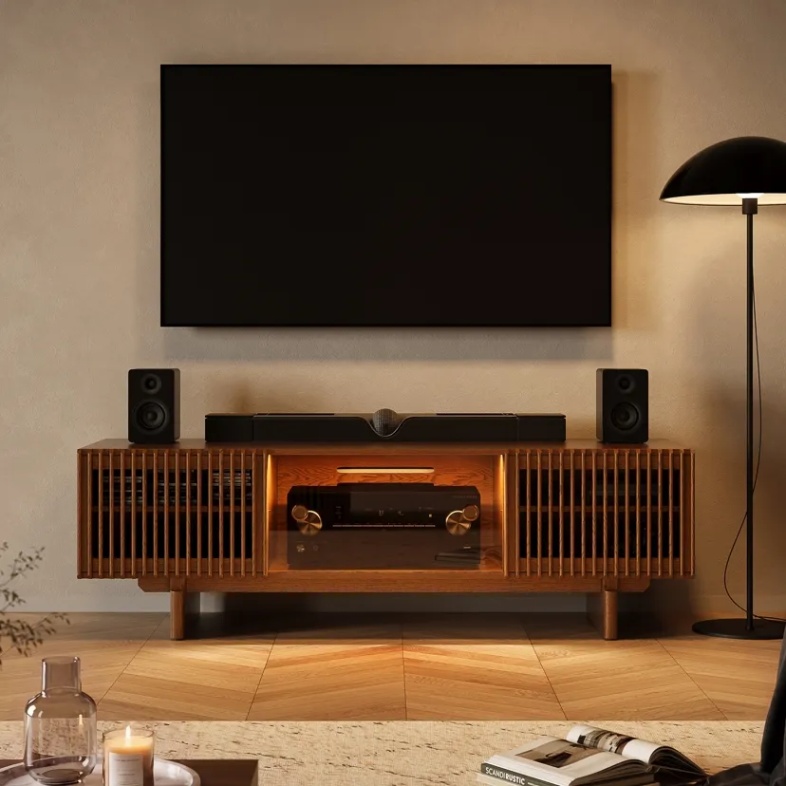
👍 Best for: Full-size receivers and mixed home theater equipment
💲 Price: $1,699
✨ Highlights
- 18.3-inch interior depth
- Removable side shelves
- Multiple internal and rear cable openings
- Slatted doors and rear ventilation
🎯 Features: The 18.3-inch interior gives connected receivers more room than a shallow TV stand. Removable shelves open a taller bay, while slatted doors and rear vents support airflow. It suits a receiver, disc player, and smaller source devices that need separate cable routes.
🗨️ Buyer review:“The larger depth and spacious cabinets allow for plenty of room for A/V Receiver.” — Jim
🥈 Top 2: Arboren 17.7″ Deep Vented Rolling Media Console
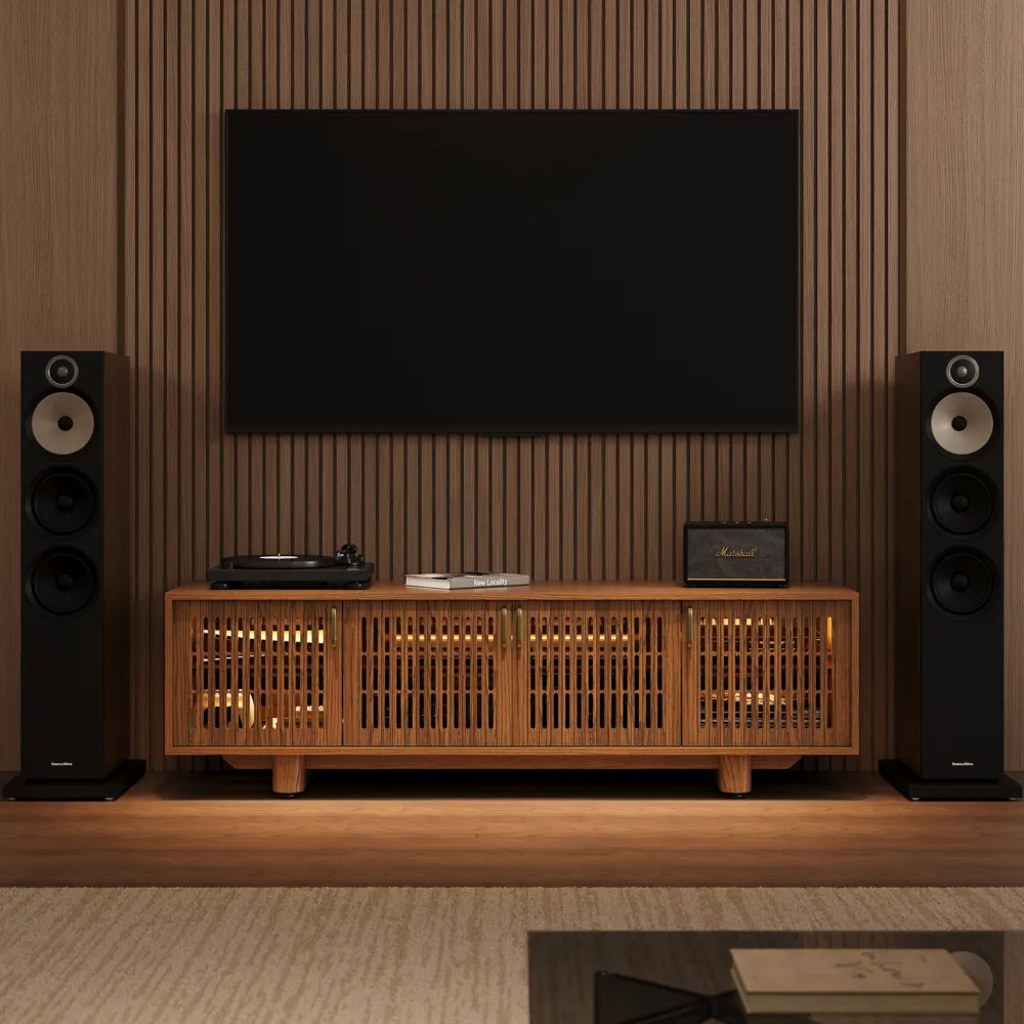
👍 Best for: Receiver-and-console setups needing easy rear access
💲 Price: $1,799
✨ Highlights
- 17.7-inch interior depth
- Removable rear panels
- Ventilated metal shelves
- Concealed wheels
🎯 Features: Concealed wheels let the cabinet move away from the wall, while removable rear panels simplify HDMI, speaker-wire, and power routing. Its separate bays help keep a receiver and game console from sharing one crowded heat zone. This is especially useful when wall access is limited.
🗨️ Buyer review:“The generous interior depth was exactly what I needed.” — Knox
🥉 Top 3: Selene Horizontal Slatted TV Stand with Adjustable LED Lights
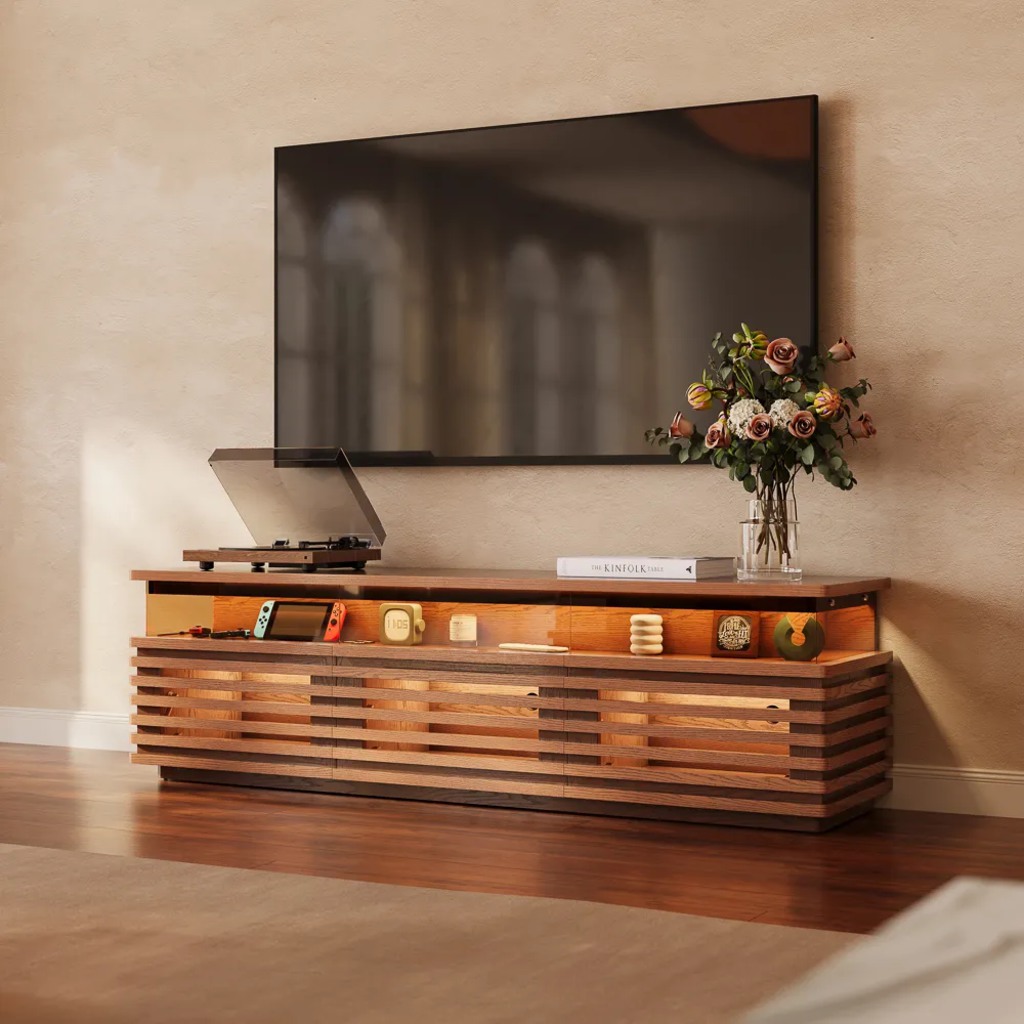
👍 Best for: Gaming consoles and moderate-depth AV equipment
💲 Price: From $1,399; confirm the selected size before publication
✨ Highlights
- 17.72-inch overall cabinet depth
- Three rear cable openings
- Slatted front for signal and sound passage
- Three separate storage cabinets
- Fully assembled construction
🎯 Features: Selene works well for gaming rooms that need separate cable routes and closed storage without completely blocking remote signals. Its slatted front allows infrared signals and sound to pass, while three rear openings help separate power, HDMI, and network cables. Because 17.72 inches is the exterior depth, measure the connected receiver before placing full-size equipment inside.
🗨️ Buyer review: “It is an excellent piece of furniture, and exactly as advertised. It is a clean, modern design with lustrous color tone and grain.” — Brianent
When a Media Console Is Not the Right Storage
Choose an open AV rack or separate equipment shelf when required clearance cannot be maintained behind closed doors. This applies especially to Xbox consoles, which Microsoft says should not run in an enclosed cabinet, and receivers whose manuals prohibit confined installation.
Room circulation matters too. In a small apartment, an extra-deep cabinet may narrow the path between the TV wall and coffee table. A separate open receiver rack beside a shallower console can protect both equipment clearance and the walkway.
Conclusion
The right media console depth is the one that passes three checks: the device fits, cables connect without strain, and equipment can operate with required ventilation. Start with official dimensions, then measure the cabinet’s narrowest usable interior space. For mixed setups, let the deepest connected component determine shelf depth and give high-heat devices separate airflow paths. When a closed cabinet cannot meet the manual’s clearance rules, an open shelf or dedicated AV rack is the safer solution.
Frequently Asked Questions
Can right-angle HDMI adapters reduce the required depth?
A right-angle HDMI adapter can reduce rear cable projection when a straight connector presses against the cabinet panel. Confirm that it supports the HDMI standard required by your console or receiver and does not cover nearby ports. It can solve a connector conflict, but it cannot replace the device’s required ventilation clearance.
Should I leave extra depth for future equipment upgrades?
Leaving one to two inches beyond your current connected-device depth can make future receiver or cable upgrades easier. However, extra media console depth is useful only when the cabinet also provides sufficient shelf height, ventilation, and access. Do not choose an oversized cabinet solely for an upgrade you are unlikely to make.
How much shelf capacity does an AV receiver require?
Check the receiver’s listed weight and add the weight of any equipment sharing the shelf. Choose a shelf rating comfortably above that total rather than matching it exactly. Because long shelves may sag over time, a center support or shorter equipment compartment can provide better stability for a heavy receiver.
Can a cabinet fan make a closed media console safe?
A fan can improve air movement, but it cannot correct an undersized compartment, blocked intake, or inadequate manufacturer clearance. Use one only when air has a clear entry and exit path. A temperature-controlled fan is more practical than a constantly running model, but the equipment manual should remain the primary standard.
How often should console and receiver vents be cleaned?
Inspect exposed vents every few months and clean them sooner in homes with pets, carpeting, or heavy dust. Turn the equipment off, unplug it, and use a soft brush or low-suction vacuum around exterior openings. Do not push dust deeper into the device or open its case unless the manufacturer permits it.


[…] back panels, shelves, plugs, and cable bends all reduce usable space. For deep components, compare media console depth for PS5, Xbox, and AV receivers using the equipment in its fully connected […]
[…] gaming cabinet should do more than hide a console. When comparing options, look for enough interior depth, ventilation that lets heat escape, and rear access that keeps plugs from pressing against device […]