 By Charles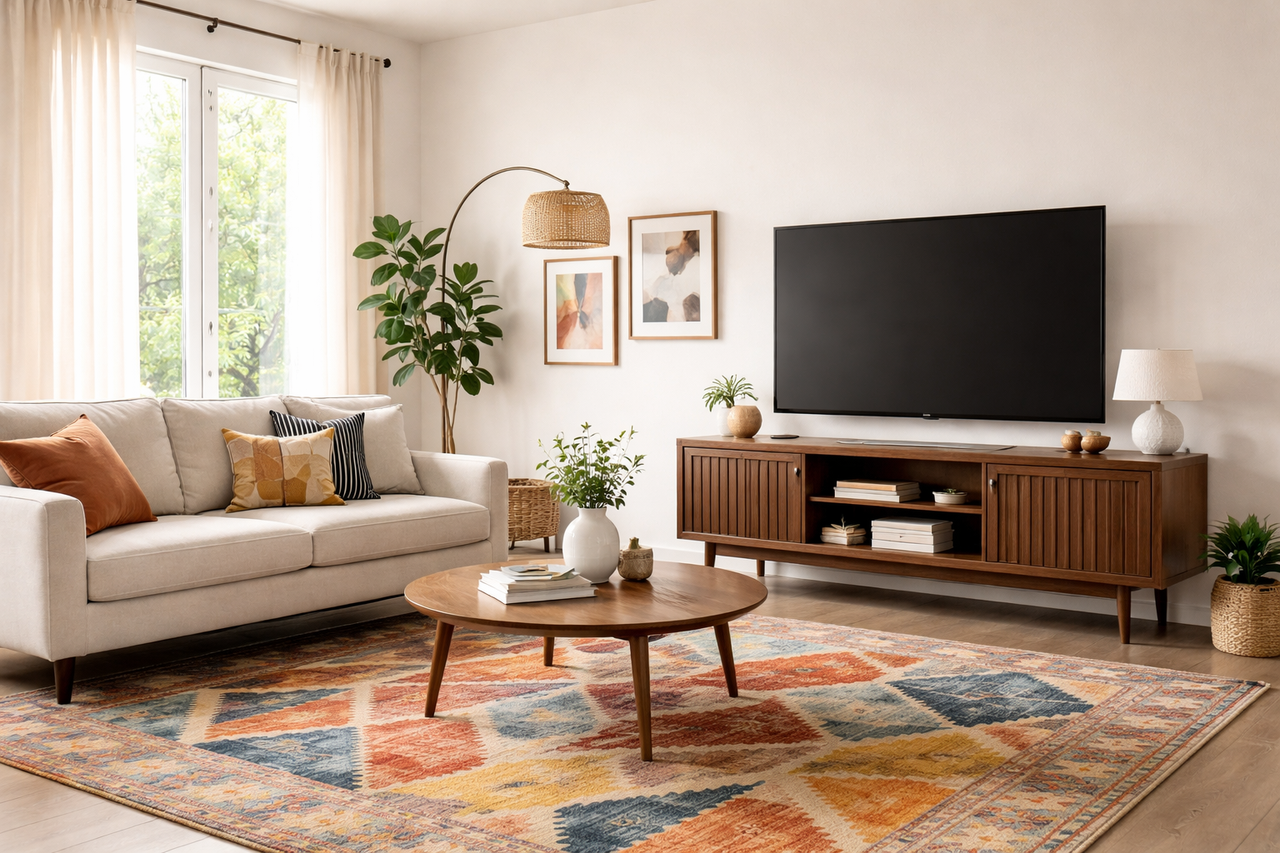
Ever bought a TV stand that looked great online… but turned into a weekend-long battle once you opened the box? When you’re juggling work, kids, pets, and the occasional Netflix binge, your mid century modern TV stand has to be more than just pretty. It needs to be sturdy, easy to clean, handle messy cables, and ideally require as close to zero assembly as possible—because your weekend is for recharging with your family, not for fighting a losing battle against a bag of missing screws and a hex key. Check out my favorite no-stress, fully assembled collections here. Before you scroll through another endless product page, let’s walk through how to pick a stand that nails the look and survives real-life chaos.
What Defines Mid Century Modern Style?
You see “mid century modern” slapped on a lot of furniture online, but not all of it passes the real-life test. So what are you actually looking for in a mid century modern TV stand that fits your home and your schedule?
Key Design Elements
When you’re scrolling, these are the easy visual cues that say “yep, that’s mid century modern”:
- Clean lines: Straight edges, simple shapes, no ornate carving. It looks calm even when the rest of your living room… doesn’t.
- Low, horizontal profile: Most MCM stands are long and low, which makes your TV wall feel wider and more grounded.
- Visible legs: No giant box on the floor. You’ll usually see at least 4–6 legs, often tapered.
- Wood-forward look: Walnut, oak, or teak tones, sometimes mixed with a bit of white or matte color.
Functionally, this style works for you because it’s:
- Easy to clean under (robot vacuums are big fans).
- Visually light, so even a big unit doesn’t dominate the room.
- Timeless enough that you’re not replacing it in two years when trends shift.
If you’re also hunting for matching pieces later, you might want to check out other kid-proof MCM tables that share these same simple lines and raised legs.
MCM vs Scandinavian vs Danish Modern
They’re cousins, so they overlap, but there are some differences you’ll notice when you’re choosing a TV stand:
Mid Century Modern (MCM):
- Warm woods (especially walnut and teak).
- Bolder shapes and sometimes contrasting doors or handles.
- A bit of retro vibe without feeling costume-y.
Scandinavian:
- Lighter woods (lots of oak, birch, and white finishes).
- Very minimal, often more storage with simple flat fronts.
- Soft, airy look, great if your room is small or doesn’t get a lot of light.
Danish Modern:
- Think “refined MCM.” Clean, elegant lines and amazing joinery.
- Often pricier because of craftsmanship and materials.
In practice, you can mix these styles. An MCM walnut TV stand can sit happily next to a Scandinavian light-wood coffee table as long as you keep the shapes simple and the room palette cohesive.
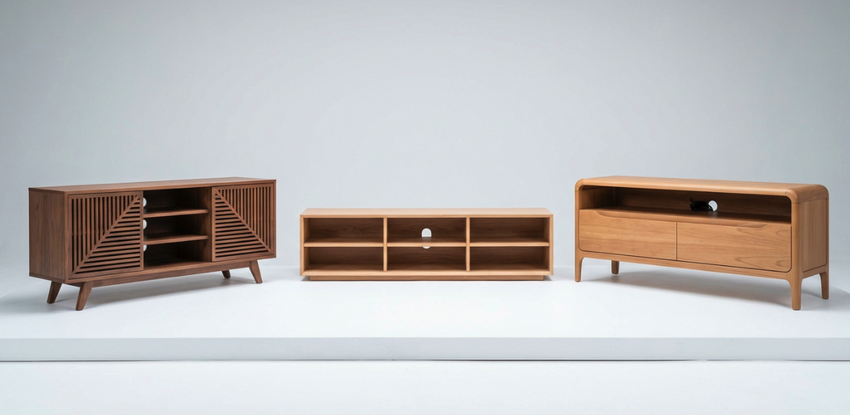
Size Guide by TV Size
You don’t want your TV stand to look like it shrunk in the wash, or like a giant boat under a small screen. Here’s how to size things so they look intentional and stay stable when kids bump into them.
A quick rule you can actually remember: aim for your mid century modern TV stand to be at least 6–10 inches wider than your TV.
55″ TV
- Ideal stand width: ~60″–70″.
- Why: You get enough surface for a soundbar or decor without the TV hanging over the edges.
- Height tip: Around 18–22″ high works for most sofas so your neck isn’t craned upward.
If you’re short on space, a compact, longer-than-the-TV stand with slim legs helps the room feel bigger.
65″ TV
- Ideal stand width: ~70″–80″.
- Why: This gives you a solid visual anchor. Too small a stand makes the TV feel like it’s about to topple.
- Check the weight rating: Especially if you’re using an older, heavier TV – always confirm the stand’s listed capacity.
If you’re also thinking about future-proofing for a larger screen, it’s worth browsing durable mid-century consoles that support bigger TVs so you’re not rebuying later.
70″ TV
- Ideal stand width: ~80″–90″.
- Look for extra support (center legs or a sled base) to avoid sagging over time.
- This is where cable management really matters, big TV usually = more devices.
75″+ TV
Once you hit 75″ and up, you’re in “measure three times” territory.
- Ideal stand width: at least 85″ and up.
- Double-check:
- Weight capacity.
- Number of support points.
- Depth (you don’t want the TV feet hanging off the front).
For really large setups, some people combine a long MCM stand with wall-mounted upper cabinets or shelves. If that’s you, look into modular wall units that blend with MCM pieces for extra storage without losing the style.
For the big screens, check out these heavy-duty MCM consoles built to handle the weight.
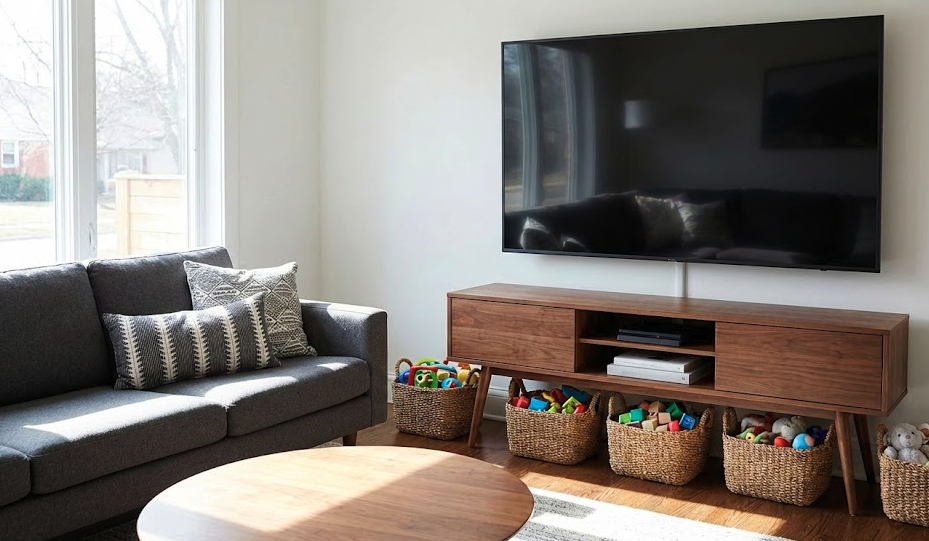
Wood Types Compared
The wood you pick affects how your TV stand ages, how much abuse it can take, and how often you’ll be wiping sticky fingerprints.
Walnut (Rich, Dark)
Walnut is the classic mid century modern TV stand wood for a reason:
- Deep, warm brown with natural variation.
- Instantly looks more “grown up” than cheap espresso-colored particle board.
- Pairs well with gray sofas, leather, and colorful rugs.
It’s a good choice if you want your stand to hide minor scuffs and if your living room leans cozy rather than beachy.
Oak (Light, Durable)
Oak is your friend if you want something lighter and airy but still tough.
- Naturally light, slightly golden tone.
- Great at disguising dust (a real bonus with pets).
- Works perfectly in Scandinavian-leaning rooms.
If your space is small or doesn’t get a lot of daylight, an oak stand will feel less heavy than a dark walnut.
Teak (Classic MCM)
Teak is the “OG” of mid-century furniture:
- Warm, slightly reddish tone that feels vintage without looking old.
- Naturally good at handling moisture and everyday wear.
True solid teak can be pricey. If you see a deal that looks too good to be true, check if it’s teak veneer over another core wood.
Veneer vs Solid Wood
You’ll see both terms a lot:
- Solid wood:
- Heavier and usually more expensive.
- Can be refinished and repaired more easily.
- Great for long-term durability.
- Veneer:
- A thin layer of real wood over a core (often plywood or MDF).
- Can still be high quality if it’s well done.
- Usually more affordable and lighter.
For a busy household, good veneer over quality plywood can actually be a smart move: it’s stable, less likely to warp, and easier on your budget while still looking like the real deal. Just avoid super-thin veneer on low-grade particle board that chips easily.
If you’re curious about longevity, you can also compare solid wood vs veneer furniture for family homes before committing.
Leg Styles & Heights
Legs aren’t just a style choice, they affect stability, cleaning, and how often you swear when a toy car shoots underneath.
Tapered Legs
These are the classic MCM look: legs that are wider at the top and narrower at the bottom.
- Pros:
- Iconic retro vibe.
- Easy to vacuum under.
- Visually light and elegant.
- Watch for:
- Sturdiness. On long TV stands, you still want a center support leg or two.
Hairpin Legs
Metal hairpin legs lean more industrial but still feel mid-century inspired.
- Pros:
- Super open underneath, great for small rooms.
- Usually very strong if properly attached.
- Cons:
- You’ll see everything that rolls under there.
- Can be a toe-stubbing hazard if they stick out past the cabinet.
Hairpin legs are better if you like a slightly edgier look and don’t mind your robot vacuum doing public service under the stand.
Sled Base
A sled base runs along the floor in a continuous frame instead of 4–6 separate legs.
- Pros:
- Extremely stable, nice if kids are prone to bumping into the stand.
- Weight is distributed more evenly.
- Cons:
- Harder to clean under unless the frame is slightly raised.
If you’ve got a very large TV, a sled base or a leg design with multiple support points can give you more peace of mind.
Style Matching Guide
Once you’ve nailed the size and wood, the fun part is making your mid century modern TV stand play nicely with the rest of your living room.
MCM Living Room Elements
You don’t have to redo your whole space, but a few touches help everything feel intentional:
- A low-profile sofa with simple lines.
- A coffee table with similar wood tones or matching legs.
- One or two statement lamps with metal or wood bases.
You can always browse other MCM-inspired living room pieces later and layer them in over time instead of changing everything at once.
Mixing With Modern Furniture
Your current furniture doesn’t have to be mid-century for this to work.
- Got a big, comfy sectional? Pair it with a slim MCM TV stand to balance the bulk.
- Have modern black metal pieces? Choose a stand with simple metal pulls or hairpin legs.
- Lots of kids’ stuff around? Lean into it, use woven baskets on lower shelves and keep breakables higher up.
As long as you stick to simple shapes and repeat 1–2 materials (like walnut + black metal), the room will feel pulled together.
Color Palette Tips
Mid century modern is flexible, but these palettes are easy wins:
- Warm & cozy: Walnut, camel leather, deep green or rust pillows.
- Light & airy: Oak, white walls, soft grays, and a few muted blues.
- Playful family room: Natural wood, a neutral sofa, and colorful art or rug.
If your TV is a big black rectangle (and it is), think of your TV stand as the frame that softens it.
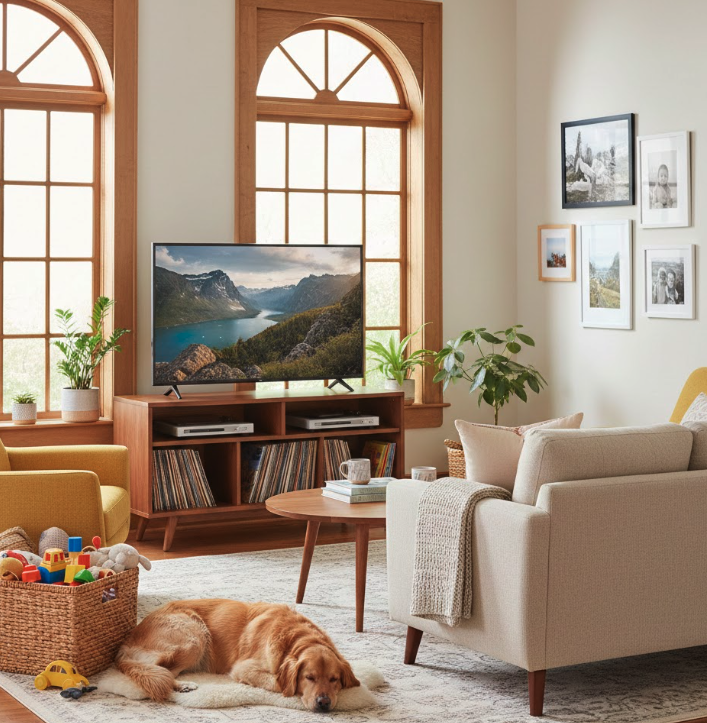
Storage Options
A beautiful TV stand that can’t hide your cables, remotes, and random toy dinosaurs isn’t actually doing its job.
Open Shelves vs Closed Cabinets
Open shelves are best if you:
- Use multiple devices (game consoles, streaming boxes, soundbars).
- Don’t want to open a door every time you turn something on.
- Like to display books, baskets, or decor.
Downside: they collect dust and visually show clutter unless you’re disciplined with baskets.
Closed cabinets or drawers are best if you:
- Want to hide toys, games, or extra blankets.
- Have curious pets that love chewing cables.
- Prefer a calm, uncluttered look.
The ideal setup for most busy households is a mix: open shelves in the center for devices, and closed storage on the sides for everything else. Look for:
- Cable management holes at the back (extra points if they’re on multiple shelves).
- Soft-close hinges so doors don’t slam when kids get enthusiastic.
- Sturdy shelves that list real weight limits.
When you find the right mid century modern TV stand, one that handles your TV, hides the mess, and fits your style, you’re not just buying furniture. You’re buying back your Saturday afternoons, no hex key required.
If you’ve been wondering whether upgrading from your old wobbly unit is worth it, the answer is this: if you value your time and your sanity, a well-built mid century modern TV stand that arrives ready (or almost ready) to go is absolutely worth the investment.
Frequently Asked Questions
What makes a TV stand truly mid century modern?
A genuine mid century modern TV stand has clean lines, a low horizontal profile, visible raised legs (often tapered), and a wood-forward look in walnut, oak, or teak tones. It should feel visually light, simple, and timeless without ornate details or heavy, boxy bases sitting flat on the floor.
How wide should a mid century modern TV stand be for my TV size?
Aim for your mid century modern TV stand to be at least 6–10 inches wider than your TV. For example, a 55″ TV works well with a 60″–70″ stand, 65″ with 70″–80″, 70″ with 80″–90″, and 75″+ with at least 85″ wide, checking weight capacity and support points.
Is solid wood better than veneer for a mid century modern TV stand?
Solid wood is heavier, usually pricier, and can be refinished, making it great for long-term durability. Quality wood veneer over plywood or MDF can still be a smart, budget-friendly choice—stable, lighter, and good-looking—just avoid ultra-thin veneer on low-grade particle board that chips easily.
Which leg style is best for a mid century modern TV stand in a family home?
Tapered legs give the classic mid-century look and are easy to clean under but need solid center supports on longer stands. Hairpin legs feel more industrial and very open but can show clutter. Sled bases are extremely stable and great with kids, though they’re harder to clean under if very low.
What weight capacity should I look for in a mid century modern TV stand?
Check the stand’s listed weight rating and compare it to your TV plus any devices or decor. Many modern flat-screen TVs are relatively light, but larger screens or older models can be heavy. For 65″+ TVs, look for multiple support points or center legs to prevent sagging and instability over time.
Past Review:


