 By Charles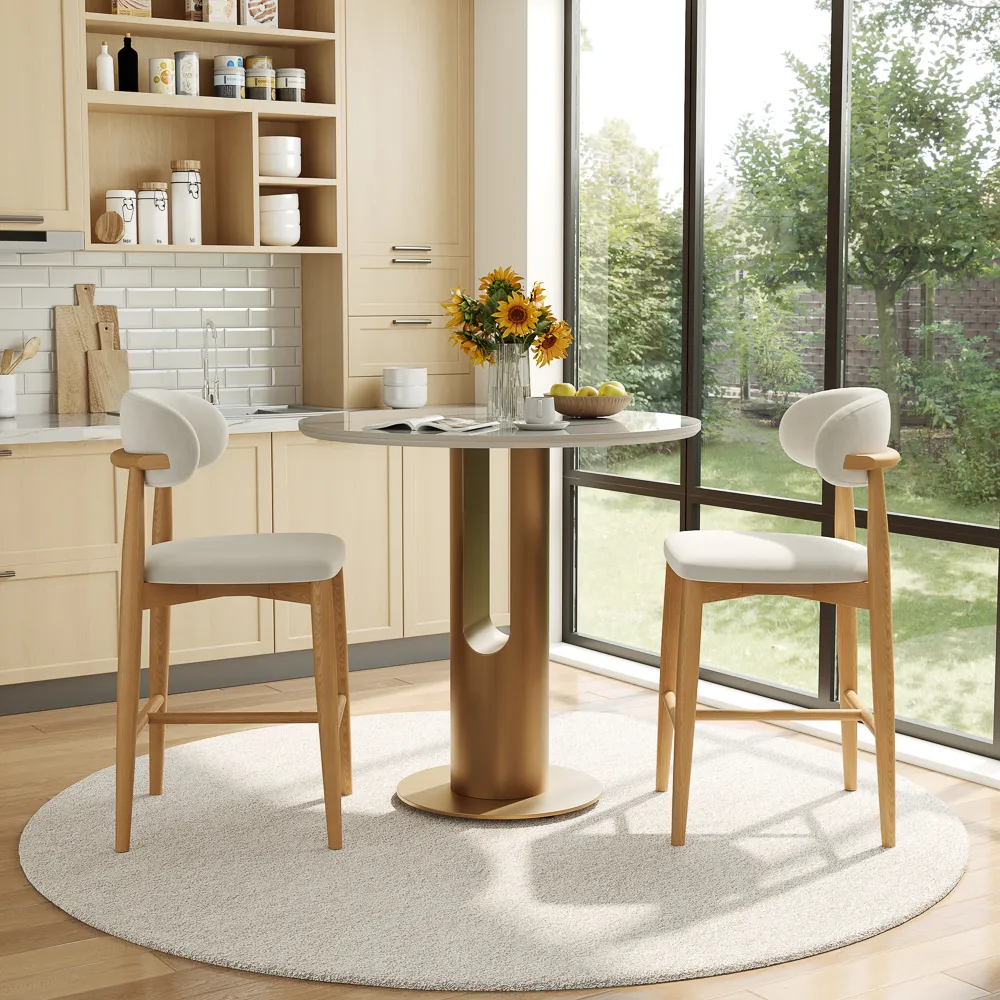
A friend texted me last fall: “We just got the counter height set installed. It looks amazing. But my mother-in-law visits next week and I’m slightly panicking.”
That message captures the question around counter height dining sets better than any home media article I’ve read. They look great, free up floor space, and make open-plan kitchens feel cohesive. The moment you stop thinking about Pinterest and start thinking about who actually sits there, things get more complicated.
I’m skipping the trend angle. You’ve already seen the articles calling these sets “modern” and “perfect for entertaining.” What I want to give you is the decision framework: when this format genuinely helps, when it quietly creates problems, and how to tell which applies to your kitchen.
What a Counter Height Dining Set Changes in a Room
A counter height set sits in a specific dimensional zone — taller than a standard dining table, shorter than a true bar. According to Dimensions’ published stool height standards, counter height tables run 35–37 inches floor to tabletop, paired with stools at 23–28 inch seat heights. The gap between the seat top and table underside should land in the 10–12 inch range for normal legroom.
Compared to a standard dining table at 28–30 inches with chairs at 17–19 inches, you’ve added roughly 6 inches of height to the entire eating zone. Here’s the full dimensional comparison across the three formats most people are deciding between:
| Spec | Standard Dining | Counter Height | Bar Height |
| Table height | 28–30″ | 35–37″ | 40–42″ |
| Seat height | 17–19″ | 23–28″ | 28–32″ |
| Legroom gap | ~10–11″ | 10–12″ | 10–12″ |
| Best meal length | Long sit-down (60+ min) | Short to medium (20–45 min) | Brief / drinks (15–30 min) |
| Floor footprint per seat | Larger (chair pull-out) | Smaller (stool tucks under) | Smallest |
| Kid-friendly | Yes | Limited (needs footrest) | No |
| Older-adult-friendly | Yes | Limited (climb-and-pivot) | No |
| Visual fit with kitchen counter (36″) | Step-down read | Continuous sightline | Step-up read |
That 6-inch height shift does three measurable things in a room.
It aligns with your kitchen counter sightline. A 36-inch kitchen counter and a 36-inch counter height table read as one continuous surface. The eye stops bouncing between two heights, and the dining zone visually merges with the prep zone instead of fighting it.
It frees up floor space without shrinking the table. Counter stools take up less floor area than full dining chairs — narrower bases, no chair back protruding into the walkway. In a 10′ x 12′ open kitchen, that can mean 8 extra inches of walkway clearance.
It changes posture and meal length. This is the part most articles skip. At 36 inches, you sit higher, lean forward more, and your feet rest on a stool footrest instead of the floor. That posture is fine for a 20-minute breakfast. It gets tiring at hour two of a holiday dinner.
That trade-off — visual upgrade versus posture limit — is the whole decision in one sentence.
Best Layouts for This Format
Breakfast Nooks
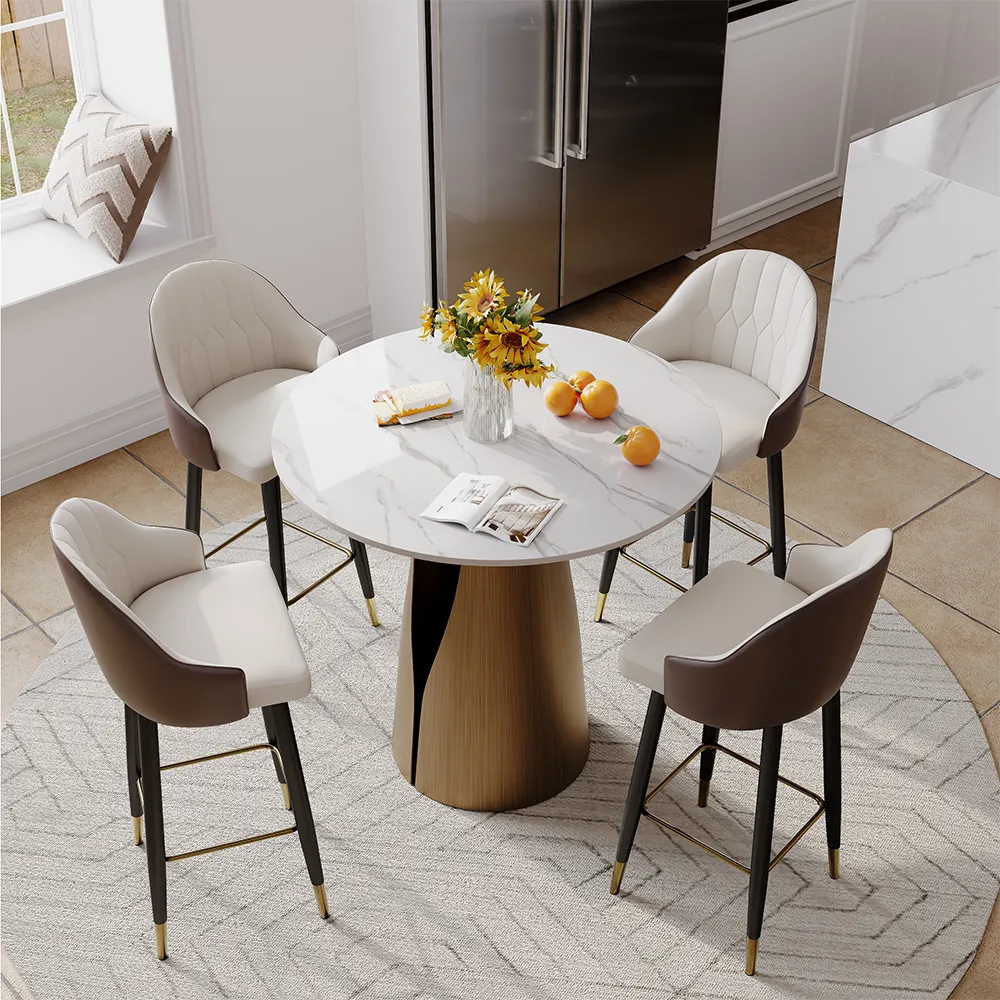
Counter height sets do their best work here. A breakfast nook is by definition a casual, short-duration eating zone — coffee, kids’ homework, a quick lunch. The 20–30 minute meal length plays to counter height’s strengths and avoids its main weakness.
Geometry helps too. Counter stools tuck under the table, so you reclaim 8–10 inches of walkway compared to chairs that need full pull-out clearance. A 35-inch round counter table works in nooks as small as 7′ x 7′, which is a footprint a standard dining set simply won’t fit.
Open Kitchens and Casual Dining Zones
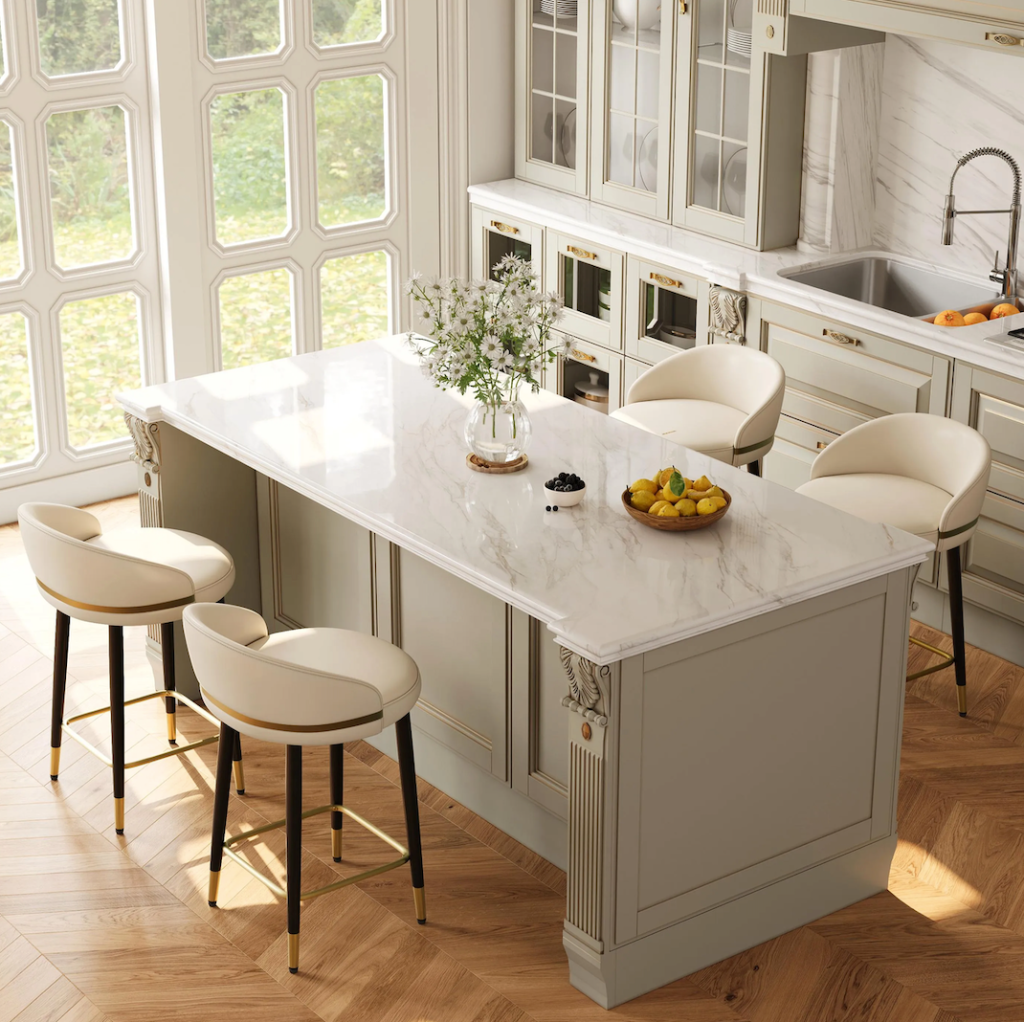
The second strong case is the open-plan kitchen with no defined dining wall. Here, height cohesion is the entire game. If your kitchen island is 36 inches tall (the standard), a 36-inch counter table directly extends the island visually. Drop down to a 30-inch dining table and you create a visible step that fragments the space.
This is also where the matching set matters most. The most common open-plan mistake I see online is buying a 36-inch table from one retailer and 24-inch stools from another, then realizing the legroom gap is actually 11 inches once seat foam compresses — too tight for anyone over 6 feet. POVISON’s bar stool and counter stool collection is built around matched pairs precisely because this mismatch is the single most common online-furniture return reason. The table fits, the stools fit, but the combination doesn’t.
Comfort, Access, and Household Trade-Offs
Now the part most articles skip. A counter height set isn’t neutral on who can use it.
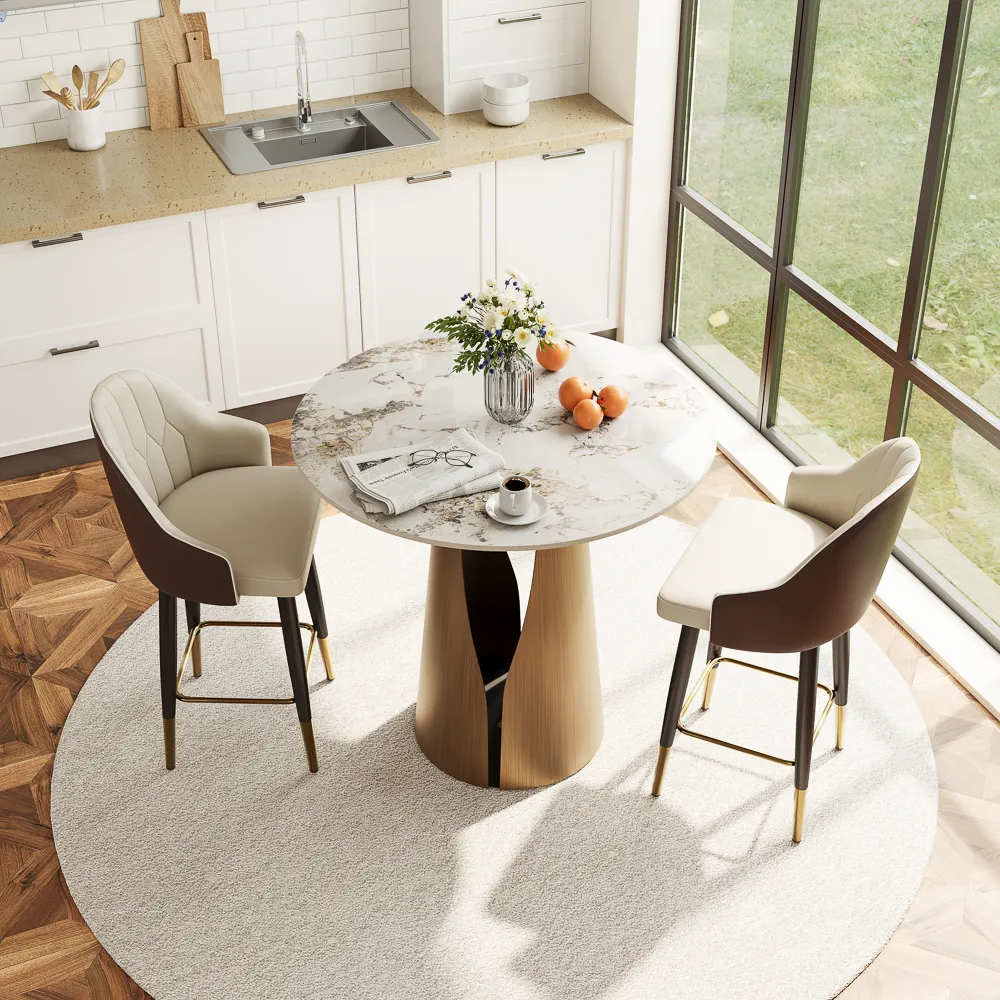
Older adults. Climbing onto a 24-inch stool requires lifting your foot to chair-seat height, then transferring weight while balancing — harder than it sounds for anyone with hip, knee, or balance issues. Stools without backs make it worse. The U.S. Consumer Product Safety Commission’s home safety guidance is broadly aimed at furniture stability, but the underlying principle applies: elevated seating without back support and without secure footrest contact creates higher fall risk than a standard dining chair. If your household includes regular grandparent visits or anyone with mobility issues, this is real.
Young children. A 4-year-old can’t climb onto a 24-inch stool unassisted. Even at 6–7, kids often need help getting up safely. Once seated, they need a footrest at 8–10 inches off the floor — most adult counter stools don’t have one at the right height. The fix is a stool with a low, broad footrest bar, but check the spec; many backless designs skip it entirely.
Long meals. Counter height seating leans you forward more than a dining chair. After about 45 minutes, most people start shifting. After 90 minutes — the length of a holiday meal — back fatigue is real. Counter height sets are honestly best at meals under an hour. If your household regularly hosts long sit-down dinners, this is the wrong format.
None of this means counter height is bad. It means it’s a specialized format that fits some households cleanly and creates daily friction for others. Be honest about your real use case before you buy, not after.
What to Compare Before You Buy
After enough returns to know what matters, here’s the checklist I use:
Verify the height pairing math. Take the table height (usually 35–36 inches) and subtract 10–12 inches — that’s your target stool seat height. A 36-inch table needs 24–26-inch stools. Don’t assume “counter height” labels are calibrated; measure the spec sheet.
Check stool spacing. Counter stools need 6–10 inches between seats for stationary models, more for swivels. A 60-inch table seats 3 counter stools comfortably, not 4. If a product page shows 4 stools at a 60-inch table, count the gap math.
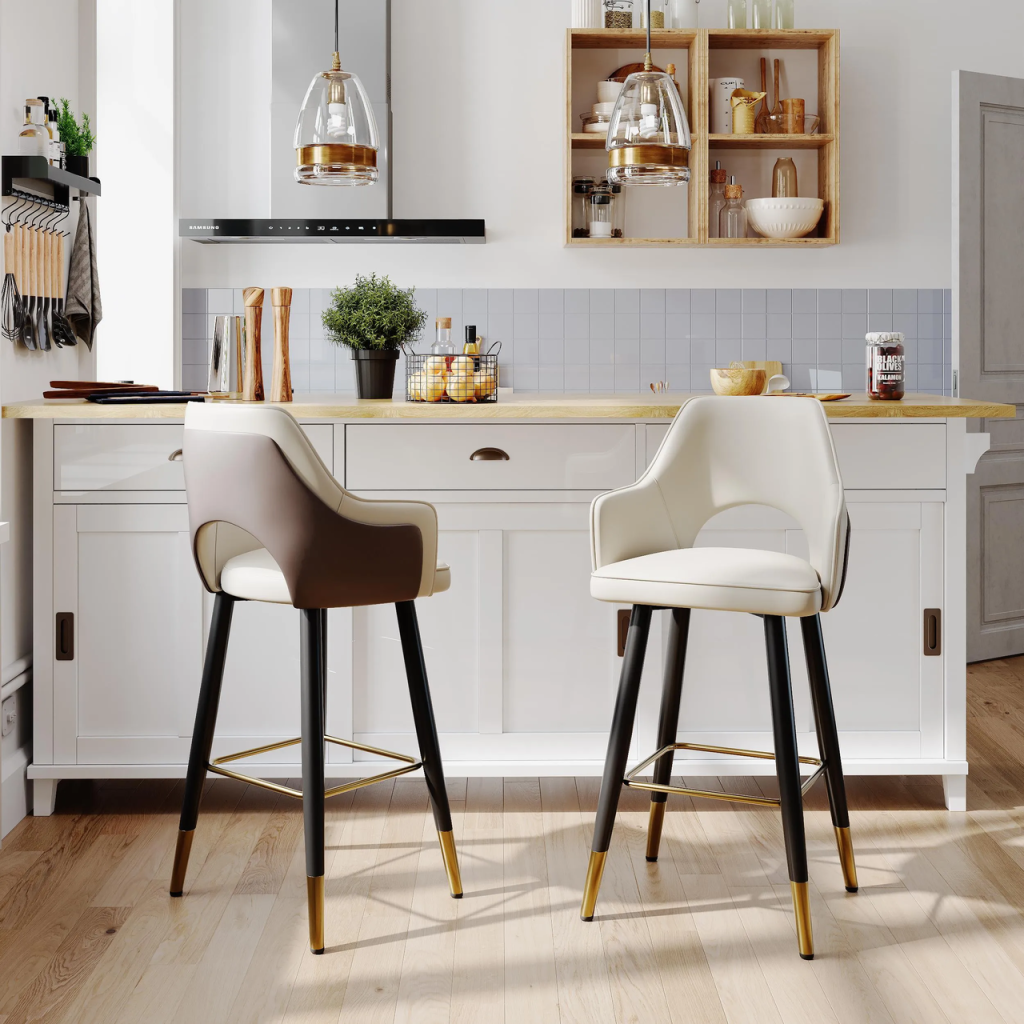
Confirm assembly state. Counter stools have hidden assembly traps that cheap flat-pack versions get wrong: footrest brackets stripping, swivel mechanisms loose out of the box, leg height inconsistency that creates wobble. Pre-assembled stools eliminate those failure points entirely. POVISON ships its counter stools fully assembled — the alternative isn’t “one Saturday of work,” it’s a piece you’ll never trust to swivel without watching the bolts.
Match the finish family across the set. Coordinated sets where the table base, stool legs, and seat material come from the same finish family eliminate the “assembled-from-pieces” look that breaks open-plan layouts. POVISON’s dining table set collection is organized around full configurations, which makes the height-and-finish pairing comparison faster than browsing tables and stools separately.
Test the posture before committing. Sit on a counter stool — anywhere, a furniture showroom, a friend’s house — for at least 20 minutes. If your back is shifting to minute 20, day 100 will be worse.
FAQ
Are counter height sets good for everyday meals?
Counter height sets work well for everyday meals under 45 minutes — breakfast, lunch, weeknight dinner. They’re less suited for long sit-down meals where people stay seated 90+ minutes. The forward-leaning posture that feels casual short-term creates back fatigue over longer stretches. If most daily meals are quick and long dinners are occasional, the format works.
Do they work in small apartments?
Yes — small apartments are one of the strongest cases. Counter stools tuck closer to the table than dining chairs, freeing walkway space, and the elevated dining zone visually expands a tight room by aligning with kitchen counter sightlines. A 35-inch round counter set works in spaces as small as 7′ x 7′. Same trade-off as anywhere: short meals great, long meals uncomfortable.
Are they harder for kids or older adults?
Yes, in measurable ways. Children under 6–7 typically can’t climb onto a 24-inch stool unassisted, and once seated they need a footrest at 8–10 inches off the floor that most adult stools don’t have. Older adults face a different challenge: the climb-and-pivot motion puts more demand on hip and knee joints than sitting down on a dining chair, and stools without backs add fall risk. If daily users include young children or older relatives, a standard dining set is more accommodating. If they’re occasional visitors, plan for it.
What delivery questions matter before ordering?
Three to confirm. First, is the set shipping pre-assembled or flat-pack? Pre-assembled stools eliminate the bracket and swivel-mechanism failures common in cheap flat-pack counter stools. Second, what’s the door clearance for the table base? Counter table bases are taller than standard dining tables and occasionally won’t clear standard residential door frames. Third, is white-glove delivery available? For heavier sets (sintered stone tops can run 100+ lbs), in-room placement matters versus curbside drop-off.
Conclusion
Counter height dining sets aren’t a trend you should adopt because Pinterest looks good. They solve specific problems: open-plan kitchens where height cohesion matters, breakfast nooks too small for standard dining sets, households where most meals are quick.
Skip them if your daily users include young children or older adults who’d be fighting the format every meal, if you regularly host long sit-down dinners, or if your kitchen doesn’t actually benefit from the height alignment.
The decision isn’t whether counter height sets are “good.” It’s whether the specific shape of your kitchen, your meal lengths, and your household members fit the format’s strengths. Run the height pairing math, test the posture for 20 minutes before committing, and confirm the set ships pre-assembled so the stools you receive actually function as designed.
If your kitchen is open-plan, your meals trend casual, and you want a dining zone that visually extends your counter line, this is the format. POVISON’s counter height sets ship fully assembled with matched stool-and-table proportions worked out before they leave the warehouse — which removes the most common online-furniture mistake from the equation. Ready To Live In, in the most literal sense.
Related Reading:


