 By Kelvin
Introduction
If you have ever wondered, “how can i clean leather sofa without ruining the finish?”, the safest answer is simple: use less water, choose gentle products, and work slowly. Leather looks strong, but harsh cleaners, soaking cloths, and direct heat can leave stains, cracks, or dull patches. This guide walks you through easy maintenance tips, DIY cleaning solutions, stain fixes, and pro-style habits that help your sofa stay soft, clean, and ready for everyday living.
Table of Contents
How Can I Clean Leather Sofa Safely at Home?
The safest way to clean a leather sofa is to start gently and avoid anything that feels harsh, wet, or abrasive. Most everyday dirt comes from dust, body oils, crumbs, and light spills. You do not need a strong chemical cleaner for that. You need a soft touch, the right cloth, and patience.
The safest short answer
For routine cleaning leather sofa surfaces, follow this simple method:
- Remove leather sofa covers, throws, or pillows first so trapped dust does not rub against the leather.
- Remove dust with a dry microfiber cloth.
- Vacuum seams with a soft brush attachment.
- Mix distilled water with a tiny amount of mild soap.
- Dampen the cloth, then wring it out well.
- Wipe in small sections.
- Dry each area right away with a clean cloth.
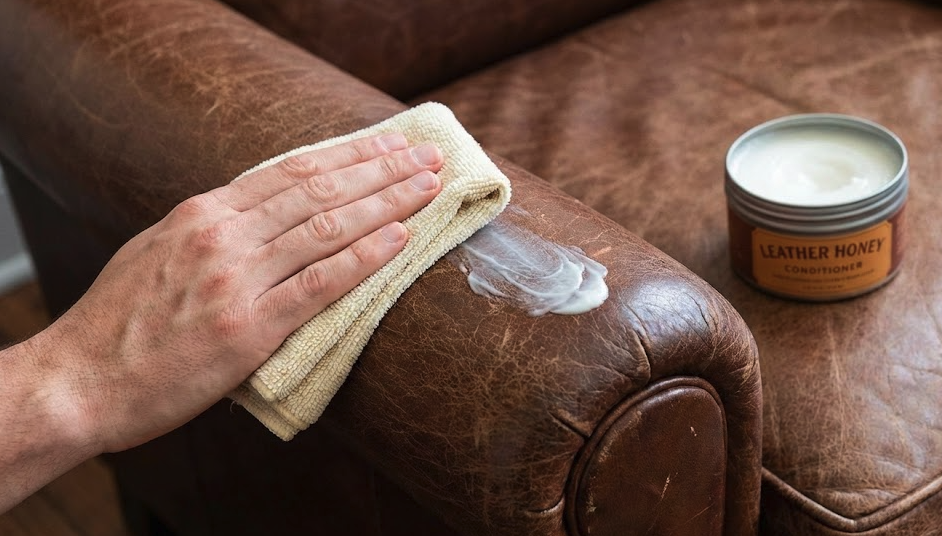
- Apply leather conditioner only if the leather feels dry.
The cloth should feel slightly damp, never wet. If water drips from it, it is too wet for leather.
What you’ll need
Keep your kit small and leather-safe:
- Microfiber cloths
- Soft brush vacuum attachment
- Distilled water
- Mild soap or pH-balanced leather cleaner
- Leather conditioner
- Cotton swabs for seams and small marks
- Dry towel for fast buffing
- Washable leather sofa covers or soft throws for high-contact areas
What Should I Check Before Cleaning a Leather Sofa?
Before you touch the sofa with any cleaner, pause and identify what you are working with. Leather can be protected, unfinished, top-grain, full-grain, aniline, semi-aniline, nubuck, or faux leather. The wrong method can turn a small smudge into a permanent mark.
Check the care label first
Look under the seat cushion, along the frame, or on the manufacturer’s website. The care label may tell you whether to use water-based cleaners, leather-only products, or professional cleaning.
If you are still comparing upholstery choices, a sofa fabric guide for durability and comfort can help explain why some materials need light wiping while others need more careful stain treatment.
Know your leather type
| Leather type | Cleaning risk | Best approach |
| Protected / pigmented leather | Low | Mild soap solution or leather cleaner |
| Semi-aniline leather | Medium | Very light damp wiping and quick drying |
| Aniline leather | High | Dry dusting first; professional help for stains |
| Nubuck / suede leather | Very high | Avoid wet cleaning; use specialty tools |
| Faux leather | Medium | Mild soap and water, but avoid oil conditioners |
When in doubt, test first. Pick a hidden area behind the sofa or under a cushion. Let it dry fully before cleaning the visible parts.
How Do You Clean a Leather Sofa Step by Step?
The question “how can i clean leather sofa” becomes easier when you treat the process like a sequence, not a scrub-down. Each step has a job: remove loose dirt, test safety, clean lightly, remove residue, dry quickly, then protect the surface.
Step 1: Remove dust and crumbs
Use a vacuum with a soft brush attachment. If you use leather sofa covers, remove them first and shake them outside or wash them according to the care label. This prevents hidden crumbs or pet hair from rubbing against the leather while you clean.
Focus on:
- Seat seams
- Armrest edges
- Back cushions
- Gaps between modules
- Areas under throw pillows
Avoid stiff vacuum heads, hard brushes, and aggressive rubbing. Dust can act like fine sandpaper if you press it into the leather while wiping.
Step 2: Test in a hidden spot
Apply a small amount of your cleaner to a hidden area. Wait until it dries. Look for color transfer, darkening, stiffness, or sticky residue.
If anything changes, stop. Use dry dusting only or call a leather specialist.
Step 3: Wipe with a gentle cleaner
Dip a microfiber cloth into your mild cleaning mix, then wring it out. Wipe a small section with light pressure. Do not soak seams or let liquid sit on the surface.
Work from top to bottom so dust and moisture do not fall onto areas you already cleaned.
Step 4: Remove residue and dry
Use a second cloth dampened with clean distilled water to remove soap residue. Then dry the surface immediately with a fresh towel.
Never use a hair dryer, heater, or direct sunlight to speed up drying. Heat can make leather stiff and more likely to crack.

How Can I Remove Stains From a Leather Sofa?
Stains need a different mindset from general cleaning. The goal is not to erase the mark by force. The goal is to lift it gently before it settles deeper. Blot first, test second, and only use stronger methods when the leather type allows it.
Quick stain treatment chart
| Stain type | First move | Best DIY method | Avoid |
| Water spill | Blot fast | Dry cloth, then air dry naturally | Rubbing hard |
| Coffee or tea | Blot, do not spread | Mild soap solution, then dry | Soaking the cushion |
| Grease or oil | Lift surface oil | Cornstarch for a few hours, then brush away | Adding water first |
| Ink | Stop spreading | Leather-safe cleaner; pro help for large stains | Alcohol over a wide area |
| Food marks | Remove solids | Damp cloth with mild soap | Scraping with nails |
| Pet hair | Loosen gently | Soft brush vacuum or dry cloth | Sticky tape on delicate leather |
When to call a professional
Call a pro if the stain is large, dark, old, or on aniline, suede, nubuck, or expensive vintage leather. DIY experiments can cost more than professional cleaning if they cause color loss.
What Should You Not Use on a Leather Sofa?
Many leather problems come from products that seem harmless because they work on counters, glass, floors, or fabric. Leather is different. It has natural oils, finishes, pores, and dyes. Strong cleaning products can strip that balance in one bad wipe.
Avoid these common mistakes
Do not use:
- Bleach
- Ammonia
- Acetone
- Window cleaner
- All-purpose spray
- Disinfectant wipes unless labeled leather-safe
- Steam cleaner
- Too much water
- Abrasive sponges
- Harsh scrub brushes
- Direct heat
Also be careful with vinegar. Some DIY advice recommends diluted vinegar, but it can be too acidic for certain finishes. If you use it, test first and keep it very diluted.
Why leather sofa covers can help
Leather sofa covers are not always necessary, but they can protect high-contact areas from pets, denim transfer, body oils, and snack spills. Choose breathable throws or fitted covers that do not trap moisture. Avoid plastic-like covers for daily use because they can create heat and friction.
How Can Leather Sofa Covers Help With Daily Care?
Leather sofa covers are not just for hiding old furniture. Used the right way, they can protect high-contact areas from pet hair, body oils, denim transfer, crumbs, and small spills. They are especially useful for families with kids, pets, or frequent guests.
When should you use leather sofa covers?
You may want to use leather sofa covers if your sofa gets heavy daily use or sits in a busy family room. A washable throw or fitted cover can help reduce friction on armrests and seat cushions, where leather often shows wear first.
They are also helpful during parties, movie nights, or pet lounging time. After a weekend gathering, removing and washing a cover is much easier than treating several small stains on the leather itself.
How to choose the right cover
Look for covers that are soft, breathable, and easy to remove. Avoid plastic-like covers or rubber-backed materials that trap heat and moisture against the leather.
Good options include:
- Cotton throws for light daily protection
- Washable slipcovers for homes with pets or kids
- Quilted sofa protectors for high-use seats
- Small armrest covers for body oil and hand contact
Leather still needs air circulation, so remove covers regularly and wipe the sofa underneath. Covers can reduce cleaning work, but they should not replace basic leather care.
When Should I Clean and Condition a Leather Sofa?
Leather care works best as a light routine, not a once-a-year rescue project. Over-cleaning can dry out the surface, while ignoring spills lets stains settle. A simple schedule helps you keep the sofa fresh without turning maintenance into a chore.
Simple maintenance schedule
| Frequency | Task |
| Weekly | Dust with a dry microfiber cloth |
| Monthly | Vacuum seams and check high-touch areas |
| Every 3–6 months | Light clean if the sofa gets heavy use |
| Every 6–12 months | Condition if leather feels dry or dull |
| Immediately | Blot spills, grease, ink, or pet messes |
Long-term leather sofa care for durability and easy maintenance starts with prevention. Keep the sofa away from direct sunlight, fireplaces, heating vents, and air-conditioning drafts.
Do not over-condition
Conditioner helps dry leather, but too much can leave a greasy film. Use a thin layer, let it absorb, then buff gently. If the sofa already feels supple, skip conditioner until it needs it.
How to Keep a Leather Sofa Looking New Longer
The best leather care is not just about cleaning. It is also about how the sofa lives in the room. Sunlight, pets, sharp objects, rough fabrics, and constant friction all affect the surface over time. Small habits can protect the look and feel.
Everyday protection tips
- Keep leather away from strong direct sun.
- Rotate cushions if the design allows it.
- Use soft throws on favorite seats.
- Trim pet nails regularly.
- Blot spills immediately.
- Avoid sitting on leather with wet hair or damp clothes.
- Keep sharp buckles, keys, and metal buttons away from the surface.
If your sofa includes removable fabric pieces instead of fixed leather panels, the same “read the label first” rule applies when you wash sofa cushion covers without ruining them.
For homes that want leather’s comfort with easier daily care, the Cronus Brown Genuine Leather Modular Sofa brings a modular layout, genuine leather texture, and a solid wood frame into busy living rooms. The Cygnus-Power Sofa Bed suits small homes or guest rooms where one seat needs to handle lounging, sleeping, and quick wipe-down care. Product pages list Cronus as genuine leather with top-grain leather composition and Cygnus as a top-grain leather power sofa bed.

Conclusion
Cleaning a leather sofa is less about strength and more about control. Dust first, test first, use a barely damp cloth, dry immediately, and condition only when needed. When you wonder “how can i clean leather sofa” again, remember the safest rule: gentle care wins. With the right routine, smart stain response, and simple protection habits, your leather sofa can stay comfortable, polished, and ready for family nights, quiet mornings, and guests who always choose the best seat.
FAQ
Why does my leather sofa feel sticky after cleaning?
A sticky feel usually means too much soap, conditioner, or cleaner was left on the surface. Wipe the area with a barely damp microfiber cloth, then dry it right away. Avoid adding more product until the residue is gone, because extra conditioner can make the surface feel even tackier.
Can leather absorb bad smells?
Yes, leather can hold odors from pets, smoke, food, or damp rooms. Start with ventilation and dry wiping. Do not spray perfume or fabric deodorizer directly on leather. For deep smells, use a leather-safe cleaner or ask a professional, especially if the odor comes from moisture.
What should I do if my leather sofa starts cracking?
Cracking often means the leather is too dry or has been exposed to heat, sun, or harsh cleaners. Stop using strong products immediately. Apply a small amount of leather conditioner if the care label allows it. Deep cracks usually need professional repair, not regular cleaning.
Can I use homemade leather conditioner?
It is safer to use a conditioner made for furniture leather. Homemade mixes with oils, vinegar, or wax can darken the leather, leave residue, or damage the finish. If you want to try any DIY option, test it on a hidden spot and wait until it dries completely.
Why did my leather sofa change color after cleaning?
Color change can happen when leather absorbs too much water, reacts to a cleaner, or loses surface dye. This is more common with delicate leather types. Stop cleaning that area, let it dry naturally, and avoid rubbing. If the mark remains, contact a leather care specialist.


 English