 By Charles
A corner bench dining room set usually sounds brilliant right after your small dining area fails the morning test.
Not the showroom test. The real one.
It is 7:18 a.m. Someone is pouring coffee. Someone else is trying to pull out a chair, but the chair hits the kitchen island. A kid is already wedged against the wall with cereal in front of them and one shoe missing. The table technically seats four, but every breakfast begins with the same tired sentence: “Can you scoot in?”
That is when a corner bench starts to look less like a style choice and more like a survival strategy.
But here is the part people miss: a corner bench dining set is not just a dining room table set with bench seating pushed into a corner. It changes how people enter, sit, leave, clean, and use the room every day.
A dining room nook set or banquette dining room set can make a small eating area feel calm and room-ready. It can also create trapped seats, crumb pockets, and cushions that take more abuse than anyone expected.
So I judge these sets with four questions: Can people sit comfortably? Can they get out? Can you clean it? Can it actually get delivered into the corner?
That is the whole game.
When a Corner Bench Dining Set Makes Sense
A corner bench dining set makes sense when your dining area already has two usable walls, limited chair clearance, and a daily need for casual meals. It is strongest in breakfast nooks, apartment dining corners, and compact family eating zones where fixed seating solves more problems than it creates.
I would start with the room, not the furniture.
If the corner is already where meals naturally happen, a corner bench can make that area feel intentional. If chairs keep sliding into a walkway, the bench can reduce daily clutter. If your family eats most meals in the same small spot, the built-in feeling can make the room feel finished instead of temporary.
Here is my quick “nook reality check”:
| Room condition | What it tells you | Corner bench verdict |
| Two walls naturally frame the table | The room already wants fixed seating | Strong fit |
| Pulled-out chairs block traffic | Bench seating may reduce floor conflict | Strong fit |
| Family uses the area daily | A room-ready nook may be worth it | Strong fit |
| Guests need easy exit access | Inside seats may frustrate people | Use caution |
| Layout changes every few months | Fixed corner seating may feel limiting | Weak fit |
| Meals are usually long and formal | Chairs may be more comfortable | Weak fit |
My favorite test is simple: tape the bench and table on the floor, then walk through one normal meal.
Coffee. Breakfast. Someone standing up. Someone dropping a spoon. Someone carrying plates back to the sink.
If the taped version already feels annoying, the real furniture will not magically fix it.
For seating clearance, I borrow from kitchen planning because most breakfast nooks live right beside kitchens. NKBA’s 36-inch seating clearance guidance is a useful benchmark when you are checking whether diners and passersby can still move through the space.
Not glamorous. Very useful.
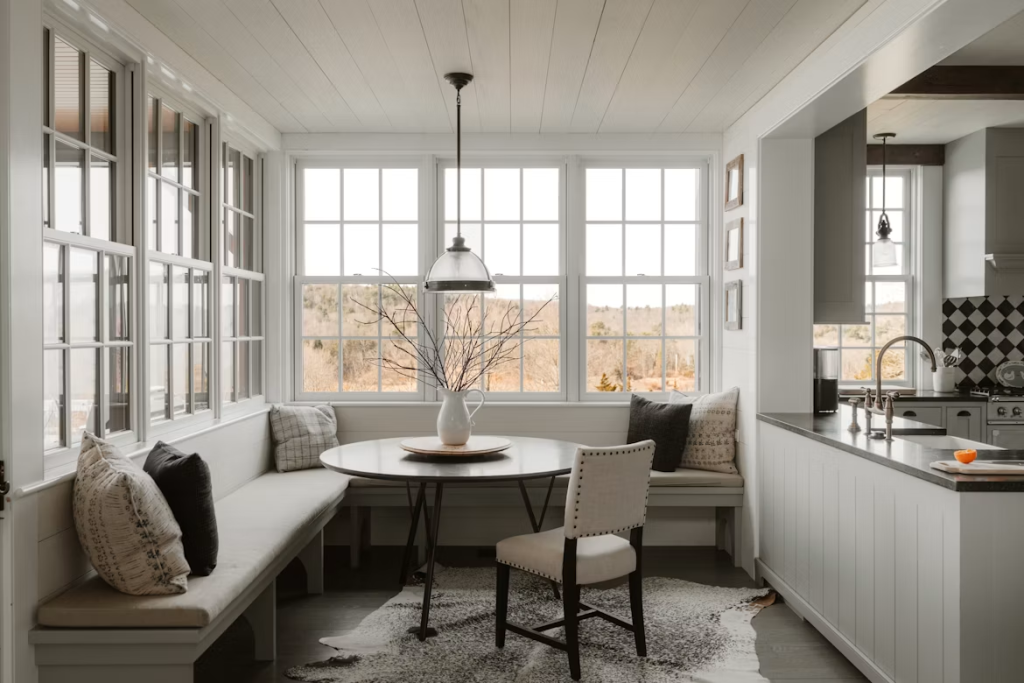
Best Rooms for Corner Bench Seating
Corner bench seating works best where the room already has a natural boundary: two walls, a window corner, a kitchen alcove, or a compact dining corner near the living area. It is weaker in open dining rooms where people need equal access from every side.
Breakfast Nooks
Breakfast nooks are the most natural fit for corner bench dining room sets because they are already semi-enclosed. A nook does not need to act like a formal dining room. It needs to handle coffee, toast, cereal, homework, snacks, and weeknight dinners without blocking the kitchen.
Here is the scene I would design around.
A small nook near the window. Two walls. One open side. A table that has to serve three people daily and maybe four on weekends. The chair on the open side cannot crash into the island. The corner seat cannot feel like a punishment.
That is where a corner bench can work.
I would measure it in three passes:
| Measurement pass | What to check | Why it matters |
| Wall pass | Length of both bench walls | Confirms whether the L-shape fits |
| Table pass | Table width, depth, and base style | Avoids knee and leg conflict |
| Movement pass | Open-side chair and walking path | Prevents the “scoot in” problem |
For banquette-style planning, I like using banquette seating clearance drawings as a visual check because they show that the table, bench, and circulation zone have to work together. A bench that fits the wall can still fail if the table sits too close.
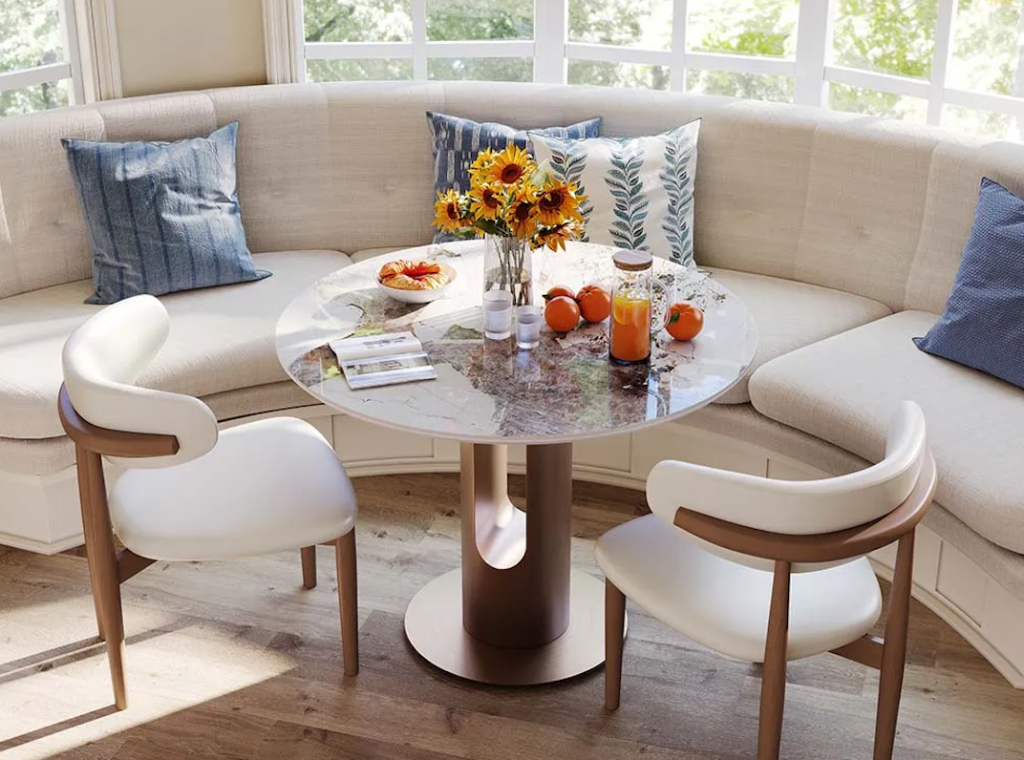
A simple nook layout should feel like this:
| Zone | Better choice | Risky choice |
| Wall side | L-shaped bench or banquette | Oversized bench with no legroom |
| Open side | One or two loose chairs | Bulky chairs that block traffic |
| Table base | Pedestal or slim legs | Thick corner legs |
| Cushion | Medium-firm, wipeable | Overstuffed and hard to clean |
| Wall gap | Reachable for cleaning | Tight crumb trap |
This is also where the low-volume terms fit naturally. A breakfast room dining set and a dining room nook set are not separate ideas here. They are the same search intent: “How do I make this small eating corner work without wasting the room?”
Compact Family Dining Corners
Compact family dining corners are tougher than pretty breakfast nooks.
This is the place where backpacks land, blueberries roll under the table, a laptop opens during lunch, and someone tries to finish dinner while answering a school message. A dining room set with corner bench seating has to survive actual family rhythm.
Here is the practical advantage: a corner bench can make the eating zone feel settled. Instead of four loose chairs drifting around a tight floor plan, the bench anchors two sides of the table. That can make the space feel calmer.
But the trade-off is access.
If the deepest corner seat belongs to a child who stays put during meals, fine. If it belongs to an adult who gets up three times, everyone will notice.
For compact family dining, I would use this arrangement:
| Seat type | Best user | Why |
| Deep corner seat | Kids or relaxed diners | They can stay seated longer |
| Side bench seat | Daily family seating | Efficient use of wall space |
| Open-side chair | Adults or older guests | Easier to stand up |
| Extra loose chair | Occasional guest | Flexible without crowding daily use |
This is also the point where design cohesion matters. In a small corner, mismatched legs, finishes, chairs, and cushions can make the area feel busier than it is. A coordinated set gives the room a cleaner visual line.
After you tape the layout, compare actual table sizes and seat counts in POVISON dining table sets. The useful part is not just shopping by style. It is comparing dining set scale, seating count, tabletop shape, and finish family before deciding whether your corner needs a nook setup or a standard set.
Corner Bench Set vs Standard Dining Table With Bench
A corner bench set is better for fixed nook seating. A standard dining table with bench is better for flexible layouts. Choose a corner bench when the walls define the eating zone. Choose a standard bench when you still need to move seating around.
This is where I would separate the two clearly.
A corner bench set is not just a bench version of a normal dining set. It behaves more like a semi-built-in dining zone. That can be a win for a breakfast nook, but not always for a changing dining room.
| Feature | Corner bench dining set | Standard dining table with bench |
| Best use | Breakfast nook, kitchen corner, wall-defined dining area | Open dining room, flexible family table |
| Space benefit | Uses two walls efficiently | Keeps seating movable |
| Access | Harder for inside seats | Easier if bench slides out |
| Cleaning | More wall edges and seams | Easier to reach underneath |
| Guest seating | Cozy for casual groups | Easier to add chairs |
| Visual effect | Built-in, room-ready feel | Casual and adaptable |
| Main drawback | People may feel boxed in | Bench may lack back support |
A standard dining room table and bench set is better when your room is still changing. You can move the bench, swap chairs, or turn the table. A corner bench is more committed.
That commitment can be exactly what a breakfast nook needs.
It can also be the wrong move if you rent, move often, host formal dinners, or hate asking people to slide out so someone else can leave.
My rule is this: choose a corner bench when the corner itself is part of the solution. Choose a regular bench when flexibility is the solution.
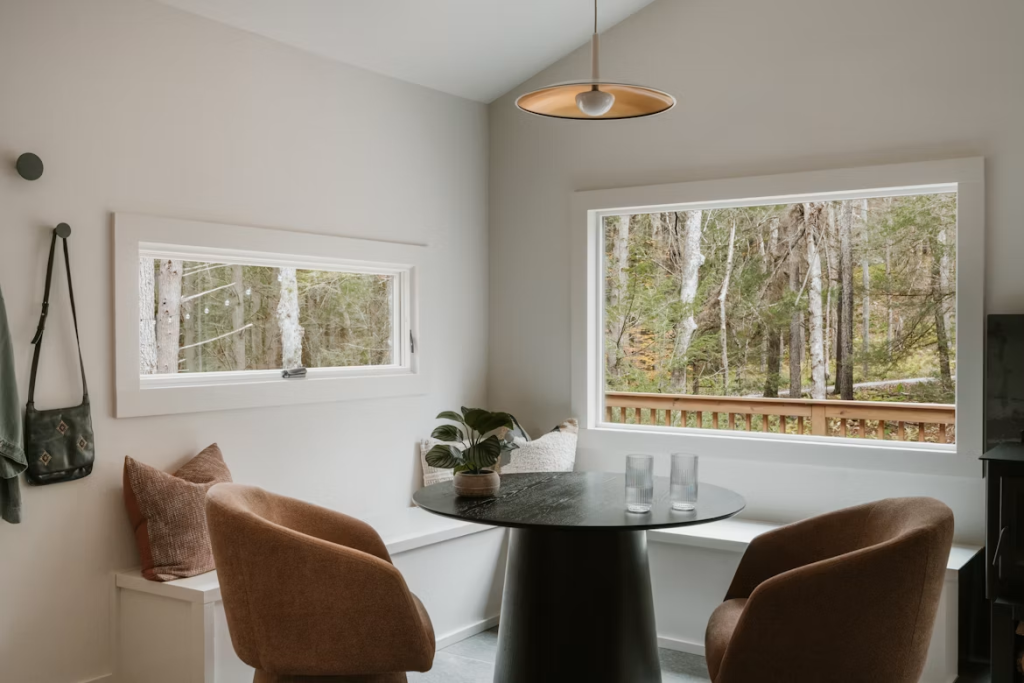
Comfort, Access, Cleaning, and Delivery Trade-Offs
A corner bench dining set should be judged by comfort, access, cleaning, and delivery. A cozy product photo does not tell you whether the inside seat is annoying, whether crumbs collect behind the cushion, or whether the bench can make the hallway turn.
Comfort comes first, because benches can fool you.
A thick cushion looks inviting, but long-meal comfort depends more on seat depth, back support, table distance, and cushion firmness. If the seat is too deep, shorter people sit forward without support. If the back is too straight, everyone shifts around. If the cushion is too soft, it can compress unevenly with daily use.
For a residential nook, I would not overcomplicate it. I would look for:
| Comfort factor | What to look for | Why it matters |
| Seat depth | Not too deep for daily dining | Helps people sit upright |
| Cushion feel | Medium-firm support | Reduces sinking over longer meals |
| Back support | Wall cushion or bench back | Helps with longer meals |
| Table base | Pedestal or slim legs | Makes sliding in easier |
| Fabric | Wipeable or removable | Handles breakfast spills |
For a broader industry perspective, BIFMA’s furniture standards overview is a useful reminder that seating quality can be described through safety, durability, and performance criteria. It is not a breakfast nook shopping checklist, but it does reinforce why vague words like “sturdy” or “comfortable” are not enough.
Access is the next trade-off.
Every corner bench creates an inside seat. That seat is cozy until someone needs to leave. If your household includes older family members, frequent up-and-down movement, or guests who need easy access, keep the open-side chairs for them.
Cleaning is where the romance fades.
Corner benches collect crumbs in three places: under the table, along the wall edge, and between cushion seams. If the bench base is closed, it may look cleaner but hide debris. If the base has legs, vacuuming may be easier. If the cushions are removable, cleaning gets simpler, but only if they stay in place during daily use.
Material safety should be checked too. If the bench or table uses engineered wood, MDF, particleboard, or plywood, look for named compliance language. The EPA composite wood standards explain TSCA Title VI requirements for regulated composite wood products sold in the U.S.
That is the kind of specific source I trust more than “family-friendly material.”
Delivery is the final check.
Corner benches can be awkward because L-shaped pieces do not move like chairs. Before buying, measure the front door, elevator, hallway turn, stair landing, and final corner. Then confirm whether the bench ships in one piece or multiple parts.
If there is a sideboard, hutch, or tall storage piece near the dining corner, I would also add anchoring to the safety checklist. The CPSC’s AnchorIt safety guidance recommends securing furniture such as dressers, bookcases, and TVs to help reduce tip-over risks.
No, that is not specifically about corner benches. But family dining corners often sit near storage furniture, and small rooms put everything closer together.
FAQ
How comfortable are corner bench dining sets for sitting through longer meals
Corner bench dining sets can be comfortable for longer meals when the bench has supportive cushions, usable back support, enough legroom, and a table that is not too far away. They become less comfortable when the seat is too deep, too upright, or too soft. For formal multi-hour meals, individual chairs usually offer better personal support.
Is it difficult to clean under and behind a corner bench dining set
Cleaning under and behind a corner bench dining set can be more difficult than cleaning around loose chairs. Crumbs often collect near wall edges, cushion seams, and bench bases. Removable cushions, wipeable upholstery, raised legs, and reachable gaps make the setup much easier to maintain.
Do corner bench dining sets make it harder for me to get in and out of the table
Corner bench dining sets can make it harder for people in the inside seats to get in and out. That is the main trade-off of corner seating. Use the deepest seats for kids or relaxed diners, and keep open-side chairs for adults, older guests, or anyone who stands up often.
How well do corner bench sets work when I have guests or a bigger group
Corner bench sets work well for casual guests because people can sit closer together in a nook-style layout. They work less well for formal hosting where every diner wants personal space, back support, and easy exit access. For mixed groups, pair the corner bench with loose chairs on the open side.
What usually happens to the bench cushions on these sets after a year or two of daily use
Bench cushions on daily-use corner sets often show wear first through compression, shifting, stains, softened edges, or fabric pilling. The exact condition depends on foam quality, upholstery, stitching, cleaning habits, and household use. Removable covers or replaceable cushion pads are worth checking before buying.
Conclusion
A corner bench dining room set is not just a cute breakfast nook idea. It is a decision about how your family enters, sits, eats, cleans, hosts, and moves through a small dining area.
Choose one when the corner already wants to become the dining zone. Choose one when chairs keep blocking the walkway. Choose one when your family needs a casual, room-ready place for coffee, cereal, homework, snacks, and weeknight dinners.
Skip it if everyone needs easy access, if you host long formal meals often, or if your layout is still changing.
My final test is simple.
Tape the bench on the floor. Tape the table. Sit in the imaginary corner. Pretend someone needs to leave. Pretend cereal hit the floor. Pretend two guests came over.
If the room still works after all that, the corner bench is probably doing its job.
Related Reading:


[…] becomes especially important in corner bench dining room layouts, where the innermost seat can become difficult to […]