 By Stephanie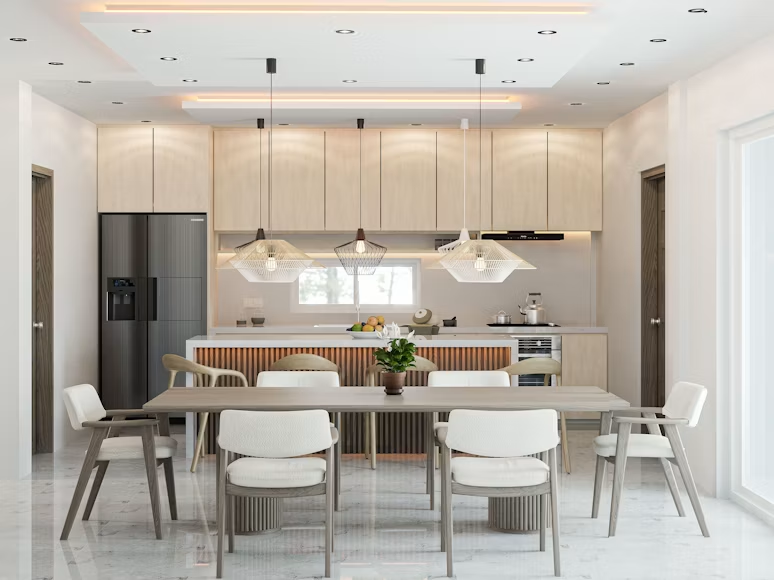
Modern dining room lighting fixtures should do more than decorate the ceiling. They should make weekday meals easy to see, give guests a reason to linger, and pull the table, chairs, and surrounding finishes into one deliberate setting. The right choice depends less on chasing a trend than on reading the furniture below it: its shape, surface, base, and role in your day. This guide narrows the decision to eight useful fixture styles, then shows how to make each one work in a real modern dining room without second guessing.
Table of Contents
Modern Lighting Starts With the Table
The best place to start is not with a fixture style, but with the table below it. Look at the tabletop, base, and how the table is used each day. A dark stone top with metal legs can carry a slim black linear pendant because both have a clean, structured look. A round pedestal table usually feels more balanced with a centered globe, drum, or compact sculptural fixture. For pale oak or light stone tables, a darker fixture can still work when the room includes softening elements such as upholstered chairs, opal glass, warm brass, or a textured rug.
Then plan for the routines that happen around the table. A fixture should support the room from breakfast through late dinners, not just look good in a photo.
- Daily meals: Choose diffused light and a dimmer for a softer evening setting.
- Work or homework: Use brighter, more even light with minimal shadow.
- Hosting: Choose a statement shape that keeps sightlines open across the table.
- Family dining: Avoid exposed bulbs that shine directly into seated guests’ eyes.
Dimmable LED lighting makes it easier to shift from practical daytime brightness to a warmer, more relaxed dinner setting.
Eight Modern Dining Room Lighting Fixture Styles
Modern dining room lighting fixtures serve different purposes. Some bring balance to a long table, while others soften hard surfaces or add warmth after dark. Use the eight styles below to find the look and function that best fit your dining area.
1. Linear Pendant Lights
Linear pendants work best over rectangular tables, especially long wood, stone, or glass tops. Their horizontal shape follows the table’s length and helps define the dining area in an open layout. Choose one for an extendable table or a six-seat setup. Skip it over a small round table, where it can feel too rigid.
2. Globe Pendant Clusters
Globe pendant clusters suit round tables, pedestal bases, and dining rooms with stone, glass, or metal surfaces. Their curved shape creates a calm focal point and softens harder materials. Frosted or opal globes are best for everyday dining because they reduce glare. Avoid exposed bright bulbs that sit directly in a seated guest’s line of sight.
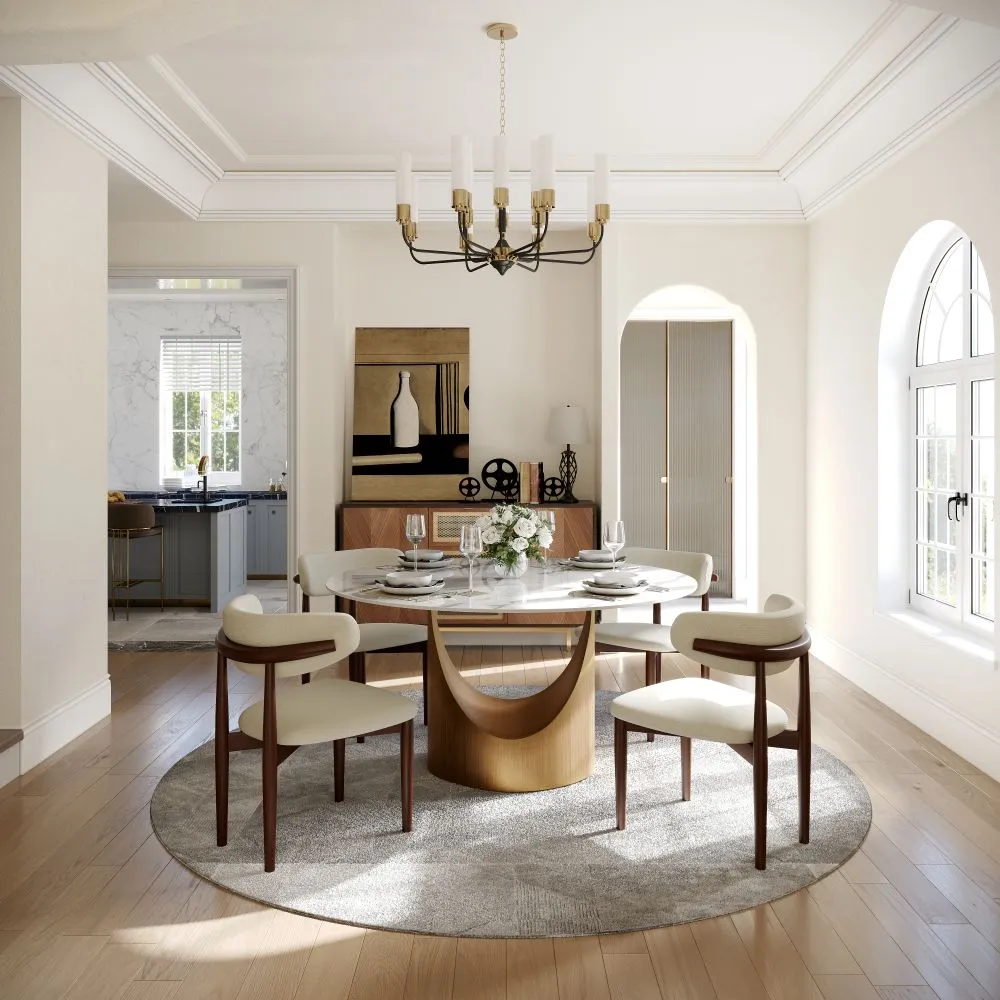
3. Sculptural Modern Chandeliers
A sculptural chandelier works best when the table and chairs have clean, simple lines. Curved arms, balanced geometry, or softly rounded shades can make the dining area feel more special without becoming formal. Use one in a room with enough open space around the table. Avoid ornate designs if the rug, artwork, or furniture already carries a strong pattern.
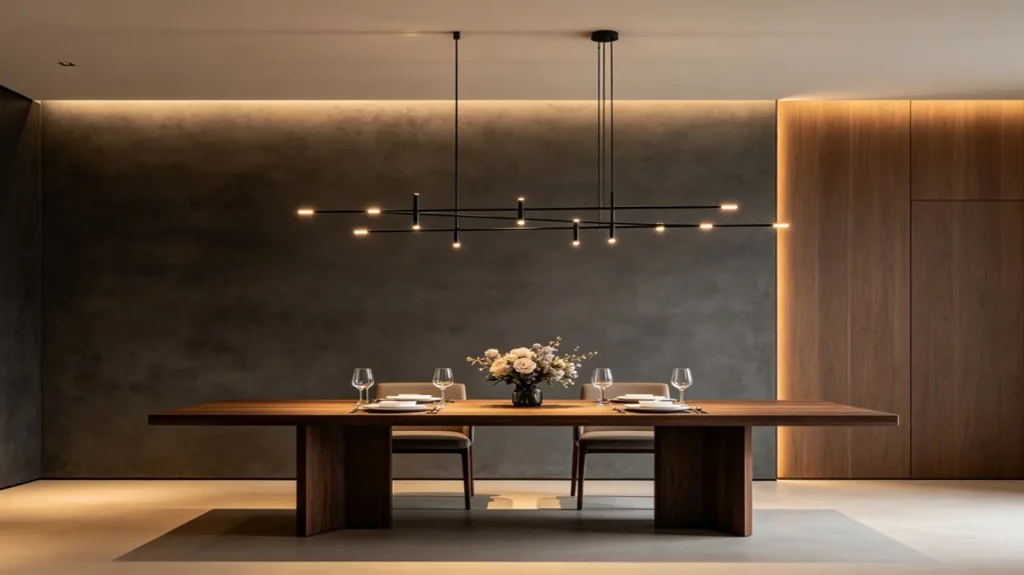
4. Slim Black Metal Chandeliers
Slim black metal chandeliers pair naturally with black table legs, dark chair frames, charcoal accents, and modern architecture. They give the room structure without adding visual clutter. Balance the look with walnut wood, cream upholstery, or warm lighting. In a dark room, avoid combining black fixtures, dark walls, and cool white bulbs, which can make the space feel severe.
5. Warm Brass or Bronze Fixtures
Brushed brass and aged bronze work especially well with walnut, oak, cream upholstery, and warm-veined stone. They add depth to a modern dining room without making it look traditional. Use one warm metal as an accent and repeat it in a small detail, such as chair hardware or a picture frame. Avoid mixing several shiny metals without a clear palette.
6. Opal Glass Pendant Lights
Opal glass pendants are a practical choice for tables used every day. Their diffused light is softer on faces, food, and eyes, making them ideal for family meals, casual coffee, and long conversations. They pair well with pale wood and white stone. For a table that also functions as a workspace, choose a dimmable fixture with enough brightness for daytime tasks.
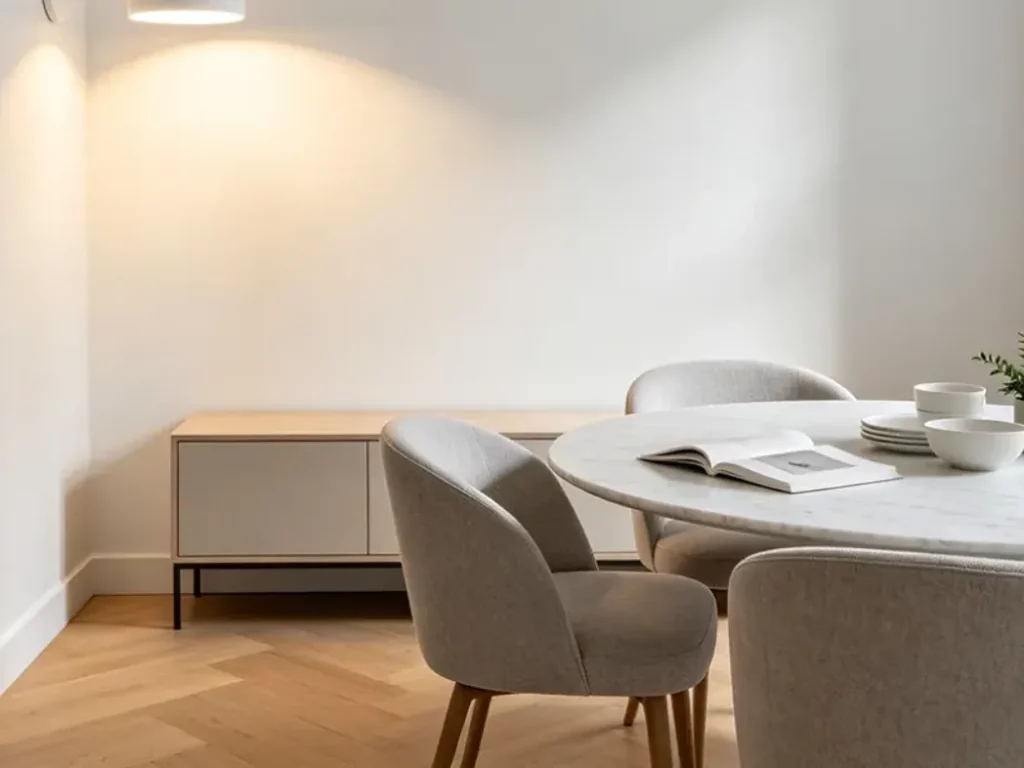
7. Low-Profile Semi-Flush Mounts
Semi-flush mounts are a smart option for apartments, breakfast nooks, and dining rooms with lower ceilings. A broad shade or shallow sculptural form can still create a focal point without dropping too far into the room. Choose a fixture with enough width to relate to the table. Avoid small, generic flush mounts over larger six-seat tables.
8. Modern Wall Sconces
Wall sconces add a second layer of light rather than replacing the main fixture. Place them near a sideboard, artwork, or a wall that fades into shadow after dark. They help the room feel finished once the overhead light is dimmed, especially when dinner continues after the plates are cleared. Avoid placing sconces on every wall, which can make a modern dining room feel busy.
Match the Fixture to Your Table Shape
Once you have a fixture style in mind, use your table shape to confirm the best layout. It determines whether light should stay centered or follow the table’s length. Use the table below as a quick styling filter, then confirm the fixture’s drop and width with a dining table lighting size and hanging guide.
| Dining setup | Best fixture direction | Avoid when |
| Round table | Globe cluster, drum pendant, or compact chandelier | The fixture is long and strongly directional |
| Oval table | Soft-edged linear pendant or two pendants | A small center pendant leaves the ends visually flat |
| Rectangular table | Linear pendant or paired pendants | A wide round chandelier takes over the corners |
| Extendable table | Long linear fixture or repeated pendants | Light reaches only the center when the table is open |
| Low ceiling | Semi-flush mount or shallow chandelier | Long rods, dense tiers, or oversized shades crowd the room |
Round and Oval Tables Need a Clear Center
Round tables look best with a fixture that gathers attention at the center without interrupting conversation. A globe cluster, drum pendant, or shallow chandelier keeps the light focused where people sit and share meals. Oval tables can handle a linear shape, but curved arms, soft-edged shades, or spaced globes usually feel more balanced than a rigid bar fixture.
That centered approach works naturally with the Hobart Round Sintered Stone Dining Table. Available in 47-, 51-, and 59-inch sizes, it pairs a glossy sintered stone top with a curved stainless-steel base in bronze or gray. A compact opal-glass cluster or shallow chandelier can echo the table’s circular outline without crowding the chairs, keeping the setting open for everyday meals and more defined after dark.
Rectangular and Extendable Tables Need Rhythm
Rectangular tables usually look more settled when the fixture follows their horizontal direction. A single linear pendant creates one clean line above the table, while two matching pendants add a softer rhythm and spread light more evenly across a longer surface. Keep the fixture visually lighter than a bold table base so the ceiling and furniture do not compete for attention.
That balance works naturally with the Hobart Rectangular Sintered Stone Dining Table. Its 63-inch Pandora sintered stone top and bronze stainless-steel base create a clear horizontal line, so a slim linear pendant or two understated pendants can reinforce the table’s shape without adding visual weight. With seating for four to six, the fixed table suits both weeknight dinners and smaller weekend gatherings.
For an extendable table, choose lighting around its fully open length rather than its smaller everyday footprint. A longer linear fixture or two repeated pendants help keep the end seats connected to the dining zone when extra chairs are added for a holiday meal or weekend hosting.
Fixture Finishes That Support Your Furniture
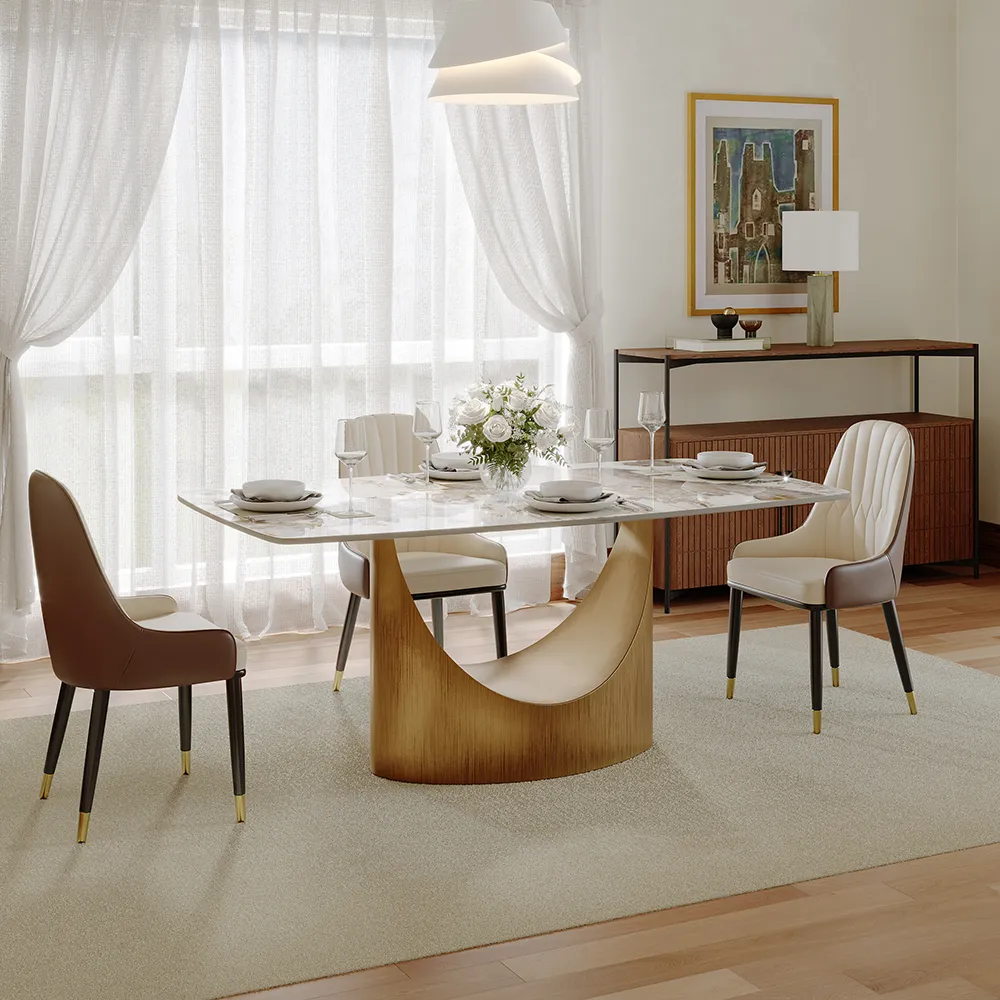
Finish matching is not about making every metal identical. It is about giving the room a clear visual direction. Start with the dining table, then repeat either its warmth, contrast, or material weight in the fixture above it. Warm walnut, beige upholstery, and bronze legs tend to work well with aged brass, dark bronze, and opal glass. White stone and gray upholstery usually feel cleaner with black, brushed nickel, soft chrome, or smoked glass.
Use these combinations as a practical starting point:
- Black metal legs: Matte black, deep bronze, or brushed nickel
- Walnut or warm ash: Aged brass, cream fabric shades, or opal glass
- White stone: Black, soft chrome, or opaque white shades
- Dark stone: Brass, bronze, or light diffusers that brighten the tabletop
To keep a modern dining room from feeling cold, balance hard surfaces with at least one softer material, such as upholstered chairs, a textured rug, linen curtains, or warm wood. A bronze pendant above a walnut table can make an ordinary pasta dinner feel more settled once the light is lowered and the table becomes the focus of the room. The same principle applies to dining room wall decor that matches your table materials: repeat one warm frame, dark edge, or natural texture instead of introducing another unrelated finish.
Lighting an Open-Plan Dining Room
In an open kitchen, dining, and living area, the fixture above the table should define the dining zone without making it feel cut off from the rest of the home. The easiest way to connect the spaces is to use a similar warm light tone throughout, then vary brightness by activity. Keep the dining table as the clearest pool of light, while the lounge area stays softer and more relaxed.
A simple three-scene approach works well:
- Breakfast or food prep: Bright, even light across the table
- Dinner: Medium, warm light that keeps faces and food easy to see
- After dinner: A dimmed main fixture with sconces, a sideboard lamp, or a nearby floor lamp
Near a television, choose shaded or diffused fixtures instead of exposed bright bulbs that can reflect on the screen. A thoughtful open-plan living and dining room layout treats lighting, furniture scale, and walking space as one connected plan. When guests stay after dessert, lowering the dining fixture while leaving a softer secondary light on makes the room feel intimate without making anyone move.
Buying Checks Before You Commit
A fixture can look right online and still feel uncomfortable once people are seated beneath it. Before ordering, test the view from each chair at conversation height. You should not see a bare filament, a harsh LED point, or a shade that blocks the person across the table.
Use this final checklist before you buy:
- Keep the lowest part of the fixture above seated eye level.
- Make sure light reaches both ends of an extendable table when it is fully open.
- Confirm compatibility with a dimmer for brighter meals and softer evenings.
- Choose diffused shades when the table is used for long dinners, homework, or hosting.
- Consider maintenance: open metal frames are usually easier to dust than layered glass or tightly grouped shades.
- Pull out the chairs and picture a centerpiece in place. The fixture should still feel centered over the table, not crowded by the room around it.
Conclusion
The best modern dining room lighting fixtures do more than fill the space above a table. They make meals easier, create a center for gathering, and help the furniture look chosen rather than merely placed. Start with the table’s shape and daily role, then choose a fixture that supports its lines and gives the room gentle warmth. Add layers only where the room needs them, and use dimming to move from practical daytime tasks to slower evenings. The result should feel ready to live in, not merely ready to photograph.
FAQs
Should dining room lights match kitchen hardware?
No. They should share an undertone or finish family, not an exact color. Warm brass lighting can work with black kitchen hardware when the dining area repeats a warm material, such as walnut, tan upholstery, or bronze. Limit the room to two intentional metal finishes.
Can modern lighting update a traditional dining table?
Yes. A clean-lined pendant or softly sculptural chandelier can refresh a traditional wood table without erasing its character. Keep the fixture simple, avoid ornate crystal details, and repeat one material from the table or chairs. The contrast looks deliberate when only one element is expressive.
Should a dining light be centered over the table or the room?
Center it over the table. Diners read the fixture in relation to the surface where they sit, eat, and talk—not the outer walls. This matters most in open layouts, where the dining table may sit off-center within the larger room. Use lamps or sconces to balance the remaining space.
Can I use a plug-in pendant in a rental dining room?
Yes, provided the cord route is safe and the lease allows it. A plug-in pendant can create a clear dining focal point without hardwiring. Pair it with a floor lamp or plug-in sconces, and keep cords away from walkways, chair legs, and areas where children or pets may pull them.


