 By Stephanie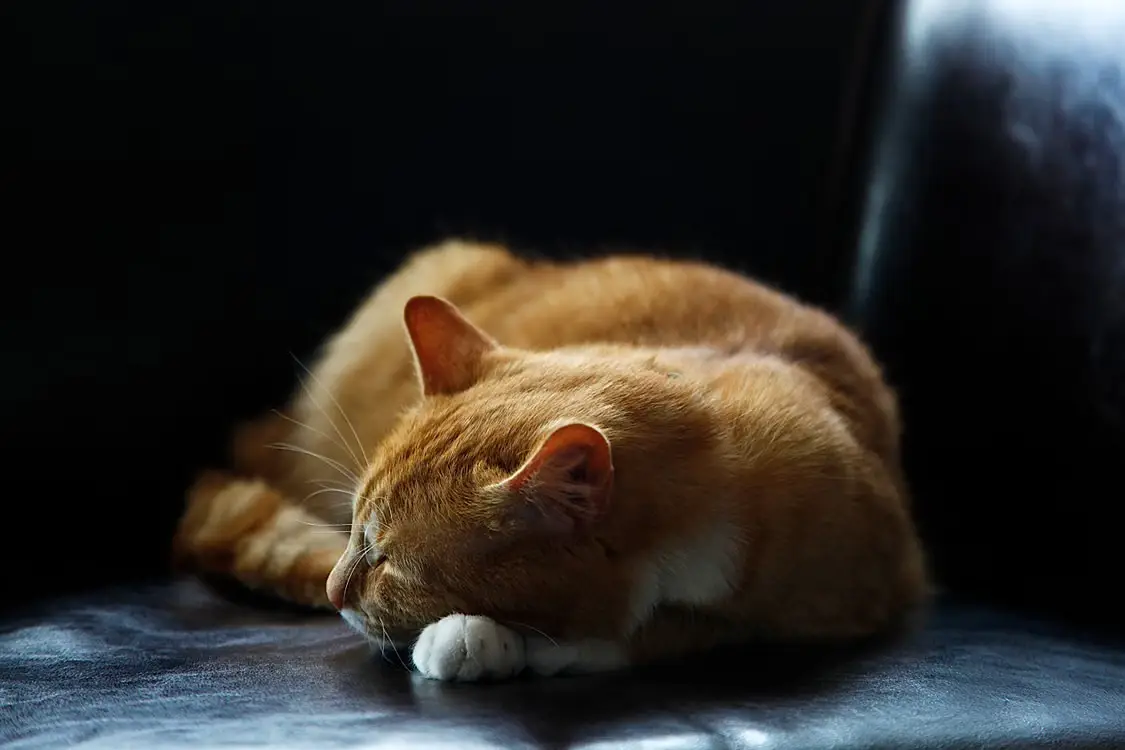
Hey fellow cat-loving home owners,
I’m Stephanie. If you love real leather but live with a cat, you’re probably trying to figure out whether everyday cat behavior will leave you regretting the sofa. With cats and leather couches, the answer is rarely a simple yes or no. Some cats mostly lounge; others knead, climb, or use upholstery for traction. I’ll show you which habits matter, what leather labels can and cannot tell you, and how to decide whether the wear risk fits the way you actually live.
Table of Contents
Can You Have a Leather Couch With Cats?
Yes. A cat in the house does not automatically rule out leather.
The better question is whether claws are already part of your cat’s normal sofa routine. A cat that mostly naps on the cushions and uses a scratching post elsewhere creates far less risk than one that regularly kneads, climbs the back, or scratches an arm.
Also think about your own expectations. Real leather changes with use. A faint line may feel like normal patina to one owner and permanent damage to another.
So when deciding whether cats and leather couches can work together, match the material to both your cat’s behavior and your tolerance for visible wear.

What Actually Damages Leather in a Cat Home?
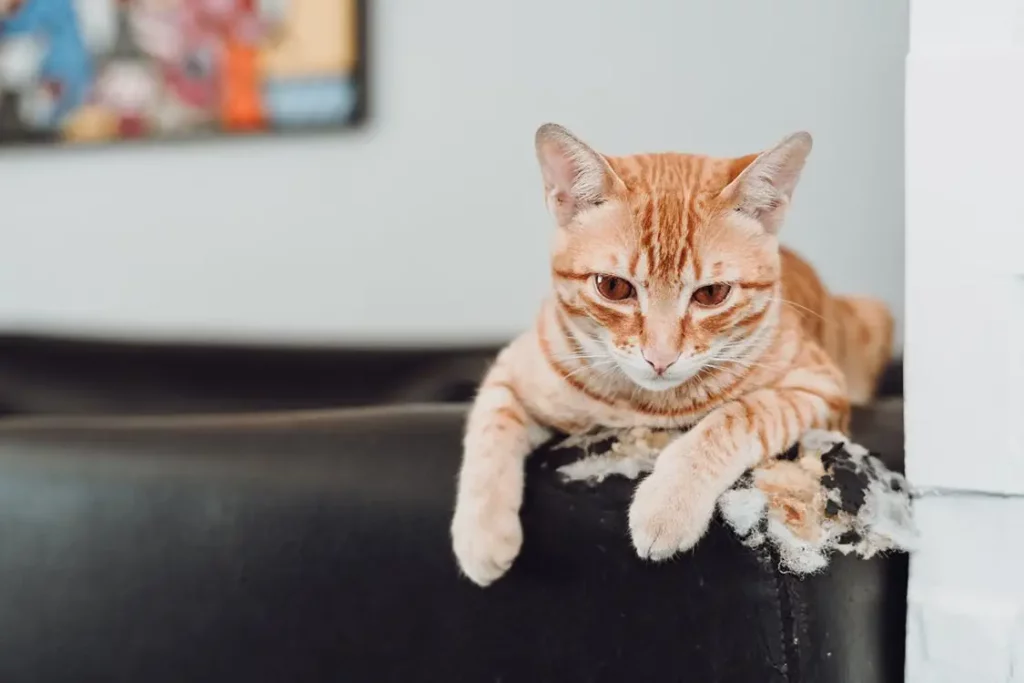
When people ask do cats scratch leather couches, deliberate scratching is only part of the answer.
Claws can also touch leather during completely normal movements such as kneading, jumping, chasing another cat, or catching balance after a slip. First identify how the damage is happening. That tells you whether you need to redirect scratching, protect a specific area, or reconsider leather altogether.
Deliberate Scratching
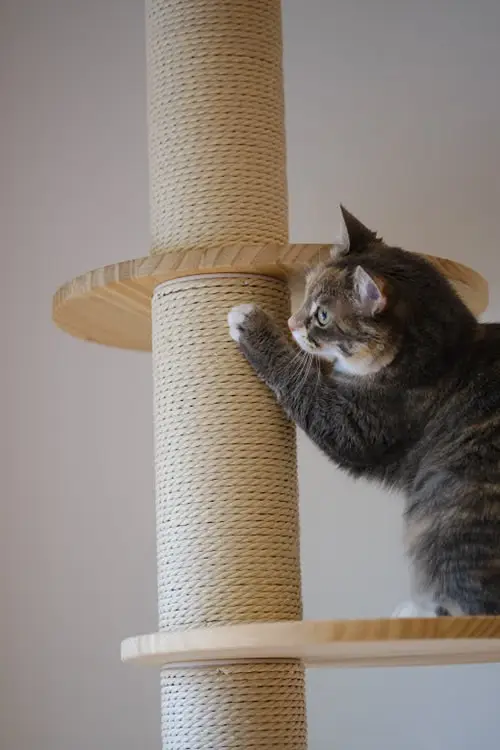
Repeated scratching is usually easy to spot. The cat keeps returning to the same arm, corner, or vertical panel and scratches the same area again and again.
Treat this differently from a random mark left during a jump. A repeated pattern means that part of the sofa has become a scratching site, so the damage is likely to continue until the behavior is redirected.
Everyday Claw Contact
This is easier to overlook.
A cat that kneads the same cushion every evening puts repeated claw pressure on one small area. A cat that always jumps from the right arm may dig its rear claws into the same takeoff point.
Zoomies create another kind of risk. A fast turn across the cushions can leave lighter surface lines, while slipping from the backrest can result in a deeper puncture.
That is why “my cat doesn’t scratch the sofa” is not enough to judge leather risk. A cat can still leave marks through kneading, push-off, traction, or an occasional slip without ever using the couch as a scratching post.
What Can a Leather Label Tell You About Cat Risk?
Do not use “top-grain” or “genuine leather” as shortcuts for claw resistance.
Top-grain tells you about the leather itself. It does not tell you how a finished sofa surface will respond to claws. “Genuine leather” alone tells you even less about pet performance.
Before buying, check:
- the exact leather grade;
- the surface finish;
- where real leather is used;
- the manufacturer’s care instructions;
- documented abrasion, scratch, or pet-performance claims, if any.
If the product page does not make a scratch-resistance claim, treat it as normal leather rather than assuming the material is pet-resistant.
Two top-grain leather sofas can also age differently because the surface finishes are different. A more protected finish may be easier to maintain, while a more natural finish may show everyday marks sooner.
For a fuller material comparison, choosing the best leather for a sofa by daily use explains how grade and finish affect everyday ownership.
Editor Tip: A leather grade is not a claw-resistance rating. If scratch performance matters, look for an explicit manufacturer claim rather than reading it into the word “top-grain.”
How Risky Is Your Cat for a Leather Couch?
Start with a normal week at home, not the quiet moment when everyone is sitting in the living room.
Watch your cat after naps, during play, and when it gets on and off the furniture. Those are the moments when claws are most likely to contact upholstery.
| What Your Cat Regularly Does | Leather Risk | What to Do |
| Sleeps on the sofa but rarely uses claws there | Lower | Leather is reasonable if minor wear is acceptable |
| Kneads the same seat before sleeping | Moderate | Protect that specific cushion |
| Jumps on and off the same arm or seat edge | Moderate | Watch the landing and push-off areas |
| Scratches one sofa arm or corner | Moderate–High | Redirect the habit before replacing the sofa |
| Climbs backrests or uses upholstery for traction | High | Expect visible claw marks on real leather |
| Multiple cats regularly chase across the sofa | High | Consider upholstery with documented pet-performance claims |
| You want the surface to stay almost mark-free | High regardless of cat | Real leather may not fit your expectations |
That last row matters more than it seems. Sometimes the problem is not an unusually destructive cat. It is the expectation that natural leather should remain almost untouched for years.
If keeping the surface nearly pristine is important, stop searching for a supposedly tougher leather grade and compare performance fabric vs leather for families with kids and pets instead.
How Should You Protect the Exact Risk Zone?
Protect the area your cat actually uses rather than covering the entire sofa by default.
- For a cat that kneads one favorite cushion, place a removable throw over that spot. It catches repeated claw pressure without hiding the rest of the leather.
- For a cat that always jumps from the same arm, focus on the takeoff point. Rear claws can put concentrated pressure on a narrow edge even when the cat is not scratching intentionally.
- For a cat that scratches one corner, place a suitable scratching surface directly beside that location. Do not make the cat cross the room to find the approved scratching spot.
- For a cat that climbs the back or races across the sofa, be realistic about what protection can do. A throw may reduce some damage, but it cannot make delicate leather behave like performance upholstery.
Also avoid testing strong cleaners, adhesives, or deterrent sprays directly on the couch. A product can be safe around cats without being safe for a particular leather finish.
Editor Tip: Protect the repeated contact point first. One throw on the cushion your cat kneads every night is usually more useful than covering areas the cat never touches.
When Is Real Leather Worth the Trade-Off?
Once you know the risk level, ask whether real leather gives you enough in return for the wear you may have to accept.
If you are choosing a material that can pick up claw marks, the sofa should offer something meaningful in everyday use—not simply a more expensive material label.
For a lower-risk cat household, the Cronus Genuine Leather Modular Sofa is worth considering when comfort makes that trade-off worthwhile. Its top-grain leather has a fine pebble grain and matte finish and becomes softer with use. Premium down adds softness with quick bounce-back, while the 26-inch seat depth leaves enough room to curl up or sit cross-legged.
That depth matters if the sofa is where you actually unwind rather than simply sit upright. The down-filled seating also gives the leather a more relaxed feel while retaining rebound after use.
Cronus is not presented here as a cat-proof sofa. Its value is the leather feel and roomy lounging experience. For a home where the cat mostly naps rather than climbs or scratches upholstery, those benefits may make normal leather wear a reasonable trade-off.
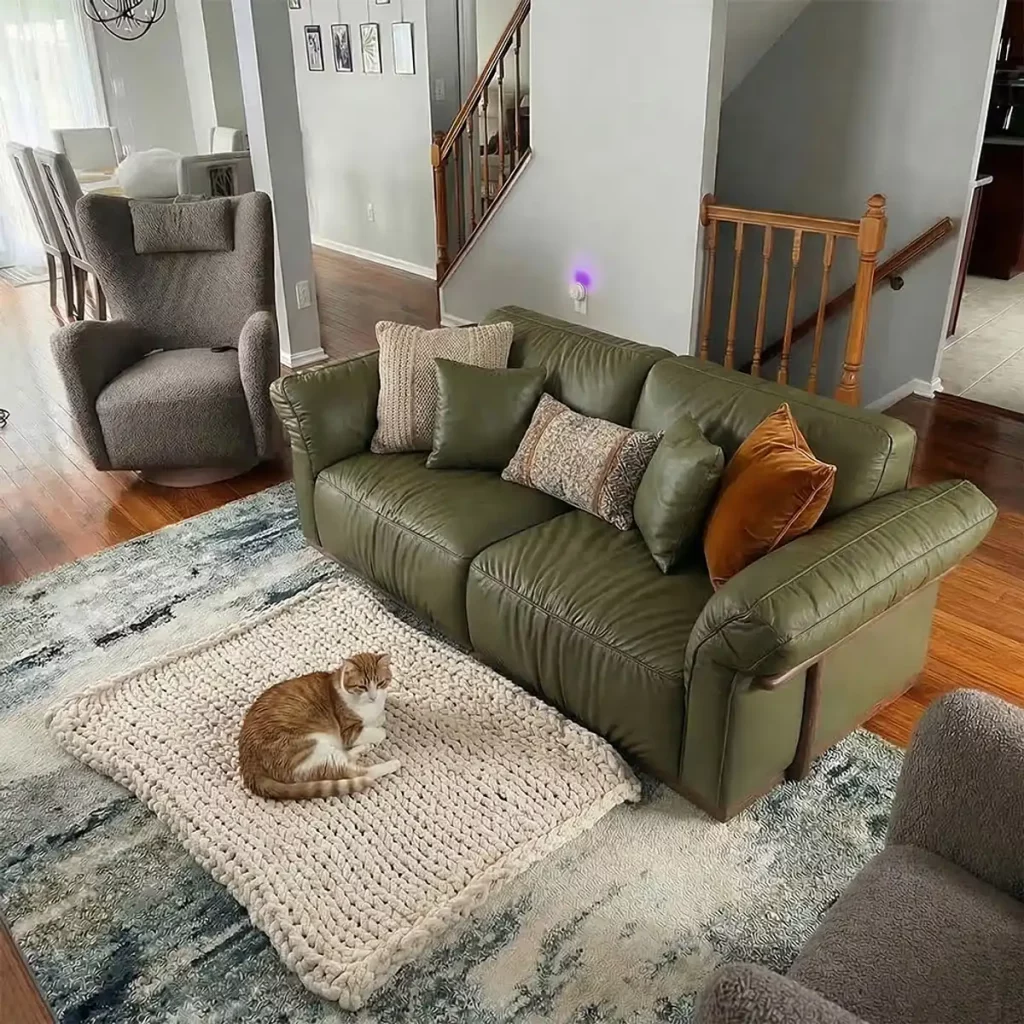
Cronus Genuine Leather Modular Sofa with Solid Wood Frame
For a lower-risk cat home, this is the kind of leather sofa I’d choose when comfort matters enough to justify a little everyday wear.
Conclusion
With cats and leather couches, start with the cat rather than the material label. Watch where your cat kneads, jumps, climbs, and scratches, then decide how much visible wear you are comfortable accepting. If claw contact is occasional and minor marks will not bother you, real leather can still make sense. If claws are part of everyday sofa use—or you want the surface to stay nearly pristine—a more forgiving performance upholstery will usually be easier to live with.
Q&A
Can cat hair damage a leather couch?
Cat hair itself does not scratch leather. The bigger concern is fur, dander, and body oils collecting around seams or favorite sleeping spots. Clean those areas using the method approved for the specific leather finish rather than allowing residue to build up.
Does leather conditioner prevent cat scratches?
No. Leather conditioner can help maintain flexibility when recommended by the manufacturer, but it cannot prevent claws from puncturing or scoring the surface. Avoid over-conditioning in an attempt to make leather scratch-resistant, since the wrong product may also alter the finish.
Is faux leather safer than real leather around cats?
Not automatically. Faux and performance-leather surfaces vary widely, and claws can still puncture or tear them. Check for documented abrasion, scratch, or pet-performance information rather than assuming a synthetic surface will always handle cats better.
Can cat urine damage a leather couch?
Yes. Cat urine can affect the leather finish, while liquid that reaches seams may soak into the backing or cushion below. Blot it promptly rather than rubbing or saturating the area, then follow the manufacturer’s cleaning instructions. Avoid odor removers unless they are approved for that leather.
What should I do if a claw punctures leather?
Avoid rubbing or stretching the area, since that can enlarge a small puncture. Check the manufacturer’s care instructions before using oil, heat, cleaner, or conditioner. The steps for how to repair cat scratches on a leather sofa depend on whether the damage is a surface mark, groove, or deeper puncture.


